Unknown's avatar

About SJPONeill

Retired(ish) and living on the side of a mountain. I love reading and writing, pottering around with DIY in the garden and the kitchen, watching movies and building models from plastic and paper...I have two awesome daughters, two awesome grand-daughters and two awesome big dogs...lots of awesomeness around me...

Leading through change

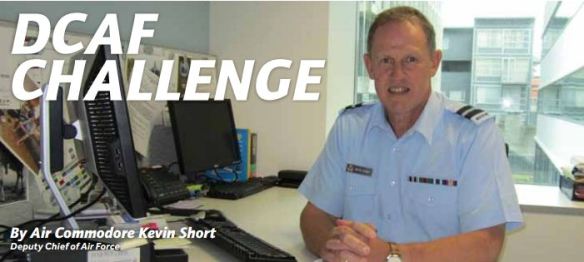
While driving around the Net searching for some information on leading change, I found this recent ‘First Word’ in the October 2012 Air Force News. Pretty good stuff, I thought, on the effects of both leadership and individual initiative in fostering and maintaining a satisfied and thus effective and efficient work force which in turn fosters and maintains the delivery of critical outputs…

Does your Unit have a good reputation and is it one of the sought-after areas to work in? Is it judged as a critical Unit and the people within it as skilled and capable? Is it a ‘key’ capability in the RNZAF?

By ‘key’ I don’t mean as judged by the quarterly reports, not by efficient management processes, nor by the myriad of statistics required by higher command each month; these I would expect from any unit in the RNZAF. Rather, your Unit will be judged as the best to work in by two measures:

(1) by the other units (that is Squadrons, Joint Forces and so on) that you support, and

(2) by the individuals who work within the unit.

So what part do you have to play in all this?

If you are positive and enthusiastic about your job and the people around you, then this will set the tone for the Unit. People will want to work with you—they will seek positions in your Unit. Strive to make your unit the best organisation to work in, with emphasis on innovative policy, development, and capability for the RNZAF, and very focused programmes; focussed because we have limited resources.

I think we all need to be challenged and given opportunities. In order to do that you should encourage initiative and allow others to present and sometimes implement new ideas. Some ideas will work and others will not—but you won’t learn unless you try, and you must take calculated risks. An Officer, SNCO, or for that matter any staff member, who is afraid to make a mistake or to present a counter view is not contributing to the team. Remember, fear stifles initiative, imagination and ideas—and the organisation will inevitably stagnate.

We are “beings in process,” forever developing, learning and adapting. I encourage you to challenge what you do. So let’s think about how we can change and improve the work we do. Think about the future, and use all those bright young men and women who work in your unit—that’s you—to move ahead. I challenge you to improve the products we produce, to improve the processes used to get there, and to make your Unit an enjoyable and rewarding work environment. The latter point is important to our success. Everyone should be provided with an environment in which they can work with little constraint. I want you to create a climate where someone’s worth is determined by their willingness to learn new skills and grab new responsibilities.

As stated in the Better Public Services Advisory Group Report, “…the single most critical driver of successful change is leadership.” I would add that this leadership must come from all levels in the organisation. And here I’ll take a leaf from GEN George Patton. He said: “Never tell people how to do things. Tell them what to do and they will surprise you with their ingenuity.” I expect to see lots of ingenuity.

Remember that we are not at war, but those in uniform can expect to be deployed for operations at any time, so balance your job and home life with appropriate priorities. I want you to be in the military for the long term, so keep your work effort and priorities balanced. There will be times when you will be required to work long hours, or be away from your family—for training, conferences, project activity, exercises and the like—and this is when the RNZAF will be first priority. 

I also encourage you to set yourself some personal goals. Everyone in the RNZAF has integrity, judgement, energy, balance and the drive to get things done. don’t just use these assets at work; apply them to your private life as well. 

You are the people who make the Unit function. You make it happen and you set the example for others to follow. I expect you to provide guidance, direction and oversight to your personnel and to others in the RNZAF so that they may also succeed. So take responsibility for, and ownership of, your particular area. Make your Unit a great place to work and be effective and enjoyable.

When Field Marshall Slim made his so-often quoted comment about the relationship of morale to materiel being as ten is to one, he was referring to far more than simple materiel, I’m sure. Today he probably would have specifically targeting the metric mentality that thrives within modern organisational communities…i.e. the “I’m OK because I’m achieving my targets and completing my directed tasks” philosophy…you might be a lumberjack too but, trust me, anyone hanging their individual or collective  hat on THAT philosophy is NOT OK!

The leadership and learning relationship is not new but this article draws in a couple of other themes that aren’t as common in the discussion. The first of these is initiative, specifically personal initiative. It’s all very well being the best leader in the world but not worth a stick of old rhubarb if the rest of your organisation are content to just follow your awesome leadership example. YOUR people must not just feel empowered but they need to be motivated to dive in and take a (considered) punt to make things that need to happen, happen. The old catch-excuse of “No one told me to” (Why didn’t you do something) is almost as bad as the Nuremberg “I vas only following orders” (Why did you do something?). Individual members of a successful organisation should be applying ‘so what, then what, now what?‘ thinking all the time – and where they may occasionally, perhaps, get it wrong or not fully right, the ‘system’ should be there to assist the learning process. If we don’t screw up from time to time, how to we get better…?

When JFK said “Ask not what your country can do for you but rather, what you can do for your country” he wasn’t meaning that the two questions are mutually exclusive. The other theme that is blended in nicely in this challenge is that of ‘balance’: work/life balance, balance between those things that have to be done and those that you can simply do, balance in looking after yourself and looking after the job (hint: the job may not reciprocate). People crack funnies about the US Army’s long standing (1989-2001) recruiting logo “Be all you can be” but it probably endured for so long because it appealed so directly to a fundamental aspect of what the military is meant be all about: regardless of someone’s roots or background, a fresh start offered exactly that opportunity to ‘be all you can be’. But it doesn’t just stop there – it can and should extend out into the broader relationships of families, friends and communities.

Many years ago, decades actually, I read a comment (on paper – it was so long ago that this interweb thingie wasn’t even a twinkle in someone’s Astounding Stories!) that, contrary to the popular perception of Vietnam veterans in the US being burned-out, drugged-up no-hopers, that many of the 2.7 million Americans that served in uniform in Vietnam actually came home and become leaders and forces for positive change in their communities. Being all they could be because their experiences had given them a new perspective on what was really important – and that wasn’t some clipboard-mounted tick-and-flick philosophy focussed on just doing the bare ‘minimum’, of perception-polishing than actually doing the job. As as stated in DCAF’s Challenge, it’s about extending that balance and perspective into our family and community lives as well. Of  gripping up challenges and doing those things that need to be done but always maintaining that awareness of ‘balance’.

So taking that closing sentence “…Make your Unit a great place to work and be effective and enjoyable…”, if your work place or your home or your community doesn’t feel like a great place to be, if it doesn’t feel effective and enjoyable, rather than just sit around and bitch into your milk about it, perhaps it’s time to consider what changes may be needed (noting that YOU may be the one that needs to change!) and applying some personal individual leadership, initiative and balance yourself. While it is true that good things rarely come without hard work, it is equally so that they rarely come without someone making them happen.

November 16 ~ 5QF

Five Question Friday (well, Friday for those who aren’t as quick as us Antipodeans who are already well into Saturday!!) is being hosted by Kate’s Life this week while Mama M confronts her fear of flying and heads off to Disney World with one of her daughters…

A bit more work required to answer the questions this week…or maybe I have just gotten ‘net-lazy’…as the host site has a restriction on copying and pasting its material…probably to restrict copying of photos but really…between ‘drag and drop’ and screen captures and MS Snip, if someone is going tot ‘take’ your photos, then they will find a way…as it was dragging and dropping the five questions for this Friday also carried over a bunch of HTML that took me a while to figure out how to edit out…

I think people need to be careful what they are trying to achieve by blocking ‘copy’ access – if they really want to protect it, then it probably shouldn’t be the Net…anyway…

1} What snack/drinks do you eat at the movies?

Aaah…the movies…I remember them…can’t remember the last time I actually when to a movie in a for-real movie theatre…think it was probably for the second or third slice of the Pirates of the Caribbean exploitation aka ‘let’s thrash this puppy to death‘ saga…maybe that’s why I haven’t been since…?

My movie watching away from home the last few years has been at about 39,000 feet and around 500 knots on a screen not much bigger than the average paperback. On the up side, the movies, except for the rubbish on Qantas flights, are usually all new releases or a combination of new releases and classics. Of course, with some of the new releases nowadays, you might as well just cut straight to the classics. My last flight from Singapore back home, I had already watched all the classics and didn’t watch a single movie the whole flight. Instead I had a most delightful item chatting with an elderly lady in the seat beside me who was on her way home from a  month’s holiday in Italy – far more enlightening and entertaining than any of the faff new releases being offered up on the teeny-screeny… So, as I normally fly down the back with the goats and chickens, my movie food is generally something that might have been meat once sitting in some stuff that once was veges, washed down with a dodgy beer and a supper of potato ships, OJ and a club sandwich…

Movie nights at home in front of the big screen are something different entirely…last night was healthy munchie night with carrot and celery sticks and cauliflower chunks dipped in homemade blue cheese dip…see the next Masterchef Raurimu update for details…other nights its less healthy munchies like Biguns, Rations, and thick-cut potato chips…

2} What’s one food you refuse to ever try?

I rest my case…

Kina although I take Kate’s point about raw oysters…tried these again in Brussels on my last trip, the meal at Le Jardin de l’Ilot Sacre where we paid the better part of 150 euros for a sad-as sea food platter, and raw, oysters still didn’t do anything…cooked, yes absolutely, anytime. Kina? Raw, cooked or gold-plated, nope, never…

3} What’s your favourite nail polish color?

Normally black or blue and a direct result of having dropped something on my toe or jammed a finger in a door…

4} What is your favourite Thanksgiving tradition?

Well, Thanksgiving isn’t really a biggie down here, nor is there any close New Zealand national equivalent…tradition around this time of the year in this little corner of Godzone is probably looking for the first unfurling of the ponga fronds

5} What are your least favorite [sic] words in the English language?

‘Favourite’ being spelled without a ‘u’?

Didn’t really think that I would have much in the way of least favourite words, well, not ones used in polite company, but, yes, ‘slacks; would probably be in the list – just don’t like the way that word sounds…

Weekly Photo Challenge: Renewal

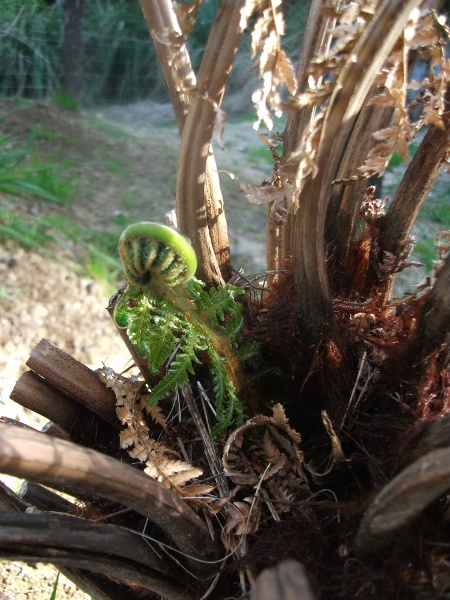
Every year about this time, there is one thing that always symbolises renewal and the arrival of spring…the annual rebirth of the pongas (pronouced ‘punga’)

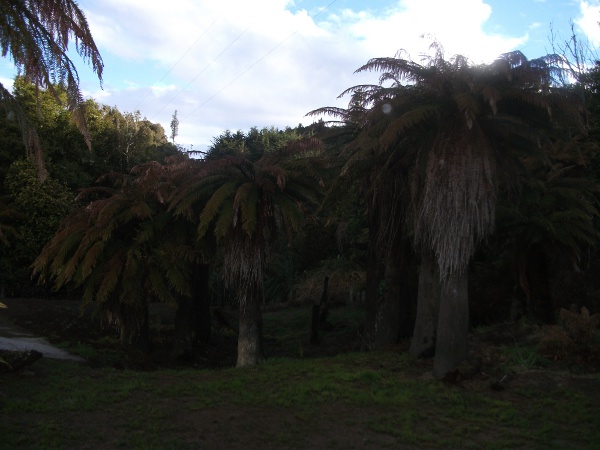
Although similar in appearance to palms they are actually large tree ferns that will grow up to ten metres tall with trunks over a metre thick…they thrive all over New Zealand but especially in the hills and mountains of Westland, Fiordland and the Central Plateau. They are very hardy and tolerate frost, snow, rain and drought equally well. But every year they go through a process of hibernation and renewal…and under they burst forth, we’re never quite sure if they are OK…

Never quite sure whether they are going to bounce back

All around the house in the months leading up to this point, the pongas all start to brown off as if they were dying, often well into summer and regardless of the type of winter we may have had…

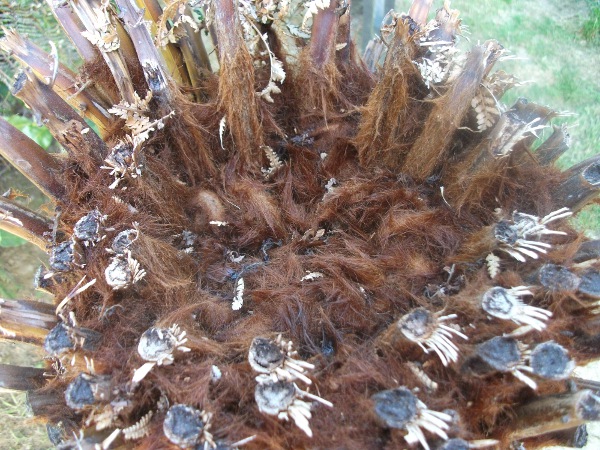
Ponga are also very resilient and bounce back even after quite harsh treatment. Ponga logs are quite popular for fences  – once in place and if watered regularly, they will often resprout into a living wall. Similarly they can be replanted and will usually start to grow again…

So long as the cut-off end looks similar to this with this very fine ‘fur’, the ponga is healthy and will start sprouting again. If you look closely, you can just see some of the furled fronds growing here as barely visible half-round shapes in the ‘fur’…soon these will start to unroll into the fronds in the first picture…

International Globetrotters

Round round get around
We get around
Yeah
Get around round round we get around
we get around
Get around round round we get around
From town to town
Get around round round we get around
We’re a real cool head
Get around round round we get around

Cheers to the Beach Boys for those opening words…

Just popped into the inbox…always good to see local lads doing well…the full update is in the Hawkeye UAV web site but I’ve taken the liberty of posting up the ISR-focused highlights below…this is cutting edge Kiwi technology, both in the aircraft technology and the imagery processing methodology…don’t forget that the processed imagery shown is actually a 3D model – very cool….and more so when you consider the size of the airframe doing the work….all images and text below © Hawkeye UAV…

At the end of September David and I departed Auckland, complete with UAV and cold weather kit, bound for Ulaanbaatar, Mongolia.   We arrived late Sunday night, to spend a week conducting tasks that included surveying an open cast coalmine in the North of the country.  Our host company MonMap took very good care of us and had made all internal arrangements for our stay and operations.

Mongolia is a really interesting place, mineral rich, particularly in copper and coal.  They have a young democracy born from the departure of Soviet control in 1989 at the time when the Iron Curtain was falling.  The legacy of Soviet rule is plain to see in Ulaanbaatar, particularly in its architecture.  That said, the obvious Western influence has definitely taken root in new business and development, and the culture of the city dwellers.  The predominantly Buddhist, Mongolian people are very open and friendly, fiercely patriotic and proud of their heritage and in particular their iconic founding father and conquering hero, Chinggis (Genghis) Khan.  His face is immortalised everywhere on statues, monuments, Vodka bottles and at least three kinds of very good local beer.  The capital’s international airport is of course named after him too.

Mongolia-1

Ulaanbaatar City

On Tuesday we travelled north via road to Sharyn Gol, a coal mining facility with a population of nearly 10,000 in the adjacent village.  Sharyn Gol was a former Soviet mine and the apartment blocks, main buildings and much of the legacy equipment remain.

Wednesday dawned overcast and with little wind initially which was an encouraging sign for the beginning of flight operations.  We had divided the whole facility into three flight areas, 1) The old and current open mines, 2) The steppes, railhead and facilities and 3) the village and outlying buildings.

Mongolia-8

Sharyn Gol mine HQ building, railhead and facilities

Mongolia-5

Mining equipment

Mongolia-12

Sharyn Gol coalmine

Throughout the morning the wind rose steadily and by the time we launched for our first sortie we were experiencing some good crosswind gusts in excess of 30 km per hour.  We conducted the flight as planned, with encouraging approval from the MonMap guys, a team of whom had laid out and very quickly tagged GPS markers for our ground control.  We had set up on the South rim of the pit clear of all mining operations and traffic, operating from out the back of MonMap’s Landcruiser. The flight duration was 72 minutes and we captured over 1,100 images. Recovery was routine, with the Hawk landing within 10 metres of our designated recovery spot.  Indicated wind gusts were registering as high as 47 km per hour and were blowing straight in off the Siberian plains.  Jackets and hats were the order of the day!  The AreoHawk took it all in stride.

After lunch we prepared for the next flight, launching from the South rim still, but further East this time, closer to our target area.  With more runs being conducted into and downwind, speed control and camera firing interval were of particular importance.  Our ability to adjust track, speed and turn radius on the fly, rather than relying on preplanned waypoints, comes into its own in these scenarios.  Despite the variable and strongly gusting winds, the task and subsequent recovery went smoothly and the Hawk landed within 20 metres of its programmed landing point.  Flight time was once again over 70 minutes long with in excess of 1,000 photos captured.

With the ever increasing wind and failing light we decided to conduct the final flight the next morning.  On the completion of Wednesday’s flying I started processing the imagery from flight 1, the mine.

Mongolia-18

AreoHawk 02 in MonMap livery

Mongolia-24

Parachute deployment, flight 1

Mongolia-60

About to touch down

Thursday morning was bright and sunny (and not as cold!).  With good light quite early we launched immediately after breakfast from an area North of the mine, within our target area.  This time we were operating adjacent to the foothills and the village lay stretched out on an incline, requiring David (on the controls for this sortie) to carefully manage acquisition altitude and terrain avoidance for the duration of the flight.  Being so close to the housing area and the schools we soon drew a steady stream of onlookers and curious folk keen to have a look at our operation and pose for photos with us and the UAV.

While the wind did once again grow in strength throughout the morning to over 30 km per hour it had little impact on the flight, which went very smoothly and was over 80 minutes in duration.  One of the main objectives of surveying the village and populated areas was to provide MonMap with a dataset for cadastral boundary and feature extraction.  The resulting product is very good and more than suitable for this purpose, especially with the GPS control applied.

Mongolia-85

Parachute hatch just popping on final recovery in Mongolia

Having completed flying operations and surveying more than a combined 12 square kilometres (3,000 acres) across the three completed flights we packed our stuff and headed back to Ulaanbaatar.  This gave us the opportunity to get into some imagery processing in the office, and to play tourist a bit.

Overall the results from the Mongolia flights have been outstanding.  We captured a lot of imagery on each sortie, with very strong overlap.  Both the point clouds and the orthophotos are extremely pleasing.  Working with MonMap was outstanding and we look forward to our return to their country next year to deliver systems and training, and for the odd Chinggis Gold lager.  Results video here.

Sharyngol Mine

Orthophoto mosaic result sample

mine3

Digital Elevation Model generated from the dense point cloud

mine4

Mine orthophotos draped over terrain model

South Africa:

In September, Andre Henrico of Aeroscan Aerial Survey, South Africa, attended training in New Zealand on his new AreoHawk.  A seasoned UAV professional, Andre has been doing the business from his South African base for many years.  Upon his return home he wasted no time getting to work, deploying his new gear on a task in Botswana.

Andre was good enough to send us some photos and share some of his results.

aeroscan1

Andre onsite with his AreoHawk preparing to get underway

aeroscan2

Recovery

aeroscan4

Digital Surface model

aeroscan5

Elevation profile superimposed in front of the terrain model

Does anyone know about chimneys?

How cool would it be if this was an in-flight shot of the tail of the jet bike I built in the garage over winter?

Although it is notionally summer here now…notionally…and we have just had a week of beautiful sun (probably more than we saw all last “summer”), we still have bouts of quite cold weather when our drill is to put the fire on when I get up at 6 to warm the house up and again in the evening if necessary…

Our problem is that the large wood-burner in the lounge that heats the house has taken to smoking continuously and, just like with teenagers, you just can’t tell it not to. We had it refurbished at the beginning of the year, including replacing the flue, removing the damper on the flue and replacing all the seals around the doors. We did this at the same time we re-roofed the house but a few months before deciding to re-roof we asked if ‘hats’ could be placed over the tops of the upper arms of the ‘H’ cap to stop rain water washing soot and much from the inside of the cap onto the roof where it had, over time, created an ugly stain running from the base of the flue down to the edge of the roof. At the time I was surprised that the hats were so small and so close to the opening of the H-cap but figured that our installers knew what they were doing.

You can’t really see if in the picture but there is also a layer of wire netting stretched across each external opening to prevent birds either dying in the cap or building their own little home sweet homes in it – for the first four or five years that we were here, we never had a problem with birds then all of a sudden the chimneys were like avian condos…the gauge of the netting is half-three-quarter inch so is unlikely to be THE problem but may be a contributing factor to the possible lack of draw across the top of the H…

We didn’t start using the wood-burner over winter til around May because, although we had a non-summer, it wasn’t that cold, just wet. But we were surprised that after only a couple of months the wood-burner started smoking worse and worse and so we got the flue swept – twice because the first time they did go hard enough and left a thick layer of creosote scaling on the inside of the flue. The folk who swept the chimney took the hit for not doing the job properly the first time around but were also critical of our wood supply as too wet. Looking back, I think that this is a stock answer as the same wood supply also feeds out wood-burners in the laundry and the guest house, neither of which has any problems with smoking. We always has a wet and dry side of the wood shed and it is possible that they only looked at the wet side i.e. the stuff drying for next winter.

I have been doing a ton of research into this issue on the net and have read up about positive and negative drafts and pressures inside the house. I have tried the fire with windows and doors open to see if it is a draft issue and doors/windows open or closed makes no difference other than to help clear the smoke that pours out the door every time we open it to add more wood.

I keep coming back to the two things that have changed: replacing all the seals on the wood-burner and adding the hats onto the H-cap. From my research it seems that the better sealed a wood-burner is, the more efficiently it operates which brings me back each time to the hats. What I’m wondering is if they need to be lifted higher above the mouth of the H for better wind flow across the top and to offer the least amount of resistance to smoke coming through the H-cap – the caps are, after all only there to stop rain washing soot etc onto the roof…

So I’m hoping that perhaps someone in our global community might actually be a subject matter expert on this topic and be able to offer up some definitive advice that doesn’t include:

  • pre-warming the flue by stuffing newspaper up it and lighting it,
  • getting better wood (there is nothing wrong with our wood supply)
  • replacing the wood-burner or
  • just hardening the heck up…

Weekly Photo Challenge: Geometry

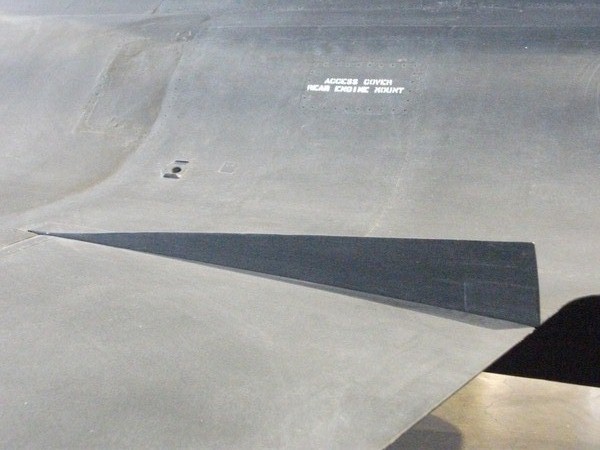
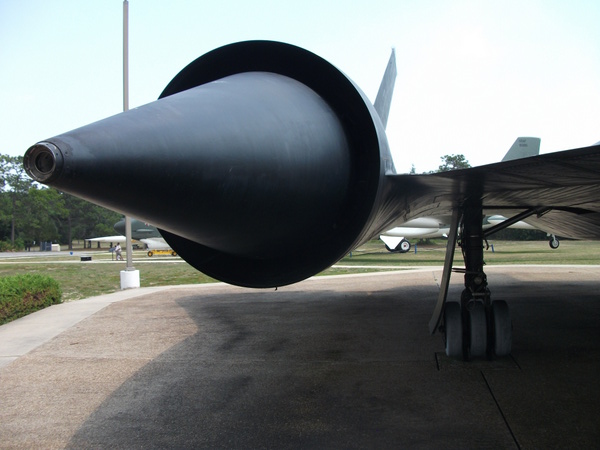
As this week’s challenge, ‘geometry‘ was very specific in what it wants “…find a good subject that contains an interesting geometry…try to crop tightly into the subject to make an unexpected composition…” Hmmmm…unexpected seems to imply ‘so that it’s actually identify is concealed’…more hmmm….OK, here goes…crops to the top, originals to the bottom…


…and the orginals…

Water intakes on one of the hydro-electric dams in the Waitaki Valley

Wing fence on the YF-23 prototype at the USAF Museum

SR-71 at the Eglin Armament Museum

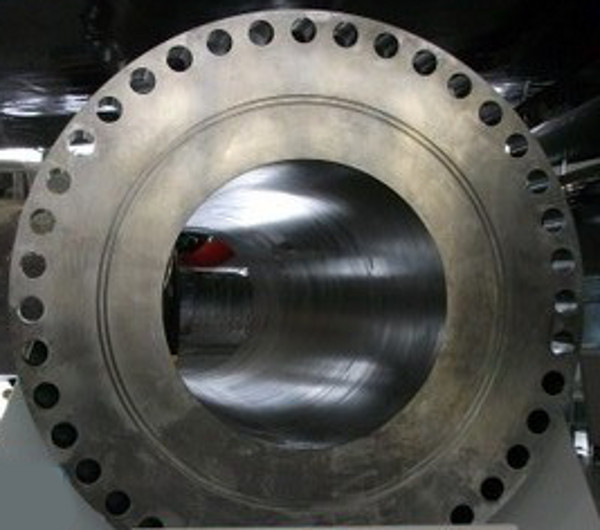
Remnant of the Iraqi ‘Supergun’ from DESERT STORM days in the Imperial War Museum at Duxford

Faster than…

Just for perspective, the upload and download speeds here are twice those we were getting with satellite broadband; the ping is almost 20 times faster!!

It doesn’t seem so long that we used to get excited at home when the dial-up download speed got anything over a mighty 6kbps…it’s been our curse to never live (for any period of time anyway) anywhere with fixed line broadband…then, one day early in 2010, the nice folk at Telecom rang up and said we were just inside the coverage for the XT network (after they got ALL the bugs out of it, of course).

Contrary to all the bad press that Telecom gets, they were very nice about it and offered to send out an XT modem for a month’s free trial. Couldn’t say no to that and all of a sudden we were in the world of broadband…not without its issues though: we only had 2Gb a month to play with and the only reception was in one room of the house (fortunately the study: working from home could have become interesting if it had been the bogger!!). XT worked really well for us for almost two years but as I reverted to working more and more from home (the great thing about policy analysis and doctrine review is that you can pretty much do it anywhere), we more and more started to exceed our 2G monthly allowance and the cost started to spiral upwards…

We had been aware of Farmside and its satellite broadband options for a while but hadn’t considered them as cost-effective as the XT option – plus they had (and still do) this annoying habit of answering emails with phone calls which is nice if one is at home but of limited use if one is spending a lot of time away from home and thus not able to answer the phone when it rings…By the end of 2011, though, their satellite and home line bundles were starting to look pretty attractive – the all-up costs were about the same as what we were already paying but the big bonus was a much larger monthly cap albeit with 25 of the 30Gb only being available offpeak between midnight and 2PM – that actually wasn’t too bad as I normally start work at 6AM to catch the back end of the US working day.

Once we established comms – after more email/phone tag – the Farmside sign-up process was swift and efficient and the installer turned up the day after Boxing Day. We would have preferred to have the dish placed further up the wall of the house so that the modem and cables would be out of sight/mind in the loft but still able to wifi through the house…but the installer didn’t come with a long enough ladder (even though we had advised that the wall was pretty high) and we think he may have been a little scared of heights…but the job was soon done and, apart from more lights than the flight deck of Concorde where the modem and router had been placed in the spare room, we achieved another plateau in the quest for decent broadband. The only downer with satellite broadband is that it is high latency – about 800 milliseconds, or the better part of a second – which only meant that pages took a little longer to access and load unless one uses a VPN for work as I do in which case it can be quite frustrating and tiring using a real time mouse and keyboard on pages lagging about a second behind.

Just before I went overseas in September, our phone went off for the day – late in the afternoon, someone claiming to be from Telecom rang and apologised for the disruption of service, attributing it to some errors when our local cabinet was cut into the new fibre network. Fibre? Did someone say fibre? You would think that finding out if we could now access fixed line broadband would be a simple thing mais non…both Farmside and Telecom fobbed us off with “We will tell you when these services are available” responses. To their credit, when we nudged Farmside again after a month or so, they came to the party and advised (after more email/phone tag) that it looked like we could now access proper broadband.

Those living in urban areas will be all “hohum” but these are the things that are important in rural areas where connectivity = communication and the ability to do business from home…the ADSL modem arrived this morning – and didn’t work. Five calls with the really helpful customer service staff (thanks, Chris and Jess) later, we had narrowed the problem down to a modem that had not been configured before it had left the store. All that was easily fixed and by lunch time, it was all up and running, and we were able to kill the Concorde lights in the spare room for the last time. By close of play today, I had been enjoying the rapid response of web pages and had indulged in a long ‘test’ Skype with Rowland from Hawkeye UAV. Now that we have decent 24/7 broadband, we plan on using Skype a lot more and possibly reducing our homeline calling plans – more

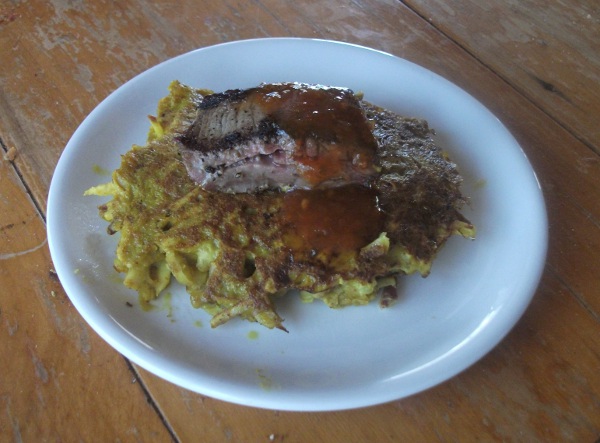
So all that thinking and fault locating made me a might peckish….I didn’t quite get the angle right in this picture – I should have reduced the angle so that the whole is silhouetted against the white of the plate – so it doesn’t look as nice as it actually did and certainly not as well as it tasted. All it is is some  kumara hash brown mix left over from my kumara and salmon stack the other night, and a chunk of fresh-fried lamb I found in the fridge with a squirt of Carmen’s homemade chili sauce…the curry in the hash brown and the chili sauce blended deliciously…so I made another and it was just as good…

Sitting back now, watching Lost in Space (the original, not the sad-as movie with Joey from Friends) after a great dinner of pork sausages with a cheese omelette….

They live!!!

Just been up the road for a coffee and endured yet another nutjob spouting off about why New Zealand just has to have fast jets if it hopes to have any credibility internationally. I’m not going to get into that argument although I will admit I do kinda miss the sound of tortured air as 75 Squadron crank across the Rangipo Desert…but…this nutjob made the comment that the Skyhawks are just rusting away, neglected and forgotten, down in Woodbourne. And that’s not true….so just for the record…

A while back, someone emailed me a PDF that had clearly been a copied and pasted Word document drawn from an internet or print article – there were no identifying links, or names or anything to give away the source. If anyone does recognise the source, please let me know so that I can credit the source and link to the original item…so, just for the record, everything from here on in italics and the pictures are all someone else’s work…not mine, not at all…but I do think it’s all pretty cool…

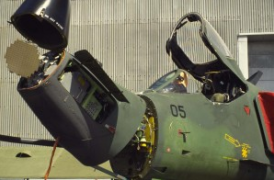
“There has been lots of rumblings in the military aviation community about the future of the Black Diamond Jet Team and the possible establishment of a commercial adversary support arm of the group, known mysteriously as Draken International. It is now clear that Draken International and its team, which sports famous names like a Dale Snodgrass in its roster, is deadly serious about jumping into the fickle commercial adversary support/contractor air services industry, with an armada of blazing afterburners to prove it.

I have written at length about the coming storm of demand for commercial adversary support services. As America and her allies transition into an almost all 5th generation fighter inventory, fighter wings will not be able to afford to accomplish all their required training tasks using “in-house” aircraft as they have done in decades past. 5th generation fighter capability comes at a huge cost, not just in the upfront purchase of the aircraft, which will cost at least twice as much as a comparable fourth generation fighter, but the operational and sustainment costs of these cutting edge machines will be absolutely crushing for users around the globe. It simply does not make sense to send an F-35 up to train on basic radar intercept procedures against another F-35. Incredibly valuable airframe hours are consumed
needlessly by doing so and aircraft operating costs for such sorties will be astronomical. Further, having a state of the art 5th generation fighter mimic an inferior threat is not only inefficient but it is also somewhat problematic. This is precisely where commercial adversary support providers will come in to alleviate these fiscal and operational pressures, providing simulated threats and other support duties that can be tailored cost effectively to each individual sortie’s training goals. Further, outsourcing such duties instead of expanding current military adversary support squadrons or establishing new ones will create an elastic on-demand force that will be much more cost-effective than a standing military force alternative. In other words, by outsourcing adversary support duties to a commercial entity an air arm only needs to pay for exactly what it wants, when it wants it. If they become dissatisfied with their provider or someone else shows that they can provide the same service better or cheaper than they can take their business elsewhere. Such an arrangement is a proven economic and operational win-win for all those involved, the problem is that there is simply not enough supply of these services right now to fulfill what will become a huge demand by the end of the decade. This is where companies like Draken International are beginning to step into the picture, possibly taking what has been a niche industry and thrusting it into the mainstream international defense marketplace. Draken International’s fleet of aggressors is simply eye watering:

image

29 MiG-21BIS/UM: This is a lot of supersonic threat simulation aircraft! The majority of these jets are ex-Polish birds and are equipped with the dated by today’s standards, yet still capable RP-22 radar set, as well as a  radar warning receiver. The MiG-21 in this configuration is roughly similar to the F-5Ns currently serving in the aggressor role for the US Navy. With the addition of a capable electronic warfare/jamming pod, the MiG-21 is known to be a dangerous jet to engage with on an air to air level even in modern times.

image

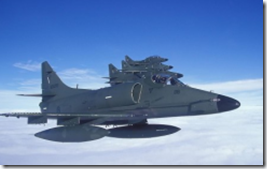
8 Ex-Royal New Zealand Air Force A-4K: Yes, some of the New Zealand’s Skyhawks have finally been sold to a loving new home after years of busted deals and “tire-kicker” inquiries. These are the most capable Skyhawks ever produced and sport an advanced version of the F-16A’s APG-66 pulse- doppler phased array radar, hands-on-throttle-and-stick pilot interface, a full-fledged heads up display, a capable radar warning receiver, 1553 digital bus which will allow for carriage of advanced stores, and even mid-air refueling pods. These A-4Ks will obviously be Draken International’s high-end threat simulation mainstay and will bring a capable radar set to the commercial adversary support industry for the first time, which is a true game-changer. Also, seeing as these jets are equipped with refueling stores, they can offer that capability for fleet training or to enhance their own aggressor capabilities where “time-on-station” is a big selling point for potential customers. The A- 4Ks are slated to be operational by early 2013.

3 A-4L Skyhawks: Currently wearing “zebra’ camouflage and Draken International titles.

image

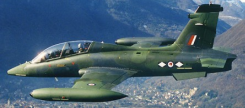
9 Ex-Royal New Zealand Air Force MB-339: These advanced jet trainers are equipped with similar sub-systems as their A-4K cousins, such as an advanced HUD and 1553 digital bus, albeit without the APG-66 radar and other combat oriented gear. Slated to be operational by the fourth quarter of 2012.

image

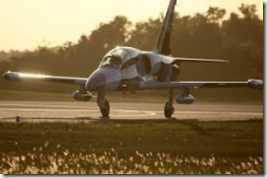
5 L-39: Presumably these are the same aircraft that are flown by Draken International’s non-profit aerial display and exhibition  team.

When you look at this fleet in comparison to other contractor air services/commercial adversary support providers you realize that Draken International has procured a diverse and flexible combination of aircraft that matches more advanced threats, and in greater volume, than what is currently available on the market today. The MiGs are fairly cheap to procure and are a good match for simulating enemy anti-ship and cruise missiles, some of which now possess solid supersonic performance. The Skyhawks will be a an affective “jack of all trades” and will be especially useful at presenting a cost-effective fourth generation fighter threat in the beyond visual range arena, a capability that is currently sorely lacking in the CAS industry. The MB-339s, and even the L-39s to a certain extent, will be good for lugging around jamming pods and presenting rudimentary radar targets for aircraft and ships, as well as providing close air support training for JTAC/FAC schools at home an abroad.

What is most astounding about Draken International’s business plan is the sheer amount of aircraft in their inventory and the endless
potential of how they could be mixed and matched together to form an incredibly diverse and capable aggressor force. With so many airframes of different capabilities, including those which can mid-air refuel and supply a persistent radar picture for their red air team, Draken International will have the ability to supply an enemy air force “on demand” for large force employment exercises that mirror the capabilities of many potential adversary nations.

imageIn business they say timing is everything, and in Draken International’s case that key ingredient may remain illusive due to a faltering F-35 program and shrinking defense budgets both at home and abroad. Yet these same factors, which may seem negative at first glance, could very well end up being Draken International’s proverbial ace in the whole, as the F-35 program is almost unstoppable at this point and costs related to it will continue to balloon, thus resulting in smaller fighter fleets than originally planned for most nations involved in the program and less cash available to fly the jets once they are purchased. As a result hiring companies like Draken International will be absolutely necessary for providing continuous training support at comparatively minimal cost.

One thing is for certain, with firmly entrenched contractor air service providers like Top Aces and ATAC already holding substantial market-share and burgeoning new startups like ECA Program and Draken International just stepping onto the stage, the biggest dogfights for these companies may no happen high in the sky but in corporate boardrooms and DoD contracting offices instead. Competition will be furious for the as yet to grow adversary support pie, but once a new, much bigger pie, in the form of the F-35 program, finally gets served it will be good eating for many for years and years to come…”

PS: Why place this in ‘The Thursday/Friday War‘ category and not ‘Playing with Toys‘? Easy…I think that the relationship between commercial and traditional military providers of capabilities to nation-states et al is just getting started and won’t stop til it gets us to the days of Falkenberg’s Legion and Hammer’s Slammers (look ’em up)…

Weekly Photo Challenge: Foreign

I like to think of myself as just a little cosmopolitan and not too prone to considering things ‘foreign‘ or otherwise, when some place different from home, I am very much of a “…when in Rome…” philosophy. Thus, once again, I found myself challenged for a picture to represent my take on ‘foreign’…

After scouring through my Picasa libraries, the issue was resolved when Carmen got home from work – she works away during the week so, even though I too work on Saturdays, I usually take care of dinner so that it about done as she comes done the driveway. Last Saturday dinner was roast chicken because I have figured out that I can throw some sort of meat and assorted veges into a roasting bag, toss it into the oven and Voila! a few hours later, dinner is served…

So all was good, right up until she asked “We got any beer?” Oh, uh-oh…the cupboard (fridge actually) was bare of such beverages…but…she remembered that I had brought a bottle of foreign beer home from my recent work trip…and that it was nicely chillin’ in the fridge door…in short order, we had the cork out (no cheap Charley screw-tops here!), had found two long beer glasses chilled behind some leftovers and Kazam!! beer with dinner…

Unfortunately, I did not think to take any pictures of the glasses full although you may get some small idea of the colour from the smidgen left in the glass on the left…it does as the label on the bottle implies has a very ruby-ish shade, and like most of the Leffes, is very smooth. It’s taste is interesting almost like Turkish Delight if you can imagine Turkish Delight beer, very subtle though and while I might not want to do a whole night on Leffe Ruby, it was certainly a fine choice to go with dinner.

This is the window display of a typical dairy in Brussels…you can probably only get one flavour of potato crisps here but can choose from 400 types of beer…

And just before anyone makes anyone makes any comments about what sort of guy brings back a bottle of beer for this wife after an overseas trip…it was a target of opportunity as the hotel where we were staying had an offer of a free large bottle of Leffe Ruby for every seven pints consumed. So we did at least seven pints between each happy hour (only EU$2.50 ea) and each night claimed a trophy…I did however bring a number of kilograms of good Belgian chocolate back with me in the interests of domestic peace and harmony…