A ‘poor western to arab death ratio!’

Curzon @ Coming Anarchy recounts his adventures flying on local airlines around the Gulf…sounds like feigning sleep is the best option…and while on the topic of Curzon, I have yet to finish reading his biography. The reason that it is taking so long is not that it is hard work and difficult to read – if anything, exactly the opposite: although some of the content is quite dry, it is so well written that I find myself savouring it like a fine dessert…comparing it to more contemporary writing, I think that we have lost a lot in the fifty years since this book was published…

Also on Coming Anarchy, Younghusband reviews David Kilcullen’s The Accidental Guerrilla. He summarises:

For close readers of COIN and CT theory, I do not think this book will offer any new insight. Kilcullen’s contribution though is an excellent overview of the “social work with guns” theory of COIN, as well as a succinct presentation of the realist arguments for non-intervention and conservation of military power…The last few pages, where he presents his policy ideas, is really where practitioners can sink their teeth in. Lots of debating points there. For example:

    • develop a new lexicon to better describe the threat (rather than UW, COIN, irregular warfare etc)
    • discuss a new grand strategy (have an ARCADIA conference on terrorism)
    • balance capability (Why is DOD 210 times bigger than USAID and State?)
    • identify new “strategic services” (ie. a new OSS)
    • develop a capacity for strategic information warfare.

As readers will now from the work published here, these insights are nothing new although it is refreshing to see them in a mainstream publication. It’s unfortunate that the conceptual COIN effort in the US especially (most others are simply followers) is still largely fragmented and lies predominately in the domain of the information militia. The focus on the Iraqi insurgency in 2005-6 has caused the term COIN to be used interchangeably across the contemporary environment and that has caused many to apply inappropriate concepts, policies and doctrine to the issues they face. Our findings in 2007 were initially that the Marines had a better grip on the issue in developing the Countering the Irregular Threat (CIT) concept; and then that the UK encapsulated it even better with Countering Irregular Activity (CIA) which covers the broad spectrum of irregular (potentially destabilising) activities from all sources and causes, natural and man-made. The flip side of both CIT and CIA is the need for a comprehensive approach harnessing the appropriate and relevant instruments of national power including those on NGOs and commercial/corporate interests which usually fall outside the accepted definitions of NGO. These are all themes that we have been exploring in the series The New War.

Bears in the Air

QRA Scramble to Intercept Russian Blackjack_Aircraft MOD_45151233

Well…Blackjacks actually…in a timely reminder that there are more bad things out there than just some nutjob hiding in a cave inciting the masses with poor quality video…the Russian Bear is alive and well and still has aspirations of Empire, certainly under its current keeper…perhaps we ought not be so quick in cancelling programmes like F-22 and planning total reliance on a committee-designed one-size fits all hybrid like the F-35…wasn’t the last time we tried – and failed – at a ‘joint’ aircraft the infamous F-111 project that skewered the TSR.2, set back the Aussie strike programme by over a decade and saw a less-than-stellar combat debut in Vietnam…thank the maker for the F-4 Phantom that carried the resulting load for the better part of a decade.

And on the topic of potential threats, STRATFOR carries an item on Chinese speed wobbles as the US ramps up a comprehensive (or unified, if you went to that school) approach to a potential threat…like Japan, China has built an economy on a foundation of sand and hope and its starting to get wobbly…all the more reason to keep the F-22 fires stoked and warm up that A-10 production line (and do a naval variant this time round!)…on yes, and you might need some decent SPGs to replace the M109s that grandpappy used in Vietnam…and don’t be counting on your data links staying up all the time so have a think about leaving the seats in any new airfames you invest in for combat… Neptunus Lex also carries some comment on this article…

The top ten manly movies

John Birmingham has been busy…The Geek discusses what are the top ten manly movies…JB votes for these with my comments in red:

1. True Grit. (Yes, you must fill your hands with this sonofabitch). Absolutely!

2. Saving Pvt. Ryan. (Because war is hell good lookin’ on blu-ray wide screen). Nah!! Too much gratuitous violence in the beginning that adds nothing to the story and the meandering journey across France is just boring. Blackhawk Down delivers all the same messages better and is based on a true story.

3. Master and Commander. (Tips out Gladiator because nobody wears skirts). Agree re Master and Commander not Gladiator which I slot in below.

4. Casino Royale (the remake, and the manliest Bond flick EVAARRR!). Yep!

5. Treasure of the Sierra Madre. (Or any Bogart flick, except the ones with a love interest). Ummm…no…Bogey never quite did it for me…from this era I’d opt for The 39 Steps.

6. The Magnificent Seven. (Well duh. It is magnificent, you know). Yep!

7. The Dirty Dozen. (Or Kelly’s Heroes, if you prefer your war movies with a psychedelic twist). Or both…

8. Cool Hand Luke. (Because I say no man can eat fifty eggs). Hmmmm…whatever…ditch in favour of 633 Squadron, the best flying movie every made.

9. Raging Bull. (Or any movie about boxers or wrestlers. They’re all good.) Replace with Kelly’s Heroes.

10. 300. (Because this is Sparta). How come these guys get to wear skirts, JB? Replace with Gladiator.

Cheeseburger Gothic also hosts a nice piece of fan fiction from The Wave section of the Birmoverse.

Get it off!

Dean @ Travels with Shiloh has developed a new counter to female suicide bombers…I wonder if the cure might not be worse than the problem…?

In more serious news, he summarises a recent workshop at Princeton on Afghanistan – in terms of being out of AFG in 2011, I hope that someone is working on the chopper pad on top of the Embassy…I think we all must have slept through the lesson on COIN re the long haul – or maybe that lesson took place during the five year summer holidays in Iraq?

Where it all began

Peter has released a prologue to The Doomsday Machine…great to see a local lad doing so well at this authoring thingie…

I also like his comments re President Obama’s snub at Israel…but disagree on the credibility of commenting on a book one has not read…I used to be prone to making similar judgements especially on movies so missed Gladiator on the big screen and gave the first series of Dr Who a miss as well…that learned me!!

Who am I?

Portable Learner discusses ways and means of promoting oneself on LinkedIn, something that I have been wresting with recently as well. The options available are quite prescriptive and I don’t think that will change regardless of what’s on the list. Lists, I think, are an industrial age tools that we have yet to evolve away from and, like so much industrial age legacy material, they hold us back. I agree with Shanta that ‘internet’ is probably more descriptive of how one might think than its clinical definition might imply.

I also agree totally with her points re e-learning which is sliding back into industrial age slime instead of being the shining beckon of knowledge it once appeared to be. In order to “…design effective learn ing environments in a networked world…” we must sever the ties with industrial tools and focus on the information and it s nurturing and growth…This is one reason that I think that the US Navy may have ever so slightly lost it in merging its 2 (intel) and 6 (comms) branches into the Information Dominance Corps (IDC) – yes, for real!! I see a very real risk that the information under this structure will be overshadowed by the fears and rules of the technicians and we will lose that timely dissemination that we so desperately need…it maybe that the victims of this merger will see their op critical information become a commodity that is delivered IDC…In…Due…Course – a phrase straight from the repertoire of petty bureaucrats and mindless chair polishers…


The New War #4 Ethos and Values

Peter McIntyre, The breakthrough, Minqar Qa'im, 27-28 June 1942

While searching for something totally unrelated, I cam across this extract from a Department of Corrections handbook which i think fits nicely into today’s item on ethos and values and their relevance and importance to successfully navigating the complexity and uncertainty of the contemporary environment. [yes, this paragraph was added AFTER the initial post when I realised that I had skipped off the opening paragraph from my original paper.]

What is culture?

Every culture:

  • has its own internal logic, coherence and integrity
  • has an intertwined system of values, attitudes, beliefs and norms that give meaning and significance both to the individual and group identity
  • is equally valid as a variation of human experience, and
  • provides the individual with some:
    • sense of identity
    • regulation of behaviour, and
    • sense of personal belonging.

All persons are to some extent bound by culture.

Our army relies upon other nations for a large proportion of its military doctrine, and has been referred to as the ‘doctrinal packrats of ABCA‘. This is a pragmatic and sensible approach based upon its limited resources to develop – and maintain – a complete library of national land operations doctrine; and upon the reasonable degree of conceptual commonality between the ABCA ‘Tight Five’. We are the only ABCA member to rely so heavily on externally sourced doctrine and thus have created a unique publication to manage this.

P(ublication) 50 Land Operations Doctrine consists of three parts:

Part One.  This details the management/development requirements and processes for Land Operations Doctrine.

Part Two.  An on-line dynamic database of authorised Land Operations publications.

Part Three. An on-line dynamic database of non-authorised Land Operations publications.

Why P50 and not 7, 42 or 657? No idea but rumour has it that the Army got a good deal on the original Lotto ball selector…

Part 2 is the authority for any land operations publication or other reference to be used i.e. if it’s not listed, it doesn’t get used. The flip side of this is that there is a short loop system in place for rapid approval of publications for general or specific use.

Right then, one of the trends we noted during the COIN Review was the high rate of turn-over of COIN/CIA/CIT-related concepts and that much of the cutting edge material was less in traditional doctrine publication format and more in the form of papers, blogs, articles, etc and short-loop doctrine notes. The operating environment was also noted as being far more complex and theatre-specific than in the good old days of the Fulda Gap. How then to control what and how doctrine was applied, managed and controlled by end-users?

In formal coursing in schools and units, it seemed fairly simple: the authority is Part 2 of the P50 as this is developing the science; similarly in collective training in units where there will be more flexibility to develop more the ‘art’, the Part 2 remains in vogue although is tempered by the experience and training of company and unit commanders; but what to do on operations? Clearly dogmatic adherence to the P50 failed to provide the flexibility to meet the demands of an operational contingency, but equally clearly there is a need to provide a degree of national guidance.

The penny dropped during a doctrine brief to a warrant officers course where this question was discussed. A student stood up and stated with total conviction that “…what counts when the heat is on, is what’s in the heart, not in the head…” He felt that you could have all the disciplinary and compliance mechanisms on the planet, but when the pressure is on, an individual, or even a group, will be most guided by their ethos and values. This is why setting and maintaining standards starts the minute a recruit steps off the bus at the recruit training centre and doesn’t stop until it is well embedded – ideally it will be an ongoing and enduring process throughout their career, be it for three or for thirty years…thus…

Doctrine is the body of knowledge on the nature, role and conduct of military operations. The Concise Oxford Dictionary defines doctrine as “…what is taught, body of instruction; religious, political, scientific, etc, belief, dogma, or tenet…” It is that simple: doctrine is the foundation of what is:

Developed in individual training,

Practised and further develop in collective training, and

Applied with judgement on the job.

Doctrine guides our actions in support of national objectives and is an important element of capability. Doctrine is not a black and white set of rules for success: it is guidance that should be tailored to account for the factors unique to each situation and requires judgment in application. Management and mitigation of risk is what we do and all personnel must be prepared to make decisions based upon the current situation but supported by the foundation of doctrine and experience developed through training.

When the situation is for real, be it on operations or in routine activity, it is the commanders and soldiers on the spot who must combine the science and art into making the right decisions and doing the right thing – here, where it really counts, it is how well we have embedded the ethos of Courage, Commitment, Camaraderie and Integrity (C3I) that ultimately defines how a solder or officer will react and respond under pressure.

Personally, I think that there should be a fourth ‘C’, for Competence, otherwise you may have a bunch of well-intentioned numpties running around the mission space but that’s another story…

The use of terminology like “…on the job…” and “…when the situation is for real...” instead of perhaps the original “…on operations…” recognises that real decisions are made very day, not juts when the start line is crossed, and that we want soldiers to make considered decisions all the time, to resist the easy path of least resistance…I’ve quoted Jerry Pournelle here before on this theme “…the hardest decisions is probably the right decision…

While ethos-driven decision-making may be a quality we would like to think that all soldiers apply all the time, it is far more vital in the contemporary environment than it ever was in the mass-oriented doctrine of the Fulda Gap. As covered in The New War #1 the new war is the war of the individual where one poor decision by one individual or group can have far-reaching and perhaps strategic consequences. Much as I hate compliance for its own sake, it may be that we accord ethos and culture the same level of emphasis in peacetime training as we do shooting and job-specific skills maintenance; AND that we practice it continually to both reinforce and develop the attributes and also to identify perhaps those who can’t make the cut…

When we talk about cultural sensitivity training for force generation, it’s already too late: force generation should focus on developing those mission-specific skills and capabilities for the assigned mission NOT on things that should be part of daily routine. If the ethos and culture is not embedded by the end of recruit or officer training, then it is not likely to ever truly take hold. When the bean-counters rock and want to cut training, ethos and culture has to be a keeper. I actually think we could save way more and become far more effective if we just got rid of the bean-counters…

Just like it is sometimes difficult to justify the retention of drill as a core skill, so it may be challenging to justify a high emphasis on intangibles like ethos and values…right up to the point where the brown stuff hits the spinny-round thing…

The Long Tomorrow

Yes, I know…on Thursday, I said I’d start listing the characteristics of the contemporary environment ‘tomorrow‘…but between twins, sick animals and wife being home for the weekend, some things got nudged off to the side…the first instalment will come off the slips tonight…promise…

This is cool

mountain moto 2010

Following through on my resolve to renew old contacts, I rippled off a number of LinkedIn connection requests to LinkedIn members in my email address book. One of them runs a Christchurch-based company, FX Bikes which manufactures and distributes “…the world’s lightest off-road motorcycle, a superlight dirt bike that crosses over between motocross and mountain bike to form a totally new category of ‘mountain motorcycle’…” with an all-up weight of only 57kg – I’ve carried packs weighing that much!! I first came across the Mountain Moto in 2004 when the FX Bike New Zealand marketing tour came through Waiouru…as a former despatch rider on the trusty old XL250, many was the time when a ditch, log, fence or other easily climbable obstacle became a real war-stopper so I saw a real appeal in this new design from the start…unfortunately, I was somewhat alone in those thoughts and FX got a fairly cool reception from capability managers back then “…it’s just a mountain bike with an engine…!” Thus it is quite satisfying, five years on, to see that this is now “…Under evaluation by NZ Special Forces and Police Search and Rescue, under consideration by US Army…

The California Office

Man dogs

Michael Yon, has (finally) given up on bashing and gotten back into serious writing.

Two days ago, there was a series of coordinated IED attacks in Kandahar City “… Details still sketchy but the “Consolidated SITREP” indicates multiple explosions at 1937hrs. 1) BBIED at al-Jidad Market, vicinity Indian Embassy; 2) VBIED at Sarpoza prison incl SAFIRE/RPG; 3) SVBIED at Red Mosque; 4) VBIED Police HQ approx 20 KIA incl 12 ANP, 8 Unkn; 5) Attack PSS (type attack unkn); Total approx 30 KIA incl approx 20 ANP and 10 LN. 97th MPs responded. No known Coalition Casualties. HWY 1 closed to civilian traffic until further…” The bill to date stands around three dozen civilians and ANP – Afghans killing Afghans…

His latest Dispatch Man Dogs provides an interesting commentary on the technological contrasts of this conflict (with some stunning imagery) and also upon the true nature of suicide bombing…the abuse of fellow Afghans and Muslims by their own…this is not a ‘nice’ war as much as we try to distance ourselves from the realities and create a ‘no eggs broken’ omelette…

One comment on the Facebook page raises some interesting issues regarding metrics and combat indicators “…So sad – lives lived to kill or be killed. I’ve read Afghan women and their young daughters, in case of being raped and they survive, keep rat poison handy to commit suicide rather than endure humiliation…I’m also aware of use of a wide variety of drugs by the insurgents/suicide bombers to perpetuate Man Dog behaviors: epinephrine to embolden the bomber/shooter and squeeze out the last drop of blood in a “hyper”-pumping, dying heart, narcotics to dull the pain, speed, cocaine, etc…
Michael, the troops and you have encountered numerous weapons caches and young human shields on housetops. Any comments regarding drug caches and abuse among insurgents that pose an even more asymmetric aspect of war our honorable, decent troops face?…
” While we focus upon the IED trail to the left and right of the BANG, and the obvious components of bomber, bomb components, initiation devices, etc it may be that the dishonour/drug combination can be added to the list…

…and on NATO…

…Guaranteed that many troops who have served here will have sharp feelings/thoughts about some Coalition partners. Some partners get accolades — others would be better off at home. It’s not one big happy family over here. A lot of partners simply do not pull their weight, and you will see complaints do not always involve U.S. I’ve seen Italians complain about Spanish, and French complain about Italians, for instance. The Dutch say the Germans don’t pull their weight. (But the Dutch are leaving while the Germans are sending more troops.) We are lucky that NATO never faced a serious enemy because, fact is, we have very few credible partners. Most of the partners cannot fight. The Taliban will crush nearly all of them. If we left, and the rest of NATO gave it their very best effort, the Taliban likely would be driving captured NATO vehicles through Kabul within a couple years. The Taliban would blast these bases to smithereens if the U.S. were not defending against the rocket/mortar attacks. (Saw that in Iraq — U.S. bases got hit, but partner bases got pounded like pinatas.) This war has been an eye-opener. Most of our partners are weak. Pitifully weak...”

Portable books

I’ve been an Audible subscriber for almost 10 years and  been a believer in portable reading for a long time. One of the problems I have been grappling with for a while is the sheer bulk of information that comes across my desk these days. I find myself continually tempted to print out reports, articles, papers etc for reading away from the PC and so have a growing mountain of paper that can only be searched the old-fashioned way. Dean @ Travels with Shiloh is trying out a ‘nook‘ and so far it seems to be working well. I’d tried this with both iMate and Blackberry and found the experience of reading a PDF on such a small screen somewhat unsatisfying – I’ll be watching Dean’s experiment with interest…

Marines ‘get it’

Hardly any surprises there. Neptunus Lex comments on the Marines’ approach to COIN in Afghanistan where they are apparently creating some ripples in the pond of the ‘nice’ war…”…CENTCOM’s strategy is to protect population centers using the “oil spot” strategy of Baghdad. The Corps, on the other hand, is seeking to minimize the Taliban’s freedom to maneuver through vast swaths of otherwise uncontested battlespace outside the cities as they did in Anbar…” Good to see that at least someone sees the folly of the CENTCOM ‘Cursed Earth‘ strategy…

Rapid Fire

Michael Yon still continues to drag the Bridgegate chain in releasing his Dispatch on the Tarnak Bridge attack and who was ultimately responsible for security on the bridge…on his Facebook page this morning, he said “…General Menard is definitely partially to blame. He’s got nowhere to hide. I’ll do this on my timeline, when the moment is right…”  This is the guy who had false accusations on the air in less than 24 hours after the attack… who then said that BG Hodges accepted full responsibility and that he would be apologising to GEN Menard (who I would suggest is not attempting to hide anywhere)…perhaps Mr Yon could enlighten us, and all those he accused over the Tarnak Bridge attack just when ‘the moment will be right‘ and how he goes about determining that? Surely the best time to apologise is as soon as he realised HIS error(s)…?

The story continues

Peter @ The Strategist has set up a new blog to host his short stories…the latest installment of Tales of the Collapse has been released this week…

The Falklands War 2010

No, not really…Cheeseburger Gothic has a thread on the likelihood and likely outcomes of another spat in the South Atlantic between Argentina and the UK…this follows items on The Strategist and Neptunus Lex on the same topic…it seems that the UK is getting a bit squirmy at the thought that the US might not be willing to commit unconditional support for any UK initiatives ‘down south’…funny, that…maybe that’s what happens when you bail and leave your friends holding the baby in places like…aaaahhhh, let’s see…Iraq? I said it there, I’ll say it here…

I posted this on a local blog a week or so ago that took a similar stance. I think that the US (regardless of what you think of the current tenant in the White House) has a right to expect some quid pro quo from its ‘friends and allies’ before supporting them in issues where they have decided to no longer be capable of supporting themselves. I’d dispute the 1 million protesters figure and also note that the UK in Iraq had a backwater AO (compared to the intensity of AOs further north), did nothing but snipe at US conduct of the war especially after the COIN phase kicked off, and had to be rescued by the US in Basra just before scuttling out of the theatre…

From http://kotare.typepad.com/thestrategist/2010/02/britain-us-argentina-falklands.html#comments

Fact time.

– The UK didn’t take a lot of casualties in Iraq…SFA considering they were right up there with the US promoting the cause. They had a backwater AO that the US had to bail they out of just before they ran away back to the UK.

– The UK contribution to Afghanistan is only notable in comparison to the rest of NATO, Australia and NZ. They have scrimped on every pound of support to that campaign (which once again, they talked up in 2001) at the expense of their own soldiers and their allies. They have had to be shamed into providing adequate support to their forces so that they are not a liability to themselves or other coalition partners.

– The UK and NATO were pretty lightweight and ineffective in Yugoslavia until the US bailed them out again in 1995.

– The US worked overtime under the table to ensure that the Brits would win the Falklands War in 82.

– The US had to stand ready to bail the UK and France out of Suez in ‘56 after they made such a botch up of putting Egypt in its place.

– The US had to bail the UK and France out of two world wars and provide the majority of the capability to NATO throughout the Cold War.

In the interests of fairness, I’ll also list those times that the UK has bailed the US out:

Well, that didn’t take long did it…?

So why would the US really give a fat rat’s about Britain’s problems with Argentina, especially since the UK still persists in touting itself as a ‘world’ power…?

If as one comment states on Lex’s item “…Britain is still a “world” power today, once you take American hyperpower out of the equation. She’s one of the very few countries in the world with both the economy and capability to provide “global intervention” military power today…” then Britain won’t really need help from anyone will she…? Certainly not small nations in the South Pacific that had their Argentinian ambassador on a plane home before the Brits could evict their own, that offered ships and troops to free UK forces from other commitments to be deployed ‘South’….

JMS on Superman

In one of my occasional random strolls through the blogosphere I came across this great article by J. Michael Straczynski (of Babylon 5 et al fame) [PDF] on the values he (and we can) draws from Superman…I don’t have much access to modern comic books here…Archie and Jughead are the upper limit in rural bookshops around the Mountain…

Seven fun ways to exercise the mind

Random stroll #2 took me to The Village Wise Woman…keeping the grey matter ticking over is a vital part of both individual and organisational learning – if we allow ourselves to fall into a nice safe comfortable rut e.g. like preparing the defence of the Fulda Gap…then we start to become less innovative and effective and our ability and will to question the things about us atrophies…take a slow day and try one or two of the exercises suggested – even better see if you can make one a habit…

No service = better service

Curzon @ Coming Anarchy describes the Dubai postal service (or lack of) and describes how this actually creates a better postal service for people living and working in a major regional hub and international center of finance and commerce.

The Oscars

Great to see The Hurt Locker take out Best Picture – just as good that it wasn’t any of the blockbuster movies that were nominated…I’m listening to various commentaries as I type and it is a concern that many of them seem to draw the dots between box office income and best picture…using this methodology, would we ever see any movies that challenge us, make us think or nudge us our of our comfort zones…in a few years who, less the scifi geek community, will really remember Avatar? In thirty years will children today describe a scene from Avatar with the same wonder that many today still describe that opening scene from Star Wars (which also did not win Best Picture in 1978), as the Star Destroyer fills the screen? What phrases from Avatar will be used three decades later by people with no interest at all in science fiction? Great bling ≠ great movie…

This year’s winners list

Hitting the target

Dartboard

Ironically, the Intentional Development website (edit 4 Feb 13: removed the link as it was dead as the proverbial door nail – managed to recover the image via the power of the Wayback Machine) from which I took this image specialises in…

Freeing the embedded wisdom of an organization’s most valuable assets (human resources) currently constrained by titles, roles, politics and procedures.

Mobilizing personnel at all levels to truly participate, become involved, and internalize objectives as their own so they willingly and eagerly contribute to solving their organization’s challenges.

Creating the circumstances and the environment to facilitate change.

Possibly there’s a job for them in Kandahar…?

The Canadian National Post has published Canadian Forces comment in response to Michael Yon’s criticism this week of security arrangements around an important bridge that was damaged in an attack near Kandahar this week. Interestingly, it is Michael Yon who disseminated the link to this article via his Facebook Page.

The release points out that “…all the land surrounding the airport has long been the responsibility of the Royal Air Force Regiment, a British infantry unit that specializes in protecting airports from attack. Most road checks in the area are carried out by Afghan National Police while sweeps for improvised explosive devices on the major highways in Kandahar are done by a U.S. Army Stryker brigade or by U.S. combat engineers attached to them...”

Although a whole three people have commented on the National Post Article, hundreds have offered comment on Yon’s items on his Facebook page, including this one on the RAF regiment in Kandahar…

Never seen this bridge Michael, but as a lowly British Inf NCO, am I making a fair assumption that as a natural/man-made choke point, this should have been identified as a weak point, in oh I don’t know…2 seconds? Therefore reinforced/defended accordingly?

On a slightly related note, there was some talk of the RAF Regt and their role. I personally have no love for them, being Infantry, but they do carry out a role that frees up our Army reservists who can get out and do their jobs. The RAF Regt’s mission is base/airfield protection and security up to 8km from the airfield. I believe this bridge was 10 miles out or something? Far from passing the buck, it should be asked then why this was not identified as an issue, and who was responsible for providing the security for a known high value choke point?

The article then goes on to link the Yon items with “…a growing frustration on the part of some Americans that NATO has put four U.S. battalions under Canadian command in Kandahar…the Americans answer to a Canadian who answers to a British major-general who in turn answers to an American. This is coalition warfare at its best…” At its best, huh? Sounds like an overly-complex recipe for buck-passing and gaps you could drive a LAV (or a VBIED) through…one mother’s comment on Yon’s Facebook page “…This was coalition warfare at its worst…a bridge was blown up! They should have to place the calls to us mothers…

Funnily enough, after presenting the current command and control  environment around Kandahar as hunky-dory, the National Post concludes “…the issue of who commands what in Kandahar is particularly sensitive at the moment, with NATO planning a major offensive in the province later this spring…

Meanwhile back in Kandahar…Michael Yon remains on the offensive… submitting two questions yesterday to Task Force Kandahar regarding the Monday bridge attack:

1) When will the bridge become fully operational?

2) What measures are being taken to prevent such attacks in the future?

A few hours later…Task Force Kandahar just answered the two questions I submitted yesterday. The TF-K answers beg for follow-up, which has just been submitted. Will publish in full when this is over. Something fishy going on.

And about an hour ago (all times are pretty lose as the Facebook clock leaves a lot to be desired)…

Bridge Update: Much information flowing. Just went through long conversations with key people. BLUF: the bridge has become an Orphan. TF-Kandahar says TF-K is not the father. We are waiting for U.S. Brigadier General Ben Hodges to say who is responsible for the bridge. BG Hodges is the Deputy Commander for RC-South. The British command RC-South. The Commanding General is Nick Carter.

My gut, based on what am seeing all over, is that this is between RC-South and TF-Kandahar. TF-K clearly has responsibility, as does their parent command RC-South. While the British command RC-South, the Canadians TF-K. The US is just sort of here under an obtuse command structure that can’t guard a strategic bridge ten minutes from the front gate of one of the biggest bases in Afghanistan.

Bridge situation — This smells like rotten fish. At a bare minimum, someone(s) at General Officer level dropped the ball. Going to take more time to sort this out and get the facts straight. One certainty: it’s not pretty.

A few minutes later…

Menard vs. Carter

Bridge failure heating up: TF-K has, for all intents and purposes, blamed RC-South for allowing the bridge to be attacked on Monday, resulting in the death of a US soldier and serious damage to a vital bridge. The controversy has reached the respective Generals at TF-K and RC-South. For those who understand the dynamics here, Brigadier General Daniel Menard (TF-K boss) has shifted the blame to Major General Nick Carter (RC-South boss).

This has become a dinosaur fight — Menard vs. Carter — wherein little people can get crushed.

If nothing else, ‘Bridgegate’ sends a clear message to ISAF that it needs to seriously up its Information and Influence Operations game…it is probably too broad a stretch to imagine that the Taliban planned or even anticipated this spatting between coalition partners but they must be loving it. It is a pretty simple question: who is responsible for the security of this bridge? Surely it must be in a clearly defined Area of Operations assigned to a specific formation or unit? That ISAF has resorted instead to bureaucratic tap-dancing and not released any comment on the issue is perhaps indicative of deeper rifts within the coalition. Jim Molan recounts in Running the War in Iraq that, prior to the final battle for Fallujah GEN Casey directed him “…in no uncertain terms to ensure that there was no more than a one-hour turnaround between an allegation appearing in the media and our response being fired back…the information fight required less physical courage and sacrifice, but was just as important as the combat on the ground…

Certainly from many of the comments on Yon’s Facebook posts, there is considerable anger in the US at Canada’s stated intention to withdraw from Afghanistan and at those NATO partners who do not pull their weight (which would probably be most of them). This latter issue was a theme in Yon’s posts last week before the bridge attack and I do wonder if the US, or some in it, are not running their own IO campaign to expose those who are not holding up their end of the stick…?

New word of the day

Thanks to Dean at Travels with Shiloh for today’s new word ‘fobbit’, replacing ‘poug’ and ‘REMF’ as a term of endearment for those personnel that spend the larger proportion of their deployment in camps and bases. This is not to say that these personnel do not perform valuable and vital functions in support of operations nor that it is their fault that higher minds decide to introduce as many home comforts as possible into these facilities. I do think however that it behooves such individuals to always remember where they are, why there are there and who they are supporting before bemoaning the quality of the GoatBurger at BK-Kandahar…

Edit: Oh, the joys of working in the information age!! Just as I was writing up ‘fobbits’ and hit the publish button, Michael Yon posted this link to a great description of the Life of a Fobbit in Afghanistan. Although humorous in nature, it is a reminder of the vital role that ‘fobbits’ play and I think that this blog, on the adventures of staff in a currently deployed Forward Surgical Team will be well worth watching…

Acronym of the day

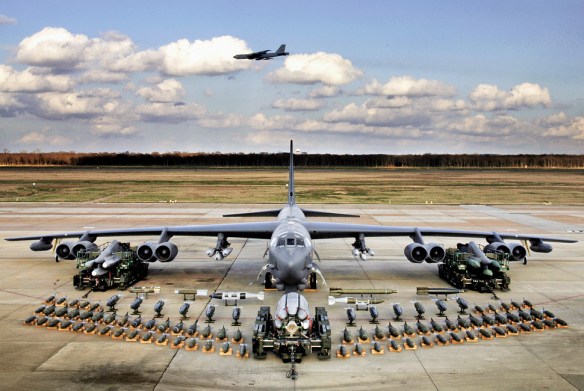
From Michael Yon’s posts, BLUF = Bottom Line Up Front, not to be confused with that ultimate hearts and minds tool, the BUFF:

b-52-bomber-2.jpg

BUFF

A Bridge Too Far?

On Facebook, Michael Yon continues to raise concerns regarding the security on the Bridge near Kandahar that was the target of a suicide bomber attack a couple of days ago, and the disproportionate emphasis given to rear area comforts in the base itself…

Turns out the commander in charge of the bridge is General Daniel Menard (linked inserted by me). Have sent questions to his office. Receipt has been acknowledged. Meanwhile, missions continue to be cancelled due to failure to secure that bridge. While troops were glued to the Olympic Hockey, the enemy was closing in on the real goal: That Bridge.

While some troops were wasting time fixated on the Olympics, 10 minutes away a major target was left vulnerable. If we can persuade the Taliban to play Hockey, or if we can learn to play their sport — Guerrilla Warfare — maybe we can score some points.

Our combat operations have been severely hampered. Confidence in this General cannot be high. If he cannot protect nearby targets of obvious significance, what next?

(to date 79 comments)

Fire the Task Force Kandahar General

Yesterday at 0735 local, a suicide car bomb attacked a US convoy crossing a bridge only about ten minutes from the major base called Kandahar Airfield. The car bomb blew an MRAP off the bridge, killing a US soldier and injuring several others. Another bomb had been planted under the bridge. This bridge is easily defensible and of great significance.

Yet while some troops go weeks or longer with no showers, fighting in rough conditions with no amenities, many troops on this base play hockey or, just the night before, had stopped nearly everything to watch the Olympics. Meanwhile, a bridge of strategic importance sat thinly guarded just minutes down the road. And so now, the bridge is damaged and large military vehicles and fuel trucks cannot use it. There is no reasonable way around.

Today we talk about an offensive in Kandahar, yet there is a General here who cannot guard a single bridge just outside the gate. That bridge is our LINK TO KANDAHAR. Meanwhile, soldiers who are doing six month easy-tours complain about R&R and morale boosters, while many soldiers who serve full-year combat tours don’t take showers.

Why are live bands streaming into here? What is this, an Amusement Park or a War?

That General needs to be fired. Dead weight at the top cannot be tolerated.

(to date 76 comments)

This is interesting…here we have am embedded reporter publicly criticising the Canadian one-star responsible for security around the Kandahar Base. This is the third post on this topic that Michael Yon has made in the last 24-36 hours yet it does not appear that the US forces with whom he has been working have taken much, if any, action to curb his comments. One might wonder if there is a more subtle IO plan being executed here, that the US simply don’t care, or that this is an indication of a new maturity in the US military’s engagement with the information militia, in that they are comfortable with this style of robust discussion as opposed to the more traditional Public Affairs-fed party line…?

The whole Starbucks, Olympics, BK, etc etc issue really begs the question: is this a War, or merely a war….?

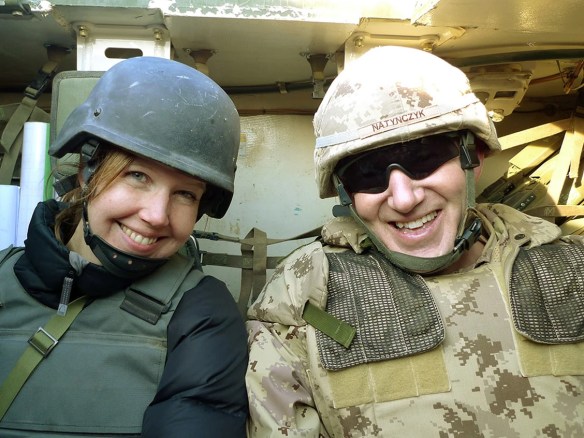
Calgary Herald journalist Michelle Lang with Chief of Defense Staff Walt Natynczyk in a military vehicle in Afghanistan on Dec. 25, 2009. Photo by Gary Lunn. Michelle Lang was among the casualties that marked the deadliest day for Canada in Afghanistan since 2007.

In Bing-ing for some more information on BG Menard, I came across an article Death of an Embed on blogs.aljazeera.net…some interesting comments on Canadian involvement in the w(W)ar and the conflict itself… [PDF]

Understanding Islam

Neptunus Lex carries a link to an interesting read [PDF} explaining apparent hypocrisy in the application of Islamic values, specifically “Is it inconsistent for Muslim “holy warriors” to engage in voyeuristic acts of lasciviousness?

It concludes”…in this context, the problem is not Muslims frequenting strip clubs, but misplaced Western projections that assume religious piety is always synonymous with personal morality…

Once again, we need to understand the environment and our adversaries if we ever hope to be able to manage them – not blindly seek to inflict Western culture, values and systems onto environments in which they are alien…

Getting it together?

Afghan police officers and the U.S. soldiers, bottom, gather at the scene of a suicide attack in Kandahar south of Kabul, Afghanistan on Monday, March 1, 2010. A suicide car bomber attacked a NATO convoy Monday outside the major southern Afghan city, killing one NATO service member and four Afghan civilians, officials said. (AP Photo/Allauddin Khan)

On Michael Yon’s Facebook page this morning:

Sad and Sickening: A General Officer should be fired.

This morning, we lost a soldier to a suicide bomb on a bridge just a short drive from this massive military installation called Kandahar Airfield. The bridge, which is important to us, was badly damaged and remains impassable to military traffic. Meanwhile, on this bustling base, under-employed soldiers from various nations crowd around hockey games, live bands, and coffee shops. The damaged bridge is just a bicycle ride away from soldiers who are too busy celebrating Olympic medals to safeguard this bridge. The bridge is so close that I felt the explosion and saw the mushroom cloud. Our mission, and no doubt others, was cancelled because we could not get over the bridge.

The General in charge of security for this bridge should be fired.

Coupled with another attack in Kabul involving NZSAS troops, one wonder if there might not be something to the idea of secondary effects of the surge in Afghanistan?

On ‘science’

Coming Anarchy discusses the ‘science’ of global warming, a topic that has also been slammed by Neptunus Lex. Portable Learner while covering another example of misapplied science, “…In an interview for On The Media, The Lancet’s editor Dr. Richard Horton weighs in on the state of open scientific debate:

We used to think that we could publish speculative research which advanced interesting new ideas which may be wrong, but which were important to provoke debate and discussion. We don’t think that now. We don’t seem able to have a rational conversation in the public space about difficult controversial issues without people drawing a conclusion which could be very averse….The 19th-century days where you could sit in the salon at the Royal Society and have a private conversation amongst your fellows just doesn’t exist anymore. So I think yeah, too much information in this particular case is a bad thing, which seems to go against every kind of democratic principle that we believe in. But in the case of science, it seems to be true.

But it is not. I can’t help but wonder if we had had this conversation, in public, ten years ago when the study was still “speculative research” we may well have averted the flawed decision to publish it in the first place. We need more information, not less, and more inclusive conversations, not narrowly confined to the medical community. The public may well have to engage the medical community in the public space “difficult conversations without drawing a conclusion that could be very averse…

I tend to agree – far better to have the discussion early and draw out all of the available information out to make as informed a decision as possible than to disregard potentially relevant stakeholders and abdicate responsibility what may be perceived as an overly-elite group.

‘The people’ can be really dumb at times…

The Strategist comments on the ignorance and stupidity of those who opted to ignore tsunami warnings along New Zealand’s coast after the earthquake in Concepcion. One might argue that this is only natural selection in action and I might have agreed if it were not for the risks implicit to those who might have to attempt to rescue these losers and to the children they took to the beach with them; at best, it is wasting Police time, at worst, manslaughter. An interesting discussion at NZ Herald here and I wonder if this naivety and complacency is linked to the questions asked in the Timings paper mentioned above? Are we a nation that only learns the hard way…after a punch in the nose…?

People ignore tsunami warning at Mount Manganui. Photo/ Christine Cornege.

A good way of doing business

Peter also has an interesting item on the Byzantine Lessons Learned process…1500 years ago, the Byzantines developed theatre-specific handbooks for each of their current and likely mission spaces…if they could do it then, it really makes you wonder why it appears so hard today. I’ll have more on this when I complete my paper on GEN Mattis’ comments re obsolete thinking.

Progress

I made my first pastry ever yesterday afternoon and my first all homemade pies last night…some tuning still required but very YUM!!!

The plot thickens

The Strategist has released Part III of The Doomsday Machine…this story just gets better and better – I think Peter may be once of those hidden talents about to be discovered…

Holding the High Ground

Travels With Shiloh has a very insightful piece on torture…for me the quote from MAJ Nathan Hoepner says it all…

As for ‘the gloves need to come off’…we need to take a deep breath and remember who we are…Those gloves are…based on clearly established standards of international law to which we are signatories and in part the originators…something we cannot just put aside when we find it inconvenient…We have taken casualties in every war we have ever fought–that is part of the very nature of war. We also inflict casualties, generally many more than we take. That in no way justifies letting go of our standards. We have NEVER considered our enemies justified in doing such things to us. Casualties are part of war–if you cannot take casualties then you cannot engage in war. Period. BOTTOM LINE: We are American soldiers, heirs of a long tradition of staying on the high ground. We need to stay there.

Drop ‘American’ from his bottom line and this statement applies across the Anglosphere.

Dumbing Down

Neptunus Lex carries a disturbing item on a US initiative to reduce the number of common tasks that all soldiers must be capable of doing.. if it is as stated, it represents a major setback for the US Army – the list of tasks referred to is a distillation of lessons learned the hard way since 2003. For a long time it has been clear that there are two parts to US TRADOC – the hard-charging sharp thinkers in Ft Leavenworth and ‘the rest’ who produce bland corporate speak. Unfortunately there are probably those who will latch onto this as an excuse to slash back training, probably based on the false premise that they can always play catch up in PDT. So much for the non-contiguous mission-space and if we are not careful, the training pendulum will swing back to the good old days of the 1990s and the Fulda Gap…

Mattis on thinking

Meanwhile, back at this ranch, I am working up an essay on GEN Mattis’ comments last week on the need to revitalise the American officer corps…unfortunately the weather is too good and the nice folk at ITM Taumarunui dropped off a load of wood for Phase II of the man-cave so I am somewhat distracted…

Mattis: Obsolete Thinking Worse Than Obsolete Weapons

By John J. Kruzel

American Forces Press Service

WASHINGTON, Feb. 19, 2010 – The only thing worse than obsolete weapons in war is obsolete thinking, a top U.S. commander cautioned in remarks on revitalizing America’s military officer corps.

Marine Gen. James N. Mattis, commander of U.S. Joint Forces Command, yesterday emphasized the role education plays in enabling military officers to adapt quickly to strategic and tactical changes they encounter.

“It’s opening the aperture,” he said, describing the value afforded through education. “Once you stretch the mind open, it’s hard for it to go back to how it was before.”

Mattis delivered his remarks at an event hosted by the Center for a New American Security, a policy think tank, in conjunction with a study by the center on improving the way military officers are trained, evaluated and promoted.

“The U.S. military must develop a model that trains and educates officers for the complex interactions of the current threat environment while being agile and versatile enough to adapt to a swiftly changing world beyond,” contributors John Nagl and Brian Burton wrote in the CNAS study published ahead of yesterday’s panel discussion. Mattis underscored the importance of complementing experience operating as part of a coalition on a battlefield with study of history and wars of the past.

“Through education built on an understanding of history and through experience gained on joint coalition operations, and probably commencing earlier in officers’ careers,” he said, “we can create an officer corps at ease with complex joint and coalition operations.”

Mattis stressed the need for a new “strategic reawakening” among military officers, making an apparent reference to the design in place before the U.S. invasion of Iraq in March 2003.

“By setting the problem first and spending a lot of time up front getting it right, you don’t invade a country, pull the statue down and say, ‘Now what do I do?’” he said, in an allusion to the iconic image of deposed dictator Saddam Hussein’s likeness being pulled down by a U.S. military recovery vehicle.

Focusing on the culture of the senior military officer corps, Mattis bemoaned that senior-ranking military members aren’t allowed ample time to reflect critically on important issues.

“I believe the single primary deficiency among senior U.S. officers today is the lack of opportunity for reflective thought,” he said. “We need disciplined and unregimented thinking officers who think critically when the chips are down and the veneer of civilization is rubbed off — seeing the world for what it is, comfortable with uncertainty and life’s inherent contradictions and able to reconcile war’s grim realities with human aspirations.”

First thoughts are that the mind is more like a rubber band – you can stretch it open but if you don’t maintain the tension, it will snap shut again; and as I said in the previous item, there are places like Ft Leavenworth that are already well down this path…


Hoping, wishing, praying…

In More on Risk-based decision making in Homeland security, Dean introduces hope-based decision-making “… Hopefully the most significant threats are the ones you’re already focused on.  As long as they are, you’re ok.  When they aren’t, you stand by…and say to everyone who will listen ‘No one could have predicted this’.”

Remember that time when you were four, and that big plate glass window in the lounge kinda got broken and even though you were the only person in the lounge playing with Dad’s golf clubs, you still hope a whole lot that your invisible friend is going to materialise and take the rap? Fast-forward thirty years to when your boss says ‘we’ will carry the risk – you really hope that he really does mean ‘we’ and not ‘you’? Or that time you decided to invade Iraq and hoped that a. a lot of WMD would turn up really quickly and b. that the UN would get over itself and follow-on with civil aid and reconstruction programmes? Each of these scenarios has three things in common:

You have a nagging feeling how things are really going to turn out.

Those consequences are probably going to hurt.

When you think about it, you really knew better.

This week, Neptunus Lex published an item for aviators The ‘Possible’ Turn which discusses the options available to a pilot when an engine fails on take-off. The commonly held truism is that any attempt to turn back to the recently departed runway is doomed to fail – doom in the worse possible sense of the word – one of those manouevres based more upon hope than physics. Lex argues in aviation speak that this might not actually be the case for a suitably experienced pilot – equipped with an ability to make practical decisions fast. Also in the mail this morning was an article discussing the proposed shift in focus of the PRT in Afghanistan to a more civil focus at a time when surge-inflicted chaos may boil over into other provinces. I wondered about this too In the Ghan.

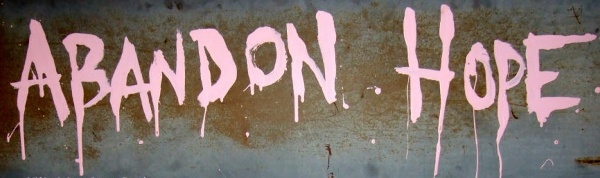
When we established our joint headquarters in 2001, many suggested that each external door should have a big sign ABANDON HOPE ALL YE WHO ENTER HERE. For different reasons, they were probably right: hope has no place in any organisation where lives are at stake.

So why do we do it so often? There are three factors:

Partly it is simple laziness – we’ve always done it like this and it’s always been OK before.

Another part is simply sticking with what we know – after decades of peacetime engagement and peacekeeping, it is difficult to shed that mindset for that necessary for operating in and around a warfighting environment where the threats are very really and unlikely to be assuaged by an umpire with a blue rag tied around one arm.

The third factor is that making good decisions has to be practiced regularly – and that includes being able to quickly sift through all the available information to extract the key points, digest them and then make the call.

Supporting good decisions is a firm ethical and cultural foundation based upon three key qualities:

The Competence to understand the environment and the issues.

The Courage to promote an unpalatable or unpopular line of reason.

The Integrity to see the issue through when the going gets tough.

Regularly we see news items when agents of government at all levels fail to display one or all of these qualities. And every time, the parent agency trots out its Code of Conduct, duly signed by all employees “Hey, look – it’s not our corporate fault!” And why isn’t it ‘our’ fault? Because it’s too hard for the HR Nazis to snap out of their nice objective competencies and consider applying some subjective qualitative assessments on potential recruits? It is interesting to note that those agencies where people are more likely to work collectively as opposed to as individuals are more likely to have a sound organisational ethos and culture – the two that spring to mind immediately are the military and the Fire Service; law enforcement to a far lesser extent because they tend to function as individuals not collective teams (STG, HRS, SWAT, etc being exceptions but only a small percentage of their respective agencies.

But developing, fostering and embedding an ethos and culture based on these qualities into an existing organisation is doable. We’re running an interesting ‘experiment’ here where the new Head of Customs is a highly-regarded former two-star who is doing exactly that. But what he’s brought to Customs is not so much thirty odd years of military experience – it is too easy to fall into the trap that ex-military staff have all the answers; they can have a lot of the problems too – but good old-fashioned command and LEADERSHIP.

So in terms of our discussions regarding decision-making in homeland security, the very first thing that we need to consider is raising the bar of competence. That means introducing more than just training, more than just practicing what we preach; it means that we need to set and conform to some basic standards of performance, weed out those who are more social than team members. I was once posted to a base that is quite isolated and where there was some institutional resistance to being posted there. Most of this was of the “well, everyone says it’s a bad place so it must be a bad place to go” variety and as a result, anyone volunteering to be posted there was usually snapped up. When I arrived, there was some debate raging over this posting policy and after about two weeks on the job, I feel firmer in to the camp of “‘it’s better to have a gap than to fill it with a warm body that does nothing; at least when you have a gap, you know you have a gap and can work around it. When the chair is filled, you keep kidding yourself that the incumbent may one day surprise you and actually do something useful – but it never happens”.

The flip side of competency is training, training that is relevant and current for the job at hand because it takes knowledge to fend off hope – yep, that’s right, Hope, we don’t want you here!! and this is where doctrine, lessons learned, organisational learning, knowledge management and all those other good things come together…to…get the right information…to the right people…at the right time…and ensure that they know what to do with it…

It all comes back to that…

Standing firm

Last week I was asked how I thought one might develop and implement a homeland security agency here. Dean’s initiative with the Homeland Security Round Table this year is proving an ideal catalyst for forming and shaking out those ideas…

In Risky Business, lunghu identifies a key factor in homeland security risk management and mitigation, that of personal self-preservation aka CYA. He also alludes to the flip side of this coin which is the hair-pulling cat-fight whenever there is any credit or praise due. The CYA factor is pure human nature and one of those things that has to be programmed out of people…organisations like the Marines do it especially well at the same time they embed the ethos of the Corps into each and every recruit. It doesn’t always need Gunny Leanin-Mean and a Smokey the Bear hat to do this but the points to take away are

  • that they do it.
  • they believe it is important to do it.
  • that they do it at the very beginning of a recruit’s career in the Corps.
  • those who don’t ‘get it’ are cycled out.
  • they do it as a part of embedding Marine Corps ethos and culture.

This is in stark contract to most, if not all, government agencies where there is little or no effort applied to developing and maintain a formal organisational ethos and culture to mitigate CYA and self-preservation instincts.

Overnight in a place I once worked, a series of  flyers appeared  on almost every vertical surface. I can’t remember the exact words now but they were along the lines of “Imagine how much we could achieve if we cared less who got the credit”. Of course, outrage erupted across the organisation the next morning and various delegations stormed through the new Chief of Staff’s door, demanding he “do something about it!” He responded that he fully intended to otherwise “…it’d be a waste of my time pinning them all up…” There was much gnashing of teeth, tearing of hair and whiny-babying around the coffee machine but he was as good as his word and drove a ‘we, us, ours‘ stake through the ‘I, me, mine‘ heart of that organisation, totally transforming it. Today I still cringe when I hear senior staff launching forth on ‘I, me, mine‘ soap boxes.

One of the fundamentals that feel out of our (←see?) work on COIN doctrine in the last few years is the importance of a well-embedded individual and collective culture and ethos across the organisation. When the heat is on in the real world i.e. on a broader front that purely ‘on operations’, we find that time and again the real driver behind a decision is not the formal consequences for any particular action e.g. the full force of The Law, be it civil, DM 69, UCMJ or other authorities; all the more often the driver behind a decision is the personal ethos of the individual. There are those who ethos will take them down the comfortable expedient path of least resistance; there are others who will take a stand. I think it was in Lucifer’s Hammer that Jerry Pournelle wrote “…the hardest decision is usually the right decision…

A number of years ago, some rocket scientist decided that Police didn’t need commanders, it needed managers. Fair enough you might think after looking up the Oxford English definition of ‘manage’, and so all Police district commanders became district managers. One day, the hard working Police officers in one such ‘managed’ district decided they had enough evidence to raid a suspected drug operation in the back blocks. To be successful, they needed helicopter support…but…it was getting near the end of the financial year and district managers had been promised a hefty bonus if they ended the year a certain percentage under their budgets.  So “…sorry, lads, can’t approve any choppers for this op…” The ‘lads’ however, being resourceful and highly PO’d with the concepts of management, arranged for a neighbouring district, still flush with $, to provide the necessary helicopter support – apparently there was some greyness regarding district boundaries – so the operation could proceed. It was a massive success and the ensuing media coverage brought out some interesting side stories…needless to say, Police here now have district commanders again…

Every organisation already has an ethos and a culture but they might actually be working against the aims and objectives of the organisation, in the manner that lunghu describes and others. Ethos and culture is a little more than signing off on the corporate code of conduct. At the very least, that code of conduct needs to be relevant to the organisation and practical in its application. It is more than anti-harassment, health and safety, and equal rights. To hit it with a very broad bat, it is ‘doing the right thing‘, standing firm under adversity. While that may mean a great many things to a great many people (including both readers of this blog), knowing where the delineation between personal and organisational interests lies is a good start point.

At Travels with Shiloh, Dean goes (IMHO) a little over the top in his initial comments on Accepting Risk the other day – if only he knew how worried I was that I might not make the grade for Round 1 of the HLS Round Table discussions. I always felt we were pretty much on  a par with each other and one of the reasons I added Travels with Shiloh to my blogroll was that I thought it set a standard for me to aspire to.

Anyway, Dean identifies another weakness in the current US HLS structure: in order to share in the post of federal gold allocation to HLS, many agencies, especially those that are smaller and less-resourced, have to proclaim a disproportionate degree of interest in big picture HLS issues. I’m reminded of the scam perpetrated in The Closer when, in order to keep all the detectives in the team to investigate homicides (real now problem) the team have to take time out to train in various counter-terrorism functions (may be, one day possibility). I’m sure that this was not pure fiction and also that it was not based upon an isolated incident.

I think it was Peter Drucker who said (possibly in On Management) that organisations should stick to their core functions: for example, churches should focus on saving souls and less on social services; the military should focus on ‘winning our wars’ and not upon saving troubled youth from themselves (unless said youth can make it through the recruiting process); lawyers should focus on the law and less on accountancy (might keep a few more of them from going behind bars too!), etc etc. Most of the agencies that make up the vast conglomerate known as HLS are pretty good at their core functions, not perfect perhaps but adequate. One might ask then what value HLS the actual organisation actually offers to either the individual agencies at one end of the scale or overall homeland and national security at the other?

I’m saving Dean’s comments re hope-based decision making for another post as it is  a good point but one which I’d like to tie into some other work.