Standing firm

Last week I was asked how I thought one might develop and implement a homeland security agency here. Dean’s initiative with the Homeland Security Round Table this year is proving an ideal catalyst for forming and shaking out those ideas…

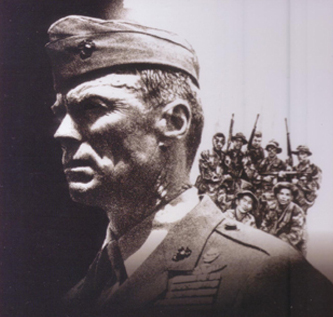
In Risky Business, lunghu identifies a key factor in homeland security risk management and mitigation, that of personal self-preservation aka CYA. He also alludes to the flip side of this coin which is the hair-pulling cat-fight whenever there is any credit or praise due. The CYA factor is pure human nature and one of those things that has to be programmed out of people…organisations like the Marines do it especially well at the same time they embed the ethos of the Corps into each and every recruit. It doesn’t always need Gunny Leanin-Mean and a Smokey the Bear hat to do this but the points to take away are

  • that they do it.
  • they believe it is important to do it.
  • that they do it at the very beginning of a recruit’s career in the Corps.
  • those who don’t ‘get it’ are cycled out.
  • they do it as a part of embedding Marine Corps ethos and culture.

This is in stark contract to most, if not all, government agencies where there is little or no effort applied to developing and maintain a formal organisational ethos and culture to mitigate CYA and self-preservation instincts.

Overnight in a place I once worked, a series of  flyers appeared  on almost every vertical surface. I can’t remember the exact words now but they were along the lines of “Imagine how much we could achieve if we cared less who got the credit”. Of course, outrage erupted across the organisation the next morning and various delegations stormed through the new Chief of Staff’s door, demanding he “do something about it!” He responded that he fully intended to otherwise “…it’d be a waste of my time pinning them all up…” There was much gnashing of teeth, tearing of hair and whiny-babying around the coffee machine but he was as good as his word and drove a ‘we, us, ours‘ stake through the ‘I, me, mine‘ heart of that organisation, totally transforming it. Today I still cringe when I hear senior staff launching forth on ‘I, me, mine‘ soap boxes.

One of the fundamentals that feel out of our (←see?) work on COIN doctrine in the last few years is the importance of a well-embedded individual and collective culture and ethos across the organisation. When the heat is on in the real world i.e. on a broader front that purely ‘on operations’, we find that time and again the real driver behind a decision is not the formal consequences for any particular action e.g. the full force of The Law, be it civil, DM 69, UCMJ or other authorities; all the more often the driver behind a decision is the personal ethos of the individual. There are those who ethos will take them down the comfortable expedient path of least resistance; there are others who will take a stand. I think it was in Lucifer’s Hammer that Jerry Pournelle wrote “…the hardest decision is usually the right decision…

A number of years ago, some rocket scientist decided that Police didn’t need commanders, it needed managers. Fair enough you might think after looking up the Oxford English definition of ‘manage’, and so all Police district commanders became district managers. One day, the hard working Police officers in one such ‘managed’ district decided they had enough evidence to raid a suspected drug operation in the back blocks. To be successful, they needed helicopter support…but…it was getting near the end of the financial year and district managers had been promised a hefty bonus if they ended the year a certain percentage under their budgets.  So “…sorry, lads, can’t approve any choppers for this op…” The ‘lads’ however, being resourceful and highly PO’d with the concepts of management, arranged for a neighbouring district, still flush with $, to provide the necessary helicopter support – apparently there was some greyness regarding district boundaries – so the operation could proceed. It was a massive success and the ensuing media coverage brought out some interesting side stories…needless to say, Police here now have district commanders again…

Every organisation already has an ethos and a culture but they might actually be working against the aims and objectives of the organisation, in the manner that lunghu describes and others. Ethos and culture is a little more than signing off on the corporate code of conduct. At the very least, that code of conduct needs to be relevant to the organisation and practical in its application. It is more than anti-harassment, health and safety, and equal rights. To hit it with a very broad bat, it is ‘doing the right thing‘, standing firm under adversity. While that may mean a great many things to a great many people (including both readers of this blog), knowing where the delineation between personal and organisational interests lies is a good start point.

At Travels with Shiloh, Dean goes (IMHO) a little over the top in his initial comments on Accepting Risk the other day – if only he knew how worried I was that I might not make the grade for Round 1 of the HLS Round Table discussions. I always felt we were pretty much on  a par with each other and one of the reasons I added Travels with Shiloh to my blogroll was that I thought it set a standard for me to aspire to.

Anyway, Dean identifies another weakness in the current US HLS structure: in order to share in the post of federal gold allocation to HLS, many agencies, especially those that are smaller and less-resourced, have to proclaim a disproportionate degree of interest in big picture HLS issues. I’m reminded of the scam perpetrated in The Closer when, in order to keep all the detectives in the team to investigate homicides (real now problem) the team have to take time out to train in various counter-terrorism functions (may be, one day possibility). I’m sure that this was not pure fiction and also that it was not based upon an isolated incident.

I think it was Peter Drucker who said (possibly in On Management) that organisations should stick to their core functions: for example, churches should focus on saving souls and less on social services; the military should focus on ‘winning our wars’ and not upon saving troubled youth from themselves (unless said youth can make it through the recruiting process); lawyers should focus on the law and less on accountancy (might keep a few more of them from going behind bars too!), etc etc. Most of the agencies that make up the vast conglomerate known as HLS are pretty good at their core functions, not perfect perhaps but adequate. One might ask then what value HLS the actual organisation actually offers to either the individual agencies at one end of the scale or overall homeland and national security at the other?

I’m saving Dean’s comments re hope-based decision making for another post as it is  a good point but one which I’d like to tie into some other work.

Accepting risk

Who hasn’t heard this answer to a curly question “We’ll carry the risk“? Yeah, that’s nice but who’ll be accepting the responsibility?

Introduction

This is the first in a series that will progress throughout 2010. The idea comes from Dean at Travels with Shiloh who has invited a group of commentators to discuss the twelve questions asked in this article Changing Homeland Security: Twelve Questions From 2009 from the Homeland Security Affairs Journal (HSAJ). Yours truly is one of those privileged to be invited to contribute to this discussion.

The first question is Why is it so difficult to make risk-based decisions in homeland security? Other contributions on this question so far are:

Risk based decisions in homeland security issues

I’ve been working on this for over a week and, to be honest, have really struggled with it. What follows is still tortorously prolonged but I’ve left it ‘as is’ to show the process by which I got to the answer. In a couple of weeks, I will rework it into something a little more coherent.

Defining the question

Before launching into discussion on the topic at hand, I first thought it would be an idea to define my interpretation of the terms in the question.

  • Difficult is the opposite of easy although it may be more correct to swap out ‘difficult’ for ‘simple’ and the degree of difficulty is directly linked to the level of complexity now common in such equations.
  • I cast the net pretty wide to define risk-based decisions. Although there were few, if any, military or HLS examples in first 100 hits when I searched ‘risk-based decisions’ on Bing; the most common seemed to those relating to auditing, insurance, health and event management. There was enough material there for me to comfortable with the R = T x V x C; Risk is the product of Threat, Vulnerability, and Consequence equation in the original HSAJ article.
  • Homeland Security is very much a US term with specific definition, membership and connotations. For our more global audience, I am using ‘HLS’ as the collective grouping of domestic, i.e. non-expeditionary,  military, security, intelligence, law enforcement, and emergency management agencies. I don’t believe that the establishment or not of an overarching agency like HLS affects the decision making process either way.

The Question

My first thought is whether it is actually difficult or, as implied in the question, if it is correct that risk-based decisions are not being made in homeland security. I would argue that they actually are, across our nations, thousands and thousands of them daily.

One approach I have found very useful when working through issues relating to the Contemporary Operating Environment (COE) by establishing a comparison with the more traditional and conventional environment that many of us are still more comfortable with or in.

If we were gearing up for yet another defence of the Fulda Gap at the operational level or even analysing intentions at the state on state level, such assessments are relatively simple and we still get them wrong with monotonous regularity, as Argentina found soon after taking Port Stanley in 1982, and Saddam found after reclaiming Kuwait in 1990. Characteristics of assessments at this level and in this environment might include:

  • Limited number and type of threats.
  • Gradual build-up and lead-in indicators.
  • Motivators/catalysts are usually understood strategies, policies and philosophies.
  • Most players are known values.
  • Big hands, big arrows, small maps.
  • Platform-based i.e focused on tracking ships, units, and formed groups; less focus on personality than major capability.
  • Unified organisations on both sides.
  • Geographic areas and boundaries are well defined.
  • The three organisational functions/groups derived from Clausewitz (people, leadership, action arm) are clearly defined and visible.

‘Simple’ as used in the paragraph above does not necessarily mean easy, just less complex in comparison to today’s environment.

Compare then this model against that faced in the HLS environment. The most obvious change is that we now need to track individuals a la the Scheiern model, not just those that we know might be players or even those who might be, but also those who might just have had a bad day, or just have had ‘enough’. The most recent example of this might be the shootings in Ft Hood and Seattle last year. Although some commentators immediately heralded the Ft Hood incident as the beginning of a domestic 4GW campaign, there has been no evidence to support such claims. Both incidents instead are illustrative of both the unpredictable and micro natures of the domestic environment.

HLS organisations are also not formed and formal organisations like the DoD, NATO, or even the Warsaw Pact. At best it is a bureaucratic umbrella sitting over a diverse collection of agencies all with their own priorities and outputs, and generally very tactically focused. Certainly there is not the same degree, not even a hint thereof, of the command and control arrangements to be found in a single agency in its own right or a large organisation like the DoD with defined roles and responsibilities

Mix in with this nature’s fickleness, for example, earthquakes in Haiti, bush fires in Australia and snow in the Washington DC area. Although the probablity of such incidents is a given, assessment of incidence and severity leans more to the arcane than the scientific: for now, Poughkeepsie Phil probably remains our best indicator for seasonal change.

To use a household analogy, you used to have three dogs and a couple of cats that normally got on with each other. The causes of discord were well-known and it wasn’t too much of a task to prevent major conflict. Then Great Aunt Anastasia dies and left you her ant farm and  ‘tame’ wasp hive; for various reasons, and as tempting as it is at times, investing in a couple of gallons of Raid is not a socially acceptable option. You’re stuck with it. You’re not impressed, the dogs and the cats aren’t impressed, and most likely the ants and wasps aren’t that thrilled either. Oh, and the boiler’s sprung a leak, taxes have just gone up, and old Mrs Grey next door has just lopped off her leg with a chainsaw. Welcome to the world of homeland security – please start your risk-based decision-making process HERE.

HLS as an entity will always find it difficult at best to conduct risk assessment as we and Third Shock Army (8th Guards for some folk) understand them from the Fulda Gap. But that is not to say that risk based assessment does not occur daily across the spectrum of homeland defence in law enforcement, emergency response, security and intelligence fields. I doubt that there are any agencies under the homeland security umbrella where the staff just sit back, bite into another donut, sip on their lattes and just wait around for something to happen. Just because it doesn’t happen in the comfortable macro format that many of us are used to, doesn’t mean that it doesn’t happen…it just happens at the micro level necessary for these agencies to fulfill their primary roles

At that’s the thing, most homeland security agencies have local or regional responsibilities and meeting these is their main priority. Unlike perhaps military organisations which generally devote a reasonably large proportion of time and resources to things that might happen, most HLS agencies are fully committed to meeting real-time outputs like catching bad guys, saving lives, fighting fires and rescuing kittens (think that last one isn’t important? – try telling that to old Mrs Smyth and still keep ‘the people’ on side). Most of them do this well.

Their world may be too complex for precise prediction but something else they also do well is respond. Within those contingencies that they know from past experience are most likely, these agencies can and do turn out and perform credibly thousands of time every day…and against these contingencies there is quite robust risk-based assessment and decision-making…why do police surge for New Years Eve activities, firejumpers have winter leave and paramedics specific tools and treatments over others? These people think, with some justification, that they are quite good at such decisions within their respective areas of expertise and responsibility.

Where they are weaker perhaps in in working and interfacing with each other beyond local relationships, especially where there may be issues of command and control or jurisdiction. HLS is never going to be the uber-C2 construct that DoD is – I think that FEMA perhaps tried this and we all saw how well that worked. Where HLS might begin to add real value is in championing the interoperability cause and facilitating communications, cultural awareness and information sharing between agencies.

An interesting insight from the 2004 Manawatu flooding (look it up – it made the top ten natural disaster list for the year) is that the civil defence plan went out the window only 30 seconds after the state of emergency was declared. BUT the value of the plan was in the planning; in bringing the various agencies together prior so that at least key staff had met, there was a general awareness of potential resources, and an awareness of issues from other perspectives. We saw the same again when the Mt Ruapehu lahar (finally) went in 2007. The event itself was almost anticlimatic because all the agencies involved (none of whom could agree on the probability or severity of the lahar happening) had been required to hammer out their difference and develop a collective response to the threat.

Where risk-based decisions really are difficult in HLS is on the terrorism side of the house. This won’t be news to Europeans, most of whom have endured domestic and/or third-party terrorist acts on their territory for decades. Terrorism itself is still subject to the same variables of complexity and uncertainty found across the HLS functional spectrum. What changes with terrorism is the false assumption that terrorist attacks can be prevented and the resulting pressure upon to HLS make this so. King Canute might offer some topical observations on this after his seashore experiments went wrong.

The Answer

The R = T x V x C equation for risk-based decision making is of little value so long the only acceptable answer is zero. Risk based decisions are made thousands of times every day in HLS – we’re just not interested in the answers. Perhaps the question that should have been asked is not Why is it so difficult to make risk-based decisions in homeland security? but When will we learn to accept risk in HLS?

To the stars…

@ The Geek, John Birmingham lashes the global warming denial crew i.e. the big business that stands to lose so much if unrestrained pollution and reliance on fossils (from under the ground and in office) continues unchecked. Money talks and twice as loud when Al Gore is the leader of the opposition. To paraphrase Barnesm’s comment “…this way of life is unsustainable, but after millions of years of evolution and hundreds of years of science and engineering the best we can come up with is “Ride bicycles everywhere, grow and eat only local vegetarian food and essentially go back to living like we did before the industrial revolution”. This is not how you build a star spanning civilisation…” Barnesm goes on to list some technologies that they think could advance both the global warming cause and that of general civilisation. You’ve got to admit, we have become a bit stagnant and stuck in the rut over the last two to three decades…a little too focussed on the now and not the future…if I was to classify myself (while still able to tell you stuff without self-terminating), it would probably be as more a technological utopiast than a ‘grow more veges’ sort of greenie…

At the Chief of Army’s Seminar at Massey last year (note that the Massey site has a ‘less is less‘ approach to pushing information out – hardly doing its bit to win the information battle) , Dr Adrian Macy, the NZ Ambassador for Climate Change,  spoke on New Zealand’s approach to global warming in the international arena. The question that only popped into my head on the drive home afterwards, and noting that this presentation was at a defence forum, was “At what stage might we need to start considering compelling compliance with global warming accords?” Perhaps the NZDF might consider what part it may play in actively saving the planet… After all, we do only have the one…

Had more to say but it’s a beautiful day outside already so I’ll be back later – off now to flea bomb the house, let the goats and sheep loose on the back garden (fitted, of course, with state of the art methane filters), spray more buttercup, and mow the front lawns…

In the ‘Ghan

NZ troops in Kabul – the soldier on the left is correctly dressed in issue Special Operations sunglasses.

The NZ news media has covered itself in glory again – NOT! When will they learn that sensationalism and short-term rating gains actually have real effects on peoples lives. I refer of course to the NZ Herald’s publication of images showing NZSAS VC winner, Willy Apiata, on the job in Kabul in the aftermath of the Taliban attacks on Monday. Because you can, because Cpl Apiata is already newsworthy, or because someone else will do it anyway are not adequate reasons – they are weak excuses.  The images in question portray a soldier nothing like the clean-shaven well-groomed soldier portrayed in the media at the time of his VC investiture. Even the fact that he is in-country is not for the NZ Herald or any other national media to trumpet to the world. It’s my understanding that the NZDF goes to great lengths to educate media agencies – with considerable success – on what the Defence Force does and, perhaps more importantly, WHY it does some things so the Herald doesn’t even have a defense of ignorance. This is media ignorance and corporate arrogance at its worst. If the Herald had any product worth boycotting, I’d boycott it but will have to satisfy myself with flicking them the finger.

It is significant however that  the NZSAS have been noted as key players in repelling the Taliban attacks in Kabul and I think this goes a long way to getting New Zealand some serious street cred (outside the Spec Ops community) as for-real contributors in Afghanistan. Although NZ has deployed Special Forces to Afghanistan on several occasions, their activities are, for good reason, kept behind an opsec shield. The first real inkling that the New Zealand public had of the level and intensity of their activities in Afghanistan was Willy Apiata’s VC citation in 2007. This street cred is possibly even more important due to recent proposals to draw down the number of troops in the Provincial Reconstruction Team (PRT) in Bamiyan province

The Government is working on an exit plan to pull all New Zealand troops out of Afghanistan.

Dr Mapp visited the Provincial Reconstruction Team in Bamiyan, and said he believed New Zealand had made the right decision in drawing down its troops. He said the province was making good progress.

The PRT will soon begin its transition towards an increased civilian component, in line with the Cabinet decision of 10 August. It is clear that Bamiyan is ready for the next stage of economic development.

Is the attack in Kabul a ripple effect of the surge – a sign of the Taliban adopting Whac-a-mole tactics as a counter-measure against the surge in the south of Afghanistan i.e. of popping up and dropping back into their holes before ISAF can reconfigure? Is this attack  taking the war to where the surge isn’t…

Hit a Gopher. Click the green ‘Start’ button at the bottom right, then get ready to whack the gophers by clicking on them when they stick their heads out of their holes. Miss 5 gophers, and the game is over!

Hit a Gopher is the equally addictive and frustrating online version of Whac-A-Mole. “If the player does not strike a mole within a certain time or with enough force, it will eventually sink back into its hole with no score. Although gameplay starts out slow enough for most people to hit all of the moles that rise, it gradually increases in speed, with each mole spending less time above the hole and with more moles outside of their holes at the same time. After a designated time limit, the game ends, regardless of the skill of the player. The final score is based upon the number of moles that the player struck.”

‘Jesus’ sights

You try and you try and you try…but nutjobs exist on all sides – you really have to wonder what sort of fundamentalist takfir arrogance exists in Trijicon management to so arrogantly and blatantly cast marking with clear Christian connotations on each and every one of their products – does some guy in their PR department also moonlight as a cartoonist for the Danes?? How would we take it if every barrel of crude (yes, I know it doesn’t really come in barrels) we imported from the Gulf was tagged ‘Death to the Great Satan and all his friends‘? Of course, no one, including NZ, is going to withdraw their ACOG sights despite demands from other nutjobs that this occur – one almost wonders if Trijicon is batting for the other side as home goals like this are too good to be accidents…

2 Peter 1:19 — “And so we have the prophetic word confirmed, which you do well to heed as a light that shines in a dark place, until the day dawns and the morning star rises in your hearts.”

John 8:12 — “When Jesus spoke again to the people, he said, ‘I am the light of the world. Whoever follows me will never walk in darkness, but will have the light of life.’”

Kriss Super V

Paper Replika has just released the Kriss Super V – no subtle divisive inscriptions on this baby although who would blame them if they did…?