Weekly Photo Challenge: Tiny

It's big but made up of tiny...

…lights…lots and lots of tiny little lights that form a dazzling night-time light show on the canopy of Fremont Street in Las Vegas...this week’s WordPress photo challenge

I’ve enjoyed revisiting Las Vegas – it’s been about 23 years since I was last here and it’s sure changed somewhat…it’s been a fairly intense week and I am looking forward to a slow day tomorrow when I hit the road (air actually) for the next leg…I’ve been on my own tonight as the rest of the team here this week has already bomb-burst and, to be honest, I don’t find Vegas much fun on my own…

These challenges become a little more challenging when I am on the road without access to our photo library at home…but also an incentive to get out of the square to come up with something…I’m still determined not to miss a challenge…

Weekly Photo Challenge: Red

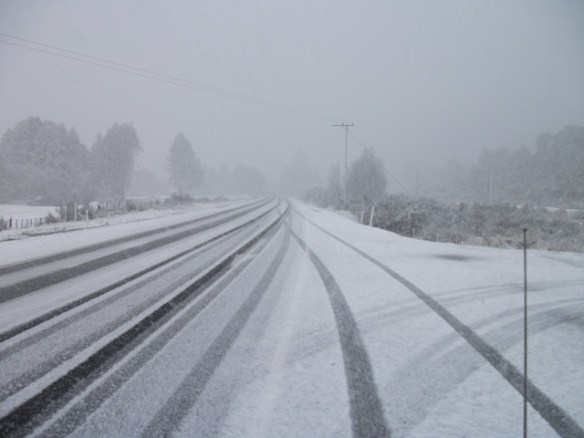
This is where I was going....

…one lovely spring morning…and this is where I came from…

I’d left home no  more than fifteen minutes before, this late September morning and there were just a very few snow flakes drifting lazily in the breeze as I closed the gate behind me, not an uncommon occurence when it is snowing on the Mountain and normally nothing to really worry about…we’re aboput 50 metres below the snow line normally so don’t get much actual snow…

By the time I got to National Park, about 5 kilometres up the road there was a layer of solid but very slushy snow over the road…again normally not to much to worry about at the time of year…and, anyway I was able to follow behind a couple of large trucks that broke it all up…but by the time I got to Pokaka, where I stopped for these pictures, it was snowing quite heavily…hmmmm, what to do? To go back through the snow is as far as pushing through…let’s push on I thought, as the lesser option of the dilemma and certainly one preferable to parking up where I was and sitting it out which would have been an overnighter!!

So away I crawled through the snow at about 15 km an hour, managing to stay in the troughs the trucks ahead of me had left, even though they were filling quickly. I’d just entered the first curve of the ZS-bend between the Pokaka and Horopito Straights when I spun 90 degrees across the road…

So what, you may ask, does any of this have to do with this week’s WordPress Photo Challenge theme of ‘Red‘? Well, you see, I was driving Li’l Red who’s life was about to get interesting…

Ouch!!

In spinning out, I had managed to stay in my own southbound lane albeit was 90 degrees across it – no worries I thought as it was unlikely that there was any traffic coming up behind me as the road gates at National Park would have already been closed…no sooner had I thought when this old guy comes toddling around the corner, heading north: he sees me (NOT blocking his lane!) and jams on his brakes…in the snow…the thick slippery snow…Of course he locks up and as Murphy would have it (no other way), slipped out of his lane into mine. All I could do was watch as he slid towards Li’l Red and braced for the impact.

How lucky can you be? Just before he struck, he got just a little traction crossing some of the truck tracks which slowed him just a little before he crunched into Li’l Red – fortunately just between the rear edge of the passenger door and the wheel well but jamming neither. I hopped out – in my so not practical office shoes and skated around make sure he was OK, and then to swap details. He’d had a bit of a fright and wanted to have a chat but all I wanted to do was get lined up again and head south before I became a resident…I suggested he might want to head south as well, not being in a  4WD or anything useful and noting the amount of snow that would have come down since I left National Park but no, he had to get to where he was going so away he toddled…

With some difficulty I manged to swing Li’l Red south and crawl south til the road cleared by the turn-off to ‘Kune although I took the discretion option and headed south via the Paraparas rather than display too much faith in the Council’s ability to keep the Waiouru road open…so that’s what white snow has to do with RED….

Weekly Photo Challenge: Wildlife

1 December 2009…was watching TV one wet-ish afternoon and turned around to see Bambi checking out the vege garden…two kinds of fortunate: firstly, that I had the camera in my hands good to go, and second, nothing in the garden particularly attracted him otherwise he would have ended up in closer proximity to a number of vegetables in an oven bag…

This weeks WordPress Photo Challenge

Totally wild, Bambi would just wonder in from time to time…have a nosey and wander off…he was a treat for city folk staying at the Chalet who would often discover him on the front lawn on misty mornings…haven’t seen him for almost a year now and suspect he got poached from across the fence…

So you want to run an air campaign…?

The aim of this week’s seminar is to evaluate, ‘what is an air campaign?’ There is an argument that there is no such thing. The term is a modern one: it was a strategic air offensive against Germany, not an offensive air campaign. But our aim is to try and discern what actually is involved in mounting an air campaign. Clearly it is a lot more than highly trained young people operating very expensive pieces of equipment.

The task for this week is different to the other seminars as it is not a set of questions.

 Task

You are sitting in your office and your superior drops in. You are informed that a non-military group is visiting your workplace to gain a better understanding of the military. Your boss recalls nominating you for the Advanced Air Power Course and tasks you to contribute by providing a brief on air power.

Your boss directs you to prepare a paper on what you believe to be the elements of an air campaign, the planning factors involved and why you think that these considerations are important. Your boss does not want a detailed written brief. A short, dot point brief will suffice.

More correctly, perhaps, the air component of the joint campaign…? There is less planning for an air campaign per se than there are air-specific aspect of planning for the campaign – but these sit a fair way down the planning food chain…thus the key elements of an air campaign are largely those for a campaign…so what might those elements be…?

My boss says I’m not allowed to play with bullets but here goes…

·         Why are we here? What does the Government want from our involvement? There is often a big difference between that which is publicly stated and the effects actually desired.

·         How are we going to do that? This leads to developing various courses of action to achieve the desired effects.

·         What will define our point of exit, i.e.  measures of success or otherwise? To quote Princess Leia from the original Star Wars “When you broke in here, did you have a plan for getting out?

·         Are we leaders or led?Are we sending a self-sufficient force or discrete capabilities to support others?

·         What/who will we use to do it? This is a natural product of developing the ‘how’ above.

·          Who will we be working with and what issues arise from that, and more so in ad hoc coalitions? Is there a lead nation? Do we subscribe to their (or compatible) doctrine? Who arbitrates the differences?

·         How will we meet our sustainment leads? Always a good topic to consider prior to departure and to burst any assumption bubbles?

·         When do we have to be there?

·         Are we ready for this? Or do we need a build-up period to achieve an operational level of capability for this campaign?

The answers to these questions provide the framework which is fleshed out and developed by the layers of detail questions that follow…leading to a campaign plan Within the campaign plan will be specific lines of operation dedicated to achieving specific effects and this is where specifc environmental (air, land, sea, SF, etc) roles and tasks are developed. The detailed planning of specific air tasks lies under the heading of ‘Conducting Air Operations”….

Weekly Photo Challenge: Round

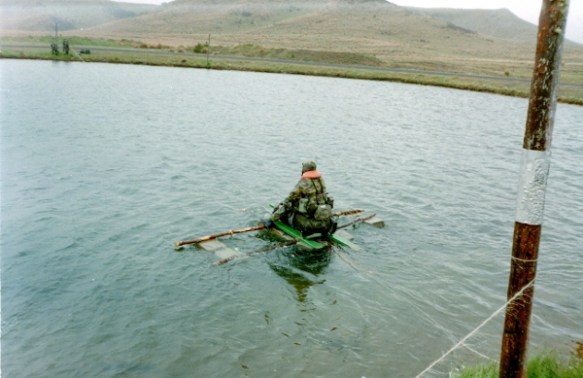
Why go a-round, when you can go a-cross?

This week’s WordPress photo challenge…Tank Pond, Waiouru…November 1992…it’s meant to be summer but you wouldn’t have known it at the time…

Weekly Photo Challenge: One

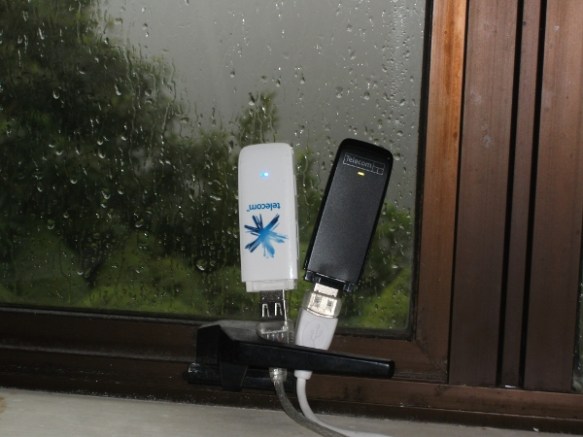
One of the world’s great mysteries…why two technically-identical Telecom T-Stick mobile modems can disagree totally with each other whether there is or is not a usable network signal…blue is yes, yellow is no…

This week’s WordPress Photo Challenge….

…the view today is not much better either as winter rolls in….

Getting it right

In regard to Vietnam, it is too easy to focus on the perceptions of ultimate failure without understanding what the conflict was about from all protagonists’ points of view, and to ignore what actually worked which was an awful lot of it. Vietnam offers some great opportunities for ‘Yank-bashing’ but in reality, it was a learning experience for all the nations involved.

Did the air war over Vietnam suggest a ‘best practice’ for the employment of air power?

Yes and in so many areas. All of the following capabilities today owe their current ‘best practice’ to the Vietnam air war:

  • modern air-to-air combat;
  • Combat Search and Reascue (CSAR);
  • aerial casevac and AME;
  • fixed- and rotary-wing gunships;
  • use of maritime patrol aircraft overland;
  • fixed- and rotary-wing air mobility;
  • Suppression of Enemy Air defences (like we would want to suppress friendly air defences) SEAD;
  • airborne C2;
  • Close Air Support (CAS);
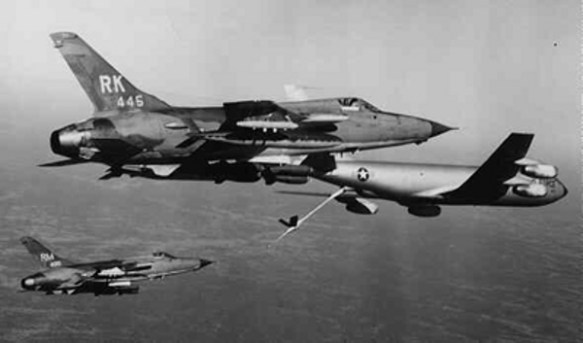
  • air-to-air refuelling;
  • aerial special operations and support to COIN;
  • Intelligence Surveillance Reconnaissance (ISR);
  • UAVs;
  • precision strike;
  • Air-Land Integration;
  • airfield ground defence.

I may have missed one or two minor capabilities but the development of best practice, which lies predominantly at the tactical and operational levels, is largely separate from the outcome of the conflict, certainly from victory. In fact, it might be said that the best catalyst for learning is a good punch in the nose.

Curtis Le May said he could have ended the Vietnam War inside two weeks. Do you think this was possible?

Without a doubt. Le May was a strategic thinker and it is unlikely that he was only thinking in terms of targeting only North Vietnam. The two key enablers for North Vietnam’s war effort were the Soviet Empire and China and Le May would have been considering what things they might hold more dear that sponsoring a sideshow conflict in Indochina. This is not to say that he would propose physical attack on either nation or its assets but certainly the big stick might have been waved in other geographic and political areas. This was the time of Eisenhower’s and Kennedy’s nuclear brinkmanship over Matsu and Qemoy, Berlin and Cuba.

Having said that, there has never been any doubt that the USAF and USN could have shut down the flow of ALL military aid into North Vietnam in a week: North Vietnam only has a very small number of ports and railway links through which this aid travelled and these were always off-limits to the campaign that was conducted. Without the external war aid, ranging from AK-47s to SA-2s, coming in by ship and rail, North Vietnam would have had little more than moral support to provide its forces in the south.

What do you think are the essential conditions for an interdiction, denial campaign to be successful? – and – were they met in the Vietnam War?

There are four key conditions to a successful air interdiction campaign:

  • political will,
  • clearly defined objectives,
  • knowing what to strike,
  • having the means to strike.

Only the latter two were consistently present in Vietnam until the Easter ’72 invasion and LINEBACKER II campaign at the end of the same year. Note, please, that both campaigns were successful…go figure…

The interdiction campaign was at the operational level while along the Trail and in South Vietnam itself tactical actions were conducted daily to constrain the flow of reinforcements and supplies to anti-government forces. If the operational campaign was successful, then the tactical actions would have been less challenged. It may also have meant that it would have been less necessary to conduct airstrikes into Laos and Cambodia, especially since North Vietnam’s ability to influence and intimidate those governments would have been reduced by a successful campaign north of the DMZ.

In considering current events, the current sham of a campaign in Libya only meets one of the four criteria, that of being able to hit things with a hammer…

Is it true to say that the Vietnam experience represented a massive failure of air power?

As per my response to the first question, not even.

Not only were most aspects of airpower employed well, many were developed and taken to a much higher level throughout the war. To fixate on one aspect of the air war, a relatively small one in the timeline when the various bombing halts are taken into consideration, and based on that one aspect, declare the whole campaign a failure of air power is grossly over-simplistic.

Was air power unduly restricted by political considerations?

Yes and this has been well documented since the end of the war. This is not to say that a strong political will in the White House would have led to a victory for South Vietnam as there are no guarantees in war, and less so in the complex environment that was post-war Indochina.

Johnson was an internalist, not an internationalist like the four Presidents before him and Nixon after him. Like Barack Obama, another internalist, he inherited a war he neither started nor wanted or cared about. Surrounded by senior advisors who understood systems but not politics, and who personified Eisenhower’s warning against the ‘military-industrial complex’, Johnson took it upon himself to personally run the air war bypassing his air power professionals. Unfortunately, this is nature of the military beast in most western nations where the military is subordinate to civilian control. All we can do is educate…or go start a junta in South America someplace…ours not to question why…

We can see another example of political considerations affecting the application of air power in the way that the false lessons of DESERT STORM led to the false perception that a similar approach would bring the Serbs to heel; and again in Iraq and Afghanistan where SECDEF Rumsfeld favoured the use of air power over the use of ground forces.

Coming soon

I think it’s safe to say that there are many people who openly dislike “Transformers 2: Revenge Of The Fallen.”  And, after sitting with him for a half-hour yesterday to talk about the third chapter in the giant robots franchise, I’d say Michael Bay is one of those people.

So opens Drew McWeeny’s sneak preview of Transformers: Dark Of The Moon…I’m probably not in the ‘openly dislike’ proportion of Revenge of the Fallen fans but certainly I think it could have been a lot more than Transformers Do Night At The Museum And Then Wreck Egypt (like it needs help from massive robot aliens…Facebook seems to have done the job quite nicely, thank you very much) so, yes, I am expecting great things from Michael Bay’s ‘apology’…the guy who brought us Armageddon – one of my all time top 10 movies (bring it on, doubters!!) has set a high standard that he has yet to surpass…

Also in the works as a possible redemption effort for the first remake movie is Rise of the Planet of the Apes

“Rise Of The Planet Of The Apes” will be in US theatres 5 August 2011.

I actually quite enjoyed the Mark Wahlberg remake of Planet of the Apes and prefer it to the Charlton Heston original, while taking nothing away from the original status as a true classic. I enjoyed it right up until the final scene which, although straight out of Pierre Boulle’s original novel, totally kills off the story-line with a cheap and meaningless twist – unless you are one of the three people who have actually read the book…I’ll be interested to see how this prequel wangles its way out of the narrative quagmire that final scene created…maybe there’ll be a director’s cut version that simply deletes it…?

It looks like a Hobbit…

I saw the first footage from The Hobbit on the news last night – as expected impressive…with more comment at hitflix – less impressive perhaps is that Peter Jackson seems to have caught Lucasitis and has inserted a two year gap between Parts 1 and 2 of The HobbitThe Hobbit Part 1 opens December 19, 2012, and The Hobbit Part 2 opens in December of 2013.” C’mon, folks…sure, we’ll all wait AGAIN for the final part to be released but does the chain have to be dragged so?

How not to run an air war…

The effectiveness of Japanese naval and land air power came as a surprise to the western powers. In 1941 Japanese aircraft operating in theatre were far superior to those of Britain and the United States. Racism underwrote the devaluation of Japanese technical and military ability. Japanese culture itself by 1944 rejected the idea of serious air attacks on the Japanese homeland. One result was the killing of 100,000 civilians by one conventional air attack alone carried out on Tokyo in March 1945. This seminar attempts to analyse the rise and fall of the Imperial Japanese Air Force.

There was no such thing as an Imperial Japanese Air Force leading up or during WW2. The Navy and Army both had their own totally separate (in R&D, production and operations) air arms that were organised and employed solely as supporting arms to their parent services. This duality is one of a number of key factors that constrained Japanese air power during WW2 from its potential as an element of military power.

Questions

To what extent did Japanese air power contribute to their successes?

As above Japanese air power was structured entirely as a supporting arm for its parent service and thus was employed largely at the tactical level. Even the attack on Pearl Harbor was only a supporting operation in support of the Co-prosperity Sphere land grab in late 1941 and early 1942. Had the Pearl Harbor attack not proceeded or had it been unsuccessful, the Japanese were still totally confident (with good reason) in their ability to defeat the US Navy during any Plan Orange engagement.

Even despite the IJN’s investment in naval aviation, the big gun battleship was still the primary striking decisive arm of Japanese naval power. Thus, while the losses at Midway were painful, they were not perceived as a strategic capability loss. This was reinforced by the ability of the Japanese to cover most of their (temporary) empire with land-based air power. The naval aviation could have been employed much more effectively than it was and not frittered away on excursions like that against Commonwealth forces in the Indian Ocean, and the knee-jerk Midway operation. The only time that Japanese naval aviation might have had a truly strategic effect would have been if, having sunk the Lexington, it had stayed in the game and provided top cover to the invasion of New Guinea at Port Moresby.

Over the land environment, the air arm of the Japanese Army was very much like the Luftwaffe in 1939: a well-honed tactical support tool optimised for tactical support to Army operations. Although the Army had experimented with long-range bombers in the 30s, most notably the Ki-20 version of the revolutionary Junkers G.38 flying wing, it did not follow through in this area. Its late war attempts to revitalise long range bombing through the likes of ‘Renzan’ and ‘Shinzan’ were not as advanced as contemporary Western design and were ‘too little, too late’ at a time when the dire need was for superlative day and night fighters.

The ultimate outcome of Japan’s inability to adequately harness air power in WW2 and the period leading up to it was to benefit the Allies in two ways. Firstly, there was the obvious lack of an effective air arm to counter; secondly, Japan’s continued investment in air power diverted resources from other arms and technologies that may have posed a greater risk to Allied operations, in particular, powerful long-range submarines.

In what ways was Japanese technology superior to western technology in 1941 – 1942 and why was it so seriously underestimated?

The primary enabler for Japanese superiority, or perceptions of such superiority as the period of superiority ended at sea in June 1942, and on land in August the same year, are not so much the hardware as the personnel employing it. As I covered off in Seminar 1, a crucial aspect of air power is the people on which it relies. The Japanese in the build-up to and conduct of the land grab are a good example of forces that trained, trained and trained again, and similarly rehearsed, rehearsed and rehearsed again. The net result was that, at the time of Pearl Harbor and the six months immediately following, Japanese soldiers, sailors, airmen and marines were a match for any in the world. The same could be same for their commanders, most definitely at the tactical and operational level but debatably not at the level of strategic command and design.

Apart from bio-warfare which was not employed in WW2 and thus is a moot topic, I do not believe that Japan had technological edge over its competitors, including Germany, at any point before or during WW2. Its ships had no or rudimentary radar but compensated for this with crews much more competent, initially, in night engagements; the Long Lance torpedo was definitely a better weapon than its American contemporaries but this is probably more an indictment of poor American design and quality control; and the legendary Zero fighter, along with other designs, achieved its performance through sacrifices in armour, self-sealing fuel tanks and armament.

During its brief period of operations, the American Volunteer Group, the Flying Tigers of legend, adapted conventional western turning air combat doctrine into a slash and run approach that was highly effective. This tactics were passed onto and employed successfully by US pilots in the Pacific who largely sought to avoid engaging the more nimble but less robust Japanese fighters’ strength opting instead to attack their weaknesses. As the war progressed, Japan’s pool of highly trained and experienced airmen and sailors was whittled away to the point that nimble performance was no longer enough to prevent almost total Allied control of Pacific sea and skies. In the final analysis, Japan fought a ‘come as you are’ war, with an inadequate base for either expansion or sustainment. From an air power perspective, Japan had no Spitfire, Ju-88, Mosquito or B-17 that was capable of on-going development throughout the war.

The West’s failure to fully grasp the level of capability achieved by Japan by 1940, especially in the air is no different than similar ‘failures’ in Europe. However some care must be taken not to believe too fully the popular myth that the West totally under-rated Japan’s capabilities across the board. Certainly, Japan’s Navy was seen as a very credible threat by its potential adversaries. The capability of naval aviation, at the time of Pearl Harbor, had not been proven with successes like Taranto being over-shadowed by losses and ineffectiveness in the Norway and Mediterranean campaigns. Similarly, assessments of the Japanese threat on land were based on contemporary doctrine for conflict in the jungle, for which there had been no real conflict from which to learn. It’s easy to make charges of complacency and incompetence through the lens of hindsight….and let’s also not forget that any superiority, real or perceived, that Japan may have had was fully expended no more than nine months after Pearl Harbor AND that the allies had agreed to make the defeat of Germany their main effort – had they not, it is quite likely that Japan would have been defeated much earlier, most likely through sheer starvation than inaugural use of nuclear weapons.

American firepower did defeat the Kamikaze. Would a modern terrorist employing air power really be immune from attack?

As brutal as the kamikaze attacks were, they were a last desperate act of a defeated warrior caste and never a sustainable tactic. As dramatic as the footage of naval close-in defensive fire is, many kamikaze never got even remotely close to the fleet, especially after the Japanese TTPs were identified and were interdicted by air power not fire power. In addition to reinforced CAPs, allied attacks on Japanese homeland airfields continued as did heavy bomber attacks on Japanese industry and infrastructure. The kamikaze achieved initial success through the element of surprise as did other ‘shock effect’ attacks like the Zeppelin raids on London, Pearl Harbor, the Doolittle Raid and 911. All of these achieved initial or ‘one-off’ success that was unlikely to be repeated or sustained.

With specific regard to terrorist air attack, this is not the forum in which to discuss or even speculate on specific counters to such avenues of attack. That notwithstanding, any international traveller is only too well aware of the international security measures now in effect and which are constantly evolving; and even the media carries regular examples of how well positive air control has been implemented by most, if not all, western nations. All this is to discourage terrorist attack from the air.

Throughout the history of conflict there have been developments in tactics or equipment that have had a surprise effect – some have been unsustainable one-offs, others have changed the nature of conflict in their time. Ten years after 911, with no repeat attacks, one might hypothesise that 911-style attacks fall into the former category. Have said that, who is to know new and unexpected tactic might not be employed with devastating success tomorrow – such is the nature of this profession.

What important conclusions can be drawn from the early successes and later failures of Japanese air power?

Such successes that were, were fairly tactical in nature and not decisive in the conduct of the war. They were all supporting acts to wider naval and land operations. It is true that the successes of Pearl Harbor and the sinking of Repulse and Prince of Wales were repeated but it doesn’t count when this is your enemy doing it back to you. Some conclusions from the Pacific air war that future air aggressors might wish to consider:

  • Pick your enemies carefully.
  • Be prepared for the long war.
  • Have an industrial and R&D base to sustain the long war.
  • Apply the principle of unity of effort and do run not just separate but competing air arms.
  • Vaccinate against ‘Victory’ disease and don’t over-extend.
  • Secure your lines of communication.
  • Aircraft survivability systems are a good thing.

To paraphrase c/s Charlie from that great aviation training resource Top Gun, Japan’s use of air power in WW2 is a great example of how not to do it.
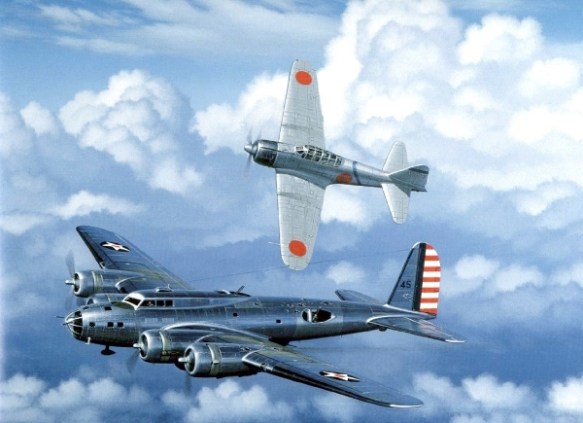
Loose lips…

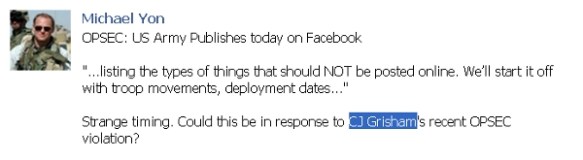
Grow UP, Mike, you're 44 and running out of time...

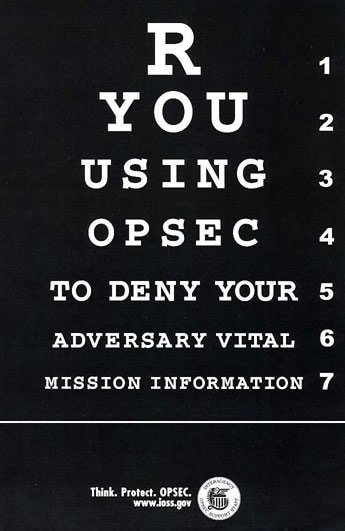
While Mike Yon crows on Facebook about milblogger CJ Grisham from A Soldier’s Perspective apparently being shut-down for a potential OPSEC breach, the US Army reinvigorates an OPSEC awareness campaignvia its Facebook page …an  use of social media interesting and contemporary enough that I’ve include a slice of the comments below…
Show off your knowledge of operations security, or OPSEC, by listing the types of things that should NOT be posted online. We’ll start it off with troop movements, deployment dates & weapons capabilities…
    • FYI-not all bases are listed on the internet.Not all Soldiers movements,and not all equiptment is known to the general public.There are secrets you and I will never know still in this modern day of the internet.

      about an hour ago ·  
    • Anything that anyone could post on Facebook has probably already been front page in the newspaper or breaking news on TV…it kills me to see all these wives posting where their husbands are…I’m CONSTANTLY talking to my husband about these issues. So many times I see soldiers doing the same things and it irritates me to no end. People don’t understand that they’re compromising their loved ones safety. When I see a post on Facebook by an army wife or soldier, I usually respond by writing OPSEC. I don’t want my husband dying because someone couldn’t keep their mouth shut. And, those of you saying they don’t have Facebook – you’re just foolish. They have Intel just like we do and if you think we don’t use Facebook to get Intel on people and track what they’re doing, you’re ignorant. And to add, just because they aren’t American, doesn’t mean they aren’t intelligent, technology savvy, and just fly by the seat of their pants to figure out what our troops are doing.
      about an hour ago ·  
    • You all keep bringing up how a photo is so bad. Listen, people, if you didn’t know that we are scattered across Iraq and Afghanistan then you have been in a dark whole…military or not. They aren’t going after a single soldier. The dead giveaway over there is we come off our own bases wearing OUR UNIFORM. Crybabies.

      about an hour ago ·  
    • ROE ROE ROE ROE ROE

      about an hour ago
    • Per OPSEC: Current and future operations, Travel Itineraries, Operation planning information, Entry/exit (security procedures), Capabilities and limitations, Address and phone lists, Budget information, Building plans, Port calls (current, future and past port calls in a current deployment), Readiness, General morale, VIP/ distinguished visitor movements, People’s names and billets in conjunction with operations, Past operations of a current deployment. (You cant say my husband left Spain yesterday but you can say my husband left port. You cant say my husband left for deployment yesterday because you can generalize an area off one day.) You may however post any of the above if you have a media link to prove the information has been released. Halfway points or referring to how many months are left in the deployment. Also no discussing how long your SO has been extended. This includes discussing percentages left on a deployment. (example: There is only 20% left on this deployment), Flight times or pilots schedules. No placing such info in your siggy and/or title. If you post any picture that includes your SO in uniform please make sure that their name tag has been edited out. You may not make a post showing your paper chain or any other kind of object you personally use to count down.
      about an hour ago ·  
    • It sad to see that you can pull up google earth and people have labeled buildings such as hq’s on bases in iraq and Afghanistan

      about an hour ago ·  
    • pictures of you in the TOC on facebook…

      about an hour ago ·  
    •  list things that should not be posted online…..but….this IS online…..

      about an hour ago · 
    •  bragging how awesome you are on sensitive equipment like counter IED stuff.

      about an hour ago
    • who is the commanding officer,his military record ,does he compromise easily under enemy pressure,he experience and which engagements he was involved in

      about an hour ago
    • Perry Bennett T,O, & E!!!…and your MOS….Hell, Don’t even have any pix or info available on FB. “SCOUTS OUT!”

      about an hour ago
    •  This is a great idea. Family members need to know what they can and can’t say on facebook. Almost everyone has facebook now and keeping our troops should always be on the minds of military families, friends, or those serving. I’m in my AIT course right now, and didn’t realize what all is and isn’t releasable.

      about an hour ago ·  
    •  the national guard members have been pretty bad at POSTING pics of Current locations, and some dont give exact locations, but most have huge LANDMARKS to go off of…… one pic i saw had about 100+ soldiers in the building a very well known building…..

      about an hour ago ·  
    • Grid references of FOBS and PBs VIP visits it happend to prince harry and they stopped his tour of afgan because it was leaked all over the media.

      about an hour ago ·  
    • Intelligent people who care about our forces safety and well being would be aware of every word they speak or post as well as any photos or videos that may hold the seemingly minor but actually major sensitive bit of intelligence that could…See more
      about an hour ago ·  
    • I don’t want this to come off harsh, but here is my take on the reason why so much is posted with such haste. I’ve been out a long time, and in law enforcement since then. Some recent training I had indicated one extremely relevant trait o…See more
      about an hour ago · 
    • Be sure and tell CNN.

      about an hour ago ·  
    •  WW2 poster: The Enemy is looking for information~guard your talk!’

      about an hour ago ·  
    •  WWw2 poster: ‘Your PEN and TONGUE can be enemy weapons~WATCH what you WRITE and SAY!’

      about an hour ago ·  
    • First perhaps you should attack the History Channel and the Military channel that gives away our weapons capabilities. Then go to the US Army website and take troop movements from there and take off the structure from there…..hey just get rid of the entire US army website, because it has vital information there…or the US army website should carry an access page for those in the armed forces etc.

      about an hour ago ·  
    • last, but not least…’What you see here, what you do here, what you hear here, When you leave here…let it stay here’. (personally, I hate to see our troops names posted on these sites by their friends and family~they’re in Harm’s WAy enough)

      about an hour ago ·  
    •  Oh yeh, then the many You Tube videos with overseas military information should be taken down.

      about an hour ago
    • ‎@Diesel-Power, don’t forget the BA-1100-November.

      This isn’t exactly related, but I get pissed when I see people in BDU’s or with other identifying gear in airports (high and tight plus assault pack w/nametape, e.g.). I want to chokeslam them and ask if they’ve ever had an S-2 briefing in their lives. If I were a foreign intel service officer I would just hover around those jabronis all day waiting for them to drop sensitive info.

      about an hour ago
    • Everyone should use common sense. If you wouldn’t give the information to an enemy then don’t ever let it leave your mouth no matter what. The other thing i hate is when soldiers always are saying their deploying but have never had official orders. It gets out that a deployment could be coming up when its not true. you should get at least the same punishment as someone who impersonates a government employee because being in the military you should know full well not to lie about orders or tell when you get them
      56 minutes ago
    •  If we’d had today’s media in WW2, we’d’ve never won…

      56 minutes ago ·  
    •  Then perhaps you should go to the US ARmy Flickr page and take down captions that say things like this;Firefight
      “””U.S. Soldiers with 2nd Battalion, 327th Infantry Regiment, 101st Airborne Division return fire during a firefight with Taliban forces in Barawala Kalay Valley in Kunar province, Afghanistan, March 31, 2011. U.S. Army photo by Pfc. Cameron Boyd/Released”””…

      53 minutes ago ·  
    •  and your asking us to not post troop locations? just look through Flickr captions and you see our troop locations, training, formations explained etc. Remember if you want others to change, the ones asking for change need to be the first ones to lead by example.

      51 minutes ago · 
    •  and then it gives the soldiers name who took the photos.

      50 minutes ago
    •  Names of Generals’ mistresses

      50 minutes ago ·  
    •  Frequency modulation of the deflector shields

      49 minutes ago ·  
    •  You should never ever never ever post (redacted)

      47 minutes ago
    •  your soliders name, do not show name in pics!

      43 minutes ago
    •  The net is a GREAT place for MIS~information….

      42 minutes ago · 
    •  just a thought… but wouldn’t posting what we know about OPSEC, in fact be an OPSEC violation? just thinking outside the box here…

      41 minutes ago
    •  lmfao..frequency modulation

      41 minutes ago
    •  All of your comments seem to agree with my statement that America as a whole has a problem with the big mouth syndrome.

      33 minutes ago ·  
    •  heres a thought… wouldn’t posting what we know about OPSEC in fact actually be an OPSEC violation… just saying…. lets think here people….

      31 minutes ago · 
    • one of our spouses’ support facebook groups was just going over this. Soldier’s name, rank, job, unit, deployment date, deployment location, length of deployment, relocation within theatre, daily operations, any operation outside the wire.

      30 minutes ago
    • Maybe it would be a good thing for the enemy to read this then they would truely believe America lets ALL secrets outta the bag.I see many people assuming things here,there is soooooo much we don’t know.Media coverage is slow and poor to relate what is going on,that is for a reason.We have the BEST Military in the World and there is a reason for that!Always support our troops and if you know SPECIFIC dates,rank,location fine do not jeapordize our Soldiers travels to and from deployment-be vaugue like( “this month”)Many of the photo’s you see are on American ground.The things you can’t see I assure you are very securely kept from your eyes and ears.
      30 minutes ago
    • A lesson in no-no’s was a spouse who didn’t have her Facebook profile locked, so anyone coming on it saw everything even if they weren’t a friend yet. On her page in her friends, it has Married to: Her Hubby’s name and FB link, his FB pageis open too, so you could see not only that he was in the Army, but listed in Employment: his MOS by number designator and job name and his rank. Her FB page had her current location, her wall was open and had all these gushy mushy postings to her hubby and boohooing about him being gone and way too much stuff that could be totalled up to a lot of handy info to the wrong person.
      24 minutes ago
    •  Stop stop stop posting pictures of your loved ones on here. I know youre excited and so proud but you dont know who is seeing and stealing the pictures and using them for who knows what. Keep them to yourself. Pictures give away sooo much. Basically opsec works like this….if you wouldnt tell al qaeda…why the heck would you put it online or even open your mouth about it? HUSH!!!!!

      18 minutes ago
    • Yeah I think this was a terrible idea for a post…

      15 minutes ago
    •  exactly amber the wives have the pics of their loved ones and their putting their loved ones in trouble.. the troops are fighting for us and the wives do not care about it.. omg the enemy is online.. how stupid are they..

      15 minutes ago
    •  loose lips sink ships . . . still holds true . . .

      13 minutes ago ·  
    • this got redundant….

      12 minutes ago
    • Sensitive info must always be kept hidden from outside due to fact this kind of intelligence could be use by our antagonist against us. Like in fighting this small war, never ever divulge what you brought in the theater otherwise some other power would know and prove this as a fact and know what will they bring in case we collided with them. in short, keep your pie hole shut from saying where youd been, what you did, how you did it, what kind of thing enables you to succeed in the mission, etc. Thus this prove intelligence wins wars. the more the enemy is kept in the dark, the more fear would overcome his will. A man overwhelmed by fear is not as thinking man. is he now?
      11 minutes ago
    • capture of enemies

      6 minutes ago
    •  How about not being the source who has “leakage” of classified information on unclassified sources.

      2 minutes ago