A busy chap

…that’s how I’d describe Curzon @ Coming Anarchy this week…in fact, I wonder if he was late getting his spring break leave app in and the other members of the team have bailed on him for a few weeks…? In Anyone Care For  A Burger?, he flags the decreasing public confidence and interest in global warming after a number of Climategate incidents that have called into question the science and method behind so much of the global warming literature and ‘studies’. I guess that ‘Be First With The Truth’ applies as much in the scientific community as it does elsewhere…

I saw the same STRATFOR article on Mexico as a failed state that Curzon comments in STRATFOR GOES CLINTONIAN ON MEXICO and had intended to make similar comments today (great minds…?). Like democracy and normalcy, failure is also in the eye of the beholder and totally subject to local conditions, expectations and cultures. One can actually sympathise with and even appreciate the Mexican Government’s pragmatic approach to a problem totally beyond its capacity to oppose, and one in which it is really on a way station between source and market. If the US is really that committed to the w(W)ar on drugs, then maybe it needs to look at turning off the tap at its end i.e. kill the market and thus the demand. Then the domestic and international distribution networks lose their raison d’etre – drugs is a business like any other and when the profits drop, the business dies…

If the US really is waging a War on drugs, then maybe someone in the Pentagon needs to reread Tom Clancy’s Clear and Present Danger for some tips on military means to stifle the flow of drugs. If we have little compunction about Predator and Reaper raids into various Middle East nations with varying levels of apparently acceptable collateral damage, then slipping a few extra lines into the ATO might give the cartels some food for thought…

And on the topic of ‘Truth’…

I stumbled across a link to the official report into the ‘accidental’ deaths of two Reuters reporters and a number of civilians in the Apache gunship attack discussed in Be First With The Truth the other day…it is an interesting read but one which ultimately reeks of whitewash. It notes that “…details that are readily apparent when viewed on a large video monitor are not necessarily apparent to the Apache pilots during a  live-fire engagement.  First of all, the pilots are viewing the scene on a much smaller screen…Secondly, a pilot’s primary concern is with flying his helicopter and the safety of his aircraft. Third, the pilots are continuously tracking the movements of friendly forces in order to prevent fratricide. Fourth, since Bravo Company had been in continuous contact since dawn, the pilots were looking primarily for armed insurgents. Lastly, there was no information leading anyone to believe or even suspect that non-combatants were in the area…” Taking each of those points in sequence…

Yes, the pilots were viewing the sensor imagery on a much smaller monitor in the Apache cockpit…but…the report also states that they were able to identify at least two other members of the group armed with AKMs and a RPG – detail that is not that discernible or obvious when the footage is viewed on a much larger monitor. Nitpicking but how does one discern between a AK-47 and AKM through graining gun camera footage?

Correct, a pilot’s primary concern is with flying his helicopter – that’s why the Apache and most other helicopter gunships since the damn things were invented carry a personality known as a gunner, or copilot/gunner (CPG), whose primary tasks is to manage the sensors, targeting and weapon systems.

OK, so the Apache crew is continuously tracking the movements of friendly forces. So what? That’s has nothing to do with the manner in which this incident played out other than in the avoid of fratricide which never seems to have been an issue here.

If the Apache crew was primarily looking for armed insurgents, then maybe they were only seeing what they expected and/or wanted to see – not what actually was there.

Why, after four years of fighting insurgency in Iraq would anyone not suspect let alone EXPECT the presence of non-combatants e.g. civilians, media, NGOs, etc in a large urban area. According to Chief of Operations at the time, MAJGEN Jim Molan in Running The War in Iraq, even during the final battle for Fallujah in 2005, US forces went out of their way to confirm the combatancy of targets before engaging them.

I’m sorry but this report reads as one where the objective from the start was clearly to butt-cover the Apache crew and not, in fact anything but, be first with the truth…

What was it all for?

Neptunus Lex provokes thought in Losing It…maybe America should just batten down and let the world go to hell in the proverbial hand-basket…? Somewhere down the track we need to objectively look at Iraq and Afghanistan, specifically the conduct of the wars there and LEARN for the next round – has anything really been achieved with these two long drawn-out campaigns or should the approach have more simplistically been “…just as soon as the invasion was done, we should have killed Hussein (and his sons), hand the reins over to the next guy, then said ‘don’t make us come back’….“?

Zombies Rule

I keep forgetting to post this link to a great show that Dean @ Travels with Shiloh put me onto…We’re Alive…that he has been following and that I have been downloading as my next big listen once I get through A Just Determination in a week or so…there’s at least twelve chapters to We’re Alive, each in three parts @20-30Mb, so you can only imagine fun I am having getting the parts – over the last fortnight I have so far managed to squeeze the first six parts through the dial-up straw…

So do Zulus…

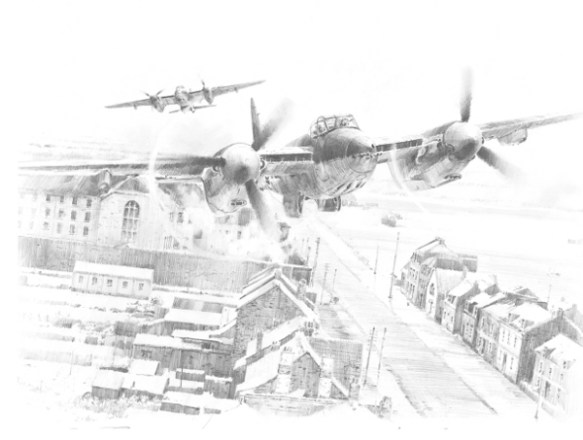
Peter @ The Strategist has a top review of Washing of the Spears, one of the best tellings of the Anglo-Zulu Wars of the late 19th Century that is well worth reading. One of the points that comes out in the comments regards the value of popular movies on historical events – regardless of the accuracy or even quality of the movie, it can often serve a useful secondary purpose in encouraging viewers to find out more about the back story. One example of this would be the 1969 movie Mosquito Squadron, a blatant rip-off of 633 Squadron (without even a rousing theme track), and not a good movie at all but one which has inspired many people, myself included to find out more about the real exploits of the Kiwi Mosquito squadrons in WW2 that pulled off precision strikes like the Amiens prison raid


Target Amiens Prison (c) Robert Taylor

…and here’s a list of links to the first six parts of Peter’s novel, The Doomsday Machine

On learning

(c) Peter Hodge @ The Strategist

This amazing photo was on Peter’s latest post @ The Strategist…my only comment is WOW! To learn more, click on the image…

This post also carried a link to a recent Business Day article Unhappy workers the key to corporate culture which states organisations that wish to learn about themselves,  for example, what’s working and what’s not, could do worse things that seek out and listen to “…malcontents and marginalised workers in the firm…” Often these people are marginalised or malcontent because they are frustrated in their efforts to improve or progress their work environment. As I commented on Peter’s post, so often I have “…seen a visiting reviewing, audit, info gathering team sat down with the happy-happy joy-joy people in an organisation when they really need to to be getting together with those who have issues (real or perceived) with how the organisation operates…

Most organisations have a fundamental expectation that equipment and processes and staff will function as advertised. To be continually told that this is occurring really achieves little except perhaps a warm fuzzy feeling in the executive washroom. What organisations really need to know is what is NOT functioning as it should, or where things could be done smarter…you won’t get this from the mindless clones of the happy-happy joy-joy brigade. This is the foundation of any Lessons Learned or organisational learning process of system: to get over fear of bad news and actually welcome and seek it out. All to often though, the catalyst for this cultural shift is a king-size punch in the nose.

The most notable example of such cultural change is the US Army in the year from the end of the official war-fighting phase in May 2003 until the true scope of the insurgency was grasped in 2004. In no more than a year, this organisation of 500,000 plus was transformed from one where it was not cool to advertise screw-ups in your area of responsibility to one where it was no longer acceptable NOT to share what went wrong on your patch in order that others might learn and lives be saved…if the pie-in-the-sky plans of Rumsfeld, Cheney et al had actually worked and Iraq had snapped into a functioning democracy as soon as Saddam was toppled, I don’t think that even a quarter of the issues identified in the various post-Phase One AARs would have been addressed, and certainly any cultural shifts arising from those issues would have been incremental at best.

The first step in any Lessons Learned system is to consistently and continuously and honestly capture what’s not working and what could be done better. We found that the format for this is:

What happened? A simple statement that defines the problem or issue, e.g. boot laces keep snapping.

What does it mean? I.e. the ‘so what?’ factor…you can not assume that everyone else will perceive the same or any issues arising from the ‘what happened’ so this needs to be explained. e.g. affects soldier’s mobility as boots don’t fit properly until such time as laces are replaced or repaired – this is not always immediately possible i.e. at night (light discipline) or if spare laces are not available/accessible.

What do you think should be done about it? This is the originator’s recommendation from their perspective and may often serve only as a start point for investigation and bear no resemblance to the final solution e.g. replace the current crap boots with a new brand.

This was an OIL that we came across through direct contact with some of the afore-mentioned malcontents and marginalised who expressed their frustration that this problem was prevalent and nothing seemed to be happening about it. When we pulled on a few threads, we found that higher levels were prone to removing such low-level ‘trivia’ as reports drifted up the hierarchy, based on a misperception that high-level issues should be disseminated up to high levels. The response back down was more than often the good old ‘harden up!’

Investigating the actual issue was very frustrating because there was a continual stream of ‘no fault found’ with every test conducted on the laces held in stock. It was only in examining the boots that it was found that the fault was not in the laces but in a batch of lace eyelets that had an exceptionally sharp inner edge – the action of pulling a lace tight also pulled the lace over this edge which cut into the fibres of the lace. Murphy’s Law of laces states that they will always give way at the least convenient time, typically 0300 on a frosty no-moon night on a patrol in the tussock.

The solutions that were put in place were to:

Withdraw the affected boots and have them repaired by the manufacturer.

Review Quality Assurance processes for future boot shipments.

Review the defect reporting process.

Discuss with headquarters staffs the importance of NOT attenuating reports as they rose through the chain of command, including those issues that perhaps they could actually resolve at their own levels. By keeping these to themselves they constrain the ability of others to learn from them.

Man’s Best Friend

Neptunus Lex has a touching story about a boy and his dog…things you wouldn’t see your cat doing for you…

Bridgegate

Still waiting on Michael Yon’s Dispatch in which he winds up the Tarnak Bridge drama AND apologises to Canadian general Daniel Menard…

Getting out of the square

Travels with Shiloh discusses the need for intelligence operators to have training in snapping out of conventional squares to consider problems in the complex environment. I agree and think that his 2007 suggestion of using movies like John Carpenter’s The Thing as the basis for scenarios to achieve this has considerable merit. I had a similar idea in the early 90s when i was just getting into PC gaming that young officers could be given certain games to play that would broaden their problem-solving thought processes…TacOps springs to mind immediately but for some reason Megafortress springs to mind – will have to see if I can find my old notes on this…to add a pain/risk factor, it was suggested that they play for places (or not) on the monthly duty/orderly officer lists…

I also agree with Dean’s comments re using tactical decision-making games (TDG) – the Marines have been using them for years – I think they still publish one at the back of each issue of the Marine Corps Gazette? – but everyone else seems a little slow on the uptake. The zero defects people seem very cool on the idea unless each TDG comes with a 17 page ‘white’ sheet that details all the possible permutations and variations of solutions so that the supervising staff would be put on the spot and find their own knowledge and or capabilities challenged. I think this is a fundamental lack of understanding of what TDGs are for which is to allow students and instructors to explore the application of principles and considerations in different environments and scenarios and to totally NOT focus on any perceived need for the solution to be a thing that Norman Schwarzkopf would be proud of…

The double standard of nice war

Coming Anarchy discusses the drone ‘war’ in Pakistan. The acceptance of civilian casualties in this campaign against the Taliban seems to be in stark contrast with ISAF’s squeamishness in engaging Taliban hiding behind civilians in Marjah. Maybe it’s only OK to kill civilians in a war zone by accident where you (and the media) can’t see the bodies…? It’s probably all the same to the dead…

A rank outsider?

Many moons ago, I mentioned how much I enjoyed District 9, both as a movie in its own right and for the deeper themes within it. I’ve been following the District 9 Facebook page for a few months now and was rapt to see last night that it has been nominated for Best Picture for the Academy Awards this weekend…

Congratulations to producers PETER JACKSON & CAROLYNNE CUNINGHAM on their Academy Award™ Nomination in the category of BEST PICTURE for DISTRICT 9!

Did you know? Peter Jackson was originally going to produce Director Neill Blomkamp’s vision of HALO, but when that fell apart, he offered Blomkamp $30 million dollars to make any movie we wanted. District 9 was that movie.

District 9 is also up for Oscars® in the categories of Best Adapted Screenplay, Best Editing, and Best Visual Effects. Watch the 82nd Academy Awards™ THIS SUNDAY March 7th!

The FB item links to this article Oscar shocker: Could ‘District 9’ win best picture?

“It would be nice if the Academy surprised us. They don’t surprise us very often,” says Betsy Sharkey, film critic for the Los Angeles Times.

“If something unexpected walked away with an Oscar this year, particularly in the Best Picture category, it would say volumes to the industry,” says Sharkey.

“That Best Picture prize sets the tone for whole Oscar show. An unexpected win would get people talking and make the Academy Awards more relevant than they have been in a long time,” she says.

I, for one, would really like to see an adventurous enterprise like District 9 pip the big studios at the post this weekend – not only would it send a message to Hollywood (although whether Hollywood is actually listening is another issue) that we do actually want original innovative and entertaining movies not endless rehashs and remakes of someone else’s good ideas but it is another score on the board for the New Zealand film industry and the magic Mr Jackson. I haven’t seen Avatar – it been a while since I have been in a city big enough to have a 3D screening of Avatar with time on my hands to go to the movies and Carmen’s description of it as “Fern Gully on steriods...” hasn’t really motivated me that much – or The Hurt Locker yet but I think my second choice for Best Movie would have to go to The Hurt Locker if for not other reason than its topic and setting.

Bridgegate totters toward resolution
Michael Yon Facebook ‘Bridgegate’ posts in the last 24 hours…

#1

After the Monday attack, the Generals are avoiding responsibility for security of the Tarnak River Bridge. Worse, nobody is claiming responsibility for the bridge this morning. Tarnak River bridge, three miles from me, is a strategic artery. The Commanding Generals failed on Monday. They are failing today. Confidence in RC-South and TF-K leadership is plummeting. Dark clouds for the upcoming Kandahar offensive.

#2

U.S, considers Afghan command structure changes. (While they are at it, they might consider getting some generals down to Kandahar who know how to secure a little strategic bridge.)

This item links to an article on “…The United States and its allies are considering setting up an American-led command in southern Afghanistan to oversee operations in a key battleground province, U.S. officials said…” This is interesting and aligns with comments made when I was in the UK last year that the US war machine is very powerful and superbly organised to operate with itself and when you get right down to it, it doesn’t really need (from an operational perspective) much help from anyone to get the job done. Blistering coalition elements into US organisations often only creates unnecessary and drag-inducng friction, more so when those elements do not or will not (hello, UK, are you there?) read from the US playbook. While sharing command across other coalition members may make for a nice stand of flags in the higher headquarters and a strong ‘feel good’ factor for senior coalition staff, it is not an efficient nor an effective method of WARFIGHTING…”We’re not in PSO-ville now, Toto…

#3

Got a call out of the blue from the office of Brigadier General Ben Hodges. We will meet in 90 minutes at his office.I have only two questions. 1) Which Coalition partner was responsible for the security of Tarnak River bridge on Monday, before the explosion. 2) Which Coalition partner is in charge of security at Tarnak River bridge now.

That’s it. If the answer is fuzzy, the answer is that nobody was in charge of a vital bridge. Otherwise, the answer will be that X was in charge on Monday while X1 is in charge today. Simple questions, simple answers. We’ve got 20 minutes. Should take less than five.

It’s been astonishing that it has taken from Monday to Thursday afternoon. Meanwhile, there remain combat leaders whose soldiers cross that bridge every day, who do not know who is in charge of not letting their soldiers get blown up.

#4

Summary of meeting with Brigadier General Ben Hodges: The result was unexpected. General Hodges courageously accepted full responsibility. My respect for him doubled in about 30 seconds. Henceforth, Strykers will “own” the bridge. Bottom line: problem solved. BREAK. Something very important came up tonight, so will give accounting Friday. The accounting will include an apology from me to General Menard.

#5

Working on dispatch with more details about the Tarnak River Bridge. There are many assumptions flying in comments — often talking (incorrectly) about assumptions made here. Surprises are coming. Suggest cease fire until facts are presented. Some folks are wedging into corners by making assumptions about ‘assumptions.’The detailed dispatch will contain email traffic. After facts are presented, it will be a simple matter for pros to check the trail. (Many pros on this FB.) Remains amazing that MSM missed the fact that a strategic bridge was hit, and instead focused so much on hockey.

Have meetings today with Special Forces and others re ongoing matters. Further details on Tarnak River Bridge will not be published today. Will present ASAP.

Yon’s final Dispatch on this topic should be released today and I expect that it will make for interesting reading…

Travels

As I mentioned a couple of days ago, I was on the road the last couple of days on job-seeking activities: had what certainly felt like a very good interview in Taupo on Thursday, and a very interesting day yesterday exploring some alternatives that are closer to my heart, including a couple of left-field initiatives that had me buzzing the whole drive home.

I stopped for dinner, well, fish’n’chips anyway, at the Fastlane Takeaways in Waiouru which we used to frequent regularly when we were living there: sorry, guys, but that was YUK!!! Even the dogs weren’t too sure about the muddy-tasting fish…so you’re OFF the Eating Out list and I’ll be transferring my allegiance to the shop in Ohakune next to the Information Centre…

Getting it together?

Afghan police officers and the U.S. soldiers, bottom, gather at the scene of a suicide attack in Kandahar south of Kabul, Afghanistan on Monday, March 1, 2010. A suicide car bomber attacked a NATO convoy Monday outside the major southern Afghan city, killing one NATO service member and four Afghan civilians, officials said. (AP Photo/Allauddin Khan)

On Michael Yon’s Facebook page this morning:

Sad and Sickening: A General Officer should be fired.

This morning, we lost a soldier to a suicide bomb on a bridge just a short drive from this massive military installation called Kandahar Airfield. The bridge, which is important to us, was badly damaged and remains impassable to military traffic. Meanwhile, on this bustling base, under-employed soldiers from various nations crowd around hockey games, live bands, and coffee shops. The damaged bridge is just a bicycle ride away from soldiers who are too busy celebrating Olympic medals to safeguard this bridge. The bridge is so close that I felt the explosion and saw the mushroom cloud. Our mission, and no doubt others, was cancelled because we could not get over the bridge.

The General in charge of security for this bridge should be fired.

Coupled with another attack in Kabul involving NZSAS troops, one wonder if there might not be something to the idea of secondary effects of the surge in Afghanistan?

On ‘science’

Coming Anarchy discusses the ‘science’ of global warming, a topic that has also been slammed by Neptunus Lex. Portable Learner while covering another example of misapplied science, “…In an interview for On The Media, The Lancet’s editor Dr. Richard Horton weighs in on the state of open scientific debate:

We used to think that we could publish speculative research which advanced interesting new ideas which may be wrong, but which were important to provoke debate and discussion. We don’t think that now. We don’t seem able to have a rational conversation in the public space about difficult controversial issues without people drawing a conclusion which could be very averse….The 19th-century days where you could sit in the salon at the Royal Society and have a private conversation amongst your fellows just doesn’t exist anymore. So I think yeah, too much information in this particular case is a bad thing, which seems to go against every kind of democratic principle that we believe in. But in the case of science, it seems to be true.

But it is not. I can’t help but wonder if we had had this conversation, in public, ten years ago when the study was still “speculative research” we may well have averted the flawed decision to publish it in the first place. We need more information, not less, and more inclusive conversations, not narrowly confined to the medical community. The public may well have to engage the medical community in the public space “difficult conversations without drawing a conclusion that could be very averse…

I tend to agree – far better to have the discussion early and draw out all of the available information out to make as informed a decision as possible than to disregard potentially relevant stakeholders and abdicate responsibility what may be perceived as an overly-elite group.

‘The people’ can be really dumb at times…

The Strategist comments on the ignorance and stupidity of those who opted to ignore tsunami warnings along New Zealand’s coast after the earthquake in Concepcion. One might argue that this is only natural selection in action and I might have agreed if it were not for the risks implicit to those who might have to attempt to rescue these losers and to the children they took to the beach with them; at best, it is wasting Police time, at worst, manslaughter. An interesting discussion at NZ Herald here and I wonder if this naivety and complacency is linked to the questions asked in the Timings paper mentioned above? Are we a nation that only learns the hard way…after a punch in the nose…?

People ignore tsunami warning at Mount Manganui. Photo/ Christine Cornege.

A good way of doing business

Peter also has an interesting item on the Byzantine Lessons Learned process…1500 years ago, the Byzantines developed theatre-specific handbooks for each of their current and likely mission spaces…if they could do it then, it really makes you wonder why it appears so hard today. I’ll have more on this when I complete my paper on GEN Mattis’ comments re obsolete thinking.

Progress

I made my first pastry ever yesterday afternoon and my first all homemade pies last night…some tuning still required but very YUM!!!

Marking Time

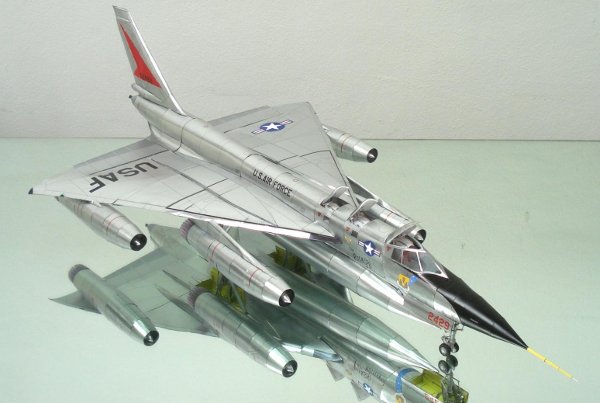
1/32 B-38 Hustler – yes, it really is made from paper…!!!

I am frantically working on three papers at the moment which has severely cramped my daily post style…it is also the beginning of March which means that the second question in the HLS roundtable is now ‘live’ which means a fourth paper should be gestating somewhere in the dark spaces between my ears…the second question is “Why are we unable to measure the relationship between homeland security expenditures and preparedness?

The good weather (is this really summer?) hasn’t been helping but Carmen and I did get heaps done around the place over the weekend so there is progress somewhere…

By means of a space filler, the test build on Ken L. West’s B-58 has just been completed at Paper Modelers and I expect that the model will soon be available for purchase and download at Ecardmodels soon…

There was a great full moon last night and Carmen and I missed a goodly chunk of Doc Martin (normally must-see TV in this household) to try to capture it…this is about the best of my attempts but I expect that Carmen’s will be much better as she has the eye for these things that I lack…

Moonlight Over Raurimu

We’ve also been experimenting in the kitchen again but will save that for a dedicated post…

Scooped

But in a good way.

Like 14,691 others, I have been following Michael Yon’s Facebook page as he reports from Afghanistan and had intended to promote him again yesterday as a great example of the Information Militia in operation – Tom Ricks beat me to it with Learn how to be a war correspondent. His website is Michael Yon Online. I’ve commented on him a couple of times before in Doing the Business, following an item on Neptunus Lex on pararescue teams operating in Afghanistan; and slightly later when I thought he was a well-intentioned meddler pressuring US DOD to release a Haitian-born Army officer from service in Afghanistan to deploy to assist in Haiti.

So who is this guy, Michael Yon?

Michael Yon was born in Florida in 1964 (a good year for writers) and joined the US Army when he was 19. He remains one of the youngest soldiers to pass the Special Forces selection process. He left the Army in 1987, after only four years. This is not that unusual and is somewhat typical of what many young men were doing at the time in joining the Army and leaving once they had gotten it out of their system, and/or to take advantage of other opportunities, many of which may have resulted from that military service. I saw many good soldiers in the same period who joined up, completed basis recruit and infantry corps training, spent 6-12 months in 2/1 RNZIR before deploying to 1 RNZIR in Singapore for two years. Many of them left the service at the conclusion of that posting, older, more mature and with much broader horizons.

He drifted through various activities until he began writing in the mid-90s. However it was not until the War in Iraq began that his name came to the fore as a correspondent in December 2004. from that point he has gone from strength to strength as an embedded reporter although his relationship with the military has not always been that smooth. He “…supports embedded journalism over traditional reporting, believing that the closer writers are to events the less likely they are to repeat military public relations spin” and this one of two common themes in his writing today. The other is an extremely strong compassion for soldiers and this comes through very strongly and effectively in his reports.

Happy news for the Left was that U.S. soldiers were demoralized and the war was being lost… Happy news for the Right was that there was no insurgency, then no civil war; we always had enough troops, and we were winning hands-down, except for the left-wing lunatics who were trying to unravel it all. They say heroin addicts are happy, too, when they are out of touch with reality.” Moment of Truth in Iraq, Michael Yon, 2008.

The War in Afghanistan has truly begun. This will be a long, difficult fight that is set to eclipse anything we’ve seen in Iraq. As 2010 unfolds, my 6th year of war coverage will unfold with it. There is relatively little interest in Afghanistan by comparison to previous interest in Iraq, and so reader interest is low. Afghanistan is serious, very deadly business. Like Iraq, however, it gets pushed around as a political brawling pit while the people fighting the war are mostly forgotten. The arguments at home seem more likely to revolve around a few words from the President than the ground realities of combat here. ~ Michael Yon Online

His 2006 article in The Weekly Standard, Censoring Iraq summarises his views well although it led to a major falling out with the US military. He has been criticised often for an apparent naivety in some of his releases, which I think could be attributed to his short period of personal military service, his habit of launching into text-based upon misleading or incorrect information (hence my comments re Haiti), and releasing the names of casualties before next of kin have been properly notified. This last point is interesting as Michael Yon has been accused of doing this during the current operations in Afghanistan however has come back strongly, supported by others, stating that the in-theatre information has been that notifications had been completed.

There is some confusion within the military regarding timing of releasability of names of the fallen. This confusion stems from apparently contradictory sentences within the embed guidelines. The guidelines are being clarified to avert misunderstandings with media, and within the military…Yes. This stems from the Garcia episode. The PAOs, through no fault of their own (other than Garcia blowing a gasket and talking publicly), have some confusion about the embed papers. CPT Adam Weece showed me the sentences and I agreed that the sentences are confusing and seem contradictory. Insofar as my release, I was completely cleared and broke no rules. Was well within the guidelines and what’s right, but the episode revealed some rough spots that need to be ironed out. And so the military is on it and will get it fixed. Should be good soon. ~ Michael Yon Facebook, Feb 10.

This latter point is interesting as it may have uncovered a lag between what happens in the theatre and the actual notifications in the US. While casualty notification is not an easy nor a pleasant task, it has to be sharp – quite simply there can be no fumbles or ball drops – and possibly this is an area that could be put under the Lessons Learned spotlight to make sure we have got it right. One would like to think that the process has come a long way from the Western Union telegrams in We Were Soldiers….Like so many things in the military, this is a function that must be regularly wargamed to ensure that we have it right – and it IS one of those areas where metrics CAN be set to define the standard e.g. family notification in XX hours by XX means by XX individual(s), media release(s) in XX time (relative to family notification) by XX individuals, etc etc.

In Running the War in Iraq, MAJGEN Jim Molan discusses how he and his staff had to meet very tight times lines to be ‘first with the truth’ or, if not, counter dis- and mis-information from any source. I think that the same onus rests with the public affairs staffs everywhere. Embedded media like Michael Yon offer great potential to conduct our own information operations – a function we have historically be very weak in – but they come with risk. Michael Yon’s great attraction is that he comes across as ‘the truth’ and not as PA-spin – if you try to take away the ‘on the edge’ ‘right here, right now’ pulse of his work, you defeat the whole purpose of having an embed. Yeah, sure, there’s this OPSEC thing but I’m not sure how far you can go down that path when the official mouthpieces are telegraphing pinches a week ahead of time. One of the strongest criticisms of the current wars is that ‘truth has become the first casualty’ again – pragmatic shepherding of embeds like Michael Yon can go a long way to mitigating this perception…

A crew from the United States Air Force spent Saturday night and Sunday morning airlifting different groups of wounded soldiers from Kandahar to Camp Bastion to Bagram, back to Kandahar, then back to Bagram, and back to Kandahar. These patients were from Afghanistan, Australia, Canada, and the United States. Here, an Air Force nurse caresses the head of a wounded, unconscious Canadian soldier while whispering into his ear. (c) Michael Yon Online 2010

Hoping, wishing, praying…

In More on Risk-based decision making in Homeland security, Dean introduces hope-based decision-making “… Hopefully the most significant threats are the ones you’re already focused on.  As long as they are, you’re ok.  When they aren’t, you stand by…and say to everyone who will listen ‘No one could have predicted this’.”

Remember that time when you were four, and that big plate glass window in the lounge kinda got broken and even though you were the only person in the lounge playing with Dad’s golf clubs, you still hope a whole lot that your invisible friend is going to materialise and take the rap? Fast-forward thirty years to when your boss says ‘we’ will carry the risk – you really hope that he really does mean ‘we’ and not ‘you’? Or that time you decided to invade Iraq and hoped that a. a lot of WMD would turn up really quickly and b. that the UN would get over itself and follow-on with civil aid and reconstruction programmes? Each of these scenarios has three things in common:

You have a nagging feeling how things are really going to turn out.

Those consequences are probably going to hurt.

When you think about it, you really knew better.

This week, Neptunus Lex published an item for aviators The ‘Possible’ Turn which discusses the options available to a pilot when an engine fails on take-off. The commonly held truism is that any attempt to turn back to the recently departed runway is doomed to fail – doom in the worse possible sense of the word – one of those manouevres based more upon hope than physics. Lex argues in aviation speak that this might not actually be the case for a suitably experienced pilot – equipped with an ability to make practical decisions fast. Also in the mail this morning was an article discussing the proposed shift in focus of the PRT in Afghanistan to a more civil focus at a time when surge-inflicted chaos may boil over into other provinces. I wondered about this too In the Ghan.

When we established our joint headquarters in 2001, many suggested that each external door should have a big sign ABANDON HOPE ALL YE WHO ENTER HERE. For different reasons, they were probably right: hope has no place in any organisation where lives are at stake.

So why do we do it so often? There are three factors:

Partly it is simple laziness – we’ve always done it like this and it’s always been OK before.

Another part is simply sticking with what we know – after decades of peacetime engagement and peacekeeping, it is difficult to shed that mindset for that necessary for operating in and around a warfighting environment where the threats are very really and unlikely to be assuaged by an umpire with a blue rag tied around one arm.

The third factor is that making good decisions has to be practiced regularly – and that includes being able to quickly sift through all the available information to extract the key points, digest them and then make the call.

Supporting good decisions is a firm ethical and cultural foundation based upon three key qualities:

The Competence to understand the environment and the issues.

The Courage to promote an unpalatable or unpopular line of reason.

The Integrity to see the issue through when the going gets tough.

Regularly we see news items when agents of government at all levels fail to display one or all of these qualities. And every time, the parent agency trots out its Code of Conduct, duly signed by all employees “Hey, look – it’s not our corporate fault!” And why isn’t it ‘our’ fault? Because it’s too hard for the HR Nazis to snap out of their nice objective competencies and consider applying some subjective qualitative assessments on potential recruits? It is interesting to note that those agencies where people are more likely to work collectively as opposed to as individuals are more likely to have a sound organisational ethos and culture – the two that spring to mind immediately are the military and the Fire Service; law enforcement to a far lesser extent because they tend to function as individuals not collective teams (STG, HRS, SWAT, etc being exceptions but only a small percentage of their respective agencies.

But developing, fostering and embedding an ethos and culture based on these qualities into an existing organisation is doable. We’re running an interesting ‘experiment’ here where the new Head of Customs is a highly-regarded former two-star who is doing exactly that. But what he’s brought to Customs is not so much thirty odd years of military experience – it is too easy to fall into the trap that ex-military staff have all the answers; they can have a lot of the problems too – but good old-fashioned command and LEADERSHIP.

So in terms of our discussions regarding decision-making in homeland security, the very first thing that we need to consider is raising the bar of competence. That means introducing more than just training, more than just practicing what we preach; it means that we need to set and conform to some basic standards of performance, weed out those who are more social than team members. I was once posted to a base that is quite isolated and where there was some institutional resistance to being posted there. Most of this was of the “well, everyone says it’s a bad place so it must be a bad place to go” variety and as a result, anyone volunteering to be posted there was usually snapped up. When I arrived, there was some debate raging over this posting policy and after about two weeks on the job, I feel firmer in to the camp of “‘it’s better to have a gap than to fill it with a warm body that does nothing; at least when you have a gap, you know you have a gap and can work around it. When the chair is filled, you keep kidding yourself that the incumbent may one day surprise you and actually do something useful – but it never happens”.

The flip side of competency is training, training that is relevant and current for the job at hand because it takes knowledge to fend off hope – yep, that’s right, Hope, we don’t want you here!! and this is where doctrine, lessons learned, organisational learning, knowledge management and all those other good things come together…to…get the right information…to the right people…at the right time…and ensure that they know what to do with it…

It all comes back to that…

To the stars…

@ The Geek, John Birmingham lashes the global warming denial crew i.e. the big business that stands to lose so much if unrestrained pollution and reliance on fossils (from under the ground and in office) continues unchecked. Money talks and twice as loud when Al Gore is the leader of the opposition. To paraphrase Barnesm’s comment “…this way of life is unsustainable, but after millions of years of evolution and hundreds of years of science and engineering the best we can come up with is “Ride bicycles everywhere, grow and eat only local vegetarian food and essentially go back to living like we did before the industrial revolution”. This is not how you build a star spanning civilisation…” Barnesm goes on to list some technologies that they think could advance both the global warming cause and that of general civilisation. You’ve got to admit, we have become a bit stagnant and stuck in the rut over the last two to three decades…a little too focussed on the now and not the future…if I was to classify myself (while still able to tell you stuff without self-terminating), it would probably be as more a technological utopiast than a ‘grow more veges’ sort of greenie…

At the Chief of Army’s Seminar at Massey last year (note that the Massey site has a ‘less is less‘ approach to pushing information out – hardly doing its bit to win the information battle) , Dr Adrian Macy, the NZ Ambassador for Climate Change,  spoke on New Zealand’s approach to global warming in the international arena. The question that only popped into my head on the drive home afterwards, and noting that this presentation was at a defence forum, was “At what stage might we need to start considering compelling compliance with global warming accords?” Perhaps the NZDF might consider what part it may play in actively saving the planet… After all, we do only have the one…

Had more to say but it’s a beautiful day outside already so I’ll be back later – off now to flea bomb the house, let the goats and sheep loose on the back garden (fitted, of course, with state of the art methane filters), spray more buttercup, and mow the front lawns…

In the ‘Ghan

NZ troops in Kabul – the soldier on the left is correctly dressed in issue Special Operations sunglasses.

The NZ news media has covered itself in glory again – NOT! When will they learn that sensationalism and short-term rating gains actually have real effects on peoples lives. I refer of course to the NZ Herald’s publication of images showing NZSAS VC winner, Willy Apiata, on the job in Kabul in the aftermath of the Taliban attacks on Monday. Because you can, because Cpl Apiata is already newsworthy, or because someone else will do it anyway are not adequate reasons – they are weak excuses.  The images in question portray a soldier nothing like the clean-shaven well-groomed soldier portrayed in the media at the time of his VC investiture. Even the fact that he is in-country is not for the NZ Herald or any other national media to trumpet to the world. It’s my understanding that the NZDF goes to great lengths to educate media agencies – with considerable success – on what the Defence Force does and, perhaps more importantly, WHY it does some things so the Herald doesn’t even have a defense of ignorance. This is media ignorance and corporate arrogance at its worst. If the Herald had any product worth boycotting, I’d boycott it but will have to satisfy myself with flicking them the finger.

It is significant however that  the NZSAS have been noted as key players in repelling the Taliban attacks in Kabul and I think this goes a long way to getting New Zealand some serious street cred (outside the Spec Ops community) as for-real contributors in Afghanistan. Although NZ has deployed Special Forces to Afghanistan on several occasions, their activities are, for good reason, kept behind an opsec shield. The first real inkling that the New Zealand public had of the level and intensity of their activities in Afghanistan was Willy Apiata’s VC citation in 2007. This street cred is possibly even more important due to recent proposals to draw down the number of troops in the Provincial Reconstruction Team (PRT) in Bamiyan province

The Government is working on an exit plan to pull all New Zealand troops out of Afghanistan.

Dr Mapp visited the Provincial Reconstruction Team in Bamiyan, and said he believed New Zealand had made the right decision in drawing down its troops. He said the province was making good progress.

The PRT will soon begin its transition towards an increased civilian component, in line with the Cabinet decision of 10 August. It is clear that Bamiyan is ready for the next stage of economic development.

Is the attack in Kabul a ripple effect of the surge – a sign of the Taliban adopting Whac-a-mole tactics as a counter-measure against the surge in the south of Afghanistan i.e. of popping up and dropping back into their holes before ISAF can reconfigure? Is this attack  taking the war to where the surge isn’t…

Hit a Gopher. Click the green ‘Start’ button at the bottom right, then get ready to whack the gophers by clicking on them when they stick their heads out of their holes. Miss 5 gophers, and the game is over!

Hit a Gopher is the equally addictive and frustrating online version of Whac-A-Mole. “If the player does not strike a mole within a certain time or with enough force, it will eventually sink back into its hole with no score. Although gameplay starts out slow enough for most people to hit all of the moles that rise, it gradually increases in speed, with each mole spending less time above the hole and with more moles outside of their holes at the same time. After a designated time limit, the game ends, regardless of the skill of the player. The final score is based upon the number of moles that the player struck.”

‘Jesus’ sights

You try and you try and you try…but nutjobs exist on all sides – you really have to wonder what sort of fundamentalist takfir arrogance exists in Trijicon management to so arrogantly and blatantly cast marking with clear Christian connotations on each and every one of their products – does some guy in their PR department also moonlight as a cartoonist for the Danes?? How would we take it if every barrel of crude (yes, I know it doesn’t really come in barrels) we imported from the Gulf was tagged ‘Death to the Great Satan and all his friends‘? Of course, no one, including NZ, is going to withdraw their ACOG sights despite demands from other nutjobs that this occur – one almost wonders if Trijicon is batting for the other side as home goals like this are too good to be accidents…

2 Peter 1:19 — “And so we have the prophetic word confirmed, which you do well to heed as a light that shines in a dark place, until the day dawns and the morning star rises in your hearts.”

John 8:12 — “When Jesus spoke again to the people, he said, ‘I am the light of the world. Whoever follows me will never walk in darkness, but will have the light of life.’”

Kriss Super V

Paper Replika has just released the Kriss Super V – no subtle divisive inscriptions on this baby although who would blame them if they did…?