Rapid Fire

3 cups of tea

Literally a storm in a teacup…I doubt there is anyone who ever published a book than was 100% honest in EVERY way and which did not lean towards one agenda or perspective or another in some way…

Greg Mortenson shot to worldwide fame with the book “Three Cups of Tea: One Man’s Mission to Fight Terrorism and Build Nations … One School at a Time,” which describes his getting lost in an effort to climb K2, the world’s second-highest peak, being rescued by Pakistanis in the village of Korphe and vowing to return there to build a school for local girls.

Now it appears that it wasn’t quite as he says which is causing a little embarrassment around the traps for those who may have supported his initiatives financially or, like the US DoD, who may have extracted insights from Three Cups of Tea for use in COIN doctrine and TTPs…personally I agree with the headline, if not all of the content, of the Wired article on the subject Does It Matter If The Military’s Fave Do-Gooder Sells Three Cups of Snake Oil?  When an organisation like the military moves out of its comfort zone, in this case, of large very structured kinetic military operations like Grandad used to do, it has to cast its net wider for ideas…

Let’s not forget that the COIN effort in Iraq got off to a false start as too many people heralded the false zealots of COIN the Malaya way, the US in particular, picking the wrong time to listen to its vocal but fickle ally from the other side of the Atlantic…it was only the efforts of David Petraeus, David Kilcullen et al who turned the tide towards a COIN strategy that would (and did) work in Iraq, this being encapsulated in the December 2006 version of FM 3-24 CounterInsurgency (don’t knock it unless you have actually read it!!). But, however applicable that FM 3-24 might have been in the Iraq of 2006, it was less applicable to the almost-forgotten Afghan war which had been festering away since March 2003 and which, as a problem, bore little resemblance to Iraq.

So, more power to those who cast the net wide in their attempts to get a better handle on the specific of the Afghan problem…Jim Gant with his One Tribe at a Time paper was one; those promoting Three Cups of Tea were others…and so what if Mortenson streamlined his experiences or even made them up? Are we still so template-ridden from the Fulda Gap that we can not think for ourselves and extract the nuggets from the rough…it’s just slipped my mind but one of the tenets that I referred to often in my work in the late 90s came a from a source that I eventually tracked back to one of Don Pendleton’s The Executioner pulp paperbacks…someone that I was working with at the time was mortified that I might draw real world insights from such a ‘disreputable‘ source but so far as I was, and am, concerned, it is not who the source is that is of prime importance but what it is saying…One area in which this has become very apparent and implemented in SOPs is in the Lessons Learned world where collection teams will endeavour to draw observations, issues and lessons (OIL – yes, it’s still all about OIL!!) from as close to the horses mouth as they can get – the trick, of course, being to avoid the equine’s other end…

On failed states

Got the cue on this article from Michael Yon’s Facebook page…always a good source of links to interesting articles…as well written as it is, I think it’s all semantic smoke and mirrors…three decades ago our biggest threats came from established states like France, the Soviet Empire and Maoist China…once again we need to resist the temptation to slap a template on a nation and use that to determine their level of potential threat or risk or not…as above, we should be able to consider each form or threat and risk on its own merits or or lack of thereof and draw our own conclusions…this sort of pseudo-analytical, ‘Eureka!‘ style of writing really leaves me cold…

Kiwi Gunners

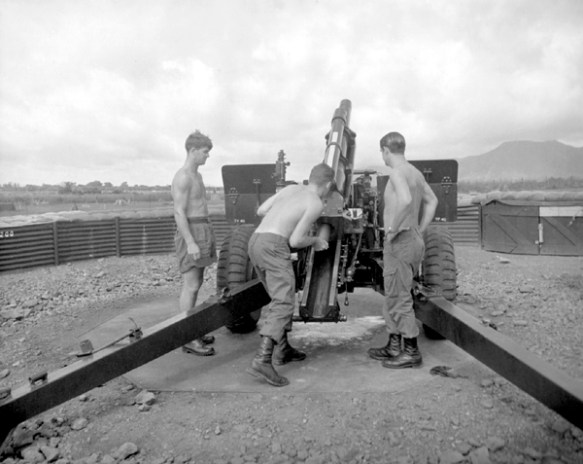
On a positive note, I came across this great written snapshot of a Kiwi gunner’s perspective on Vietnam and the New Zealand of the time, again drawing the cue from someone’s (sorry, can’t remember the source) Facebook page….it’s not that well known that our artillery was in Vietnam well before there was any infantry deployment…and especially topical when one remembers that yesterday was ANZAC Day…

Getting it right

In regard to Vietnam, it is too easy to focus on the perceptions of ultimate failure without understanding what the conflict was about from all protagonists’ points of view, and to ignore what actually worked which was an awful lot of it. Vietnam offers some great opportunities for ‘Yank-bashing’ but in reality, it was a learning experience for all the nations involved.

Did the air war over Vietnam suggest a ‘best practice’ for the employment of air power?

Yes and in so many areas. All of the following capabilities today owe their current ‘best practice’ to the Vietnam air war:

  • modern air-to-air combat;
  • Combat Search and Reascue (CSAR);
  • aerial casevac and AME;
  • fixed- and rotary-wing gunships;
  • use of maritime patrol aircraft overland;
  • fixed- and rotary-wing air mobility;
  • Suppression of Enemy Air defences (like we would want to suppress friendly air defences) SEAD;
  • airborne C2;
  • Close Air Support (CAS);
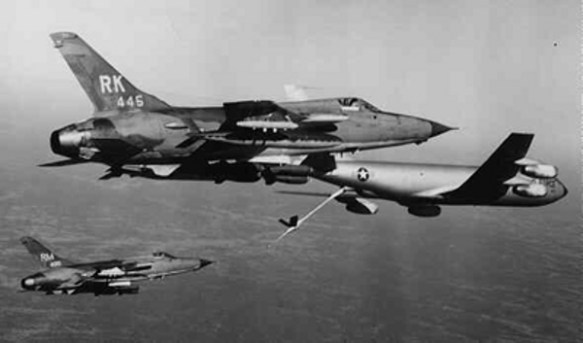
  • air-to-air refuelling;
  • aerial special operations and support to COIN;
  • Intelligence Surveillance Reconnaissance (ISR);
  • UAVs;
  • precision strike;
  • Air-Land Integration;
  • airfield ground defence.

I may have missed one or two minor capabilities but the development of best practice, which lies predominantly at the tactical and operational levels, is largely separate from the outcome of the conflict, certainly from victory. In fact, it might be said that the best catalyst for learning is a good punch in the nose.

Curtis Le May said he could have ended the Vietnam War inside two weeks. Do you think this was possible?

Without a doubt. Le May was a strategic thinker and it is unlikely that he was only thinking in terms of targeting only North Vietnam. The two key enablers for North Vietnam’s war effort were the Soviet Empire and China and Le May would have been considering what things they might hold more dear that sponsoring a sideshow conflict in Indochina. This is not to say that he would propose physical attack on either nation or its assets but certainly the big stick might have been waved in other geographic and political areas. This was the time of Eisenhower’s and Kennedy’s nuclear brinkmanship over Matsu and Qemoy, Berlin and Cuba.

Having said that, there has never been any doubt that the USAF and USN could have shut down the flow of ALL military aid into North Vietnam in a week: North Vietnam only has a very small number of ports and railway links through which this aid travelled and these were always off-limits to the campaign that was conducted. Without the external war aid, ranging from AK-47s to SA-2s, coming in by ship and rail, North Vietnam would have had little more than moral support to provide its forces in the south.

What do you think are the essential conditions for an interdiction, denial campaign to be successful? – and – were they met in the Vietnam War?

There are four key conditions to a successful air interdiction campaign:

  • political will,
  • clearly defined objectives,
  • knowing what to strike,
  • having the means to strike.

Only the latter two were consistently present in Vietnam until the Easter ’72 invasion and LINEBACKER II campaign at the end of the same year. Note, please, that both campaigns were successful…go figure…

The interdiction campaign was at the operational level while along the Trail and in South Vietnam itself tactical actions were conducted daily to constrain the flow of reinforcements and supplies to anti-government forces. If the operational campaign was successful, then the tactical actions would have been less challenged. It may also have meant that it would have been less necessary to conduct airstrikes into Laos and Cambodia, especially since North Vietnam’s ability to influence and intimidate those governments would have been reduced by a successful campaign north of the DMZ.

In considering current events, the current sham of a campaign in Libya only meets one of the four criteria, that of being able to hit things with a hammer…

Is it true to say that the Vietnam experience represented a massive failure of air power?

As per my response to the first question, not even.

Not only were most aspects of airpower employed well, many were developed and taken to a much higher level throughout the war. To fixate on one aspect of the air war, a relatively small one in the timeline when the various bombing halts are taken into consideration, and based on that one aspect, declare the whole campaign a failure of air power is grossly over-simplistic.

Was air power unduly restricted by political considerations?

Yes and this has been well documented since the end of the war. This is not to say that a strong political will in the White House would have led to a victory for South Vietnam as there are no guarantees in war, and less so in the complex environment that was post-war Indochina.

Johnson was an internalist, not an internationalist like the four Presidents before him and Nixon after him. Like Barack Obama, another internalist, he inherited a war he neither started nor wanted or cared about. Surrounded by senior advisors who understood systems but not politics, and who personified Eisenhower’s warning against the ‘military-industrial complex’, Johnson took it upon himself to personally run the air war bypassing his air power professionals. Unfortunately, this is nature of the military beast in most western nations where the military is subordinate to civilian control. All we can do is educate…or go start a junta in South America someplace…ours not to question why…

We can see another example of political considerations affecting the application of air power in the way that the false lessons of DESERT STORM led to the false perception that a similar approach would bring the Serbs to heel; and again in Iraq and Afghanistan where SECDEF Rumsfeld favoured the use of air power over the use of ground forces.

How not to run an air war…

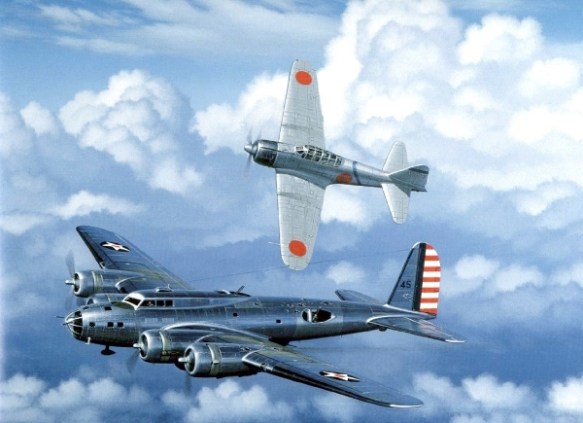
The effectiveness of Japanese naval and land air power came as a surprise to the western powers. In 1941 Japanese aircraft operating in theatre were far superior to those of Britain and the United States. Racism underwrote the devaluation of Japanese technical and military ability. Japanese culture itself by 1944 rejected the idea of serious air attacks on the Japanese homeland. One result was the killing of 100,000 civilians by one conventional air attack alone carried out on Tokyo in March 1945. This seminar attempts to analyse the rise and fall of the Imperial Japanese Air Force.

There was no such thing as an Imperial Japanese Air Force leading up or during WW2. The Navy and Army both had their own totally separate (in R&D, production and operations) air arms that were organised and employed solely as supporting arms to their parent services. This duality is one of a number of key factors that constrained Japanese air power during WW2 from its potential as an element of military power.

Questions

To what extent did Japanese air power contribute to their successes?

As above Japanese air power was structured entirely as a supporting arm for its parent service and thus was employed largely at the tactical level. Even the attack on Pearl Harbor was only a supporting operation in support of the Co-prosperity Sphere land grab in late 1941 and early 1942. Had the Pearl Harbor attack not proceeded or had it been unsuccessful, the Japanese were still totally confident (with good reason) in their ability to defeat the US Navy during any Plan Orange engagement.

Even despite the IJN’s investment in naval aviation, the big gun battleship was still the primary striking decisive arm of Japanese naval power. Thus, while the losses at Midway were painful, they were not perceived as a strategic capability loss. This was reinforced by the ability of the Japanese to cover most of their (temporary) empire with land-based air power. The naval aviation could have been employed much more effectively than it was and not frittered away on excursions like that against Commonwealth forces in the Indian Ocean, and the knee-jerk Midway operation. The only time that Japanese naval aviation might have had a truly strategic effect would have been if, having sunk the Lexington, it had stayed in the game and provided top cover to the invasion of New Guinea at Port Moresby.

Over the land environment, the air arm of the Japanese Army was very much like the Luftwaffe in 1939: a well-honed tactical support tool optimised for tactical support to Army operations. Although the Army had experimented with long-range bombers in the 30s, most notably the Ki-20 version of the revolutionary Junkers G.38 flying wing, it did not follow through in this area. Its late war attempts to revitalise long range bombing through the likes of ‘Renzan’ and ‘Shinzan’ were not as advanced as contemporary Western design and were ‘too little, too late’ at a time when the dire need was for superlative day and night fighters.

The ultimate outcome of Japan’s inability to adequately harness air power in WW2 and the period leading up to it was to benefit the Allies in two ways. Firstly, there was the obvious lack of an effective air arm to counter; secondly, Japan’s continued investment in air power diverted resources from other arms and technologies that may have posed a greater risk to Allied operations, in particular, powerful long-range submarines.

In what ways was Japanese technology superior to western technology in 1941 – 1942 and why was it so seriously underestimated?

The primary enabler for Japanese superiority, or perceptions of such superiority as the period of superiority ended at sea in June 1942, and on land in August the same year, are not so much the hardware as the personnel employing it. As I covered off in Seminar 1, a crucial aspect of air power is the people on which it relies. The Japanese in the build-up to and conduct of the land grab are a good example of forces that trained, trained and trained again, and similarly rehearsed, rehearsed and rehearsed again. The net result was that, at the time of Pearl Harbor and the six months immediately following, Japanese soldiers, sailors, airmen and marines were a match for any in the world. The same could be same for their commanders, most definitely at the tactical and operational level but debatably not at the level of strategic command and design.

Apart from bio-warfare which was not employed in WW2 and thus is a moot topic, I do not believe that Japan had technological edge over its competitors, including Germany, at any point before or during WW2. Its ships had no or rudimentary radar but compensated for this with crews much more competent, initially, in night engagements; the Long Lance torpedo was definitely a better weapon than its American contemporaries but this is probably more an indictment of poor American design and quality control; and the legendary Zero fighter, along with other designs, achieved its performance through sacrifices in armour, self-sealing fuel tanks and armament.

During its brief period of operations, the American Volunteer Group, the Flying Tigers of legend, adapted conventional western turning air combat doctrine into a slash and run approach that was highly effective. This tactics were passed onto and employed successfully by US pilots in the Pacific who largely sought to avoid engaging the more nimble but less robust Japanese fighters’ strength opting instead to attack their weaknesses. As the war progressed, Japan’s pool of highly trained and experienced airmen and sailors was whittled away to the point that nimble performance was no longer enough to prevent almost total Allied control of Pacific sea and skies. In the final analysis, Japan fought a ‘come as you are’ war, with an inadequate base for either expansion or sustainment. From an air power perspective, Japan had no Spitfire, Ju-88, Mosquito or B-17 that was capable of on-going development throughout the war.

The West’s failure to fully grasp the level of capability achieved by Japan by 1940, especially in the air is no different than similar ‘failures’ in Europe. However some care must be taken not to believe too fully the popular myth that the West totally under-rated Japan’s capabilities across the board. Certainly, Japan’s Navy was seen as a very credible threat by its potential adversaries. The capability of naval aviation, at the time of Pearl Harbor, had not been proven with successes like Taranto being over-shadowed by losses and ineffectiveness in the Norway and Mediterranean campaigns. Similarly, assessments of the Japanese threat on land were based on contemporary doctrine for conflict in the jungle, for which there had been no real conflict from which to learn. It’s easy to make charges of complacency and incompetence through the lens of hindsight….and let’s also not forget that any superiority, real or perceived, that Japan may have had was fully expended no more than nine months after Pearl Harbor AND that the allies had agreed to make the defeat of Germany their main effort – had they not, it is quite likely that Japan would have been defeated much earlier, most likely through sheer starvation than inaugural use of nuclear weapons.

American firepower did defeat the Kamikaze. Would a modern terrorist employing air power really be immune from attack?

As brutal as the kamikaze attacks were, they were a last desperate act of a defeated warrior caste and never a sustainable tactic. As dramatic as the footage of naval close-in defensive fire is, many kamikaze never got even remotely close to the fleet, especially after the Japanese TTPs were identified and were interdicted by air power not fire power. In addition to reinforced CAPs, allied attacks on Japanese homeland airfields continued as did heavy bomber attacks on Japanese industry and infrastructure. The kamikaze achieved initial success through the element of surprise as did other ‘shock effect’ attacks like the Zeppelin raids on London, Pearl Harbor, the Doolittle Raid and 911. All of these achieved initial or ‘one-off’ success that was unlikely to be repeated or sustained.

With specific regard to terrorist air attack, this is not the forum in which to discuss or even speculate on specific counters to such avenues of attack. That notwithstanding, any international traveller is only too well aware of the international security measures now in effect and which are constantly evolving; and even the media carries regular examples of how well positive air control has been implemented by most, if not all, western nations. All this is to discourage terrorist attack from the air.

Throughout the history of conflict there have been developments in tactics or equipment that have had a surprise effect – some have been unsustainable one-offs, others have changed the nature of conflict in their time. Ten years after 911, with no repeat attacks, one might hypothesise that 911-style attacks fall into the former category. Have said that, who is to know new and unexpected tactic might not be employed with devastating success tomorrow – such is the nature of this profession.

What important conclusions can be drawn from the early successes and later failures of Japanese air power?

Such successes that were, were fairly tactical in nature and not decisive in the conduct of the war. They were all supporting acts to wider naval and land operations. It is true that the successes of Pearl Harbor and the sinking of Repulse and Prince of Wales were repeated but it doesn’t count when this is your enemy doing it back to you. Some conclusions from the Pacific air war that future air aggressors might wish to consider:

  • Pick your enemies carefully.
  • Be prepared for the long war.
  • Have an industrial and R&D base to sustain the long war.
  • Apply the principle of unity of effort and do run not just separate but competing air arms.
  • Vaccinate against ‘Victory’ disease and don’t over-extend.
  • Secure your lines of communication.
  • Aircraft survivability systems are a good thing.

To paraphrase c/s Charlie from that great aviation training resource Top Gun, Japan’s use of air power in WW2 is a great example of how not to do it.

Desperately seeking strategic effects

Operation TIDAL WAVE (c) Nicholas Trudgian

How has the concept of precision attacks against key economic targets changed since WWII?

It has only been since the latter part of the Vietnam War that an actual precision attack capability has truly existed, although one might argue that the brief ascendancy of the dive bomber in Germany, Japan and the US provided a degree of precision against point targets. Even so, the key issue is not so much the method of attack but the target and the actual outcome and effect desired by striking it. If anything this was the true weakness in so-called strategic air campaigns: an over-focus on the targets and considerably less upon the desired outcomes. It is doubly a weakness in that it indicates a dogmatic approach to applying the thoughts of the accepted military theorists.

Why were civilians regarded as a legitimate target for the strategic bomber offensive?

Why not? The notion of ‘total war’ has been well-accepted across history from the Romans into the ‘peacekeeping’ campaigns of the colonial nations between the wars. But once again, the key element that is being overlooked is the OUTCOME. Targeting ‘the people’ on its own offers nothing to a campaign unless there is a clearly defined outcome that has some chance of success/achievability from that targeting. If a logical case can be made that targeting ‘the people’ will achieve a strategic effect, then probably they should be targeted. Certainly the targeting of ‘the people’ in Japan directly affected Hirohito’s decision to terminate hostilities; it is less certain that the targeting of ‘the people’ in Germany and Britain achieved much at all other than strengthening their resolve. Perhaps, in considering the Roman approach to ‘the people’, the critical factor in targeting is to employ sufficient shock effect and brutality to get the message through? Certainly this worked well for the Soviet Empire, Saddam’s Iraq and the Taliban in Afghanistan.

Did the area attacks (punishment strategy) make a significant contribution to allied victory?

If the desired outcome was ‘punishment’ then probably not as there is no strategic effect to be gained from ‘punishment’. But if the actual outcome was that they diverted capacity and manpower from the land and maritime campaigns, which they did, then they most definitely made a significant contribution to not only the allid victory in WW2 but in later conflicts where strategic bombing effects were sought.

Or were the ‘precision attacks’ of the 8th Air Force more effective?

There was a difference? Any distinction between the night and day campaigns became largely not after the concerted city-busting attacks began.

Do targets now determine what is strategic or not?

No. Targets are simply the means to an end. If that end is poorly divined, then no matter how well the targets are struck, the long term effects may be minimal or activate the law of unintended consequences.

Should Douhet, Mitchell, and Trenchard now be forgotten?

First up, Mitchell and Trenchard are in a totally different class than Douhet, who rides alongside the likes of Mahan, Clausewitz and Napoleon. As covered in a previous seminar, Mitchell was more a tactical thinker and Trenchard a hopeful one who was influenced more by his passion for the emerging importance of air power as a military tool than any particularly deep thought. The names of the classic military thinkers come up again and again simply because their work is enduring and attempting to discount them purely because their works do not apply literally to modern times is rather short-sighted to say the least. And once written-off who might them replace them? Warden…?

There is risk in considerable the works of the classic thinking through too narrow a straw and failing to determine the underlying themes and insights in there works; or to consider their work against the literal context of today. Anyone who has been involved in a flight safety or air accident investigation will know the importance of considering events from the perspective of and context in which they occurred. Similarly, to be able to really consider these thinkers’ relevance one must really have read their works in some detail and there is also danger in taking them out of their broader context and attaching too much or too little importance to them.

The answer to the question is, of course, no…

Weekly Photo Challenge: Old

For this week’s photo challenge, here’s a shot from the Smithsonian National Air and Space Museum last weekend – good thing I didn’t put off my visit til tomorrow as the impending Government shutdown means that all the government-run museums until the crisis passes…the image has been processed through the GIMP 2.6 old photo filter…

Had a good walk around Georgetown in the rain this afternoon, looking for antique shops – think I will have to cast the net wider next time I’m here as I couldn’t find much (yes, I know Google is my friend but it can take the fun out of exploring, even in the rain)…I resisted the temptation to buy a B&N Nook e-reader: I think I need to research this topic a bit more before committing funds…I think I want one with e-ink as opposed to an LCD screen and with wifi for library top-ups…I liked the Nook because in its Android-based as allows the user to access email etc as well via wifi or 3G but I am not sure whether this extends to the b&w version as well…not too fussed about the 3G but I saw one review which said that the Nook’s wifi only connects to the B&N internal netowrk which wouldn’t be much use to me once I get home…

The rubber band unwinds again tomorrow and I am off home again via LA for a night…

Defense of the air?

At the end of the Battle of Britain, the Luftwaffe remained intact as an effective fighting force and so did Fighter Command. By April 1945, the Luftwaffe had virtually be destroyed. Does this result suggest a ‘best practice’ method of conducting a defensive counter-air campaign?

An interesting approach, attempting to compare a fairly localised battle (the Battle of Britain was only really the opening of the Seelowe campaign) that last only a few months and a campaign that lasted three years and which ranged across Western Europe.

That both, one or neither force survived the Battle of Britain is largely irrelevant – the key issue is whether they achieved their objectives or not. The the answer to that is probably that neither actually did. The Luftwaffe was charged to clear the RAF from the skies over southern England and the Channel to enable the invasion of Great Britain to commence. The RAF’s mission was to prevent this occurring, and while neither the attainment of control of the air by the Luftwaffe nor the invasion of Great Britain occurred, it is a big ask for the RAF or indeed the Allies to take credit for this (except under the victors’ right to write history as they see it. The key determinator of the outcome of the Battle of Britain was Germany’s decision to switcvh its targeting from the RAF’s forward airfields, where it was without question winning the battle, to a strategically-(mis?)focussed attack on major industrial targets. This provided the RAF a vital respite to regroup and recover and then focus on defeating the Luftwaffe whiule not being under attack itself. It is more true to say that the Battle of Britain was lost by Germany than it was won by the RAF.

It is also not particularly correct to say that the Luftwaffe was virtually destroyed without applying a broader context to the statement. The Luftwaffe continued to fly operationally right up to the last day of the war and hundreds if not thousands of operational aircraft were captured at the war’s end. Not only did German aircraft production increase as the war progressed, it also continued to introduce new technological capabilities into 1945, for the example, operational jet aircraft far in advance of anything that the Allies had on the drawing board. The death knell for the Luftwaffe was not a lack of aircraft or pilots to fly them, but simply places to fly them from (as Allied armies advanced from the West, East and South) and, in the end, fuel to put in them.

We have to be very careful in our use of terminology in this kind of question. There is a major difference between a defensive counter-air campaign, a defensive air campaign and the air component of a defensive campaign. I would contend that defensive counter-air is what we planned on doing in Western Europe should 8 Guards Army ever been so rash as to step across the border casting covetous eyes at the Channel ports, that is, striking deep across the curtain to dislocate and disrupt Warsaw Pact aviation capabilities; a defensive air campaign is what the RAF conducted over southern England in the summer of 1940, and which the Luftwaffe conducted over Western Europe from the end of the Battle of Britain until D-Day; and the air component of a larger defensive campaign is what the Luftwaffe was doing on the Eastern Front from 1943 (probably since the Battle of Kursk) and over Western Europe after D-Day.

Referring back to Seminar Three though, it might seem that the ‘best practice’ that arises from both the Battle of Britain and the air defence of Germany is doctrinal. I remember noting when I read Command of the Air that it must have been a key informing document for the rebirth of the Luftwaffe. But as I read, I started to get the impression that perhaps the creators of the Luftwaffe had only read as far as Part One and not fully grasped the full scope of Douhet’s thoughts. Thinking further on the subject, it was apparent that nor had they grasped the Principle of War relating to the setting and maintenance of the aim; nor that Mahan had attached considerable importance to the need to ensure that any national intent to control any environment must be fully backed up by the capability to apply that control.

The best practice to be taken away is that, if you have an objective, stick to it. Germany failed to do so during the Battle of Britain; and the Allies did in pursuing Germany’s unconditional surrender in May 1945.

Might it remain true that a successful defence for the control of the air between 1939 – 1945 depend on:

a. Early detection.

b. Interpretation of enemy intent.

c. Successful interception.

d. Destruction or deterrence?

Douhet struck the nail fair on the head when he identified the difficulties facing a nation attempting to defend against a like (in terms of capabilities) adversary. Of the four factors listed above, only two are really relevant: successful interception and deterrence. Both the RAF in the Battle of Britain and the Luftwaffe (all arms) had both early detection and relatively interpretation of enemy intent (tactically to strategically) but this clearly did not provide a suitably large advantage over their adversaries. Both failed to successfully intercept attacking forces – success interception being defined as adequate to turn back or neutralise e.g. force them to jettison their payloads, the attacking force.

When a high probability of successful interception is attained or is perceived to have been attained, a state of deterrence may have been achieved. This state existed over most of England from 1941 onwards; in the Mediterranean from the end of 1942; and over the Pacific as the US advanced north from the Solomon Islands. Where desperation or perhaps learning difficulties deny acceptance of a state of deterrence, we have situations like those of the air bridge that attempted to supply the Afrika Korps in Tunisia in 1943; and many of the Japanese (non-kamikaze) air attacks in the latter part of the war.

And has modern technology rendered this quartet of questions obsolete?

As already alluded to above, the advance of time and technology has not altered the response to the question above. Ultimately, while early detection AND accurate interpretation of enemy intent are important enablers, the critical objective is successful interception. Robin Olds’ Bolo tactic against North Vietnamese air defences relied on early detection of US aircraft but equally depended on an inaccurate North Vietnamese interpretation of his intentions to enable successful interception of North Vietnamese defending aircraft. In the Falklands War, it still remains unclear to what extent the British received early warning from the mainland of impending Argentinian attacks. Regardless, the key to maintaining the fleet in San Carlos Bay and other key areas, and ultimately the success of the campaign to retake the islands, was successful interception. Deterrence also played a part in defence of the task force as the sinking of the General Belgrano early in the campaign effectively deterred Argentinean use of its aircraft carrier in the defence of the Malvinas.

The state of deterrence described under the previous over the Gulf can also be seen in DESERT STORM; and over Iraq and Afghanistan since 2003 and 2001 respectively. It may also be why there were no offensive North Vietnamese air operations 1965-73: while the NVAF proved to be a capable defender over its own territory, it was under no illusions as to the outcome had it attempted offensive action against US bases in Thailand, South Vietnam or sailing off the coast. This state of deterrence is one reason why there have been no air incursions into Iraq or Afghanistan and why all incursions have been by land and, for the most part, below the general detection threshold of coalition forces.

The so-called Principles of War include the concept of the offensive. In short, this means to act rather than react, to dictate the time and place, purpose, scope and intensity, pace of operations. It implies the initiative must be seized, retained and fully exploited. From the British and German experience of moulding a defensive counter-air campaign, would such a principle apply equally well to the Defensive!?

Excuse me? “So-called” Principles of War? This questions would indicate that the Principles aren’t that well understand at all…

To understand the concept of the offensive, more so from an air perspective, one only needs to read the early parts of Command of the Air where Douhet lays out the dilemma of the defender. A defensive campaign does not win a war: at best it gains some breathing space. Wellington still had to thump Napoleon at Waterloo, ten years after the defensive victory of Trafalgar; the Allies still had to defeat Germany after the Battle of Britain, otherwise there was little to prevent Germany regrouping and having another crack, especially had it postponed BARBAROSSA; and the Task Force still had to kick the Argies off the Falklands after gaining control of the air over the theatre.

Is an examination of the Battle of Britain and the German defence of the Reich irrelevant to the study of the modern air power applications?

Absolutely but only so long as they are considering within the context within which they occurred: neither can be usefully considered in isolation. What ‘won’ the Battle of Britain was not the RAF but Germany’s decision to not apply the Principle of Selection and Maintenance of the Aim to its air campaign against Britain in 1940. Similarly, Germany’s defeat was a given once America entered the war: regardless of the skill and capability of the Luftwaffe, Germany, like Japan, could simply not compete with America’s industrial and economic horsepower: a lesson the Soviet Union would also learn in 1989.

Why does the Battle of Britain appear to occupy such an important position in the history of air power?

There is much about the Battle of Britain that supports a good myth ranging from Churchill’s words at the time (we will fight them on the beaches,blood sweat and tearsso much to so few, etc); the Arthurian connection to the Merlin; the perception of the under-dog standing up to the local bully; of a few against the many a la Thermopylae, Agincourt, Rorke’s Drift, etc. It was also the first time that the defence of a nation relied so heavily upon an air force and not more traditional land and naval forces but as stated above, it was not the first time that an air force changed the course of a campaign: the Doolittle Raid, Malta or Crete would be better candidates for this distinction. Like Midway and Coral Sea, the Battle of Britain does mark the limit of the Axis advance, noted by Churchill in his ‘end of the beginning’ speech on 10 November 1942.

NJG 1 by Michael Turner


Thinking “air power”…

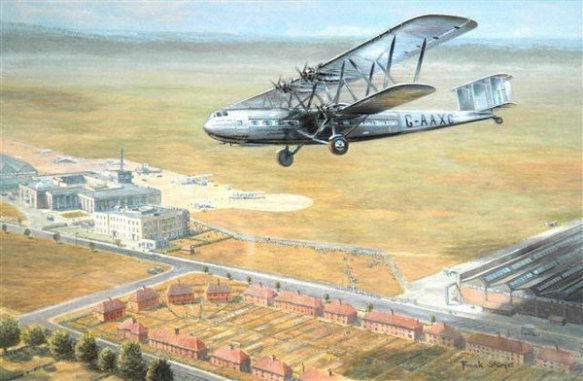
A5CA6 Frank Sturges c.1980s - Handley Page 'Heracles' over Croydon Airpirt, Watercolour, Sutton Museum Collection

Is contemporary air power doctrine still influenced by the classical air power theorists?First up we should probably drop ‘air power’ in favour of ‘military’: it is just too simplistic to persist in describing warfare in terms of one environment or another, especially air power which owes as much to Clausewitz and Mahan as it does Douhet. Whether this is because air power operates over sea and land, or simply as the most recently developed ‘environment’ it builds upon those who have gone before is up for discussion. The list of classical military theorists i.e. those whose theories have endured is not exhaustive and nor it is restricted solely to the Big Three of Clausewitz, Mahan and Douhet however the concepts and truisms developed by these three are certainly among the most enduring and popularly accepted. 

Noting how the nature of warfare has changed since 1989 (DESERT STORM being almost an aberration), the use of ‘contemporary’ is interesting especially since we would assume and would like that ‘environmental’ capstone doctrine remain relatively stable. We now operate in an era of the ‘non-contiguous operating environment’ and ‘war amongst the people’, environments so different than the backdrops of conventional conflict against which they were developed. In this environment, rather than perhaps being outdated or irrelevant, the works of the classic military theorists remain as applicable as they ever were on the battlefields of Europe, the oceans of the Pacific and the air over Europe, Vietnam or Libya.

It is not really correct to refer to them as theories or their works as theories: theories, by definition, are unproven works. Once proven, theories become laws, rules or principles: noting the unpredictable nature of war, the works of Clausewitz, Mahan and Douhet, among others, are best considered principles, principles to be applied with judgement. I do not believe that the works of Warden, Mitchell, Trenchard et al have yet been validated to the same extent and thus they remain as theories. As such, any influence they may have on contemporary doctrine should be considered carefully.

Clausewitz argues ‘…war is not a mere act of policy, but a true political instrument, a continuation of political activity by other means…war is not an act of senseless passion’. Do you think Douhet takes into account the ‘end state’ which Clausewitz implies is the object of war?

Absolutely.Douhet’s work is scientific, almost clinical, in its detachment and lack of emotion (as distinguished from the passion he clearly has for the subject). The ultimate objective of Douhet’s war is national victory which might expect to a natural and logical endstate for war as a politcasl entity as described by Clausewitz.

What do you think is the difference between theory and doctrine, if any?

Theory is something that remains unproven…”…a tentative insight…a concept that is not yet verified but that if true would explain certain facts or phenomena…” Doctrine, on the other hand, is defined as “…fundamental principles by which the military forces guide their actions in support of objectives. It is authoritative but requires judgement in application…” Doctrine, in essence, is the considered best practice for a given force in a given situation: it is far more than mere theory. here, we have taken the definition of doctrine further as “…that which is taught, validated against a context, delivered in individual training, developed under supervision on the job and in collective training, and applied with judgement…

If you had been a British defence planner in the 1920s, how far would you have been guided by the theories of Douhet and Mitchell?

Not much at all. As I covered in Seminar 2, WW1 did little to demonstrate the potential of air power as a decisive (as opposed to a supporting) arm, unlike other new technologies like the tank and the submarine. Mitchell had demonstrated the sinking of a warship under very controlled and static conditions that bore little resemblance to a ship underway (and returning fire); Douhet would have been interesting reading in the 1920s but, really, his work was not validated until the end of WW2. The general theme of the 1920s was of the War to end all Wars, with the League of Nations (not discredited until the 30s) to limit the development of arms races like those that had contributed to the beginning of WW1. The big fear of the time would have been chemical attack at the strategic level however even then, an early MAD policy seems to have been accepted by the ‘chemical’ powers. After WW1, Britain’s focus had returned to maintaining the Empire and it was here that air power appeared most applicable and useful: an application of air power in COIN…

Clausewitz argued war is a trilogy of ‘reason, passion and chance’. Do you think Warden would agree?

Probably not but then that is why Clausewitz endures after 180 years and Warden is already becoming a footnote in history: his theory only appears to have worked (debatedly) in DESERT STORM and was less than effective in Kosovo, and Iraq – it must be noted that all three of those campaigns were only resolved conclusively through occupation by ground forces.

There has been over the last couple of weeks there has been a discussion at Small Wars Journal on the validity of Warden’s work. I’ve avoided as best I can any observation of that discussion to avoid colouring my own consideration of these questions but the one comment I did read seems to sum up Warden’s theory. It pointed out the lack of science in the DESERT STORM air campaign in the shotgun approach to targeting, essentially hitting everything til something might snap – which it didn’t.

Just as in COIN, it is fundamentally false to assume let alone rely on the hope that a population, sufficiently provoked, will rise up and topple its leadership in response to targeting by an adversary. The number of times across history that this has actually occurred is limited at best. Due to the greater influence of public opinion in the western world, perhaps this may be a strategy that we are more susceptible to today than our adversaries may be.

Warden’s belief in ‘friction-free’ warfare is another manifestation of the ‘victory disease’ that seized parts of the US military after the collapse of the Iron Curtain and new ‘surgically clean’ victories like Panama and DESERT STORM and that culminated( in all senses of the word) in its misplaced confidence in the ‘shock and awe’ of OIF in March 2003. I have yet to find any account of OEF or OIF that does anything to indicate that Clausewitzian friction is anything but alive and well in the contemporary operating environment.

Afterthought: WRT Libya…I’m not sure what all the fuss is about…the Libyans seemed to be doing all right on their own using air power to suppress a land-based internal insurgency…

WRT John’s comment about about ‘strike being strike’…true but in WW1, there was no concept of strike as it know it from WW2 or today…it was more a case of ‘lob in the general direction and see what happens’…just because WW1 was the first major conflict in which aircraft were used, it does not necessarily follow that this was the birth of air power as we know it any more than the meeting between Monitor and Virginia in Hampton Roads could be considered the birth of modern naval warfare, or the use of the tank in WW1 could be considered the birth of modern manouevre warfare. I would suggest that a lot more water needed to go under the bridge before any of these could be considered actual capabilities than could be employed effectively in combat…

The early days

It’s been almost a hundred years and it’s unlikely that we will ever really know just what effect WW1 really did have on the development of air power. For me, it was really a bit of a sideshow in a larger conflict and the real developments occurred in the 20s and 30s.

With reference to the second reading, I’ve read Mahan a number of times (how sad is that?) and don’t agree with the  way the author has tried to use it as a yardstick to measure air power in WW1 – I’d be hard pressed to draw the same conclusions. The big takeaway (to use a current buzzword) from The Influence of Seapower Upon History is that is a nation should only get into the sea power game if it can actually control the seas. Examples of that have would be the United Kingdom to the mid-20th Century and the United States from the same point on; those who tried but didn’t make the grade? France, Spain, Germany (twice), and Japan. The same applies to air power…

What might defence planners have learnt from the use of air power in the First World War?

There is a lot that might have been learned from any major activity but that’s largely a speculator question because we will never know what might have happened. The best articulator of the air lessons of WW1 was Douhet and his 1923 writings give a very good idea of what defence planners might have been learned. In the end, the one lesson that defence planners did take from WW1 and generally apply across the board was that “…this air power all seems a bit up in the air – let’s toss it back in its box and seen what happens in a few years…” And that is exactly what they did, especially in the UK where the RAF of 1939 bore a remarkable resemblance in terms of doctrine and capability to that of 1919: twin-engined bombers with small payloads and only defenced by single small calibre machine guns and (excluding the Hurricane and  Spitfire that were spurred by Germany’s rearmament in the 30s) biplane fighters with no radios and only two small calibre machine guns…

Could valid generalisations have been made for the future use of air power from the experience of the 1914 – 1918 war?

Not really, for the simple reason that air power did not really have any great effect in WW1: there was no air Cambrai, let alone a Taranto, Dams Raid or Pearl Harbor to learn from. Had air power not been employed in WW1, it is likely that WW2 would have started with the same level of air capability that it actually did: the major driver for the development of air technologies between the wars was not the military (by choice or treaty) but the commercial arena especially in the UK (Shorts), Germany (Junkers and Dornier) and the US (Boeing, Bell and Curtiss) and with the development and exploration of long-range travel routes  It would probably be more correct to say that modern air power owes more to the Dornier X and the HP.42 that it does to anything that struggled into the air in WW1.

Was the assertion made by some that air power would soon become the principal mode of warfare justified by experience?

Not then and not now…the number of instances where air power has had a decisive strategic effect on the outcome of a conflict is so low as to be insignificant statistically or in any other form of comparison. 93 years on, air power has still not taken up the mantle of ‘principal mode of warfare’ and is unlikely to anytime soon.

Would you agree that there have been no significant developments in the employment of air power since 1918?

Not ever. A statement like that can only be made with the benefit of 20/20 hindsight and some incredible leaps of logical faith. Air Power (such as it was) til the mid-30s bears no resemblance to the applied tactical, operational and strategic forces developed and applied during WW2 and since to the current day. Flying around shooting guns and dropping ad hoc bombs ≠ air power: there are far more components of air power that mere flying as I alluded to in my response to last week’s questions. WW1’s biggest contribution to air power was probably the misperception that populations can be controlled from the air alone as was attempted across the Empire in the 1920s – although, COL Gaddafi may prove me wrong on this one next week…


Heigh-ho, Silver…and away…!

Just in case no-one noticed, the Lone Ranger is a myth, a legend, something not real and if he had existed, someone would more than likely have put some .44 calibre lead in his back one night…the moral of the story is that if you believe your own press and keep interfering in other folks business, you are only buying into grief, and lots of it. Yes, folks, that right and just as right or even righter, even if you are (or think you are) sitting up on the moral high ground…and the bigger you are, the more this applies… This might be because the bigger you are, the more powerful you think you are and with that comes the perception of license…

Well, here’s a fact…no one has a license to boldly interfere in the internal workings of another nation – a resolution from the defunct and impotent UN is no more a license than a letter from Osama Bin Laden authorising the world to go to war against the West…As much as we might not like the current leader of Libya, there is no evidence that the socalled Libyan rebels have anything to offer that will make Libya one iota a better place to live or to deal with than it is today. Just like Saddam Hussein, just because we don’t like someone and even if they are real bad bastards, this does not mean that they do not actually offer benefits in international affairs, especially in maintaining regional stability.

In intervening interfering in Libya, the West is acting like the world policeman that it is not; in interfering in Libya but not in Syria where protestors are being subject to 7.62mm ball riot control, the west shows itself to be not much more than the same bully it accuses Ghaddafi of being. More so, in wibbling (yes, it is a word – see Blackadder’s Guide to Trench Cooking and Tactical Lexicon) until the US agreed to support the interference, the European nations showed themselves to be impotent and cowardly – Libya is not such a conventional threat that France or the UK (on the days that its remaining jet is flying) could not easily cope with. The Libyan forces are even less a threat to Western forces when the object of the interference is enforcement of a no fly zone and not actual ground lodgement and intervention – of course, having seen all the footage of destroyed Libyan armour, one wonders just exactly what technologies the Libyans employ to get them into the air…maybe we should be a little worried…?

Our moral justification for interfering Libya was further undermined when the Arab nations that so vocally supported it (one wonders why all THEIR high tech toys were as incapable of dealing with a regional issue as those of the European nations) turned on NATO in much the same way that Tonto rediscovered his roots…

“Those Indians look pretty dangerous, Tonto, we could be in trouble” “What mean ‘we’, white man?”

We can’t remember what we’re doing in Afghanistan any more – the making the world safe for democracy line is pretty worn these days – and we have no good reason for being in Libya…the air power option is nice and clean and simple: it reinforces the myths of DESERT STORM that air power cleans up messes with minimal cost or loss…how soon we forget the lessons of Iraq…shock and awe versus blood and treasure or is it shock and awe = blood and treasure…??

In the beginning…

One of the reasons that my blograte has dropped off is that I am participating at an online advanced air power course and this has been tapping somewhat into my available time. The penny only just dropped that the course content is relevant to the blog and that I can probably kill two birds with one keystroke and use my contributions to the course as the basis for blog items…once I catch up, the output should be about a post a week til the end of the course…so here goes…

Q1. What do you think are the most important components of air power?

I’ve done a lot of driving this week and have wrested with this question more than any other. I’ve worked through all the various components of air power and then realised that all I was thinking about were the physical components, the tangibles like aircraft, systems, infrastructure, training, doctrine etc. The penny only dropped on the last leg last night that the component that really counts is the intangible, that thing referred to as airmanship or maybe air mastery: it’s not what tools you have in the box so much that count but how you wield them. Even more so than that, it is how you get up once knocked down and get back into the fight that counts.

While this isn’t a component unique to the air environment and applies equally well across the other environments and other walks of society (it’s A World Cup year so if we run true to form we offer up some dazzling examples later in the year!), it is one that muster be fostered and developed and maintained just as much as any physical capability or piece of equipment. Done well, it is the thing that makes the whole greater than merely the sum of the parts…

Q2. Are definitions useful in trying to understand what air power is?

Absolutely, but then I’m a doctrine geek so I’m bound to say that…definitions are essential to understanding anything even if only as a launching point for rebuttle or disagreement. Without these, discussion of air power becomes a meandering ‘how long is a piece of string?’  discourses…

Q3. Is air power different in any significant ways to other forms of combat power?

By definition, yes, otherwise it most likely wouldn’t be a separate form of combat power (and I’m more fan of military power than combat power which is a little narrow for the operating environment we’re in today) but if the question is actually leading towards whether air power is uniquer than other forms of combat power then, no, it’s not. Each form of combat power has its own characteristics, strengths and weaknesses which can be harnessed or exploited as the case may be to create an effect in support of national objectives. True, the air is not an environment in which man can survive naturally or sustain himself above a couple of metres but then submariners would have us believe the same about their environment and as a constraint is it relevant to air power as a form of military power. Probably not…and for every strength or weakness in air power, there are corresponding characteristics in other forms of military power – which is probably why we go down the dreaded ‘J is for Joint’ path instead of attempting to persevere as independent arms.