After Dire Sequestration Warnings, Skepticism Abounds | Defense News | defensenews.com

After Dire Sequestration Warnings, Skepticism Abounds | Defense News | defensenews.com.

Five Carriers in Norfolk

The aircraft carriers USS Dwight D. Eisenhower (CVN 69), USS George H.W. Bush (CVN 77), USS Enterprise (CVN 65), USS Harry S. Truman (CVN 75), and USS Abraham Lincoln (CVN 72) are in port at Naval Station Norfolk, Va. US Navy Photo

Hmmmm….US service chiefs are promising/threatening/prediction the loss of major capabilities as a direct result of the US Congress’ inability to form a budget, and the now-implementing sequestration (even the word sounds painful) process…

“Decisions of particular concern include not deploying the USS Harry Truman to the Persian Gulf; not refueling the USS Abraham Lincoln, thus making it unavailable in a crisis; the suspension of mission-critical training and equipment maintenance; and withholding the deployment of Marines to strategic regions in the Pacific,”

I wonder if they have heard of the Law of Unintended Consequences? If suspending these capabilities has no direct near-term adverse impact on national security – noting the short memories of both politicians and ‘the people’ – it may be that all they have really achieved is to put these capabilities on the block instead…hubris is a dangerous thing and I am reminded of those, a decade or so ago, that said that Helen Clarke would never dare to disestablish our Air Combat Force….ummmm….hello?

Perhaps this is a clarion call to western militaries for a long overdue review of military acquisition and development programmes to ensure that they are actually meeting current or near-term most likely and most dangerous capability gaps and not merely existing for their own sake or to bolster sagging national economies…

I’ve just finished reading William Trimble’s history of the Seaplane Striking Force (review to follow), a 50s concept intended to provide a credible dispersed nuclear deterrent based upon a systems-based capability built around the Martin P6M Seamaster – a large four-jet seaplane bomber, very advanced for its time and even now. Unfortunately, resolving the technical issues around such a force took so long that the need was overcome by events. As cool as the Seamaster was and as useful as it may have been once all the bugs were ironed out, the programme was cancelled in 1959. Perhaps before critical capabilities are casually put up for grabs, it’s way past time to thin the herd…? Like, perhaps….

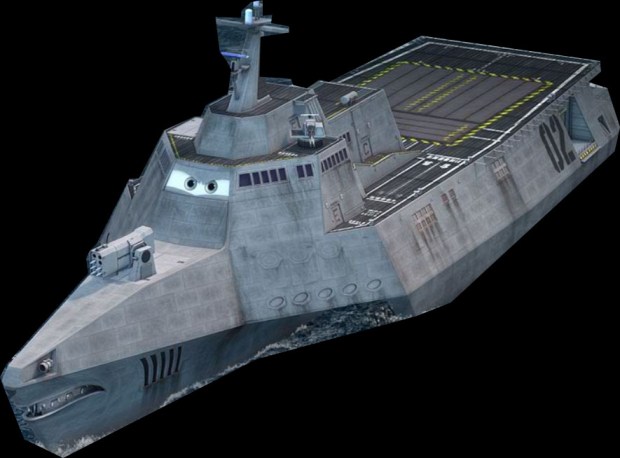
lcs cartoon

The ultimate stealth vessel – it appears to just fade away as you look at it. Or is that just what’s known in the trade as ‘galvanic corrosion’?

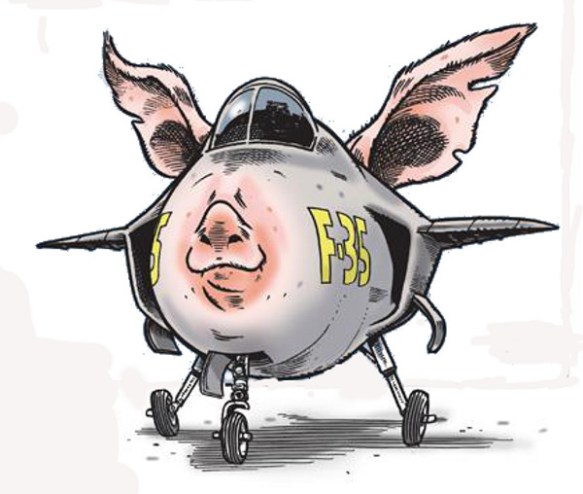
f-35 cartoon

Wasn’t this originally meant to be the LOW COST buddy to F-22? The lightweight ‘bomb truck” to replace the F-16, A-10 etc into the 21st Century…when and how did it become The Blob of modern military aviation?

If it’s no longer or never was fit for purpose, and/or or if the operating environment has dramatically changed then maybe , just maybe, it’s time for some tough decisions…?

Off to a good start for the Year of the Snake

Latest update in from the lads at Hawkeye UAV…homegrown Kiwi technology in action!!

North Otago, New Zealand

Early in the New Year we travelled to the South Island to undertake a large task in the Waitaki river valley. The task consisted of the hi res survey of multiple wetlands and other sites earmarked for conservation along a 30km section of the valley in the vicinity of Kurow, North Otago. Having driven down from Christchurch we approached Kurow from the North and it was immediately apparent that the Waitaki river was in flood. A quick drive around the area, checking out both the Waitaki and Aviemore Dams confirmed that there was plenty of flow coming down.

!cid_423a8f909f12e8d89387528cd2ad9512

After booking ourselves into the mighty Waitaki Hotel we settled into our stay and got on with the planning. With myself and David this time was Drew Gwyer, of Hawkeye UAV Americas, a very experienced aviator doing his “apprenticeship” on the AreoHawk. It was his second day in New Zealand too, so the rapid change from Maine, to Auckland, to Palmerston North and then ultimately Kurow was probably pretty eye opening! We did manage to treat him to some nice weather down there which was undoubtedly a good contrast to the snowstorms at home.

!cid_4416d57ea9b820881dba31a6010be62e

Damn hard to beat a North Otago pub!!!!

On the morning of the second day, complete with our bountiful packed lunches prepared by the tavern staff, we headed out early to begin flight ops. We had in the region of 12 tasks to conduct over the coming days, some of quite significant size (7-8km²). We managed a full day of flying with three full sorties and a good start to our overall programme of work.

!cid_0e2375bdc65646b48462d54381f85629

We received reassuring confirmation that our published NOTAM (Notice To Airmen) had been observed by the local helicopter operators too, who checked in with us and maintained safe clearance via radio communications during their operations alongside us in the valley.

The next day started out well but unfortunately was soon blowing 50-70km/h of wind and while we did launch and test the conditions, it was plain that it wasn’t ideal for accurate data capture.

!cid_a5594e1bdf09cfdfb9b626635bd9ba7e

Once we had resumed flying ops we began making good progress along the valley and through our tasks. We operated from a variety of sites, most of them adjacent to the river or on farmland nearby, having been up and down on the first day and arranged access with the property owners.

!cid_ba0bca5ca1c7c04dc989794d187acefa!cid_352854ee7f22e6acf544b5bd82cbddc5

!cid_175fc8d1833b22a94a65d2d022370843

During the 6 days down in the Waitaki we lost a couple of days to weather, both from wind and rain and that did give us a chance to visit Oamaru and Moeraki and also to further Drew’s exposure to the great kiwi flat white. We did finish the job successfully despite the weather hiccups and bade farewell to the Waitaki Hotel and its friendly staff, heading back north to Christchurch for our return home with a hard drive full of raw imagery for processing.

Reno, Nevada USA

Later in January Hawkeye UAV travelled to the USA to put on a series of demonstration flights in conjunction with Hawkeye UAV Americas (HUA), at Reno-Stead airfield in Nevada. This was in part sponsored by the good folks from the Reno-Tahoe Airport Authority who have a state sponsored initiative to promote the growth of the UAV industry at Reno-Stead, which is also home to the Reno Air Races. To say they were warmly accommodating doesn’t really do them service, they were fantastic. On the threshold of the lesser used cross vector runway at Reno-Stead they had set up a luxurious tent complete with gas heating, coffee and catering to keep us all in great style. What we also had but hadn’t bargained for was a lot of snow on the ground! Being mid-Winter Nevada did not disappoint, providing mind-focussing temperatures a couple of degrees above freezing. I must also add that being accommodated at a Casino-Hotel was a bit of an experience for us kiwis who can count the total number of real casinos at home on just one hand.

!cid_2b157ba33eeae90436612efa2c1f937e

The plan for the week here was to demonstrate the setup, flight and capability of the AreoHawk system to a steady stream of VIP guests from a range of interested industries, culminating with a media day on the final day. With the help of HUA we got underway on the first day, and after a coffee or two and warming our hands we launched the Hawk into the crisp but sunny skies of Reno-Stead, which rests at 5,000’ above sea level.

!cid_fefa3331d1938322b835ee0727c70fa9

We had an allocated “flight box” for our use from surface to 700’ AGL north and east of our location and proceeded to survey it, snow and all. Photographing snowy ground, especially from altitude, was going to present an interesting proposition and not something we had undertaken before, so we were curious to see just how well it would turn out, both the imagery and the point cloud.

Orthomosaic result from Reno-Stead demo flights

As it turned out, the results were very good. Here’s a snapshot of the orthomosaic generated. Note the tent and vehicles in the bottom right corner.

In all, we flew the Hawk four times in three days, with lots of news media and VIPs in attendance for the final flight. This one, like the preceding flights went completely without a hitch, and the interviews and questions afterwards lasted longer than the duration of the sortie!

!cid_7bef4a856ade68aff71f9566f3e862b1

Links to the corresponding media articles and news footage is here on our facebook page.

While at Reno-Stead we were also very fortunate to see some very cool aircraft, including a MiG-21 that did circuits right next to us, and we got to visit Aviation Classics, an amazing repair and custom refit shop.

!cid_99e0b6058315a20285cbe2be628d9e7c

!cid_00c64b86de6765ada746e3be43bba000

Surveyors leading the way with UAV technology

The first UAV operator’s course of the year was run from the end of January through to mid-February. On the course were two staff from Beasley and Burgess Surveyors Ltd of Northland, and two from Juffermans Surveyors Ltd, of New Plymouth. Both companies have purchased AreoHawk systems and their operators have now completed training ready to undertake survey work with their new gear.

Hawkeye UAV Ltd’s commitment to ongoing support and working relationships will see us maintaining a mentoring and flight supervision role, plus providing advice and assistance with planning.

Kevin O’Connor and Associates Ltd of Palmerston North are the third North Island survey firm to purchase an AreoHawk system and their training is about to begin in the coming weeks.

Engagement with survey companies is a great step forward for us. Each one is in a distinct area or province and allows greater reach of our UAV technology into these areas. Surveyors have existing client bases that will be well-served by the AreoHawk system and will also now be able to control their own aerial photography and 3D terrain requirements of all sizes, without the need for outsourcing. Additionally, all their data will be processed at home in New Zealand rather than offshore.

More operations from Birlik Harita in Turkey

These photos are from our Turkish partners during a Cadastral Survey along the long and narrow Datça Peninsula. Datça has nine villages scattered along the peninsula. These are; Cumalı, Emecik, Hızırşah, Karaköy, Kızlan, Mesudiye, Sındı, Yakaköy, Yazıköy. The local villagers were intrigued with the UAV and spent all day with the crew from Birlik Harita.

!cid_2d2edd9297f54754eb319390db01020c

!cid_22c9cb7658894089b63cc6ffeae96306

!cid_9c954b894821e3878a9869198305d80d

!cid_eebda7a6924c6dcb8950efa8fe2b59e4

!cid_9e5bc5681627b262d41c219811af119a!cid_527797074f73a1d56d55715441579729

New Zealand domestic services work

The following photograph is of Gareth in the Kawekas while on a Department of Conservation task monitoring pinus contorta. For this we conducted both RGB and NIR (Near Infra-Red) orthophotography at 4cm resolution. The area where the photo was taken is the only clear area of significance within the regulated flight range. This did cause some added thought to how to launch and recover the UAV, however that is part and parcel of the job. The start of the year has been mostly orthophotos, some with NIR and some without. We certainly welcome any task and hope to make the most of the great summer here in New Zealand at the moment.

!cid_0f4d4ccb90ce9d69500d2231273f05b4Wondering when this new-fangled technology will be gracing out skies more…? One really has to wonder why an ISR-short Government isn’t latching on to this…

Bad boys, bad boys…

…whatcha gonna do, whatcha gonna do when they come for you…? 

Ready or not, here we come...

Ready or not, here we come…

Dear Unit 61398

How do you hack the guidance on a ‘dumb’ Mk.84 low drag bomb once it (and its friends) are spiralling down towards you?

Sincerely

The Hacked (Off)

In this era of informal conflict i.e. one in which one or more or even all of the actors are the regular formed units or formations that we remember from the good old days of the Fulda Gap, this becomes a valid question.

In the good old days (GOD for short), if someone actively and physically attacked or took some form of physical action against a nation’s physical infrastructure or commercial structures, there would be options under the DIME construct (more D, M or E than I perhaps) through which one might register one’s national concerns about such activities and encourage the perpetrators to cease and desist.

In the case of Unit 61398, despite its mundane designation (F-117 sounded mundane until 17 January 1991), we have an identified military unit conducting, with guns more smoking than Saddam’s WMDs, offensive actions against national and commercial infrastructure around the world but especially targeting the US. If Unit 61398 was an active service unit, regular or irregular, operating within the borders of any western, and most if not all other, nations, it could reasonably be expected to be hunted down and neutralised physically. Similarly, if  it was as openly offensive as Saddam’s SAMs during the decade of no fly zones, or Iran’s Boghammers during the Tanker War, something loud and bad would probably happen to them.

But (yes,yes, I know, never start a sentence with ‘but’) in the convolutions of informality the smoking gun justifications are not as clear regardless of provocation. Just as US- and UK-based UAS operators blithely commute between domestic homes and respective UAS remote operating bases with a strong sense of security and little of risk of threat (in the UK, the IRA must be rolling in its unmarked grave after the security awareness it forced upon the UK military in its heyday of terror), members of Unit 61398 probably cycle home with a similar sense of blithe innocence…

So will it be that one day,maybe one day soon, and in true Dale Brown style, the stars at 65,000 feet will ripple as payback soars over Shanghai and releases some unhackable cease and desist notices (Lucasfilm lawyers eat your hearts out!!)…?

Note: Lucasfilms/LucasArts are the people who not only brought you the three worst science fiction movies of all time (certainly when viewed sequentially) but who also have a rep for being the Galactic Empire of the known legal cease and desist notice universe…

My Little Life: Live and Learn

My Little Life: Live and Learn.

In the link above, Mama M is angsting about apologies from two perspectives: one of considering that she had been over the top in criticising five day a week kindy, and another of educating her daughter on why an apology needs to be sincere and not just a compliance √.

Sometimes the bigger lessons of an apology are that little things that we can do may have longer and more lasting effects that we ever thought…

297247_2466759519196_1081767366_n

A teacher in New York was teaching her class about bullying and gave them the following exercise to perform. She had the children take a piece of paper and told them to crumple it up, stamp on it and really mess it up but do not rip it. Then she had them unfold the paper, smooth it out and look at how scarred and dirty is was. She then told them to tell it they’re sorry. Now even though they said they were sorry and tried to fix the paper, she pointed out all the scars they left behind. And that those scars will never go away no matter how hard they tried to fix it. That is what happens when a child bully’s another child, they may say they’re sorry but the scars are there forever. The looks on the faces of the children in the classroom told her the message hit home. Pass it on or better yet, if you’re a parent or a teacher, do it with your child/children.

Kinda trite but totally on the money, a mistake once made, deliberately or as an accident, be it an act of ommission or commission, can never be fully recalled and there will always be a slight edge where the wound once lay…Here’s an example of a good apology that I stumbled across the other night while considering this subject. Although we live rurally I’m no farmer (not one little bit) and so was scanning the pages of Straight Furrow for any potential useful bits of kit and equipment (aka farmer porn!)…

It’s been an awkward year for me, one of lost friends and shifting principles. I began the year as the dairy Farmers’ friend, saying they were doing all they could to clean up waterways.

I reeled off a list of on-farm clean-up actions they were taking to keep waterways clean. I quoted figures from the most recent report of the Clean Streams Accord, among them that casttle were fenced off from waterways on 84 percent of farms.

Then I found this figure was wrong.

Naively, perhaps, I did not realise that the accord relies on farmers honesty to report their own progress towards the agreement’s targets.

When the Primary Industries Ministry finally, after eight years, got round to checking for itself, its audit found a descrepancy. Only 42 percent of farms had fenced their waterways.

It was quite a shock. I beghan to think about the arguments from the Manawatu-Whanganui regional council for their prescriptive One Plan – that they’d had enough of asking farmers nicely to chnage their ways. They hadn’t listened and now it was tiem to force them to act.

After all, regulations had been needed to stop them pouring cowshed effluent into rivers some years earlier – they hadn’t voluntarily stopped that.

So, in March, just as the Land and Water Forum was meeting (unbeknownst to me), I changed my tune. I said:

“it’s seems obvious that we have too many cows in the most sensitive parts of the country – sandy, shingly, free-draining areas laced with streams, close to groundwater and big recreational rivers.

“and I think there’s no doubt that these cows are the main source of the excessive nutrients that are polluting rivers and lakes in these regions. The simple solution is to regulate a reduction in cow numbers.”

I suddenly found I had lost some of my old friends but gained a lot of new friends – all of the Green persuasion.

This was awkward. I’d railed against these people for years and here they were welcoming me as a new ally. I didn’t see it that way – still don’t. I’m not on their side. There’s much they say that I dodnot agree with.

The only side I’m on is that of you, my friend, the reader, who has the right to be as fully informed as possible about this important debate. And that’s been my intention all along. As the information – the science, expert views, farmers’ experience and other facts – has come to light I have given it to you. 

~ Over The Fence, Jon Morgan, Straight Furrow, Jan 22, 2013.

An example of a poor apology might be “Hey, Saddam, no WMD, huh? Our bad…” or “Maybe we could’ve thought this Arab Spring thing through a bit more…

  • It’s never too late to apologise but let’s be straight about it…sooner is better than later, and both a preferable to carry on as you’ve always done…how might things be different if:
  • People realised that when you have a hammer all you look for is nails and thus it took so long for common sense to break out in the prosecution of the campaigns in Iraq and Afghanistan?
  • The jet heads weren’t in control and the A-10 production line was not scrapped in favour of more fast jets – the same fast jets that are desperately seeking work..?
  • Someone said “F-35!! Enough already!!! Let’s can it!”

Hmmm….

Aviation Business: What are the best aviation books ever published?

There I was...the opening phrase of many a great aviation yarn…when I spotted…yep, same old tried and true formula…

…a link to this story ‘New Zealand training organisation develops UAV qualification‘ which in turn led me to the one I am ‘pressing’…Aviation Business: What are the best aviation books ever published?

I agree with the author that the published list looks just a little TOO British although top marks for slipping a Biggles tome in there and so, I thought, what would my top ten list look like? Or, hint, don’t come near one of my air power courses unless you’ve read at least half of them…

My number one would have to be the original 633 Squadron and I am just a little miffed that someone seems to have borrowed my very worn copy that dates back to the release of the movie…yes, I do have the four sequels by the same author but they are nowhere near in the same class as the original classic…

Untitled

From this point on, I don’t really have a pecking order so here are the Top Nine…

1413093_110429162945_Photo-18

Paul Brickhill’s The Dam Busters…a tale that STARTs with their most famous raid and tells the story from there through to the end of the war – the dams were just the opening act for this mob…

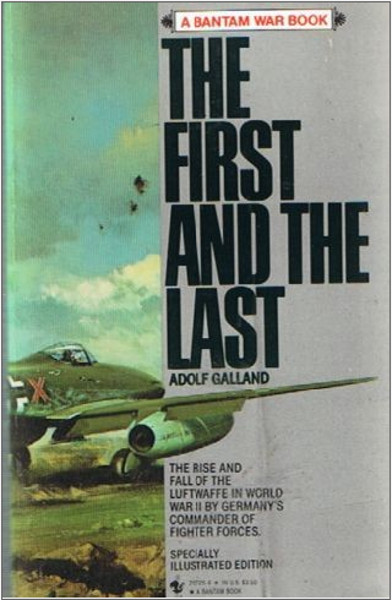
galland

One of many books I added to the library while living in Singapore in the late 80s…a great pilot tells his story and that of a force that was built under a dark star…

old dog

Another Singapore acquisition…a great read for the dying days of the Cold War and, although we didn’t realise it at the time, a great insight into the myth of precision combat that’s dogged us across the last two decades…Dale Brown’s later works tend to succumb to the angst of a junior officer who aspired to chest-poke the generals but just didn’t quite get round to it before departing the forces but this would have to be his best work by a good country mile…I bought the game for my first PC when in came out in 1991 (yes, 21 years ago and we DID have computers back then!!) and I still play it when I have the time…one of these days I will get one of those tablet thingummies and be able to play it wherever I go…

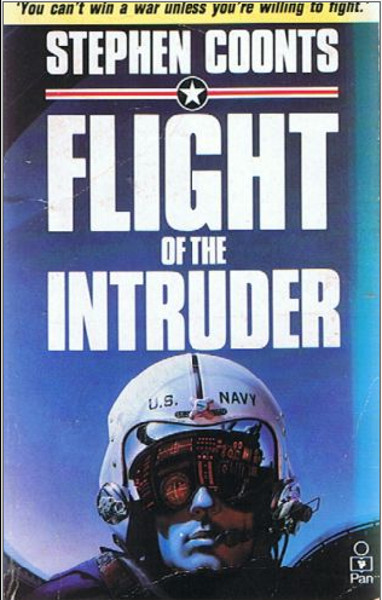
intruder

I don’t remember when I first read Flight of the Intruder but the game was another early 90s acquisition and I remember that it came with the novel – at the time the game was one of the most realistic around, despite its 2D wireframe graphics…the book is based on the author’s experiences as an A-6 pilot during the Vietnam War, and its sequel, The Intruders is almost as good (but just misses out on my top 10 this week – maybe #11…)

north sar

Gerry Carroll wrote three aviation novels before his premature death: North SAR, Ghostrider One and No Place to Hide, all covering different facets of the Vietnam Air War. Each is very good but North SAR is my personal favourite.

9780312940645

Oh, yeah, baby..IF I was scaling my Top Ten, this would be #2 after 633 Squadron…I first read it as a Reader’s Digest abridgement in one of my Gran’s vast collection of Reader’s Digest bound volumes…if I thought the short version was great, I was blown away by the complete version when I found a copy in a book exchange when I was 12 or 13…This is one of a very few books that I would like to turn into a movie – maybe two because the story lends itself to various themes – I even started on a script once, before people started flying planes into buildings…

rugged

Another book exchange acquisition…yes, I know that Martin Caidin is now considered to not let reality stand in the way of telling a good story but that it no ways detracts from his telling of the early days of the Pacific Air War…rippingly good yarns…

thud

I remember reading Thud Ridge on my first trip to the US in 1988 and great lead-in to a visit to the Pima Air Museum in Tucson…a great story of airmen at war by one of the leaders…

…and finally…

big show

…as long as I can remember we had a copy of The Big Show in our crib at Waikouaiiti…and would have read it at least once every summer…I’ve heard that some low-browed individuals have criticised Pierre Closterman in later life for boosting his number of enemy aircraft ‘kills’ but, really, who gives a fat rats? There is no dispute that he flew hundreds of combat missions and did shoot down over 20 enemy aircraft and this is a great story well told that takes the reader from those early dark days after Dunkirk through to the post D-Day march across Europe…

I enjoyed sifting through the library to make up this list – in these items when the focus has been so much on land warfare in an irregular environment, and where the myth of precision endures, it is all too easy to forget the true rigours and realities of real air war…

Special Photo Challenge: Inspiration

“What inspires you to blog? We blog because there are people, places, things, and ideas that we care about so much we can’t help but tell the world about them. We want to know what inspires you. For this special mid-week photo challenge, we want to see portraits of you doing something that inspires you to blog.”

Not all things that inspire my blogging are things that I do and of those are, not all of them are things that need a photo of me doing them to illustrate them…so these are the things that inspire…

International Globetrotters

Round round get around
We get around
Yeah
Get around round round we get around
we get around
Get around round round we get around
From town to town
Get around round round we get around
We’re a real cool head
Get around round round we get around

Cheers to the Beach Boys for those opening words…

Just popped into the inbox…always good to see local lads doing well…the full update is in the Hawkeye UAV web site but I’ve taken the liberty of posting up the ISR-focused highlights below…this is cutting edge Kiwi technology, both in the aircraft technology and the imagery processing methodology…don’t forget that the processed imagery shown is actually a 3D model – very cool….and more so when you consider the size of the airframe doing the work….all images and text below © Hawkeye UAV…

At the end of September David and I departed Auckland, complete with UAV and cold weather kit, bound for Ulaanbaatar, Mongolia.   We arrived late Sunday night, to spend a week conducting tasks that included surveying an open cast coalmine in the North of the country.  Our host company MonMap took very good care of us and had made all internal arrangements for our stay and operations.

Mongolia is a really interesting place, mineral rich, particularly in copper and coal.  They have a young democracy born from the departure of Soviet control in 1989 at the time when the Iron Curtain was falling.  The legacy of Soviet rule is plain to see in Ulaanbaatar, particularly in its architecture.  That said, the obvious Western influence has definitely taken root in new business and development, and the culture of the city dwellers.  The predominantly Buddhist, Mongolian people are very open and friendly, fiercely patriotic and proud of their heritage and in particular their iconic founding father and conquering hero, Chinggis (Genghis) Khan.  His face is immortalised everywhere on statues, monuments, Vodka bottles and at least three kinds of very good local beer.  The capital’s international airport is of course named after him too.

Mongolia-1

Ulaanbaatar City

On Tuesday we travelled north via road to Sharyn Gol, a coal mining facility with a population of nearly 10,000 in the adjacent village.  Sharyn Gol was a former Soviet mine and the apartment blocks, main buildings and much of the legacy equipment remain.

Wednesday dawned overcast and with little wind initially which was an encouraging sign for the beginning of flight operations.  We had divided the whole facility into three flight areas, 1) The old and current open mines, 2) The steppes, railhead and facilities and 3) the village and outlying buildings.

Mongolia-8

Sharyn Gol mine HQ building, railhead and facilities

Mongolia-5

Mining equipment

Mongolia-12

Sharyn Gol coalmine

Throughout the morning the wind rose steadily and by the time we launched for our first sortie we were experiencing some good crosswind gusts in excess of 30 km per hour.  We conducted the flight as planned, with encouraging approval from the MonMap guys, a team of whom had laid out and very quickly tagged GPS markers for our ground control.  We had set up on the South rim of the pit clear of all mining operations and traffic, operating from out the back of MonMap’s Landcruiser. The flight duration was 72 minutes and we captured over 1,100 images. Recovery was routine, with the Hawk landing within 10 metres of our designated recovery spot.  Indicated wind gusts were registering as high as 47 km per hour and were blowing straight in off the Siberian plains.  Jackets and hats were the order of the day!  The AreoHawk took it all in stride.

After lunch we prepared for the next flight, launching from the South rim still, but further East this time, closer to our target area.  With more runs being conducted into and downwind, speed control and camera firing interval were of particular importance.  Our ability to adjust track, speed and turn radius on the fly, rather than relying on preplanned waypoints, comes into its own in these scenarios.  Despite the variable and strongly gusting winds, the task and subsequent recovery went smoothly and the Hawk landed within 20 metres of its programmed landing point.  Flight time was once again over 70 minutes long with in excess of 1,000 photos captured.

With the ever increasing wind and failing light we decided to conduct the final flight the next morning.  On the completion of Wednesday’s flying I started processing the imagery from flight 1, the mine.

Mongolia-18

AreoHawk 02 in MonMap livery

Mongolia-24

Parachute deployment, flight 1

Mongolia-60

About to touch down

Thursday morning was bright and sunny (and not as cold!).  With good light quite early we launched immediately after breakfast from an area North of the mine, within our target area.  This time we were operating adjacent to the foothills and the village lay stretched out on an incline, requiring David (on the controls for this sortie) to carefully manage acquisition altitude and terrain avoidance for the duration of the flight.  Being so close to the housing area and the schools we soon drew a steady stream of onlookers and curious folk keen to have a look at our operation and pose for photos with us and the UAV.

While the wind did once again grow in strength throughout the morning to over 30 km per hour it had little impact on the flight, which went very smoothly and was over 80 minutes in duration.  One of the main objectives of surveying the village and populated areas was to provide MonMap with a dataset for cadastral boundary and feature extraction.  The resulting product is very good and more than suitable for this purpose, especially with the GPS control applied.

Mongolia-85

Parachute hatch just popping on final recovery in Mongolia

Having completed flying operations and surveying more than a combined 12 square kilometres (3,000 acres) across the three completed flights we packed our stuff and headed back to Ulaanbaatar.  This gave us the opportunity to get into some imagery processing in the office, and to play tourist a bit.

Overall the results from the Mongolia flights have been outstanding.  We captured a lot of imagery on each sortie, with very strong overlap.  Both the point clouds and the orthophotos are extremely pleasing.  Working with MonMap was outstanding and we look forward to our return to their country next year to deliver systems and training, and for the odd Chinggis Gold lager.  Results video here.

Sharyngol Mine

Orthophoto mosaic result sample

mine3

Digital Elevation Model generated from the dense point cloud

mine4

Mine orthophotos draped over terrain model

South Africa:

In September, Andre Henrico of Aeroscan Aerial Survey, South Africa, attended training in New Zealand on his new AreoHawk.  A seasoned UAV professional, Andre has been doing the business from his South African base for many years.  Upon his return home he wasted no time getting to work, deploying his new gear on a task in Botswana.

Andre was good enough to send us some photos and share some of his results.

aeroscan1

Andre onsite with his AreoHawk preparing to get underway

aeroscan2

Recovery

aeroscan4

Digital Surface model

aeroscan5

Elevation profile superimposed in front of the terrain model

Weekly Photo Challenge: Geometry

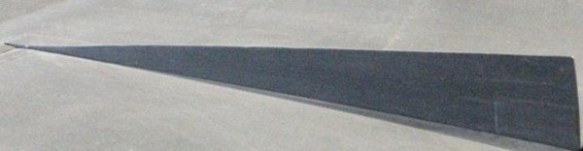
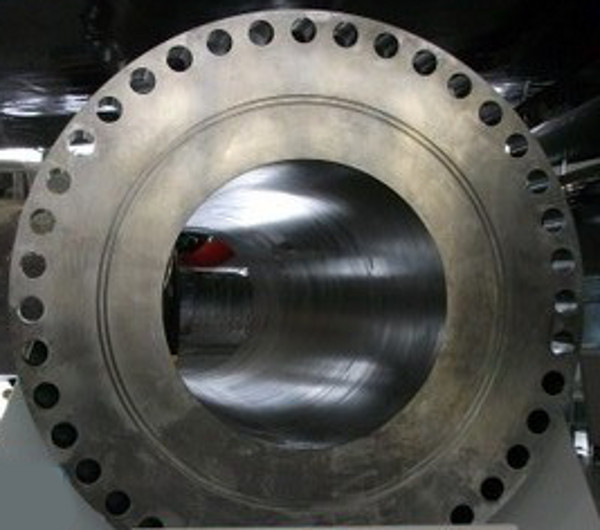
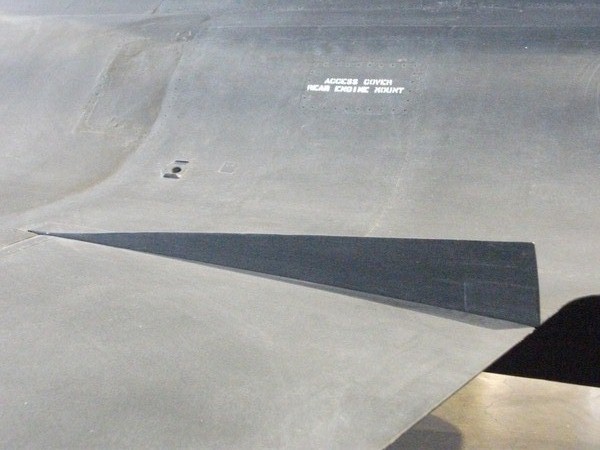
As this week’s challenge, ‘geometry‘ was very specific in what it wants “…find a good subject that contains an interesting geometry…try to crop tightly into the subject to make an unexpected composition…” Hmmmm…unexpected seems to imply ‘so that it’s actually identify is concealed’…more hmmm….OK, here goes…crops to the top, originals to the bottom…


…and the orginals…

Water intakes on one of the hydro-electric dams in the Waitaki Valley

Wing fence on the YF-23 prototype at the USAF Museum

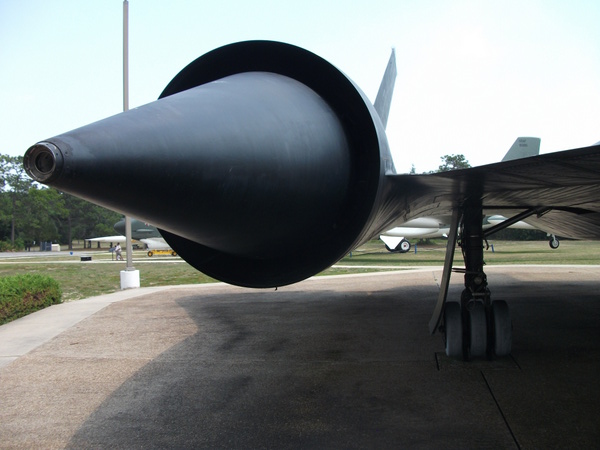
SR-71 at the Eglin Armament Museum

Remnant of the Iraqi ‘Supergun’ from DESERT STORM days in the Imperial War Museum at Duxford

They live!!!

Just been up the road for a coffee and endured yet another nutjob spouting off about why New Zealand just has to have fast jets if it hopes to have any credibility internationally. I’m not going to get into that argument although I will admit I do kinda miss the sound of tortured air as 75 Squadron crank across the Rangipo Desert…but…this nutjob made the comment that the Skyhawks are just rusting away, neglected and forgotten, down in Woodbourne. And that’s not true….so just for the record…

A while back, someone emailed me a PDF that had clearly been a copied and pasted Word document drawn from an internet or print article – there were no identifying links, or names or anything to give away the source. If anyone does recognise the source, please let me know so that I can credit the source and link to the original item…so, just for the record, everything from here on in italics and the pictures are all someone else’s work…not mine, not at all…but I do think it’s all pretty cool…

“There has been lots of rumblings in the military aviation community about the future of the Black Diamond Jet Team and the possible establishment of a commercial adversary support arm of the group, known mysteriously as Draken International. It is now clear that Draken International and its team, which sports famous names like a Dale Snodgrass in its roster, is deadly serious about jumping into the fickle commercial adversary support/contractor air services industry, with an armada of blazing afterburners to prove it.

I have written at length about the coming storm of demand for commercial adversary support services. As America and her allies transition into an almost all 5th generation fighter inventory, fighter wings will not be able to afford to accomplish all their required training tasks using “in-house” aircraft as they have done in decades past. 5th generation fighter capability comes at a huge cost, not just in the upfront purchase of the aircraft, which will cost at least twice as much as a comparable fourth generation fighter, but the operational and sustainment costs of these cutting edge machines will be absolutely crushing for users around the globe. It simply does not make sense to send an F-35 up to train on basic radar intercept procedures against another F-35. Incredibly valuable airframe hours are consumed
needlessly by doing so and aircraft operating costs for such sorties will be astronomical. Further, having a state of the art 5th generation fighter mimic an inferior threat is not only inefficient but it is also somewhat problematic. This is precisely where commercial adversary support providers will come in to alleviate these fiscal and operational pressures, providing simulated threats and other support duties that can be tailored cost effectively to each individual sortie’s training goals. Further, outsourcing such duties instead of expanding current military adversary support squadrons or establishing new ones will create an elastic on-demand force that will be much more cost-effective than a standing military force alternative. In other words, by outsourcing adversary support duties to a commercial entity an air arm only needs to pay for exactly what it wants, when it wants it. If they become dissatisfied with their provider or someone else shows that they can provide the same service better or cheaper than they can take their business elsewhere. Such an arrangement is a proven economic and operational win-win for all those involved, the problem is that there is simply not enough supply of these services right now to fulfill what will become a huge demand by the end of the decade. This is where companies like Draken International are beginning to step into the picture, possibly taking what has been a niche industry and thrusting it into the mainstream international defense marketplace. Draken International’s fleet of aggressors is simply eye watering:
image

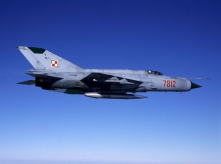
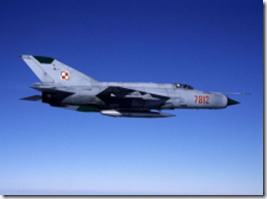
29 MiG-21BIS/UM: This is a lot of supersonic threat simulation aircraft! The majority of these jets are ex-Polish birds and are equipped with the dated by today’s standards, yet still capable RP-22 radar set, as well as a  radar warning receiver. The MiG-21 in this configuration is roughly similar to the F-5Ns currently serving in the aggressor role for the US Navy. With the addition of a capable electronic warfare/jamming pod, the MiG-21 is known to be a dangerous jet to engage with on an air to air level even in modern times.
image

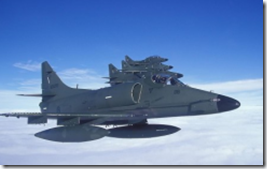
8 Ex-Royal New Zealand Air Force A-4K: Yes, some of the New Zealand’s Skyhawks have finally been sold to a loving new home after years of busted deals and “tire-kicker” inquiries. These are the most capable Skyhawks ever produced and sport an advanced version of the F-16A’s APG-66 pulse- doppler phased array radar, hands-on-throttle-and-stick pilot interface, a full-fledged heads up display, a capable radar warning receiver, 1553 digital bus which will allow for carriage of advanced stores, and even mid-air refueling pods. These A-4Ks will obviously be Draken International’s high-end threat simulation mainstay and will bring a capable radar set to the commercial adversary support industry for the first time, which is a true game-changer. Also, seeing as these jets are equipped with refueling stores, they can offer that capability for fleet training or to enhance their own aggressor capabilities where “time-on-station” is a big selling point for potential customers. The A- 4Ks are slated to be operational by early 2013.

3 A-4L Skyhawks: Currently wearing “zebra’ camouflage and Draken International titles.
image

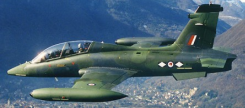
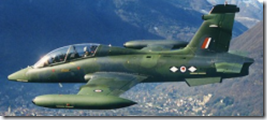
9 Ex-Royal New Zealand Air Force MB-339: These advanced jet trainers are equipped with similar sub-systems as their A-4K cousins, such as an advanced HUD and 1553 digital bus, albeit without the APG-66 radar and other combat oriented gear. Slated to be operational by the fourth quarter of 2012.
image

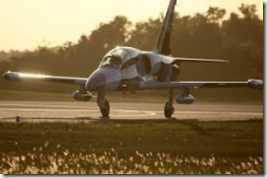
5 L-39: Presumably these are the same aircraft that are flown by Draken International’s non-profit aerial display and exhibition  team.

When you look at this fleet in comparison to other contractor air services/commercial adversary support providers you realize that Draken International has procured a diverse and flexible combination of aircraft that matches more advanced threats, and in greater volume, than what is currently available on the market today. The MiGs are fairly cheap to procure and are a good match for simulating enemy anti-ship and cruise missiles, some of which now possess solid supersonic performance. The Skyhawks will be a an affective “jack of all trades” and will be especially useful at presenting a cost-effective fourth generation fighter threat in the beyond visual range arena, a capability that is currently sorely lacking in the CAS industry. The MB-339s, and even the L-39s to a certain extent, will be good for lugging around jamming pods and presenting rudimentary radar targets for aircraft and ships, as well as providing close air support training for JTAC/FAC schools at home an abroad.

What is most astounding about Draken International’s business plan is the sheer amount of aircraft in their inventory and the endless
potential of how they could be mixed and matched together to form an incredibly diverse and capable aggressor force. With so many airframes of different capabilities, including those which can mid-air refuel and supply a persistent radar picture for their red air team, Draken International will have the ability to supply an enemy air force “on demand” for large force employment exercises that mirror the capabilities of many potential adversary nations.
imageIn business they say timing is everything, and in Draken International’s case that key ingredient may remain illusive due to a faltering F-35 program and shrinking defense budgets both at home and abroad. Yet these same factors, which may seem negative at first glance, could very well end up being Draken International’s proverbial ace in the whole, as the F-35 program is almost unstoppable at this point and costs related to it will continue to balloon, thus resulting in smaller fighter fleets than originally planned for most nations involved in the program and less cash available to fly the jets once they are purchased. As a result hiring companies like Draken International will be absolutely necessary for providing continuous training support at comparatively minimal cost.

One thing is for certain, with firmly entrenched contractor air service providers like Top Aces and ATAC already holding substantial market-share and burgeoning new startups like ECA Program and Draken International just stepping onto the stage, the biggest dogfights for these companies may no happen high in the sky but in corporate boardrooms and DoD contracting offices instead. Competition will be furious for the as yet to grow adversary support pie, but once a new, much bigger pie, in the form of the F-35 program, finally gets served it will be good eating for many for years and years to come…”

PS: Why place this in ‘The Thursday/Friday War‘ category and not ‘Playing with Toys‘? Easy…I think that the relationship between commercial and traditional military providers of capabilities to nation-states et al is just getting started and won’t stop til it gets us to the days of Falkenberg’s Legion and Hammer’s Slammers (look ’em up)…

Weekly Photo Challenge: Silhouette

I am looking after the girls this long weekend so will bang this out before I get overrun…it’ll be all on after breakfast so some quick thoughts on ‘silhouette‘…

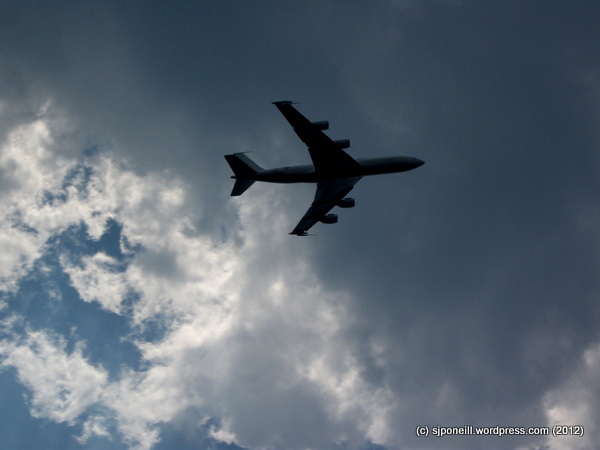
I was visiting the USAF Armament Museum last year when these things kept banging out of Eglin AFB next door – or maybe it was the same one doing touch and goes…

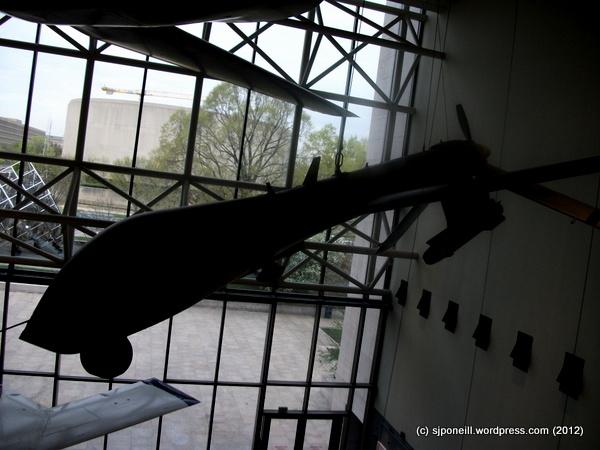
MQ-1 Predator (pointy-down tail) at the National Air and Space Museum in Washington…

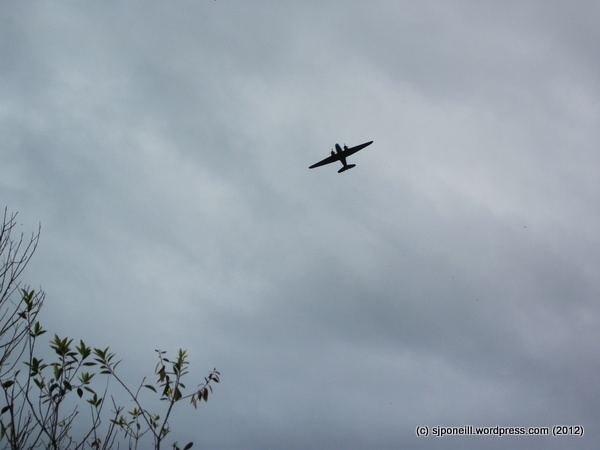
This Warbird DC-3 was doing joy rides out of Taumarunui in 2010 – snapped it as it flew overhead on a circuit of the Mountain…

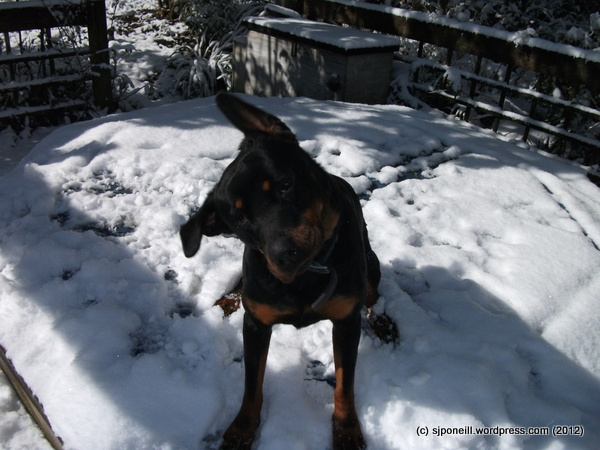
This isn’t a silhouette…just Lulu in the snow last year…last time we had real snow at home…call the last few months a winter?!?!