How “We” Lost Yemen

How We Lost Yemen – By Gregory D. Johnsen | Foreign Policy.

yemen drone

Tonto used to say “We? White man..?” I haven’t seen the new version of The Lone Ranger so I’m not sure if Johnny Depp resists the temptation to weird this classic out…

The first thing that I like about this article is that it starts with “…drones, ships, and planes have all taken part in the bombardment...” and avoids the tendency of the uninformed to focus solely on the drone aspect of these attacks. Yes, for sure, we all know that ‘drone‘ isn’t the right word from a UAS geek perspective but as has been pointed out to me, the nice people at Merriam-Webster (the dictionary you use when you can’t afford real English!) still include as one of the definitions of drone “…an unmanned aircraft or ship guided by remote control…” Unfortunately, that definition is more apt than its other two definitions of drone as either “…a stingless male bee (as of the honeybee) that has the role of mating with the queen and does not gather nectar or pollen…” when we all know that the modern use can both collect and sting; or, and I had not seen this one before, “…one that lives on the labors of others…” although one might offer than a number of commentators on the so-called Drone Wars may be doing this.

The author asks why AQ continues to grow if this campaign has been so apparently successful – wasn’t it just not so long ago that victory in the war on terror was declared? Just as all the US and UK Embassy’s slammed the doors behind them as they knuckle down for yet another AQ-inspired assault? His answer? “…Faulty assumptions and a mistaken focus paired with a resilient, adaptive enemy…” I think that he is absolutely right and to these I would add reliance on resurgent but disproven ‘shock and awe‘ doctrine – we will so dazzle them with our technology that they can not fail to be overcome…yup…hasn’t worked for the last two decades and it’s not going to now…

Among the faulty assumptions are a demonstration of a total lack of grasp of military operations, culture and human factors – that, today, there are still people in power that believe that what work in one place will, without any supporting evidence work somewhere else: Yemen is not Pakistan is not Afghanistan is not Iraq. This is the same fundamental hubris error that the US made attempting to translate FM 3-24 from its successful implementation in Iraq to the total basket case that is Afghanistan (at any time).

Another is that there is some sort of subtle but vital distinction between launching strikes from an unmanned aircraft and launching them from a manned aircraft or a naval vessel or sharing the luff with a special operations team. Apart from avoiding the potential for inconvenient bodies to be displayed during News at 6, strikes from unmanned aircraft are really, as we all know deep down inside, just another form of national power employed in support of national objectives.

But…there’s always a but…might we assume that an inherent reluctance to be seen to put blood on the line by using drones further undermines national credibility especially in the absence of a declared or properly recognised or accepted conflict? Would the kinetic cross-border campaign against proponents of terror be more credible if it was conducted with manned resources i.e. to be specific, if human resources (a term I generally hate as aren’t resources things to be exploited?) aka nationals of the nation waging the campaign were actually doing the border crossing bit and not, as in the case of unmanned aircraft strikes, sitting back in the relative safety and comfort of an undisclosed top-secret location?

Although his model was flawed and needs further development, David Kilcullen was right – the accidental guerrilla not only exists but is created by precisely this sort of heavy-handed, poorly-formulated use of force. As the author of the article points out, the current campaign in Yemen is focusing on individuals and not on countering or neutralising the actual network in which they exist: control the water and the fish are yours for the taking…continue to play a short game and you are destined to play the short game forever – sort of like Happy Gilmore Hell…The article concludes:

The United States can do a lot of good in Yemen, but it can also do a lot of harm. And right now it is playing a dangerous game, firing missiles at targets in the hopes that it can kill enough men to keep AQAP from plotting, planning, and launching an attack from Yemen. After this terrorism alert that has sent America’s entire diplomatic and intelligence operatives in nearly two dozen countries scrambling, it may be time to rethink that approach in favor of a strategy that’s more sustainable — and more sensible too.

When you consider this statement – which I totally agree with – you might see the fundamental flaw (and irony) of a campaign strategy that employs shock and awe to conduct attrition warfare. As I recall, after the bloodbaths of WW1 and its sequel, we decided that we could do this war-fighting thing a lot smarter and developed concepts of manouevrism and asymmetry. It looks like the only ones that read all those books were the bad guys…

 

Fight Begins Over Navy’s Armed Drone Program

Fight Begins Over Navy’s Armed Drone Program.

© 2013 National Defense Industrial Association

© 2013 National Defense Industrial Association

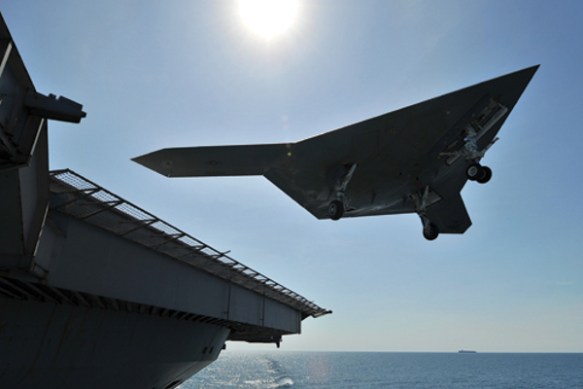
This is a really good article. Not only is the title intended to tempt in readers in much the same way as ‘Navy UAV takes on mud-wrestling’ might do but it is effective in that intent… The touch and go flight that was recently successfully conducted aboard the USS George HW Bush is a real advance in unmanned aircraft (UA) technology. As I stated at the time, the earlier catapult launching of the X-47B was a bit of a non-event as a block of concrete can be successfully launched by an aircraft carrier catapult, after which it flies in accordance with its design specifications.

The touch and go was probably even more of a challenge than the arrested landing on a carrier that has yet to occur. This is because an arrested landing is exactly that – the aircraft will stop (arrest) whether it really wants to or not (unless it’s an F-35C where the hook may or may not engage or simply bounce over the wire). In a touch and go, the UA must land on the carrier, remained aligned with the flight deck and take off again until its own power – no catapult-assisted kick in the rear to help out.

Now we are starting to see some real operating concepts being rolled out for an unmanned combat aircraft (UCA??) that give us some idea of how such a capability may be employed to complement the manned component of an aircraft carrier’s air wing and, by inference, the manned component of other air combat forces. Unfortunately the fight mentioned in the title is not over how we will use UCAs but more over who might build them and does the builder of the concept development platform have an unfair advantage over other contenders for the production run. This resurrects shades of the USAF KC-X tanker and light attack aircraft trainer (LAAT) programmes where the bigger issue was not which was the best aircraft for the role but who was going to make to damn things…

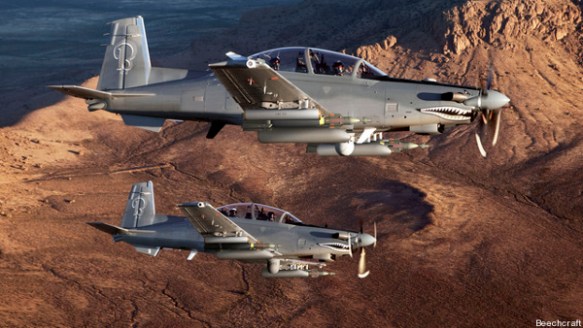
hawker-beechcraft-at-6-a2a

AT-6 Texan II

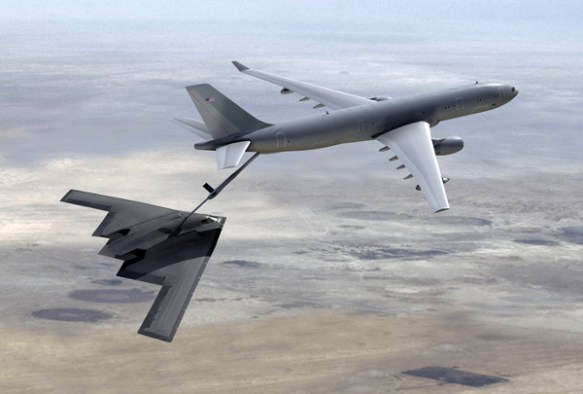
AIR_KC-30_Refuels_B-2_Concept_lg

KC-46 refuelling a B-2 © 2013 National Defense Industrial Association

UCLASS will operate autonomously most of the time, but a pilot will control the aircraft during critical mission segments. Ultimately, Lockheed wants its design to allow one operator to fly as many as four aircraft at the same time, he said. “There’s going to be inherent systems aboard the aircraft and in the loop that will ensure safe separation” between the drones.

There are some interesting themes in this short paragraph…

“…will operate autonomously most of the time, but a pilot will control the aircraft during critical mission segments…” Please define ‘autonomously’: does this mean that the UCA will operate ‘most of the time’ thinking for itself, making its own decisions on how it will conduct tasks in the a similar manner to how the pilot/crew of a manned aircraft conduct themselves? Watch out, Skynet, here comes the competition!! Or, does it mean that the UCA will operate automatically for those portions of its mission where a human operator is not required, for example, during long transits through permissive (no credible bad guys) airspace or other ‘boring stuff’? One of the biggest problems facing the UA community is the misuse of UA-related terminology within the military and by the media and the public. We may not be able to do too much about the latter two but we can certainly get it right within our own communities…autonomous ≠ automatic!!

“…to allow one operator to fly as many as four aircraft at the same time…” Uh-huh…just how will this work when things get ‘busy’? I would say that this task would be a challenge akin to chainsaw-juggling (engines revving) and would question whether the human mind, even assisted by notional AI and the best situational awareness tools available will be severely challenged to keep track of multiple UCAs performing anything more than the most mundane of ‘bus-driving’ tasks…

“…between the drones…” OMG, see the point about getting the terminology right…a drone in nature and in technology is just that – why do you think it is not considered exactly complimentary to refer to someone as a ‘drone’? A drone is a semi-expendable minion, not noted for its ability for free thought or great displays of initiative. A military drone is something like the Teledyne Ryan ones flown over Vietnam et al in the 60s, or the good old CL-289 taught to glazed-eye tactics students during the Cold War.

6870988407_a699414097_o

A ‘drone’ is not the interactive, responsive tool that most contemporary UA are, even those acquired from Toyword, Ebay, or Trademe. We really need to square away the semantics within the UAS community so that we can sing off the same sheet of music to the uninitiated and not simply muddy the waters further. If this doesn’t come from the UAS community, it will be inflicted upon it by those unaware and uninitiated who think a drone is something to be afraid of – not because it is so dumb but because it might (apparently) take over the world…

So let’s keen an eye on progress with the X-47B and the upcoming US UCA competition but let’s also not be so blinded by its coolness that we don’t forget our own responsibilities towards enlightenment and responsibility.

Weekly Photo Challenge: Fleeting | The Daily Post

My take on fleeting this week is of moments that you can never get back – they are there, then they are gone…fleeting…this week, just for a change I have used video instead of photos so I hope everyone is cool with this…

As you grow up, you can never quite replicate the thrill of being chased by a big blue ball…

In all fairness to the adults present, this was the chasee’s own idea…

That fleeting moment of victory…

Of course, it didn’t take Kirk the puppy long to grow up (currently weighs in at just over 50kg) whereas Pepe the spaniel stayed around 10kg…we had to sadly rehome Pepe in the end when he kept stealing toys from the big dogs…

And that fleeting moment of rapture when you realise that ISN’T an Airtrainer on approach…

Nothing quite like having a Merlin living nearby…

Weekly Photo Challenge: Fleeting | The Daily Post.

The first law of aircraft…

…acquisition is that it must look good and thus Euro Hawk stumbles at even that first hurdle…
image-500652-galleryV9-beoq

I subscribe to a digest of UAS-related issues from the Small Wars Council – often it lies dormant for weeks but this evening it delivered this corker item from Germany…an absolute how-NOT-to of aircraft (yes, unmanned aircraft ARE aircraft too) acquisition…

…because, of course, the second rule of aircraft acquisition is that it must actually meet a user requirement. One of the great idiocies of UA in the last decade is that people who really should know better are regarding UA as capabilities in their own right. The sad unfortunate and inconvenient truth is that UA are just like any other aircraft in that they provide a means to carry a capability through the air to (hopefully) create or apply specific effects. Those effects will probably fall into one of three functional groups of air power: Sense, Move, or Engage.

Some way down the acquisition path, there will be a decision point where the nature of the aircraft may need to be considered in terms of whether it should have seats or not. This decision should be based on a number of factors driven to a large extent by the environment in which it is expected that the aircraft will operate. And this is where the German methodology for Euro Hawk (assuming that such exists) unravels…surely not even the most zealous proponent on unmanned aircraft would realistically accept for a second that a large UA like Euro Hawk was ever going to be allowed to operate in the congested skies over western Europe?

The ‘sense and avoid’ issue is a bit of a red herring…the problem is not those airspace users that play by the rules: it is those that do not who pose the greater threat – unfortunately, as in so many things, it is the actions of the few that shape the rules that govern the many. The airways would most probably be far safer if all large aircraft flew automated courses, controlled by a central skynet air traffic control. Human error is one of the more common causes of air incidents and thus a higher, not lesser, degree of automation in the airways would promote flight safety. The Sully Sullenberger’s of the world aside, if a large modern aircraft suffers a major systems failure, the skill and experience of the crew is only so capable of countering that failure. The main benefit of a flight crew aboard an aircraft in distress is their real-time situational awareness that is denied to a emote operator.

But, getting back to the Germans…half a billion euros down the gurgler for a capability that it not only cannot operate at home but that it probably should not have ever thought it could so until UA are integrated into civilian airspace, something that is unlikely to occur on a large scale any time soon. But, airworthiness and compliance issues with Northrop-Grumman aside (get better contract writers), this investment need not be wasted. There is nothing stopping Germany entering into an agreement with one of more other nations for its Euro Hawks, if ever delivered, or a replacement UA (if they really really must have a UA in this class and not a more flexible manned ISR platform), to operate in someone else’s less congested airspace to maintain air and ground crew proficiency and possibly contribute to other outputs. There has been discussion that UK Reapers (which also cannot fly in western European airspace) may be based in Kenya to do exactly this. If Kenya does not appeal, why not Australia or New Zealand…?

Lessons?

UA are no  more capabilities in their own right than manned aircraft. Aircraft are a means of getting a capability to a specific point to create a  desired effect, and (ideally) back again.

Don’t give up the dream but definitely stop stoking the fire for premature integration of UAs into congested civilian airspace – just stoke the embers for now.

Read the contract before you sign it – if you don’t like it, then bin it (before you commit half a billion euros) and wait or identify a replacement supplier. Northrop Grumman is not the only player in this game.

The age of manned aircraft is not over yet.

Think outside the square – does your large expensive UA really have to be based at home?

UAVs: hit or miss?

out-00061Terrifying video captures moment German drone missed Afghan plane carrying 100 passengers by just two metre | Mail Online.

Pitiful attempts at contemporary journalism like this get right up my nose! Not only is it poor practice to take an incident that occurred nine years ago and portray it in such a manner that it appears to be a recent occurrence, it is even worse to do it on a topic that a. the ‘journalist’ in question clearly know nothing about; and b. in such a manner that all the ignorati out there that take the internet as gospel will break out their pitchforks and torches.

In all fairness, I may be just a little sensitive with regard to the time issue as I have just completed a university marking marathon in which I have been disappointed at the number of students that think that they can take an incident in one point in time and link it casually to another event some time later.

It’s also a beef I have with Max Boot’s latest book Invisible Armies where he takes a stance that a coercive approach to quelling irregularity, insurgency and other signs of unrest amongst ‘the people’ is counter-productive and ultimately leads to the downfall of the coercing regime. I take issue with this because

a. I think that historically, the coercive approach has actually been more successful than more populist forms of maintaining peace and order;

b. it is a big leap to link the downfall of a regime to the sacking of a city or decimation of a population some centuries (yes, centuries, not decades) before’ and

c. there are just as many indications that ‘peace, love and we’ll-build-you-a-schoolhouse’ approach to pacification is not that successful, regardless of its current contemporary favour.

The constructive advice I give to students in my markers comments is to to construct a timeline of events that MAY be relevant to their argument and then to examine that timeline to see if they can still draw a causal line between an event and the outcome that they wish to link it to e.g. did coalition application of Warden’s Rings theory, specifically to Iraqi leadership, in the 1991 Gulf War air campaign directly lead to the capture of Saddam Hussein in December 2004? It almost sounds plausible until out into the context of time…Ms Becky Evans of the Daily Mail – and Max Boot, if you’re reading this – might wish to take note…

UAS operations are no more or no less safe than manned aircraft operations so long as the EXISTING rules are followed. In the case cited above by the Daily Mail, a combination of procedural air traffic control and air crew issues lead to the situation of the near miss, an actual collision being avoided by the crew of the UAS. The involvement of a UAS in a flight safety event does not automatically mean that the UAS is at fault. In another popular example of the dangers of UAS, where an Air National Guard C-130 struck an RG-7 Shadow in Afghanistan, the C-130 was at fault.

The Daily Mail does nothing but stir up ignorance and conceal the issues that do need to be addressed i.e. those of operators, of manned or unmanned systems, that fail to apply the minimum standards for safe operation of aircraft in a specific airspace environment. UAS are small and often fly close to the ground, making them very difficult to detect with time to take evasive action. As a result, airspace management ‘bureaucracy’ like NOTAMs, SPINs, ATOs, etc becomes so much more important for providing the situational awareness required by the operators of manned aircraft: might is only right until it gets to(o) stoopid

‘…with great power comes great responsibility…’ and thus the operators of (more powerful, bigger, faster) manned aircraft have the responsibility to ensure that they deconflict with UAS approved to operate in a  given area of airspace. There is little to be done about the cowboys on either side of the manned/unmanned fence that do not play by the rules e.g. the jet jocks that think that flying in a combat zone means they can zoom and boom wherever they like, or the private contractor that just flips their undeclared Ebay UAS into the sky because everyone knows that ‘…it’s a big-ass sky…’ apart from breeding those elements out of the aviation culture and fostering a sense of air-mindedness amongst anyone that thinks they need to operate an aircraft (with or without seats).

Here is New Zealand, small UAS fly commercially almost every day with the permission and blessing of the Civil Aviation Authority. They fly in and over urban areas, and in controlled airspace. How do they get away with it? Because the operators reviewed the rules, assessed the risk and offered a mitigation philosophy to the CAA. When, and only when, that mitigation philosophy was accepted, they were in business – literally.

The genie of small UAS proliferation is already out of the bottle, and it is unlikely that it will ever get drawn back in – not when camera-equipped UAS can be purchased from any Toys’r’Us – like so many other genies, small UAS are something that we need to get to grips with and the time for that is now…


Weekly Photo Challenge: Pattern | The Daily Post

DSCF2248

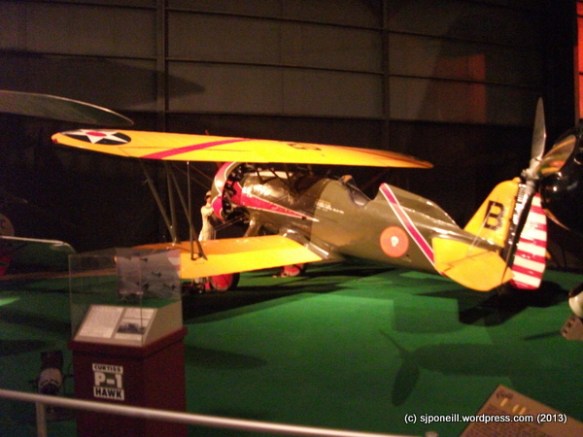
1930s US Army aircraft markings

DSCF0744

Sunrise over the Plateau

DSCF0761

Old Town, Alexandria 005

Reflections in a window, Alexandra, VA

March 2012 001

Lighty things at LAX

DSCF6210

Slates on the roof of the bell tower of the Flanders Museum in Ieper. An accidental shutter click…

1-23-2011_027

Iron fencing outside St Patrick’s Basilica, Oamaru

DSCF2021

Light show on the roof of Fremont Street, Las Vegas

Weekly Photo Challenge: Pattern | The Daily Post.

Weekly Photo Challenge: From Above | The Daily Post

Ingenious mouse trap at Unwin Hut

Looking down on a novel and innovative mousetrap in A Department of Conservation hut near Mt Cook during a school trip in 1981…the beer bottle is wrapped in a sock to stop it rolling away and had a chunk of cheese jammed in the opening…the rest is simple physics…

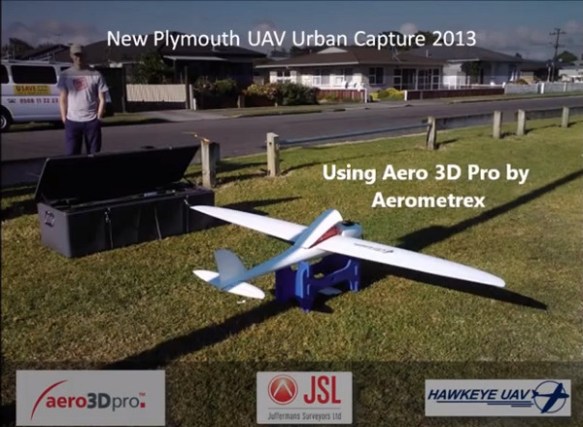
As much as I aspire to always use my own images in these challenges, this time I can’t resist putting in a plug for my mate, Rowland at Hawkeye UAV who has combined cutting-edge geospatial technologies with state of the art small UAS technologies for the ultimate in commercially-useful look-down applications. In addition, this is largely based on Kiwi home-grown innovation and smarts…

This imagery is from a recent task over New Plymouth, New Zealand and over a clearly urban area which gives the lie to the know-it-all doomsayers that state that small UAS can not operate safely over urban areas…

Hawkeye UAV New Plymoutn 2013-1

Hawkeye UAV New Plymouth 2013-2

…don’t forget that this is a 3D image – as you scroll it the perspective and relationships between features on the ground change…

Hawkeye UAV New Plymouth 2013-3

…and all done from Hawkeye’s own AreoHawk UAS…

Weekly Photo Challenge: From Above | The Daily Post

Click to view some very cool imagery…even if it is only New Plymouth….

Weekly Photo Challenge: Up | The Daily Post

UAMF xf91 012

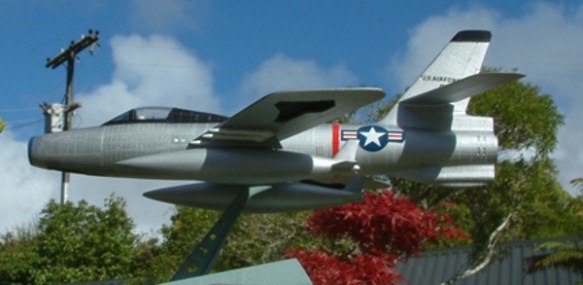
Looking up at the Lindberg XF-91 that I built for the Unofficial Airfix Modellers Forum (UAMF) 2008Classic American Kits Group Build…the pilot has dropped his pencil and is just leaning forward to pick it up hence the white of his helmet being so far forward in the cockpit…

Actually, I didn’t quite finish it…the reason that many of my shots of this aircraft are looking up at it is that while I was adding the markings, I reached for my trusty bottle of Mr Mark Softener (bottle with a bright green top) to assist the US national marking to settle closely over the rivets etc on the wing but picked up instead my equally trusty but in this case not appropriate bottle of Tamiya Extra Thin Cement (bottle with a bright green top) with the result that half the the star and bar marking instantly dissolved into a murky smear…UAMF xf91 014

One of these days, I’m planning on stripping it back and finishing it off properly, doing a decent paint job on, or replacing the original pilot, and adding the undercarriage…some day…

Weekly Photo Challenge: Up | The Daily Post.

Revitalise

Not only do They Live but now they fly again under the Draken banner in Florida…

Draken 4

Draken 5

Draken 1

Draken 2

Draken 3

So very very cool to see Kiwi Skyhawks back in the air again…a real shame that it’s someone else’s air but at least they are flying again…some of the Macchis are flying again too, which is good but just not nearly as cool as having the A-4s airborne again…