Hanging in there…

Take you to our leader?

Man, the Russians come up with some cool looking machines…this is the…Obyekt 279, a Soviet prototype heavy tank developed in the Kirov industrial plant, Leningrad. Work on the tank started in 1957, and was based on a heavy tank operational requirements developed in 1956. The special-purpose tank was intended to fight on cross-country terrain that was inaccessible to conventional tanks and act as a vehicle to break through enemy defensive positions….(cheers to Wikipedia)…

I came across this beast in a Paper Models thread asking for ideas for new armour models so if it tweaks a designer’s imagination, maybe it’ll be a builder…I’d have a crack at the design myself but at the moment I am running at capacity doing year-end accounts, working with Hawkeye UAV, gearing up for the Winter season, and completing some of my COIN-related review commitments…I finished Benoit Mandelbrot’s The (mis)Behaviour of Markets on Monday, am almost done with Amanda Lennon’s Fourth Generation Valkyries, and have a local work on hybridism to read…

So, the blog has taken a back foot for the last week or so and this state of affairs will most likely last until next week when normal services should be resumed…

In the meantime, Dean @ Travels With Shiloh has returned from the COIN Symposium at Fort Leavenworth and started to upload this thoughts and findings..please head on over and value-add to the his comments and observations…it’ll be interesting to see what Kiwis attending the symposium took away from a  national perspective…

PS…forgot to mention that Michael Yon has left Afghanistan (probably best for all concerned) and is currently in Bangkok covering the troubles there…if you’re on Facebook, it is well worth subscribing to his page where he has been delivering a steady commentary – a dozen + feeds each day – on the situation there…he offers an interesting counterpoint to the more sensationalist news media ‘reporting’ and depicts the human side of this drama very well…it is great to see that Michael has returned to the type of .boots on the ground’ that he is so very good at…

A sad day made sadder…

This morning an RNZAF Iroquois, one of three flying from RNZAF Ohakea to Anzac Day commemorations, crashed in rough terrain on the coast just north of Wellington. Three of the four crew were killed in the crash with a fourth being airlifted to hospital…

A sad reminder on a day already sad, of the dangers inherent in this profession even in peacetime at home…

Rest In Peace

Sadness and gladness of the Last Post

Lest We Forget

This was an editorial in one of the national newspapers for Anzac Day 1997…I can’t find any notes I may have made identifying the paper or the author…

The Last Post always makes me cry. I can’t help it. There is something in those crisp clear notes ringing out in the sharp-edged air of ANZAC morning that takes my breath away. It sets up a curious chemical reaction in the soul, where sadness and gladness are fused together and one is lifted out of oneself and into the unending reverberations of history.

The bugler speaks to the dead – the “glorious” dead – inscribed on countless cenotaphs and roadside memorials from one end of New Zealand to another. Not that there is anything glorious about dying. In the paintings of our country’s battles, the death of young men, far from home, in agony and fear, is seldom portrayed with much accuracy. We spare ourselves the horrors of war – and rightly so. Veterans of the real thing seldom speak of what they have seen and heard lest their words conjure up again the screams, the blood, the shattered flesh, the cries of “Mother!”.

The Last Post speaks to the silence beyond death; the space in which we contemplate the meaning of the final “sacrifice”. The Last Post asks us to ask ourselves “What did these young men die for?”

When I was a little boy, I would spend my ANZAC Days drawing pictures of soldiers climbing up the rocky hillsides of the Dardanelle’s. And, over the vivid colours of the battle scenes, I would print in the laborious hand of the young: “For King and Country”.

I do not think that there are many today who would die for the House of Windsor. But, in the silent crowds of young New Zealanders – more every year – who join the old diggers on ANZAC morning, I sense a longing to serve, to sacrifice, to give something back to their country.

The generations of New Zealanders born after World War II have been spared what the United Nations charter calls “the scourge of war”. It is a mixed blessing. To be sure, we have never had to hold our friends in our arms and watch them die or receive a telegram informing us of the death of a loved one. But neither have we experienced the powerful sense of unity with which a nation at war is infused, not the bonds of comradeship forged when men and women from all walks of life are brought together and transformed into a  fighting force.

Most importantly, the post-war generations will never know what it feels like to play for history’s highest stakes – when the issues of ultimate significance hung in the balance.

I often ask myself: “Is political activism a substitute for war?” “What is it that we go on protest ‘marches’?” “Why do we seek out those moments of ‘confrontation’?” When we see that line of helmeted police officers, their long batons drawn; when we experience that lonely thrill of fear, that sudden rush of adrenalin, are we not, in our own way, playing soldiers?

People often ask me: “What’s wrong with today’s young people? Why aren’t they protesting like we did?” My answer is brutally simple: “Because of what we did” Our generation has reduced those “issues of ultimate significance ” – Roosevelt’s “four freedoms” (freedom of speech, freedom of conscience, freedom from want, freedom from fear) down to just one: the freedom to buy and sell. Once a year, on ANZAC Day, we call forth the dead and invoke the myths that animate our nation. In the half-light of dawn, as the bugler draws out our tears and we “remember them”, remember the living also, and never forget that there are greater things to die for than a balance sheet.

And remembering other soldiers in another war…


The Return of Feral the Cat

Feral and her own little Odie

It struck me this evening while watching Tony stalk Maria around her flat on Coro that I have been devoting a little too much time to the Thursday/Friday War category at the expense of some of my other interests. So time to play a little catch-up…

As implied in the title, Feral the Cat has indeed returned to this rural stage…she has been staying with Carmen the last few months and, being an independent lady cat, amusing herself when Carmen comes home on weekends…unfortunately we think that Feral fell in with some of the wrong sort of cats from the wrong side of the tracks in Otorohanga  and snorted some bad weed. She was pretty crook for over a week and came home to recuperate. The reason we think she had been snorting weed is that one morning a week ago, she started coughing and coughing…hairball, all you knowledgeable cat types will be crying…but nope, weed.

I went to wipe some of what I thought was just gooby off her face, only too find that she had a blade of grass coming out each nostril. After a quick phone consult with the vet, I got a firm but gentle grip on her and withdrew a 3-4″ blade of grass from each nostril…no wonder she had been coughing so badly…since then she has bounced right back and is now pretty close to normal although a pleasant side effect is that she seems to have shed her FU attitude towards the rest of the world – but still manages to give her Odie aka Penny the Schnoodle a thumping most days…

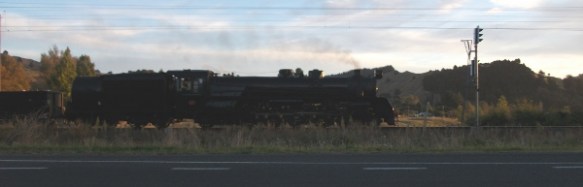
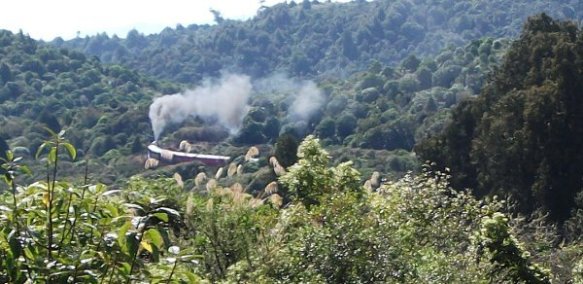
Once Feral got the weed out of her system, her internal processes started to flow freely again and I had to make an emergency trip into town for some more kitty litter. On the drive in, I noticed cars parked up at all the points where the rail tracks crossed or neared the road, with lots of little groups of train spotters peering expectantly up and down the tracks. I had the camera ready as I returned from my and caught blast from the past on the straights just south of Taumarunui…and here she is the next day, heading south again up the Raurimu Spiral – this is shot from our study window and I do miss the old camera with the 6x zoom…

There she goes, huffing and puffing...

And finally, this just popped up on a friend’s Facebook page – thank God for little commas…

Rapid Fire

Michael Yon still continues to drag the Bridgegate chain in releasing his Dispatch on the Tarnak Bridge attack and who was ultimately responsible for security on the bridge…on his Facebook page this morning, he said “…General Menard is definitely partially to blame. He’s got nowhere to hide. I’ll do this on my timeline, when the moment is right…”  This is the guy who had false accusations on the air in less than 24 hours after the attack… who then said that BG Hodges accepted full responsibility and that he would be apologising to GEN Menard (who I would suggest is not attempting to hide anywhere)…perhaps Mr Yon could enlighten us, and all those he accused over the Tarnak Bridge attack just when ‘the moment will be right‘ and how he goes about determining that? Surely the best time to apologise is as soon as he realised HIS error(s)…?

The story continues

Peter @ The Strategist has set up a new blog to host his short stories…the latest installment of Tales of the Collapse has been released this week…

The Falklands War 2010

No, not really…Cheeseburger Gothic has a thread on the likelihood and likely outcomes of another spat in the South Atlantic between Argentina and the UK…this follows items on The Strategist and Neptunus Lex on the same topic…it seems that the UK is getting a bit squirmy at the thought that the US might not be willing to commit unconditional support for any UK initiatives ‘down south’…funny, that…maybe that’s what happens when you bail and leave your friends holding the baby in places like…aaaahhhh, let’s see…Iraq? I said it there, I’ll say it here…

I posted this on a local blog a week or so ago that took a similar stance. I think that the US (regardless of what you think of the current tenant in the White House) has a right to expect some quid pro quo from its ‘friends and allies’ before supporting them in issues where they have decided to no longer be capable of supporting themselves. I’d dispute the 1 million protesters figure and also note that the UK in Iraq had a backwater AO (compared to the intensity of AOs further north), did nothing but snipe at US conduct of the war especially after the COIN phase kicked off, and had to be rescued by the US in Basra just before scuttling out of the theatre…

From http://kotare.typepad.com/thestrategist/2010/02/britain-us-argentina-falklands.html#comments

Fact time.

– The UK didn’t take a lot of casualties in Iraq…SFA considering they were right up there with the US promoting the cause. They had a backwater AO that the US had to bail they out of just before they ran away back to the UK.

– The UK contribution to Afghanistan is only notable in comparison to the rest of NATO, Australia and NZ. They have scrimped on every pound of support to that campaign (which once again, they talked up in 2001) at the expense of their own soldiers and their allies. They have had to be shamed into providing adequate support to their forces so that they are not a liability to themselves or other coalition partners.

– The UK and NATO were pretty lightweight and ineffective in Yugoslavia until the US bailed them out again in 1995.

– The US worked overtime under the table to ensure that the Brits would win the Falklands War in 82.

– The US had to stand ready to bail the UK and France out of Suez in ‘56 after they made such a botch up of putting Egypt in its place.

– The US had to bail the UK and France out of two world wars and provide the majority of the capability to NATO throughout the Cold War.

In the interests of fairness, I’ll also list those times that the UK has bailed the US out:

Well, that didn’t take long did it…?

So why would the US really give a fat rat’s about Britain’s problems with Argentina, especially since the UK still persists in touting itself as a ‘world’ power…?

If as one comment states on Lex’s item “…Britain is still a “world” power today, once you take American hyperpower out of the equation. She’s one of the very few countries in the world with both the economy and capability to provide “global intervention” military power today…” then Britain won’t really need help from anyone will she…? Certainly not small nations in the South Pacific that had their Argentinian ambassador on a plane home before the Brits could evict their own, that offered ships and troops to free UK forces from other commitments to be deployed ‘South’….

JMS on Superman

In one of my occasional random strolls through the blogosphere I came across this great article by J. Michael Straczynski (of Babylon 5 et al fame) [PDF] on the values he (and we can) draws from Superman…I don’t have much access to modern comic books here…Archie and Jughead are the upper limit in rural bookshops around the Mountain…

Seven fun ways to exercise the mind

Random stroll #2 took me to The Village Wise Woman…keeping the grey matter ticking over is a vital part of both individual and organisational learning – if we allow ourselves to fall into a nice safe comfortable rut e.g. like preparing the defence of the Fulda Gap…then we start to become less innovative and effective and our ability and will to question the things about us atrophies…take a slow day and try one or two of the exercises suggested – even better see if you can make one a habit…

No service = better service

Curzon @ Coming Anarchy describes the Dubai postal service (or lack of) and describes how this actually creates a better postal service for people living and working in a major regional hub and international center of finance and commerce.

The Oscars

Great to see The Hurt Locker take out Best Picture – just as good that it wasn’t any of the blockbuster movies that were nominated…I’m listening to various commentaries as I type and it is a concern that many of them seem to draw the dots between box office income and best picture…using this methodology, would we ever see any movies that challenge us, make us think or nudge us our of our comfort zones…in a few years who, less the scifi geek community, will really remember Avatar? In thirty years will children today describe a scene from Avatar with the same wonder that many today still describe that opening scene from Star Wars (which also did not win Best Picture in 1978), as the Star Destroyer fills the screen? What phrases from Avatar will be used three decades later by people with no interest at all in science fiction? Great bling ≠ great movie…

This year’s winners list

On learning

(c) Peter Hodge @ The Strategist

This amazing photo was on Peter’s latest post @ The Strategist…my only comment is WOW! To learn more, click on the image…

This post also carried a link to a recent Business Day article Unhappy workers the key to corporate culture which states organisations that wish to learn about themselves,  for example, what’s working and what’s not, could do worse things that seek out and listen to “…malcontents and marginalised workers in the firm…” Often these people are marginalised or malcontent because they are frustrated in their efforts to improve or progress their work environment. As I commented on Peter’s post, so often I have “…seen a visiting reviewing, audit, info gathering team sat down with the happy-happy joy-joy people in an organisation when they really need to to be getting together with those who have issues (real or perceived) with how the organisation operates…

Most organisations have a fundamental expectation that equipment and processes and staff will function as advertised. To be continually told that this is occurring really achieves little except perhaps a warm fuzzy feeling in the executive washroom. What organisations really need to know is what is NOT functioning as it should, or where things could be done smarter…you won’t get this from the mindless clones of the happy-happy joy-joy brigade. This is the foundation of any Lessons Learned or organisational learning process of system: to get over fear of bad news and actually welcome and seek it out. All to often though, the catalyst for this cultural shift is a king-size punch in the nose.

The most notable example of such cultural change is the US Army in the year from the end of the official war-fighting phase in May 2003 until the true scope of the insurgency was grasped in 2004. In no more than a year, this organisation of 500,000 plus was transformed from one where it was not cool to advertise screw-ups in your area of responsibility to one where it was no longer acceptable NOT to share what went wrong on your patch in order that others might learn and lives be saved…if the pie-in-the-sky plans of Rumsfeld, Cheney et al had actually worked and Iraq had snapped into a functioning democracy as soon as Saddam was toppled, I don’t think that even a quarter of the issues identified in the various post-Phase One AARs would have been addressed, and certainly any cultural shifts arising from those issues would have been incremental at best.

The first step in any Lessons Learned system is to consistently and continuously and honestly capture what’s not working and what could be done better. We found that the format for this is:

What happened? A simple statement that defines the problem or issue, e.g. boot laces keep snapping.

What does it mean? I.e. the ‘so what?’ factor…you can not assume that everyone else will perceive the same or any issues arising from the ‘what happened’ so this needs to be explained. e.g. affects soldier’s mobility as boots don’t fit properly until such time as laces are replaced or repaired – this is not always immediately possible i.e. at night (light discipline) or if spare laces are not available/accessible.

What do you think should be done about it? This is the originator’s recommendation from their perspective and may often serve only as a start point for investigation and bear no resemblance to the final solution e.g. replace the current crap boots with a new brand.

This was an OIL that we came across through direct contact with some of the afore-mentioned malcontents and marginalised who expressed their frustration that this problem was prevalent and nothing seemed to be happening about it. When we pulled on a few threads, we found that higher levels were prone to removing such low-level ‘trivia’ as reports drifted up the hierarchy, based on a misperception that high-level issues should be disseminated up to high levels. The response back down was more than often the good old ‘harden up!’

Investigating the actual issue was very frustrating because there was a continual stream of ‘no fault found’ with every test conducted on the laces held in stock. It was only in examining the boots that it was found that the fault was not in the laces but in a batch of lace eyelets that had an exceptionally sharp inner edge – the action of pulling a lace tight also pulled the lace over this edge which cut into the fibres of the lace. Murphy’s Law of laces states that they will always give way at the least convenient time, typically 0300 on a frosty no-moon night on a patrol in the tussock.

The solutions that were put in place were to:

Withdraw the affected boots and have them repaired by the manufacturer.

Review Quality Assurance processes for future boot shipments.

Review the defect reporting process.

Discuss with headquarters staffs the importance of NOT attenuating reports as they rose through the chain of command, including those issues that perhaps they could actually resolve at their own levels. By keeping these to themselves they constrain the ability of others to learn from them.

Man’s Best Friend

Neptunus Lex has a touching story about a boy and his dog…things you wouldn’t see your cat doing for you…

Bridgegate

Still waiting on Michael Yon’s Dispatch in which he winds up the Tarnak Bridge drama AND apologises to Canadian general Daniel Menard…

Getting out of the square

Travels with Shiloh discusses the need for intelligence operators to have training in snapping out of conventional squares to consider problems in the complex environment. I agree and think that his 2007 suggestion of using movies like John Carpenter’s The Thing as the basis for scenarios to achieve this has considerable merit. I had a similar idea in the early 90s when i was just getting into PC gaming that young officers could be given certain games to play that would broaden their problem-solving thought processes…TacOps springs to mind immediately but for some reason Megafortress springs to mind – will have to see if I can find my old notes on this…to add a pain/risk factor, it was suggested that they play for places (or not) on the monthly duty/orderly officer lists…

I also agree with Dean’s comments re using tactical decision-making games (TDG) – the Marines have been using them for years – I think they still publish one at the back of each issue of the Marine Corps Gazette? – but everyone else seems a little slow on the uptake. The zero defects people seem very cool on the idea unless each TDG comes with a 17 page ‘white’ sheet that details all the possible permutations and variations of solutions so that the supervising staff would be put on the spot and find their own knowledge and or capabilities challenged. I think this is a fundamental lack of understanding of what TDGs are for which is to allow students and instructors to explore the application of principles and considerations in different environments and scenarios and to totally NOT focus on any perceived need for the solution to be a thing that Norman Schwarzkopf would be proud of…

The double standard of nice war

Coming Anarchy discusses the drone ‘war’ in Pakistan. The acceptance of civilian casualties in this campaign against the Taliban seems to be in stark contrast with ISAF’s squeamishness in engaging Taliban hiding behind civilians in Marjah. Maybe it’s only OK to kill civilians in a war zone by accident where you (and the media) can’t see the bodies…? It’s probably all the same to the dead…

Getting it together?

Afghan police officers and the U.S. soldiers, bottom, gather at the scene of a suicide attack in Kandahar south of Kabul, Afghanistan on Monday, March 1, 2010. A suicide car bomber attacked a NATO convoy Monday outside the major southern Afghan city, killing one NATO service member and four Afghan civilians, officials said. (AP Photo/Allauddin Khan)

On Michael Yon’s Facebook page this morning:

Sad and Sickening: A General Officer should be fired.

This morning, we lost a soldier to a suicide bomb on a bridge just a short drive from this massive military installation called Kandahar Airfield. The bridge, which is important to us, was badly damaged and remains impassable to military traffic. Meanwhile, on this bustling base, under-employed soldiers from various nations crowd around hockey games, live bands, and coffee shops. The damaged bridge is just a bicycle ride away from soldiers who are too busy celebrating Olympic medals to safeguard this bridge. The bridge is so close that I felt the explosion and saw the mushroom cloud. Our mission, and no doubt others, was cancelled because we could not get over the bridge.

The General in charge of security for this bridge should be fired.

Coupled with another attack in Kabul involving NZSAS troops, one wonder if there might not be something to the idea of secondary effects of the surge in Afghanistan?

On ‘science’

Coming Anarchy discusses the ‘science’ of global warming, a topic that has also been slammed by Neptunus Lex. Portable Learner while covering another example of misapplied science, “…In an interview for On The Media, The Lancet’s editor Dr. Richard Horton weighs in on the state of open scientific debate:

We used to think that we could publish speculative research which advanced interesting new ideas which may be wrong, but which were important to provoke debate and discussion. We don’t think that now. We don’t seem able to have a rational conversation in the public space about difficult controversial issues without people drawing a conclusion which could be very averse….The 19th-century days where you could sit in the salon at the Royal Society and have a private conversation amongst your fellows just doesn’t exist anymore. So I think yeah, too much information in this particular case is a bad thing, which seems to go against every kind of democratic principle that we believe in. But in the case of science, it seems to be true.

But it is not. I can’t help but wonder if we had had this conversation, in public, ten years ago when the study was still “speculative research” we may well have averted the flawed decision to publish it in the first place. We need more information, not less, and more inclusive conversations, not narrowly confined to the medical community. The public may well have to engage the medical community in the public space “difficult conversations without drawing a conclusion that could be very averse…

I tend to agree – far better to have the discussion early and draw out all of the available information out to make as informed a decision as possible than to disregard potentially relevant stakeholders and abdicate responsibility what may be perceived as an overly-elite group.

‘The people’ can be really dumb at times…

The Strategist comments on the ignorance and stupidity of those who opted to ignore tsunami warnings along New Zealand’s coast after the earthquake in Concepcion. One might argue that this is only natural selection in action and I might have agreed if it were not for the risks implicit to those who might have to attempt to rescue these losers and to the children they took to the beach with them; at best, it is wasting Police time, at worst, manslaughter. An interesting discussion at NZ Herald here and I wonder if this naivety and complacency is linked to the questions asked in the Timings paper mentioned above? Are we a nation that only learns the hard way…after a punch in the nose…?

People ignore tsunami warning at Mount Manganui. Photo/ Christine Cornege.

A good way of doing business

Peter also has an interesting item on the Byzantine Lessons Learned process…1500 years ago, the Byzantines developed theatre-specific handbooks for each of their current and likely mission spaces…if they could do it then, it really makes you wonder why it appears so hard today. I’ll have more on this when I complete my paper on GEN Mattis’ comments re obsolete thinking.

Progress

I made my first pastry ever yesterday afternoon and my first all homemade pies last night…some tuning still required but very YUM!!!

Marking Time

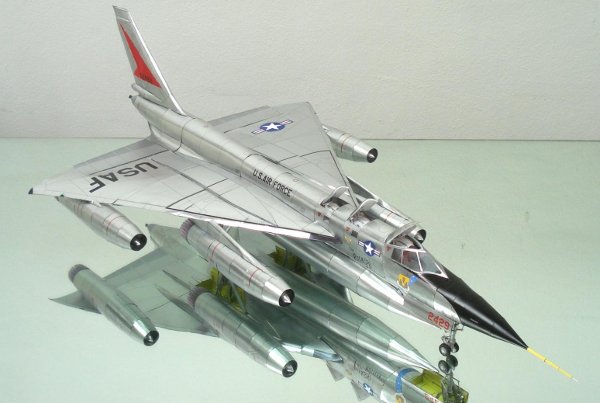
1/32 B-38 Hustler – yes, it really is made from paper…!!!

I am frantically working on three papers at the moment which has severely cramped my daily post style…it is also the beginning of March which means that the second question in the HLS roundtable is now ‘live’ which means a fourth paper should be gestating somewhere in the dark spaces between my ears…the second question is “Why are we unable to measure the relationship between homeland security expenditures and preparedness?

The good weather (is this really summer?) hasn’t been helping but Carmen and I did get heaps done around the place over the weekend so there is progress somewhere…

By means of a space filler, the test build on Ken L. West’s B-58 has just been completed at Paper Modelers and I expect that the model will soon be available for purchase and download at Ecardmodels soon…

There was a great full moon last night and Carmen and I missed a goodly chunk of Doc Martin (normally must-see TV in this household) to try to capture it…this is about the best of my attempts but I expect that Carmen’s will be much better as she has the eye for these things that I lack…

Moonlight Over Raurimu

We’ve also been experimenting in the kitchen again but will save that for a dedicated post…

Round Up

Just a quick round up of what’s happening around the blogspace – have loads of domestic duties this week so focusing on those while the sun shines…

Europe Descends

Neptunus Lex continues to chronicle the decline of Europe as a major power, if it every was in the first place – certainly some of its member nations may have been – once – but EU Europe definitely seems to be less than the sum of its parts…Britain, Eire, Netherlands, Greece, Russia

Keep 558 alive

At Paper Modelers, there is a request to support XH558, the last flying Avro Vulcan bomber. 558 took to the skies once more in 2008 but exists only on donations and some minor corporate support…have a look at the Vulcan Trust site and at least sign the supporters card – give a little if you can….

Is this not both beautiful and super cool?

Birmoverse – The Movie

Following the creation of a Facebook page calling to Hollywood to option John Birmingham’s Axis of Time trilogy, Cheeseburger Gothic called for ideas on who should play who in the movies…still room for your 2 cents…

Mr Birmingham is also off to Puckapunyal again next week for another get together with Force Development Group on what future conflict environments might be like…interesting to be a fly on the wall for that chat…

RIP Charley Wilson

Coming Anarchy carries a brief obituary for the orchestrator of the mujahedeen victory against the Russians in the 80s.

Natural Selection in Action

Some would-be bombers in Adelaide have gone to a better place…

Be older and happier

Discover Magazine reports on a survey that finds we get happier as we get older – something to look forward to…

Kilcullen on Metrics

Tom Ricks at Foreign Policy is carrying a series of new material from David Kilcullen:

Kilcullen (I): Here’s what not to measure in a COIN campaign

Obviously more to follow on the nuggets in these articles…

Uh-huh

More thefts from Army Museum Stop dodgy crims at Crimestoppers.

And we should respect your traditions in our countries why?

Valentine’s police see red as Saudis crack down on Valentine’s Day…

Once was a rail service

Along the Kapiti Coast

I have ‘borrowed’ this great picture from Peter over on The Strategist – the background to the picture is in Peter’s own post Saturday evening reflection: from a railway carriage – it’s a great little story about boys and their dads.

It’s only January but already this picture is a contender for my picture of the year. Every time I look at it, it brings up a range of images and feelings. The scenic beauty of our little nation – that’s the Kapiti Island Nature Reserve on the horizon – although this is one of the few places now where a passenger trains runs along the coast for any length of time. Once upon a time when the Southerner still ran daily on the ChristchurchInvercargill run, one of the best sections was where the rail wound through hills and along the coast between Oamaru and Dunedin with views much like this. Of course the powers that be decided that we didn’t need a passenger rail link any further south that Christchurch a few years back and so anyone wanting to head south now has to contend with being cramped onto a bus with minimal facilities, getting a rental car or hitching (although the South Island natives are generally friendlier and more hospitable than in the north.

I see the cool Capri on the trailer in the foreground – immediate memories of Bodie and Doyle – must-see TV in the late 70s and early 80s. I like to see icons from past eras being restored and I wonder what story surrounds this car – lovingly restored in a garage over time? Captured memories of frantic back-seat fumblings and youth now gone? Maybe a father-son project while mum and the girls do ballet and horse-riding. Maybe a journey off to a show for the weekend where others display their pride and joys too…?

Most of all I am sad at the way in which successive governments have allowed rail services to be hacked to bits. While there is probably more freight going on rail than every before – the Raurimu Spiral is visible from my window and there are big (for NZ anyway) freights going through every couple of hours – and congestion would be a major problem if we tried to return to the passenger schedules of three or four decades ago, I’d love to see the Overnighter return to the Auckland-Wellington run – even if only as a rail car much like the old Silver Fern. I see that the wikipedia entry on the Silver Fern mentions its fatal crash in 1981 – a friend of mine was the Orderly Officer in Waiouru that night and was telling me about when we had a farewell drink before he departed for a new posting down south only a week or so ago. The day after the accident, a very reserved and polite Englishman approached him, identified himself as an RAF officer and asked if it might be at all possible, if it wasn’t any trouble, to send a signal off to the UK advising that his return from leave would be delayed by a few days due to the accident.  The tone and gist of the signal was “…IN NZ ON HONEYMOON STOP BRIDE KILLED IN TRAIN CRASH STOP REQUEST ADDITIONAL LEAVE FOR ADMIN PURPOSES STOP…” Sad…

I remember meeting the railcar in Oamaru on Friday nights with my parents as various cousins studying in Dunedin or Christchurch would visit for the weekend for home-cooked meals and a decent bed. Later in life, I used to take the train the other way to link up with student mates in those cities for a weekend of chaos. South Island railcar services were withdrawn in the 70s and not replaced by another overnight rail service. In 1983, a fast Invercargill-Christchurch bus service was introduced that did the run in twelve hours – this was in the days of the 80 kmh speed limit and it was soon pointed out pretty bluntly by the Ministry of Transport that it simple was not possibly to meet this schedule AND comply with open road speed limits – the schedule was amended accordingly but I don’t think the speeds every dropped much. I was a regular on this run and as a result discovered, as did Peter in his tale, the rich resources of the railway station bookshops. Here I found such ‘classics’ as Martin Walker’s A Mercenary Calling (not much info on AMazon but I can’t belive the prices this book is going for!), David Gerrold’s War Against the Chtorr and Jerry Pournelle’s Janissaries – the latter two becoming eventual disappointments as, even three decades later, both authors still drag the chain on concluding respective series.

In 1983, the bus would drop me at the corner of Riccarton and Ilam Roads in Christchurch around 6 in the morning and I would stagger (restoring circulation after twelve hours bus-bound – staggering due to other causes would come later in the day) through the mist and rain to Rochester Hall where I always crashed with my mate, Paul. We’d go hard all weekend, then I’d sadly unwind the rubber band on the Sunday or Monday (if I gave myself a long weekend) back to the sunny South…

In other journeys, my trip to Otorohanga yesterday went really well. There is a small business just up the road from Carmen’s work week flat that makes a range of hard-wearing, colourful bags and items of clothing – Danzbags, if you want to Google/Bing for it. They only sell from the factory shop but they have such a great range of items (and NZ made!!) that Carmen got us together so I can do some marketing for them on Trademe and possibly elsewhere if it takes off. Small businesses here (and elsewhere, I guess) are under mega-pressure from big chains like Warehouse that kill off smaller enterprises wherever they set themselves up so I’m more than happy to support them where I can – and, as Carmen has been quick to point out, it keeps me off the streets.

Chiefs supporters should be able to work out the anagram.

I had a lot to do with this type of industry in New Zealand when I was project manager for a range of projects looking at military clothing and personal equipment in the mid-90s and it has been quite interesting getting back into the periphery of this area again, Even something as simple as a pencil case, which I never gave much thought to until I stopped at the Warehouse in Te Kuiti on my way home and saw the absolute crap being sold there and the prices they ask for it…

Support Kiwi made