Back in the office…

…after the better part of five weeks away. I find that I didn’t really miss it that much…some interesting new content in the inbox though and this week will be largely occupied by book reviews I think:

  • MAJ Jim Gant has completed his  Tribal Engagement Team paper and the full text is available with a broad range of comments on Steven Pressfield’s blog. The closing paragraph says it all: ” There may be dozens of reasons not to adopt this strategy. But there is only one reason to do so—we have to. Nothing else will work.”
  • JFCOM has released JP 3-24 Counterinsurgency, the US DOD’s joint slant on COIN which should encapsulate and further develop the themes in FM 3-24. There is some comment on JP 3-24 on the COIN Center blog.
  • The US Army is developing its Army Capstone document Operating under Conditions of Uncertainty and Complexity in an Era of Persistent Conflict for a planned release date of December 2009. For all those who have been happy to sit back and snipe at US policy and doctrine here is your chance to have some input: the draft document has been published online and comments may be submitted through the Small Wars website (you do have to join up). The news release has more information.

In other COIN-related news

The UK is reroling four armoured and mechanised battalions into light infantry for service in Afghanistan on the understanding that these units will be able to revert back at a later date and noting that this will take possibly up to five years. This move is somewhat unusual in light of public comment in the UK this month regarding the overly-light nature of British vehicles in Afghanistan and the perception of a direct link between this and a number of battle casualties. The Canadians not only swear by their LAV3s in this theatre but also reversed a decision to get out of the tank game and are spending some billions of dollars for the rapid acquisition of Leopard 2A6M tanks. The US has deployed SBCT 5/2 into Afghanistan as well and initial reports indicate that Stryker is as effective here as it has been in Iraq. One wonders if this move is driven more by efficiency than by effectiveness?

I am (really, I am) making some progress in redrafting the paper on Countering Irregular Activity and it might even be complete next month…after that, Josh has been cracking the whip for the Future War rewrite/update…

It’s raining again…

..after a nice day yesterday, where I chopped  most of the wood and filled up the shed, dried the carpets after they got caught out in the last storm, and recovered a dozen+ eggs from the chooks latest covert nest – maybe their yard is too big?

After all that – it was a fairly respectable wood pile that had accumulated over 2-3 months – my poor old body wasn’t up to the challenge of blogging, and even less so after Carmen slipped me a glass of wine over dinner (very nice too: steak, tabouli and cold roast vege salad with a rosemary and honey dressing). I was out to it on the couch (also very comfortable: they are two big flat-tops that I can easily stretch right out on, named Nimitz and Ark Royal) by the time the Monday movie started: I have brief flashes of Brit crims knocking each other off (The Take…?)before I negotiated the stairs to bed…

Anyway…

Coming Anarchy has an interesting item on media bias and reliability which has turned into a bit of a cable-bashing session. While I share the concern raised in the actual blog entry, I don’t have much time for the hobby-horsing in many of the comments. As per my own comment, the issues in the blog entry are how it is now: the internet and our ablility to self-publish pretty well whatever we want have decreased our reliance on the media for impartial information to the extent that most media outlets now have to follow commercial imperatives or go under: simply, they are now in the same ratings game as the rest of the media business; no longer the voices of knowledge and wisdom, but catalysts for people (‘the people’?) to further not only explore but contribute to an issue, for better or for worse…

Hence the Information Militia: informal, disorganised, often at cross purposes and following their own agendas even when in support of a common goal (have you ever noticed how a ‘common goal’ can have so many different meanings?) but a force none the less to be reckoned with. From Twitter to Crimestoppers to the most stridently hard left/right (is there really a difference or do the meet in the middle?) blogspace, we have access to growing mass of information upon which to make our own decisions, to shape and guide our actions and our worlds. The choise is ours whether we meekly accept that which is served up to us on a spoon, or take the plunge to ferret out as much supporting and contrary (what sort of loser only seeks that which agrees with them? Possibly we don’t want the answer to that question!)  information to deal with.

So the first level of the Information Militia are those who feed information in; is the next level those who take that information, reprocess it and serve it up again, perhaps in support of a specific objective…?

Steven Pressfield is on the road this week and has reposted his One Tribe At A Time article to keep the dialogue alive. Of all the online discussion regarding the way ahead, this particular discussion is the first that I have seen that may be sowing the seeds of a successful campaign in Afghanistan (which would be a historical first!) . Key elements are:

  • Prevent Afghanistan from passing into a condition that would allow Al Qaeda to use it as a resource in creating threats to our security and national interests.
  • The best that we can hope for in Afghanistan is a “loose confederation of tribes.” Think of a congress composed of elder members of each tribe that comes to represent issues of import to that tribe at some set dates/times each year. The only hope for a “traditional” government is found in the bigger cities; but…Afghanistan is mostly tribal villages, not big cities. Such gatherings would not put an end to inter-tribal fighting, however, the tribes might be able to get some assistance from the central government for basic services and the like. Generally, the tribes don’t want the “modern” conveniences – they want to stay the way they are, but some can benefit from help with drilling wells, medical care, etc…
  • Adopt and implement NOW a campaign based upon direct integrated engagement with the tribes (‘the people’ in popular COIN parlance).

The catalyst behind this proposal is MAJOR Jim Gant’s One Tribe At A Time paper which articulates the Tribal Engagement Team concept although it will seem all too familiar to anyone with knowledge of traditional ‘hearts and mind’s campaigns like the classic campaign waged in the Highlands of Vietnam by US Special Force in the 60s. This mission used to be SF bread and butter before the glitz of Special Operations took over in the 80s and 90s. Gen McCrystal has the ‘get out amongst the people bit right’; Jim Gant has provided the ‘how’ of this…small units, living with the tribes in an enduring and long-term relationship…Anyone wanting to do some background reading on this could do worse things than read Robin Moore’s The Green Berets – the very good book upon which the entertaining but conceptually accurate John Wayne movie was based…Here is someone who has read FM 3-24 and then adapted it to the current situation; hopefully the full text of this paper will be posted soon so that we can get our teeth into it instead of being fed these tempting titbits…

My last link today is to the developing discussion on The Strategist on historically incorrect war movies, initiated by King Arthur on the weekend…it’s a good discussion with a good nugget or two…and of course my comment above re The Green Berets movie will spark off some more…

The COIN drops…

…or is it just a penny…?

Previously in The World According To Me: “Over time some insurgents will tire of the constant harassment in the face of growing public confidence in government forces and disdain for the insurgents… encouraging THEM one by one to consider coming to the talking table…”

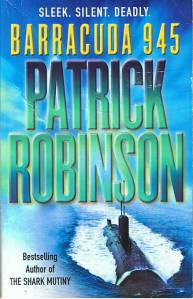
barracuda 945I picked this up on my way through Singapore last month, thinking that with Admiral Sandy Woodward of Falklands War fame as an advisor, it would be pretty good. Not only is it not, but I could also see why other commanders in the fleet were worried that Woodward, with limited aviation or amphibious experience, be the wrong guy for the job:  once the plot puts to sea the whole premise is based on the ‘fact’ that the US Navy is the only service in the US DoD which helps the story along by skipping gayly around inconveniences like AWACs…I also think that the three unnamed Special Forces officers who allegedly advised on the story need to hand back any beers they received for ‘advice’ as the SF side is pretty weak as well. So the connection with COIN is…?

Without spoiling what story there is, a key assumption in the book is that the way to win an insurgency is to out-exasperate the opposition, i.e. harass them to the point of just giving up and going home…at the time of reading the book, these seemed like a great recipe for success for insurgents and difficult to beat from a COIN perspective – until I I reread the piece on the Information Militia this afternoon…could initiatives like Crimestoppers in a COIN/Stability campaign actually be the start of the Death of 1000 Cuts for an insurgency? Turning The War of the Flea on its head and subjecting the insurgents to an endless series of pinpricks and mossie bites until they have just had enough and start to consider their options…?

One thing I did like about Barracuda 945 is that the ending is not the righteous vengeance that one might have been expecting. Instead it presents a very left-field scenario which strikes at a core issue and not just a symptom – does that sound like something that might be drawn from FM 3-24 – even if the story does use major elements of national power to achieve the effect…?

I’ve commented a lot, as have many other commentators, on the apparent lack of strategic objectives for the war in Afghanistan. This summary came off one of the distribution lists I’m subscribed to; it states pretty clearly that al-Qaeda is still the primary raison d’etre for the war from a US point of view but one wonders how logical that really is…some things to think about:

  • The Taliban are not AQ; they may have supported and hosted them prior to 9/11 but are now probably not that impressed with all the attention that has drawn.
  • AQ are probably well-established in many other locations are the globe – where next after Afghanistan for the GWOT?
  • If there is any lesson to be learned by insurgents (as opposed to simple terrorists) from 9/11 and the London Tube bombings it is that such actions are more counter-productive for the ’cause’ – as Yamamoto feared, once you wake the sleeping dragon, it is damn difficult to put it back to bed…so AQ cells around the world are probably more discreet than to parade themselves openly in training camps as once was their wont.

These things being the case, then perhaps we need to reread FM 3-24 and ensure that such fundamentals remain in the 2010 version, and start to focus the campaign on ending the insurgency…if the aim is an AQ-free Afghanistan, then maybe we need to be casting off the dream of democracy for all and realistically start to look at ways of bring the Taliban to the table…carrot and stick…turn the war of the flea back on them…out-exasperate them until talking becomes the way better option to fighting. It is unlikely that we will be able to bring the Taliban (or any other significant Afghan group) to the table by force – didn’t work for Alexander, didn’t work for Victoria, didn’t work for Mikhail, and it wouldn’t have worked for Napoleon either if he had strayed in this direction….

Could we live with a stable Taliban in Afghanistan if that meant an al-Qaeda-free Afghanistan?

The Information Militia

…it was really great to see former Chief of Army, Lou Gardiner, fronting for the recent launch of Crimestoppers NZ (0800 555 111). This initiative is the silver lining from the cloud of the December 2007 Army Museum VC theft that brought General Lou and Lord Ashcroft together and got the  idea fermenting (‘though the head of Crimestoppers NZ probably won’t have his own jet!!).

Initially I was a bit dubious about the whole idea of anonymous reporting and the opportunities to play ‘Dob Thy Neighbour‘ but I’ve been following the news reports this week and even if the Kiwi version is only half as effective as the UK one, that is still a 10% dent in the crime stats which is pretty respectable by anyone’s standards. More power to Crimestoppers and it will be interesting to visit in a few months to see  how the stats are panning out. In the meantime, I exhort everyone to pop across to Crimestoppers and plant a few words of encouragement on the Crimestoppers Blog. Consider this your personal contribution to domestic Info Ops for 2009: the more obvious public support there is, the more likely it is that ordinary people will use the site….away you go…

Defence Capability Centre 033 small

This mobile signpost is in one of the display areas at the Defence Capability Centre at Shrivenham – it was in this complex, which is absolutely packed with big boys toys for ambient effect, that the CLAW was conducted this year. At first, I thought it looked kinda dumb and just a big invite for a couple of rounds of ‘Dob Thy Neighbour‘ and other forms of neighbourhood score-settling and mischief. But then I thought about it some more from an information perspective. Clearly in any COIN, Irregular Threat or Stability environment – and when you get down to it, domestic crime-fighting is as much about stability ops as is providing security in an operational theatre – there is a very real risk or kickback and retribution for ‘narks‘ and ‘informers‘ thus anonymity is not only good but essential.

This is probably easier to effect in an operational theatre where the onus of evidence might not be as rigid as in a civil courtroom even though the process of analysis and decision may be no less rigorous or difficult. I’m about 2/3 of the way through Australian General Jim Molan’s Running the War in Iraq (top read – highly recommended!!) and he goes into considerable detail on the rigour that his staff applied before approving prosecution of a target, often under very tight time imperatives (which is why it’s called Time Sensitive Targeting). Instead of having to satisfy a judge a a jury of his/her ‘peers’, the operational requirement is to satisfy a specific decision matrix based on four considerations: (from Running the War in Iraq) proportionality, humanity, discrimination and necessity. So in this environment, the painting of a picture based upon all source information, including that from anonymous sources, is more directly linked to an actionable result.

In a domestic criminal environment, there remains an equal or possibly greater burden of analysis and validation on information from anonymous sources which ultimately may have to satisfy a formal legal evidential chain. But over time, what we develop is a complex and detailed picture of a society and its environment that is constantly enhancing and evolving. The key to this, is the reliance upon informal, part-time, intermittent information sources…uh-oh, it’s THE PEOPLE again and these are whom I am starting to think of as the Information Militia…they are often not formally organised, particularly reliable, or often even that useful but every little titbit they provide adds to the picture, even (possibly not even intentionally) their place in it…a resource that supports the campaign, even while perhaps attempting to further its own myriads of ends…

And then I thought, wow, what if you took this model and applied it to Afghanistan – could this be where the support of the people might actually make a difference? It is not realisitic, although we keep on doing it, to expect ‘the people’ to just wake up one day and decide ‘Enough!’ and turn in all insurgents and their supporters. Not realistic at all, and we’ve all seen it happen one place or another, where the insurgents/criminals  (the same or another mob) come back and dish out retribution. But what if we had Crimestoppers Afghanistan? Very specifically Crimestoppers and not any play on words like Talibanbusters, etc etc…the objective is to focus on crime and by very clearly unstated inference, insurgents because they are nothing but criminals…the Information Militia provide leads, feeds, rumours and whispers – all anonymously – which paint a picture which then informs counter-criminal operations – reducing crime is always a good start to getting the people onside – and as the picture evolves, oopsy-a-daisy, a counter-criminal feed ‘accidentally’ knocks off some insurgents…and on it goes…

Over time, as occurred in Northern Ireland, some insurgents will tire of the constant harassment in the face of growing public (‘the people’ again) confidence in government forces and disdain for the insurgents. I refer to ‘insurgents’ deliberately in order to decriminalise the Taliban associations, to encourage THEM to consider one by one coming to the talking table…

Something’s missing…

Today I’ve made similar comments on both the COIN Center blog and Steven Pressfield’s blog on the war – maybe I’m missing something but has anyone recently i.e. since December 2001, actually clearly articulated what we are trying to achieve in Afghanistan? Every man and his dog (maybe we should start listening to the dogs?) are presenting their theories on how to win the war BUT, if these is one lesson we think we have learned since WW2, it is don’t get into anything unless you have some idea on how you’re going to get OUT of it. So what is the endgame for Afghanistan? Please… anyone…?

  • Exploit the mineral wealth of Afghanistan? Which minerals would they be?
  • Prevent Pakistani nukes falling into Taliban/AQ hands?
  • Return Afghanistan to its pre-1979 state?
  • Save it for/from democracy?
  • Prevent Iran or someone else filling the power vacuum left by the Taliban post-2001?
  • Secure new markets for globalised industry?
  • Something else?

Maybe I’m just dumb, or wasn’t  paying attention that day the endstates were being explained…I’ve read FM 3-24 and similar publication on the subject of COIN, irregular threats and stability ops and actions and a common theme in most of the is the absolute need to identify what the root issues of the conflict are and set out to address them in your long game…are we doing that? Have we done that? Is there a cycle of ongoing review and adjustment….?

As LCOL Malevich says in the Center blog “The Taliban have a simple message “foreigners out.” And, they promise only “security” and “justice.” What is our mission, what is our compelling narrative?

I suppose the other question that we might want to review is why does America care? When is NATO going to get its act together and get into the game; Ditto the Islamic Brotherhood – if they really do care for all Muslims, where are the aid packages, the troops and the initiatives from closer to home – would an Iranian Brigade be more effective than an SBCT…?

And some more in a similar vein here that I stumbled across while tag surfing…

And we pay for this…

Couldn’t sleep again this morning so got up and have been pottering around for a few hours now. I came across the latest Consumer magazine (NZ consumer watchdog magazine for overseas viewers) and had a read. For a while now, I’ve been thinking that some of the reporting has been rather superficial, if not downright inaccurate in some areas, and the article in the October 09 issue on tramping boots and jackets is a ripper – written by their technology writer, no less!!

High and Dry

  • One would expect Consumer to be able to source more empirical comment than from a company that is in the business. There are numerous resources available, including Google, that should allow a staff reporter to draw their own conclusions without relying on a single commercial source.
  • The implication in the ‘a boot to match’ paragraph that synthetic material boots may be more prone to leaks may be true but it is not as simple as that as many boots from synthetic and natural materials feature built-in waterproof membranes to provide waterproofing. Any boot, synthetic or natural, will let water in sooner or later – if dry feet are that essential, then find a pair of boots with a breathable waterproof membrane, or get a decent pair of Goretex socks. On a decent tramp, though, your feet will probably pump out enough moisture  from the inside of the boot that damp feet are almost inevitable – trampers should plan on drying feet, having spare dry socks, for the end of a days walking…
  • More important than insoles for the comfort of your feet is the support structure of the boot, of which the insoles are only a relatively small part – like any form of footwear the internal structure of the boot is what really defines the comfort of a boot, not the insole.
  • Soles should avoid rounded edges on the sole and at the heel so as to better dig into soft ground. The article should define what an open tread pattern actually is instead of leaving it up to the reader to interpret. Looking for a name brand sole is also a good idea.
  • It is false to state that boots with higher uppers offer more ankle support – while a higher upper may offer better protection to the lower leg and also make it more difficult for water to come in over the top of the boot (thus negating any perceived advantage from natural material boots!), they provide little in the way of extra ankle support and possibly, if laced too tightly, have an adverse ‘splint-like’ effect in restricting the natural movement of the foot and lower leg. This is why many, if not most, experienced trampers still stick with traditional ankle style boots. Ankle support comes in a rough line from the heel, just below the ankle bone to the top of the foot a la a shoe – this is why modern boot designs with extended uppers often have a lock eyelet at the ankle to gain ankle support at this point and to eliminate a requirement to tightly lace the upper part of the boot.
  • Cheap does not equal uncomfortable for footwear anymore that it does for any other items of clothing – people should buy for their requirements and shop around for the best item at the best price – I would offer that most NZ tramping shops do NOT offer the best price; or even the best advice or items in a number of cases. I have just finally worn out a pair of quality name brand leather European boots that I bought in 2000 for around $200 and replaced them with a like item for around the same cost.
  • Cheap jackets don’t necessarily equal poor or non-breathable jackets and vice versa – sometimes the label and not the material is the more significant contributor to the retail cost; there are also some quite good and inexpensive breathable fabrics around should one care to search. It is more important that the buyer select a jacket made from a material that meets their needs – in many circumstances, the good old Kiwi Swanndri still does the business as well as any high-tech material. Seam sealing in garments made from Goretex and similar materials adds considerably to the cost – I have worn both sealed and unsealed garments over the years and experienced few leaks through the seams. There is no panacea for comfort in the bush and if someone really wants to stay warm and dry then they should probably stay at home.
  • Goretex is but one of a number of different technologies for breathable waterproof materials – it is however the best and most aggressively marketed but this does not make it the best for any specific purpose. Certainly Goretex is less effective in dirty dusty environments where an osmotic membrane would be better. It’s performance is also downgraded if it is not regularly washed.
  • Under the ‘Lots of Layers’ heading, the three layers that are most important in a  breathable waterproof garment are the outer and inner layers to protect the breathable membrane, and the relatively delicate membrane itself. Without and sometimes even with especially if heavy packs are being carried, the membrane will wear through at pressure/rubbing points very quickly and with it goes the waterproofing. Any inner wicking layer is an extra and would probably be better off as a separate item as part of a structured layered clothing system (an important concept for comfortable and safe tramping that it not even mentioned in this article). The quote from Dave Stewart in this section is a blatant commercial plug that deserves no place in a supposedly neutral public service publication. I have dealt with Goretex and a number of its competitors and the statement is simply not true.
  • It is not unreasonable with 21C technology to expect a new pair of boots to be wearable out of the box. A quality boot of good design, with prestretched leather, that has been properly fitted, should be able to be worn pretty well immediately – it’s not like big boot users like the Army can get soldiers to just wear their boots for a couple of hours a day if a pair has to be replaced in the field.
  • Footwear should be cleaned and maintained with the products recommended by the manufacturer. many waxes and other cleaning products also seal the seal and prevent it breathing and drying. This can lead to a problem in boots with a built-in waterproof liner where moisture gets trapped between the outside of the waterproof membrane and the leather, leading to accelerated degrading/rotting of the leather – in worse cases with results in the tongue pulling away when the boot is being pulled on – not good in the middle of the Kaimanawas!
  • The footwear table on p24 contains a number of the inaccuracies listed above. It is also not true to say that four season boots are ‘not suitable for lighter walks’ – a good pair will be able to cover the spectrum; or to list the requirement for boot maintenance as a ‘con’ – that’s much like describing the need to periodically check a car’s oil and water as a ‘con’!

I found this article not just superficial but inaccurate and not the sort of item that Consumer has established its reputation on. Perhaps in a country like NZ, Consumer needs a specialist staff expert on the outdoors, instead of roping in its technology writer? It really gets up my nose that an organisation like this, that is a Kiwi icon for standing up for the under-dog has come to this; even more so when we pay a subscription for crappy product – maybe it’s time that Consumer reviewed itself???

In other news, Coming Anarchy has an comment on AG Parody videos which it suggests would be a great way to undermine AQ; I disagree as this reeks of once again applying a Western solution to a non-Western problem: “Agree that this may help discredit AQ in cultures like ours but I do wonder how such attempts may be viewed in the Islamic and other non-Western cultures where they may be perceived as denigrating the ‘sacrifice of the fallen’ and thus have a contrary effect? If Al-Jazzera started running pisstakes of fallen US, UK, NATO, etc soldiers, how well would it go down at home?

It also has an item on what is calls deviant globalisation i.e. when globalisation goes bad, or gets even worse depending on your POV…like the post says, possibly nothing new but also a side of globalisation not often covered articles listing globalisation as the root or a contributing cause of the world’s evils, failing nations, the price of cheese (seriously) or the demise of Coro St as serious TV drama…there’s no way the slides or video will be viewable here at home (if the internet is the information superhighway, we are on a little dirt road way up the back of Hazzard County!!) so maybe some follow-on comment when I go back to work and have broadband access again next week…

There’s been some great discussion re the Birmoverse Axis of Time on Cheeseburger (well, as good a discussion as you can get within the limitation of blog comments) – a number of contributors have been lauding the B-52 as the best bomber for the US to develop in the AoT alternate universe to polish off the bad guys in WW2 and there have been numerous statements that it’s speed and manouevrability would enable it to easily avoid German air defences like the Me-163 rocket fighter – this has been nagging me for a couple of days now and it strikes me that the Me-163 and similar in the same vein are not much different from the SA-2s that wreaked havoc over North Vietnam and parts of the Middle East in the 60s and 70s except for having a slightly brighter guidance system…so I still reckon that a. even in the AoT universe, the Germans would still have given the Allies a good run for their money in air defence and b. the B-49 would still be a way cooler option that the B-52…

I’ve been thinking….

….and I’m not even from the ACT Party…(sorry, NZ in-joke – Google for ‘Prebble’, ‘I’ve been thinking’ for more info – the most common response to the book was a request for some evidence that he had actually thought very much about anything).

This COIN thing – the more I think about it the more parallels I see with Vietnam (and someone drew a parallel between the ANA and the ARVN on the latest thread on the COIN blog over the weekend):

♣ What’s it all about? We went into Vietnam on the premise that it was an insurrection supported by a hostile neighbour to the north, all in support of global world domination by the communists. The real issue in Vietnam was one of reunification and perhaps if we had identified that up front we would have conducted the whole war with a totally different aim and approach and achieved the ultimate endstate earlier and with way less cost on blood and treasure. What is the real issue in Afghanistan? COIN and SSR are means. To what end are we applying them?

♣ An underlying principle of COIN is that in the end the successful campaign by Western standards seeks to redress wrongs and address/resolve the core issues, which may in the end, as in Malaya, Aden, Ireland (across the 20th Century), and New Zealand (1840-90), pretty well give the insurgents what they want. What are the issues in Afghanistan and what do the insurgents want? That’s what do they really want as opposed to what we think they want…

♣ The non-HN COIN forces in Vietnam were largely from Western nations (US, Australia and New Zealand. The only Asian forces there were from Korea but there were no forces from what we now know as ASEAN. In all fairness, that might not be a bad thing as most of the those military forces were still in a fledgling stage of capability in the 60s. The main exception would be Indonesia but it was a bit scarred from The Misunderstanding with Commonwealth forces in Borneo and Southern Malaysia around the same time. There was an interesting discussion over dinner on Saturday regarding Iran’s role in Middle East politics at the moment…while it has been happy to stir up trouble in Iraq to further its national interests regarding the Gulf, it is less happy to do so in Afghanistan because Iran does not actually want a fundamentalist Islamic nation sitting on its own borders. Apparently it is one thing to be or have been one, and quite another to have to live with one. As a result, Iran considers it in its own interests to have a stable Afghanistan. Perhaps the current defrosting (warming is probably too positive a term) in the relationships between Iran, the US and the UN may lead to an Iranian force deploying to Afghanistan, possibly even as lead nation in an Islamic brigade/div under ISAF. This might bring the necessary degree of cultural awareness and engagement to the ISAF campaign that it currently so clearly lacks.

♣ Following on from the point above, perhaps the engagement that GEN McCrystal needs to be doing is not with the US and UK, or the parsimonious NATO contributors, but with the informal Islamic Alliance including Iran, Iraq (yes, you did read that right – how better to learn COIN for domestic use than understudy in another campaign), the Gulf States (how nice just for once to see them ante up, especially since they contributed so much to the original mess – yes, Saudi Arabi, that means YOU!!), Malaysia (whose forces had a good rep in Somalia and Bosnia – partly because of the Islamic cultural connection, partly because the Malaysians are very laid back and laissez-faire in their approach to just about anything),  Indonesia,  and Pakistan (see Saudi comments). Maybe the last thing Afghanistan needs is more Western troops…This point also came out in 2000 after the INTERFET deployment into East Timor, after Australia announced the Howard Doctrine whereby Australia would become more active in regional affairs. There was a massive kickback from ASEAN which felt, probably with some justification that it could look after its affairs and those of its members very nicely thank you very much. Similar regional interventions have been attempted with varying degrees of success in Africa. perhaps the actual question is What’s in Afghanistan for NATO?

♣ Would it just be easier to load up everyone who does not want to return to the living hell of Taliban rule and relocate them to New Afghanistan somewhere else? Is the war about saving the people or is it about stopping the Taliban getting their hands on nukes as per the head of the British Army, General Sir David Richards’ warning last week?

♣ In another parallel with Vietnam, the Taliban are being supported by a neighbouring nation albeit without the direct blessing of the Government of Pakistan. Like North Vietnam, although for different reasons perhaps, NATO is unable to shutdown this support via military means and diplomatic means only have limited effect because Pakistan is not officially support the Taliban. Applying the ‘isolate the insurgent’ line from COIN doctrine, how do we isolate the Taliban from its support base in Pakistan  over what is some of the most unnavigable and inhospitable terrain on the planet (You’re not in the Fulda Gap anymore, Dr Ropata)?