Unknown's avatar

About SJPONeill

Retired(ish) and living on the side of a mountain. I love reading and writing, pottering around with DIY in the garden and the kitchen, watching movies and building models from plastic and paper...I have two awesome daughters, two awesome grand-daughters and two awesome big dogs...lots of awesomeness around me...

Weekly Photo Challenge: Old

For this week’s photo challenge, here’s a shot from the Smithsonian National Air and Space Museum last weekend – good thing I didn’t put off my visit til tomorrow as the impending Government shutdown means that all the government-run museums until the crisis passes…the image has been processed through the GIMP 2.6 old photo filter…

Had a good walk around Georgetown in the rain this afternoon, looking for antique shops – think I will have to cast the net wider next time I’m here as I couldn’t find much (yes, I know Google is my friend but it can take the fun out of exploring, even in the rain)…I resisted the temptation to buy a B&N Nook e-reader: I think I need to research this topic a bit more before committing funds…I think I want one with e-ink as opposed to an LCD screen and with wifi for library top-ups…I liked the Nook because in its Android-based as allows the user to access email etc as well via wifi or 3G but I am not sure whether this extends to the b&w version as well…not too fussed about the 3G but I saw one review which said that the Nook’s wifi only connects to the B&N internal netowrk which wouldn’t be much use to me once I get home…

The rubber band unwinds again tomorrow and I am off home again via LA for a night…

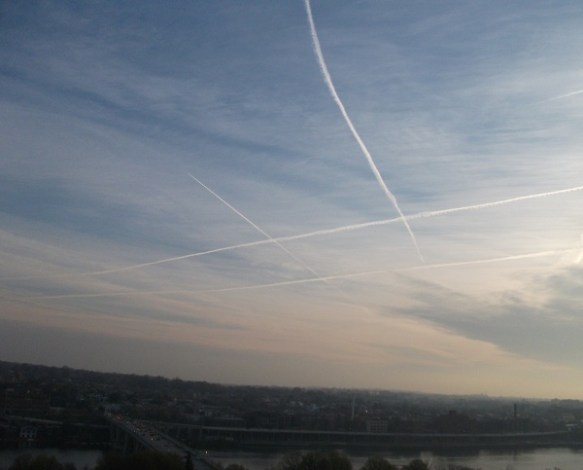
A slow morning over DC…

…even the airline pilots were lining up for a spot of noughts and crosses…

This was the view that greeted me when I drew back the curtains this morning….and great intro into what has been quite a painless day…an EKO which allowed me to wander along the river to the Iwo Jima Memorial…

This is only a klick or so from where we have been working and I had thought I might not get time to visit it – the memorial is in a great location in a park not far from the Potomac, lined up pretty much with Lincoln Memorial and the Mall across the river…


We went to a Kiwi work dinner tonight, Flying Fish in Old Alexandria, very nice but typical mega-sized US servings – even the appetiser would have done me for a meal…great beer too…something called Dogfish Head…I’ll try to bring some home but my last experiment with beer in the checked-in luggage was kinda messy at the other end…we drove past Arlington Cemetery on the way to Old Alexandria – if I had realised that it was so close to town I would have pushed on in that direction this afternoon….

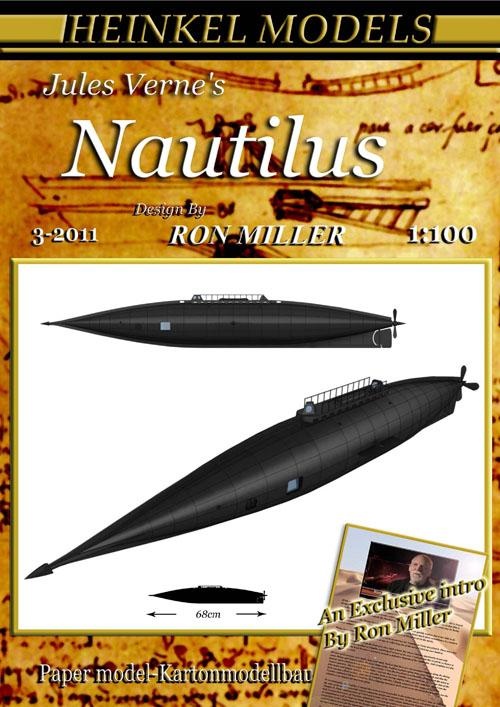
This is my third visit to DC and each time I explore a little further and learn a little more…I think I am back here a couple more time this year so am planning on exploring further…hoping for another EKO tomorrow so that I can finish off domestic shopping obligations – already I have stocked up the library with a few books that I had been unable to find back home…and speaking of stocking up, I was unable to resist Heinkel Model’s latest work…

It is the Nautilus as she was envisaged by Jules Verne…I was unaware until the design thread for this version appeared on Paper Modelers that the most common and available version of 20,000 Leagues Under the Sea was not actually the complete novel as crafted by Verne in French…that “…the 23% of text that had been expurgated by the original translator for political, ideological and other reasons…” (a modern translation is available at Black Cat Studios) nor that the design known to most people from the Disney movie bears little resemblance to the Nautilus as described in the book…

Lastly, Dean @ Travels With Shiloh has put me onto a new intel-related tome to review as a possible guide to unraveling intelligence in the contemporary environment…it is a hundred + pages and again I find myself tempted to grab one of these new-fangled e-reader gadgets so that I can read on the move….Intelligence Analysis for Tomorrow: Advances from the Behavioral and Social Sciences can be found here…I am very interested to see what insights that another discipline might add to the analysis conundrum just as I found Beniot Mandelbrot’s The (mis)Behaviour of Markets last year…(yes, I will get to finishing my review of this…)

Defense of the air?

At the end of the Battle of Britain, the Luftwaffe remained intact as an effective fighting force and so did Fighter Command. By April 1945, the Luftwaffe had virtually be destroyed. Does this result suggest a ‘best practice’ method of conducting a defensive counter-air campaign?

An interesting approach, attempting to compare a fairly localised battle (the Battle of Britain was only really the opening of the Seelowe campaign) that last only a few months and a campaign that lasted three years and which ranged across Western Europe.

That both, one or neither force survived the Battle of Britain is largely irrelevant – the key issue is whether they achieved their objectives or not. The the answer to that is probably that neither actually did. The Luftwaffe was charged to clear the RAF from the skies over southern England and the Channel to enable the invasion of Great Britain to commence. The RAF’s mission was to prevent this occurring, and while neither the attainment of control of the air by the Luftwaffe nor the invasion of Great Britain occurred, it is a big ask for the RAF or indeed the Allies to take credit for this (except under the victors’ right to write history as they see it. The key determinator of the outcome of the Battle of Britain was Germany’s decision to switcvh its targeting from the RAF’s forward airfields, where it was without question winning the battle, to a strategically-(mis?)focussed attack on major industrial targets. This provided the RAF a vital respite to regroup and recover and then focus on defeating the Luftwaffe whiule not being under attack itself. It is more true to say that the Battle of Britain was lost by Germany than it was won by the RAF.

It is also not particularly correct to say that the Luftwaffe was virtually destroyed without applying a broader context to the statement. The Luftwaffe continued to fly operationally right up to the last day of the war and hundreds if not thousands of operational aircraft were captured at the war’s end. Not only did German aircraft production increase as the war progressed, it also continued to introduce new technological capabilities into 1945, for the example, operational jet aircraft far in advance of anything that the Allies had on the drawing board. The death knell for the Luftwaffe was not a lack of aircraft or pilots to fly them, but simply places to fly them from (as Allied armies advanced from the West, East and South) and, in the end, fuel to put in them.

We have to be very careful in our use of terminology in this kind of question. There is a major difference between a defensive counter-air campaign, a defensive air campaign and the air component of a defensive campaign. I would contend that defensive counter-air is what we planned on doing in Western Europe should 8 Guards Army ever been so rash as to step across the border casting covetous eyes at the Channel ports, that is, striking deep across the curtain to dislocate and disrupt Warsaw Pact aviation capabilities; a defensive air campaign is what the RAF conducted over southern England in the summer of 1940, and which the Luftwaffe conducted over Western Europe from the end of the Battle of Britain until D-Day; and the air component of a larger defensive campaign is what the Luftwaffe was doing on the Eastern Front from 1943 (probably since the Battle of Kursk) and over Western Europe after D-Day.

Referring back to Seminar Three though, it might seem that the ‘best practice’ that arises from both the Battle of Britain and the air defence of Germany is doctrinal. I remember noting when I read Command of the Air that it must have been a key informing document for the rebirth of the Luftwaffe. But as I read, I started to get the impression that perhaps the creators of the Luftwaffe had only read as far as Part One and not fully grasped the full scope of Douhet’s thoughts. Thinking further on the subject, it was apparent that nor had they grasped the Principle of War relating to the setting and maintenance of the aim; nor that Mahan had attached considerable importance to the need to ensure that any national intent to control any environment must be fully backed up by the capability to apply that control.

The best practice to be taken away is that, if you have an objective, stick to it. Germany failed to do so during the Battle of Britain; and the Allies did in pursuing Germany’s unconditional surrender in May 1945.

Might it remain true that a successful defence for the control of the air between 1939 – 1945 depend on:

a. Early detection.

b. Interpretation of enemy intent.

c. Successful interception.

d. Destruction or deterrence?

Douhet struck the nail fair on the head when he identified the difficulties facing a nation attempting to defend against a like (in terms of capabilities) adversary. Of the four factors listed above, only two are really relevant: successful interception and deterrence. Both the RAF in the Battle of Britain and the Luftwaffe (all arms) had both early detection and relatively interpretation of enemy intent (tactically to strategically) but this clearly did not provide a suitably large advantage over their adversaries. Both failed to successfully intercept attacking forces – success interception being defined as adequate to turn back or neutralise e.g. force them to jettison their payloads, the attacking force.

When a high probability of successful interception is attained or is perceived to have been attained, a state of deterrence may have been achieved. This state existed over most of England from 1941 onwards; in the Mediterranean from the end of 1942; and over the Pacific as the US advanced north from the Solomon Islands. Where desperation or perhaps learning difficulties deny acceptance of a state of deterrence, we have situations like those of the air bridge that attempted to supply the Afrika Korps in Tunisia in 1943; and many of the Japanese (non-kamikaze) air attacks in the latter part of the war.

And has modern technology rendered this quartet of questions obsolete?

As already alluded to above, the advance of time and technology has not altered the response to the question above. Ultimately, while early detection AND accurate interpretation of enemy intent are important enablers, the critical objective is successful interception. Robin Olds’ Bolo tactic against North Vietnamese air defences relied on early detection of US aircraft but equally depended on an inaccurate North Vietnamese interpretation of his intentions to enable successful interception of North Vietnamese defending aircraft. In the Falklands War, it still remains unclear to what extent the British received early warning from the mainland of impending Argentinian attacks. Regardless, the key to maintaining the fleet in San Carlos Bay and other key areas, and ultimately the success of the campaign to retake the islands, was successful interception. Deterrence also played a part in defence of the task force as the sinking of the General Belgrano early in the campaign effectively deterred Argentinean use of its aircraft carrier in the defence of the Malvinas.

The state of deterrence described under the previous over the Gulf can also be seen in DESERT STORM; and over Iraq and Afghanistan since 2003 and 2001 respectively. It may also be why there were no offensive North Vietnamese air operations 1965-73: while the NVAF proved to be a capable defender over its own territory, it was under no illusions as to the outcome had it attempted offensive action against US bases in Thailand, South Vietnam or sailing off the coast. This state of deterrence is one reason why there have been no air incursions into Iraq or Afghanistan and why all incursions have been by land and, for the most part, below the general detection threshold of coalition forces.

The so-called Principles of War include the concept of the offensive. In short, this means to act rather than react, to dictate the time and place, purpose, scope and intensity, pace of operations. It implies the initiative must be seized, retained and fully exploited. From the British and German experience of moulding a defensive counter-air campaign, would such a principle apply equally well to the Defensive!?

Excuse me? “So-called” Principles of War? This questions would indicate that the Principles aren’t that well understand at all…

To understand the concept of the offensive, more so from an air perspective, one only needs to read the early parts of Command of the Air where Douhet lays out the dilemma of the defender. A defensive campaign does not win a war: at best it gains some breathing space. Wellington still had to thump Napoleon at Waterloo, ten years after the defensive victory of Trafalgar; the Allies still had to defeat Germany after the Battle of Britain, otherwise there was little to prevent Germany regrouping and having another crack, especially had it postponed BARBAROSSA; and the Task Force still had to kick the Argies off the Falklands after gaining control of the air over the theatre.

Is an examination of the Battle of Britain and the German defence of the Reich irrelevant to the study of the modern air power applications?

Absolutely but only so long as they are considering within the context within which they occurred: neither can be usefully considered in isolation. What ‘won’ the Battle of Britain was not the RAF but Germany’s decision to not apply the Principle of Selection and Maintenance of the Aim to its air campaign against Britain in 1940. Similarly, Germany’s defeat was a given once America entered the war: regardless of the skill and capability of the Luftwaffe, Germany, like Japan, could simply not compete with America’s industrial and economic horsepower: a lesson the Soviet Union would also learn in 1989.

Why does the Battle of Britain appear to occupy such an important position in the history of air power?

There is much about the Battle of Britain that supports a good myth ranging from Churchill’s words at the time (we will fight them on the beaches,blood sweat and tearsso much to so few, etc); the Arthurian connection to the Merlin; the perception of the under-dog standing up to the local bully; of a few against the many a la Thermopylae, Agincourt, Rorke’s Drift, etc. It was also the first time that the defence of a nation relied so heavily upon an air force and not more traditional land and naval forces but as stated above, it was not the first time that an air force changed the course of a campaign: the Doolittle Raid, Malta or Crete would be better candidates for this distinction. Like Midway and Coral Sea, the Battle of Britain does mark the limit of the Axis advance, noted by Churchill in his ‘end of the beginning’ speech on 10 November 1942.

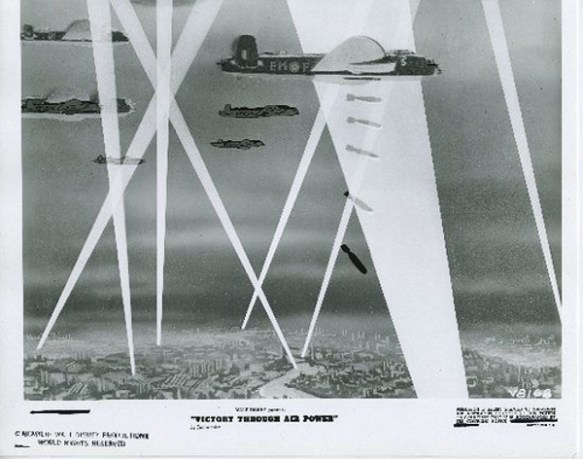
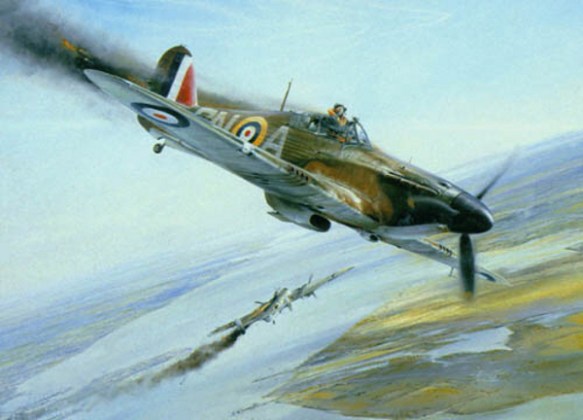
NJG 1 by Michael Turner


Thinking “air power”…

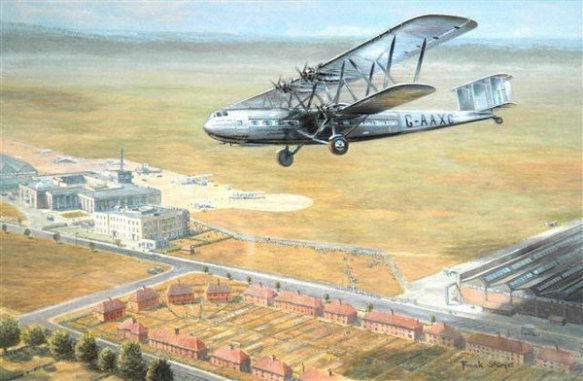
A5CA6 Frank Sturges c.1980s - Handley Page 'Heracles' over Croydon Airpirt, Watercolour, Sutton Museum Collection

Is contemporary air power doctrine still influenced by the classical air power theorists?First up we should probably drop ‘air power’ in favour of ‘military’: it is just too simplistic to persist in describing warfare in terms of one environment or another, especially air power which owes as much to Clausewitz and Mahan as it does Douhet. Whether this is because air power operates over sea and land, or simply as the most recently developed ‘environment’ it builds upon those who have gone before is up for discussion. The list of classical military theorists i.e. those whose theories have endured is not exhaustive and nor it is restricted solely to the Big Three of Clausewitz, Mahan and Douhet however the concepts and truisms developed by these three are certainly among the most enduring and popularly accepted. 

Noting how the nature of warfare has changed since 1989 (DESERT STORM being almost an aberration), the use of ‘contemporary’ is interesting especially since we would assume and would like that ‘environmental’ capstone doctrine remain relatively stable. We now operate in an era of the ‘non-contiguous operating environment’ and ‘war amongst the people’, environments so different than the backdrops of conventional conflict against which they were developed. In this environment, rather than perhaps being outdated or irrelevant, the works of the classic military theorists remain as applicable as they ever were on the battlefields of Europe, the oceans of the Pacific and the air over Europe, Vietnam or Libya.

It is not really correct to refer to them as theories or their works as theories: theories, by definition, are unproven works. Once proven, theories become laws, rules or principles: noting the unpredictable nature of war, the works of Clausewitz, Mahan and Douhet, among others, are best considered principles, principles to be applied with judgement. I do not believe that the works of Warden, Mitchell, Trenchard et al have yet been validated to the same extent and thus they remain as theories. As such, any influence they may have on contemporary doctrine should be considered carefully.

Clausewitz argues ‘…war is not a mere act of policy, but a true political instrument, a continuation of political activity by other means…war is not an act of senseless passion’. Do you think Douhet takes into account the ‘end state’ which Clausewitz implies is the object of war?

Absolutely.Douhet’s work is scientific, almost clinical, in its detachment and lack of emotion (as distinguished from the passion he clearly has for the subject). The ultimate objective of Douhet’s war is national victory which might expect to a natural and logical endstate for war as a politcasl entity as described by Clausewitz.

What do you think is the difference between theory and doctrine, if any?

Theory is something that remains unproven…”…a tentative insight…a concept that is not yet verified but that if true would explain certain facts or phenomena…” Doctrine, on the other hand, is defined as “…fundamental principles by which the military forces guide their actions in support of objectives. It is authoritative but requires judgement in application…” Doctrine, in essence, is the considered best practice for a given force in a given situation: it is far more than mere theory. here, we have taken the definition of doctrine further as “…that which is taught, validated against a context, delivered in individual training, developed under supervision on the job and in collective training, and applied with judgement…

If you had been a British defence planner in the 1920s, how far would you have been guided by the theories of Douhet and Mitchell?

Not much at all. As I covered in Seminar 2, WW1 did little to demonstrate the potential of air power as a decisive (as opposed to a supporting) arm, unlike other new technologies like the tank and the submarine. Mitchell had demonstrated the sinking of a warship under very controlled and static conditions that bore little resemblance to a ship underway (and returning fire); Douhet would have been interesting reading in the 1920s but, really, his work was not validated until the end of WW2. The general theme of the 1920s was of the War to end all Wars, with the League of Nations (not discredited until the 30s) to limit the development of arms races like those that had contributed to the beginning of WW1. The big fear of the time would have been chemical attack at the strategic level however even then, an early MAD policy seems to have been accepted by the ‘chemical’ powers. After WW1, Britain’s focus had returned to maintaining the Empire and it was here that air power appeared most applicable and useful: an application of air power in COIN…

Clausewitz argued war is a trilogy of ‘reason, passion and chance’. Do you think Warden would agree?

Probably not but then that is why Clausewitz endures after 180 years and Warden is already becoming a footnote in history: his theory only appears to have worked (debatedly) in DESERT STORM and was less than effective in Kosovo, and Iraq – it must be noted that all three of those campaigns were only resolved conclusively through occupation by ground forces.

There has been over the last couple of weeks there has been a discussion at Small Wars Journal on the validity of Warden’s work. I’ve avoided as best I can any observation of that discussion to avoid colouring my own consideration of these questions but the one comment I did read seems to sum up Warden’s theory. It pointed out the lack of science in the DESERT STORM air campaign in the shotgun approach to targeting, essentially hitting everything til something might snap – which it didn’t.

Just as in COIN, it is fundamentally false to assume let alone rely on the hope that a population, sufficiently provoked, will rise up and topple its leadership in response to targeting by an adversary. The number of times across history that this has actually occurred is limited at best. Due to the greater influence of public opinion in the western world, perhaps this may be a strategy that we are more susceptible to today than our adversaries may be.

Warden’s belief in ‘friction-free’ warfare is another manifestation of the ‘victory disease’ that seized parts of the US military after the collapse of the Iron Curtain and new ‘surgically clean’ victories like Panama and DESERT STORM and that culminated( in all senses of the word) in its misplaced confidence in the ‘shock and awe’ of OIF in March 2003. I have yet to find any account of OEF or OIF that does anything to indicate that Clausewitzian friction is anything but alive and well in the contemporary operating environment.

Afterthought: WRT Libya…I’m not sure what all the fuss is about…the Libyans seemed to be doing all right on their own using air power to suppress a land-based internal insurgency…

WRT John’s comment about about ‘strike being strike’…true but in WW1, there was no concept of strike as it know it from WW2 or today…it was more a case of ‘lob in the general direction and see what happens’…just because WW1 was the first major conflict in which aircraft were used, it does not necessarily follow that this was the birth of air power as we know it any more than the meeting between Monitor and Virginia in Hampton Roads could be considered the birth of modern naval warfare, or the use of the tank in WW1 could be considered the birth of modern manouevre warfare. I would suggest that a lot more water needed to go under the bridge before any of these could be considered actual capabilities than could be employed effectively in combat…

The early days

It’s been almost a hundred years and it’s unlikely that we will ever really know just what effect WW1 really did have on the development of air power. For me, it was really a bit of a sideshow in a larger conflict and the real developments occurred in the 20s and 30s.

With reference to the second reading, I’ve read Mahan a number of times (how sad is that?) and don’t agree with the  way the author has tried to use it as a yardstick to measure air power in WW1 – I’d be hard pressed to draw the same conclusions. The big takeaway (to use a current buzzword) from The Influence of Seapower Upon History is that is a nation should only get into the sea power game if it can actually control the seas. Examples of that have would be the United Kingdom to the mid-20th Century and the United States from the same point on; those who tried but didn’t make the grade? France, Spain, Germany (twice), and Japan. The same applies to air power…

What might defence planners have learnt from the use of air power in the First World War?

There is a lot that might have been learned from any major activity but that’s largely a speculator question because we will never know what might have happened. The best articulator of the air lessons of WW1 was Douhet and his 1923 writings give a very good idea of what defence planners might have been learned. In the end, the one lesson that defence planners did take from WW1 and generally apply across the board was that “…this air power all seems a bit up in the air – let’s toss it back in its box and seen what happens in a few years…” And that is exactly what they did, especially in the UK where the RAF of 1939 bore a remarkable resemblance in terms of doctrine and capability to that of 1919: twin-engined bombers with small payloads and only defenced by single small calibre machine guns and (excluding the Hurricane and  Spitfire that were spurred by Germany’s rearmament in the 30s) biplane fighters with no radios and only two small calibre machine guns…

Could valid generalisations have been made for the future use of air power from the experience of the 1914 – 1918 war?

Not really, for the simple reason that air power did not really have any great effect in WW1: there was no air Cambrai, let alone a Taranto, Dams Raid or Pearl Harbor to learn from. Had air power not been employed in WW1, it is likely that WW2 would have started with the same level of air capability that it actually did: the major driver for the development of air technologies between the wars was not the military (by choice or treaty) but the commercial arena especially in the UK (Shorts), Germany (Junkers and Dornier) and the US (Boeing, Bell and Curtiss) and with the development and exploration of long-range travel routes  It would probably be more correct to say that modern air power owes more to the Dornier X and the HP.42 that it does to anything that struggled into the air in WW1.

Was the assertion made by some that air power would soon become the principal mode of warfare justified by experience?

Not then and not now…the number of instances where air power has had a decisive strategic effect on the outcome of a conflict is so low as to be insignificant statistically or in any other form of comparison. 93 years on, air power has still not taken up the mantle of ‘principal mode of warfare’ and is unlikely to anytime soon.

Would you agree that there have been no significant developments in the employment of air power since 1918?

Not ever. A statement like that can only be made with the benefit of 20/20 hindsight and some incredible leaps of logical faith. Air Power (such as it was) til the mid-30s bears no resemblance to the applied tactical, operational and strategic forces developed and applied during WW2 and since to the current day. Flying around shooting guns and dropping ad hoc bombs ≠ air power: there are far more components of air power that mere flying as I alluded to in my response to last week’s questions. WW1’s biggest contribution to air power was probably the misperception that populations can be controlled from the air alone as was attempted across the Empire in the 1920s – although, COL Gaddafi may prove me wrong on this one next week…


Heigh-ho, Silver…and away…!

Just in case no-one noticed, the Lone Ranger is a myth, a legend, something not real and if he had existed, someone would more than likely have put some .44 calibre lead in his back one night…the moral of the story is that if you believe your own press and keep interfering in other folks business, you are only buying into grief, and lots of it. Yes, folks, that right and just as right or even righter, even if you are (or think you are) sitting up on the moral high ground…and the bigger you are, the more this applies… This might be because the bigger you are, the more powerful you think you are and with that comes the perception of license…

Well, here’s a fact…no one has a license to boldly interfere in the internal workings of another nation – a resolution from the defunct and impotent UN is no more a license than a letter from Osama Bin Laden authorising the world to go to war against the West…As much as we might not like the current leader of Libya, there is no evidence that the socalled Libyan rebels have anything to offer that will make Libya one iota a better place to live or to deal with than it is today. Just like Saddam Hussein, just because we don’t like someone and even if they are real bad bastards, this does not mean that they do not actually offer benefits in international affairs, especially in maintaining regional stability.

In intervening interfering in Libya, the West is acting like the world policeman that it is not; in interfering in Libya but not in Syria where protestors are being subject to 7.62mm ball riot control, the west shows itself to be not much more than the same bully it accuses Ghaddafi of being. More so, in wibbling (yes, it is a word – see Blackadder’s Guide to Trench Cooking and Tactical Lexicon) until the US agreed to support the interference, the European nations showed themselves to be impotent and cowardly – Libya is not such a conventional threat that France or the UK (on the days that its remaining jet is flying) could not easily cope with. The Libyan forces are even less a threat to Western forces when the object of the interference is enforcement of a no fly zone and not actual ground lodgement and intervention – of course, having seen all the footage of destroyed Libyan armour, one wonders just exactly what technologies the Libyans employ to get them into the air…maybe we should be a little worried…?

Our moral justification for interfering Libya was further undermined when the Arab nations that so vocally supported it (one wonders why all THEIR high tech toys were as incapable of dealing with a regional issue as those of the European nations) turned on NATO in much the same way that Tonto rediscovered his roots…

“Those Indians look pretty dangerous, Tonto, we could be in trouble” “What mean ‘we’, white man?”

We can’t remember what we’re doing in Afghanistan any more – the making the world safe for democracy line is pretty worn these days – and we have no good reason for being in Libya…the air power option is nice and clean and simple: it reinforces the myths of DESERT STORM that air power cleans up messes with minimal cost or loss…how soon we forget the lessons of Iraq…shock and awe versus blood and treasure or is it shock and awe = blood and treasure…??

In the beginning…

One of the reasons that my blograte has dropped off is that I am participating at an online advanced air power course and this has been tapping somewhat into my available time. The penny only just dropped that the course content is relevant to the blog and that I can probably kill two birds with one keystroke and use my contributions to the course as the basis for blog items…once I catch up, the output should be about a post a week til the end of the course…so here goes…

Q1. What do you think are the most important components of air power?

I’ve done a lot of driving this week and have wrested with this question more than any other. I’ve worked through all the various components of air power and then realised that all I was thinking about were the physical components, the tangibles like aircraft, systems, infrastructure, training, doctrine etc. The penny only dropped on the last leg last night that the component that really counts is the intangible, that thing referred to as airmanship or maybe air mastery: it’s not what tools you have in the box so much that count but how you wield them. Even more so than that, it is how you get up once knocked down and get back into the fight that counts.

While this isn’t a component unique to the air environment and applies equally well across the other environments and other walks of society (it’s A World Cup year so if we run true to form we offer up some dazzling examples later in the year!), it is one that muster be fostered and developed and maintained just as much as any physical capability or piece of equipment. Done well, it is the thing that makes the whole greater than merely the sum of the parts…

Q2. Are definitions useful in trying to understand what air power is?

Absolutely, but then I’m a doctrine geek so I’m bound to say that…definitions are essential to understanding anything even if only as a launching point for rebuttle or disagreement. Without these, discussion of air power becomes a meandering ‘how long is a piece of string?’  discourses…

Q3. Is air power different in any significant ways to other forms of combat power?

By definition, yes, otherwise it most likely wouldn’t be a separate form of combat power (and I’m more fan of military power than combat power which is a little narrow for the operating environment we’re in today) but if the question is actually leading towards whether air power is uniquer than other forms of combat power then, no, it’s not. Each form of combat power has its own characteristics, strengths and weaknesses which can be harnessed or exploited as the case may be to create an effect in support of national objectives. True, the air is not an environment in which man can survive naturally or sustain himself above a couple of metres but then submariners would have us believe the same about their environment and as a constraint is it relevant to air power as a form of military power. Probably not…and for every strength or weakness in air power, there are corresponding characteristics in other forms of military power – which is probably why we go down the dreaded ‘J is for Joint’ path instead of attempting to persevere as independent arms.

Weekly Photo Challenge: Light

…is the theme for WordPress’ photo of the week challenge…I’m on the road this week and so don’t have access to my photo files at home…so will have to make do with a shot of DC by night from my hotel room…

I like DC…there are some cities I just can’t wait to get out of…I was starting to feel that way about Auckland before I flew out on Friday afternoon…just too much too slow traffic for this country boy…I’ve had a good wander around today and not too much has changed since my last visit and I braved the Metro today to get a round a bit more – think I have that pretty sussed now…

I was dreading the flight up as I opted to do Auckland-DC in one hit but it was actually quite pleasant – a lot of work has gone into slicking up the LAX arrival processes and these were actually pretty slick this time. My only adverse comment on the journey up is that if Qantas can’t get the onboard video playback system to work, then I can see why they might be having problems with their engines…

But while it was working I got to see (couldn’t sleep the whole leg to LAX):

tron legacy

I thought this was a bit slow but the special effects were definitely a legacy from the original. Due to the problems with the QANTAS playback system, I couldn’t figure out the relationship between Tron and Flynn, and certainly couldn’t recall from the only time I saw Tron in the 80s…hopefully they will both be released as a double pack in the near future. The ending, I thought, was a bit weak and rather predictable – a second viewing on a screen bigger than 7″ and with better sound might change that opinion.

true grit 2010

I stated in Fill your hand, you sunnovabitch!!! that I wasn’t sure that there was much new to look forward to in this year’s remake of True Grit with Jeff Bridges and Matt Damon (still a step up from Glen Campbell!). Even on the small screen, I was pleasantly surprised by the new version. I don’t think it is better than the original but it certainly complements it and I am going to buy the book to see which version most closely adheres to the actual story. The main difference between the two is that the ‘Le Beef’ character is not as well developed in the new version as it was in John Wayne’s original big screen telling – this underdevelopment is to such an extent that you wonder why they bothered with the character at all – apart from his being part of the original book.

RED 2010

A bunch of old hands running around having a ball and making a movie at the same time – a very entertaining and light-hearted way to kill off a couple of hours and highly recommended. Great to see Helen Mirren in a comedy role….

dawn treader

Even though I still think that Dawn Treader is a stupid name for a boat, this is a fine addition to the Narnia series and it certainly recovers the franchise from the damage done by the rather dreary Prince Caspian.

Assuming that QANTAS gets its movie system sorted in the next week or so, there are still a good bunch of movies in its April line up to keep me occupied on the long haul home…

No pictures as I couldn’t have maintained my death grip on the side rail and juggled a camera but I went ice-skating last night with the guys I’m meeting with next week. It’s a regular Friday night activity for them and the fact that I had just arrived after a solid 24 hours of travel was not considered any excuse for non-participation. I hadn’t skated since 1982 at the rink that was (still is?) out Kaikorai Valley Road in Dunedin and that was just a single night out…still by the time the hour was up. I was only touching the side rail a couple of times each circuit…I’m still here next Friday so may have another chance to risk life and limb before I fly out…

Knowing…

…me, knowing you…it’s the best we can do…

Thanks, ABBA….it’s all about knowing when to do something and more importantly sometimes, when not too…

This idea for this post came from observing so many of the comments made in the immediate aftermatch of the February 22 earthquake and that we’re starting to hear again from Japan…it was reinforced again by the Daily Post question last week When is it better to be sorry that safe? As posts go, I’d rate it as less than average – if all you have to do to meet a Daily Post obligation is ask a question, I’d be in like Flynn but I think that any post worth its electrons needs to be a little more substantive than that…

Knowing… in her blog piece Three Times You Have To Speak Nilofer Merchant argues that there are three times (in bold print) when we ought to speak up:

When it will improve the results of the group.

When it gives others permission to speak their truth.

When the costs of silence are too high.

But her key point is hidden away in her summary text “…knowing when to speak is an art, and like any art, requires skill….” Conversely, knowing when to shut the hell up is equally as much a skill that requires practice…

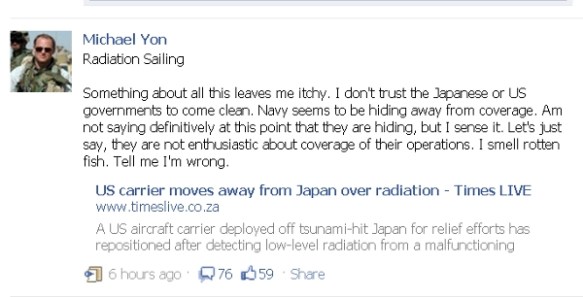
Yeah, whatever, Mike...


A more pertinent observation from a more professional organisation...

Not really picking on Mike Yon this time…it’s just that he happened to launching off when I first started to draft this…what actually got me going on the subject was rather vocal comments from a number of sources regarding the Civil Defence effort in Christchurch in the immediate aftermath of the Feb 22 quake…calling for reviews and investigations and labelling staff as incompetent is simply not productive when responding to the most major natural disaster ever to hit the nation. There is a time for all hands to the pump to just get things done and another for later introspection and review…

In a similar vein, are all those second-guessers and self-appointed experts who, possibly with the best of intentions, promulgate such guff as the discredited Triangle of Life technique to save oneself during an earthquake or those who, like at Pike River, state it would have better to rush into collapsed buildings to try to rescue trapped and injured people. The harsh truth is that there is bugger-all to support such ideas and plenty to prove that they are more likely to hinder than help. Like we say it the doctrine world, it’s all about ‘applying with judgement’ and not just charging in – or applying by rote…thinking thinking thinking….

No doubt there are some major issues appearing in, not just Civil Defence, but most agencies involved in the recovery effort as they adjust from the initial response to the long haul of recovery and clean up…now is the time to start collecting the raw OIL (observations, issues and lessons) across the entire response force to identify what we did that we shouldn’t have done and what we didn’t do that we should have done…it’ll be interesting to see how a government-level lessons learned project might emerge from this…

//

As you can see this was a post that was started and never quite polished off…I’m still a bit behind the 8 ball on this one as well but completing ‘Knowing’ also meets another WordPress Daily Post challenge – even if it was from last Friday – Go to your drafts folder and finish an old post…I have to say that the Daily/Weekly Post challenges are great motivators to keep up the momentum…I get an idea and launch into a draft but then either get distracted or want to polish just a little bit more before publishing that it never really gets done…as it says in today’s daily challenge, “…Writing is therapeutic…” Yes, it is and although I now have more writing tools, I don’t write as much…ten years ago I had a good half dozen scripts bubbling away, was prolific in a number of online forums and was writing reviews and papers on a range of subjects. Today, the ideas are still there but the delivery mechanism seems to be jammed on ‘Start’ and locked out of ‘Develop’ and ‘Complete’…all I can say is that I’m working on it…