Getting it right

In regard to Vietnam, it is too easy to focus on the perceptions of ultimate failure without understanding what the conflict was about from all protagonists’ points of view, and to ignore what actually worked which was an awful lot of it. Vietnam offers some great opportunities for ‘Yank-bashing’ but in reality, it was a learning experience for all the nations involved.

Did the air war over Vietnam suggest a ‘best practice’ for the employment of air power?

Yes and in so many areas. All of the following capabilities today owe their current ‘best practice’ to the Vietnam air war:

  • modern air-to-air combat;
  • Combat Search and Reascue (CSAR);
  • aerial casevac and AME;
  • fixed- and rotary-wing gunships;
  • use of maritime patrol aircraft overland;
  • fixed- and rotary-wing air mobility;
  • Suppression of Enemy Air defences (like we would want to suppress friendly air defences) SEAD;
  • airborne C2;
  • Close Air Support (CAS);
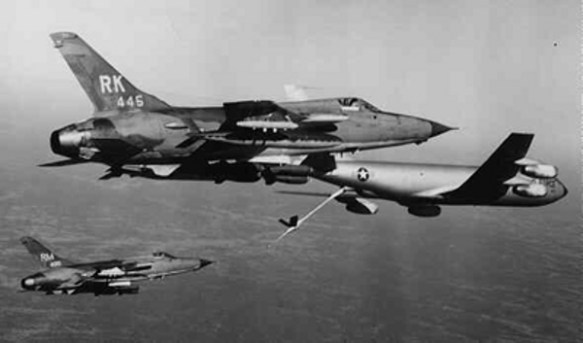
  • air-to-air refuelling;
  • aerial special operations and support to COIN;
  • Intelligence Surveillance Reconnaissance (ISR);
  • UAVs;
  • precision strike;
  • Air-Land Integration;
  • airfield ground defence.

I may have missed one or two minor capabilities but the development of best practice, which lies predominantly at the tactical and operational levels, is largely separate from the outcome of the conflict, certainly from victory. In fact, it might be said that the best catalyst for learning is a good punch in the nose.

Curtis Le May said he could have ended the Vietnam War inside two weeks. Do you think this was possible?

Without a doubt. Le May was a strategic thinker and it is unlikely that he was only thinking in terms of targeting only North Vietnam. The two key enablers for North Vietnam’s war effort were the Soviet Empire and China and Le May would have been considering what things they might hold more dear that sponsoring a sideshow conflict in Indochina. This is not to say that he would propose physical attack on either nation or its assets but certainly the big stick might have been waved in other geographic and political areas. This was the time of Eisenhower’s and Kennedy’s nuclear brinkmanship over Matsu and Qemoy, Berlin and Cuba.

Having said that, there has never been any doubt that the USAF and USN could have shut down the flow of ALL military aid into North Vietnam in a week: North Vietnam only has a very small number of ports and railway links through which this aid travelled and these were always off-limits to the campaign that was conducted. Without the external war aid, ranging from AK-47s to SA-2s, coming in by ship and rail, North Vietnam would have had little more than moral support to provide its forces in the south.

What do you think are the essential conditions for an interdiction, denial campaign to be successful? – and – were they met in the Vietnam War?

There are four key conditions to a successful air interdiction campaign:

  • political will,
  • clearly defined objectives,
  • knowing what to strike,
  • having the means to strike.

Only the latter two were consistently present in Vietnam until the Easter ’72 invasion and LINEBACKER II campaign at the end of the same year. Note, please, that both campaigns were successful…go figure…

The interdiction campaign was at the operational level while along the Trail and in South Vietnam itself tactical actions were conducted daily to constrain the flow of reinforcements and supplies to anti-government forces. If the operational campaign was successful, then the tactical actions would have been less challenged. It may also have meant that it would have been less necessary to conduct airstrikes into Laos and Cambodia, especially since North Vietnam’s ability to influence and intimidate those governments would have been reduced by a successful campaign north of the DMZ.

In considering current events, the current sham of a campaign in Libya only meets one of the four criteria, that of being able to hit things with a hammer…
Is it true to say that the Vietnam experience represented a massive failure of air power?

As per my response to the first question, not even.

Not only were most aspects of airpower employed well, many were developed and taken to a much higher level throughout the war. To fixate on one aspect of the air war, a relatively small one in the timeline when the various bombing halts are taken into consideration, and based on that one aspect, declare the whole campaign a failure of air power is grossly over-simplistic.

Was air power unduly restricted by political considerations?

Yes and this has been well documented since the end of the war. This is not to say that a strong political will in the White House would have led to a victory for South Vietnam as there are no guarantees in war, and less so in the complex environment that was post-war Indochina.

Johnson was an internalist, not an internationalist like the four Presidents before him and Nixon after him. Like Barack Obama, another internalist, he inherited a war he neither started nor wanted or cared about. Surrounded by senior advisors who understood systems but not politics, and who personified Eisenhower’s warning against the ‘military-industrial complex’, Johnson took it upon himself to personally run the air war bypassing his air power professionals. Unfortunately, this is nature of the military beast in most western nations where the military is subordinate to civilian control. All we can do is educate…or go start a junta in South America someplace…ours not to question why…

We can see another example of political considerations affecting the application of air power in the way that the false lessons of DESERT STORM led to the false perception that a similar approach would bring the Serbs to heel; and again in Iraq and Afghanistan where SECDEF Rumsfeld favoured the use of air power over the use of ground forces.

Heigh-ho, Silver…and away…!

Just in case no-one noticed, the Lone Ranger is a myth, a legend, something not real and if he had existed, someone would more than likely have put some .44 calibre lead in his back one night…the moral of the story is that if you believe your own press and keep interfering in other folks business, you are only buying into grief, and lots of it. Yes, folks, that right and just as right or even righter, even if you are (or think you are) sitting up on the moral high ground…and the bigger you are, the more this applies… This might be because the bigger you are, the more powerful you think you are and with that comes the perception of license…

Well, here’s a fact…no one has a license to boldly interfere in the internal workings of another nation – a resolution from the defunct and impotent UN is no more a license than a letter from Osama Bin Laden authorising the world to go to war against the West…As much as we might not like the current leader of Libya, there is no evidence that the socalled Libyan rebels have anything to offer that will make Libya one iota a better place to live or to deal with than it is today. Just like Saddam Hussein, just because we don’t like someone and even if they are real bad bastards, this does not mean that they do not actually offer benefits in international affairs, especially in maintaining regional stability.

In intervening interfering in Libya, the West is acting like the world policeman that it is not; in interfering in Libya but not in Syria where protestors are being subject to 7.62mm ball riot control, the west shows itself to be not much more than the same bully it accuses Ghaddafi of being. More so, in wibbling (yes, it is a word – see Blackadder’s Guide to Trench Cooking and Tactical Lexicon) until the US agreed to support the interference, the European nations showed themselves to be impotent and cowardly – Libya is not such a conventional threat that France or the UK (on the days that its remaining jet is flying) could not easily cope with. The Libyan forces are even less a threat to Western forces when the object of the interference is enforcement of a no fly zone and not actual ground lodgement and intervention – of course, having seen all the footage of destroyed Libyan armour, one wonders just exactly what technologies the Libyans employ to get them into the air…maybe we should be a little worried…?

Our moral justification for interfering Libya was further undermined when the Arab nations that so vocally supported it (one wonders why all THEIR high tech toys were as incapable of dealing with a regional issue as those of the European nations) turned on NATO in much the same way that Tonto rediscovered his roots…

“Those Indians look pretty dangerous, Tonto, we could be in trouble” “What mean ‘we’, white man?”

We can’t remember what we’re doing in Afghanistan any more – the making the world safe for democracy line is pretty worn these days – and we have no good reason for being in Libya…the air power option is nice and clean and simple: it reinforces the myths of DESERT STORM that air power cleans up messes with minimal cost or loss…how soon we forget the lessons of Iraq…shock and awe versus blood and treasure or is it shock and awe = blood and treasure…??

In the beginning…

One of the reasons that my blograte has dropped off is that I am participating at an online advanced air power course and this has been tapping somewhat into my available time. The penny only just dropped that the course content is relevant to the blog and that I can probably kill two birds with one keystroke and use my contributions to the course as the basis for blog items…once I catch up, the output should be about a post a week til the end of the course…so here goes…

Q1. What do you think are the most important components of air power?

I’ve done a lot of driving this week and have wrested with this question more than any other. I’ve worked through all the various components of air power and then realised that all I was thinking about were the physical components, the tangibles like aircraft, systems, infrastructure, training, doctrine etc. The penny only dropped on the last leg last night that the component that really counts is the intangible, that thing referred to as airmanship or maybe air mastery: it’s not what tools you have in the box so much that count but how you wield them. Even more so than that, it is how you get up once knocked down and get back into the fight that counts.

While this isn’t a component unique to the air environment and applies equally well across the other environments and other walks of society (it’s A World Cup year so if we run true to form we offer up some dazzling examples later in the year!), it is one that muster be fostered and developed and maintained just as much as any physical capability or piece of equipment. Done well, it is the thing that makes the whole greater than merely the sum of the parts…

Q2. Are definitions useful in trying to understand what air power is?

Absolutely, but then I’m a doctrine geek so I’m bound to say that…definitions are essential to understanding anything even if only as a launching point for rebuttle or disagreement. Without these, discussion of air power becomes a meandering ‘how long is a piece of string?’  discourses…

Q3. Is air power different in any significant ways to other forms of combat power?

By definition, yes, otherwise it most likely wouldn’t be a separate form of combat power (and I’m more fan of military power than combat power which is a little narrow for the operating environment we’re in today) but if the question is actually leading towards whether air power is uniquer than other forms of combat power then, no, it’s not. Each form of combat power has its own characteristics, strengths and weaknesses which can be harnessed or exploited as the case may be to create an effect in support of national objectives. True, the air is not an environment in which man can survive naturally or sustain himself above a couple of metres but then submariners would have us believe the same about their environment and as a constraint is it relevant to air power as a form of military power. Probably not…and for every strength or weakness in air power, there are corresponding characteristics in other forms of military power – which is probably why we go down the dreaded ‘J is for Joint’ path instead of attempting to persevere as independent arms.

Christchurch

Despite all the pain and sadness in Christchurch, I couldn’t help a smile when I came across this sponsored link while researching last night:

Discover Christchurch Get 50-90% Off Restaurants, Spas, & Events In Christchurch. Sign-Up! www.LivingSocial.com

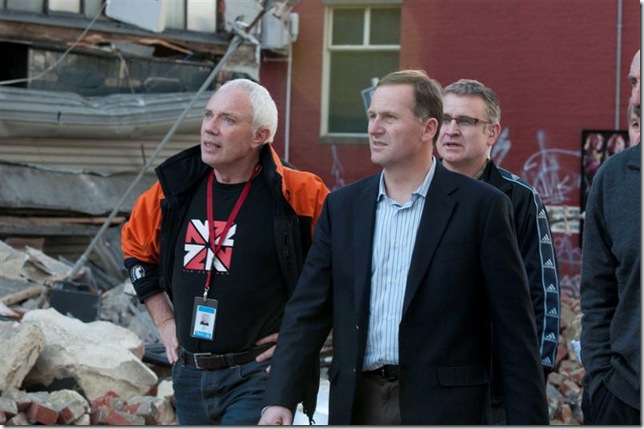
christchurch_mayor_bob_parker_surveys_the_damage_t_4c8444672c

This picture is from the September earthquake but is the only one I could find that shows together, the two men who have been exhibiting great leadership since 1250 yesterday afternoon…on the left, Mayor Bob Parker, and beside him, Prime Minister, John Key. I don’t follow Christchurch politics that closely and my main experience pre-quakes of Bob Parker is of many years ago when he was a top game show host. Certainly in the last six months, he has displayed that he definitely has other attributes as well…

In John Key, New Zealand is lucky to have a leader (in all senses of the word) fit to fill Helen Clark’s shoes, after a long line of rather lack-lustre prime ministers dating back into the early 80s…Rob Muldoon and before him, Norman Kirk were the last real leaders we had from back then. The PM addressed the nation at 1130 and, as I commented at the time, I don’t know if John Key writes his own material or not, but these are great words very well delivered…

Today I want Christchurch to hear this message:

You will get through this.

This proud country is right behind you and we are backing you with all our might.

The world is with us.

Our Australian neighbours, our British and American friends, the great countries of this world, all are putting their shoulder to your wheel. They are sending their support, their expertise, their people to help us.

Christchurch, today is the day your great comeback begins.

Though your buildings are broken, your streets awash, and your hearts are aching, your great spirit will overcome.

While nature has taken much from you, it can not take your survivor’s spirit.

This devastating event marks the beginning of a long journey for your city.

It will be a journey that leads us from ruins and despair to hope and new opportunities. From great hardship will come great strength.

It will be a difficult journey, but progress is certain, things will get better, Christchurch will rise again.

Full text [PDF: John Key Chch speech 23 Feb 2011 ]

On leadership at the other end of the scale, my old mate, Dusty from Signals Platoon days in Burnham (from which I have many many fond memories of Christchurch, less of Aylsebury Road though…more of those perhaps in a night or two) was in the Square when the quake hit yesterday and his first-hand account is on his blog today…Another day another disaster [PDF: SecurityNZ_ Another day another disaster! ]…I don’t necessarily agree with his thoughts on Civil Defence screw-ups but we’re sorta at opposite ends of the scale on that one, Dusty’s always been the ‘dive in, boots’n’all’ sort and I’ve been more concerned with trying to blend all sorts of disparate and often conflicting information into a coherent picture…I dare say I’ll hear from him soon if I got that wrong but as I commented on his Facebook page, yesterday he did the old ONWARDs proud…

The NZ Herald has a page on which it publishes regular updates on Christchurch…it reads like a tragic diary…this is one of the best ways to keep tabs on what happening down there… [PDF: Christchurch quake timeline 23 Feb 2011  ]

Last night I chatted to a friend who commented that it was good to see the good press for the much (but unfairly) maligned HMNZS Canterbury which had been in Lyttleton during the earthquake and which was able to provide immediate assistance to the people of Lyttleton while offloading its cargo of soldiers and LAVs to assist Police efforts. A number of civilians also over-nighted in Canterbury’s medical facility while being treated for injuries from the quake. A comment was made that at least our amphibious vessel was able to assist our civil defence efforts unlike the three RAN vessels which are tied up with rust.

Thus it was interesting to read this commentary on the Australia-New Zealand relationship when it popped into the inbox this morning…The Kiwi as puny predatorthe author does so well right up to his last two paragraphs…

Whenever the talk turns to taking trans-Tasman integration further, such symbols are placed on the table. On the economic front, Wellington confronts the free rider dilemma – the ride is never really free. It’s a matter of what you’re prepared to sacrifice. In a column for the New Zealand Herald, Fran O’Sullivan pondered the costs NZ is already paying: ‘The steady drain of our talent to Australia in search of greater opportunities and higher wages coupled with the remorseless transformation of New Zealand into a branch economy has a price.’

To take the next economic steps, the Kiwis are going to have to embrace more of the Australian part of the term ‘Australasian’. The choices are tough. They don’t have to surrender the All Blacks, but what price the New Zealand dollar?

Sorry, buddy, but you presume too much…just as we declined Australia coming aboard as the province of West New Zealand, we think we might hold off on your plastic play money as well for a while…bigger’s not necessarily better and once you’ve sold off all your minerals to China, we don’t want to get caught in the subsequent vacuum when the hollowed-out cavern under what was mainland Australia implodes. True, Tasmania will survive, but like you, we don’t really want it either…

Josh tells me that this ‘I support New Zealand and anyone else playing Australia’ thing is called Segmentary Opposition and that he came across the term in an interesting Massey project he’s involved in – more to follow on that soon…I researched Segmentary Opposition…OK, I didn’t, I googled it and enough of the hits looked interesting enough to be worth some time in the next month or so…

Tangihanga – Major M.M. Brown, RNZMP


Monique

…usually, one might use a title like this to remember a member of the old and bold who has passed on…Major Monique Brown of Waiouru died suddenly in Wellington on 14 February…although quite definitely bold she equally definitely wasn’t that old, certainly nowhere close to be the topic of an obituary.

Monique and her whanau were welcomed onto the Army Marae on their arrival from Wellington yesterday afternoon and a church service will be held at the marae this evening at 7pm. She will be buried with full military honours commencing with a service at the National Army Marae- Rongomaraeroa o Nga hau e Wha Marae- Waiouru on Friday  at 1100. The service will be followed by a burial at the Waiouru Cemetery. Dress for military personnel attending the tangi is Dress 1A, HMR. Light refreshments will be available at the WO & SNCOs’ Mess at the completion of the formalities.

Wow…Monique…gone just like that…Monique was a Kiwi who’d joined the Aussie Army (OK, no one’s perfect!!) and went to the Australian Defence Force Academy at Duntroon, graduating near the top of her class. I first met her int eh mid-90s just after she’d seen the light, come home and joined our own Army. At the time I was a fresh-as lieutenant and Monique was the ‘go-to’ captain in Army Headquarters. The whole time I knew her she was always bubbly and happy but damn professional as well – I suspect, although I never had occasion to find out personally, that ‘bubbly and happy’ could chnage very quickly if she felt that an individual was unreceptive to the ‘carrot’ approach…

One of the good things about a small army is that it’s easy to keep in touch with people and so Monique and I would bump into each other from time to time over the years. In 2007, she was posted up to Waiouru, ostensibly to work for me but I prefer to think if it as ‘with’ rather than ‘for’ – I was a newly minted major and she had some years seniority over me but never once saw fit to mention this but she managed to keep me on the straight and narrow and a jetted back and forth between my domestic responsibilities and those arising from CWID that year.  Around this time, Monique wrote a book for children, a family story about what her granddad did in the war – she was always concerned that the boys would know their heritage – and I’m very glad now that I took the opportunity to get a copy then: it’s on a shlef in our library waiting for a time when the twins are a little older. I was quite sad when she moved out to occupy the new simulation centre that she had built in Waiouru: very flash with two indoor twelve lane weapon ranges and 24 station simulation facility…A year later, she got the posting that was nearest and dearest to her heart and that was the defacto ‘Mayor of Waiouru’, responsible for support services for the camp. Monique was all about support…supporting her family, her friends, her work colleagues and all those in her little dependency in the Central Plateau…

At the end of last year, Monique had been posted back to line logistic unit and would have been just getting her feet under that desk…I remember seeing a mention on Facebook that she was moving south late last year and said to her that we’d have to ‘do lunch or coffee or something’ since we were both back in the Manawatu…too slow and now Monique’s made one last trip back home to Waiouru…

OK…LISTEN UP,  FRIENDS…NO ONE ELSE IS TO DIE THIS YEAR – THAT”S AN ORDER!!!!!

My fellow Americans…

Many great addresses have begun with those words but few more memorable than those spoken on August 11, 1984…My fellow Americans, I’m pleased to tell you today that I’ve signed legislation that will outlaw Russia forever. We begin bombing in five minutes.

The 40th President of the United States

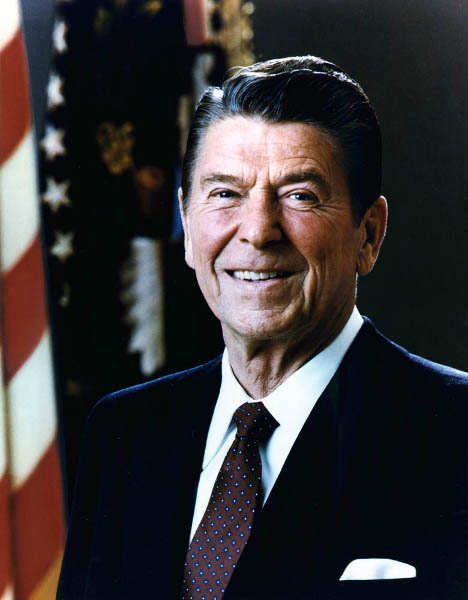
100 years ago today, Mrs Reagan had a baby boy she named Ronald Wilson…who became an actor most remembered for playing with a monkey…and a President who brought an Empire to its knees…The 80s were an interesting time…little leadership had been shown anywhere in the 70s and, really, it looked like the whole planet was going down the gurgler…Iran had toppled, the Russians looked like they were heading in that direction via Afghanistan, the Domino Theory looked like it was alive and well in Southern Africa and the Soviet Bear kept leering at Western Europe…post-Vietnam America, who we most looked to for leadership and support appeared weak and disorganised, apparently bent on returning to the isolationist days of the 30s…

War was a real and present threat…the IRA was in full howl and in 1981 terrorists seized the Iranian Embassy in London; Maggie Thatcher had to sort out Argentina in 1982; in 1983, America faced terrorist in Beirut and destabilisation in Grenada, and Russia thought it was OK to shoot-down civilian airliners; in 1985, it was still OK to use your air force (Navy in this case) to force down another nation’s airliner because you wanted to have a word with a terrorist on board; we all wondered if that nutjob Ghaddafi was going to spin out and take us all with him – and in January 1986, we thought he might have done it when Challenger exploded. It’s odd but my clearest memory of that morning is not of televised debris trails over Florida but of peeling potatoes…I was on Infantry Corps Training at the time and maybe we were in the kitchen at Balmoral Camp – or maybe that was a few months later when the US Navy gave the Libyans so lessons in dissimilar air combat…

But all through those years, there was this calm force that never seemed to get angry or upset but who stayed his course…who stared the Russians down and set the scene for Saddam’s first serious trouncing, who led his nation out of the morass of the 70s (The 70s Show only shows the good stuff) and laid the path for the next two decades…I have no idea who Reagan’s domestic policies were like of how he fared as a leader internally – the he was re-elected in 1984 is probably a clue – but as a world leader, he excelled…

He gets results

I missed the media release but ‘He gets results’ was the title of the email sent to me to let me know…and indeed he does…Martyn Dunne is  straight shooter and straight talker who expects the same from those around which, I believe, some may find a tad disconcerting…I first met him when he was a colonel and I was a lowly juniuor officer running projects to develop and introduce new clothing and personal equipment for soldiers in the mid-90s – projects in which he took a personal interest. I always found him very direct and confident in his views but also willing to listen to and discuss (with some vigour!) contrary points of view but not once did I ever know of him abusing any advantage in rank…I was pleased to see him promoted to Brigadier as our senior representative in Peter Cosgrove’s INTERFET headquarters and only 18 months later, attain Major-General as the commander-designate for the new joint headquarters. Here, not only did he have to get a new headquarters up and running while commanding operations from domestic activities through East Timor and Bougaineville to Bosnia and Afghanistan, but also had to merge into a team, three previously-separate environmental commands that had a long history of not working and playing together particularly well…

Three years later, with that task a success, at a point where other generals might be eying up the golf course, he became Comptroller and Chief Executive of the Customs Service, again successfully leading and reinventing that service, for the last six years. And now, when the bach and golf course might be beckoning again, he has accepted another challenge in the diplomatic realm as High Commissioner to Australia…look out, Aussies, there’s a new marshal coming to town…

Something fishy

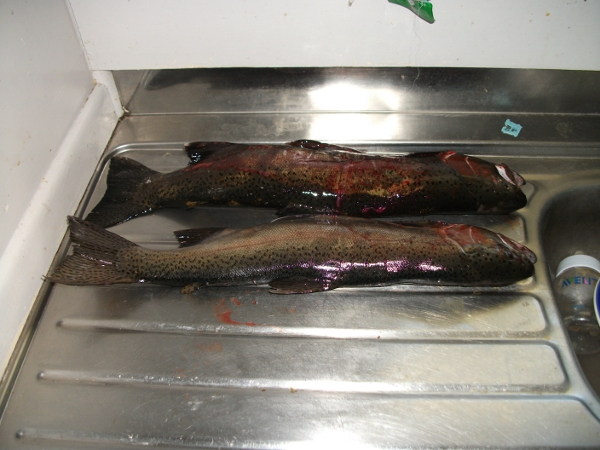
A couple of littlies

I got this long but interesting article from Dean @ Travels With Shiloh‘s Facebook page a week or so ago (it’s been sitting open in browser ever since as I don’t have a good system of ‘post-it-ing’ interesting links I come across). There are some comments at the end of the article but they are only worth ignoring. The reason this article struck a chord with me is that it is a great article of the sort of things that we never really think to much about until it’s all too late and, in this case, the fish are all gone…

Harking back to one of my frequent soapboxes, that of countering irregular activity, the stripping of non-renewable (well, not quickly) fishing grounds is happening now. As a destabilising activity (I like destabilising better than irregular), the rape of East African fisheries is a direct catalyst for the Somalia pirate problem that is keeping a number of navies off the streets at the moment. In our neck of the woods, we are constantly aware of various nations attempting to curry short-term favour with Pacific Island nations in return for fishing rights, or sometimes, maybe just a blind eye from time to time. Even domestically, it is illegal to list trout on a commercial menu here because it is pretty obvious that this would lead to a gutting of our trouteries in about six months…it’s fine to catch a trout the old-fashioned way and take it to a restuarant to be prepared and most of them, especially in this region, will do a bang-up job of it.

A few years back, we had a doer-upper bach in Purakanui – beautiful spot but really too far away for us to use or even do any work on some rather sadly we let it go…at low tide, most of the inlet would empty out and you could dig up cockles on the sand bar exposed…the legal limit is something like 40 per person but some weekends we could see greedy and unscrupulous restaurateurs come out from Dunedin and plough up the whole bar for cockles – they would bring out babies so as to beef up the limit they could take away i.e. 40 x the number of people in each group regardless of age…the legislation is too weak to cover this abuse…and it’s not hard to see that this one will end in tears as well…

Purakanui - you can stay overnight (via Bookabach) in the red and white cottage in the upper right - highly recommended!

Wry humour

These have also been sitting on my browser for the last few days…

Julian Assange claims success in free release of information…oh…uh-oh…it’s not meant to work like this…not when it’s about me...just goes to show how trivial ever aspect of this issue is…

and how to fail Bombmaking 101…probably way more to this story than Wired knows but these days it almost counts as a War on terror feel-good story…some of the coments are quite revealing too…

Well done, that man!!

Strangely, I picked this up from Michael Yon and not the local media

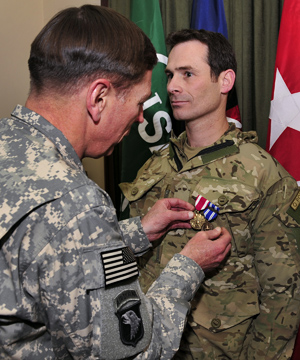
(Photo by U.S. Navy Chief Petty Officer Joshua Treadwell)

Gen. David H. Petraeus, commander of the International Security Assistance Force (ISAF), awarded the Meritorious Service Medal to New Zealand Army Lt. Col. Chris J. Parsons, during a ceremony in Kabul, Afghanistan, Jan. 13.  NZ Ambassador to Afghanistan Neville Reilly attended the ceremony.  The Meritorious Service Medal is the highest US decoration that can be awarded to an officer who is not a general for exceptional contribution to the ISAF mission. Under Parsons’ command, NZ Army 1st SAS significantly hindered the insurgents’€™ ability to reconstitute and conduct actions against Coalition Forces, resulting in increased security for the people of Afghanistan.   Parsons returns to New Zealand after a four month tour in Afghanistan.

The head of the New Zealand SAS in Afghanistan has been recognised by the United States with its top honour for foreign officers.

Lieutenant Colonel Chris Parsons was presented with the Defense Meritorious Service Medal last week in Kabul.

New Zealand Defence Minister Wayne Mapp says it’s testament to Lieutenant Colonel Parsons’ leadership and also recognition of the work the entire SAS unit is doing in the Afghan capital.

Dr Mapp says each time he meets top American servicepeople they remark on the professionalism of the SAS unit.

He says the award is given for exceptional leadership over a sustained period of time.

Dr Mapp says it is the third time during his tenure as Defence Minister that the medal has been awarded to a New Zealander.

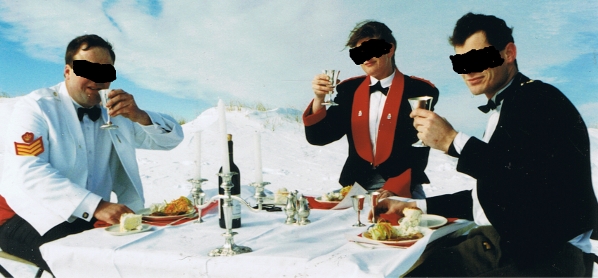
It’s good to see a Kiwi recognised at any time but even better when it’s a mate from wayback…I first met Chris  in 1995 when I was commissioned over the space of a weekend and inflicted on Headquarters Support Command and the Trentham Officers Mess…it wasn’t long before he’d led a group of us through a blizzard to the top of the snow-clad mountain for a formal dinner…because we could…

…and because the sun was so bright, everyone wore their special sunglasses…

Leadership has always been one of Chris’ (many) strong suites and I count myself very fortunate not only to know him as a friend but to have worked for and with him in a number of other appointments…

Well done, mate…

Edit: updated with image of award ceremony and Stuff caption…

Wiki…whatever….

Julian Assange’s latest exploits from Wikileaks have caused about as much real news as Y2K on 1 January 2000…after all the hype and expectation-massaging, the latest torrent of leaked documents is about as inspiring and memorable as George Lucas’ attempt at a prequel trilogy to the Original Trilogy…I once heard somewhere that the body doesn’t remember pain: it’s not that great at remembering boredom either and hopefully once the ripples in the pond subside, Assange will be marginalised by the growing realisation that he has actually done anything…all the risk was taken by those who actually leaked the quarter of a million documents in question and anyone who believes that one disgruntled PFC who’s just been dumped by his boyfriend can steal such a range of classified documents is living in Lala-land (much, in fact, like those in my previous post…)…

Michael Yon puts it all in perspective on his Facebook Page by linking Assange to other nutjobs….

It is HIGHLY doubtful that the United States government would kill Assange. If Assange is killed, the hit more likely would come from a lone wolf or someone else’s government. The conspiracy theorists might then “prove” that it was a CIA hit ordered by the same people who killed Kennedy, and that we didn’t really land on the moon but we do have a secret moon base. And 9/11 was a Jewish plot…

Never really thought about that before either…that the same people who deny the moon landings are the same ones who think the US/UN World Government has a secret Moonbase…but then again, when I was 10 I was a big fan of Gerry Anderson’s UFO and thought that building a secret Moonbase (complete with chicks with purple hair – the penny relating to the benefits of the short skirts hadn’t really dropped when I was that old) was a. pretty cool and b. pretty simple…

Dean covers it all pretty well in Wikileaks and ‘cablegate’ and I share his desperate plea to stop adding ‘gate’ to everything that has the slightest potential whiff of scandal attached to it…much the same as could we please stop referring to every campaign or initiative as a ‘war’ unless we really mean to fix bayonets, send in the Marines and let Air Combat Command off the leash…

And on ‘wars’, let’s not forget that, rhetoric aside, we’re not really at war at the moment…in at least one…yes, certainly…but ‘at’ war…no, not really: we’re not harnessing all the instruments of national power to quell the adversary and most definitely, we are not acting against those who seek to undermine the ‘war’ effort through accident or deliberate action. And that, boys, girls and family pets, is why people like Assange get away with what they do: because they are not breaking any laws…that their motives and actions are reprehensible is beyond question but even if it can be proved in the World Court (where else would have jurisdiction?) that the wikileaks were directly responsible for deaths in Afghanistan or elsewhere, it is not an offense to publish leaked material – not unless perhaps there is some form of court-ordered suppression order in effect. Even then, with the internet being what it is, it is unlikely that this would be that enforceable or provable…

But that notwithstanding, the lunatic fringe is out there demanding that Assange be arrested, assassinated or otherwise jabbed in the calf by a ricin-loaded umbrella. There’s a good thread at Small Wars Journal that hammers out the why-nots of this issue. In fact, Small Wars seems to be all over this one…WikiLeaks, Round Three provides a comprehensive list of links to various comments and reports on Assange’s latest non-event: note the DoD caveat at the top of the list, two or more wrongs DO NOT make a right:

Department of Defense personnel should not access the WikiLeaks website to view or download publicized classified information nor should they download it from anywhere, regardless of the source. Doing so will introduce potentially classified information on unclassified networks. Executive Order 13526 states ‘Classified Information shall not be declassified automatically as a result of any unauthorized disclosure of identical or similar information.

Digital security problem is bigger than Assange and PFC Manning discusses the likelihood of kneejerk reactions to PFC Manning’s indiscretions (so just how does one PFC access let alone copy 250,000 classified military and diplomatic documents between making coffee, sweeping the floor and being unappreciated?) leading to balkanisation of military and government information systems ( and Dean raises this as well)…might as well since most of them can’t talk to each other anyway, but doing so effectively cedes the public information domain to the other guys – which is probably not the sharpest move we’d want to be making…

And finally a word from our sponsor for the current ‘war’, Secretary Gates, once again courtesy of Michael Yon :

I’ve heard the impact of these releases on our foreign policy described as a meltdown, as a game-changer, and so on.  I think — I think those descriptions are fairly significantly overwrought. The fact is, governments deal with the United States because it’s in their interest, not because they like us, not because they trust us, and not because they believe we can keep secrets.  Many governments — some governments deal with us because they fear us, some because they respect us, most because they need us.  We are still essentially, as has been said before, the indispensable nation.

So other nations will continue to deal with us.  They will continue to work with us.  We will continue to share sensitive information with one another.

Is this embarrassing?  Yes.  Is it awkward?  Yes.  Consequences for U.S. foreign policy?  I think fairly modest.

The sooner we forget about Assange and let him be consumed by his own insignificance, the better…the real problem raised by the unauthorised release of close to half a million classified documents is what are we going to do a. about those who are releasing them in the first place (there can’t be THAT many briefcases and thumb drives left on the train each night)? and b. how do we train and educate their replacements that doing these is the wrong thing to do…?

Another Victory for the Whiny-baby Brigade…

In another resounding victory for the self-righteous, sit-at-home, ne’er-do-wrong brigade of whiny-babies that think the world should be nice…not interesting, exciting, stimulating…just nice…in other words, bland and boring…and that’s what Breakfast (the show and the meal) will be from now on without Paul Henry at the helm…yes, of course, he’s brash, opinionated, childish, immature but…BUT…he does say many of those things that many many people are actually thinking and his latest mindless verbal gaffe is typical of this when he asked the Prime Minister last week on live TV “…Is he [the current Governor-General] even a New Zealander? Are you going to choose a New Zealander who looks and sounds like a New Zealander this time?…

And that’s a good question…not racial grounds but simply because no one has the faintest idea where the current Governor-General comes from, who he is, or what he does…in short, he’s just like Breakfast will be from now on…nice but bland and boring – there’s probably some kind of irony in that. Previous Governor-Generals as far back as I can remember (and that’s getting to be some way now) have been public figures of some form who Joe Public had actually heard of before not some nice chap who doesn’t really appear to say or do much at all…so good on you, Paul, for speaking up and saying what so many think…

And while we’re on the topic of what so many think, here’s a snap of the Stuff.co.nz poll this morning on the subject…


The little yellow bar says it all...


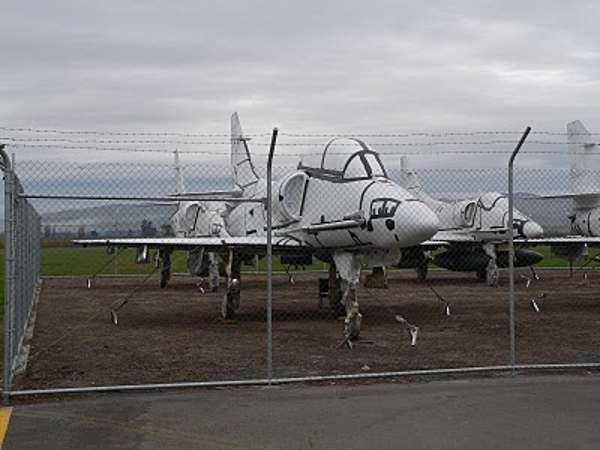
And, Paul,  I hope that you get a good job back on air…probably snapped up by someone else already…and do get to put that Skyhawk in the back garden…


All parked up with no place to go...


9-6 The under-dog bites…

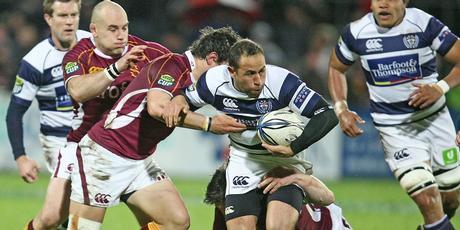
Jamie Hellur of Auckland tries to make a break during the round nine ITM Cup match between Southland and Auckland. Photo / Getty Images

 It’s always good to see an underdog holds it own, better when it not only thrashes one of the most affluent clubs but gets to retain THE Shield, and better when the trounced club is Auckland…of course, this will mean zip to overseas readers (imagine the SuperBowl but maybe played for 4-5 times a season) but as one who was a temporary Southlander in the early 80s and was there when they clawed their way in the First Division, Southland’s retention of the Shield is a great achievement…a massive morale spike in our southernmost province that can only be a good thing…