Surf Nazis Alive And Well In NZ

The most fitting accompanying image I could find…

Oh…my God, it’s not often anything stops me in my tracks but this did…there are real live Nazi apologists in New Zealand!! Holy Heck, Batman!!

This blot on the tapestry of reality came to light when a small (very small) smattering of socalled anti-war (like anyone is pro-war) advocates set up their soapboxes in the FB Sumner Burstyn give back your NZ passport! page….The prattle about oil in Afghanistan was amusing but this revelation just took the cake:

Her: I dont support the way Sumner expressed herself at all. I mourn a lost life regardless of who they are. I do my homework every day and I dont wave placards or go to protests, I try to address the causes and not the symptoms, thats all. The intentions of NZ soldiers are no doubt honorable, all I am saying is I dont believe the actions or intentions of those requesting your assistance are. I didnt come here to be a punching bag for those wanting to vent against anyone who disagrees. Facts speak the loudest, it is a fact that the enemy you are fighting was deliberately created to collapse the soviet union. Why are we cleaning up the mess of failed US poilcy. They mass murder people on a regular basis and we dont want to be tarred by that brush. They are hated so much and rightly so.

Another Poster: Small question. Without soldiers who would have stopped Hitler?

Her: Hitler did not start the war contrary to the propaganda we have been fed. He invaded Poland in retaliation for the murder of 58,000 innocent germans in the danzig corridor. Examine his every speech and his works and you can clearly see he did not start the war.. The germans were starving as a result of the sanctions, they did all they could to avoid the war. General patton was assassinated because he saw that a mistake had been made, that germans were lovely compared to the way russians were treating people. They killed him because he did not agree with the treatment of german POW’s. 1million germans died of starvation without shelter, food or water at the hands of the americans. A cruel way to die. They havent stopped this cruelty and we ougt not to support their immoral actions..

Another Poster: Are you actually defending Hitler? [name removed to protect the stupid] you are deluded.

Her: you need to study his speeches and look at the provocations…i alwsy thought that too. We have been lied to all our lives…

Apparently, the answers are all in Patton’s diaries…Indiana Jones, where you when we need the Patton Diaries…?

In an attempt to establish her credibility, this individual stated that she’d been an Army wife – disclaimer not to be associated with real Army wives who are indeed a force to be reckoned with, lest anyone be subjected to the Death of a 1000 Chick Flicks – but, sheesh, woman!! Do you think that’ll really help your case when you’re pleading a case of self-defence for Nazi Germany…? Of course, the bigger question might simply be, ‘do you think?’…

While the creators and members of the page have been happy for those with alternate views to contribute to the page, it is disappointing that all they can do is attempt to use it as a platform for their views on the wrongs of involvement in Afghanistan, relations with the US, etc instead of avoiding the real issue that the page was established for, i.e.. to raise and share concerns arising from the unnecessary comments made by disowned Kiwi Barbara Sumner Burstyn (the Canadians probably wouldn’t mind disowning her now too) about fallen Kiwi soldier, Lance-Corporal Jacinda Baker. Although most members of the group manage to express themselves clearly and rationally, in some cases eloquently, the anti-war fringe consistently come across as poorly-informed and quite ignorant, with quick recourse to personal attacks against those that do not agree. I note that they are all very quick to rant away online but less keen to set up their soap boxes outside the RSA or anywhere in mainstream New Zealand…

Here’s another muppet: why is it that they all assume that any and all service people are mindless brainless machines capable only of following orders…perhaps it’s a super-clear that they have not taken the time or made the effort to actually get to know their ‘enemy’ – of course, this might mean that their preconceptions might be ever so shattered when they find that service people are actually smart, articulate well-educated people and, if the truth be known, always have been…one need look no further than the vast bulk of the comments posted on the Burstyn protest page…

Have to go now…I feel so bad the we picked the wrong side in WW2 and need to atone in my own small way…maybe a dose of Inglorious Bastards…?

The media look after their own

Oh, woe is me…the combination of Kiwi, stick and snake apparently works for leftos as well

There is a story in the Herald on Sunday on the Sumner Burstyn issue. Unfortunately it’s not a very good one and really only serves as a platform for Ms Burstyn to plead ‘oh, woe is me…why are people angry with me?” We wondered last night if the media lack of response to the issues were a case of them looking after their own and based on THIS article that would seem to be the case…

The author, Joanne Carroll, does not appear to have made any attempt to interview or seek comment from the creators of the page and seems happy enough to simply regurgitate what she has been told by Summy Bear, coupled with some lightweight comment from the defence Force which does not seem to have any opinion on whether it is OK or not for people to slag off fallen soldiers before their final journey is complete. And that is the real issue here, folks, NOT the hows or whyfores of New Zealand’s involvement in Afghanistan…

There is an email link at the end of the article and I would suggest that anyone with concerns about the standard of NZ media reporting on this and other issues, use it. Pick your 1200 characters carefully and, as always, keep it seemly and remember that soldiers are discplined but mobs and rabbles are not…

Dear Joanne

Thank you for making the effort to cover the erupting Summer Burstyn issue however I don’t believe that you have provided a balanced perspective at all and have simply latched onto the issue for some cheap ratings. You have made no effort to portray fairly the feelings of those who have expressed their outrage at her comments on Facebook and elsewhere online but have just focussed on the minority whose comments are aggressive. Is not the fact (if the Herald still deals in such?) that over 20,000 people have joined the FB page in less than two days an indicator of where public feeling lies on this issue? The NZ media was very quick to climb aboard when similar outrage was expressed occurred over the Kahui twins.

There was a belief expressed yesterday that the NZ media’s lack of response to this issue was a case of the media covering up for its own. Your article has done nothing the assuage that belief and merely provides a forum for more of Burstyn’s self-righteous self-pity.

I hope that the Herald and the rest of the NZ media community will get it together and offer a balanced view of what the issues are.

Here’s a view from the FB page that I think presents the balance absent from the article:

Sumner Burstyn: post an antiwar comment and get 120 death threats – funny how that works.

Barbara, the thing is, your comments were not antiwar comments (I greatly respect anyone’s right to make those). Instead they were a personal attack on a young dead female soldier just after her body was returned to New Zealand for burial.
While I am sorry that the responses from 20,000 of her closest friends and collegues became personal and in some instances threatening, surely you can see that they mirrored the language and feeling of YOUR original post.

While I respect your opinion, your target, tone and timing were highly inappropriate in any civilised society. Despite your apology we continue to see similar messages from you, including personal attacks on dead service personnel in your earlier posts. As a NZ Herald columnist I would have expected a more considered approach to posting such views. I guess that’s now a matter for your employer and tomorrow’s talk back radio callers to consider.

More words from activist filmaker Sumner Burstyn

More words from activist filmaker Sumner Burstyn.

This makes great reading. It derives from a comment made about  Lance-Corporal Jacinda Baker, one of the three Kiwi soldiers killed by an IED in Afghanistan last weekend:

After the first pushback from the community the comment was removed however as the exchange with a soldier on the link above shows, that wasn’t through any sense of remorse. It is really interesting to note, when reading this transcript that the socalled journalist very quickly descends into abuse while the infantry soldier continues to put his case in clear and articulate terms…

The issue is not whether or not we should or should not be in Afghanistan, or the whys or why nots of having a defence force; the issue is simply that someone has stooped to a vicious personal attack on a young woman who is no longer able to speak for herself – but there are, at the time of typing this, 13752 people prepared to speak on Jacinda Baker’s behalf.

While the freedom of the internet allows someone like Sumner Burstyn to publish her slander, it also allows for that slander to be challenged and not be allowed to become the new ‘truth’ and here a community has come together again to see that wrong righted.    I say ‘again’ because this is a very special community, one that spans across the world and across decades – there are names appearing here that I have not seen for years and years and that bring back such memories. We might not meet regularly or even often but we can carry on a conversation that started in a hole full of mud and bugs in South East Asia, or while shivering in the tussock of Waiouru as if that were only yesterday. And certainly we can come together again to speak on behalf of those who can no longer…

There is a lot of anger on the community page and there probably would be at any time but in this month, where we have lost five of our own, a lot of folks are venting. It isn’t an unreasonable expectation that the mollycoddled left leaning loony community couldn’t give it a rest at least til the funerals and grieving are done…

A sad day for New Zealand as Corporal Luke Tamatea, Lance Corporal Jacinda Baker and Private Richard Harris arrive back home. (c) NZDF 2012

Jim Hopkins of the NZ Herald ends an article yesterday:

Yet, somehow, we still get soldiers. Who don’t hide in other people’s houses or make self-serving speeches or expect everyone else to “do the right thing”. They do it themselves, whatever the cost. On the Stuff website, beneath its report on the death of SAS Corporal Doug Grant last year, readers have posted their comments. One says this: – “Rest in Peace – We shall remember them. If you can read this, thank a teacher. If you can read it in English, thank a soldier.”

That’s the essence of the debt every generation owes its troops – a debt unpaid by those who hide in embassies.

Age shall not weary them

I started work this morning, only to learn that three more Kiwi soldiers have been killed in Bamiyan Province when the last vehicle in a convoy was hit by an improvised explosive device in Bamiyan, north west of Do Abe on the road to Romero about 9.20am on Sunday (Afghanistan time).  The remaining personnel in the patrol secured the location and awaited additional support. A second bomb was found and defused.

Many people are sharing a quote from US Army Major John Hottell, who was killed in Vietnam…it sounded familiar and I found a Time article that concludes with that quote:

…you have five in a row from the class of ’64. One belongs to John Hottell III – a Rhodes scholar, twice a recipient of the Silver Star – who was killed in 1970. The year before, he had written his own obituary and sent it in a sealed envelope to his wife. “I deny that I died for anything – not my country, not my Army, not my fellow man,” he wrote. “I lived for these things, and the manner in which I chose to do it involved the very real chance that I would die…my love for West Point and the Army was great enough…for me to accept this possibility as a part of a price which must be paid for things of great value.

Some day I might copy the whole article in here but that’s not appropriate today…in getting my head around these losses in Bamiyan, I did come across the site from which I borrowed the image above…the author talks about memories of ANZAC Day and the simple act of placing an RSA poppy on the cenotaph, one of the many scattered across this nation, reminders of those who did not come back from the nation’s struggles…

Leading from the Front

Major Wilson pictured here in 2010 speaking with then Defence Minister Wayne Mapp. (c) Dean Kozanic

The following statement has been issued by the New Zealand Defence Force on behalf of Major Craig Wilson, the officer commanding Kiwi Company at the time of the gun battle with insurgents in Bamyan, Afghanistan, on 4 August.
“I am writing this statement for release to the general public. Until I am well enough, these words will have to take the place of me speaking directly.

“All six of us wounded personnel are incredibly pleased at the way LCpls Pralli Durrer and Rory Malone were honoured by their Army units and the nation more generally over the weekend. We are thinking of Rory and Pralli and it gave us great comfort to see them appropriately honoured.
“Our first thoughts are with the families of Pralli and Rory and I look forward to meeting the families in person on my return to New Zealand. I appreciate the support being provided to the families of our fallen, which I know will be coming from so many compassionate people in the country we serve and love.
“We are very much thinking of the Durrer and Malone families and their friends, as well as the families of all the guys still out doing the job in Afghanistan. We really appreciate the support of the New Zealand public, and I am hopeful that that public support will be ongoing to the families of the men and women still delivering the mission in Afghanistan.
“With regard to the other injured men of Kiwi Company, I have been very proud of their conduct. We have tried to be as strong as possible. I am sure I speak for us all when I talk about the support we have received.
“This initially came from our mates on the ground, who in some cases risked their own lives to get us out of immediate danger and provided immediate first aid. Then from our medics – who have been consummate professionals all tour and stood up yet again.
“Finally, from our headquarters and support personnel who brought all the external support to bear that we needed; who made the best of what was an incredibly difficult situation; and, as always, made the troops on the ground feel supported.
“I would like to also publicly praise the coalition troops who responded in support of the situation – especially the MEDEVAC helicopter pilots and crews who are some of the most skilled and brave unsung heroes of the Afghan theatre.
“Thanks also goes to the many coalition medical teams through the chain of evacuation that in some cases saved our lives. In all cases they made us feel safe and secure. The public of New Zealand should know that these Dutch, German and American medical teams treated us like their own countrymen, working tirelessly and with great skill.
“I would like to thank our military leaders and their staff back in New Zealand, who through their hard-working liaison officers have made us feel as though heaven and earth is being moved to keep us supported, and getting us home to our families quickly, where we all want to be. We look forward to reuniting with our family and friends, getting our medical treatment finalised, and getting back on with things just as soon as we can.
“With regard to the incident itself, I and the other wounded look forward to formally passing to the New Zealand Defence Force, at the appropriate time on our return, the knowledge and detail of this battle that we possess. This battle was very fast, very complex, and came down to a pitched gunfight where the insurgent force had many advantages over us at that moment. The full story is yet to be pieced together.
“Judging by the nature of my wounds, my days as an operational soldier are probably over but I will continue working for my soldiers now and over the next while to ensure that they are accredited the respect and recognition that their actions in Bamyan deserve.
“While this was a major combat engagement, it is what our men and women work and train for. I know Kiwi Company will have continued on committed to their work in Afghanistan because they are a professional group, and that’s what soldiers do. 
“Finally, I wish to thank the public of New Zealand for their support of all our service personnel on operations everywhere. It is really important to us, especially when times get tough.”

About the incident:
On 4 August, Kiwi Company came to the support of the Afghan National Directorate of Security who were under attack by insurgents. The NDS sustained two deaths and a further 11 personnel, including one civilian, were wounded. The New Zealand Defence Force sustained two deaths and a further six wounded.

About Major Wilson:
Major Craig Wilson was shot in the shoulder and received multiple wounds to his lungs, ribs, collarbone and shoulder-bone, as well as artery and tissue damage, and has lost the use of his right arm. However, doctors anticipate that he will regain some if not all function after likely many months rehabilitation. All of Maj Wilson’s wounds have been effectively treated, except the nerve damage where treatment/rehabilitation will commence after his return to New Zealand.
Maj Wilson is a married father of three, who lives in Burnham.
In 2007, he received the New Zealand Gallantry Decoration – NZGD – for events while serving with the New Zealand SAS in Afghanistan in 2004.
The NZGD is the third-highest military decoration for New Zealand. It is granted in recognition of ‘acts of exceptional gallantry in situations of danger’ while involved in war and warlike operational service.

Home are the hunters…

Image

304641_423065317730620_1901594990_n

Home to rest, forever in hearts of those who served with them, and those who loved them.

Lance Corporals Paralli Durrer and Rory Malone who were killed in Afghanistan on Saturday have arrived home to New Zealand.

They were met by members of their families, senior military officials, and personnel from 2/1 RNZIR and QAMR during a ramp ceremony in Christchurch.

Weekly Writing Challenge: From Mundane to Meaningful

WordPress has kicked off a new challenge to encourage more regular writing…the first challenge is themed From Mundane to Meaningful…the general idea is to take some mundane action from your day or week and lead it to a train of more meaningful thought…

Because we both often away from home, we have to always have a plan for looking after our dogs…there are big enough that we can leave them on their own for about a day and a half but anything over that, we have to make other plans…Our kennel of choice is Creature Comforts, just north of Sanson, under the approach to RNZAF Ohakea. We’ve been using it for many years and know that our ‘kids’ are well looked after there: we use them often enough that the drop-off is pretty routine for all of us.

Driving past the main gate of the air base, I glanced in just in time to see the Avenger out of its hangar – the first time I have seen it since it arrived. It’s great to see this aircraft fully restored and flyable: I sat and waited to see if they were going to fire it up but no joy this particular morning.

For me, this and the other flying warbirds are a link to a past that we don’t appreciate and are all to quick to dismiss and forget amidst the tempo of our modern world. The Avenger is particularly evocative of the massive naval air battles of the Pacific War that turned back the Japanese tide at odd-sounding and other insignificant places like Midway, Coral Sea, Leyte Gulf and the Marianas.

And the thousands of young men, all of whom had other aspirations, careers, plans, lives…who downed tools, quite school and signed up to fight for some basic values…The young, now old men, who flew for Bomber Command, Britain’s only means of striking back during those dark years from 1940 to 1942, who only now have been recognised for their sacrifice seven decades ago, recognition denied them for reasons of political tidiness.

And we shouldn’t forget that every day, other young men and women launch themselves into the skies from Ohakea and Whenuapai, into harm’s way because flying will remain an inherently dangerous act until such time as we can do it unaided…I understand the physics of what they do but remain in total awe of the way that they have mastered this unnatural act…slipping those surly bonds in such a way that it seems so natural and effortless…

An act as mundane as dropping our dogs at the kennel led to a sad nostalgic train of thought…


Skin in the Game

There’s been more dross in the popular media this week about ‘killer robot drones’ and this article from the Atlantic Journal got me thinking. Those thoughts didn’t really gel til tonight. After work – I almost always forget to turn on some ambient noise while I’m working – I put on a movie while doing some work around the house; you know, the cool stuff like laundry, dishes, bringing in wood, vacuuming, etc, etc…My selection was Stealth, a good bit of pounding hitech fun. I just happened to walk past the TV as the key players were discussing the implications of ‘robot’ war…the line went something like “…war is horrible, we know that and it’s the main reason that war is a last resort; but if we don’t have skin in the game any more, if it’s all machines – then we’ll have war all the time…”

So very true, and something that we seem to have forgotten – it’s not about cost-effectiveness, or superior precision, or any other military advantage that unmanned systems might bring to the party: it’s the cold but simple fact that unmanned systems relieve those that do not serve from the burden of, not guilt, but plain old inconvenient embarrassment in case some damn fool pilot decides to imitate Francis Gary Powers or get dragged through the streets of some dusty third world capital.

These distancing also takes the pilot out of the loop as well when it comes to pushing the button; contrary to what anyone might say, sitting in a room half a world away is not the same as being in the same missionspace as those he’s having a crack at…no skin in the game and we start to forget what it is that we are going, forget that there are actually people down there on the ground who may take some exception to being rudely bundled into some distant collateral damage calculation. It is one thing to strike a target in the heat of wartime and accidentally killing some bystanders or of striking the wrong building by accident while evading SAMs and AAA; and entirely another to grant yourself a license to strike where you want and when you want.

There are claims, well substantiated legally0-supported claims that the so-called drone strikes are conducted by legal right under international law, an inherent right to self-defence, and that your nation is at war. The trouble with that argument is that when you are the biggest by far kid on the block an argument of self-defence is difficult if not impossible to justify, even less so when you are not prepared to consider your end of the Drone Wars (and it does read like a bad Muppet-ridden George Lucas movie) as belligerents and subject to the same risks as your quarry. “Excuse us, Mr President, would it be OK if we lobbed a Hellfire missile at that Reaper pilot when he stops at the 711 for some milk on his way home from the war?” Skin in the game might take on a whole new meaning if someone decides to turn your rules against you – where do you want to draw the line? We won’t bomb your wedding parties if you don’t bomb ours?

Without skin in the game, we forget what war is really all about…that sort of complacency leads to weakness and weakness draws competition and predators (lower case predators, that is)…

It’s dorky, it’s ugly and…

…and it serves no useful purpose…

A solution in search of a problem

OK, so, yeah whatever, it’s technically very cool and it’s not REALLY an aircraft so you can let a couple of NCOs operate it – and of course save a bundle on what you would actually have to pay a proper crew…

I’m clearly a big fan of unmanned systems – in entirely the wrong job if I wasn’t – but it’s like they used to teach in the good old days at the Tactics School ‘..task with a purpose…’ that is, you don’t just do stuff simply because you can…

So what are my issues with the unmanned cargo aerial vehicle:

Even the acronym is dodgy as UCAV also represents unmanned combat aerial vehicle and I’m not sure we want to be getting to two confused. Maybe a good rule of thumb could be that if you have two acronyms that can be applied interchangeably but mean totally different things, then one of them has to change. Litmus test: would anyone be upset if the US announced it was deploying ‘UCAVs’ to Libya? (Let’s not go near the whole Syrian debacle…

It’s optionally manned i.e. the cockpit is still there and functional so that if required a pilot (one only as it is a single seater) can operate it. Sounds like someone is hedging their bets but who’d want to be flying a single seat unarmoured helicopter at low level in the badlands…possibly keeping it sellable so keep an eye out for some slightly used optionally manned K-Maxs on eBay.

It’s meant to save lives. How is not exactly clear. The greater numbers of casualties in a helicopter crash come from the passengers – this thing isn’t carrying passengers and it’s only doing ash and trash tasks which are not noted as being amongst the more dangerous helicopter missions unless all of a sudden boredom is actually a hazard.

Oh, I see, it’s meant to save lives by reducing the amount of ground traffic that needs to be exposed to the IED threat. But haven’t we been doing the airborne resupply thing for years now? What has K/Max really brought to the party except another aircraft type to maintain and operate?

This whole thing of we’ll only travel by air because of the IEDs gives the lie to ‘war amongst the people’: having come in and screwed up your country, we happy for us to have the luxury of free air travel…whoa, you locals step away from the aircraft – you still get to travel by land and risk the threat aimed at us. Yeah right, much as we don’t want our people to go in harm’s way, this is simply ceding the ground to the bad guys which bad. What’s worse is that validates IEDs as valid and effective tools to employ against ground forces. Expect to see (LOTS) more of them until they go the way of the Zeppelin and and made untenable as weapon systems. That means putting more resource into countering IEDs to the left, well to the left of the BANG. the K-Max UCAV isn’t going to help you there.

The K-Max might actually add to the problems created by ceding the land environment (great for air forces though!!) because every boring mundane MANNED ash and trash mission puts eyes on the ground, and the more that they cover the same area on a routine basis, the greater the familiarity they build up and the more likely they are to be able to detect and identify some form of anomaly or indicator that might need to be followed up.

Every manned helicopter currently doing the ash and trash mission can be reroled on the fly for emergency dust-off of casualties or to provide airborne ISR for troops in contact…can’t really do that with the K-Max UCAV. You also can’t use it to provide quick fires with its door guns because it doesn’t have doors let alone guns…can’t toss an airborne sniper up in it either…

There are hidden costs. This thing is not fitted with any form of self-protection system so its only really any good where there no air threat to helicopters. One also wonders how good the flight control system is once the aircraft has been damaged in flight – will it be able to autonomously divert to an alternate LZ or even opt to make an emergency landing in the field?

So sorry, close but no cigar…UAVs are useful but they are not a universal panacea for all ills and they certainly do make the IED issue ‘go away’…but everything has to actually contribute meaningfully to the war effort and, as writ to date, the K-Max UCAV simply doesn’t…

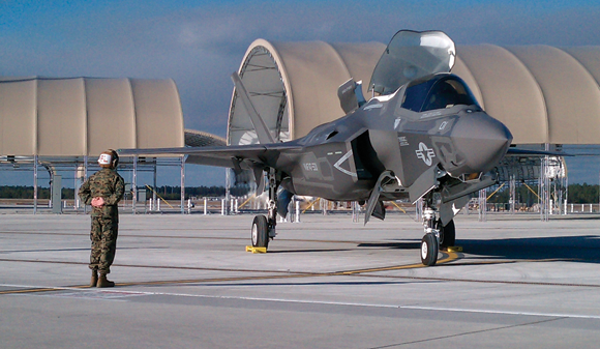
The Jet That Ate the Pentagon

When I read this article from Foreign Policy, I am so very much reminded of this Arthur C. Clarke short story, Superiority which I found online here….Patton may have been righter than he realised when he said that it was all about being ‘first with the mostest’ as opposed to lastest with the bestest….

Superiority – by Arthur C. Clarke

IN MAKING THIS STATEMENT – which I do of my own free will – I wish first to make it perfectly clear that I am not in any way trying to gain sympathy, nor do I expect any mitigation of whatever sentence the Court may pronounce. I am writing this in an attempt to refute some of the lying reports broadcast over the prison radio and published in the papers I have been allowed to see. These have given an entirely false picture of the true cause of our defeat, and as the leader of my race’s armed forces at the cessation of hostilities I feel it my duty to protest against such libels upon those who served under me.

I also hope that this statement may explain the reasons for the application I have twice made to the Court, and will now induce it to grant a favor for which I can see no possible grounds of refusal.

The ultimate cause of our failure was a simple one: despite all statements to the contrary, it was not due to lack of bravery on the part of our men, or to any fault of the Fleet’s. We were defeated by one thing only – by the inferior science of our enemies. I repeat – by the inferior science of our enemies.

When the war opened we had no doubt of our ultimate victory. The combined fleets of our allies greatly exceeded in number and armament those which the enemy could muster against us, and in almost all branches of military science we were their superiors. We were sure that we could maintain this superiority. Our belief proved, alas, to be only too well founded.

At the opening of the war our main weapons were the long-range homing torpedo, dirigible ball-lightning and the various modifications of the Klydon beam. Every unit of the Fleet was equipped with these and though the enemy possessed similar weapons their installations were generally of lesser power. Moreover, we had behind us a far greater military Research Organization, and with this initial advantage we could not possibly lose.

The campaign proceeded according to plan until the Battle of the Five Suns. We won this, of course, but the opposition proved stronger than we had expected. It was realized that victory might be more difficult, and more delayed, than had first been imagined. A conference of supreme commanders was therefore called to discuss our future strategy.

Present for the first time at one of our war conferences was Professor-General Norden, the new Chief of the Research Staff, who had just been appointed to fill the gap left by the death of Malvar, our greatest scientist. Malvar’s leadership had been responsible, more than any other single factor, for the efficiency and power of our weapons. His loss was a very serious blow, but no one doubted the brilliance of his successor – though many of us disputed the wisdom of appointing a theoretical scientist to fill a post of such vital importance. But we had been overruled.

I can well remember the impression Norden made at that conference. The military advisers were worried, and as usual turned to the scientists for help. Would it be possible to improve our existing weapons, they asked, so that our present advantage could be increased still further?

Norden’s reply was quite unexpected. Malvar had often been asked such a question – and he had always done what we requested.

“Frankly, gentlemen,” said Norden, “I doubt it. Our existing weapons have practically reached finality. I don’t wish to criticize my predecessor, or the excellent work done by the Research Staff in the last few generations, but do you realize that there has been no basic change in armaments for over a century? It is, I am afraid, the result of a tradition that has become conservative. For too long, the Research Staff has devoted itself to perfecting old weapons instead of developing new ones. It is fortunate for us that our opponents have been no wiser: we cannot assume that this will always be so.”

Norden’s words left an uncomfortable impression, as he had no doubt intended. He quickly pressed home the attack.

“What we want are new weapons – weapons totally different from any that have been employed before. Such weapons can be made: it will take time, of course, but since assuming charge I have replaced some of the older scientists with young men and have directed research into several unexplored fields which show great promise. I believe, in fact, that a revolution in warfare may soon be upon us.”

We were skeptical. There was a bombastic tone in Norden’s voice that made us suspicious of his claims. We did not know, then, that he never promised anything that he had not already almost perfected in the laboratory. In the laboratory – that was the operative phrase.

Norden proved his case less than a month later, when he demonstrated the Sphere of Annihilation, which produced complete disintegration of matter over a radius of several hundred meters. We were intoxicated by the power of the new weapon, and were quite prepared to overlook one fundamental defect – the fact that it was a sphere and hence destroyed its rather complicated generating equipment at the instant of formation. This meant, of course, that it could not be used on warships but only on guided missiles, and a great program was started to convert all homing torpedoes to carry the new weapon. For the time being all further offensives were suspended.

We realize now that this was our first mistake. I still think that it was a natural one, for it seemed to us then that all our existing weapons had become obsolete overnight, and we already regarded them as almost primitive survivals. What we did not appreciate was the magnitude of the task we were attempting, and the length of time it would take to get the revolutionary super-weapon into battle. Nothing like this had happened for a hundred years and we had no previous experience to guide us.

The conversion problem proved far more difficult than anticipated. A new class of torpedo had to be designed, as the standard model was too small. This meant in turn that only the larger ships could launch the weapon, but we were prepared to accept this penalty. After six months, the heavy units of the Fleet were being equipped with the Sphere. Training maneuvers and tests had shown that it was operating satisfactorily and we were ready to take it into action. Norden was already being hailed as the architect of victory, and had half promised even more spectacular weapons.

Then two things happened. One of our battleships disappeared completely on a training flight, and an investigation showed that under certain conditions the ship’s long-range radar could trigger the Sphere immediately after it had been launched. The modification needed to overcome this defect was trivial, but it caused a delay of another month and was the source of much bad feeling between the naval staff and the scientists. We were ready for action again – when Norden announced that the radius of effectiveness of the Sphere had now been increased by ten, thus multiplying by a thousand the chances of destroying an enemy ship.

So the modifications started all over again, but everyone agreed that the delay would be worth it. Meanwhile, however, the enemy had been emboldened by the absence of further attacks and had made an unexpected onslaught. Our ships were short of torpedoes, since none had been coming from the factories, and were forced to retire. So we lost the systems of Kyrane and Floranus, and the planetary fortress of Rhamsandron.

It was an annoying but not a serious blow, for the recaptured systems had been unfriendly, and difficult to administer. We had no doubt that we could restore the position in the near future, as soon as the new weapon became operational.

These hopes were only partially fulfilled. When we renewed our offensive, we had to do so with fewer of the Spheres of Annihilation than had been planned, and this was one reason for our limited success. The other reason was more serious.

While we had been equipping as many of our ships as we could with the irresistible weapon, the enemy had been building feverishly. His ships were of the old pattern with the old weapons – but they now out-numbered ours. When we went into action, we found that the numbers ranged against us were often 100 percent greater than expected, causing target confusion among the automatic weapons and resulting in higher losses than anticipated. The enemy losses were higher still, for once a Sphere had reached its objective, destruction was certain, but the balance had not swung as far in our favor as we had hoped.

Moreover, while the main fleets had been engaged, the enemy had launched a daring attack on the lightly held systems of Eriston, Duranus, Carmanidora and Pharanidon – recapturing them all. We were thus faced with a threat only fifty light-years from our home planets.

There was much recrimination at the next meeting of the supreme commanders. Most of the complaints were addressed to Norden-Grand Admiral Taxaris in particular maintaining that thanks to our admittedly irresistible weapon we were now considerably worse off than before. We should, he claimed, have continued to build conventional ships, thus preventing the loss of our numerical superiority.

Norden was equally angry and called the naval staff ungrateful bunglers. But I could tell that he was worried – as indeed we all were – by the unexpected turn of events. He hinted that there might be a speedy way of remedying the situation.

We now know that Research had been working on the Battle Analyzer for many years, but at the time it came as a revelation to us and perhaps we were too easily swept off our feet. Norden’s argument, also, was seductively convincing. What did it matter, he said, if the enemy had twice as many ships as we – if the efficiency of ours could be doubled or even trebled? For decades the limiting factor in warfare had been not mechanical but biological – it had become more and more difficult for any single mind, or group of minds, to cope with the rapidly changing complexities of battle in three-dimensional space. Norden’s mathematicians had analyzed some of the classic engagements of the past, and had shown that even when we had been victorious we had often operated our units at much less than half of their theoretical efficiency.

The Battle Analyzer would change all this by replacing the operations staff with electronic calculators. The idea was not new, in theory, but until now it had been no more than a Utopian dream. Many of us found it difficult to believe that it was still anything but a dream: after we had run through several very complex dummy battles, however, we were convinced.

It was decided to install the Analyzer in four of our heaviest ships, so that each of the main fleets could be equipped with one. At this stage, the trouble began – though we did not know it until later.

The Analyzer contained just short of a million vacuum tubes and needed a team of five hundred technicians to maintain and operate it. It was quite impossible to accommodate the extra staff aboard a battleship, so each of the four units had to be accompanied by a converted liner to carry the technicians not on duty. Installation was also a very slow and tedious business, but by gigantic efforts it was completed in six months.

Then, to our dismay, we were confronted by another crisis. Nearly five thousand highly skilled men had been selected to serve the Analyzers and had been given an intensive course at the Technical Training Schools. At the end of seven months, 10 percent of them had had nervous breakdowns and only 40 per cent had qualified.

Once again, everyone started to blame everyone else. Norden, of course, said that the Research Staff could not be held responsible, and so incurred the enmity of the Personnel and Training Commands. It was finally decided that the only thing to do was to use two instead of four Analyzers and to bring the others into action as soon as men could be trained. There was little time to lose, for the enemy was still on the offensive and his morale was rising.

The first Analyzer fleet was ordered to recapture the system of Eriston. On the way, by one of the hazards of war, the liner carrying the technicians was struck by a roving mine. A warship would have survived, but the liner with its irreplaceable cargo was totally destroyed. So the operation had to be abandoned.

The other expedition was, at first, more successful. There was no doubt at all that the Analyzer fulfilled its designers’ claims, and the enemy was heavily defeated in the first engagements. He withdrew, leaving us in possession of Saphran, Leucon and Hexanerax. But his Intelligence Staff must have noted the change in our tactics and the inexplicable presence of a liner in the heart of our battlefleet. It must have noted, also, that our first fleet had been accompanied by a similar ship – and had withdrawn when it had been destroyed.

In the next engagement, the enemy used his superior numbers to launch an overwhelming attack on the Analyzer ship and its unarmed consort. The attack was made without regard to losses – both ships were, of course, very heavily protected – and it succeeded. The result was the virtual decapitation of the Fleet, since an effectual transfer to the old operational methods proved impossible. We disengaged under heavy fire, and so lost all our gains and also the systems of Lormyia, Ismarnus, Beronis, Alphanidon and Sideneus.

At this stage, Grand Admiral Taxaris expressed his disapproval of Norden by committing suicide, and I assumed supreme command.

The situation was now both serious and infuriating. With stubborn conservatism and complete lack of imagination, the enemy continued to advance with his old-fashioned and inefficient but now vastly more numerous ships. It was galling to realize that if we had only continued building, without seeking new weapons, we would have been in a far more advantageous position. There were many acrimonious conferences at which Norden defended the scientists while everyone else blamed them for all that had happened. The difficulty was that Norden had proved every one of his claims: he had a perfect excuse for all the disasters that had occurred. And we could not now turn back – the search for an irresistible weapon must go on. At first it had been a luxury that would shorten the war. Now it was a necessity if we were to end it victoriously.

We were on the defensive, and so was Norden. He was more than ever determined to reestablish his prestige and that of the Research Staff. But we had been twice disappointed, and would not make the same mistake again. No doubt Norden’s twenty thousand scientists would produce many further weapons: we would remain unimpressed.

We were wrong. The final weapon was something so fantastic that even now it seems difficult to believe that it ever existed. Its innocent, noncommittal name – The Exponential Field – gave no hint of its real potentialities. Some of Norden’s mathematicians had discovered it during a piece of entirely theoretical research into the properties of space, and to everyone’s great surprise their results were found to be physically realizable.

It seems very difficult to explain the operation of the Field to the layman. According to the technical description, it “produces an exponential condition of space, so that a finite distance in normal, linear space may become infinite in pseudo-space.” Norden gave an analogy which some of us found useful. It was as if one took a flat disk of rubber – representing a region of normal space – and then pulled its center out to infinity. The circumference of the disk would be unaltered – but its “diameter” would be infinite. That was the sort of thing the generator of the Field did to the space around it.

As an example, suppose that a ship carrying the generator was surrounded by a ring of hostile machines. If it switched on the Field, each of the enemy ships would think that it – and the ships on the far side of the circle – had suddenly receded into nothingness. Yet the circumference of the circle would be the same as before: only the journey to the center would be of infinite duration, for as one proceeded, distances would appear to become greater and greater as the “scale” of space altered.

It was a nightmare condition, but a very useful one. Nothing could reach a ship carrying the Field: it might be englobed by an enemy fleet yet would be as inaccessible as if it were at the other side of the Universe. Against this, of course, it could not fight back without switching off the Field, but this still left it at a very great advantage, not only in defense but in offense. For a ship fitted with the Field could approach an enemy fleet undetected and suddenly appear in its midst.

This time there seemed to be no flaws in the new weapon. Needless to say, we looked for all the possible objections before we committed ourselves again. Fortunately the equipment was fairly simple and did not require a large operating staff. After much debate, we decided to rush it into production, for we realized that time was running short and the war was going against us. We had now lost about the whole of our initial gains and enemy forces had made several raids into our own solar system.

We managed to hold off the enemy while the Fleet was reequipped and the new battle techniques were worked out. To use the Field operationally it was necessary to locate an enemy formation, set a course that would intercept it, and then switch on the generator for the calculated period of time. On releasing the Field again – if the calculations had been accurate – one would be in the enemy’s midst and could do great damage during the resulting confusion, retreating by the same route when necessary.

The first trial maneuvers proved satisfactory and the equipment seemed quite reliable. Numerous mock attacks were made and the crews became accustomed to the new technique. I was on one of the test flights and can vividly remember my impressions as the Field was switched on. The ships around us seemed to dwindle as if on the surface of an expanding bubble: in an instant they had vanished completely. So had the stars – but presently we could see that the Galaxy was still visible as a faint band of light around the ship. The virtual radius of our pseudo-space was not really infinite, but some hundred thousand light-years, and so the distance to the farthest stars of our system had not been greatly increased – though the nearest had of course totally disappeared. These training maneuvers, however, had to be canceled before they were completed, owing to a whole flock of minor technical troubles in various pieces of equipment, notably the communications circuits. These were annoying, but not important, though it was thought best to return to Base to clear them up.

At that moment the enemy made what was obviously intended to be a decisive attack against the fortress planet of Iton at the limits of our Solar System. The Fleet had to go into battle before repairs could be made.

The enemy must have believed that we had mastered the secret of invisibility – as in a sense we had. Our ships appeared suddenly out of no-where and inflicted tremendous damage – for a while. And then something quite baffling and inexplicable happened.

I was in command of the flagship Hircania when the trouble started. We had been operating as independent units, each against assigned objectives. Our detectors observed an enemy formation at medium range and the navigating officers measured its distance with great accuracy. We set course and switched on the generator.

The Exponential Field was released at the moment when we should have been passing through the center of the enemy group. To our consternation, we emerged into normal space at a distance of many hundred miles – and when we found the enemy, he had already found us. We retreated, and tried again. This time we were so far away from the enemy that he located us first.

Obviously, something was seriously wrong. We broke communicator silence and tried to contact the other ships of the Fleet to see if they had experienced the same trouble. Once again we failed – and this time the failure was beyond all reason, for the communication equipment appeared to be working perfectly. We could only assume, fantastic though it seemed, that the rest of the Fleet had been destroyed.

I do not wish to describe the scenes when the scattered units of the Fleet struggled back to Base. Our casualties had actually been negligible, but the ships were completely demoralized. Almost all had lost touch with one another and had found that their ranging equipment showed inexplicable errors. It was obvious that the Exponential Field was the cause of the troubles, despite the fact that they were only apparent when it was switched off.

The explanation came too late to do us any good, and Norden’s final discomfiture was small consolation for the virtual loss of the war. As I have explained, the Field generators produced a radial distortion of space, distances appearing greater and greater as one approached the center of the artificial pseudo-space. When the Field was switched off, conditions returned to normal.

But not quite. It was never possible to restore the initial state exactly. Switching the Field on and off was equivalent to an elongation and contraction of the ship carrying the generator, but there was a hysteretic effect, as it were, and the initial condition was never quite reproducible, owing to all the thousands of electrical changes and movements of mass aboard the ship while the Field was on. These asymmetries and distortions were cumulative, and though they seldom amounted to more than a fraction of one per cent, that was quite enough. It meant that the precision ranging equipment and the tuned circuits in the communication apparatus were thrown completely out of adjustment. Any single ship could never detect the change – only when it compared its equipment with that of another vessel, or tried to communicate with it, could it tell what had happened.

It is impossible to describe the resultant chaos. Not a single component of one ship could be expected with certainty to work aboard another. The very nuts and bolts were no longer interchangeable, and the supply position became quite impossible. Given time, we might even have overcome these difficulties, but the enemy ships were already attacking in thousands with weapons which now seemed centuries behind those that we had invented. Our magnificent Fleet, crippled by our own science, fought on as best it could until it was overwhelmed and forced to surrender. The ships fitted with the Field were still invulnerable, but as fighting units they were almost helpless. Every time they switched on their generators to escape from enemy attack, the permanent distortion of their equipment increased. In a month, it was all over.

THIS IS THE true story of our defeat, which I give without prejudice to my defense before this Court. I make it, as I have said, to counteract the libels that have been circulating against the men who fought under me, and to show where the true blame for our misfortunes lay.

Finally, my request, which as the Court will now realize I make in no frivolous manner and which I hope will therefore be granted.

The Court will be aware that the conditions under which we are housed and the constant surveillance to which we are subjected night and day are somewhat distressing. Yet I am not complaining of this: nor do I complain of the fact that shortage of accommodation has made it necessary to house us in pairs.

But I cannot be held responsible for my future actions if I am compelled any longer to share my cell with Professor Norden, late Chief of the Research Staff of my armed forces.

This is probably my all-time favourite Clarke story and I am rapt to be able to share it here…

PS In reference to my previous post about using Press This, it took me no longer and about three LESS steps to assemble this post the old-fashioned way than using the tool henceforth known as Press This – Another Tool For Lazy Writers (and thinkers?)