Revitalise

Not only do They Live but now they fly again under the Draken banner in Florida…

Draken 4

Draken 5

Draken 1

Draken 2

Draken 3

So very very cool to see Kiwi Skyhawks back in the air again…a real shame that it’s someone else’s air but at least they are flying again…some of the Macchis are flying again too, which is good but just not nearly as cool as having the A-4s airborne again…

Attack from the Sea

attack from the seaI’ve always been interested in the ‘Let’s give it a crack’ design philosophies of the 1950s and ‘60s – long before the advent of computer-aided design took all the coolness out of aircraft prototyping (although not the cost, as the F-35 Flying Pig demonstrates every day). This was an era where, if you wanted to know how a new design might perform, you built it and flew it… Thus, the design philosophy and development saga of Martin’s P6 SeaMaster has interested me for some years. I bought the Airmodel 1/72 vacuform model of the SeaMaster in the 90s, started it in the early 2000s and plan to finish it ‘one day’ (Roger Fitch!). In the meantime, I enjoy researching about this and other aircraft of this era…

Late in 2006, I was in Norfolk (VA, not UK) for the first planning conference for the 2007 iteration of the Coalition Warrior Interoperability Demonstration (CWID). Having a spare hour or two of shopping time the day before I started to unwind the rubber band back home, I found myself in a Barnes and Noble in one of those big strip malls and stumbled across a copy of William Trimble’s Attack from the Sea. It hadn’t been released for very long and commanded a handsome price (this was also before our two dollars started to approach parity) I opted out of purchasing it.

Cut forward five years and I’m now not only regularly attending Air and Space Interoperability Council (ASIC) meetings in the US, but I have a contact in DC who was happy to receive and hold any US purchases for me until my next visit – almost a necessity for heavy and/or bulky items since the US Postal Service took it upon itself to no longer support international surface post – Hello? Just because you are the only nation that plays in the ‘World’ Series doesn’t mean that there’s not the rest of the planet out there!!!! Shortening a longer story, I finally acquired a hard copy of Attack from the Sea in March last year.

The Airmodel SeaMaster being a LONG term project, I didn’t actually get round to reading it until this year when I resolved to start reading more professionally oriented books as part of refocusing myself on the development of Air-related course work and also working towards more regular publication of such work.

So…the techo stuff…although listed as 196 pages only 142 are actually devoted to the text, the remainder being set aside for end notes and a bibliography. I’m always a bit wary of books that have been derived from a thesis as the thesis structure does not always translate into an attractively readable book format. Although both are comprehensive and possibly of use to other scholars and researchers, they are somewhat dry and add no value to the story other than listing sources used.

I especially hate those thesis-derived books that harp on and on about the research practices followed, i.e. following the research template, instead of employing this for the actual conduct of their research and then telling the story in the thesis proper. Fortunately, Attack from the Sea does not fall into this trap for young players and its narrative flows clearly and logically towards its inevitable unhappy ending – no spoiler alert needed here as the dust cover and introduction both make no effort to disguise the fate of the Seaplane Striking Force.

It is important to remember – and the text does not cover this – that the concept of a Seaplane Striking Force was independent of the infrastructure necessary to support both heavy land-based bombers AND carrier-based naval aviation. This was borne in a time space-based reconnaissance and surveillance was in the realm of Analog and Amazing Stories than practical military capability. Thus it was quite practical to consider a force of large fast seaplanes that could operate from lakes, fjords or open water, supported by ships, submarines and other seaplanes – fighters, patrol and resupply – and invisible to potential adversaries until committed to a strike. Today, modern ISR capabilities may render the original concept untenable in any conventional high-intensity symmetric conflict but then we haven’t seen many of those recently.

William Trimble details the Seaplane Striking Force from its inception between the Wars through to post-WW2 attempts to develop it into a practical part of America’s nuclear deterrent capability. Although the text on the larger programme gives the reader a good grasp of the SSF and how it could have been employed, it does not devote enough space (constrained by the limits of research templates?) to the development of each of the three main aircraft that would have been the mainstays of the SSF:

the Convair F2Y-1 Sea Dart fighter,
sea dart

the Convair R3Y-1 Tradewind patrol and logistic support aircraft, and

tradewind

the Martin P6M-1 SeaMaster heavy bomber.

seamaster plan

The SeaMaster receives the lion’s share of the coverage, followed by the Sea Dart with the Tradewind coming in a slow third; nor are the proposed supporting naval platforms covered in as much detail as the Seamaster. In some ways this is fair as a discussion on a seaplane striking force probably needs to cover the strike element in some detail but it does lead to a feeling that the problems with the Seamaster were the main reason that the programme was cancelled in 1959.

The actual reasons that the US Navy decided to axe the SSF (literally as none of the 14 Seamasters built survive today) were two-fold. Firstly, the programme’s costs had not been properly budgeted, nor had proper management processes been embedded in the programme to monitor and mitigate cost increases.

Secondly, by 1959, it was starting to become clear that nuclear submarines could provide an even more secure deterrent/counter-strike capability than any other platform and no role was seen for a naval heavy bomber capability.

What is surprising is that the advent of the nuclear ballistic missile submarine did not equally threaten air force nuclear heavy bomber capabilities, allowing the USAF to continue development of heavy nuclear strike options like the XB-70 in the mid-60s and the original B-1A in the 1970s. It is ironic that conventional attack has saved both the B-52 and the B-1 from the breaker’s yards. Had the B-70 gone into production, it would probably now be an expensive lemon unable to perform any roles other than nuclear stand-by and limited strategic ISR (but, then, that’s what we had the SR-71 for).

This begs the question whether the Seamaster would have been a credible and practical capability had it been introduced into service in its planned numbers of at least two strike complexes, each of 36 aircraft, one complex each for the Pacific and Atlantic theatres . The author alludes to other roles, but only as a passing thought in a brief mention of how it might have operated during the Vietnam War. This brevity is unfortunate in a book published in 2005 when numerous other employment contexts could have been examined to add contemporary context to what might have been.

“…the possibilities for such a force were virtually “unlimited”. It was easy to concentrate the numbers of aircraft needed to “saturate” the air over the landing force and protect the shore bases as they were built. The landing zone could be spread out over a wide area, complicating the enemy’s defense and decreasing the vulnerability of friendly forces to counter-attack…in the nuclear age dispersal was even more vital, because a single weapon could easily wipe out the entire force. Aircraft ranges could be enhanced by refuelling from a submarine or a surface ship, damaged aircraft could land anywhere offshore, and all-weather operations were easier because precise shipboard landings were not necessary… ”

US practical demonstrations of long range aerial force projection since 1990 remain impressive feats with flight times in excess of 24 hours. However these are only achievable at the cost of logistic support, mainly air to air refuelling, and expenditure of aircraft hours. With the last B-52 rolling out in 1962 and the last production B-1B in 1988, no matter how good the upgrade and zero hour programme, these aircraft remain finite resources. In addition, such long sorties extract a toll upon flight crews that must affect in-flight performance. Where national positions may preclude the use of regional airbases for heavy bomber forces, where such facilities are simply not available, or where they are not secure, there very well may be a greater role for a Seamaster-like capability than there ever was in the 50s. In addition, the example of Vietnam in Attack from the Sea, other regional deployment possibilities might include:

RAF Seamasters operated covertly from locations closer to the Falklands Islands operational theatre than those flown during the Black Buck missions. The Seamasters ability to base anywhere that sea or other waterway conditions permitted would have aggravated Argentina’s air defence problem by opening avenues of attack other than from the North.

Seamasters  deployed into the Mediterranean as part of ELDORADO CANYON as an alternative to the long flight around France, Italy and Spain to avoid hurting European sensibilities.

USAF Seamasters operating from secure locations in the Red Sea and Mediterranean provided more responsive heavy attack during DESERT STORM, and also easily surged into location during Saddam’s various sword rattling activities during the 90s.

Seamasters added another string to the bow of US ‘big stick’ diplomacy in the former Yugoslavia after the signing of the Dayton Accord in 1995; and again over Kosovo in 1999.

RAF Seamasters operated alongside the UK forces deployed to Sierra Leone in the lead up to the BARRAS rescue mission. Their ability to deploy both precision heavy aerial munitions up to 2000 pounds and mini-munitions weighing less than 5kg enabled the Seamaster force to provide local commanders a range of response options not available from any other strike platform in the UK armoury.

Seamasters provided a credible and more responsible heavy attack capability to ENDURING FREEDOM in 2001 and 2002, operating from secure locations much closer than the US bases from which the US heavy bomber force operated from. Ditto IRAQI FREEDOM from 2003 onwards.

While NATO forces established themselves in Poggia, Seamasters removed the requirement for RAF Tornados to sortie from UK bases to launch attacks on Libya in the early stages of ELLAMY in 2011.

In a myriad of small wars and irregular activities, the Seamaster’s ability to sea-base added a new obstacle to an insurgents ability to breach local defences and attack aircraft and crews directly as occurred at Camp Bastion in 2012, with the loss of six irreplaceable USMC Harrier attack jets.

Although aging by the early 21st Century, RNZAF Seamasters enabled ANZAC forces to deploy advanced ISR and precision attack capabilities into South Pacific theatres beyond the practical reach of ADF Super Hornets and F-35 Emus (they look like birds but don’t really fly that well!)

Yes, what never was and what might have been…

I enjoyed Attack from the Sea – it is well-researched and well-written and provides insights into operational concepts like the Seaplane Striking Force that are not well-known today; and also, and perhaps more topical, some insights into the dangers of inadequately managed development programme, with specific regard to cost overruns.

I see that someone else on WordPress also likes this book [Attack from the Sea — book review] and makes a point that I missed:

“…One thing, and probably the only thing, not explained was the USN’s decision to purposely destroy the remaining 16 SeaMaster aircraft but keep all the Sea Dart aircraft. This decision was either myopic or, maybe, shameful, but its rationale appears lost in the fog of history — especially so if Trimble could not make a determination…”

The same spiteful vandalism was also inflicted on the AVRO Canada CF-105 Arrow (leading to the RCAF’s interesting little dalliance with the Soviets) and the BAC TSR.2 – you have to ask yourself…WHY???

As they say down the hall in the Lessons Learned broom cupboard, those who do not learn from history are doomed to repeat it….

My Little Life: Five Question Friday! 3/28/13

2Apr05 020

Cake for Birthday #41…

1. How often should adults have birthday parties?

At least once a year i.e. birthdays should be acknowledged, not just passed over or forgotten…whether it’s a big party, or just a few friends and family is entirely a matter of choice and personal preference…

2. What was your room decorated like when you were a child?

Me in my room at home

Only room photo I could find…

Very cooly…I had loads of shelves for books and toys, had all my Matchbox cars displayed on top of the dresser, and all my model planes hanging from the ceiling…posters, mainly scifi-themed on the walls…not many photos though as this was before the era of convenience photography…

Return to modelling - Esci 1-48 F-16A

Only image of my model planes from way back then…I think this one might still be stored away somewhere…?

3. Do you have any traditions for Easter? If so, what? and do you have a why behind that?

Not really but it is usually a chance to get last-minute summer jobs done before the weather rolls in for the next few months…this year, however, we are just hanging out for that weather to roll in as it is so dry at the moment we don’t dare do any ground work for fear of extending the desert…

4. Do you get Good Friday off? If so, any plans?

R&R…I am finding the one problem with working from home on a casual/part-time basis is that work days are not as clearly defined as they are in the Monday-Friday 9-5 paradigm so this weekend so yesterday was definitely an enforced chillin’ day…

5. Did you wear hats & white shoes to church on Easter? (Or was that just in the South?)

Not here but maybe in the South…?

via My Little Life: Five Question Friday! 3/28/13.

Off to a good start for the Year of the Snake

Latest update in from the lads at Hawkeye UAV…homegrown Kiwi technology in action!!

North Otago, New Zealand

Early in the New Year we travelled to the South Island to undertake a large task in the Waitaki river valley. The task consisted of the hi res survey of multiple wetlands and other sites earmarked for conservation along a 30km section of the valley in the vicinity of Kurow, North Otago. Having driven down from Christchurch we approached Kurow from the North and it was immediately apparent that the Waitaki river was in flood. A quick drive around the area, checking out both the Waitaki and Aviemore Dams confirmed that there was plenty of flow coming down.

!cid_423a8f909f12e8d89387528cd2ad9512

After booking ourselves into the mighty Waitaki Hotel we settled into our stay and got on with the planning. With myself and David this time was Drew Gwyer, of Hawkeye UAV Americas, a very experienced aviator doing his “apprenticeship” on the AreoHawk. It was his second day in New Zealand too, so the rapid change from Maine, to Auckland, to Palmerston North and then ultimately Kurow was probably pretty eye opening! We did manage to treat him to some nice weather down there which was undoubtedly a good contrast to the snowstorms at home.

!cid_4416d57ea9b820881dba31a6010be62e

Damn hard to beat a North Otago pub!!!!

On the morning of the second day, complete with our bountiful packed lunches prepared by the tavern staff, we headed out early to begin flight ops. We had in the region of 12 tasks to conduct over the coming days, some of quite significant size (7-8km²). We managed a full day of flying with three full sorties and a good start to our overall programme of work.

!cid_0e2375bdc65646b48462d54381f85629

We received reassuring confirmation that our published NOTAM (Notice To Airmen) had been observed by the local helicopter operators too, who checked in with us and maintained safe clearance via radio communications during their operations alongside us in the valley.

The next day started out well but unfortunately was soon blowing 50-70km/h of wind and while we did launch and test the conditions, it was plain that it wasn’t ideal for accurate data capture.

!cid_a5594e1bdf09cfdfb9b626635bd9ba7e

Once we had resumed flying ops we began making good progress along the valley and through our tasks. We operated from a variety of sites, most of them adjacent to the river or on farmland nearby, having been up and down on the first day and arranged access with the property owners.

!cid_ba0bca5ca1c7c04dc989794d187acefa!cid_352854ee7f22e6acf544b5bd82cbddc5

!cid_175fc8d1833b22a94a65d2d022370843

During the 6 days down in the Waitaki we lost a couple of days to weather, both from wind and rain and that did give us a chance to visit Oamaru and Moeraki and also to further Drew’s exposure to the great kiwi flat white. We did finish the job successfully despite the weather hiccups and bade farewell to the Waitaki Hotel and its friendly staff, heading back north to Christchurch for our return home with a hard drive full of raw imagery for processing.

Reno, Nevada USA

Later in January Hawkeye UAV travelled to the USA to put on a series of demonstration flights in conjunction with Hawkeye UAV Americas (HUA), at Reno-Stead airfield in Nevada. This was in part sponsored by the good folks from the Reno-Tahoe Airport Authority who have a state sponsored initiative to promote the growth of the UAV industry at Reno-Stead, which is also home to the Reno Air Races. To say they were warmly accommodating doesn’t really do them service, they were fantastic. On the threshold of the lesser used cross vector runway at Reno-Stead they had set up a luxurious tent complete with gas heating, coffee and catering to keep us all in great style. What we also had but hadn’t bargained for was a lot of snow on the ground! Being mid-Winter Nevada did not disappoint, providing mind-focussing temperatures a couple of degrees above freezing. I must also add that being accommodated at a Casino-Hotel was a bit of an experience for us kiwis who can count the total number of real casinos at home on just one hand.

!cid_2b157ba33eeae90436612efa2c1f937e

The plan for the week here was to demonstrate the setup, flight and capability of the AreoHawk system to a steady stream of VIP guests from a range of interested industries, culminating with a media day on the final day. With the help of HUA we got underway on the first day, and after a coffee or two and warming our hands we launched the Hawk into the crisp but sunny skies of Reno-Stead, which rests at 5,000’ above sea level.

!cid_fefa3331d1938322b835ee0727c70fa9

We had an allocated “flight box” for our use from surface to 700’ AGL north and east of our location and proceeded to survey it, snow and all. Photographing snowy ground, especially from altitude, was going to present an interesting proposition and not something we had undertaken before, so we were curious to see just how well it would turn out, both the imagery and the point cloud.

Orthomosaic result from Reno-Stead demo flights

As it turned out, the results were very good. Here’s a snapshot of the orthomosaic generated. Note the tent and vehicles in the bottom right corner.

In all, we flew the Hawk four times in three days, with lots of news media and VIPs in attendance for the final flight. This one, like the preceding flights went completely without a hitch, and the interviews and questions afterwards lasted longer than the duration of the sortie!

!cid_7bef4a856ade68aff71f9566f3e862b1

Links to the corresponding media articles and news footage is here on our facebook page.

While at Reno-Stead we were also very fortunate to see some very cool aircraft, including a MiG-21 that did circuits right next to us, and we got to visit Aviation Classics, an amazing repair and custom refit shop.

!cid_99e0b6058315a20285cbe2be628d9e7c

!cid_00c64b86de6765ada746e3be43bba000

Surveyors leading the way with UAV technology

The first UAV operator’s course of the year was run from the end of January through to mid-February. On the course were two staff from Beasley and Burgess Surveyors Ltd of Northland, and two from Juffermans Surveyors Ltd, of New Plymouth. Both companies have purchased AreoHawk systems and their operators have now completed training ready to undertake survey work with their new gear.

Hawkeye UAV Ltd’s commitment to ongoing support and working relationships will see us maintaining a mentoring and flight supervision role, plus providing advice and assistance with planning.

Kevin O’Connor and Associates Ltd of Palmerston North are the third North Island survey firm to purchase an AreoHawk system and their training is about to begin in the coming weeks.

Engagement with survey companies is a great step forward for us. Each one is in a distinct area or province and allows greater reach of our UAV technology into these areas. Surveyors have existing client bases that will be well-served by the AreoHawk system and will also now be able to control their own aerial photography and 3D terrain requirements of all sizes, without the need for outsourcing. Additionally, all their data will be processed at home in New Zealand rather than offshore.

More operations from Birlik Harita in Turkey

These photos are from our Turkish partners during a Cadastral Survey along the long and narrow Datça Peninsula. Datça has nine villages scattered along the peninsula. These are; Cumalı, Emecik, Hızırşah, Karaköy, Kızlan, Mesudiye, Sındı, Yakaköy, Yazıköy. The local villagers were intrigued with the UAV and spent all day with the crew from Birlik Harita.

!cid_2d2edd9297f54754eb319390db01020c

!cid_22c9cb7658894089b63cc6ffeae96306

!cid_9c954b894821e3878a9869198305d80d

!cid_eebda7a6924c6dcb8950efa8fe2b59e4

!cid_9e5bc5681627b262d41c219811af119a!cid_527797074f73a1d56d55715441579729

New Zealand domestic services work

The following photograph is of Gareth in the Kawekas while on a Department of Conservation task monitoring pinus contorta. For this we conducted both RGB and NIR (Near Infra-Red) orthophotography at 4cm resolution. The area where the photo was taken is the only clear area of significance within the regulated flight range. This did cause some added thought to how to launch and recover the UAV, however that is part and parcel of the job. The start of the year has been mostly orthophotos, some with NIR and some without. We certainly welcome any task and hope to make the most of the great summer here in New Zealand at the moment.

!cid_0f4d4ccb90ce9d69500d2231273f05b4Wondering when this new-fangled technology will be gracing out skies more…? One really has to wonder why an ISR-short Government isn’t latching on to this…

The greatest question ever asked…

Star Wars saga

Arguments will rage and wars may be fought over this question and there may never ne a full resolution that all thinking peoples will be happy with however it is a discussion that needs to take place and not be shuffled away under th hustle and bustle of day to day life…namely…

What is the CORRECT order in which to watch the Star Wars saga?

I don’t think you can go wrong with Andrew P. Street’s take on the question – I agree 100% that the correct and only sequence that makes sense is…

4

2

3

5

6

Although appearing rather like a dyslectic’s take on the opening scene from Thunderbirds, this sequence makes absolute sense, and the logic in the article can not be faulted…

But’s there’s no ‘1‘!!” you cry – and crying is really only a natural response to Star Wars Part I George Lucas Gets It So Wrong – correct. This ‘movie’ adds nothing to the saga other than a sad comment on what happens when David becomes Goliath, or Anakin becomes Darth Vader in the real world…

And, as astute Hitchhikers Guide to the Galaxy fans will have noted, it is clearly no accident that the first numbers of the answer are 42 – Douglas Adams just got the question wrong…

World of Tanks gets physical

WoT media

It has been a while since I posted anything about my modelling hobby other than occasional  hopefully relevant images in the Weekly Challenges…

Once upon a time, I used to be into gaming, either on the PC, Xbox (CLASSIC!!), or the Wii – we even have two Wii’s so that we can play NZ or US Wii games – but nowadays, I simply don’t have the time and when I’m sitting at the PC it is to work or, at the moment, look for work…so while I am aware of World of Tanks, mainly through its pop-up ads that permeate through the webosphere, I am not a player…World of Tanks, parent company, wargaming.net is also the major sponsor of David Cundall’s quest for Spitfires buried in Burma (perhaps) at the end of WW2. In mid-2012, WoT also began to post at Paper Modeling, a site I monitor pretty much daily piquing interest in the paper modelling community with promises of new paper models based on tanks in the game. Those promises are now being fulfilled at the rate of one a month.

Although the initial design work has been done to already incorporate these vehicles into WoT, the game, there is a little more to converting a gaming 3D model to a (buildable) paper model so this is more than just a cheap marketing ploy on WoT’s part, although that we should also recognise that paper modelling is far more popular and widespread in Eastern Europe and Asia than it has ever been in the West.

At the same time, using some of my few spare moments each day, generally while watching Coro, I am building a paper model as part of the UAMF Small Scale Armour Group Build and trust me, it’s not as easy as it looks and I probably would be finished now if I had opted for one of the more basic Airfix or Matchbox kits…but I have to be different and so have taken on a what is turning into a bit of a challenge. To a certain (possibly large!) extent this is self-inflicted as I am finding myself relearning a lot of previously learned lessons (pretty ironic for the lessons learned guru!!) as the time I have been able to devote to regular modelling.

Anyway, someone posted in my UAMF thread for this GB (I can post all these links but it doesn’t really matter ‘coz no one ever clicks them) last night that a. maybe it would be an idea to have a paper/card (one and the same thing, really) group build on UAMF sometime this year which lead to a. me posting this response, and b. thinking that it would be an idea perhaps to acknowledge within a wider audience the efforts of those designers that design and share their paper models as free downloads (and also to note the launch of the revamped Ecardmodels.com website)…

A paper/card model GB has been mooted before but I think that there is growing interest in the idea. As Ian says, there are a broad range available for download for free, of all degrees of complexity although I would recommend some relatively simple ones for starters so that builders can come to grips with the different techniques required, especially for folding and rolling – none of it rocket science, but none of it just quite that way we do it with other media…as a start point for anyone who might be interested, I would recommend that they check out the free model section at www.ecardmodels.com (select “free Models’ from the menu bar on the left of the home page) which has a range of mainly aircraft and vehicles with a few ships and buildings as well. There are also sites like the download section of www.papermodelers.com (must register and post in order to download), the models section of www.landships.info, the free section at www.currell.net, and, for those into World of Tanks, the model section on the Russian language (YOU MUST GO TO THE RUSSIAN VERSION AS THE MODELS ARE NOT LISTED ON ANY OF THE OTHER REGIONS FOR WoT) version of the site: http://worldoftanks.ru/media/?category=10 where they are releasing one 1/50 (of course, depending on your preference, printer and copier, the scale could be whatever suits…) tank model each month…

So that’s it really, just trying to spread the paper modelling love…in this days of financial crises and ongoing insecurity, it is nice to have a modelling-related hobby that doesn’t want an army and a leg just for the raw materials i.e. a traditional kitset, but which still provides for the satisfaction of seeing a  model take shape into a (hopefully) recognisable facsimile of the original…

Hawks Over Rangiora

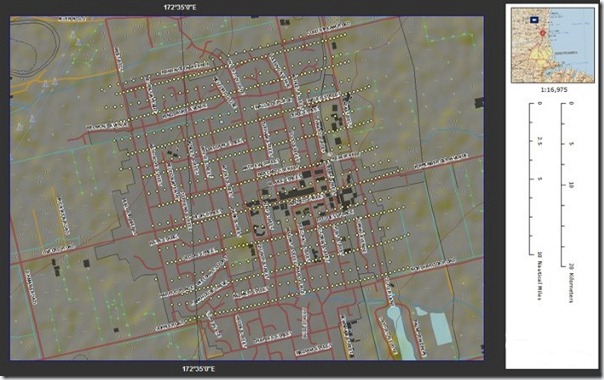
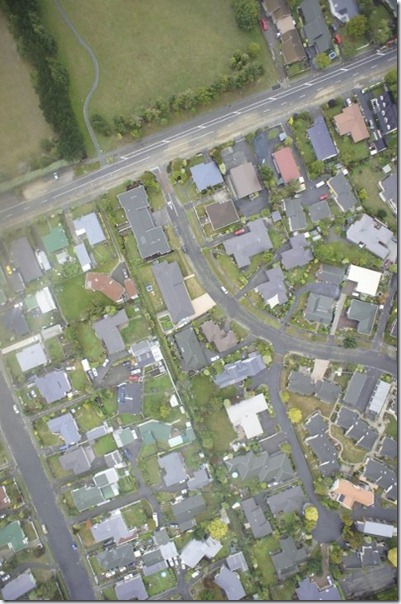
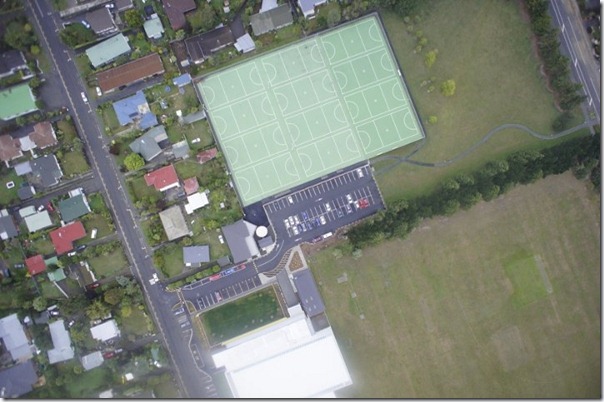
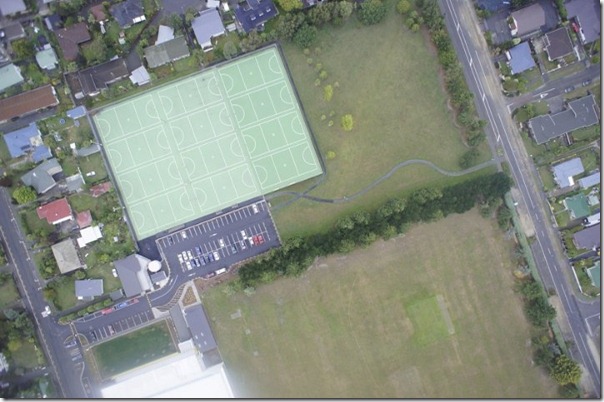
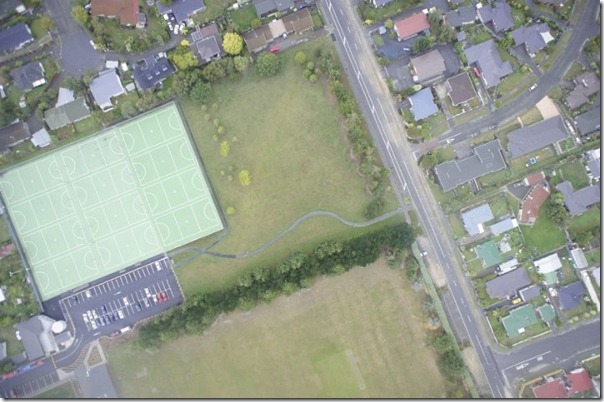
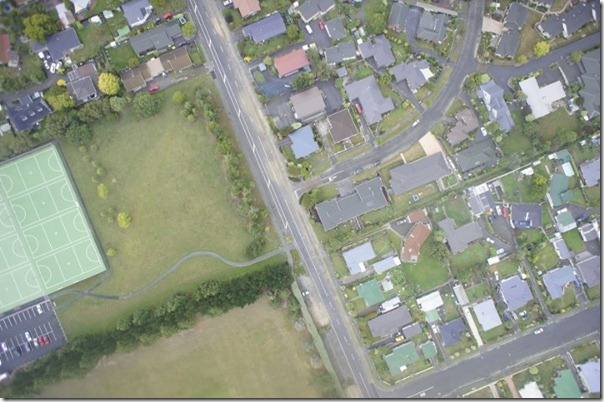
There I was…cleaning out the hard drive…when I found this…a draft post from almost two years ago…some imagery that the lads at Hawkeye UAV shared with me after flying tasks in the direct aftermath of the February 2011 Christchurch earthquake…

I’m not sure why I never posted this…possibly too many authoring tools and it was just overlooked…this mission was flown using Kahu as the team started its journey back north. Although Hawkeye’s capabilities have increased geometrically in pretty much every way (aircraft, sensors, software, etc) in the intervening two years, this series still is till a good look at the sequence of a mission from…

183929_1602850794316_1327477019_31303264_3816954_n

…initial mission planning in the flight control software…each of the dots on the map above represents the point where an image will be taken from the aircraft, taking into account factors like wind and light.

The next five images are part of the imagery set collected during the missions

181793_1602842074098_1327477019_31303247_3754878_n   181793_1602842234102_1327477019_31303251_3097191_n 181793_1602842194101_1327477019_31303250_2639623_n 181793_1602842154100_1327477019_31303249_8104646_n 181793_1602842114099_1327477019_31303248_4727725_n

184906_1602819913544_1327477019_31303227_7190142_n

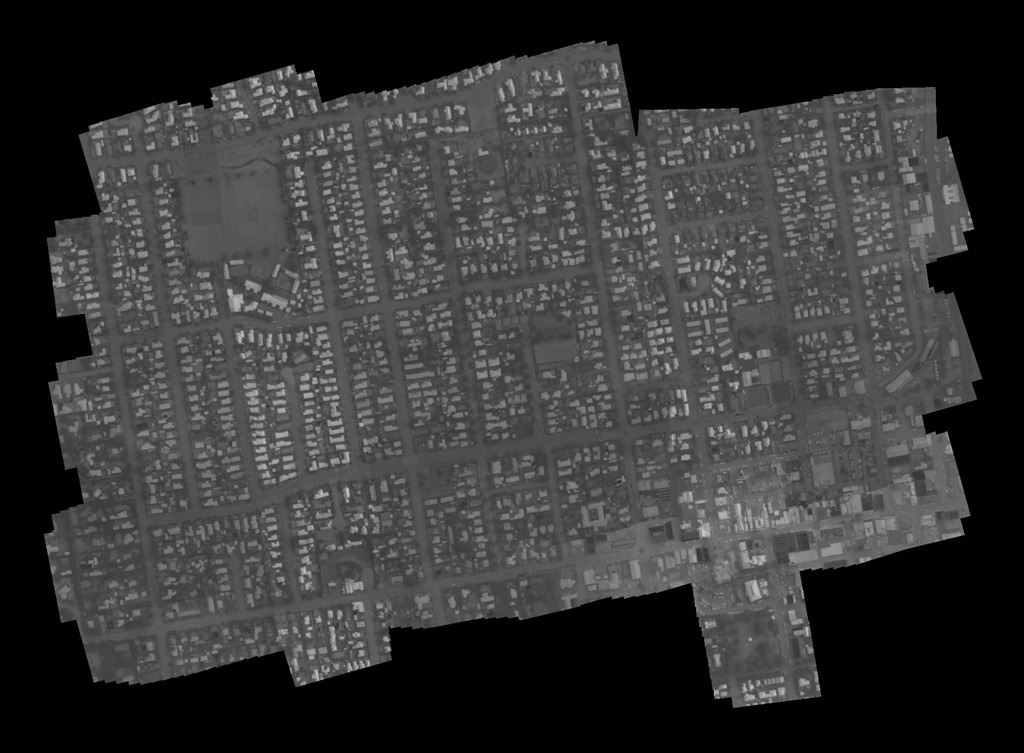
These are then combined into a mosaic…in this case a thermal image of the town from a night mission because silly me has misplaced the daylight mosaic shot…

thermalMosaicLarge

…and also the image of the 3D model of the town created from these 2D images are photogrammetric processing (some interesting work at Otago University on this process)…but here’s a short clip of some 3D imagery from another task…

HUYT

Pretty cool…more so when it’s all homegrown Kiwi technology and ingenuity…

Weekly Photo Challenge: Resolved

I’m not really that big on New Years resolutions as resolving can and should happen any time it is necessary…but anyway…

…work less, play more…

DSCF6544…turn the ‘desert’ into green…

Raurimu renovations 008

…actually finish a modelling project…

…just once…

Like a fine wine, a good year…

Just in from Hawkeye UAV, their end of 2012 newsletter…

2012 is nearly at the close and since the last update there has been much to report.

Our new operators, in Turkey and South Africa respectively, have been busy flying sorties with their new AreoHawks.  Quickly settling into their work and undertaking a range of tasks and a lot of flying.  Some sample data from a Middle East survey task is shown here.

Dec-1

One of our AreoHawk airframes is currently being used as a testbed aircraft for the development of hydrogen fuel cell technology.  The Defence Technology Agency (DTA) here in New Zealand is undertaking a project to perform airborne testing and a capability study in conjunction with the Australian Defence Science and Technology Organisation (DSTO), who are sponsoring the project.  The AreoHawk has been selected as it is considered a robust and stable platform, with the ability to support modification and more weight.  The fuel cell technology is expected to push flight endurance out to 5-6 hours!

Serious game changer for Class I UAVs which have been traditionally limited by short legs…all of a sudden a CLASS I UAS could have a 200 km operating radius and still have a two hour loiter time over its objective…

Another AreoHawk airframe has been on display as part of an exhibition at The National Library of New Zealand, in Wellington.  Part of the “Big Data / Changing Place” programme, our aircraft represents a Kiwi company that is contributing big things in the world of data.  The exhibition and events run until the end of Aril 2013.

If you’re in the capital, GO AND SEE IT!!

Also here at home we have good news on covering the domestic services market.  Hawkeye UAV is forming partnerships with 3 established North Island survey companies.  Within their distinct regions these agencies will operate the AreoHawk, and grow the UAV survey capability around New Zealand with ongoing support from Hawkeye.  This collaborative arrangement will greatly help all parties and ease the pressure from the influx of domestic services work that keeps building month to month.

Amongst the tasks mentioned above are extended contracts for road building and engineering survey, conservation work and an extensive government facilities management portfolio (more on this next year).

We are making successful inroads into the development of both infra-red and multispectral data acquisition capabilities.  These will add some powerful tools to our arsenal and once again cement UAV technology as a very viable alternative to traditional manned aerial photography.

We have been mentioned in dispatches lately with a good news piece about our development of industry training packages for the safe and legal operation of UAV technology.  Published by the Aviation, Tourism and Travel Training Organisation (ATTTO) this article reaffirms our safety-first and procedural approach, and recognises Hawkeye UAV Ltd.’s commitment to working as an operator certified by the Civil Aviation Authority.

ATTTO article

Long overdue and about time…this will both make the skies safer by requiring operators to be trained AND certified AND accountable.

A new and exciting development for us that has only occurred in the past few days is the Australian Civil Aviation Safety Authority (CASA)certification of the AreoHawk for commercial use by our partner, AeroMetrex.  They are now the first AreoHawk UAV operator in Australia.  AeroMetrex, with the support of Hawkeye have been working very diligently with CASA for the better part of 2012 to obtain this endorsement. They promptly capped off this great news by announcing the sale of six AreoHawk systems within Australia.

CASA cert

Look for our write-up in the January edition of Coordinates magazine in the article “UAV/UAS – Potential and Challenges.”  Hawkeye has made a contribution on how we see the development of the technology and any hurdles to overcome.

Very way cool and great to see the Kiwi influence on the other side of the ditch…

Coming up early next year is a road trip of tasks and demonstrations in the western United States.  We have a succession of jobs to undertake that have been generated by the good work of Hawkeye UAV Americas (HUA).  There are some really interesting things on the list here, including the mapping of a whole town.  We hope to have some interesting shots and even more interesting stories to tell on our return.

Hawkeye-2

Also in January Hawkeye will be running another UAV operators course for up to six new students.  These students, on completion of their conversion are likely to receive some serious on the job training as they are employed to assist with New Zealand tasks.  The summer months should permit plenty of flying and see each gain a lot of experience in a relatively short timeframe.

Hawkeye-13

Hawkeye-14

Merry Christmas and a Happy New Year!

Weekly Photo Challenge: Delicate

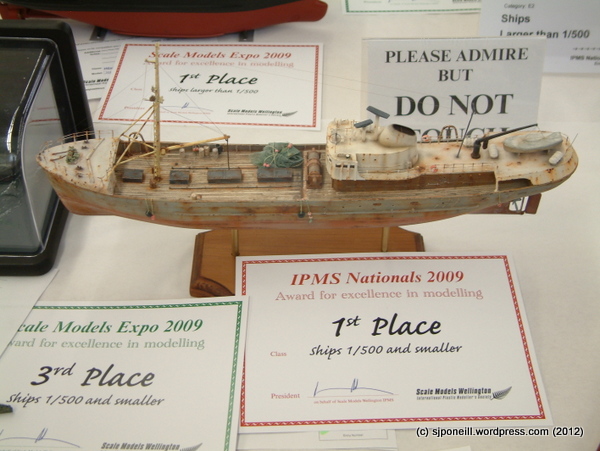
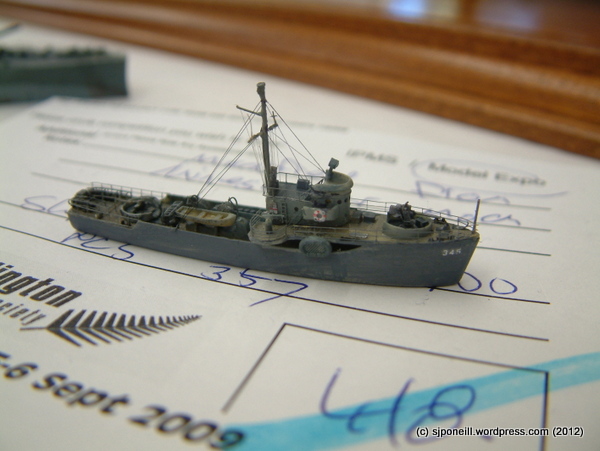
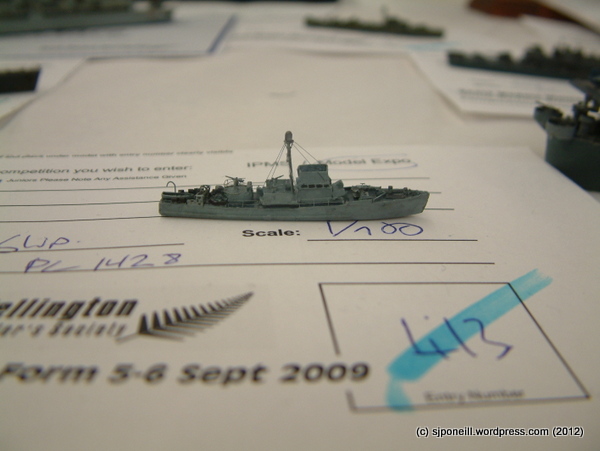
Although I must admit to feeling rather delicate in the mornings as I adjust to my first significant break from work in almost three years but the world’s probably not quite ready for those pics yet…

I took these at the 2011 Scale Model Expo in Wellington…the size of the placard with each model will give you some idea of the scale and the delicate work that has gone into these creations…

Scale Model Expo 2009 051

Scale Model Expo 2009 026

Scale Model Expo 2009 027