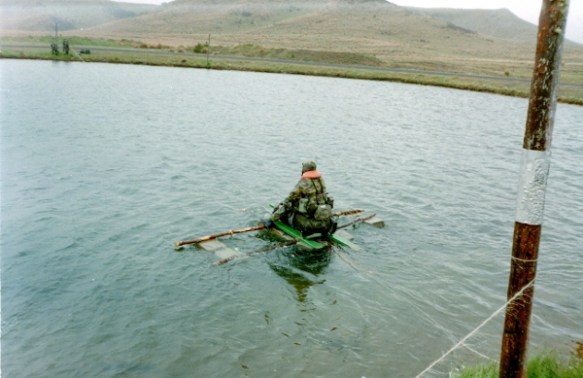
Why go a-round, when you can go a-cross?
This week’s WordPress photo challenge…Tank Pond, Waiouru…November 1992…it’s meant to be summer but you wouldn’t have known it at the time…


Why go a-round, when you can go a-cross?
This week’s WordPress photo challenge…Tank Pond, Waiouru…November 1992…it’s meant to be summer but you wouldn’t have known it at the time…
3 cups of tea
Literally a storm in a teacup…I doubt there is anyone who ever published a book than was 100% honest in EVERY way and which did not lean towards one agenda or perspective or another in some way…
Greg Mortenson shot to worldwide fame with the book “Three Cups of Tea: One Man’s Mission to Fight Terrorism and Build Nations … One School at a Time,” which describes his getting lost in an effort to climb K2, the world’s second-highest peak, being rescued by Pakistanis in the village of Korphe and vowing to return there to build a school for local girls.
Now it appears that it wasn’t quite as he says which is causing a little embarrassment around the traps for those who may have supported his initiatives financially or, like the US DoD, who may have extracted insights from Three Cups of Tea for use in COIN doctrine and TTPs…personally I agree with the headline, if not all of the content, of the Wired article on the subject Does It Matter If The Military’s Fave Do-Gooder Sells Three Cups of Snake Oil? When an organisation like the military moves out of its comfort zone, in this case, of large very structured kinetic military operations like Grandad used to do, it has to cast its net wider for ideas…
Let’s not forget that the COIN effort in Iraq got off to a false start as too many people heralded the false zealots of COIN the Malaya way, the US in particular, picking the wrong time to listen to its vocal but fickle ally from the other side of the Atlantic…it was only the efforts of David Petraeus, David Kilcullen et al who turned the tide towards a COIN strategy that would (and did) work in Iraq, this being encapsulated in the December 2006 version of FM 3-24 CounterInsurgency (don’t knock it unless you have actually read it!!). But, however applicable that FM 3-24 might have been in the Iraq of 2006, it was less applicable to the almost-forgotten Afghan war which had been festering away since March 2003 and which, as a problem, bore little resemblance to Iraq.
So, more power to those who cast the net wide in their attempts to get a better handle on the specific of the Afghan problem…Jim Gant with his One Tribe at a Time paper was one; those promoting Three Cups of Tea were others…and so what if Mortenson streamlined his experiences or even made them up? Are we still so template-ridden from the Fulda Gap that we can not think for ourselves and extract the nuggets from the rough…it’s just slipped my mind but one of the tenets that I referred to often in my work in the late 90s came a from a source that I eventually tracked back to one of Don Pendleton’s The Executioner pulp paperbacks…someone that I was working with at the time was mortified that I might draw real world insights from such a ‘disreputable‘ source but so far as I was, and am, concerned, it is not who the source is that is of prime importance but what it is saying…One area in which this has become very apparent and implemented in SOPs is in the Lessons Learned world where collection teams will endeavour to draw observations, issues and lessons (OIL – yes, it’s still all about OIL!!) from as close to the horses mouth as they can get – the trick, of course, being to avoid the equine’s other end…
On failed states
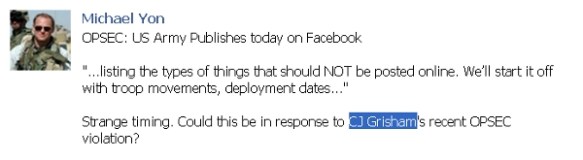
Got the cue on this article from Michael Yon’s Facebook page…always a good source of links to interesting articles…as well written as it is, I think it’s all semantic smoke and mirrors…three decades ago our biggest threats came from established states like France, the Soviet Empire and Maoist China…once again we need to resist the temptation to slap a template on a nation and use that to determine their level of potential threat or risk or not…as above, we should be able to consider each form or threat and risk on its own merits or or lack of thereof and draw our own conclusions…this sort of pseudo-analytical, ‘Eureka!‘ style of writing really leaves me cold…
Kiwi Gunners
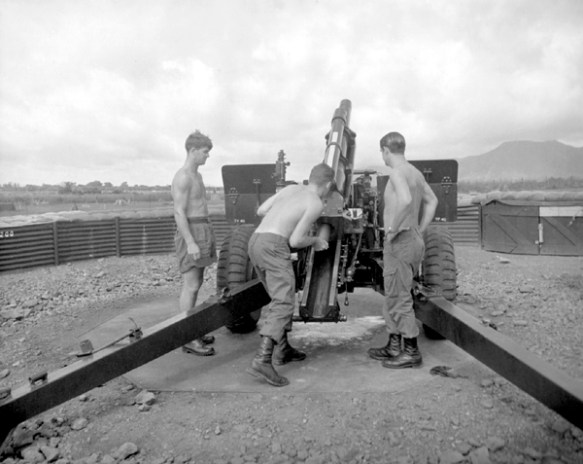
On a positive note, I came across this great written snapshot of a Kiwi gunner’s perspective on Vietnam and the New Zealand of the time, again drawing the cue from someone’s (sorry, can’t remember the source) Facebook page….it’s not that well known that our artillery was in Vietnam well before there was any infantry deployment…and especially topical when one remembers that yesterday was ANZAC Day…

One of the world’s great mysteries…why two technically-identical Telecom T-Stick mobile modems can disagree totally with each other whether there is or is not a usable network signal…blue is yes, yellow is no…
This week’s WordPress Photo Challenge….
…the view today is not much better either as winter rolls in….

In regard to Vietnam, it is too easy to focus on the perceptions of ultimate failure without understanding what the conflict was about from all protagonists’ points of view, and to ignore what actually worked which was an awful lot of it. Vietnam offers some great opportunities for ‘Yank-bashing’ but in reality, it was a learning experience for all the nations involved.
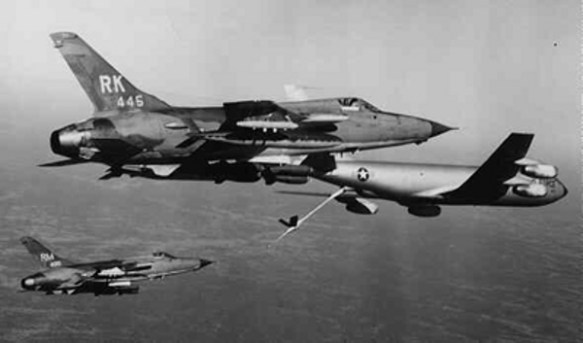
Did the air war over Vietnam suggest a ‘best practice’ for the employment of air power?
Yes and in so many areas. All of the following capabilities today owe their current ‘best practice’ to the Vietnam air war:
I may have missed one or two minor capabilities but the development of best practice, which lies predominantly at the tactical and operational levels, is largely separate from the outcome of the conflict, certainly from victory. In fact, it might be said that the best catalyst for learning is a good punch in the nose.
Curtis Le May said he could have ended the Vietnam War inside two weeks. Do you think this was possible?
Without a doubt. Le May was a strategic thinker and it is unlikely that he was only thinking in terms of targeting only North Vietnam. The two key enablers for North Vietnam’s war effort were the Soviet Empire and China and Le May would have been considering what things they might hold more dear that sponsoring a sideshow conflict in Indochina. This is not to say that he would propose physical attack on either nation or its assets but certainly the big stick might have been waved in other geographic and political areas. This was the time of Eisenhower’s and Kennedy’s nuclear brinkmanship over Matsu and Qemoy, Berlin and Cuba.
Having said that, there has never been any doubt that the USAF and USN could have shut down the flow of ALL military aid into North Vietnam in a week: North Vietnam only has a very small number of ports and railway links through which this aid travelled and these were always off-limits to the campaign that was conducted. Without the external war aid, ranging from AK-47s to SA-2s, coming in by ship and rail, North Vietnam would have had little more than moral support to provide its forces in the south.
What do you think are the essential conditions for an interdiction, denial campaign to be successful? – and – were they met in the Vietnam War?
There are four key conditions to a successful air interdiction campaign:
Only the latter two were consistently present in Vietnam until the Easter ’72 invasion and LINEBACKER II campaign at the end of the same year. Note, please, that both campaigns were successful…go figure…
The interdiction campaign was at the operational level while along the Trail and in South Vietnam itself tactical actions were conducted daily to constrain the flow of reinforcements and supplies to anti-government forces. If the operational campaign was successful, then the tactical actions would have been less challenged. It may also have meant that it would have been less necessary to conduct airstrikes into Laos and Cambodia, especially since North Vietnam’s ability to influence and intimidate those governments would have been reduced by a successful campaign north of the DMZ.
In considering current events, the current sham of a campaign in Libya only meets one of the four criteria, that of being able to hit things with a hammer…
Is it true to say that the Vietnam experience represented a massive failure of air power?
As per my response to the first question, not even.
Not only were most aspects of airpower employed well, many were developed and taken to a much higher level throughout the war. To fixate on one aspect of the air war, a relatively small one in the timeline when the various bombing halts are taken into consideration, and based on that one aspect, declare the whole campaign a failure of air power is grossly over-simplistic.

Was air power unduly restricted by political considerations?
Yes and this has been well documented since the end of the war. This is not to say that a strong political will in the White House would have led to a victory for South Vietnam as there are no guarantees in war, and less so in the complex environment that was post-war Indochina.
Johnson was an internalist, not an internationalist like the four Presidents before him and Nixon after him. Like Barack Obama, another internalist, he inherited a war he neither started nor wanted or cared about. Surrounded by senior advisors who understood systems but not politics, and who personified Eisenhower’s warning against the ‘military-industrial complex’, Johnson took it upon himself to personally run the air war bypassing his air power professionals. Unfortunately, this is nature of the military beast in most western nations where the military is subordinate to civilian control. All we can do is educate…or go start a junta in South America someplace…ours not to question why…
We can see another example of political considerations affecting the application of air power in the way that the false lessons of DESERT STORM led to the false perception that a similar approach would bring the Serbs to heel; and again in Iraq and Afghanistan where SECDEF Rumsfeld favoured the use of air power over the use of ground forces.


I think it’s safe to say that there are many people who openly dislike “Transformers 2: Revenge Of The Fallen.” And, after sitting with him for a half-hour yesterday to talk about the third chapter in the giant robots franchise, I’d say Michael Bay is one of those people.
So opens Drew McWeeny’s sneak preview of Transformers: Dark Of The Moon…I’m probably not in the ‘openly dislike’ proportion of Revenge of the Fallen fans but certainly I think it could have been a lot more than Transformers Do Night At The Museum And Then Wreck Egypt (like it needs help from massive robot aliens…Facebook seems to have done the job quite nicely, thank you very much) so, yes, I am expecting great things from Michael Bay’s ‘apology’…the guy who brought us Armageddon – one of my all time top 10 movies (bring it on, doubters!!) has set a high standard that he has yet to surpass…
Also in the works as a possible redemption effort for the first remake movie is Rise of the Planet of the Apes…

“Rise Of The Planet Of The Apes” will be in US theatres 5 August 2011.
I actually quite enjoyed the Mark Wahlberg remake of Planet of the Apes and prefer it to the Charlton Heston original, while taking nothing away from the original status as a true classic. I enjoyed it right up until the final scene which, although straight out of Pierre Boulle’s original novel, totally kills off the story-line with a cheap and meaningless twist – unless you are one of the three people who have actually read the book…I’ll be interested to see how this prequel wangles its way out of the narrative quagmire that final scene created…maybe there’ll be a director’s cut version that simply deletes it…?

It looks like a Hobbit…
I saw the first footage from The Hobbit on the news last night – as expected impressive…with more comment at hitflix – less impressive perhaps is that Peter Jackson seems to have caught Lucasitis and has inserted a two year gap between Parts 1 and 2 of The Hobbit…“The Hobbit Part 1 opens December 19, 2012, and The Hobbit Part 2 opens in December of 2013.” C’mon, folks…sure, we’ll all wait AGAIN for the final part to be released but does the chain have to be dragged so?

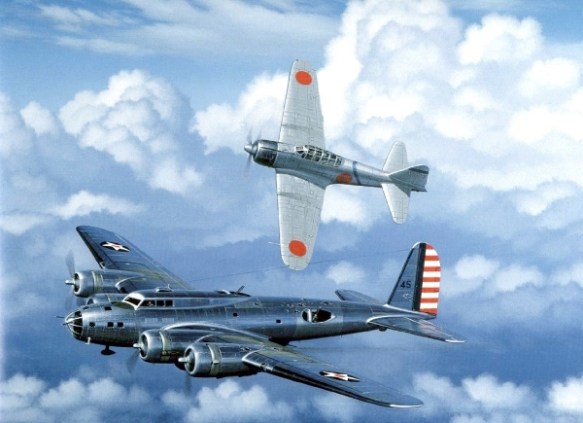
The effectiveness of Japanese naval and land air power came as a surprise to the western powers. In 1941 Japanese aircraft operating in theatre were far superior to those of Britain and the United States. Racism underwrote the devaluation of Japanese technical and military ability. Japanese culture itself by 1944 rejected the idea of serious air attacks on the Japanese homeland. One result was the killing of 100,000 civilians by one conventional air attack alone carried out on Tokyo in March 1945. This seminar attempts to analyse the rise and fall of the Imperial Japanese Air Force.
There was no such thing as an Imperial Japanese Air Force leading up or during WW2. The Navy and Army both had their own totally separate (in R&D, production and operations) air arms that were organised and employed solely as supporting arms to their parent services. This duality is one of a number of key factors that constrained Japanese air power during WW2 from its potential as an element of military power.
Questions
To what extent did Japanese air power contribute to their successes?
As above Japanese air power was structured entirely as a supporting arm for its parent service and thus was employed largely at the tactical level. Even the attack on Pearl Harbor was only a supporting operation in support of the Co-prosperity Sphere land grab in late 1941 and early 1942. Had the Pearl Harbor attack not proceeded or had it been unsuccessful, the Japanese were still totally confident (with good reason) in their ability to defeat the US Navy during any Plan Orange engagement.
Even despite the IJN’s investment in naval aviation, the big gun battleship was still the primary striking decisive arm of Japanese naval power. Thus, while the losses at Midway were painful, they were not perceived as a strategic capability loss. This was reinforced by the ability of the Japanese to cover most of their (temporary) empire with land-based air power. The naval aviation could have been employed much more effectively than it was and not frittered away on excursions like that against Commonwealth forces in the Indian Ocean, and the knee-jerk Midway operation. The only time that Japanese naval aviation might have had a truly strategic effect would have been if, having sunk the Lexington, it had stayed in the game and provided top cover to the invasion of New Guinea at Port Moresby.
Over the land environment, the air arm of the Japanese Army was very much like the Luftwaffe in 1939: a well-honed tactical support tool optimised for tactical support to Army operations. Although the Army had experimented with long-range bombers in the 30s, most notably the Ki-20 version of the revolutionary Junkers G.38 flying wing, it did not follow through in this area. Its late war attempts to revitalise long range bombing through the likes of ‘Renzan’ and ‘Shinzan’ were not as advanced as contemporary Western design and were ‘too little, too late’ at a time when the dire need was for superlative day and night fighters.
The ultimate outcome of Japan’s inability to adequately harness air power in WW2 and the period leading up to it was to benefit the Allies in two ways. Firstly, there was the obvious lack of an effective air arm to counter; secondly, Japan’s continued investment in air power diverted resources from other arms and technologies that may have posed a greater risk to Allied operations, in particular, powerful long-range submarines.
In what ways was Japanese technology superior to western technology in 1941 – 1942 and why was it so seriously underestimated?
The primary enabler for Japanese superiority, or perceptions of such superiority as the period of superiority ended at sea in June 1942, and on land in August the same year, are not so much the hardware as the personnel employing it. As I covered off in Seminar 1, a crucial aspect of air power is the people on which it relies. The Japanese in the build-up to and conduct of the land grab are a good example of forces that trained, trained and trained again, and similarly rehearsed, rehearsed and rehearsed again. The net result was that, at the time of Pearl Harbor and the six months immediately following, Japanese soldiers, sailors, airmen and marines were a match for any in the world. The same could be same for their commanders, most definitely at the tactical and operational level but debatably not at the level of strategic command and design.
Apart from bio-warfare which was not employed in WW2 and thus is a moot topic, I do not believe that Japan had technological edge over its competitors, including Germany, at any point before or during WW2. Its ships had no or rudimentary radar but compensated for this with crews much more competent, initially, in night engagements; the Long Lance torpedo was definitely a better weapon than its American contemporaries but this is probably more an indictment of poor American design and quality control; and the legendary Zero fighter, along with other designs, achieved its performance through sacrifices in armour, self-sealing fuel tanks and armament.
During its brief period of operations, the American Volunteer Group, the Flying Tigers of legend, adapted conventional western turning air combat doctrine into a slash and run approach that was highly effective. This tactics were passed onto and employed successfully by US pilots in the Pacific who largely sought to avoid engaging the more nimble but less robust Japanese fighters’ strength opting instead to attack their weaknesses. As the war progressed, Japan’s pool of highly trained and experienced airmen and sailors was whittled away to the point that nimble performance was no longer enough to prevent almost total Allied control of Pacific sea and skies. In the final analysis, Japan fought a ‘come as you are’ war, with an inadequate base for either expansion or sustainment. From an air power perspective, Japan had no Spitfire, Ju-88, Mosquito or B-17 that was capable of on-going development throughout the war.
The West’s failure to fully grasp the level of capability achieved by Japan by 1940, especially in the air is no different than similar ‘failures’ in Europe. However some care must be taken not to believe too fully the popular myth that the West totally under-rated Japan’s capabilities across the board. Certainly, Japan’s Navy was seen as a very credible threat by its potential adversaries. The capability of naval aviation, at the time of Pearl Harbor, had not been proven with successes like Taranto being over-shadowed by losses and ineffectiveness in the Norway and Mediterranean campaigns. Similarly, assessments of the Japanese threat on land were based on contemporary doctrine for conflict in the jungle, for which there had been no real conflict from which to learn. It’s easy to make charges of complacency and incompetence through the lens of hindsight….and let’s also not forget that any superiority, real or perceived, that Japan may have had was fully expended no more than nine months after Pearl Harbor AND that the allies had agreed to make the defeat of Germany their main effort – had they not, it is quite likely that Japan would have been defeated much earlier, most likely through sheer starvation than inaugural use of nuclear weapons.
American firepower did defeat the Kamikaze. Would a modern terrorist employing air power really be immune from attack?
As brutal as the kamikaze attacks were, they were a last desperate act of a defeated warrior caste and never a sustainable tactic. As dramatic as the footage of naval close-in defensive fire is, many kamikaze never got even remotely close to the fleet, especially after the Japanese TTPs were identified and were interdicted by air power not fire power. In addition to reinforced CAPs, allied attacks on Japanese homeland airfields continued as did heavy bomber attacks on Japanese industry and infrastructure. The kamikaze achieved initial success through the element of surprise as did other ‘shock effect’ attacks like the Zeppelin raids on London, Pearl Harbor, the Doolittle Raid and 911. All of these achieved initial or ‘one-off’ success that was unlikely to be repeated or sustained.
With specific regard to terrorist air attack, this is not the forum in which to discuss or even speculate on specific counters to such avenues of attack. That notwithstanding, any international traveller is only too well aware of the international security measures now in effect and which are constantly evolving; and even the media carries regular examples of how well positive air control has been implemented by most, if not all, western nations. All this is to discourage terrorist attack from the air.
Throughout the history of conflict there have been developments in tactics or equipment that have had a surprise effect – some have been unsustainable one-offs, others have changed the nature of conflict in their time. Ten years after 911, with no repeat attacks, one might hypothesise that 911-style attacks fall into the former category. Have said that, who is to know new and unexpected tactic might not be employed with devastating success tomorrow – such is the nature of this profession.
What important conclusions can be drawn from the early successes and later failures of Japanese air power?
Such successes that were, were fairly tactical in nature and not decisive in the conduct of the war. They were all supporting acts to wider naval and land operations. It is true that the successes of Pearl Harbor and the sinking of Repulse and Prince of Wales were repeated but it doesn’t count when this is your enemy doing it back to you. Some conclusions from the Pacific air war that future air aggressors might wish to consider:
To paraphrase c/s Charlie from that great aviation training resource Top Gun, Japan’s use of air power in WW2 is a great example of how not to do it.
Grow UP, Mike, you're 44 and running out of time...

Even the airline pilots were lining up for a spot of noughts and crosses...
Yes, I know, I used this the other day but it fits this week’s photo challenge so well….

Just for a day…
The WordPress Daily Post challenge…I usually don’t play but this one is easy – and it’s 0449, I’ve just had a mega-coffee and can’t go back to sleep after an early start to listen in on Dr Sarah Sewall’s presentation at the COIN Center on civilian casualties and their mission effect. It references her recent report ‘Civilian Casualties’ however the link provided for the report either either broken, mistyped or CAC access coz it doesn’t work for me…
I was sufficiently intrigued by her comments that reducing civilian casualties is not a binary ‘me or them’, ‘either/or’ equation and that there are ‘win/win’ approaches that do not prescribe operational effectiveness in reducing civilian casualties. An insight gleaned from some of the text comments made during the presentation is that there has to be a balance between force protection and achieving the mission which I think we all accept but what do you do when your force protection measures themselves jeopardise the mission i.e where those measures undo or erode the force’s credibility or acceptance with ‘the people’…? More to follow on this if I can source a copy Dr Sewall’s report….
Anyway back to the Challenge “...Your phone, laptop, tab, ipad and desktop are dead. Will you make it through a normal working day and evening? What would you miss the most?...” The answer is so simple…quite simply: none of the above…it’d a be a great opportunity to catch up on professional reading, go to the gym, go for a staff wander and doing some face-to-face networking and maybe even tidy my desk (apparently there is one there somewhere under the accumulated detritus) but I only have a day so maybe not…
I remember a few years back an organisation-wide email asked for feedback on the likely impact if email got switched off for an unspecified period…every other response including much gnashing of teeth and predictions of the collapse of civilisation as we know it…our boss simply asked if the ‘switch-off’ could start that week: “…we’ll just have to fall back on good old-fashioned written correspondence, signal traffic, and maybe even picking up the phone or getting out of the office to actually talk to people…don’t see it as a biggie at all...” As handy and convenient all this e-connectivity may be, we should be letting it endanger personal communication nor should we rely on it to such an extent that we become dysfunctional if we lose it…I wonder if the drop-off in physical letters is one reason that NZ Post is set to close shops…? I don’t practise what I preach here but I firmly believe that there is a ton more value in a physical written letter than the tending-to-casual nature of email….

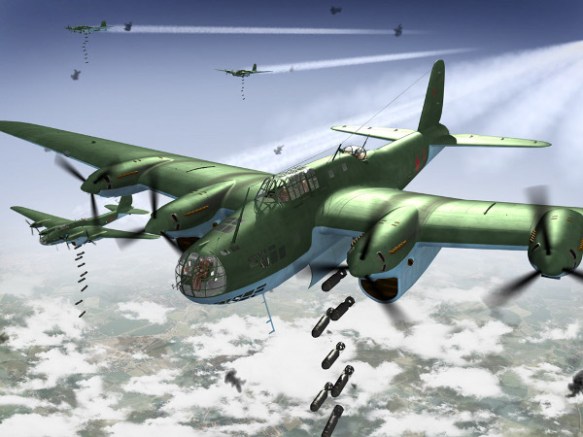
Operation TIDAL WAVE (c) Nicholas Trudgian
How has the concept of precision attacks against key economic targets changed since WWII?
It has only been since the latter part of the Vietnam War that an actual precision attack capability has truly existed, although one might argue that the brief ascendancy of the dive bomber in Germany, Japan and the US provided a degree of precision against point targets. Even so, the key issue is not so much the method of attack but the target and the actual outcome and effect desired by striking it. If anything this was the true weakness in so-called strategic air campaigns: an over-focus on the targets and considerably less upon the desired outcomes. It is doubly a weakness in that it indicates a dogmatic approach to applying the thoughts of the accepted military theorists.
Why were civilians regarded as a legitimate target for the strategic bomber offensive?
Why not? The notion of ‘total war’ has been well-accepted across history from the Romans into the ‘peacekeeping’ campaigns of the colonial nations between the wars. But once again, the key element that is being overlooked is the OUTCOME. Targeting ‘the people’ on its own offers nothing to a campaign unless there is a clearly defined outcome that has some chance of success/achievability from that targeting. If a logical case can be made that targeting ‘the people’ will achieve a strategic effect, then probably they should be targeted. Certainly the targeting of ‘the people’ in Japan directly affected Hirohito’s decision to terminate hostilities; it is less certain that the targeting of ‘the people’ in Germany and Britain achieved much at all other than strengthening their resolve. Perhaps, in considering the Roman approach to ‘the people’, the critical factor in targeting is to employ sufficient shock effect and brutality to get the message through? Certainly this worked well for the Soviet Empire, Saddam’s Iraq and the Taliban in Afghanistan.
Did the area attacks (punishment strategy) make a significant contribution to allied victory?
If the desired outcome was ‘punishment’ then probably not as there is no strategic effect to be gained from ‘punishment’. But if the actual outcome was that they diverted capacity and manpower from the land and maritime campaigns, which they did, then they most definitely made a significant contribution to not only the allid victory in WW2 but in later conflicts where strategic bombing effects were sought.
Or were the ‘precision attacks’ of the 8th Air Force more effective?
There was a difference? Any distinction between the night and day campaigns became largely not after the concerted city-busting attacks began.
Do targets now determine what is strategic or not?
No. Targets are simply the means to an end. If that end is poorly divined, then no matter how well the targets are struck, the long term effects may be minimal or activate the law of unintended consequences.
Should Douhet, Mitchell, and Trenchard now be forgotten?
First up, Mitchell and Trenchard are in a totally different class than Douhet, who rides alongside the likes of Mahan, Clausewitz and Napoleon. As covered in a previous seminar, Mitchell was more a tactical thinker and Trenchard a hopeful one who was influenced more by his passion for the emerging importance of air power as a military tool than any particularly deep thought. The names of the classic military thinkers come up again and again simply because their work is enduring and attempting to discount them purely because their works do not apply literally to modern times is rather short-sighted to say the least. And once written-off who might them replace them? Warden…?
There is risk in considerable the works of the classic thinking through too narrow a straw and failing to determine the underlying themes and insights in there works; or to consider their work against the literal context of today. Anyone who has been involved in a flight safety or air accident investigation will know the importance of considering events from the perspective of and context in which they occurred. Similarly, to be able to really consider these thinkers’ relevance one must really have read their works in some detail and there is also danger in taking them out of their broader context and attaching too much or too little importance to them.
The answer to the question is, of course, no…
MacChick Academic
Savour, Relax & Enjoy
A home for us all.
Scattered to the Chaos of Life
Don't be bullied
Inspiration through my thoughts, experiences and travels
Indulge- Travel, Adventure, & New Experiences
My random musings and whatnot
Because stress is fattening and life is just too short
Lost and Found: rediscovering books, writing, destinations, childhood memories and more
mixing it up, one great recipe at a time...
I hope you dance....


 The World According to Me...