Unknown's avatar

About SJPONeill

Retired(ish) and living on the side of a mountain. I love reading and writing, pottering around with DIY in the garden and the kitchen, watching movies and building models from plastic and paper...I have two awesome daughters, two awesome grand-daughters and two awesome big dogs...lots of awesomeness around me...

Why Lessons Learned Programmes Don’t Work

Budgetary battles are raging across the US Department of Defence and every service and agency desperately rounds its soapboxes, sacred idols and hobby-horses into a defense circle…it’s a desperate, no holds barred struggle for the survival of the most precious as opposed perhaps to the most needed. Unsurprisingly, this results in a steady dribble of pro/con article on the various issues or perceived issues. This one struck a chord as the five stated reasons resounded from my years in the lesson learned field…you’ll need to read the artcile itself to see that author’s take on such ‘initiatives’…

Five Reasons to Boycott the Air Force’s Savings Initiative : John Q. Public.

1. Your Time is Too Important.  The lessons learned programme may be more form than function i.e. regardless of best intentions, hopes, dreams and aspirations, it does not have a clear and effective method of initiating and embedding the behavioural change that heralds the ‘lesson learned. In this is the case and sadly, so many of them and other ‘continuous improvement’ programmes are, then your time may be better spent contributing to the organisation in another way, possibly as simple as just doing your day job to the best of your ability, and fostering a local climate for change in improvement around your immediate work area.

2. Your Participation Will Harm the Air Force’s Credibility. Or whichever organisation you represent…there are few things worse for an organisations credibility than a broadly and publicly promoted programme that visibly does not work…”What? you can’t improve your own improvement programme..?

3. The Program Enables a False Impression. An improvement initiative by its very existence promotes a perception that things must improve. Unless, however, the lessons learned programme is well-designed, well-implemented and well-lead, it is almost always doomed to fail. Once again, some time more would be done to improve the organisation if local change was encouraged and fostered – it is only very rarely that a large scale programme does not result in cookie cutter ‘solutions’ that are inflicted across an organisation and while maybe fixing one problem, create ten more.

4. The Initiative Is Itself Wasteful.  Absolutely and more so if it includes an incentive programme where staff are or may be rewarded for offering suggestions under the guise of initiatives and innovations. Without a good system and excellent leadership, the great risk is that staff will fixate on the reward and dedicate more and more time to dreaming up innovations than just doing their job and resolving issues when they encounter them. Moreover, just because something is called an initiative, does not mean that it is: in fact, the more strident the initiative narrative, the less likely the programme is to be innovative and more likely it is to be just another bureaucratically-inflicted drag-producing waste of time and resources.

5. There’s no reason to associate oneself needlessly with failure. Yes, sad but true. Despite all the good intentions, if the programme is tainted – and let’s face it, most improvement initiatives are even before the ink on the initiating directive dries – then why flog a dead horse or allow it to undermine by association those things that do work.

Don’t get me wrong…I am dedicated to lessons learned concepts and practices (I hope so after all these years!)  however initiating and embedding change in even a small organisation is not a simple thing and nowhere as simple as the loudest advocates might, in their simplistic ignorance, have us believe. Like any programme seeking to change a status quo, it must first understand the environment in which it will be conducted, who the people are (outside of the Borg, there is rarely any single collective group of ‘the people’), what shapes and influences them, what their hopes, dreams and aspirations are, and it must really understand how the organisation actually works (as opposed to what has been chiselled into process and procedure files.

So, when the innovation initiative evangelists coming knockin’, just think carefully about what they are really selling…

Spicy ricy

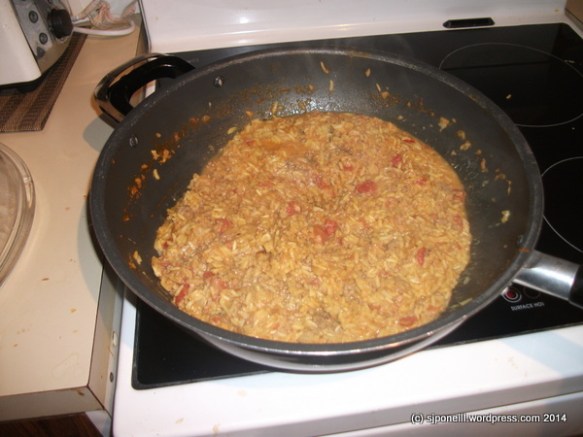
DSCF8363

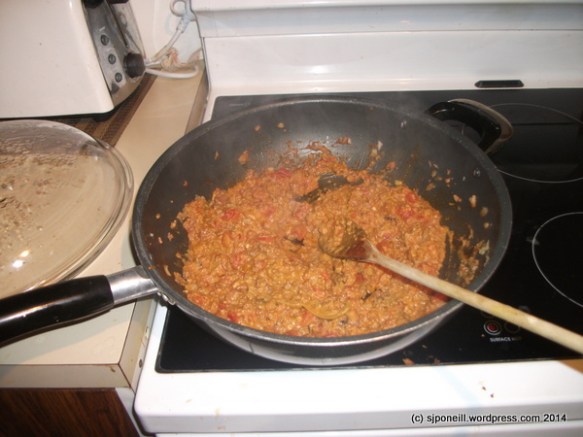
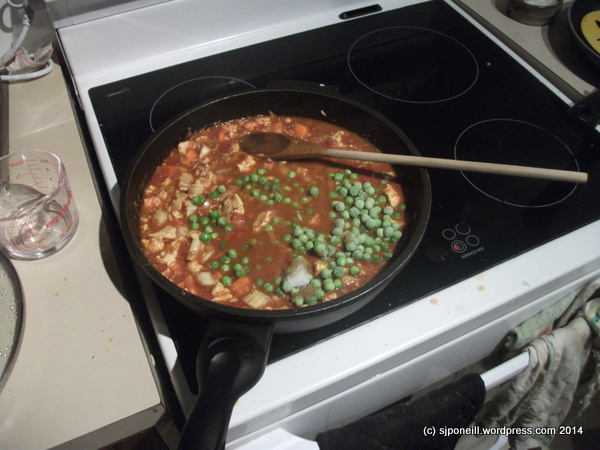
The enhanced vegetarian version underway

This post was originally meant to be an addendum to an existing post on the Healthy Food Guide Spicy Indian Mince and Rice recipe [PDF: Spicy Indian mince and rice – Healthy Food Guide ]but it seems that I never got around to publishing (or even drafting) that post in the first place…

Every day a new recipe or two from HFG pops up in my Facebook feed and I’ll grab anything that looks doable with basic i.e. inexpensive ingredients…meals that can either be frozen and/or that will last over a couple of days are popular at the moment…

What You Need

  • 1 tablespoon canola oil
  • 1 large onion, finely diced
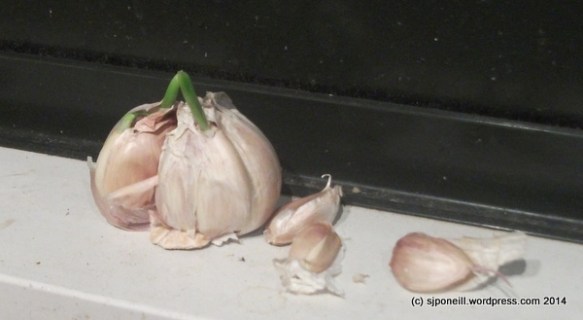
  • 2 cloves garlic, peeled, chopped (I’m used garlic that has been crushed and frozen for simplicity and ease of use + I’m lazy)
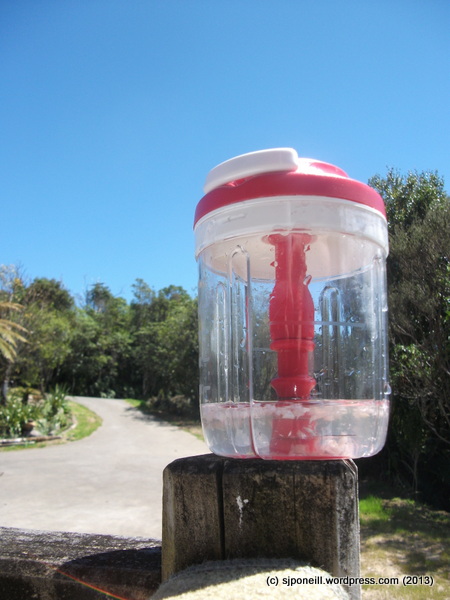
  • 1 tablespoon grated fresh ginger (I dice up the onion, ginger and (if fresh) the garlic using my every handy Tupperware Terminator – see below)
  • 400g lean lamb or beef mince
  • 2 teaspoons curry powder
  • 2 teaspoons garam masala
  • 1/2 teaspoon chilli powder
  • 1/2 teaspoon ground cloves (the recipe says whole cloves which I have but hate picking them out later on)
  • 1/2 teaspoon ground cinnamon
  • 2 bay leaves
  • 3-4 whole cardamoms, crushed (optional) I just used a teaspoon of cardamon powder because I have a bottle of it that will most likely not get used otherwise.
  • 1 cup long-grain or basmati rice
  • 400g can chopped tomatoes in juice
  • 2 cups liquid chicken stock
  • salt and pepper, to taste
  • toasted slivered almonds and currants
  • chopped fresh coriander (optional)
The Tupperware Terminator

The Tupperware Terminator

What you do

Heat the oil in a large non-stick frying pan. Add the onion, ginger and garlic. Cook until onion begins to brown.

Stir in the mince and break up any lumps. Cook, stirring frequently, until mince has lost its pink colour.

Add the spices and cook for 1-2 more minutes before adding the rice, tomatoes in their juice and stock. Bring the mixture to the boil and then reduce the heat to a gentle simmer. Cover and cook, stirring occasionally, until rice is tender. I find that, at a slow heat, this takes about 30-40 minutes. If it starts to dry out, just add some more water.

Season with salt and pepper then serve. Garnish with a sprinkling of almonds, currants and coriander (if using).

I’ve made this a few times since discovering the recipe in March but until last night it seems to have avoided both camera and blog. It doesn’t take a lot of time or effort to prepare and is another uber-flexible recipe that you can tweak depending on what you might have available in the fridge.

Having successfully experimented with a  vegetarian version of the Going Nutty With Rice recipe, I thought I might try the same with this one. Looking to provide dinner for the next 3-4 nights I also increased the quantities to make the same quantity as that nutty recipe. The change I made were to substitute the following from the original recipe above:

  • 400g lean lamb or beef mince became two diced carrots, a diced stick of celery, a diced up chuck of cauliflower (about a cup) and a cup of frozen peas.
  • 2 teaspoons curry powder was increased to three teaspoons.
  • 2 teaspoons garam masala was increased to three teaspoons.
  • 1/2 teaspoon chilli powder was increased to a  full teaspoon.
  • 1/2 teaspoon cloves was increased to a  full teaspoon.
  • 1/2 teaspoon ground cinnamon was increased to a  full teaspoon.
  • 1 teaspoon of cardamon powder. I kept this the same but probably should have increased it to 1 1/2 teaspoons.
  • 1 cup long-grain or basmati rice became 1 1/2 cups.
  • 2 cups liquid chicken stock became three cups. This was enough stock for flavour but I had to add two extra cups of water before the rice was cooked properly. I actually used Maggi Green Herb stock powder as I found that I was out of chicken stock.

I was very happy with the result although for dining in polite company I might look at reducing the curry and chili powder by about a third so that they match the proportional increase in the size of the recipe i.e. the 50% increase in the rice and stock.

Mt Ngauruhoe under the setting sun…

Image

Mt Ngauruhoe under the setting sun...

I just happened to glance over this way on my way home from the Visitor Centre yesterday after noon. After a beautiful clear day, a little patchy cloud was starting to drift in and I thought that this beautifully set the mountain off from the surrounding land…

Variations on a theme of C

A while back Sofia posted a great story on Schubert, who I didn’t know that much about apart from think (wrongly) that he was Charlie Brown’s friend with the piano, as a backdrop to her ‘Four Cs’ recipe…the four Cs being cumin, coriander, chili and curry…and over four nights I experimented with variations on this theme…

What you need

2 cloves garlic

1/2 teaspoon curry powder

1 teaspoon coriander seeds (I had hoped to use my own coriander seeds in the recipe but they didn’t look quite ready when I looked at them and now the storms of the last week or so have pretty much done for my corianders til next season)

1 teaspoon cumin seeds

1/2 teaspoon chili flakes

salt

black pepper

1 tablespoon of sesame oil

Your choice of meat chunks e.g. chicken, lamb, beef, fish…

1 cup of basmati rice

What you do

Wash the rice and put it on to cook in either a rice cooker, or pot on the range.

DSCF8274

Warm the sesame oil in a wok – I tried a frying pan but it was too flat: the wok guides everything into the centre – and add all the spices.

DSCF8272

On my first crack at the four Cs, I forgot the garlic…only remembering when I saw it on the window sill as I was serving up…

DSCF8263Once the spices are blended together and the fragrance is wafting out of the wok, add the meat and mix it in so that the spices are all over it.
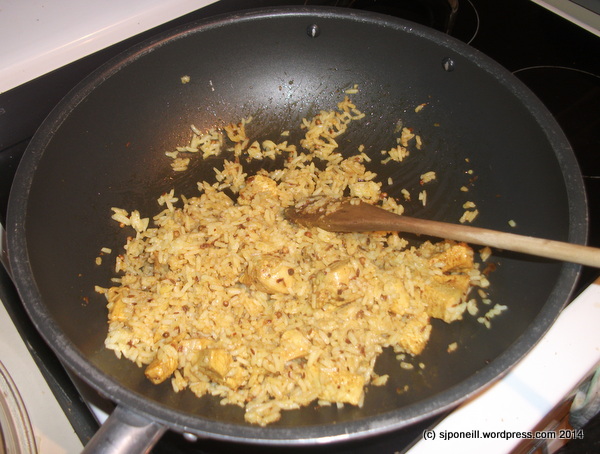
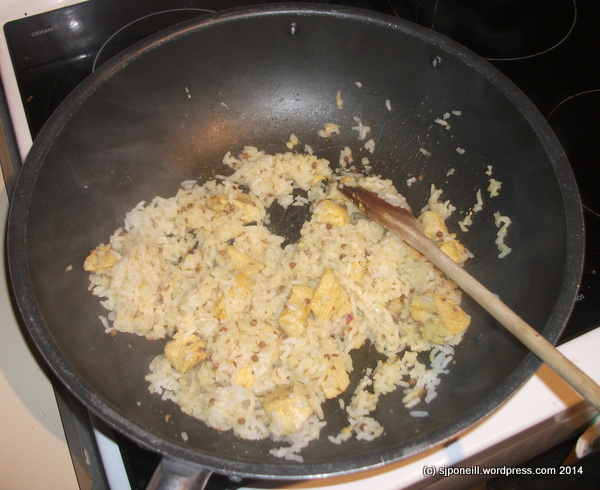
Place a lid on the wok and let the mix simmer – you don’t want it to dry out so add a little water if it does – stirring it occasionally. 

In a perfect world, the spices and meat will be cooked just as the rice is ready.

DSCF8290

A ring of rice

Ring the rice on a plate and serve the spices and meat in the middle. there should be enough of the spice mix to serve as a sauce over the top.

So that was variation #1 – forgot to take a pic of the final product…very tasty but I forgot the garlic…

Variation #2

As I had defrosted a three-pack of chicken breast from the freezer for Variation #1, I was pretty much committed to chicken for the next three nights…we all know that refreezing and reheating raw chicken just creates a lethal WMD, don’t we?

With Variation #2, I still had some rice left over from Variation #1, so rather than do the lazy and unadventurous option of simply reheating it in the microwave, I added it to the spices about five minutes after the chicken. I remembered to add the garlic to the spices too!

DSCF8266 DSCF8264Having the spices mixed through the rice as it was cooking/reheating really added to the flavour and I much prefer Variation #2 to Variation #1 with the rice on its own. Having the rice on its own, I think, works a lot better as a bland offset to a strongly-flavoured centrepiece (just hold that thought for a minute…)…

Variation #3

In Variation #3, I got all the spices right, added the chicken chunks, and then added half a cup of the basmati. In other dishes, when I cook the rice with the main dish, I use the old standby of a can of chopped tomatoes to provide the moisture for the basmati to do its rice thing…I was a little over that but had a can of coconut milk approaching its best-by date that I cracked and added to the mix.

DSCF8267 I didn’t realise quite how much I had made until I had plated it up…really, even for me after a hard day’s working, there was enough for two meals…from an economy point-of-view, not bad for one chicken breast and a half cup of rice…DSCF8271

Variation #4

I have had a pack of smoked salmon chunks in the fridge freezer for a while and they stare at me each time I open it to get something…I decided that their time had come and defrosted them on the fourth afternoon of this journey.

DSCF8275

Because of their strong natural flavour, I decided (you can release that thought from Variation #2 now) to cook the rice separately as an offset to that strong flavour. I prepared and started the four Cs spices in the usual manner and added the salmon. 

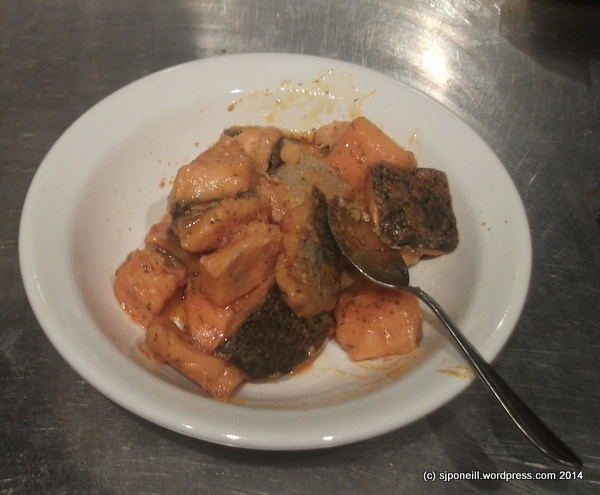
Placing the lid on the wok and stirring the mix occasionally, I waited for the rice to cook. When it was ready, I ringed it on a plate and served the salmon and spices up into the middle. Certainly this was the best presented of this experiment and certainly has the best combination of flavours…

DSCF8278

So there you have it: four variations on Sofia’s four Cs…cumin, coriander, chili and curry…Of the four, my preference overall goes to Variation #3 with the coconut milk, with the salmon of Variation #4 running a close second…

There was some rice left in the cooker after Variation #4, so I made a quick rice pudding for dessert but forgot to take a picture…twas yummy though…

Going nutty with rice

I am getting more and more into these meals in which you cook rice as part of the main dish and not separately…last night I tried another variation on this theme that popped up on the Healthy Food Guide Facebook pagepeanut chicken and rice

I was sure that I had some chicken bits in the freezer but they must be buried deep as I couldn’t find them. It was getting late so, instead of waiting for a chicken breast to thaw out, I used the last 200 or so grams of beef mince that I had in the fridge (I needed to use this any way). That worked a treat and I think that this recipe would work equally as well with beef, lamb, chicken or pork, chunks or minced; in fact, it would probably go well as a vegetarian dish with a mixture of vegetables instead of any meat. Other than that and finding myself out of thyme and having to substitute oregano, the only change I would make to this recipe next time would be to double the curry as I couldn’t even taste a hint of the tablespoon this went in last night in accordance with the recipe…

What you need

  • 1 tablespoon oil
  • 2 boneless and skinless chicken breasts or beef, pork, lamb (chunked or minced) or mixed veges
  • 1 onion, chopped
  • 3 cloves garlic, crushed
  • 400g can chopped tomatoes
  • 1/4 cup (= 4 tablespoons) crunchy peanut butter
  • 1 tablespoon curry powder
  • 3 cups chicken stock
  • 1 1/2 cups basmati or jasmine rice
  • 1 large pinch thyme
  • 1/2 teaspoon salt

What you do

Heat the oil in a large saucepan. Add the onion and garlic to the pan and cook till soft.

Add the chicken to the pan and, after a couple of minutes mix in the tomatoes, peanut butter, curry powder and thyme and mix well to disperse the peanut butter through the mixture.DSCF8310

Add the chicken stock and bring to the boil. When the mixture is boiling stir in the salt and rice. Return the mixture to the boil then cover and reduce the heat.

DSCF8311Cook for 20 minutes on low, then check to see if all the liquid is absorbed and the rice is cooked.
DSCF8312Serve with a salad or green vegetables. I didn’t do this and just had it on its own which was good enough; if I was going to do a salad I think I would use very crisp peppers and tomatoes…
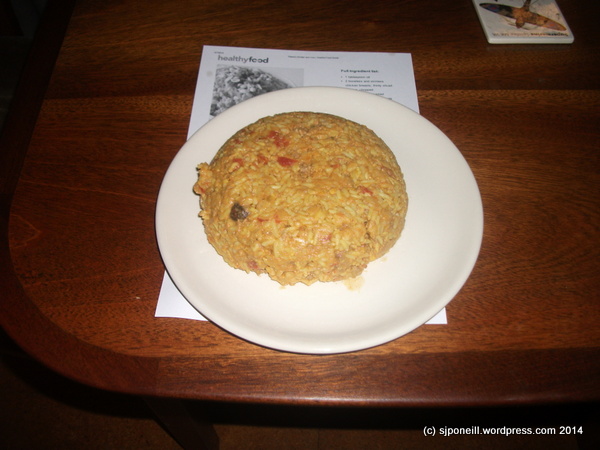
DSCF8313


I got three big servings from this and if I was honest they were very big servings and I could have gotten four servings from it without adversely affecting my diet…or 3-4 dinners for an investment of only $3-4…pretty good, I think…

Edit: found this on the camera this morning…a better presentation…

DSCF8325

Just Another Day | The Daily Post

Just Another Day | The Daily PostOur days our organized around numerous small actions we repeat over and over. What’s your favorite daily ritual?

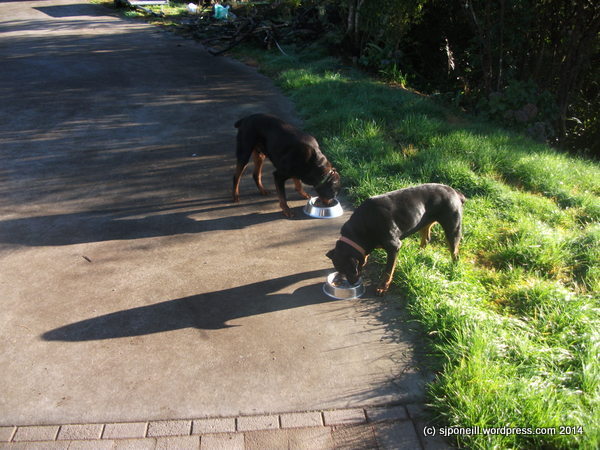
Every day, twice every day, we have this ritual, initiated by the phrase “…feed the dogs…”. It is such a well-known phrase here than we can only use it when we actually intend doing it, otherwise there is much excitement followed by disappointment. If we want to refer to this activity, we have to say “…Eff the Dees…” and even now, I am not convinced that they do not know that they are being talked about…DSCF8320 DSCF8319 DSCF8321It’s an important ritual because it is one that we can not afford to miss, forget or otherwise omit…it is also a very satisfying one that daily builds the bonds between us…

Edit: Forgot to mention…this morning…as I was dishing out their breakfast on the deck, the littlest wax-eye fearlessly planted himself on the deck to watch the proceedings. Lulu, in the pink collar, is our hunter but was fascinated by this bright-coloured little thing that clearly was totally unawed by her 40+ kilogram mass, nor the fact that she could probably inhale him by accident…

I thought he might have been hurt but nope, just fearless…he let me pick him up in my hand as Lulu looked on; hopped onto the rail, had one last look, and then flittered off into the trees…

People wonder why we’re not that fussed about missing out on the ‘joys’ of urban life…

Apples on the tree, eggs in the coop…

DSCF8253

I probably wouldn’t win any awards for plating this one up but Masterchef wasn’t until Sunday evening…this is a recipe for apple cinnamon fritters that I ‘shared’ from a friend’s Facebook feed so that I wouldn’t lose it before I got home on Thursday night (yes, Android really does need a decent print to PDF app!!)…

The storm that blew through over the later part of last week blew a bunch of my apples off the tree (I guess that’s why they call it a wind fall!) – and blew another over: hopefully it will survive being replanted…that and a week’s worth of eggs that had accumulated while I had been away from the week were clearly signs that I had to give this a go…

What you need

2 cups self-raising flour (I just used high-grade flour and baking powder)

2 cups milk

2 eggs

1 teaspoon cinnamon

What you do

Core and grate 2 apples.

In a bowl, mix together 2 cups self-raising flour, 2 cups milk, 2 eggs and 1 teaspoon cinnamon. Whisk until smooth.

Stir in grated apples.

Heat a non-stick fry pan over a medium-high heat. Add a little oil or margarine. Then, working in batches, drop ¼ cupfuls of batter into the pan.

Cook over a medium heat for one to two minutes until bubbles appear on the uncooked surface. Then turn the fritters over and cook the other side for a further 2 minutes or until golden brown.

Repeat with remaining batter, adding more oil or margarine between batches if needed.

Transfer to a plate with a paper towel and keep warm.

Serve with sliced fresh or canned fruit and cinnamon yoghurt (make cinnamon yoghurt by mixing together plain unsweetened yoghurt, a little runny honey and cinnamon).

The recipe says that this is enough for six fritters so I halved it and still got four decent size fritters from the mix. I missed the bit about making cinnamon honey but will try that next time. As it was I used this as an excuse to finish off odds’n’sods things from the fridge and the pantry: a little fruit salad, some honey yoghurt, a squeeze of maple syrup that the twins missed on their last visit plus I added some dead flies raisins into the mix before cooking it up – these added complementary texture to the grated apple and IMHO improved the original recipe…Edit: Sofia has just reminded me that i fried up my last banana and added it to the stack as well…

I had planned to try a savoury approach to the toppings for the same fritters yesterday but by the time I got myself together on the fourth day of the long long weekend it was into the afternoon and I was busy doing ‘stuff’ and so I settled for simple muesli and yoghurt…savoury version to follow soon…

Tongariro by air


One of the really great things about working for DOC on Mount Ruapehu is that opportunities arise to participate in some of the activities available around the Park. Last month, my planned trip to the rim of the crater lake on Mt Ruapehu was foiled by poor weather so when Mountain Air called to say they had a spare seat if anyone was interested, I was on the road immediately…DSCF7897

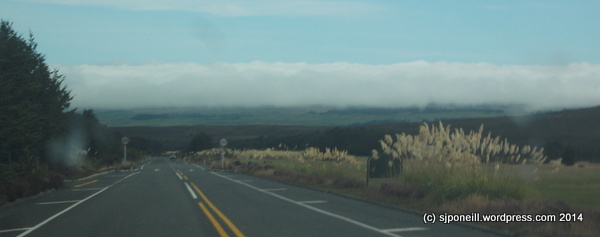
Even by midday this bank of cloud was still sitting just short of the base of the Mountain and more importantly for the day’s unplanned activity, just short of the end of the Chateau Airport runway.
DSCF7899Our destination…DSCF7900

Our chariot…

DSCF7903 The Mangatepopo car park in the lower right, the start of the Tongariro Alpine Crossing…DSCF7909

The other side of the Alpine Crossing on the long descent from the Blue Lake to the Ketetahi Carpark which is the finish point of the Crossing…DSCF7907

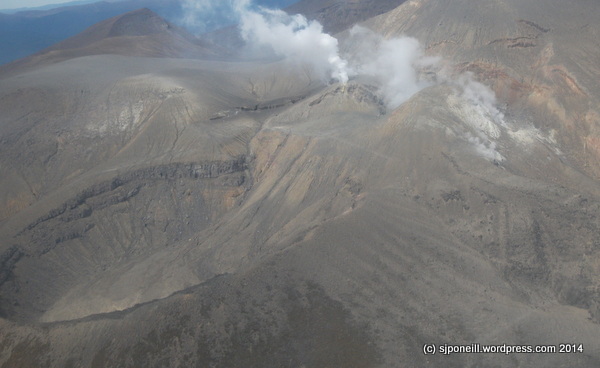
A small patch of cloud mingling with steam from one of the volcanic vents on the north side of Mt Tongariro…DSCF7911

A closer look down on those steam vents…

DSCF7917

Looking west over the Blue Lake which is a bout the halfway point on the Crossing walk…DSCF7932

The Blue Lake with the Emerald Lakes on the lower left and the majestic bulk of Mt Tongariro in the background…DSCF7926

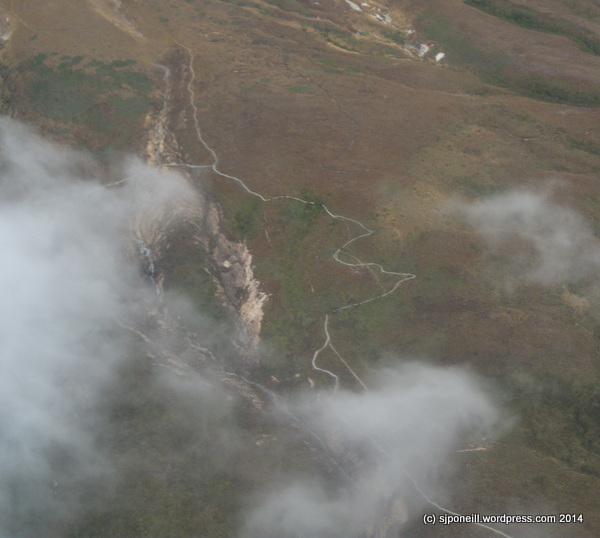
Looking closer at the Emerald Lakes with the Crossing track running from top right to lower left…DSCF7928Looking over the Emerald lakes and Red Crater towards Mt Ngauruhoe (aka Mt Doom in the Lord of the Rings trilogy). Just to the right of Red Crater, you can just make out the Crossing track: Red Crater marks the highest point on the Crossing at around 1780 metres, a good half kilometre above the 1200 metre start point at Mangetepopo…

DSCF7934

Mt Ngauruhoe …you can’t see them but on a good day like this, there were dozens of ambitious visitors clambering their way to the summit – they said that they waved but I didn’t see them. The journey to the summit of Mt Ngauruhoe is probably the most challenging of the three peaks in summer as the slopes are very steep (a constant 30 degrees), covered in loose material so that you may spend as much time sliding back as you do pushing forward, and there is always a risk of getting clocked by a rock or stone dislodged by climbers ahead of you….DSCF7968

Between Mts Ngauruhoe and Ruapehu lies Whakapapa Village, home of the Chateau Tongariro the main DOC base for administering the Park. The light coloured roofs on this side of the Village are the Skotel accommodation complex, and the tracks to the north of it run to Tama Lakes and Taranaki Falls…DSCF7993

Last but not least the splendour of Mt Ruapehu, with a glimpse of the Crater Lake. In a few months this will be covered in metres of snow but at the moment it is still relatively easy to trek up to the crater rim as a day trip form the Village.

Just after taking this picture, i switch my camera to video mode and recorded the remainder of the flight back around all three mountains and back to the airfield. I meant to convert it to MP$ and upload it to Youtube before I came away this week but I am afraid that you will have to wait until the weekend for me to get that down…

I’d really like to thank the lads at Mountain Air for taking me up. I’ve been in and out of aircraft of all sizes over the last three decades and i would have to say that their presentation and performance was as good as any other top-line aviation activity that I have been involved with. If you visit us on a nice day (and most of them are), Mountain Air offers a great way to see the Park and its attractions in a way that  a ground based perspective simply cannot match…


Tunnels, tunnels, tunnels….

I’be been sitting one this one for over a month, just waiting for a spare moment in which to get it written up in my next installment of Around and About…other things have gotten on top of me and it is only this week that I find myself with a little time on my hands and able to draw it together…

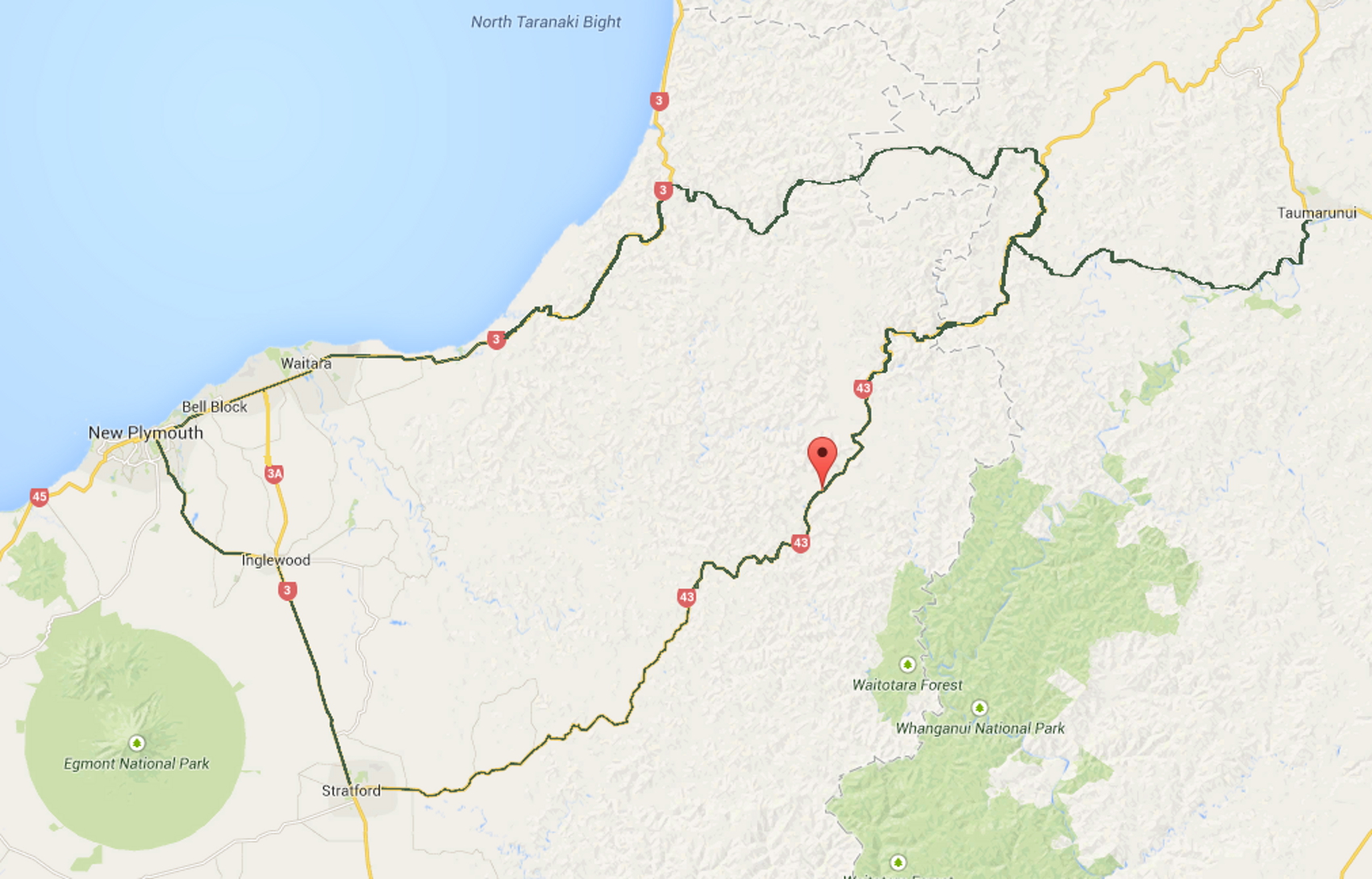
The old saying is ‘Don’t Leave Town Til You’ve Seen the Country’ and I have found myself sadly lacking in my knowledge of the area in which I have lived for the last decade. When an opportunity arose for me to drove over the New Plymouth for a business trip, I opted for the more adventurous route through Taumarunui and over State Highway 43, the Forgotten Highway over the longer but faster routes north or south along SH4 and SH3 (they are kinda like a loop road).

DSCF7739

My journey started mid-morning after I put $40 into the mighty Ssangyong to get another 6 cents/litre loaded into my AA Fuelcard (it really does all add up). I crossed the bridge north out of town and took the hard left up past the hospital onto the Forgotten Highway. The first section is just through rolling farm country…DSCF7741

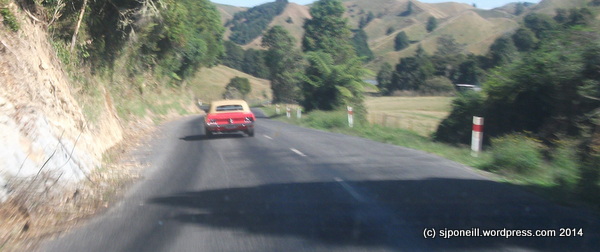
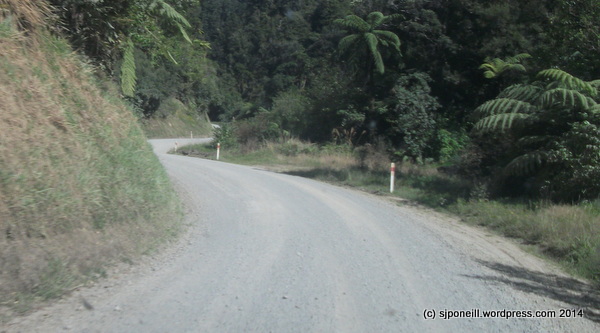
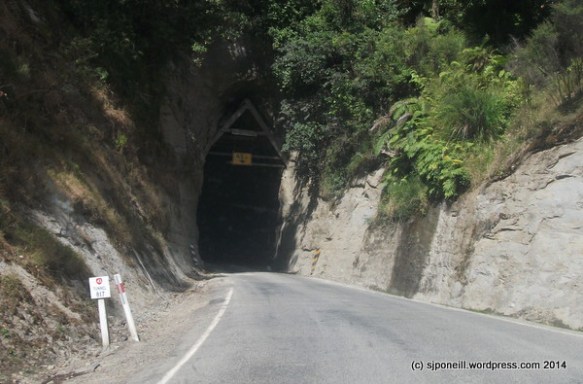
…which slowly gives way to more and more thick native bush…DSCF7743I caught up with this guy and his mate – quite an unusual vehicle to see on a road like this – but I couldn’t wait to get past them both as they were clearly not used to driving a left-hand drive vehicle on such narrow roads and were all over the place. I wanted to get well shot of them before their centreline-hogging habits collected someone coming the other way…DSCF7745…this gives you some idea of the narrowness of the road….DSCF7749…and why staying well left is a really good idea.DSCF7752Navigating one;s one side of the road is also complicated by a reasonably long stretch of unsealed gravel road, where the centreline is not marked at all and where occasional drifts of gravel encourage the inexperienced out over the centreline…DSCF7757I like tunnels…they always seem to be an indication of adventure and times gone by…DSCF7798…and it is just neat bursting out into the sun on the other side.DSCF7765Whangamomona’s main claim to fame is that it used to declare itself a republic for a day as a bit of a tourist gimmick. I’m not sure if it still does that but on this day its claim to fame was clearly hosting…DSCF7769…the annual Americana pageant…Loads of cool heavy metal parked up here and I would have liked to have stopped and had a closer look but I was running a little behind time. I would have to question the wisdom of holding such an activity in a location that can only be accessed via narrow winding country roads – and not a member of the constabulary in sight, of course – when most of the drivers have a real problem staying on their side of the road…DSCF7770Some of the few that were able to stay on their side of the centreline…DSCF7778
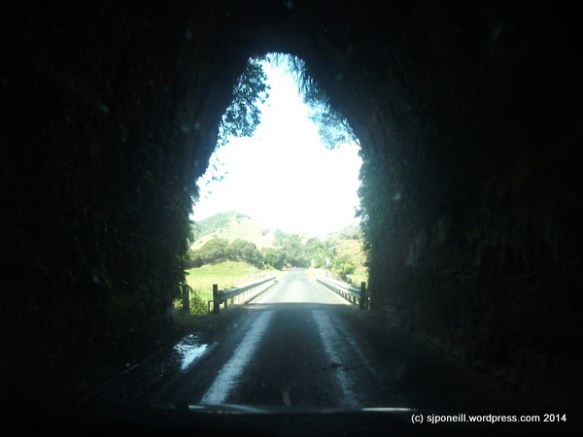
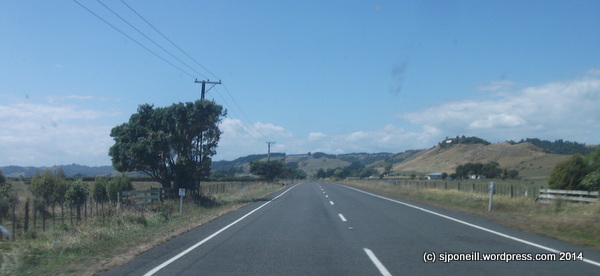
A ways on and I’m closing in on Stratford on the Taranaki Plains…that darker patch just to the right of the road in the distance is Mt Taranaki, climbable in summer and ski-able (just) in winter.DSCF7780

My business in New Plymouth done, I headed north on my homeward leg, heading for Ohura and back into Taumarunui from the north…DSCF7789

This part of SH3 is very nice as it winds through another tunnel…DSCF7790

…and bush-covered hills…DSCF7782

…before levelling out again.DSCF7794

This opportunity was just on the turn-off from SH3 onto the Ohura road…I burrowed into the parking meter money and exchanged some coins for two decent sized banks of tangelos…DSCF7795I saw this and figured that I was still sweet for fuel having at least enough for another 200 km in the tank.DSCF7796Yep…another tunnel…DSCF7802

All this winding up and over these roads with some quite long unsealed section ate into my fuel reserves more than I expected…DSCF7803

By the time, I reached this head-hunting bridge at Ohura, I was becoming quite interested in the movement of the little orange needle as the closest fill-up point was Taumarunui. I opted not to carry-on exploring – the are at least three different routes from Ohura to Taumarunui and I took the discretion option and went for what I thought would be the most direct route.DSCF7804This took me back over 40-odd km of the route I had taken in the morning – but repetition beats walking – and after a longish wait at some of the inevitable summer road works, I cruised into the Taumarunui BP with about 50km of fuel left in the tank. That would have just been enough to get me home but would probably have left me with a walk to National park if I had wanted to go any further…Note for next time: toss in another $40 in new Plymouth…

sh43Here’s a map of my journey…south west in the morning to Stratford and north east to Ohura in the afternoon. Ohura is not marked on the map but is where the dark line of my trip cuts the yellow line at the top of the map before I drifted south back onto 43 towards Taumarunui…

If you are on The Central Plateau and looking to head across to Taranaki, and you have the time, take the Forgotten Highway. If you have a good GPS and strong forearms for all the corners, an even better (IMHO) route is the back road through Ohura…go adventuring..!


Unmanned aircraft for Search and Rescue: not quite that simple, TV3…

(c) TV3 2014

(c) TV3 2014

There was an interesting item on Campbell Live last night about the use of ‘cutting edge’ unmanned aircraft for search and rescue applications (note the video in the linked article may not work for overseas readers). While it all looked very cool and exciting, it was a little misleading when it presented these small UAs as ‘…running on the spell of an oily rag…’, beyond the blindingly obvious fact that all the UA shown were electrically-powered and thus rather unimpressed by the proffered ‘oily rag’!

A reliable UA of any size is not cheap…your average Toyworld flying camera device may last for a while, but eventually you will end up with a large number of them scattered over the land- and seascapes. In addition they tend not to have the endurance necessary for any practical employment for search and rescue other than perhaps peeking into nearby spots not easily accessible by a person. You get what you pay for and if lives are relying on it, the device must be reliable and have sufficient endurance to be useful.

Unmanned aircraft systems are not really unmanned: it’s just that the flying component lacks seats in most cases. They all require at least one person to operate them and, for safe operation, generally at least two are required: one to control the aircraft, and others to observe the airspace for any other users and these may include not just other aircraft but para-surfers, kites and any of our feathered friends that may take offence at this noisy intruder into their domain. If operating at very low altitudes as shown in the video clip, the ground observers may also have to watch for vessels on the surface as well. Relying on volunteers is all very nice but UAS operators need to be trained and accredited to conduct any but the most limited flying.

The supporting infrastructure costs as well, not just in the cost of initial setup and acquisition but also in the ongoing maintenance including the regular replacement of critical components as they reach the end of their defined life. If supporting a SAR operation in a remote area, the unmanned aircraft system will probably need to include some form of vehicle, also not cheap.

All those video visors, laptops and viewing screens seen in the video clip? Again, not cheap.

It appeared that all the UA shown in the clip were flown directly from a controller similar to that used by the remote control aircraft community. While this may be practical for short (in time and distance) flights, this form of control for longer flights is inefficient and places a greater burden on the operator. All the flights shown in the clips appeared rather ad hoc and ‘zoomy’ i.e. all very cool looking but lacking the methodical search pattern essential in a for-real search and rescue operation. An effective autopilot allows the UA to maintain controlled flight and follow a methodical search pattern without constant operator input. Again, this necessary technology is not cheap; it’s not THAT expensive either but has to be reliable and also professionally integrated into the other systems that make up the UAS.

While I think that it is great that the national search and rescue community are researching the potential of unmanned aircraft for this role, and that there is a great potential for UA in this role, I also think that they would get a better return on their investment in time and money by not seeking to design their own UA or supporting the ‘I built a UAV in my garage‘ community and instead engaging directly with the existing (and growing) commercial UAS community both in New Zealand and overseas. I think that they would find that there would already be existing mature reliable designs that would meet all the requirements shown in the video item…and that reliability comes at a cost…