Off to a good start for the Year of the Snake

Latest update in from the lads at Hawkeye UAV…homegrown Kiwi technology in action!!

North Otago, New Zealand

Early in the New Year we travelled to the South Island to undertake a large task in the Waitaki river valley. The task consisted of the hi res survey of multiple wetlands and other sites earmarked for conservation along a 30km section of the valley in the vicinity of Kurow, North Otago. Having driven down from Christchurch we approached Kurow from the North and it was immediately apparent that the Waitaki river was in flood. A quick drive around the area, checking out both the Waitaki and Aviemore Dams confirmed that there was plenty of flow coming down.

!cid_423a8f909f12e8d89387528cd2ad9512

After booking ourselves into the mighty Waitaki Hotel we settled into our stay and got on with the planning. With myself and David this time was Drew Gwyer, of Hawkeye UAV Americas, a very experienced aviator doing his “apprenticeship” on the AreoHawk. It was his second day in New Zealand too, so the rapid change from Maine, to Auckland, to Palmerston North and then ultimately Kurow was probably pretty eye opening! We did manage to treat him to some nice weather down there which was undoubtedly a good contrast to the snowstorms at home.

!cid_4416d57ea9b820881dba31a6010be62e

Damn hard to beat a North Otago pub!!!!

On the morning of the second day, complete with our bountiful packed lunches prepared by the tavern staff, we headed out early to begin flight ops. We had in the region of 12 tasks to conduct over the coming days, some of quite significant size (7-8km²). We managed a full day of flying with three full sorties and a good start to our overall programme of work.

!cid_0e2375bdc65646b48462d54381f85629

We received reassuring confirmation that our published NOTAM (Notice To Airmen) had been observed by the local helicopter operators too, who checked in with us and maintained safe clearance via radio communications during their operations alongside us in the valley.

The next day started out well but unfortunately was soon blowing 50-70km/h of wind and while we did launch and test the conditions, it was plain that it wasn’t ideal for accurate data capture.

!cid_a5594e1bdf09cfdfb9b626635bd9ba7e

Once we had resumed flying ops we began making good progress along the valley and through our tasks. We operated from a variety of sites, most of them adjacent to the river or on farmland nearby, having been up and down on the first day and arranged access with the property owners.

!cid_ba0bca5ca1c7c04dc989794d187acefa!cid_352854ee7f22e6acf544b5bd82cbddc5

!cid_175fc8d1833b22a94a65d2d022370843

During the 6 days down in the Waitaki we lost a couple of days to weather, both from wind and rain and that did give us a chance to visit Oamaru and Moeraki and also to further Drew’s exposure to the great kiwi flat white. We did finish the job successfully despite the weather hiccups and bade farewell to the Waitaki Hotel and its friendly staff, heading back north to Christchurch for our return home with a hard drive full of raw imagery for processing.

Reno, Nevada USA

Later in January Hawkeye UAV travelled to the USA to put on a series of demonstration flights in conjunction with Hawkeye UAV Americas (HUA), at Reno-Stead airfield in Nevada. This was in part sponsored by the good folks from the Reno-Tahoe Airport Authority who have a state sponsored initiative to promote the growth of the UAV industry at Reno-Stead, which is also home to the Reno Air Races. To say they were warmly accommodating doesn’t really do them service, they were fantastic. On the threshold of the lesser used cross vector runway at Reno-Stead they had set up a luxurious tent complete with gas heating, coffee and catering to keep us all in great style. What we also had but hadn’t bargained for was a lot of snow on the ground! Being mid-Winter Nevada did not disappoint, providing mind-focussing temperatures a couple of degrees above freezing. I must also add that being accommodated at a Casino-Hotel was a bit of an experience for us kiwis who can count the total number of real casinos at home on just one hand.

!cid_2b157ba33eeae90436612efa2c1f937e

The plan for the week here was to demonstrate the setup, flight and capability of the AreoHawk system to a steady stream of VIP guests from a range of interested industries, culminating with a media day on the final day. With the help of HUA we got underway on the first day, and after a coffee or two and warming our hands we launched the Hawk into the crisp but sunny skies of Reno-Stead, which rests at 5,000’ above sea level.

!cid_fefa3331d1938322b835ee0727c70fa9

We had an allocated “flight box” for our use from surface to 700’ AGL north and east of our location and proceeded to survey it, snow and all. Photographing snowy ground, especially from altitude, was going to present an interesting proposition and not something we had undertaken before, so we were curious to see just how well it would turn out, both the imagery and the point cloud.

Orthomosaic result from Reno-Stead demo flights

As it turned out, the results were very good. Here’s a snapshot of the orthomosaic generated. Note the tent and vehicles in the bottom right corner.

In all, we flew the Hawk four times in three days, with lots of news media and VIPs in attendance for the final flight. This one, like the preceding flights went completely without a hitch, and the interviews and questions afterwards lasted longer than the duration of the sortie!

!cid_7bef4a856ade68aff71f9566f3e862b1

Links to the corresponding media articles and news footage is here on our facebook page.

While at Reno-Stead we were also very fortunate to see some very cool aircraft, including a MiG-21 that did circuits right next to us, and we got to visit Aviation Classics, an amazing repair and custom refit shop.

!cid_99e0b6058315a20285cbe2be628d9e7c

!cid_00c64b86de6765ada746e3be43bba000

Surveyors leading the way with UAV technology

The first UAV operator’s course of the year was run from the end of January through to mid-February. On the course were two staff from Beasley and Burgess Surveyors Ltd of Northland, and two from Juffermans Surveyors Ltd, of New Plymouth. Both companies have purchased AreoHawk systems and their operators have now completed training ready to undertake survey work with their new gear.

Hawkeye UAV Ltd’s commitment to ongoing support and working relationships will see us maintaining a mentoring and flight supervision role, plus providing advice and assistance with planning.

Kevin O’Connor and Associates Ltd of Palmerston North are the third North Island survey firm to purchase an AreoHawk system and their training is about to begin in the coming weeks.

Engagement with survey companies is a great step forward for us. Each one is in a distinct area or province and allows greater reach of our UAV technology into these areas. Surveyors have existing client bases that will be well-served by the AreoHawk system and will also now be able to control their own aerial photography and 3D terrain requirements of all sizes, without the need for outsourcing. Additionally, all their data will be processed at home in New Zealand rather than offshore.

More operations from Birlik Harita in Turkey

These photos are from our Turkish partners during a Cadastral Survey along the long and narrow Datça Peninsula. Datça has nine villages scattered along the peninsula. These are; Cumalı, Emecik, Hızırşah, Karaköy, Kızlan, Mesudiye, Sındı, Yakaköy, Yazıköy. The local villagers were intrigued with the UAV and spent all day with the crew from Birlik Harita.

!cid_2d2edd9297f54754eb319390db01020c

!cid_22c9cb7658894089b63cc6ffeae96306

!cid_9c954b894821e3878a9869198305d80d

!cid_eebda7a6924c6dcb8950efa8fe2b59e4

!cid_9e5bc5681627b262d41c219811af119a!cid_527797074f73a1d56d55715441579729

New Zealand domestic services work

The following photograph is of Gareth in the Kawekas while on a Department of Conservation task monitoring pinus contorta. For this we conducted both RGB and NIR (Near Infra-Red) orthophotography at 4cm resolution. The area where the photo was taken is the only clear area of significance within the regulated flight range. This did cause some added thought to how to launch and recover the UAV, however that is part and parcel of the job. The start of the year has been mostly orthophotos, some with NIR and some without. We certainly welcome any task and hope to make the most of the great summer here in New Zealand at the moment.

!cid_0f4d4ccb90ce9d69500d2231273f05b4Wondering when this new-fangled technology will be gracing out skies more…? One really has to wonder why an ISR-short Government isn’t latching on to this…

Hawks Over Rangiora

There I was…cleaning out the hard drive…when I found this…a draft post from almost two years ago…some imagery that the lads at Hawkeye UAV shared with me after flying tasks in the direct aftermath of the February 2011 Christchurch earthquake…

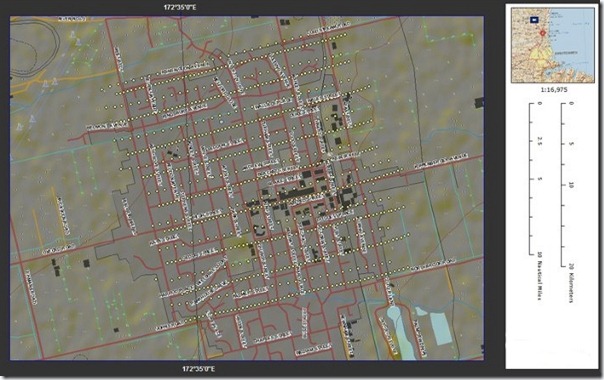
I’m not sure why I never posted this…possibly too many authoring tools and it was just overlooked…this mission was flown using Kahu as the team started its journey back north. Although Hawkeye’s capabilities have increased geometrically in pretty much every way (aircraft, sensors, software, etc) in the intervening two years, this series still is till a good look at the sequence of a mission from…

183929_1602850794316_1327477019_31303264_3816954_n

…initial mission planning in the flight control software…each of the dots on the map above represents the point where an image will be taken from the aircraft, taking into account factors like wind and light.

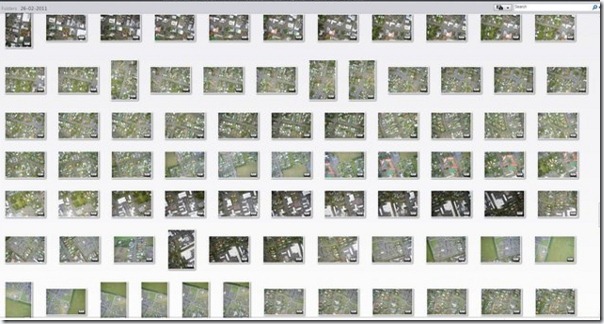
The next five images are part of the imagery set collected during the missions

181793_1602842074098_1327477019_31303247_3754878_n   181793_1602842234102_1327477019_31303251_3097191_n 181793_1602842194101_1327477019_31303250_2639623_n 181793_1602842154100_1327477019_31303249_8104646_n 181793_1602842114099_1327477019_31303248_4727725_n

184906_1602819913544_1327477019_31303227_7190142_n

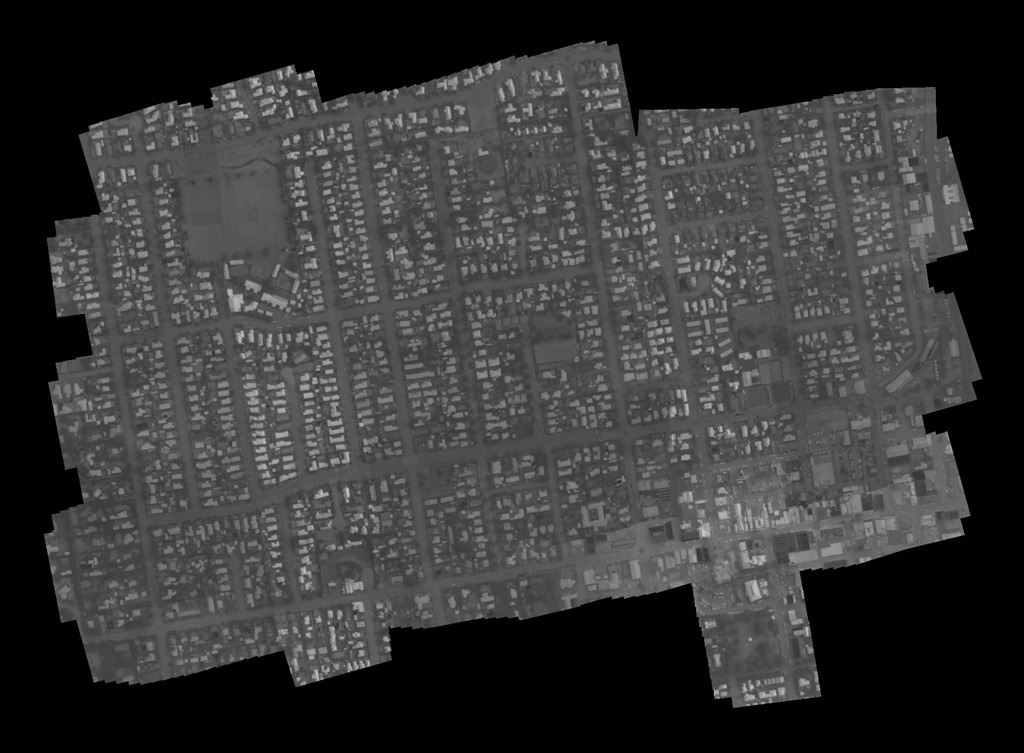
These are then combined into a mosaic…in this case a thermal image of the town from a night mission because silly me has misplaced the daylight mosaic shot…

thermalMosaicLarge

…and also the image of the 3D model of the town created from these 2D images are photogrammetric processing (some interesting work at Otago University on this process)…but here’s a short clip of some 3D imagery from another task…

HUYT

Pretty cool…more so when it’s all homegrown Kiwi technology and ingenuity…

International Globetrotters

Round round get around
We get around
Yeah
Get around round round we get around
we get around
Get around round round we get around
From town to town
Get around round round we get around
We’re a real cool head
Get around round round we get around

Cheers to the Beach Boys for those opening words…

Just popped into the inbox…always good to see local lads doing well…the full update is in the Hawkeye UAV web site but I’ve taken the liberty of posting up the ISR-focused highlights below…this is cutting edge Kiwi technology, both in the aircraft technology and the imagery processing methodology…don’t forget that the processed imagery shown is actually a 3D model – very cool….and more so when you consider the size of the airframe doing the work….all images and text below © Hawkeye UAV…

At the end of September David and I departed Auckland, complete with UAV and cold weather kit, bound for Ulaanbaatar, Mongolia.   We arrived late Sunday night, to spend a week conducting tasks that included surveying an open cast coalmine in the North of the country.  Our host company MonMap took very good care of us and had made all internal arrangements for our stay and operations.

Mongolia is a really interesting place, mineral rich, particularly in copper and coal.  They have a young democracy born from the departure of Soviet control in 1989 at the time when the Iron Curtain was falling.  The legacy of Soviet rule is plain to see in Ulaanbaatar, particularly in its architecture.  That said, the obvious Western influence has definitely taken root in new business and development, and the culture of the city dwellers.  The predominantly Buddhist, Mongolian people are very open and friendly, fiercely patriotic and proud of their heritage and in particular their iconic founding father and conquering hero, Chinggis (Genghis) Khan.  His face is immortalised everywhere on statues, monuments, Vodka bottles and at least three kinds of very good local beer.  The capital’s international airport is of course named after him too.

Mongolia-1

Ulaanbaatar City

On Tuesday we travelled north via road to Sharyn Gol, a coal mining facility with a population of nearly 10,000 in the adjacent village.  Sharyn Gol was a former Soviet mine and the apartment blocks, main buildings and much of the legacy equipment remain.

Wednesday dawned overcast and with little wind initially which was an encouraging sign for the beginning of flight operations.  We had divided the whole facility into three flight areas, 1) The old and current open mines, 2) The steppes, railhead and facilities and 3) the village and outlying buildings.

Mongolia-8

Sharyn Gol mine HQ building, railhead and facilities

Mongolia-5

Mining equipment

Mongolia-12

Sharyn Gol coalmine

Throughout the morning the wind rose steadily and by the time we launched for our first sortie we were experiencing some good crosswind gusts in excess of 30 km per hour.  We conducted the flight as planned, with encouraging approval from the MonMap guys, a team of whom had laid out and very quickly tagged GPS markers for our ground control.  We had set up on the South rim of the pit clear of all mining operations and traffic, operating from out the back of MonMap’s Landcruiser. The flight duration was 72 minutes and we captured over 1,100 images. Recovery was routine, with the Hawk landing within 10 metres of our designated recovery spot.  Indicated wind gusts were registering as high as 47 km per hour and were blowing straight in off the Siberian plains.  Jackets and hats were the order of the day!  The AreoHawk took it all in stride.

After lunch we prepared for the next flight, launching from the South rim still, but further East this time, closer to our target area.  With more runs being conducted into and downwind, speed control and camera firing interval were of particular importance.  Our ability to adjust track, speed and turn radius on the fly, rather than relying on preplanned waypoints, comes into its own in these scenarios.  Despite the variable and strongly gusting winds, the task and subsequent recovery went smoothly and the Hawk landed within 20 metres of its programmed landing point.  Flight time was once again over 70 minutes long with in excess of 1,000 photos captured.

With the ever increasing wind and failing light we decided to conduct the final flight the next morning.  On the completion of Wednesday’s flying I started processing the imagery from flight 1, the mine.

Mongolia-18

AreoHawk 02 in MonMap livery

Mongolia-24

Parachute deployment, flight 1

Mongolia-60

About to touch down

Thursday morning was bright and sunny (and not as cold!).  With good light quite early we launched immediately after breakfast from an area North of the mine, within our target area.  This time we were operating adjacent to the foothills and the village lay stretched out on an incline, requiring David (on the controls for this sortie) to carefully manage acquisition altitude and terrain avoidance for the duration of the flight.  Being so close to the housing area and the schools we soon drew a steady stream of onlookers and curious folk keen to have a look at our operation and pose for photos with us and the UAV.

While the wind did once again grow in strength throughout the morning to over 30 km per hour it had little impact on the flight, which went very smoothly and was over 80 minutes in duration.  One of the main objectives of surveying the village and populated areas was to provide MonMap with a dataset for cadastral boundary and feature extraction.  The resulting product is very good and more than suitable for this purpose, especially with the GPS control applied.

Mongolia-85

Parachute hatch just popping on final recovery in Mongolia

Having completed flying operations and surveying more than a combined 12 square kilometres (3,000 acres) across the three completed flights we packed our stuff and headed back to Ulaanbaatar.  This gave us the opportunity to get into some imagery processing in the office, and to play tourist a bit.

Overall the results from the Mongolia flights have been outstanding.  We captured a lot of imagery on each sortie, with very strong overlap.  Both the point clouds and the orthophotos are extremely pleasing.  Working with MonMap was outstanding and we look forward to our return to their country next year to deliver systems and training, and for the odd Chinggis Gold lager.  Results video here.

Sharyngol Mine

Orthophoto mosaic result sample

mine3

Digital Elevation Model generated from the dense point cloud

mine4

Mine orthophotos draped over terrain model

South Africa:

In September, Andre Henrico of Aeroscan Aerial Survey, South Africa, attended training in New Zealand on his new AreoHawk.  A seasoned UAV professional, Andre has been doing the business from his South African base for many years.  Upon his return home he wasted no time getting to work, deploying his new gear on a task in Botswana.

Andre was good enough to send us some photos and share some of his results.

aeroscan1

Andre onsite with his AreoHawk preparing to get underway

aeroscan2

Recovery

aeroscan4

Digital Surface model

aeroscan5

Elevation profile superimposed in front of the terrain model

2012 ESRI International User Conference

This just popped into my inbox while I was on a break…who would have though that a couple of years ago, Hawkeye was two guys in an tiny back office between an accountant and a dentist?

Great to see this team getting into the big leagues…my comments in red (doctrine writers can’t resist red pens in any form…)…

Hawkeye UAV was fortunate enough to be invited to exhibit at this year’s ESRI GIS User Conference in San Diego.  With a sponsored booth in a prime position in Hall D we could only say “Yes, thank you!”  So in late July, Rowland and myself made our way across from New Zealand.  Rowland left the week prior to the UC in order to attend the preconference seminars, conduct some meetings and make our technology accessible to the Survey community.   Along with the two of us, and providing their expertise on the photogrammetry processing were Luke, Hayden and Sheryl from Areo.

The first big coup was ESRI’s invitation to have our display bird on the main stage for the duration of the weekend and Plenary sessions at the start of the Conference.  To put all this in perspective, the “main stage” is in front of a room in the region of 200m long, and is backed by three HUGE screens.  The room hosted 16,000 people at one time, so a lot of GIS professionals saw our UAV onstage and some of our data as part of the plenary presentations.

Hawk_onstage

An ESRI speaker talks about the AreoHawk onstage during the conference opening plenary

In fact many folks mentioned to us at the booth that they’d seen the AreoHawk onstage and asked about the content in the keynote presentation.  It was both humbling an exciting to have our technology out there in front of the world.

Supporting us this year at our first time attending the ESRI UC were Hawkeye UAV Americas (HUA) – our North American partners from Tactical Systems Engineering.  They were represented by Drew Gwyer, Dave Molthen and Ermie, and were brilliant in helping man the booth, collecting information and assisting people with their inquiries.  Their local knowledge of San Diego was of great benefit also!

Check out these guys’ website some very cool and innovative kit there – I really want to get my mitts on WINGMAN and DACTYL to have a play with – possibly why they’re part of HUA (is that a take off ‘Hoo-aahh!’?)….

Special mention must also be made of Mark Deuter, Director of Aerometrex our distributor in Australia.  He zoomed in from Australia to lend his vast expertise of all things aerial photography and provide a bit of Aussie contrast to the strong Kiwi flavour on the booth.

Monday before the conference start was our day to set up the booth before the Exhibitor Expo got underway Tuesday.   Tuesday started with a hiss and a roar – when we were allowed into the exhibition hall at 8am to do our final setup and start the demos rolling, we only just got in before the influx of people started.  It was soon apparent that we hadn’t printed nearly enough flyers to keep up with demand! If you were one of those who missed out, I’m very sorry. But we did get some more done to see us out until the end of the UC.  The candy ran out before the end of day one too!

booth_hawk2

Hawkeye UAV booth in the middle of “UAS Central” at the ESRI UC 2012

The UAV seen here in the flesh (and in the top pic) and on the screen is the Hawkeye UAV home-grown aerial vehicle, AreoHawk – for its size, it has some pretty impressive performance specs and it is interesting to note, just how short its gestation period from first thought to first flight…

The conference has been a huge success for us. We have literally been hand-launched (rather than catapulted) onto the World’s stage.  Interest from all over the globe and the United States has been tremendous and very encouraging.  HUA/TSE share our ethos and vision for leading the precision survey Unmanned Aerial System market.  It is also apparent to us that we not only have a world class system that’s been developed here in New Zealand, but the AreoGraph process is second to none.

We now expect our tempo to rise, and our global footprint to reach wider and further than before.  A large number of confirmed sales and survey jobs have already come from the ESRI UC and we expect more to follow as soon as demonstrations and follow ups can be arranged.

Rules and Regulations:

Simply put, to fly UAS’s in the United States today you must either be a Government, Federal or State agency or a ‘not for profit’ organisation, such as a University.  Federal Aviation Administration regulations currently require these parties to obtain a Certificate of Authorization (COA) before flight.  In conjunction with HUA/TSE we are actively working with FAA representatives to achieve an accreditation for the licensed commercial flight of the AreoHawk system within the United States.  We currently hold such accreditation in New Zealand with the Civil Aviation Authority (CAA) and are also underway with CASA (Civil Aviation Safety Authority) registration for Australia.  We strongly believe our unblemished record will stand us in good stead in this regard.

Good point, well made…regardless of the size or whether you picked it up at Toyworld or Foreign Military Sales’R’Us, UAS of all sized need to operated in a controlled manner, with rules that are clear, understood and complied with by all involved. Nowhere is this more vital that in this category of AVs below 6kg where the common popular (mis)perception is that they are too small to matter so you can do what you like with them…well, you ain’t in Iraq anymore, Toto: if something bigger and faster takes your battery down an intake or through a window, well…let’s just say that we hope you’ve keep your liability insurance payments current. This being the case, it is good to see a commercial operator expounding these principles…

It has always been our intention, especially as aviators ourselves, to comply with and exceed the expectations of the governing body where these matters are concerned.  Hence our emphasis on safety, failsafe systems, compliance and training.

Improved Areo Process:

We have found now that with the new and vastly improved AreoHawk processing software that we can re-process old jobs and archived imagery with great success.  Second time around the quality of the orthos and the density of the point clouds are an amazing contrast.

urban_sample

This Areo process is damn exciting to anyone with any interest in the shape of the ground and/or object on it – with the new processes and the upgraded sensors on Areohawk – what you are seeing here is not a simple 2D image of the area but a 3D manipulatable (if that’s not a word it should be, meaning able to be manipulated) model of the surveyed area [makes note to nag Hawkeye guys about a Flash-based user steerable demo model] so, if you’re say, a miner, it’ll let you calculate how much spoil you taken from your mine; if you’re a shooter, it’ll let you work out to a high degree of accuracy lines of sight from shooters to shootees…

Semi-urban data resampled under the new Areo process. Point cloud data only is currently being displayed

More pictures from San Diego:

Jack_Dangermond_ESRI_UC2012

With the big guy! Drew, Simon, Jack Dangermond (ESRI CEO) and Rowland at the close of this year’s User Conference

552709_10150956856117811_361825588_n

Hawkeye UAV Ltd booth at this year’s ESRI International User Conference

skyhawk

US Navy A4 on the deck of the museum aircraft carrier, USS Midway

Can’t pass up a visit to any handy museums while in loc – although an A4 is a piece of paper: an A-4 is a lot cooler and faster –

When Good UAVs Go Bad

I came across this article this morning, courtesy of the Marine Corps Gazette’s Facebook Page; it’s titled UAVs’ next challenge: Bad guys shooting back [PDF: UAVs’ next challenge – Bad guys shooting back] and I thought that it might offer some interesting perspective on counter-UAS philosophies…

Counter-UAS is an area that hasn’t got much press yet as the last three decades of growing UAS use, back as far as Israeli’s excursion through the Bekaa Valley in 1982, have all been in very benign airspace conditions where almost without exception, any air defence has been ruthlessly snuffed from the missionspace. But sooner rather than later, we will have to come to terms with various means of countering the West’s UAS advantage…

Unfortunately, the article doesn’t deliver and is a disappointing rant about how the nasty old USAF is holding back the rest of the world from autonomous freedom by selfishly insisting that its next bomber at least have the option of a human crew. I mean, who do they think they are? Autonomous strategic weapons have been around since the days of Snark, Mace and Pluto so what’s really that new about it? Didn’t we have those cruise missiles in DESERT STORM that were so smart as they rocketed down the empty boulevards of Baghdad that they obeyed the road rules..?

Well, I guess, maybe one of the key differences between those systems and manned bombers since the 1930s is that you can always turn a manned bomber around; a manned bomber can also, by virtue of the squidgy bits sitting up front, think for itself if someone forgets to pay the datalink account this month…

To state “…where you might be able to develop a new UAV quickly, in relative terms, an optionally manned bomber will be a good bill-payer for years, requiring all the time, money and effort of a human-operated airplane. Look how long it took, and how much it cost, to develop the B-1 and B-2…” and  imply that either of these systems took as long and as much money as they did because they were manned platforms, and that the main driver behind an optionally manned bomber is its cash-cow-ability, is simply dishonest.

The simple fact is that, in comparison to a manned aircraft, even the smartest UAV today is still pretty dumb – even the pathological mono-focus of The Terminator’s Hunter-Killers is a long way off, let alone the true learning ability of Stealth‘s EDI – in the meantime, the squidgy bits, in the air or on the ground, offer the best option not just for smart weapons but smart, devious and cunning weapons…