Weekly Photo Challenge: Red

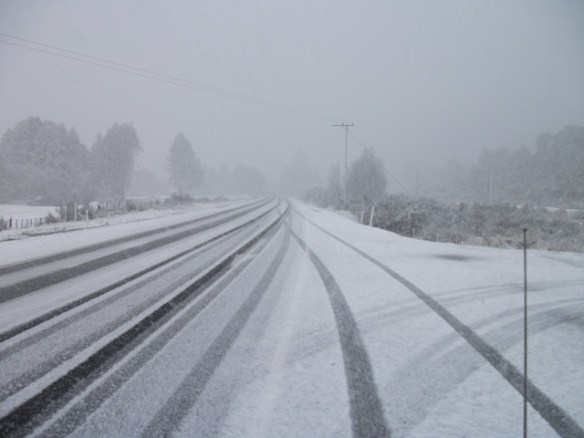
This is where I was going....

…one lovely spring morning…and this is where I came from…

I’d left home no  more than fifteen minutes before, this late September morning and there were just a very few snow flakes drifting lazily in the breeze as I closed the gate behind me, not an uncommon occurence when it is snowing on the Mountain and normally nothing to really worry about…we’re aboput 50 metres below the snow line normally so don’t get much actual snow…

By the time I got to National Park, about 5 kilometres up the road there was a layer of solid but very slushy snow over the road…again normally not to much to worry about at the time of year…and, anyway I was able to follow behind a couple of large trucks that broke it all up…but by the time I got to Pokaka, where I stopped for these pictures, it was snowing quite heavily…hmmmm, what to do? To go back through the snow is as far as pushing through…let’s push on I thought, as the lesser option of the dilemma and certainly one preferable to parking up where I was and sitting it out which would have been an overnighter!!

So away I crawled through the snow at about 15 km an hour, managing to stay in the troughs the trucks ahead of me had left, even though they were filling quickly. I’d just entered the first curve of the ZS-bend between the Pokaka and Horopito Straights when I spun 90 degrees across the road…

So what, you may ask, does any of this have to do with this week’s WordPress Photo Challenge theme of ‘Red‘? Well, you see, I was driving Li’l Red who’s life was about to get interesting…

Ouch!!

In spinning out, I had managed to stay in my own southbound lane albeit was 90 degrees across it – no worries I thought as it was unlikely that there was any traffic coming up behind me as the road gates at National Park would have already been closed…no sooner had I thought when this old guy comes toddling around the corner, heading north: he sees me (NOT blocking his lane!) and jams on his brakes…in the snow…the thick slippery snow…Of course he locks up and as Murphy would have it (no other way), slipped out of his lane into mine. All I could do was watch as he slid towards Li’l Red and braced for the impact.

How lucky can you be? Just before he struck, he got just a little traction crossing some of the truck tracks which slowed him just a little before he crunched into Li’l Red – fortunately just between the rear edge of the passenger door and the wheel well but jamming neither. I hopped out – in my so not practical office shoes and skated around make sure he was OK, and then to swap details. He’d had a bit of a fright and wanted to have a chat but all I wanted to do was get lined up again and head south before I became a resident…I suggested he might want to head south as well, not being in a  4WD or anything useful and noting the amount of snow that would have come down since I left National Park but no, he had to get to where he was going so away he toddled…

With some difficulty I manged to swing Li’l Red south and crawl south til the road cleared by the turn-off to ‘Kune although I took the discretion option and headed south via the Paraparas rather than display too much faith in the Council’s ability to keep the Waiouru road open…so that’s what white snow has to do with RED….

A job well done…

From this....

...to this...

...to this.

Carmen and I filled in the trench late yesterday afternoon with assistance from four four-year olds ( 2 x two-legged, 2 x four-legged – hard to say which was the most helpful…) and are assured fresh, clean water….it’s been a bit if a saga since the old tank was damaged in a  storm last year but all done now…you can see some of the rocks excavated along the way in the middle picture, about a ratio of one barrow load of rocks to every barrow load of spoil…until I gave up on barrowing the rocks away and just dumped them on the edge of the pit…not quite as bad as digging in around Feature Golf at Tekapo and certainly no rocks we couldn’t handle: only one we had to hook the truck up to and brute force out of the way…

Painting the tank, pipes and the top bit of the garage will bring this year’s development project to an end…

I wonder what’s on the cards for next year…

A legend in its own mind

This week the air campaign in Kosovo is examined. The gradualist/risk strategy was employed despite its apparent discrediting in the Vietnam War. This led to a conflict between the commanders. General Short wished for the implementation of a punishment theory. It remains true that ground forces were not committed. However, was it the air campaign alone that achieved the favourable outcome or is there other factors? Was this a true convergence of ‘effects’ generated by the fortuitous or planned combination of offensive military action and the actions of a range of non-military players?

The gradualist (graduated escalation?) strategy was discredited in Vietnam? The elements of strategy and tactics that were discredited in Vietnam (and other conflicts where the same has occurred) were those that were separated from the professionals in those fields and dictated largely by powerful but inexperienced (in warfare) politicians.

Ground forces were not committed in Kosovo? So which famous armoured brigade crawled over narrow mountain roads into Kosovo? (Clue: its emblem is a rodent) Who raced the Russians for Pristina airport? Who’s still there now? While the air campaign may have helped set the scene for a relatively successful positive outcome to the Kosovo campaign, let’s not forget that the other instruments of the DIME (Diplomatic, Informational, Military, Economic) model were also decisively engaged in regional, domestic and international fora; and that these elements also deserve recognition for the roles they played in the campaign.

Russian vehicles mount a road block at Pristina Airport. A British armoured fighting vehicle and Landrover provide assistance

It might actually be argued that Serbian land forces would have been more decisively engaged had a land campaign been conducted in the traditional manner. The ability of the air component to engage Serbian land forces proved to be far more difficult than in the super-optimal environment of Kuwait and southern Iraq, and there is considerable evidence that a large number of targets engaged were ‘spoofs’. As events in the Falaise Gap (1944), Quang Tri province (1972) and the road to Basra (1991) showed, land forces in contact and on the move are significantly easier to engage with aerial fires.

Questions

Given that the first Gulf War concluded with a notion of air power being capable of winning wars, how has the employment of air power since then challenged that assumption?

This notion existed in a very few minds and if there is one single reason for air power’s lack of traction as an equal component of military power, it is the constant assumption of achievements that do not exist. Air power did not win the Kosovo campaign, Gulf War 1,or the Battle of Britain any more than my three-legged floppy-eared Spaniel. Not only do the domains operate together as part of the joint environment, there is no solely military solution to conflicts and these military options are employed as part of a whole of government inter-agency and broader comprehensive approach.

The notion that dominated military thinking after DESERT STORM was that of the revolution in military affairs, the dreaded RMA, but not one in air power. DESERT STORM was the first conflict where information had been employed as a decisive tool. As it turned out as the 90s unfolded, much of the hype from that conflict was simply just that, hype; but at the time it had swayed the minds of the world to justify both the conflict and the methods by which it was conducted. While the application of air power may have influenced the withdrawal of Iraqi forces from Kuwait, that movement did not actually start until after the commencement of the ground war. This action offered an unacceptable threat to Iraqi land forces and forced the withdrawal, or maybe rout would be more accurate. While air power advocates may crow over the road to Basra, it is arguable whether that level of destruction was actually necessary or that it contributed anything meaningful to the conclusion of the conflict. For whatever reasons, air power was also unable to deter Iraqi repression of Shia in southern Iraq.

So how have events since March 1991 challenged the assumption that air power won the 1991 Gulf War? Quite simply there has not been a single campaign or conflict that could claim to have been ‘won’ by air power. To flip that around, every conflict since March 1991 has required ‘boots on the ground’ (or ‘boats in the water’ in the case of counter-piracy campaigns) to force a conclusion:

Somalia. 1992-95 and current. Air used for ISR and mobility; a strong air bridge into Mogadishu during the former campaign. All decisive actions fought on the ground with air in support.

Bosnia. Resolved by the deployment of a powerful US force prepared and empowered to play the warlords at their own game, meeting force with force. Primarily a land mission during the decisive post-Dayton phase with air in support.

Rwanda. Air could have played a decisive supporting role here in 1994 by enabling the mass airlift of troops to reinforce the small UN force and reduce if not halt the genocide.

Kosovo. See above: possibly a contributor to the scene setting before the deployment of land forces, however there are arguments that the air campaign was largely counter-productive and actually strengthened Serbian resolve.

Bougainville. The 1997 deployment of peacekeepers (withdrawn in mission success in 2003) was supported by air for ISR, local mobility and maintenance of an air bridge for resupply and reinforcement.

Solomon Islands. 2000, 2003, 2006-current. Land force deployment supported by air for ISR, local mobility and maintenance of an air bridge for resupply and reinforcement; air transport also employed during various NEO during these periods.

East Timor. Major ground force deployment (division level) supported by air for ISR, local mobility and maintenance of an air bridge for resupply and reinforcement; kinetic air support also stood to during the lodgement phase in 1999.

RNZAF Iroquois helicopters fly Australian troops in Dili, Timor-Leste.

South Ossetia. Major, albeit one-sided land force on force confrontation between Russia and Georgia, with air in support (primarily on the Russian side after Day1) for ISR, strike, mobility and CAS.

Chechnya. Primarily a land conflict between conventional Russian forces and irregular Chechan forces; significant air resources employed by Russia to no discernible positive value.

Iraq. The primary effect of the no-fly zone campaign and its associated sporadic strikes into Iraq 1991-2002 was to keep the wounds between Iraq and the US open and festering. While the ‘shock and awe’ aspect of the opening of OIF was feted, the reality is that a decisive land campaign was always identified as the decider in this campaign, both the Plan A campaign to May 2003, and the insurgency to mid-2010. While ‘shock and awe’ can trace its roots through the Powell Doctrine of the 90s back to the ‘triumph’ of Gulf 1, the primary driver behind it was SECDEF Rumsfeld’s belief that greater reliance on technology would reduce defence costs by eliminating large numbers of expensive personnel.

Afghanistan. Neither the British (between the wars) nor the Russians (1979-89) were able to quell local tribesmen by air. OEF was always predicated on a strong land campaign supported by air. The air bridge into Kabul in the earliest days of the campaign was a key enabler for early successes however air has remained in a supporting role to the land campaign. The mission to take down OBL was a land mission supported by air i.e. no UAV-delivered PGM through the window.

Sierra Leone. Primarily a land-based peacekeeping operation. The British JPR mission in 2002(?) was a land force mission supported by air for mobility and CAS however use of kinetics was hindered by misperceptions of proportionality with the rules of engagement.

Israel v Hizbollah. A classic example of how not to do it. Not only would any other aspect of the DIME model been better employed to counter HIzbollah rocket attacks into Israel from Gaza and Lebanon, but the use of air power as Israel’s tool of choice not only illustrated how behind the times Israeli military thinking was but also had the opposite effect to that desired, regionally and in the court of world opinion.

Libya. The ultimate (so far) example of how not to employ air power. Not only has this meddling extended a minor internal conflict into one likely to drag on for years, but it has seriously damaged the credibility of air power as a decisive force and its advocates. Already some NATO nations are trickling land forces (under the guise of training and liaison) into Libya to attempt to recover the situation. This is what happens when you start to believe your own press.

It is to our benefit that the one strategic scenario where the use of the air and space would have had a direct and decisive effect on the outcome of a conflict is the one that has never come to pass…
Weekly Photo Challenge: Wildlife

1 December 2009…was watching TV one wet-ish afternoon and turned around to see Bambi checking out the vege garden…two kinds of fortunate: firstly, that I had the camera in my hands good to go, and second, nothing in the garden particularly attracted him otherwise he would have ended up in closer proximity to a number of vegetables in an oven bag…

This weeks WordPress Photo Challenge

Totally wild, Bambi would just wonder in from time to time…have a nosey and wander off…he was a treat for city folk staying at the Chalet who would often discover him on the front lawn on misty mornings…haven’t seen him for almost a year now and suspect he got poached from across the fence…

Weekly Photo Challenge: Round

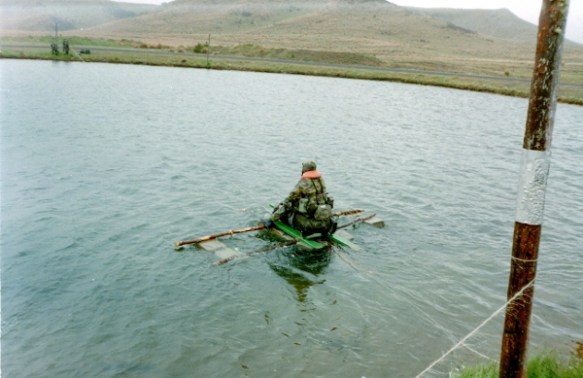
Why go a-round, when you can go a-cross?

This week’s WordPress photo challenge…Tank Pond, Waiouru…November 1992…it’s meant to be summer but you wouldn’t have known it at the time…

Rapid Fire

3 cups of tea

Literally a storm in a teacup…I doubt there is anyone who ever published a book than was 100% honest in EVERY way and which did not lean towards one agenda or perspective or another in some way…

Greg Mortenson shot to worldwide fame with the book “Three Cups of Tea: One Man’s Mission to Fight Terrorism and Build Nations … One School at a Time,” which describes his getting lost in an effort to climb K2, the world’s second-highest peak, being rescued by Pakistanis in the village of Korphe and vowing to return there to build a school for local girls.

Now it appears that it wasn’t quite as he says which is causing a little embarrassment around the traps for those who may have supported his initiatives financially or, like the US DoD, who may have extracted insights from Three Cups of Tea for use in COIN doctrine and TTPs…personally I agree with the headline, if not all of the content, of the Wired article on the subject Does It Matter If The Military’s Fave Do-Gooder Sells Three Cups of Snake Oil?  When an organisation like the military moves out of its comfort zone, in this case, of large very structured kinetic military operations like Grandad used to do, it has to cast its net wider for ideas…

Let’s not forget that the COIN effort in Iraq got off to a false start as too many people heralded the false zealots of COIN the Malaya way, the US in particular, picking the wrong time to listen to its vocal but fickle ally from the other side of the Atlantic…it was only the efforts of David Petraeus, David Kilcullen et al who turned the tide towards a COIN strategy that would (and did) work in Iraq, this being encapsulated in the December 2006 version of FM 3-24 CounterInsurgency (don’t knock it unless you have actually read it!!). But, however applicable that FM 3-24 might have been in the Iraq of 2006, it was less applicable to the almost-forgotten Afghan war which had been festering away since March 2003 and which, as a problem, bore little resemblance to Iraq.

So, more power to those who cast the net wide in their attempts to get a better handle on the specific of the Afghan problem…Jim Gant with his One Tribe at a Time paper was one; those promoting Three Cups of Tea were others…and so what if Mortenson streamlined his experiences or even made them up? Are we still so template-ridden from the Fulda Gap that we can not think for ourselves and extract the nuggets from the rough…it’s just slipped my mind but one of the tenets that I referred to often in my work in the late 90s came a from a source that I eventually tracked back to one of Don Pendleton’s The Executioner pulp paperbacks…someone that I was working with at the time was mortified that I might draw real world insights from such a ‘disreputable‘ source but so far as I was, and am, concerned, it is not who the source is that is of prime importance but what it is saying…One area in which this has become very apparent and implemented in SOPs is in the Lessons Learned world where collection teams will endeavour to draw observations, issues and lessons (OIL – yes, it’s still all about OIL!!) from as close to the horses mouth as they can get – the trick, of course, being to avoid the equine’s other end…

On failed states

Got the cue on this article from Michael Yon’s Facebook page…always a good source of links to interesting articles…as well written as it is, I think it’s all semantic smoke and mirrors…three decades ago our biggest threats came from established states like France, the Soviet Empire and Maoist China…once again we need to resist the temptation to slap a template on a nation and use that to determine their level of potential threat or risk or not…as above, we should be able to consider each form or threat and risk on its own merits or or lack of thereof and draw our own conclusions…this sort of pseudo-analytical, ‘Eureka!‘ style of writing really leaves me cold…

Kiwi Gunners

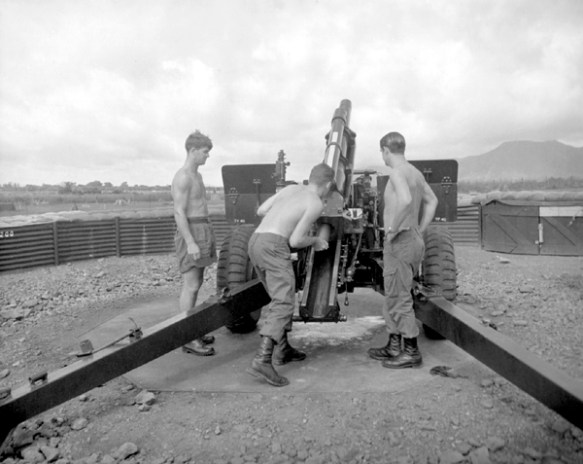
On a positive note, I came across this great written snapshot of a Kiwi gunner’s perspective on Vietnam and the New Zealand of the time, again drawing the cue from someone’s (sorry, can’t remember the source) Facebook page….it’s not that well known that our artillery was in Vietnam well before there was any infantry deployment…and especially topical when one remembers that yesterday was ANZAC Day…

Weekly Photo Challenge: One

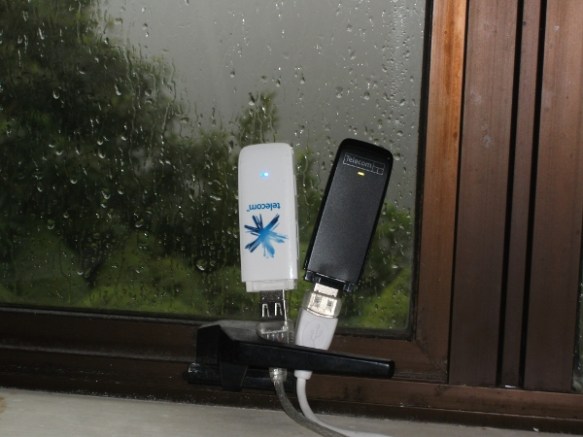
One of the world’s great mysteries…why two technically-identical Telecom T-Stick mobile modems can disagree totally with each other whether there is or is not a usable network signal…blue is yes, yellow is no…

This week’s WordPress Photo Challenge….

…the view today is not much better either as winter rolls in….

Coming soon

I think it’s safe to say that there are many people who openly dislike “Transformers 2: Revenge Of The Fallen.”  And, after sitting with him for a half-hour yesterday to talk about the third chapter in the giant robots franchise, I’d say Michael Bay is one of those people.

So opens Drew McWeeny’s sneak preview of Transformers: Dark Of The Moon…I’m probably not in the ‘openly dislike’ proportion of Revenge of the Fallen fans but certainly I think it could have been a lot more than Transformers Do Night At The Museum And Then Wreck Egypt (like it needs help from massive robot aliens…Facebook seems to have done the job quite nicely, thank you very much) so, yes, I am expecting great things from Michael Bay’s ‘apology’…the guy who brought us Armageddon – one of my all time top 10 movies (bring it on, doubters!!) has set a high standard that he has yet to surpass…

Also in the works as a possible redemption effort for the first remake movie is Rise of the Planet of the Apes

“Rise Of The Planet Of The Apes” will be in US theatres 5 August 2011.

I actually quite enjoyed the Mark Wahlberg remake of Planet of the Apes and prefer it to the Charlton Heston original, while taking nothing away from the original status as a true classic. I enjoyed it right up until the final scene which, although straight out of Pierre Boulle’s original novel, totally kills off the story-line with a cheap and meaningless twist – unless you are one of the three people who have actually read the book…I’ll be interested to see how this prequel wangles its way out of the narrative quagmire that final scene created…maybe there’ll be a director’s cut version that simply deletes it…?

It looks like a Hobbit…

I saw the first footage from The Hobbit on the news last night – as expected impressive…with more comment at hitflix – less impressive perhaps is that Peter Jackson seems to have caught Lucasitis and has inserted a two year gap between Parts 1 and 2 of The HobbitThe Hobbit Part 1 opens December 19, 2012, and The Hobbit Part 2 opens in December of 2013.” C’mon, folks…sure, we’ll all wait AGAIN for the final part to be released but does the chain have to be dragged so?

Knowing…

…me, knowing you…it’s the best we can do…

Thanks, ABBA….it’s all about knowing when to do something and more importantly sometimes, when not too…

This idea for this post came from observing so many of the comments made in the immediate aftermatch of the February 22 earthquake and that we’re starting to hear again from Japan…it was reinforced again by the Daily Post question last week When is it better to be sorry that safe? As posts go, I’d rate it as less than average – if all you have to do to meet a Daily Post obligation is ask a question, I’d be in like Flynn but I think that any post worth its electrons needs to be a little more substantive than that…

Knowing… in her blog piece Three Times You Have To Speak Nilofer Merchant argues that there are three times (in bold print) when we ought to speak up:

When it will improve the results of the group.

When it gives others permission to speak their truth.

When the costs of silence are too high.

But her key point is hidden away in her summary text “…knowing when to speak is an art, and like any art, requires skill….” Conversely, knowing when to shut the hell up is equally as much a skill that requires practice…

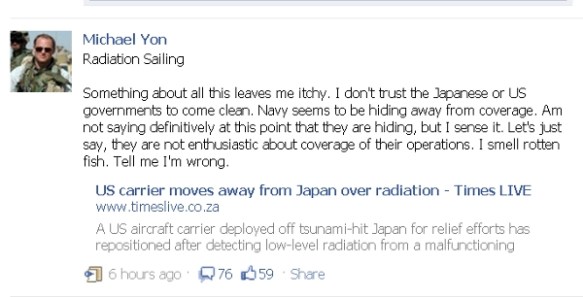
Yeah, whatever, Mike...


A more pertinent observation from a more professional organisation...

Not really picking on Mike Yon this time…it’s just that he happened to launching off when I first started to draft this…what actually got me going on the subject was rather vocal comments from a number of sources regarding the Civil Defence effort in Christchurch in the immediate aftermath of the Feb 22 quake…calling for reviews and investigations and labelling staff as incompetent is simply not productive when responding to the most major natural disaster ever to hit the nation. There is a time for all hands to the pump to just get things done and another for later introspection and review…

In a similar vein, are all those second-guessers and self-appointed experts who, possibly with the best of intentions, promulgate such guff as the discredited Triangle of Life technique to save oneself during an earthquake or those who, like at Pike River, state it would have better to rush into collapsed buildings to try to rescue trapped and injured people. The harsh truth is that there is bugger-all to support such ideas and plenty to prove that they are more likely to hinder than help. Like we say it the doctrine world, it’s all about ‘applying with judgement’ and not just charging in – or applying by rote…thinking thinking thinking….

No doubt there are some major issues appearing in, not just Civil Defence, but most agencies involved in the recovery effort as they adjust from the initial response to the long haul of recovery and clean up…now is the time to start collecting the raw OIL (observations, issues and lessons) across the entire response force to identify what we did that we shouldn’t have done and what we didn’t do that we should have done…it’ll be interesting to see how a government-level lessons learned project might emerge from this…

//

As you can see this was a post that was started and never quite polished off…I’m still a bit behind the 8 ball on this one as well but completing ‘Knowing’ also meets another WordPress Daily Post challenge – even if it was from last Friday – Go to your drafts folder and finish an old post…I have to say that the Daily/Weekly Post challenges are great motivators to keep up the momentum…I get an idea and launch into a draft but then either get distracted or want to polish just a little bit more before publishing that it never really gets done…as it says in today’s daily challenge, “…Writing is therapeutic…” Yes, it is and although I now have more writing tools, I don’t write as much…ten years ago I had a good half dozen scripts bubbling away, was prolific in a number of online forums and was writing reviews and papers on a range of subjects. Today, the ideas are still there but the delivery mechanism seems to be jammed on ‘Start’ and locked out of ‘Develop’ and ‘Complete’…all I can say is that I’m working on it…

Hey, honey…can I get your attention please?

Keeping up the blogging momentum…as suggested in the WordPress daily photo challenge…today’s theme is oceans…

Moeraki Boulders 001Moeraki Boulders 003Moeraki Boulders 002Moeraki Boulders 007 Oh…too late…

These were taken at the Moeraki Boulders, just south of Oamaru in the South Island of New Zealand, in 2005…