Thinking

President Obama is visiting China. Among the issues under discussion, he also plans to press China to agree to sanctions or other measures to punish Iran if it does not capitulate to an agreement to export its uranium for processing abroad. I really wonder sometimes if anyone in the US is actually reading their COIN doctrine (FM 3-24, JP 3-24, the State Department Guide to COIN, A Tentative Guide to Countering Irregular Threats etc etc) or not? We still seem to be so quick to reach for the big stick instead of perhaps considering other options. Many, incorrectly, called it COIN. The Marines call it Countering Irregular Threats (CIT), the Brits call it Countering Irregular Activity which is a more accurate term albeit with the unfortunate acronym of CIA and, regardless of where the hyphen might be, who would want to be picked up with a CIA manual in their back pocket?

Regardless of what we call it, what we are really doing is Countering Destabilising Activities which we could call CDA, or reverse engineer and simply call it Stability Operations: those operations which promote stability. Because when you really get down to it, this is what we are really interested in: the maintenance of stability. Sometimes when stability operations are not enough, we have to get out the big stick and apply force with the intention of doing harm to promote good. That force may be military; it may equally be diplomatic, economic, or social…but before we get to this point, as in the case of Iran, maybe we should read our doctrine, cut to the core issues at the root of a problem and seek to address them. Perhaps, instead of being treated as the rabid dog of the Islamic world (let’s face it , we’re all pretty tired of being tarred as varying flavours of ‘The Great Satan‘), perhaps Iran would respond more to incentives, to be treated as an equal on the Central Asian stage, perhaps even to being a party to discussion regarding what is certainly an associated issue: the non-sanctioned ownership by Israel of a substantial nuclear capability? Let’s start thinking BEFORE we wave that big stick…

That's Lulu in the front and Kirk at the rear.

And on the topic of thinking, I’ve been considering today on much dogs think. Our second biggest dog, Lulu, is not well: for the last couple of months she has been favouring her rear right leg and the vets aren’t sure what the problem is. X-rays showed nothing unusual and there doesn’t seem to be any obvious injury. She’s on a course of weekly injections and I took her in this morning. She was very brave and only flinched a little at the needle – she doesn’t like them at all and is certainly big enough to make her dislike known.

Afterwards, the vet gave her a chew snack for being so brave and we both commented on her behaviour when she got it. Instead of just chomping it down, she just held it in her mouth as if to save it for later – much like, as we noted, a small child might do. She held it in her mouth the whole way home (about 40km), stubby little tail going a million miles an hour, until she got inside and on her mat; only then did she start to work on it but very slowly as if really savouring it and trying to make it last as long as possible. She growled Kirk any time he so much as looked in her direction and looked so forlorn when he finally managed to score a piece of her treat. She made it last twelve hours – and there is a still a section left for tomorrow.

I know that all the ‘experts’ say we shouldn’t attempt to transpose human actions on to what are meant to be just ‘dumb’ animals (can you get dumb experts too?)  but both the vet and I wondering just how true that it really is…man’s best friend might be brighter than we think. And also on the canine theme, here’s a cute but very sad story I found tonight while researching what might be wrong with Lulu.

The twins say “that’s amaaazing“. If they’d been interested in the News at 6, they would have chorused that line at the story on the bikers protest against the Accident Compensation Corporation’s over-hiked levies in Wellington today (see Tapdancing post. Amazing the confirmed increases in the levies have today become only proposals that “…the Government has yet to decide on…” Nothing like 5000 bikers descending upon their place of work to get the ACC minister and Prime Minster doing a Fred and Ginger act (aptly this link goes to a number called Too Hot To Handle!)…perhaps Nick and John should have done some thinking as well:

  • Is this blatant extortion going to fly with the voters?
  • Are there other options for reducing ACC expenditure other than victimising victims some more?
  • Are we getting value for money from the grossly overpaid executives running ACC?

Back in the office…

…after the better part of five weeks away. I find that I didn’t really miss it that much…some interesting new content in the inbox though and this week will be largely occupied by book reviews I think:

  • MAJ Jim Gant has completed his  Tribal Engagement Team paper and the full text is available with a broad range of comments on Steven Pressfield’s blog. The closing paragraph says it all: ” There may be dozens of reasons not to adopt this strategy. But there is only one reason to do so—we have to. Nothing else will work.”
  • JFCOM has released JP 3-24 Counterinsurgency, the US DOD’s joint slant on COIN which should encapsulate and further develop the themes in FM 3-24. There is some comment on JP 3-24 on the COIN Center blog.
  • The US Army is developing its Army Capstone document Operating under Conditions of Uncertainty and Complexity in an Era of Persistent Conflict for a planned release date of December 2009. For all those who have been happy to sit back and snipe at US policy and doctrine here is your chance to have some input: the draft document has been published online and comments may be submitted through the Small Wars website (you do have to join up). The news release has more information.

In other COIN-related news

The UK is reroling four armoured and mechanised battalions into light infantry for service in Afghanistan on the understanding that these units will be able to revert back at a later date and noting that this will take possibly up to five years. This move is somewhat unusual in light of public comment in the UK this month regarding the overly-light nature of British vehicles in Afghanistan and the perception of a direct link between this and a number of battle casualties. The Canadians not only swear by their LAV3s in this theatre but also reversed a decision to get out of the tank game and are spending some billions of dollars for the rapid acquisition of Leopard 2A6M tanks. The US has deployed SBCT 5/2 into Afghanistan as well and initial reports indicate that Stryker is as effective here as it has been in Iraq. One wonders if this move is driven more by efficiency than by effectiveness?

I am (really, I am) making some progress in redrafting the paper on Countering Irregular Activity and it might even be complete next month…after that, Josh has been cracking the whip for the Future War rewrite/update…

It’s raining again…

..after a nice day yesterday, where I chopped  most of the wood and filled up the shed, dried the carpets after they got caught out in the last storm, and recovered a dozen+ eggs from the chooks latest covert nest – maybe their yard is too big?

After all that – it was a fairly respectable wood pile that had accumulated over 2-3 months – my poor old body wasn’t up to the challenge of blogging, and even less so after Carmen slipped me a glass of wine over dinner (very nice too: steak, tabouli and cold roast vege salad with a rosemary and honey dressing). I was out to it on the couch (also very comfortable: they are two big flat-tops that I can easily stretch right out on, named Nimitz and Ark Royal) by the time the Monday movie started: I have brief flashes of Brit crims knocking each other off (The Take…?)before I negotiated the stairs to bed…

Anyway…

Coming Anarchy has an interesting item on media bias and reliability which has turned into a bit of a cable-bashing session. While I share the concern raised in the actual blog entry, I don’t have much time for the hobby-horsing in many of the comments. As per my own comment, the issues in the blog entry are how it is now: the internet and our ablility to self-publish pretty well whatever we want have decreased our reliance on the media for impartial information to the extent that most media outlets now have to follow commercial imperatives or go under: simply, they are now in the same ratings game as the rest of the media business; no longer the voices of knowledge and wisdom, but catalysts for people (‘the people’?) to further not only explore but contribute to an issue, for better or for worse…

Hence the Information Militia: informal, disorganised, often at cross purposes and following their own agendas even when in support of a common goal (have you ever noticed how a ‘common goal’ can have so many different meanings?) but a force none the less to be reckoned with. From Twitter to Crimestoppers to the most stridently hard left/right (is there really a difference or do the meet in the middle?) blogspace, we have access to growing mass of information upon which to make our own decisions, to shape and guide our actions and our worlds. The choise is ours whether we meekly accept that which is served up to us on a spoon, or take the plunge to ferret out as much supporting and contrary (what sort of loser only seeks that which agrees with them? Possibly we don’t want the answer to that question!)  information to deal with.

So the first level of the Information Militia are those who feed information in; is the next level those who take that information, reprocess it and serve it up again, perhaps in support of a specific objective…?

Steven Pressfield is on the road this week and has reposted his One Tribe At A Time article to keep the dialogue alive. Of all the online discussion regarding the way ahead, this particular discussion is the first that I have seen that may be sowing the seeds of a successful campaign in Afghanistan (which would be a historical first!) . Key elements are:

  • Prevent Afghanistan from passing into a condition that would allow Al Qaeda to use it as a resource in creating threats to our security and national interests.
  • The best that we can hope for in Afghanistan is a “loose confederation of tribes.” Think of a congress composed of elder members of each tribe that comes to represent issues of import to that tribe at some set dates/times each year. The only hope for a “traditional” government is found in the bigger cities; but…Afghanistan is mostly tribal villages, not big cities. Such gatherings would not put an end to inter-tribal fighting, however, the tribes might be able to get some assistance from the central government for basic services and the like. Generally, the tribes don’t want the “modern” conveniences – they want to stay the way they are, but some can benefit from help with drilling wells, medical care, etc…
  • Adopt and implement NOW a campaign based upon direct integrated engagement with the tribes (‘the people’ in popular COIN parlance).

The catalyst behind this proposal is MAJOR Jim Gant’s One Tribe At A Time paper which articulates the Tribal Engagement Team concept although it will seem all too familiar to anyone with knowledge of traditional ‘hearts and mind’s campaigns like the classic campaign waged in the Highlands of Vietnam by US Special Force in the 60s. This mission used to be SF bread and butter before the glitz of Special Operations took over in the 80s and 90s. Gen McCrystal has the ‘get out amongst the people bit right’; Jim Gant has provided the ‘how’ of this…small units, living with the tribes in an enduring and long-term relationship…Anyone wanting to do some background reading on this could do worse things than read Robin Moore’s The Green Berets – the very good book upon which the entertaining but conceptually accurate John Wayne movie was based…Here is someone who has read FM 3-24 and then adapted it to the current situation; hopefully the full text of this paper will be posted soon so that we can get our teeth into it instead of being fed these tempting titbits…

My last link today is to the developing discussion on The Strategist on historically incorrect war movies, initiated by King Arthur on the weekend…it’s a good discussion with a good nugget or two…and of course my comment above re The Green Berets movie will spark off some more…

The COIN drops…

…or is it just a penny…?

Previously in The World According To Me: “Over time some insurgents will tire of the constant harassment in the face of growing public confidence in government forces and disdain for the insurgents… encouraging THEM one by one to consider coming to the talking table…”

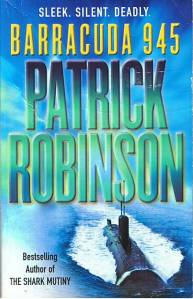
barracuda 945I picked this up on my way through Singapore last month, thinking that with Admiral Sandy Woodward of Falklands War fame as an advisor, it would be pretty good. Not only is it not, but I could also see why other commanders in the fleet were worried that Woodward, with limited aviation or amphibious experience, be the wrong guy for the job:  once the plot puts to sea the whole premise is based on the ‘fact’ that the US Navy is the only service in the US DoD which helps the story along by skipping gayly around inconveniences like AWACs…I also think that the three unnamed Special Forces officers who allegedly advised on the story need to hand back any beers they received for ‘advice’ as the SF side is pretty weak as well. So the connection with COIN is…?

Without spoiling what story there is, a key assumption in the book is that the way to win an insurgency is to out-exasperate the opposition, i.e. harass them to the point of just giving up and going home…at the time of reading the book, these seemed like a great recipe for success for insurgents and difficult to beat from a COIN perspective – until I I reread the piece on the Information Militia this afternoon…could initiatives like Crimestoppers in a COIN/Stability campaign actually be the start of the Death of 1000 Cuts for an insurgency? Turning The War of the Flea on its head and subjecting the insurgents to an endless series of pinpricks and mossie bites until they have just had enough and start to consider their options…?

One thing I did like about Barracuda 945 is that the ending is not the righteous vengeance that one might have been expecting. Instead it presents a very left-field scenario which strikes at a core issue and not just a symptom – does that sound like something that might be drawn from FM 3-24 – even if the story does use major elements of national power to achieve the effect…?

I’ve commented a lot, as have many other commentators, on the apparent lack of strategic objectives for the war in Afghanistan. This summary came off one of the distribution lists I’m subscribed to; it states pretty clearly that al-Qaeda is still the primary raison d’etre for the war from a US point of view but one wonders how logical that really is…some things to think about:

  • The Taliban are not AQ; they may have supported and hosted them prior to 9/11 but are now probably not that impressed with all the attention that has drawn.
  • AQ are probably well-established in many other locations are the globe – where next after Afghanistan for the GWOT?
  • If there is any lesson to be learned by insurgents (as opposed to simple terrorists) from 9/11 and the London Tube bombings it is that such actions are more counter-productive for the ’cause’ – as Yamamoto feared, once you wake the sleeping dragon, it is damn difficult to put it back to bed…so AQ cells around the world are probably more discreet than to parade themselves openly in training camps as once was their wont.

These things being the case, then perhaps we need to reread FM 3-24 and ensure that such fundamentals remain in the 2010 version, and start to focus the campaign on ending the insurgency…if the aim is an AQ-free Afghanistan, then maybe we need to be casting off the dream of democracy for all and realistically start to look at ways of bring the Taliban to the table…carrot and stick…turn the war of the flea back on them…out-exasperate them until talking becomes the way better option to fighting. It is unlikely that we will be able to bring the Taliban (or any other significant Afghan group) to the table by force – didn’t work for Alexander, didn’t work for Victoria, didn’t work for Mikhail, and it wouldn’t have worked for Napoleon either if he had strayed in this direction….

Could we live with a stable Taliban in Afghanistan if that meant an al-Qaeda-free Afghanistan?

Something’s missing…

Today I’ve made similar comments on both the COIN Center blog and Steven Pressfield’s blog on the war – maybe I’m missing something but has anyone recently i.e. since December 2001, actually clearly articulated what we are trying to achieve in Afghanistan? Every man and his dog (maybe we should start listening to the dogs?) are presenting their theories on how to win the war BUT, if these is one lesson we think we have learned since WW2, it is don’t get into anything unless you have some idea on how you’re going to get OUT of it. So what is the endgame for Afghanistan? Please… anyone…?

  • Exploit the mineral wealth of Afghanistan? Which minerals would they be?
  • Prevent Pakistani nukes falling into Taliban/AQ hands?
  • Return Afghanistan to its pre-1979 state?
  • Save it for/from democracy?
  • Prevent Iran or someone else filling the power vacuum left by the Taliban post-2001?
  • Secure new markets for globalised industry?
  • Something else?

Maybe I’m just dumb, or wasn’t  paying attention that day the endstates were being explained…I’ve read FM 3-24 and similar publication on the subject of COIN, irregular threats and stability ops and actions and a common theme in most of the is the absolute need to identify what the root issues of the conflict are and set out to address them in your long game…are we doing that? Have we done that? Is there a cycle of ongoing review and adjustment….?

As LCOL Malevich says in the Center blog “The Taliban have a simple message “foreigners out.” And, they promise only “security” and “justice.” What is our mission, what is our compelling narrative?

I suppose the other question that we might want to review is why does America care? When is NATO going to get its act together and get into the game; Ditto the Islamic Brotherhood – if they really do care for all Muslims, where are the aid packages, the troops and the initiatives from closer to home – would an Iranian Brigade be more effective than an SBCT…?

And some more in a similar vein here that I stumbled across while tag surfing…

The rules murdering their troops…

A top article from the NY Post on the COIN Center blog – most definitely stimulating for the grey matter and really makes you wonder what’s it all about. The day of 911, I was working with a guy who had just come back from a US college and I clearly remember his words that this was Pearl Harbor all over and from this point on, America would consider itself at war. The implications of this were that the gloves would come off and any pretence of being a team player would vanish if it got in the way of the main effort…

Somewhere along the way, the ‘war’ seems to have been lost out of the whole ‘war amongst the people’ model – the key part is that, unlike peace support and reconstruction and peacekeeping and all the nice safe sounding words (like offshore and deployment and operations…) is that war is war and there not very much nice about it – certainly it is not about trying to be nicer to the bad guys or potential bad guys than to your own troops, or hobbling them with rules to prevent anything bad happening (apparently except to them)…this is a war.

Bad things happen in wars. Sometimes people get caught in the middle and get hurt. That’s war but we accept these risks because there are bigger things at stake…Any non-combatant death is bad but the key is whether there was an intent to kill, either directly or passively by failing to apply a reasonable duty of care (key word: REASONABLE!!) War is and always has been (possibly always will be so long as people are involved) messy, untidy, dangerous and indiscriminate…we should not be kidding ourselves that we can write a book and toss in some technology and all of a sudden make it squeaky clean and politically palatable.

However, this article and FM 3-24 both skirt around or possibly even overlook the key point: the keys to successful COIN are probably endurance and habit forming – the foe that can stick it out the longest AND ensure that the habits it desires are embedded over a couple of generations (Note: speed is not a characteristic of COIN!!) will most likely be declared the winner. While the Malaysian Emergency may have been declared ‘over’ (won?) in 1960, the last CT did not surrender til 1988. Similarly, and they are probably halfway there, it will still be another ten or so years before anyone can confidently state that the troubles in Ireland are truly over. You want to be out of Afghanistan in ten years? You’re dreaming – you might as well pull the pin and bail out right now…

Wars are wars and you can not fight (definitely not win) them with a sterile ‘big arrows, little maps’ approach…forget the non-lessons of DESERT STORM and get down and dirty…