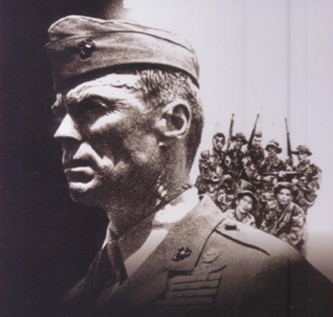
It’s not logical…

On February 12th 1942, No 825 Squadron, based at RAF Manston, carried out a virtual suicide mission in an attempt lo damage or sink the Scharnhorst, Gneisenau, and Prince Eugen, and remove them from the Kriegsmarine’s order of battle when they made the infamous Channel Dash from Brest back to Germany. All six aircraft were lost for no effect on the enemy ships, but for the sheer courage shown in carrying out the attack, a posthumous award of the Victoria Cross was made to the CO of the Squadron Lieutenant Commander Eugene Esmonde, and the other aircrew were mentioned in dispatches, only five of the eighteen men involved in the attack survived. (c) http://www.marklittlejohn.com

@ Small War Council yesterday, I kicked off a thread The Dumbness of Oneness. Readers will, I’m sorry, have to pop over to Small Wars to view the original post and subsequent comments [edit: not anymore: PDFs below]. The short version is that I am challenging the industrial age mentality that is still so evident in much of our thinking, even after eight and a half years, 5000+ combat casualties and thousands of civilian victims of this ‘new war’ against takfiri jihadists of all races, religions and persuasions.

The Dumbness of Oneness pt 1 The Dumbness of Oneness pt 2

In the quotes in the thread, a theme emerged that perhaps the commanders from WW1 and WW2 actually had a far better handle on the art of war than those today who seek to make it a simple push-button science based more on Harvard Business School methodologies than the accumulated experience and lessons of history. War is not simple, not is it logical nor rational…it can not be distilled down to simple formulae and calculations that will determine the outcome of an engagement. War is about much more than a simple financial bottom line.

It was no more rational for 825 Squadron to fly into the German guns than it was for the New Zealand Division to break out from Minqar Qaim, the Marines to hold out at Wake, or for any of the hundreds of US CSAR missions in Vietnam and other conflict zones – these actions do not stack up in a balance sheet calculation that has no place for courage, camaraderie or commitment, no value that quantifies the human spirit. This is the myth of modern manoeuvre warfare – that achieving a position of dominance over a foe takes the place of actually defeating that opponent. History is as full of ‘sure thing’ plans that ended in tears as it is of desperate acts that paid off.

The myth of oneness is equally false. Although there is no dispute that there are advantages in common approaches and equipment, this should never be allowed to adversely affect effectiveness. Amanda Lennon stated at the New Zealand Chief of Army’s Conference last year that “…coalition interoperability requirements drive conceptual laziness…” and this is the risk of oneness as well: under the guise of interoperability, we create a bubble of dumbness that expands throughout an organisation. Driven by drives for efficiency, we forgot not so much how to do things but WHY we do them. We rationalise away the need for drill and colours and things as unnecessary in modern war, forgetting that they foster the courage, camaraderie and commitment that bolsters a force when the going gets really tough.

I surf the Get Frank site periodically, mainly because it has good competitions, and came across this editorial item Schama on New Zealand. In summarising, it states “…but beyond that, these people see only money. They measure the worth of a society solely in terms of GDP. As a result, they are utterly blind to our real achievements, and place no value on them…” This is not simply a question of core values although they are part of it. It is about remembering what is important in maintaining, nurturing and evolving the art of war…for there will come a time when we will face a foe is both prepared to and capable of going toe to toe with us in real War…where the blandness of oneness will be exposed at what cost?

Edit: 20 Nov 2018. The original Get Frank article is gone but I found a similarly-themed article from Simon Schama from the same period that also notes the value of diversity to New Zealand.

Promises, promises

@ Small Wars there is a new article by Wilf Owen rather provocatively proposing that a ‘horde’ of 4WD armed with modern guided weapons could inflict significant damage to an Anglospheric brigade size force i.e. a Stryker Brigade or Armoured Cavalry Squadron. I’m not convinced – we have always been susceptible to myths of uber-weapons from the other side of the fence – remember the Hind super-helicopter killing machine that was going to sweep all before it in the 80s? – and think that we shouldn’t be selling ourselves short…

Wilf’s article is well-written and if the aim was to promote professional discussion, then it is probably successful and more power to anyone prepared to publicly put pen to paper rather than just lip off in the Mess/ O Club (if such things still exist).

If however, the aim was to actually promote a viable capability, then it has a long way to go. What really got my back up was the comment “…if any officer reading this cannot conceive of ways to inflict significant damage to a Stryker Brigade, or Armoured Cavalry Squadron; given 100 SUVs, 100 x ATGM + MANPADS and maybe 500 men; then they probably have no place in their chosen profession…” To me this is an unnecessary and somewhat arrogant (ignorant?) throwaway line that adds no value whatsoever. To turn it around, any officer that would allow such a force to do significant damage to a Anglospheric brigade probably needs to be relieved immediately, as does any unit commander in one of those formations that could wipe the floor with a Toyota horde.

The horde, if successful at all, would be a one hit wonder (anyone remember ‘Promises‘and Baby It’s You from the 70s – not just the lead singer’s ‘attributes’?) that would be easily countered. The terrain necessary for the horde to have any sort of practical mobility would also act against it and unless it could shelter behind the skirts of a large non-combatant population, it would be vulnerable to both ISR and engagement systems. Where the horde might be employable, would be a follow-on force to a more conventional ‘hammer’ to mop small outposts and stay-behind forces.

There is/will most likely be a place for swarming in near/far future conflicts but, at the moment, the concept still awaits some conceptual and technical developments. Ultimately, it could take us a number of steps closer to Heinlein’s Mobile Infantry concept that we aspired to in the mid-90s with the Empty Battlefield et al…

I had a long discussion with a compadre last night and one of the topics we touched on was the paucity of professional papers, other than those extracted by force as part of staff college compliance rituals, on topics of contemporary relevance, from authors down under – certainly there doesn’t seem to be any shortage of serving and former officers prepared to launch themselves into the arena in the Northern Hemisphere and the US Army probably leads in the development and publication of professional discussion, regardless of whether the concepts espoused follow political or doctrinal party lines. Having been privileged enough to have been invited to attend the Chief of Army’s Seminar at Massey University last year and corresponding with some of the speakers and attendees, I wonder, of the 200 or so uniformed attendees, how many have progressed any of the subjects discussed at the Seminar? It probably doesn’t help that the Massey web page for the Seminar exhibits a rather minimalist design philosophy and only links to recordings of the presentations with no transcripts or even speaker bios, let alone forums for further discussion – come on, guys, I think you need to up your game for the contemporary environment and the information age…!!!! It might be an interesting experiment, as I assume planning for the 2010 Seminar looms, to ask all the attendees for their two most enduring memories of the 2009 Seminar…

Oh, what to do…?

It’s all so confusing…I’m looking around for a portable computing device that lets me make notes and sketches away from the desktop PC in the study e.g. when I am away from home, even just popping down to the shop, or watching TV in the lounge so that the notes and sketches can be ported/synced directly back into the main PC. At the moment, I make a lot of my review notes on the good old legal pad and then manually transcribe them which takes more time that I have and eats significantly into productivity. I often forget to take a notebook with me when I leave the house as it always ends up back by the PC for transcription and stays there for my next foray out into the world…

I had thought that perhaps the iPad might be the answer but following up a link from Paper Modelers I’ve found that there are a range of new and impending technologies that might meet my needs…my gut feeling is that I’d be better off with something closer to a tablet than an iPhone so that I can read papers in closer to a traditional page format (am I turning into a fuddy-duddy?) and also so that I can also have a decent-sized work area for graphics…

Mmmmm….

Those from the Wellington IPMS community especially will know that I am a bit of an attention-seeker in my modelling procurements…in 2007, I was allowed to buy the Soar Art 80cm Railway Gun in 1/35 scale. It is very big and impressive – I can only just manhandle the box on my own – and I have been slowly assembling it. Like most people, I built the barrel first…

Yes, folks, the breech block is really the same size as a contemporary tank!! The barrel assembly is now painted and as complete as it needs to be for now and I have psyched myself up to start on the railway trucks that bear this monster but…somewhere in the course of domestic re-orgs that comprehensive instruction manual has gone west – no doubt it has been placed somewhere ‘safe’ – and I went to the Soar Art site to ask for a new manual. While there, I surfed through some of their partnered companies and stumbled into the world of Dust, a “…what-if world, a fictionary world based on our true history and mixed-up with science fiction…” and found this…

KV-152I Fury of Ivan – WOOF!!!!

…and I want one!!! Damn New Year’s resolutions….

Old doctrine never dies…

Over the weekend both Neptunus Lex and Small Wars Journal have commented on the address by ADM Mike Mullen, Chairman of the Joint Chiefs, at Kansas State University which has been heralded as the death of the Powell Doctrine which dominated US military policy from the 1991 Gulf War. The Lex item links to a LA Times article Top U.S. military official outlines tempered approach to war which doesn’t quite get the right end of the stick in opening with “…The U.S. military must use measured and precise strikes, not overwhelming force, in the wars it is likely to face in the future, the nation’s top uniformed officer said Wednesday in outlining a revised approach to American security…” That’s not quite correct – the full text of ADM Mullen’s address is online and what he is actually advocating re overwhelming force is “…We must not try to use force only in an overwhelming capacity, but in the proper capacity, and in a precise and principled manner…” That is not discounting the overwhelming force option at all – he is saying the force and the approach should be customised to the threat – and inline with a philosophy of comprehensively employing all instruments of national power where they can have the best effect.

The SWJ item is actually a CNP of Robert Haddick’s article Foreign Policy The Long Death of the Powell Doctrine; unfortunately this story has been combined with another story re the potential for Myanmar to build a clandestine breeder reactor on behalf of the North Koreans and/or other bad  people – didn’t they learn from one visit from John Rambo…? The Mullen story is significant of a column all its own, more so when it appears that many are only drawing what they want in isolation from the entire speech. SWJ has a robust discussion on the speech.

The ‘Mullen Doctrine’ which supplants the ‘Powell Doctrine’ rests upon three principles:

The first is that military power should not – maybe cannot – be the last resort of the state.  Military forces are some of the most flexible and adaptable tools to policymakers.  We can, merely by our presence, help alter certain behavior.  Before a shot is even fired, we can bolster a diplomatic argument, support a friend or deter an enemy.  We can assist rapidly in disaster-relief efforts, as we did in the aftermath of Haiti’s earthquake.  We can help gather intelligence, support reconnaissance and provide security. And we can do so on little or no notice.  That ease of use is critical for deterrence.

No arguments there – this finally goes someway to closing the artificial gap between peacetime engagement and operations…there should only really be two types of military operations (always under a national policy framework a la Clausewitz): stability operations which counter any destabilising influences (irregularity) in national areas of interest (domestic or offshore), and war-fighting where specific and intense use of force has become necessary.

Force should, to the maximum extent possible, be applied in a precise and principled way.

I would be more comfortable with this point if it stated ‘military options’ in lieu of ‘force’ as all actions should be applied in a precise, principled AND tailored way.

Policy and strategy should constantly struggle with one another.  Some in the military no doubt would prefer political leadership that lays out a specific strategy and then gets out of the way, leaving the balance of the implementation to commanders in the field.  But the experience of the last nine years tells us two things:  A clear strategy for military operations is essential; and that strategy will have to change as those operations evolve.

I’m not sure that I agree with this last point – the wrangling between senior US military and government officials since 2003 has absorbed and diverted national focus and effort from the job at hand. Perhaps what ADM Mullen means is that the military and government need to have a clearer idea of where each is coming from. We don’t want a military that blindly follows policy without discussion, nor government that blindly ignores concerns from professional operators (this applies in government departments other than the military). The real issue arising from both high level policy strategy is knowing the answer to two key questions:

Why are we here? Clear objectives and the means by which to measure when they have been achieved.

What’s our plan for getting out? Apply the Princess Leia Doctrine “…when you broke in here, did you have a plan for getting out?” A clearly-defined exit strategy, based upon best and worse cases, that is developed as part of initial planning and robustly and regularly reviewed…

What does my boss expect me to achieve and why?

What freedoms enable me?

What constraints restrict me?

Has anything changed since I last thought about this?

My first thought when people start talking about the death of a doctrine is that doctrine never dies – it just gets filed for future reference. This first came home to me at  doctrine working group in Australia in 2006. There was a call from a number of operators and schools for doctrine NOW on convoy escort, roadside IEDs and other pressing contemporary topics and there was certainly a feeling that ‘someone’ had dropped the ball (not New Zealand as it wasn’t a World Cup year) in this regard. One of the things that the Aussies did then – and which I hope they still do – was to have a representative from the Army History Unit attend such working groups; when this call for contemporary doctrine was made, the elderly gentlemen from the AHU called for some semblance of order and advised all assembled that the Australian Army already had such doctrine “…ask your dad, young XXX [the officer who raised the original inquiry] , when he was in Vietnam…none of those topics is new and we have been here before. I suggest you review what’s in the archives and go from there…” In Australia, the Centre for Army Lessons is the default archive for retired doctrine (strangely, not the Doctrine Centre) and over the space of a coffee break, had located a number of Vietnam-era publications that certainly provided a useful start point for contemporary TTPs. I think is because of this, that the NZ Army’s Doctrine Centre (based not far from here in sunny Waiouru) maintains a doctrine library with publications that extend back to between the (world) wars classics like MAJGEN Charles Gwynn‘s Imperial Policing (strangely the only Wikipedia entries on this publication are in Spanish and German).

In last month’s The CoGs in the war go round and round… I discussed the applicability today of some of Napoleon’s writings in his Maxims as part of a broader piece on the Centre of Gravity construct. In this forum, doctrine as defined as what we teach on courses, expand and develop in collective training, and apply with judgement (implied in the real world, not solely on operations) so the traditional ‘out’ that doctrine is only a discussion of fundamental philosophies does not apply here. In purist terms, the Powell Doctrine will not die – the closest it may come is to be quietly filed away until such time as circumstances cause it to be dusted off and reviewed. That so many US pundits are joyous at its ‘death’ is indicative of the urge in the US to disassociate itself from the false beliefs in overwhelming technology, ‘shock and awe’, and adversaries who would cooperatively fold when confronted with the immutable logic of the manouevrist approach that ultimately drew them into the seven years of pain in Iraq.

I selected an image of Trafalgar as the header for today’s post because it is illustrative of both dogmatic application of doctrine (perhaps the  first lesson in any course on doctrine is to emphasise the difference between dogma and doctrine?) and the application of doctrine with judgement. In 1805, it was a capital offence for any captain or commander to not rigidly adhere to the Fighting Instructions in vogue at the time which essentially required opposing fleets to close up in parallel lines and hammer the living bejesus out of each other until a victor emerged or it got too hard due to weather, wind or nightfall…Looking back, this is really not too much different from our approach to state v state warfare where we lined up on respective sides of borders or other lines drawn in the sand until someone pushed the button. Certainly I believe that this linear approach dominated our thinking for the past four to five decades and to a large extent still does as we wrest with the geometrically more complex environment of today.

Nelson opted to disregard the Fighting Instructions at Trafalgar and break the French and Spanish lines in order to defeat them in some detail. Trafalgar was a hard-fought battle and the issues was in doubt for some time – certainly neither the French nor the Spanish were so devastated by this tactic as to strike their colours immediately; if they were devastated by anything it was good British gunnery…It is this ability to appreciate a specific situation, draw from relevant historical and personal experience, and develop a plan tailored to the current situation that we need to (re-)develop and foster amongst our planners and operators. In an area where the military is but just one of a number of instruments of national power, the growth must be applied across government…

Things are Blowing up but no more than usual

Coming Anarchy has an independent view of the progress of the elections in Iraq that is not polluted by the mainstream media’s need for sensationalism and loud noises…it would be nice to think that all the casualties and loss since 2003 will have a positive outcome…

Woof!

The Ironman 2 trailer will screen after the Academy Awards today

Bridgegate

Still waiting for Michael Yon’s Dispatch resolving the Tarnak Bridge episode and publicly apologising to Canada’s GEN Daniel Menard…as his tempo of releases has not slowed, it seems that it is easier for Mr Yon to get rounds of accusation in the air than it is to equally publicly tidy up the mess he makes when he gets it wrong – interestingly still no US or ISAF PAO comment on this story…

Into the Blue

xvy2zlctq_ypm6ngt3qzr5ec3oatgbyc-large (2)

Yes, it’s cool; yes, it was in Die Hard 4.0; but it just has way too many dangly bits to do the business. Image (c) http://www.telegraph.co.uk

“We are shackled by the past and never has the future been more difficult to divine. What we must do is to quite ruthlessly discard ideas, traditions, and methods which have not stood the test…each of the fighting services must go for speed, mobility and economy, and develop the whole time with an eye on the other two members of the team in co-operation, not in competition.” This 1947 quote from Marshal of the RAF the Lord Tedder opens an article by the new UK Chief of Air Staff, The Future of British Air and Space Power: A Personal Perspective, in the Autumn 2009 Air Power Review. He follows this with a quote from Darwin on the second page of the article “It is not the strongest of the species that survive, nor the most intelligent, but the most adaptable.” I did comment briefly in this article in Resuming Normal Services last month but have only really considered the issues more fully today…

It is indeed good to see a newly-appointed service chief (appointed on 31 July 2009) publicly stating his opinions and intentions. Certainly, as a general rule across government, this is not something that we do well in New Zealand – tons of internal marketing and engagement but not too much with the poor old public or our friends and allies…I actually think that it should be mandatory for CEOs and chiefs within government and its ministries and agencies to release a public stance on where they think they will go during their tenure as ‘boss’.

The new CAS will most likely achieve much of what he sets out in this paper. He has steered clear of the ‘boots on the ground’ versus ‘ships at sea’ spat between the Chiefs of Army and Navy and it is only in late January this year that he issued a cautionary note regarding the risks involved in focusing Defence acquisitions too much on ‘the’ war and not enough on ‘a’ war “…the point is to have those discussions in the context of a proper review so we don’t end up making short-term decisions on the financial (question) of the availability of money in the current environment or the short term rationale. We need a long-term view…” This is somewhat of a contrast to the previous CAS who, only a month or so before handing over the role, predicted that the RAF would take over Royal Navy jet operations. While this may be the current situation through the establishment of the Joint Harrier Force, it certainly created waves as the Royal Navy anticipates the introduction into service of two new ‘real’ aircraft carriers equipped with brand spanking F-35 Lightning IIs. Lightning is the US name for the F-35 which the RAF has adopted although nothing published as yet defines whether they see it as the successor to the Lockheed Lightning ‘I’ which the RAF wasn’t that impressed with; or  as a possible successor to the English Electric Lightning ‘I’ which is and will always be one of the all-time grunter fighter aircraft.

I have my own reservations regarding the F-35 Joint Strike Fighter, all versions; it seems reminiscent of the McNamarist one-size-fits-all-roles aircraft in the F-111 debacle and comes across as an attempt to (ap)please everyone and will end up pleasing no one. Even though the RAF has stood fast in its procurement of the Eurofighter which lies in capability somewhere between the F-35 and the now-cancelled F-22, it has already shrunk its fleet from the 232 originally needed to only 123  aircraft. This seems scarcely enough for the RAF’s primary mission,as described by CAS’ article,  of controlling and protecting British airspace, let alone to support any but the most benign expeditionary operations. Even though the Typhoon will eventually be joined by the F-35, reading between the lines of the UK MOD’s current financial stresses, it is likely that its numbers will also be dramatically reduced from the 150 originally planned. This number has already been whittled down to 138 and there is speculation that this number will be reduced again.

While the Air Power Review article  sees the F-35 Lightning II as “…primarily an ISTAR asset…with hugely effective built-in Attack and Control of the Air capabilities...”, it does caution against the risks of “…putting all our investment into a small number of highly capable platforms…that we will field a ‘middle-weight’ force structure which is too sophisticated to fight low technology insurgencies in a cost effective manner but equally, is unable to be completely effective against the high technology equipment that future state adversaries…are likely to deploy…” Unfortunately, as costs spiral upwards passing budgets spiraling the other way, it does not seem like that the RAF as it is currently being structured will be able to meet its obligations to “…capitalise on air power’s ability to acquire and process intelligence, and to strike with proportion and precision…” The article concludes by listing ten key propositions for the future of British air and space power:

  1. Air and space power is all about creating influence.
  2. Control of the Air and Space remains the paramount air and space role.
  3. Air and space power is about the provision of capability, not the generation of platforms.
  4. Time is a weapon: air and space power offers the mean to dominate it.
  5. Combat ISTAR will lie at the heart of the RAF’s future capability.
  6. Unmanned Air Systems are here to stay. UAS are an integral part of the UK’s air power capability.
  7. Space and cyber are joint domains but the air component is best-placed to lead in coordinating the defence effort in these areas.
  8. Technology and air and space power are synergistically related.
  9. Agility and adaptability are the key to the delivery of capable, relevant and affordable air and space power in a complex and uncetain world.
  10. Network Enabled Capability is critical to unlocking air and space power’s potential.

First things first: the UK does not have a space capability – it got out of that game in the 60s.  Any interdiction and control of space will be reserved for those nations that can get into the operating environment: the US, Russia and maybe China and India one day. Even the EU is not a real player in the 21st Century space game which is a shame because there is not reason that it should not be, other than general apathy and too great an interest in keeping the here and now nice and comfortable…

ISTAR and cyber are and MUST be a Joint, Interagency, Multinational and Public (Bring out the JIMP!) responsibilities. As soon as any one player declares it is ‘their’ role and grabs for primacy in either role, it only demonstrates a total failure to grasp this fact. Both ISTAR and cyber relate to facets of information; attempts to cram them into legacy single service stovepipes only cripples the wider effort. There is not one single whit of evidence to suggest that any service is better or worse in these domains than any other. If our children are to be believed, it is the unkempt, Gen Z-ers with their trousers habitually halfway to their knees who rule in the information domains…

Technology and air and space power may be synergistically related but possibly not in the way intended in the article. I am a big fan of Alfred Thayer Mahan; in fact, The Influence of Seapower Upon History is one of only two books that I have as both Audible files and hard copy publications – the other being William Manchester‘s American Caesar. I first read The Influence of Seapower in the mid-90s when the third frigate debate raged across Defence. Although Mahan was oft-quoted by the frigate lobby, I always suspected that those doing the quoting hadn’t actually read the book as one of the key points I took away from it was that, in order to control the seas, you must actually be capable of doing so. Thus, the French and Spanish talked it (seapower) up but we never able to quite deliver whereas the Dutch and most definitely the Royal Navy were very much able to enforce their will on and dominate the waves. If the RAF seeks to control the Britain’s air space or the air space of an operational theatre, then perhaps it simply can not afford these high tech platforms like Typhoon and F-35. More importantly, it might not be able to afford to replace them should an opponent adopt an attritive strategy. Even if an adversary lacks its own air power capability, conflicts in Zimbabwe, Vietnam and the Falkland Islands have demonstrated how small groups of soldiers can apply their own counter-air campaigns on aircraft on the ground. Similarly, an over-dependence on UAS will come a cropper as an adversary targets the links between the UAV, its controllers and its ‘clients’.

In defining the way ahead for the RAF, I am not at all sure that the CAS has fully considered where it has been. Scene-setting early paragraphs in the paper cite the air policing of no-fly zones over Iraq from 1991-2003 as a relatively cost-effective (no loss of coalition lives and $1 billion annually) method of neutering Saddam compared to the 4000 US KIA and $12.5 billion monthly cost of OIF. This is very much a chalk and cheese comparison: the no-fly zone campaign was at the bottom end of a containment strategy that did little to curbs Saddam’s aspirations, power or depredations against his own people. OIF, on the other hand, was very much a high intensity state on state conflict that, rightly or wrongly, deposed Saddam’s regime and heralded significant change and consequences for all Iraqis. While I could by no means be accused of land-centricity, the simple fact is that there are few campaigns where the employment of air power in isolation has been a deciding factor in a conflict. The bombing of Nagasaki and Hiroshima, the Berlin Airlift, and Operation EL DORADO CANYON are three rare examples where this has occurred.

Immediately following this example, the article states that “…even where a significant presence is required on the ground as part of a joint campaign, air power is able to act as a force multiplier to dramatically reduce exposure. Ideally, the ‘boots on the ground’ required in a counterinsurgency operation will eventually be provided by indigenous forces after suitable training...” It cites no example to support this statement and it is unlikely that many examples exist. These two statements overlook two fundamentals of COIN (as opposed to Countering Irregular Activity as Op ELDORADO CANYON did) , namely the need to close with and engage (not necessarily ‘strike‘ or ‘attack‘) the people in the campaign theatre, and that, for the purposes of shaping UK forces for the future, the ‘long war‘ nature of COIN requires a long term commitment of land forces. It is only in the very late stages of a successful COIN campaign that air power might become the primary form of aid to the host nation.

Like Friends in High Places, this article only pays the barest lip service to the less kinetic aspects of air power. Instead of ‘engage‘ it still displays the archaic mindset of  ‘attack‘. The force multiplying value of RAF fixed and rotary wing transport capabilities is only skimmed over and does not earn so much as a mention in the ten key propositions for the future of British air and space power listed above. Relationships with the other services receive little mention, and even less is awarded to allies and coalition partners.  The RAF has yet to fully consider the final part of Lord Tedder’s advice that opens the article “…and develop the whole time with an eye on the other two members of the team in co-operation, not in competition...” In the frantic scrambling for the remnants of the British Defence budget, the RAF may have been a little too quick to “…ruthlessly discard ideas, traditions, and methods…” without fully considering the nature of the test that each should have withstood.

Indications of this are evident in the article in that there is not one single mention of control of the sea lanes upon which Britain relies so much. Although Mahan wrote of naval control of the sea, it is not difficult to extrapolate his principles to include control of the sea from the air as well, regardless of who, RAF or RN, might own that air power. The US Navy integration of air power into control of the sea is probably the most powerful example of Mahan’s work being put into action. From its earliest days, the RAF has played a key role in control of Britain’s sea lane’s; although it could be argued that this might fall under one of the ISTAR principles listed above, that does not include any capability (apart from F-35?) to actually inflict control on those areas i.e. the roles filled by the Hudson and Liberators of Coastal Command and now assumed by Nimrod today. The sea is the other ‘space’ the RAF should be seeking to control both as one of its core traditional roles and also as one directly linked to the prosperity and growth of Mother England.

The RAF has some tough decisions ahead of it, as do the Royal Navy and British Army. The simple fact is that Britain is no longer the world power that she once was and has not been for decades: the Falklands Islands campaign almost 30 years ago could easily be regarded as the last gasp of an Empire. Sometime less = less and more = more: maybe the RAF needs to be less swayed by the attractions of technologies it can no longer afford e.g. Typhoon and F-35 – who exactly might be the threat against which such capabilities maybe required? It may well be that such high-tech platforms are now solely in the bailiwick of those that can afford to operate them like the US and Singapore (sorry, Australia). In their place, perhaps the RAF should be considering adoption of  greater quantities of the 21st Century equivalents of the Hawker Hunter,  Douglas A-4 Skyhawk and Northrop F-5…?

[PDF version]

In other news

Peter @ The Strategist has released Part 2 of the Doomsday Device.

Paper Modelers has now been down for almost two days and I am most definitely missing my fix. Apparently the ISP lost (how careless!) a drive in its RAID array and is having trouble restoring the site – as the twins would say, uh-oh…what makes this double or triply frustrating is that I have news to share and no one to share it with: where it was thought that the Kalinin K-12 released a couple of weeks ago might be some seven inches short in wing span, I have now measured the relevant parts and the span, less skin thickness, in my opinion, is 606mm which is close enough to the correct 635mm span. Of course, that meant absolutely nothing to anyone but at least I have it off my chest now…

Neptunus Lex has a thought-provoking item on the “…moral continuum between killing our terrorist adversaries where we find them, detaining them as unlawful combatants and giving them the same constitutional rights as any US citizen…

Fixed, determined, inviolable

I’ve always had a soft spot for Douglas MacArthur and think, rightly or wrongly, that he is one of history’s most maligned and least understood commanders. Here is a soldier who reached the top of the heap, Chief of Staff of the US Army, before WW2, who retired to his beloved Philippines, and who was recalled back to duty after Pearl Harbor. Together with Dwight Eisenhower and George Marshall, he was a key figure in implementing a style of occupation we can still (and should) be learning from today and halting the postwar advance of communism.

His final address to the cadets at West Point on 12 May 1962 is a classic that provides a focal point for the essence of what the military is:

… your mission remains fixed, determined, inviolable – it is to win our wars. Everything else in your professional careers is but a corollary to this vital dedication. All other public purposes, all other public projects, all other public needs, great or small, will find others for their accomplishment; but you are the ones who are trained to fight; yours is the profession of arms – the will to win, the sure knowledge that in war there is no substitute for victory; that if you lose, the nation will be destroyed; that the very obsession of your public service must be Duty – Honour – Country…

This is not an Americanism – it is a universally applicable reminder that, indeed, there is no substitute for victory. It does not say how that victory should be achieved, or under what conditions, or in what environments. Simply, it’s about doing our jobs and not letting the bad guys win. To achieve this, we may have to change our ways and, this is where Douglas  MacArthur is commonly held to have failed. Personally, I think that’s debatable given his mandate and mission.

Regardless of nation, the same applies to us in the current environment – it’s a different environment with a different adversary and we have to adapt to the nature of that adversary. That’s the real bitch of being the good guys: we have to adapt to what the bad guys are doing – we can offer them all the MBTs and attack helicopters we like, they are just not going anywhere near our comfort zones. To succeed, to be victorious, we need to get into THEIR comfort zones…and to do that, WE need to change, adapt and evolve or, just like Gunny Highway used to growl, “…improvise, adapt, overcome…