The Big Gun

The Business End (c) Michael Yon 2010

There is no doubt that the A-10 Warthog is one of the coolest aircraft ever, no argument…it was designed to do one thing and one thing only: kill tanks. Against the mass exposed targets so thoughtfully provided by the Iraqi Army in 1991 and 2003, it proved eminently successful. So successful that the fast jet jocks who run the US Air Force that were scheming to do away with the A-10 were forced to back down and implement long overdue upgrade programmes. Unfortunately the production jigs for this flying tank had already been destroyed so what we have now is what we’ve got.

The thing about the A-10 that makes it so successful is not just its big gun but the fact that, in addition to dishing it out, it can take a ton of punishment as well everything about this aircraft is designed to bring the aircraft and its pilot back after a hard day converting armour to pillars of smoke. The same could not be said for the A-10’s proposed replacement, an F-16 with the 30mm GEPOD pod strapped to its belly. Not only does the F-16 totally lack the armour and built-in survivability features of the A-10, e.g. like two engines, experience with the gunless versions of the F-4 Phantom showed just how much you lose with a bolt-on gun and how little extra you might gain in ‘adaptability’. That then A-10 for all its utility in the complex environment is a diminishing resource is due to the undue influence of ego over fact within the senior echelons of the USAF. Similar mindset in the Navy maybe why the A-6 Intruder’s successful career was prematurely terminated after Gulf 1 in favour of multi-role-ism.

Similar ego-fed posturing seems to be behind the US hard-line attitude towards Iran and its nuclear programme. The sole redeeming feature of the current US rhetoric is that it appears to have more substance than the WMD arguments that led it into Iraq (and didn’t that work out well?). The nuclear genie is well out of the bottle and the US just needs to get over it, more so since it tacitly supported Israel’s nuclear weapons programme in the 60s and 70s; has opted to partner with Pakistan against the Taliban (also supported by Pakistan!), and take a ‘hope it turns out OK’ approach to xenophobic North Korea. The Sunday Herald reports that the US appears to be restocking its base in Diego Garcia with a range of earth penetrating bunker-buster munitions – of limited utility in Afghanistan except against cave complexes but ideal for disrupting work in underground research and storage facilities.

This is a worry on two counts. Firstly, you’d like to think that the most powerful nation in the world might be able to shift weapons around the planet without some journo plastering it across the media. Secondly. you’d also like to think that senior staff in the US Government might get over the unfortunate events of THIRTY YEARS AGO, get with the 21st Century, and realise that one of the reasons that the Islamic world burns effigies of The Great Satan every Tuesday is ego-driven idiocy like this. As Scott Atran says in his Edge article Pathways to and From Violent Extremism:
The Case for Science-Based Field Research

In sum, there are many millions of people who express sympathy with Al Qaeda or other forms of violent political expression that support terrorism. They are stimulated by a massive, media-driven global political awakening which, for the first time in human history, can “instantly” connect anyone, anywhere to a common cause — provided the message that drives that cause is simple enough not to require much cultural context to understand it: for example, the West is everywhere assaulting Muslims, and Jihad is the only the way to permanently resolve glaring problems caused by this global injustice.

If the road to Hell is paved with good intentions, then the spritual of the road gangs is Bomb Bomb Bomb, Bomb Bomb Iran

The New War #1 – An issue of resolution

Over the past few months I have alluded to the characteristics of this ‘new war’ that fell out of our review of contemporary COIN doctrine a couple of years back. In From These Things We Draw Strength last week, I commented on GEN Mattis’ statements of obsolete thinking and William Astore’s illustration of flaws in the technology-dominated ‘shock and awe‘ philosophy that arose after DESERT STORM. While I don’t agree 100% with all their comments (I imagine that both will be devastated to learn this!!), I do agree that we are not teaching the right things to ensure a good foundation for successfully operating in the contemporary environment and that we remain too fixated on the philosophies and doctrines for defending the Fulda Gap. Over the next couple of weeks, I will list the key characteristics of this new war, especially how it differs from conventional force on force, state versus state conflict, under the heading of The New War.

An issue of resolution

My use of the word ‘resolution’ in this context is in terms of fidelity and granularity as opposed to resolving actual issues – although there is a clear link between the two.

The first and possibly most important of these differences is that originally passed on to me by USMC LTC Michael Scheiern at the ABCA Coalition Lessons Analysis Workshop (CLAW) in Salisbury in September 2005. Although this was a good two years before we even considered the conduct of the COIN review, I still consider that conversation with LTC Scheiern a tipping point in my grasp of operational concepts.

The Scheiern model, as I call it, essentially states that we have progressed from platform-based tracking to individual-based tracking; in other words we are now less interested in platforms like ships and aircraft, or groups like fleets, wings, and brigades, and much more focused upon individuals. This change reflects not only the nature of the contemporary adversary and the effects of popular support but also the potential of individuals within friendly forces to create disproportionate effects within the mission-space.

This has two immediate effects upon our preparation for and conduct of operations.

Firstly, we must ensure that each and every team member (soldier, sailor, airperson and Marine) meets minimum standards of skill, competence and behaviour. In a mass-oriented conventional force, we can accept a far higher level of adequate but below par personnel because we are mainly interested the performance of a collective group or platform. In the COE, the careless or unthinking actions of a small group of our people, as at Abu Graib Prison, or even an individual, like Hasan at Fort Hood, can have far-reaching effects, that are totally disproportionate.

Secondly, we must be prepared to manage information at a far higher resolution than was ever required in the less complex days of large-scale conventional conflict. It is not just the same geospatial (where and when) and general status information in more detail; in essence there is no limit to the type, nature and scope of the information that now must be tracked. This is further complicated by the fact that it is not even clear which information might actually be significant until after the fact.

In this particular area, I don’t claim to offer any solutions other than to champion those forums that do evaluate technical solutions e.g. CWID, and those, like the CLAW, that review and identify capability gaps so that at least we might know what we don’t know. If nothing else, we should now understand why ‘complexity and uncertainty’ feature so strongly in contemporary writings; we should be talking about how these issues affect us and our forces and how we think they might be mitigated.

The bottom line in all of these ‘new war’ characteristics is that we must continuously and consistently teach them; and equally so practice working in this environment whenever and wherever possible.

One Step Off Anarchy

Accepting risk

Who hasn’t heard this answer to a curly question “We’ll carry the risk“? Yeah, that’s nice but who’ll be accepting the responsibility?

Introduction

This is the first in a series that will progress throughout 2010. The idea comes from Dean at Travels with Shiloh who has invited a group of commentators to discuss the twelve questions asked in this article Changing Homeland Security: Twelve Questions From 2009 from the Homeland Security Affairs Journal (HSAJ). Yours truly is one of those privileged to be invited to contribute to this discussion.

The first question is Why is it so difficult to make risk-based decisions in homeland security? Other contributions on this question so far are:

Risk based decisions in homeland security issues

I’ve been working on this for over a week and, to be honest, have really struggled with it. What follows is still tortorously prolonged but I’ve left it ‘as is’ to show the process by which I got to the answer. In a couple of weeks, I will rework it into something a little more coherent.

Defining the question

Before launching into discussion on the topic at hand, I first thought it would be an idea to define my interpretation of the terms in the question.

  • Difficult is the opposite of easy although it may be more correct to swap out ‘difficult’ for ‘simple’ and the degree of difficulty is directly linked to the level of complexity now common in such equations.
  • I cast the net pretty wide to define risk-based decisions. Although there were few, if any, military or HLS examples in first 100 hits when I searched ‘risk-based decisions’ on Bing; the most common seemed to those relating to auditing, insurance, health and event management. There was enough material there for me to comfortable with the R = T x V x C; Risk is the product of Threat, Vulnerability, and Consequence equation in the original HSAJ article.
  • Homeland Security is very much a US term with specific definition, membership and connotations. For our more global audience, I am using ‘HLS’ as the collective grouping of domestic, i.e. non-expeditionary,  military, security, intelligence, law enforcement, and emergency management agencies. I don’t believe that the establishment or not of an overarching agency like HLS affects the decision making process either way.

The Question

My first thought is whether it is actually difficult or, as implied in the question, if it is correct that risk-based decisions are not being made in homeland security. I would argue that they actually are, across our nations, thousands and thousands of them daily.

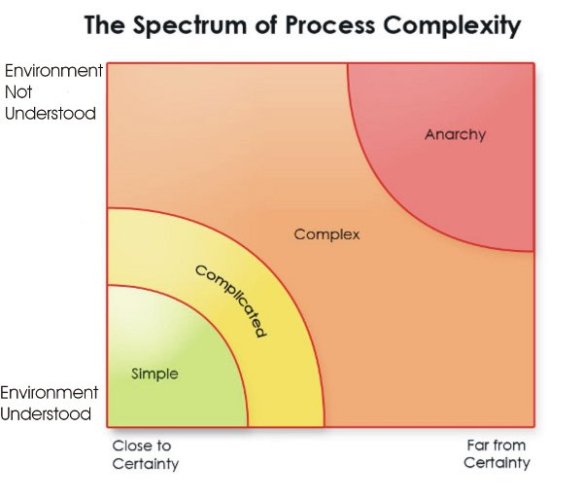
One approach I have found very useful when working through issues relating to the Contemporary Operating Environment (COE) by establishing a comparison with the more traditional and conventional environment that many of us are still more comfortable with or in.

If we were gearing up for yet another defence of the Fulda Gap at the operational level or even analysing intentions at the state on state level, such assessments are relatively simple and we still get them wrong with monotonous regularity, as Argentina found soon after taking Port Stanley in 1982, and Saddam found after reclaiming Kuwait in 1990. Characteristics of assessments at this level and in this environment might include:

  • Limited number and type of threats.
  • Gradual build-up and lead-in indicators.
  • Motivators/catalysts are usually understood strategies, policies and philosophies.
  • Most players are known values.
  • Big hands, big arrows, small maps.
  • Platform-based i.e focused on tracking ships, units, and formed groups; less focus on personality than major capability.
  • Unified organisations on both sides.
  • Geographic areas and boundaries are well defined.
  • The three organisational functions/groups derived from Clausewitz (people, leadership, action arm) are clearly defined and visible.

‘Simple’ as used in the paragraph above does not necessarily mean easy, just less complex in comparison to today’s environment.

Compare then this model against that faced in the HLS environment. The most obvious change is that we now need to track individuals a la the Scheiern model, not just those that we know might be players or even those who might be, but also those who might just have had a bad day, or just have had ‘enough’. The most recent example of this might be the shootings in Ft Hood and Seattle last year. Although some commentators immediately heralded the Ft Hood incident as the beginning of a domestic 4GW campaign, there has been no evidence to support such claims. Both incidents instead are illustrative of both the unpredictable and micro natures of the domestic environment.

HLS organisations are also not formed and formal organisations like the DoD, NATO, or even the Warsaw Pact. At best it is a bureaucratic umbrella sitting over a diverse collection of agencies all with their own priorities and outputs, and generally very tactically focused. Certainly there is not the same degree, not even a hint thereof, of the command and control arrangements to be found in a single agency in its own right or a large organisation like the DoD with defined roles and responsibilities

Mix in with this nature’s fickleness, for example, earthquakes in Haiti, bush fires in Australia and snow in the Washington DC area. Although the probablity of such incidents is a given, assessment of incidence and severity leans more to the arcane than the scientific: for now, Poughkeepsie Phil probably remains our best indicator for seasonal change.

To use a household analogy, you used to have three dogs and a couple of cats that normally got on with each other. The causes of discord were well-known and it wasn’t too much of a task to prevent major conflict. Then Great Aunt Anastasia dies and left you her ant farm and  ‘tame’ wasp hive; for various reasons, and as tempting as it is at times, investing in a couple of gallons of Raid is not a socially acceptable option. You’re stuck with it. You’re not impressed, the dogs and the cats aren’t impressed, and most likely the ants and wasps aren’t that thrilled either. Oh, and the boiler’s sprung a leak, taxes have just gone up, and old Mrs Grey next door has just lopped off her leg with a chainsaw. Welcome to the world of homeland security – please start your risk-based decision-making process HERE.

HLS as an entity will always find it difficult at best to conduct risk assessment as we and Third Shock Army (8th Guards for some folk) understand them from the Fulda Gap. But that is not to say that risk based assessment does not occur daily across the spectrum of homeland defence in law enforcement, emergency response, security and intelligence fields. I doubt that there are any agencies under the homeland security umbrella where the staff just sit back, bite into another donut, sip on their lattes and just wait around for something to happen. Just because it doesn’t happen in the comfortable macro format that many of us are used to, doesn’t mean that it doesn’t happen…it just happens at the micro level necessary for these agencies to fulfill their primary roles

At that’s the thing, most homeland security agencies have local or regional responsibilities and meeting these is their main priority. Unlike perhaps military organisations which generally devote a reasonably large proportion of time and resources to things that might happen, most HLS agencies are fully committed to meeting real-time outputs like catching bad guys, saving lives, fighting fires and rescuing kittens (think that last one isn’t important? – try telling that to old Mrs Smyth and still keep ‘the people’ on side). Most of them do this well.

Their world may be too complex for precise prediction but something else they also do well is respond. Within those contingencies that they know from past experience are most likely, these agencies can and do turn out and perform credibly thousands of time every day…and against these contingencies there is quite robust risk-based assessment and decision-making…why do police surge for New Years Eve activities, firejumpers have winter leave and paramedics specific tools and treatments over others? These people think, with some justification, that they are quite good at such decisions within their respective areas of expertise and responsibility.

Where they are weaker perhaps in in working and interfacing with each other beyond local relationships, especially where there may be issues of command and control or jurisdiction. HLS is never going to be the uber-C2 construct that DoD is – I think that FEMA perhaps tried this and we all saw how well that worked. Where HLS might begin to add real value is in championing the interoperability cause and facilitating communications, cultural awareness and information sharing between agencies.

An interesting insight from the 2004 Manawatu flooding (look it up – it made the top ten natural disaster list for the year) is that the civil defence plan went out the window only 30 seconds after the state of emergency was declared. BUT the value of the plan was in the planning; in bringing the various agencies together prior so that at least key staff had met, there was a general awareness of potential resources, and an awareness of issues from other perspectives. We saw the same again when the Mt Ruapehu lahar (finally) went in 2007. The event itself was almost anticlimatic because all the agencies involved (none of whom could agree on the probability or severity of the lahar happening) had been required to hammer out their difference and develop a collective response to the threat.

Where risk-based decisions really are difficult in HLS is on the terrorism side of the house. This won’t be news to Europeans, most of whom have endured domestic and/or third-party terrorist acts on their territory for decades. Terrorism itself is still subject to the same variables of complexity and uncertainty found across the HLS functional spectrum. What changes with terrorism is the false assumption that terrorist attacks can be prevented and the resulting pressure upon to HLS make this so. King Canute might offer some topical observations on this after his seashore experiments went wrong.

The Answer

The R = T x V x C equation for risk-based decision making is of little value so long the only acceptable answer is zero. Risk based decisions are made thousands of times every day in HLS – we’re just not interested in the answers. Perhaps the question that should have been asked is not Why is it so difficult to make risk-based decisions in homeland security? but When will we learn to accept risk in HLS?

What’s up with all this Birmoverse stuff?

Good question.

First up, is that John Birmingham has asked via Cheeseburger Gothic for thoughts on what a post-WW2 world might look like in the Axis of Time (AoT) universe, with especial interest in Great Britain. It is rare for an author to do this and I think that it provides JB an opportunity to add a real richness to his books in adopting this approach.

If you hadn’t figured it out already, I like his alt-history after buying World War 2.1 Weapons Of Choice while stuck in Changi Airport in 2005 on my way home from CLAW 1 – it was an act of desperation as it was the only book on the shelves that even remotely appealed. Over two years, I managed to seek and devour 2.2 and 2.3 and then was pleasantly surprised to find Without Warning in the Taupo  Whitcoulls mid-last year. I was less impressed to find on completing it that, it was Part One of another series – there was not a single clue on the cover to indicate this which really hacked me off. Normally I won’t buy a book in a series unless I know that the whole series is published AND available – a lesson learned from War Against the Chtorr and Janissaries.

In thinking about the questions posed and subsequent dialogue on Cheeseburger, I am finding that I am able to view our current environment through a slightly off-centre perspective. By considering those things that we might want to do in the AoT universe that we didn’t get right in the real world, it is possible to divine perhaps some relevance back this way. As an example, I proposed that, in dissolving the Empire, that Great Britain establish India as a strategically-influential region power from the beginning instead of letting it muddle its way there over the decades as has actually happened. My thought at the time, was that,by doing this, we might be able to head off much of the instability in the Pakistan/Afghan area for the AoT universe. Thinking about it later, this also ties in with my belief that we have the wrong force composition in Afghanistan and they what it really needs is for the regional powers, namely India and Iran (might as well accept it and stop the name-calling), to pick up the burden of maintaining regional stability. Some thoughts on greater Indian involvement here

It’s an example of one writer harnessing the horsepower of the Information Militia.

It’s fun thinking about what-if, whether at the geo-strategic or micro-tech cool toys level; even more fun when there is a possibility that some of those ideas might actually be taken up into the storyline for the next book or form the basis for perhaps some fan fiction in the AoT universe. Nothing wrong with a bit of fun…

In other news…

Airmen from the 105th Airlift Wing's Logistic Squadron load cargo aboard a C-17 bound for Haiti early Saturday morning. (Photo: Tech Sgt. Michael O'Halloran, 105th Airlift Wing)

It’s also been a bit slow in the real world this week. Yes, lots of angsting over Haiti in just about every blog site on the planet with some interesting points being raised:

  • Humanitarian issues aside, at what point do we decide that it is simply just not worth it to keep saving these failed ‘nations’ from themselves? Here’s a couple of interesting threads from the Coming Anarchy side of the house:  The Latest Battlefield of the Monroe Doctrine and A Bit Of Realism Please? Our constant reinforcement of Third World cargo cults comes at a price and, sooner or later, it is going to become untenable unless we start to address the root issues. Step 1 would be to rein all these meddling NGOs that address the symptoms but actually only foster more suffereing in the long run…
    • Have a plan and impose control.
    • Blindly sending in supplies, aid, etc is a waste of time if the resources don’t exist ont he other end to do anything with them. Ditto for all the well-meaning dogooders who just want to arrive in Port-au-Prince to ‘help’.
    • If you are a ‘once-were’ nation, like the UK and France, then get with the programme and be thankful that someone is getting out there and filling the vacuum (and fixing the messes) left when you dumped your colonies. If you don’t like the new rules, then YOU rock up with the necessary capabilities and force structures to do the business. Here’s a subjective but interesting item on what a real power can bring to the party Do Americans Care About British Soldiers?
  • It’s funny how the US gets caned for even thinking about interfering in these rock show wannabe countries but then gets caned when something like this happens for allowing the country in question to decline to such a state in the first place. Same thing happened in Myanmar – why won’t the US make the government open up to accept aid? You really have to wonder sometimes why the US doesn’t just pack it all up and go home…?

The current operation in Haiti is a classic example of humanitarian assistance, disaster relief, stability operations and countering irregular activities – the earthquake could not be predicted and it is unrealistic to expect Haiti to construct quake-proofed buildings, so many of the current problems are unavoidable. However it will be interesting to see what follow-on activities are conducted to maintain stability in Haiti and address the core problems within the country.

Travels with Shiloh is running a series on the implications of MAJGEN Flynn’s paper on what’s wrong with intel – of course the shorter option to write might have been ‘what’s right with the intel world’ – while I don’t agree with all the points made, I think it is important that someone is raising them to get the discussion going…

The Information Militia

I’m coming to the conclusion that Michael Yon is a well-meaning but meddling journo who probably does need to slow down and consider his place in the universe. I like his website and think it is some great material – please check it out – as photojourno, he is very good and sends some very strong and often poignant messages. His Facebook page on the other hand is an example of the down side of the Information Militia – he is a guy who has, just this week, publicly bypassed the US military chain of command by inciting his fans to pressure CENTCOM and the Pentagon to release a Haitian-born officer in the US Army, current posted to Afghanistan, for duties in Haiti. Yes, sure, members of this officer’s family have died so there IS a compassionate case to be made and his cultural and language skills would definitely be employable BUT…BUT…do you not think that perhaps the DoD has its own processes to this to occur and that there might also be broader implications in releasing him from his current theatre? Michael Yon also posted an item critical of Starbucks and its relationships with the US military which was subsequently proven to be both incorrect and old news as covered in this story from 2004 – as HoaxSlayer points out, even when a retraction is released, it never gets the same degree of airtime as the original accusation.

Building the Birmoverse Deux

VJ-101 VTOL fighter in transitional flight (NB: transition with a small 't', thank you)

Some spillover from yesterday’s thread…

  • While SSTs and ballistic transports will make getting around that planet that much faster especially time spent in the worrisome skies over Europe and the UK, the airship will also make a come back. This will largely be in response to the increasing dangers of the sea lanes and will also reduce the need for massive harbours and maritime points of entry as airships will be able to deliver relatively large and bulky loads direct to the target location. Customs and Immigration will, of course, be tearing their hair…
  • What will happen with the Irish problem? With the Sovs posturing over half of Europe, like, more than the half they had the first time round, it is unlikely the Brits will have much tolerance for any bolshie Paddys. In any case, Ireland is too isolated for any meaningful insurgency to be conducted and it is likely that Eire would become part of Fortress Britain whether it really liked it or not. One impact this might have is that the Brits will no longer have the catalysts to develop their mastery of comprehensive approach Countering Irregular Activity and COIN. Then again, they have always played pretty fast and loose with the rules when playing the great game and managed to deal with most of Adolf’s spies and saboteurs in short order without much help from anyone. Perhaps, in revealing ahead of time, those like Philby and Co, the Brit public service will be purged and thus be similarly successful against Uncle Joe’s spies and saboteurs – which really makes the Irish question a non-issue.
  • I would like to see France used as a nuclear testing zone by everyone and for this to be encouraged.
  • In terms of nitty-gritty, technotoys I would like to see in service: after the TSR.2, the Rotodyne tops the list…let’s use them as feeders out to the floating airship terminals…
  • The quest for effective VTOL aircraft will continue with some urgency and aircraft like the VJ-101, P.1152, P. 1154 and XFV-12A will come into service as close range protection for naval platforms, including civilian vessels to fend off pirates and privateers (QE2 will have a hangar deck for two); and also because the much warmer Cold War (Cold War++) will again call into question the security of large concrete airbases.
  • At least one permanent space station will be developed in the 60s both to control the high ground and as an eventual stepping stone to the Moon and further. As I commented yesterday, all the biochemicals being sprayed with gay abandon around the planet in 1945 mean that we might want to be thinking of an Earth 2 – and we know now that wormholes are doable…
  • Also I do like the concept of Project Horizon that was raised yesterday in a comment by savO – not just because it aligns with my statements re a moonbase but because it has a high cool factor and introduces the potential for combat on the Moon.
  • Referring back to yesterday’s pic of the Vulcan in the Sound – I think that pic is actually in Milford Sound – I’m wondering if JB could slip in some sort of Vulcan low-level strike, basically what I’m after is 633 Squadron with Vulcans…
  • I’m also wondering if 21C technologies might not be focussed on alternate and clean (though why bother with all the NBC being used?) power sources so that the Middle East never gets the strangehold at the pumps that it enjoys now.
  • Israel, instead of stirring up the Arabs, and having decided to work and play nicely with them, conducts a very aggressive covert campaign against the Sovs to encourage the expatriation of Soviet Jews to Israel – alive. This becomes one of the major wild cards in the AoT post-war deck.
  • Is there a Marshall Plan? Yes, but focussed on the Middle East and North Africa as the new bastions against Soviet aggression. The Fertile Crescent become fertile again. Central Africa remains a shithole and pretty well plays out the same history as it has here.
  • With economies kickstarted by the Marshall Plan, a combination of Arab money and Israeli know-how widens the Suez Canal into a two lane facility. In 1956, Sov proxies from Greece and Turkey (yes, I know they hate each other but if we can have wormholes, we can have Greeks and Turks who get on) get a snotting when they try to seize the Canal to protect it as an ‘international asset’.
  • The Falklands War never gets a look in. By 1955, The Falklands Island have become the unsinkable fleet that holds Argentine and Chilean ambitions towards Antarctica in check – the Brits however do take the time to return all abandoned scrap metal to Argentina, just in case…
  • I don’t think McCarthyism will occur – what happened to Hoover pretty well sets the scene for what will happen to anyone else who gets out of control and surely amongst the Uptimer 21C lessons must be one relating to the folly of over-simplistic profiling; communist leaning ≠ Sov supporter or agent just like Islamic ≠ rabid nutjob terrorist…what there may be though because the Uptimer histories will have shown its effect, is the introduction of terror as a weapon a la what we see today.  Who might those terrorists be? Well, the both sides of the civil rights movement leaps out for a start; perhaps also some sort of movement kicking back against the Uptimers; the list so far is quite short as most of those who might feel that they were disadvantages in some way by the AoT version of WW2 are conveniently dead – I’m really leaning towards domestic than ‘transnational’ or external terrorists…
  • Maybe it is such as attack that thrusts Kohlhammer into the Presidency – he doesn’t need to be elected so long as he sits in the chain of succession as per Coppel’s 34 East or By Dawn’s Early Light (both stories where the chain of succession extends lower than the Vice-President)- maybe terrorists gatecrash a White House dinner party (we all know how easy that is now!) and Kohlhammer finds himself at the top of the food chain.
  • We’ve solved most of the worlds ills except for the Sovbloc – likely to be solved with a bright flash or flashes on the horizon – and South America – i think that South America may be where the global plot gets its tail twisted – there is little significant history on the continent so less in the way of 21C lessons to be applied in the AoT post-war era therefore we really have to take South America as it comes…
  • Will we move towards a standing force in support of the (toothless in our time) UN and will this perhaps be a relatively short leap towards a world government, certainly a good guy alliance government?
  • I think that we will see, in short order, a number of new inventions as smart people from the 1940s start to apply their new knowledge. RULE #1 – no wormhole experiments on Earth!! These new inventions will introduce some new life into the Uptimer story as well as more uncertainty as the timeline starts to deviate from what’s left of ‘our’ timeline as as technological edges start to smooth out.
  • I’d like to see the rather conventional Sovbloc versus US/UK plotline resolved and tossed out in short order and bring in a new story that takes us out of that comfort zone – what, I’m not sure. Maybe the Israel/Arab bloc might leap ahead in the application of Uptimer tech to new problems, make a breakthrough and become (again) a super-power…? Push the Uptimers into a situation where they really have to think rather than just succumb to the temptation to rehash Hackett’s The Third World War. What-if…the Judeo-Islamic Federation begins to dictate its values as the norm for global ethos and culture, just as we in the west tend to do to the Third World…?

Building the Birmoverse

Great thread over on Cheeseburger Gothic soliciting thoughts on what the world will look like after the war in the Axis of Time Birmoverse….even if I am a bit of a late starter…this is a great series, so a. have a think about tracking down the first trilogy and having a read and b. contributing some thoughts. I’m tossing my thoughts in here as I find it easier to add in links etc to sources…

  • The UK will revert back to a Battle of Britain frontline mentality i.e. a far higher rate of readiness than during the Cold War and a non-war that will be far hotter than the Cold War i.e. intercepts and shoot-downs, possibly much like the 67-73 War of Attrition in the Middle East.
  • The Sovs are much more likely to learn from our history or what’s left of it and plan on making their move for the rest of Europe early and there will be a lot more skirmishes, border incidents etc, again more like the Arab-Israel relationship in ‘our’ time.
  • Britain will give up the Empire but under far more controlled conditions: Singapore will be created immediately based upon the ethnic Chinese, ditto for Malaysia with the native Malays; India will become independent without much help from Mr Ghandi (so the movie will be much different too and possibly no longer Oscar material) and from the start be set up as a strong ally in the region a la AS and NZ in the Pacific; issues with tribes (i.e. we will get into advanced Gantism early) and borders will be sorted at the same time possibly along the same lines as the UAE  as per this item on Coming Anarchy. On similar lines, the handover from empire in the Gulf will be far more structured and only once a civil infrastructure a la India is well-embedded.
  • AS and NZ will be developed as regional allies to much the same level as Canada in terms of militaries, especially air and maritime forces, and NZ’s main focus will be patrolling/protecting the seaways and resources of the southern sea lanes and Antarctica before Argentina and Chile make a grab for them. I for one would like to see more RNZAF Vulcans (no, not the point eared type)
  • The convoy system will remain in vogue and the intensified Cold War will make the sea lanes operational environments to pressure the UK and other free world nations like AS and NZ that are dependent on shipping for trade and goods. Submarines may replace the nutcase terrorists like Baader-Meinhof etc. As mentioned in The Strategist today, there may well be an increase in private maritime forces to exploit this on both security and piracy/privateer sides of the house.
  • Just for shits and giggles and because I think he got a raw deal, MacArthur will be allowed to nuke the Yellow River if anyone looks even remotely sideways at crossing it.
  • Someone already mentioned the internet but via cable – Voice of America/Free Europe will beam out not just radio but information and TV streams into occupied Europe – two info war models spring to mind: one is Tom Clancy’s campaign against China in The Bear and the Dragon, and the other the UK Political Warfare Executive initiatives like Gustav Seigfied Eins, with more info on Wikipedia and an interesting paper here on Grey and Black Propaganda Against Nazi Germany. I remembering reading about this when I was about ten in a Reader’s Digest Condensed book, titled something like The House in Baker Street (Baker St being pretty much owned by the SOE during WW2)- I haven’t been able to find any references to this title via Google or Bing – I’d be much appreciated if anyone could put me on to either the full or abridged version as I’d love to reread it – the original have gone up in smoke many moons ago.
  • On the same lines, I think that we will see personal computing power (PCP) ramp up into the early fifties as the technology is made accessible through the uptimers – what we saw in the 90s will probably happen in the Birmoverse in the 50s. This will be both a byproduct and a deliberate policy to use information as a weapon both against the Soviets and also to mitigate the vulnerability of ignorance that enables the exploitation of people into proxy terrorists and fighters e.g. take the info war to the mullahs in the 50s – this approach will also be a major factor in decolonialisation.
  • The whole Vietnam thing will be headed off at the pass when the French get arbitrarily booted out of Indochina (with lots of parties and champagne and bugger-all tears from the locals), a US-based Constitution is adopted and President Ho Chi Minh leads Vietnam into an era of prosperity and progress (much like Lee Qwan Yew in Singapore) while becoming the region’s major foundation for stability against Chinese expansionism.
  • Ed Hillary still knocks the bugger off in 1953…and Queen Elisabeth II is crowned at the same time – but takes considerable steps to ensure that her children get better relationship counselling before being allowed to breed. The Queen Mother still lives on to 103 years old. Sir Ed sees that Nepal and Tibet become peaceful sanctuaries for eco-tourism while the UK realises the error of its ways and makes sure the Ghurkas get a fair shake decades earlier than in this timeline.
  • Winston Churchill doesn’t get booted out of office in 1945 by an ungrateful nation and remains Prime Minister until the late 50s when he hands over to someone way smarter than those who actually did the job between him and Maggie Thatcher.
  • JFK drops his (and his dad’s) political aspirations and gets into Hollywood, marries Grace Kelly and both go on to become Hollywood’s ‘royal’ family.
  • A peacekeeping force deploys into Palestine on the eve of the creation of the state of Israel in May 48 (Exodus never happens as the Brits are dicks about it this time around) – over the next 2-3 decades it oversees the successful blending of cultures and healing of wounds. Israel become a major technology centre ( a la Singapore), never needs to develop a major military capability (or submit its economy to one) – by 1980 the relationship of Jew and Muslim returns to the symbiotic one of a previous millenia.
  • The space race still occurs but a decade earlier with a man on the moon (one of the Mercury 7?) in 1959 – the Russians still can’t get it together in space without massive attrition in astronauts and hardware. Bombs in space are a reality a la Jeff Sutton‘s Bombs in Orbit Ace Publishing D-377 1959. Permanent bases are established on the moon by 1970 and the first landings on Mars happen by 1980. The UK is not a player in the space race other than to provide high calibre pilots due to its ongoing combat ops in the non-war with the Sovs.
  • Many British children and families are evacuated to the Dominions for education as Britain becomes a literal floating FOB against the Sovs. This is made more palatable by the SST network established by the late 50s (it took time to ramp up mass production of the high-tech metals necessary for mass supersonic flight) that reduces global travel times and also mitigates the maritime threats against shipping. Stratospheric ballistic travel become a reality in the 60s. Essentially the UK is someplace you work but you go on holiday anywhere else.
  • Due to its ongoing war footing, the mass immigration from the colonies never occurs and Britain remains essentially British – the Beatles and the Rolling Stones still kick off on schedule.
  • The B-49 is adopted by the RAF as the Vandal (sorry but I’m not giving this one up!) as its stealthy profile, along with the Vulcan and Victor, enables its to better operate in the air defence environments over Europe and the North Sea – the B-52 is too slab-sided and suffers too many losses. The TSR.2 also comes into service in the mid-50s as the F-111 concept is tossed out as the joke it always was + there will be no McNamaraism to foster its design anyway. McNamara himself goes on to become the head of the Tucker Motor Corporation.
  • Despite the early release of public CG software in the 50s, Gerry Anderson still starts out with SuperMarionation and Thunderbirds remains a mega-hit with children of all ages.
  • South Africa and Rhodesia remain members of the Commonwealth and over a period of decades transition from apartheid-based societies to successful blended cultures a la Singapore. Both nations form the bulwark of westernism against the Sovs in Southern Africa and win numerous wars against Sov-supported forces from Mozambique, Angola and Zambia a la Barrett Tillman’s The Sixth Battle and Larry Bond’s Vortex.  Nelson Mandela still becomes President but in the late 80s.
  • Britannia continues to rule the waves – the RN retains its full deck carriers and also expands the battleship fleet with more Vanguard class vessels – it remains the premier maritime force for littoral operations (a la lessons from the Med pre-Transition), whereas the US Navy rules in blue water ops.
  • The Sovs will be wise to the concept of containment but I still don’t think that they will be bright enough to do much about it as they have this habit of killing off all their best and brightest – while the steel-shod boot of terror may maintain its hold on Europe eventually this will weaken. Trite as it sounds I think that repressing its intellectual capabiltities will be sound the same eventual death knell for the Sovs in the Birmoverse as it did here in 1989.
  • Women will be empowered way earlier without having to ignite their undies (which we now know can get you locked up in Gitmo #2) – this will be one of the most significant long-term effects of the Transition, even more than the technological advances, and will spread like wild fire through all cultures. This notwithstanding, prominent bumpy bits on aircraft will still be known as ‘Sabrinas‘. Sometime in the fifties, either the British Prime Minister or the President should be a women – without wanting too many uptimers running the place, maybe Karen Halabi takes over from Churchill either by election or succession – this benign dictatorship thing seems to work quite well…and would a nation at war like Britain still is, really want to risk an election that might bring in the likes of MacMillan?
  • The All Blacks still only win the one Rugby World Cup but manage to hold the America’s Cup for three decades running as a bonus prize.

Doing the Business


Neptunus Lex has a great link today to a story covering the work of pararescue crews in Afghanistan – take the time to read it and perhaps just reflect for a moment on the work that these people do…That Others May Live is their motto…one really does wonder what greater protection a Red Cross offers over a minigun when operating against an adversary that has made it crystal-clear that it does not and will not respect those laws and rules by which most of the rest of the planet lives…the journalist author has a Facebook page that I think will be worth following while he is in-theatre.

Also on Lex is an item entitled Overload on the growing mass of video data from UAV operations, currently at about 23 YEARS worth of continuous viewing and growing by the minute – the follow-on discussion on how to deal with this from an analysis point of view is worth thinking about. I, for one, am not a proponent of the belief that all analysis must be done by trained analysts especially those in a centralised reachback system because a. it takes too long and b. they are too removed from the situation on the ground. I once heard an experienced and well-thought-of operator get lambasted by the intel weenies at a conference when he said that all he wanted was to be able to review past and current imagery of a route himself before he conducted a patrol. Apparently HE didn’t understand what it was all about and why all imagery analysis had to be undertaken by specialists before the product got to him (in a few days).

Try him or just shoot him?

On Coming Anarchy, discussion rages over the fate of the Undie Bomber. Should he be treated by a criminal and tried according to due process, or simply squeezed dry of any information he may or may not have and discarded? From a domestic point of view, is there any difference between a criminal and a terrorist? The Brits would say no, and I guess that we would as well based on our experience with French terrorists in the mid-80s – eight years after 911, the US still doesn’t seem able to make up its mind.

On Influence

Still working on some comment re the Mackay/Tatham paper – my problem is not the paper per se but that I keep getting more and more information support the shift of emphasis from kinetics to Influence. I am able to say that I don’t think that Gian Gentile has ‘got it’ in his rebuttal to  Behavioural Conflict – From General to Strategic Corporal: Complexity, Adaptation and Influence when he says “War is about killing and destruction, it is not armed social science“. In fact, reading his comments yet again, I wonder if COL Gentile actually read the UK paper any further than the cover page? Perhaps it is fitting that he is currently teaching history at West Point because he seems somewhat stuck in the past, maybe has a nice little (sandbagged) cottage near the Fulda Gap, and appears blissfully unaware that the world has moved on from the kinetics of the Cold War – perhaps he lives in a far happy place than that which the rest of us are stuck with. The world we are in now requires decision-making and other responsibilities to be devolved far lower down the hierarchical food chain than every before in a further evolution of the strategic corporal and conversely an exponential increase in the level of detailed awareness at the other end of the chain, in the development of tactical general. The US Army’s own future capstone document (note to self – this still links to the draft – must chase down later to release version) identifies this as the key enabler for developing and maintaining credible and relevant land capabilities out to 2028.

To implement this fundamental shift, US TRADOC released the new version of FM 7-15 Army Universal Task List. It did so because there was a clearly identified need for change: not so much change in what armies do but a change in the emphasis of what they do. This change was reinforced in the new FM 7-0 Training for Full Spectrum Operations and the updating of the Soldier Manuals of Common Tasks (levels 1-5). I understand that the new version of FM 7-1 Battle Focussed Training is due out soon as well to further reinforce this doctrine.

Last Call for 2009

Well, this is probably it for the year – we’re off on holiday from this weekend and aren’t planning on resuming normal services until the first week of 2010 although, if I get time, I may schedule some tuning signal posts over the close down period…

The misuse of the term ‘COIN’ for the environment we face today has always annoyed and as most will know my preferences are for the more accurate Countering Irregular Threats or, even better, Countering Irregular Activity. There is a great thread developing on Small Wars Journal on The Myth of Hearts and Minds [PDF: The Myth of Hearts and Minds – Comments – Small Wars JournalThe Myth of Hearts and Minds – Small Wars Journal] – I’ve already said my little bit and encourage you all to as well…I think this is important as the proponderant focus on COIN in the last four to five years has been a significant doctrinal red herring.

Both Coming Anarchy and Lex Neptunus offer comment on a recent Wall Street Journal piece on the alleged ability of insurgents to hack the feeds from US UAVs (drones are something totally different)…while it is simply so totally unamazing that the bad guys might target a weakness in the US comms hierarchy (you could build a whole doctrine around targeting weakness and call it ‘asymmetry’ – oh, yeah, they did that already…), this is not hacking: it sounds more like it is not much more than tuning into your neighbour’s unsecured wifi connection – more his problem that yours if he is too dumb/lazy/cheap to do the job properly…the Russians must be so upset that this $25 software, developed for legitimate and peaceful use, is being abused in this way…

On The Strategist, there is a note on the Brits punting up the success of their next big push in Afghanistan – before it happens – it’s either a cunning (of weasel proportions) information operations campaign – or just another sign of how much they just DON’T get it anymore and are still hankering for the halcyon days of the British Army on the Rhine where it was all so much simpler, lots of small maps, big arrows and bigger hands…I’m also not sure if you can have “…classic behind the lines fighting…” on the non-contiguous battlefield…?

And, finally, some food for thought from a Blunty of a few months ago: Are we better than them?