Heigh-ho, Silver…and away…!

Just in case no-one noticed, the Lone Ranger is a myth, a legend, something not real and if he had existed, someone would more than likely have put some .44 calibre lead in his back one night…the moral of the story is that if you believe your own press and keep interfering in other folks business, you are only buying into grief, and lots of it. Yes, folks, that right and just as right or even righter, even if you are (or think you are) sitting up on the moral high ground…and the bigger you are, the more this applies… This might be because the bigger you are, the more powerful you think you are and with that comes the perception of license…

Well, here’s a fact…no one has a license to boldly interfere in the internal workings of another nation – a resolution from the defunct and impotent UN is no more a license than a letter from Osama Bin Laden authorising the world to go to war against the West…As much as we might not like the current leader of Libya, there is no evidence that the socalled Libyan rebels have anything to offer that will make Libya one iota a better place to live or to deal with than it is today. Just like Saddam Hussein, just because we don’t like someone and even if they are real bad bastards, this does not mean that they do not actually offer benefits in international affairs, especially in maintaining regional stability.

In intervening interfering in Libya, the West is acting like the world policeman that it is not; in interfering in Libya but not in Syria where protestors are being subject to 7.62mm ball riot control, the west shows itself to be not much more than the same bully it accuses Ghaddafi of being. More so, in wibbling (yes, it is a word – see Blackadder’s Guide to Trench Cooking and Tactical Lexicon) until the US agreed to support the interference, the European nations showed themselves to be impotent and cowardly – Libya is not such a conventional threat that France or the UK (on the days that its remaining jet is flying) could not easily cope with. The Libyan forces are even less a threat to Western forces when the object of the interference is enforcement of a no fly zone and not actual ground lodgement and intervention – of course, having seen all the footage of destroyed Libyan armour, one wonders just exactly what technologies the Libyans employ to get them into the air…maybe we should be a little worried…?

Our moral justification for interfering Libya was further undermined when the Arab nations that so vocally supported it (one wonders why all THEIR high tech toys were as incapable of dealing with a regional issue as those of the European nations) turned on NATO in much the same way that Tonto rediscovered his roots…

“Those Indians look pretty dangerous, Tonto, we could be in trouble” “What mean ‘we’, white man?”

We can’t remember what we’re doing in Afghanistan any more – the making the world safe for democracy line is pretty worn these days – and we have no good reason for being in Libya…the air power option is nice and clean and simple: it reinforces the myths of DESERT STORM that air power cleans up messes with minimal cost or loss…how soon we forget the lessons of Iraq…shock and awe versus blood and treasure or is it shock and awe = blood and treasure…??

Facebook and Twitter strike a blow for democracy…

Egyptians celebrate on the streets after Vice President Omar Suleiman announced that President Hosni Mubarak has stepped down from his position

…a title that’s about as catchy as Jay and Silent Bob Do The World…and with about the same level of connection with the real world…Facebook and Twitter did NOT overthrow the President of Egypt, nor were they much more than enablers for communication (until the Egyptian government turned the internet lights out anyway). A population taking to the streets to demand the removal/resignation of a leader is not that common but it’s also not THAT unusual…Anyone who thinks that the ‘power’ of social networks created an unstoppable critical mass is living in LaLaLand (L3) – that the demonstrations continued after the net was switched off is a good combat indicator here.

If the conditions are right and there are some suitably skilled organisers/agitators available, then mass demonstrations are pretty easy to orchestrate…there are plenty of examples of this across history even prior to the invention of the interweb…to focus too much on social networking software is to distract oneself from the more important topics of the networks themselves AND who is manipulating them.

That a Google executive was involved in this right from the start is indicative of some form of leadership, planning and organisation and NOT of the spontaneous mass uprising that many in the media would have us believe this transfer of leadership relied on. I can’t not say transfer of power because it is simply too early to determine where the real power will lie…I also wonder how many remember how Hosni Mubarak came to power and that his strong consistent hand has probably saved Eqypt from the Moslem Brotherhood of Really Bad People Out For Some Headlines and World Peace (or some such group)…noting that and the lack of any sort of succession plan, I wonder how Google defends its ‘Do No Harm’ motto if Egypt continues to unravel (think it’s run it’s course)?

Much as I’d like see see the recent event in Tunisia and Egypt as a triumph for the information militia, I just can’t see any proof that it was…the upside of the information militia for the most part remains collaborative discussion on the like of Small Wars Journal whose discussion board and blog continue to make my brain run marathons; the downside is the like of Michael Yon who continues to just not get it.

Yes, I am miffed (but not that surprised) that he can blatantly claim that he has only ever blocked/banned 14 people from his Facebook page when the number is well above that; and doubly miffed that my name doesn’t appear on the list of those blocked – I learned today that one should only consider oneself banned if one also ‘unlikes’ Mike on FB as well – preschool hairsplitting at its best. I’m not losing sleep over Mike’s antics – following his FB page is like watching a good soap: you keep watching just to see what inanity happens next – but it annoys me that his antics drag others in the information militia down with him…what force would ever want an embed (from anywhere) are reading Mike’s slurs on GEN McCrystal and BGEN Menard last year? Or after considering the damage he has done to the coalition by constantly attacking key members of coalition forces – who needs the Taliban when Mike’s on your side?\

The Yon saga has been laid out in three interesting threads here:

Overview of the Michael Yon Saga PDFs: [Overview of the Michael Yon Saga – CommentsOverview of the Michael Yon Saga – Perspectives]

Banned by Yon! [PDF: Banned by Yon – Perspectives ]

Michael Yon Needs Money

I think the guy just needs some perspective in his diet and needs to get over being a 19 year old E-5 and look to what he is really good at (besides pissing people off and mudslinging) and get back to telling the human side of conflicts like Iraq and Afghanistan, and also offer an alternative perspective to events like Thailand’s recent Red Shirt troubles – when he was there: reporting from afar on Egypt does really cut the mustard…

On the topic of internet shutdowns, Wired has an interesting but pretty light article (PDF: US Has Secret Tools to Force Internet on Dictators _ WIRED) on the US’ apparent ability to turn it back on if it so desired – this concept is not really cutting edge. Yes, the delivery mechanisms will have a certain geeky appeal but the concept has its roots in the Voice of America broadcasts over the Iron Curtain and the Allied broadcasts into occupied Europe (you remember, Europe, the last time that everyone else had to come save you) during WW2. In Tom Clancy’s The Bear and The Dragon, Beijing after the US unleashed free (in every sense of the word) braodcasts into Chinese TV and radio systems, spurring a (you guessed it) population uprising.

And there we are back where we started…the good old spontaneous uprising…when it all gets post-mortemed, I am fairly confident that the dead Germans will have played a strong hand in all of it…that is, that the popular interpretation of Clauswitz’ trinity will bear out: there will have been a leadership group, an action arm and, coming a very slow third (like always), ‘the people’, the poor old bloody people…Small Wars Journal has on its blog, a very robust discussion entitled A Populace-Centric Foreign Policy which talks about the role of ‘the people’ and how best to engage them…it was quite satisfying for a while (won’t last) to see some other contributors following my practice of parenthesising ‘the people’ as an indication that the word represent influence and  power that doesn’t really exist…

[RDFs: A Populace-Centric Foreign Policy _ Small Wars Journal; A Populace-Centric Foreign Policy _ Comments 2; A Populace-Centric Foreign Policy _ Comments 1]

PS…when I post links to online discussions, it is with the faint hope that one or two readers might be bold enough to contribute their own thoughts to those discussions…Small Wars especially has not pretty impressive street cred in its active community (yeah, I know, they list Mike Yon as a author but no one’s perfect)…I recently read through some of the 65-odd pages of the ‘Introduce Yourself‘ thread and was humbled to see in whose presence I virtually walk…

Fill your hand, you sunnovabitch!!!

johnwaynetruegrit

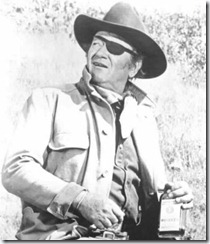
The Jeff Bridges’ version of True Grit opens here tomorrow…coincidentally, I only watched the original John Wayne version from 1969 on the weekend and commented to Carmen the other night that so much of the lines in the trailers for the remake were word-for-word from the original, I wondered if there was going to be much different about the new version other than Rooster gets to wear his patch on the other eye this time round…

So, imagine my surprise to read in today’s DomPost that “…where Wayne played Cogburn as a one-dimensional veteran gunslinger, the original Rooster of the novel (brilliantly rendered by Jeff Bridges in the Coen’s version) is drunken, half-blind, smelly and deeply flawed…” Furthermore, this amazing bad and inaccurate review, in this nation’s second largest daily, isn’t even by a Kiwi – it’s some loser called Ben Macintyre who writes for something called The Times…my recollection of John Wayne’s performance, only days old, is exactly of “…drunken, half-blind, smelly and deeply flawed…”

Dean’s comments yesterday notwithstanding – and they do apply more to general soldiery than to the specifics of those in sensitive roles – I really worry if that bumper sticker actually has a broader application beyond the intel community into the general information community. I’m reading Dean Koontz’ Cold Fire this week and parts of that also struck a similar chord with me as the reporter lead in the story laments to demise of good old fashioned ‘honest’ reporting in favour of what sells – and that was written in 1991…

I’m on base for the next couple of days and was able to catch the big TV in the bar free tonight and take it over to keep up with Coro – waiting to see how, not when, Molly and Kev’s little affair gets blown – but was reading today’s paper in the ad breaks. Maybe it was just a slow news day but I was disappointed at how superficial many of the items were…we don’t get  a paper delivered at home and, really, why would we bother if all it’s going to be good for is starting the fire and wrapping the frozens when we go away…

I find now that I get greater stimulus from the non-professionals on the internet; in fact, I would have to say that Michael Yon’s Facebook page, when he isn’t whining about milkooks, or general officers who have (apparently) slighted him, offers a very good range of cues; as do the Facebook pages for the USN’s Information Dominance Corp and Marine Corps Gazette; Small Wars Journal and Travels with Shiloh…

I wonder whether the maturity of the information age also means the demise of the true professional reporter in favour of info-marketeers who tailor their stories to specific markets (as opposed to audiences), and the rise of the information militia as the new voice of the ‘news’…?

I did find a couple of interesting titbits in the Dompost:

  • The capital of Afghanistan,Kabul, was rocketed by rebels – in 1993. It’s quite strange to think of a time where it was necessary to state that Kabul was the capital of Afghanistan.
  • And also on this day in 1944, NZ pilot Irving Smith led Mosquito bombers in a pinpoint raid on Amiens prison to save condemned prisoners. If nothing else, a timely reminder that airpower is more than just running a flying bus service and providing direct support to the troops on the ground.
  • In 1848, Mexico ends a US invasion by ceding Texas, New Mexico and California to the US. If Mexico does get a handle on the cartel wars soon, I wonder what they have to trade-off against the next US invasion..?
  • In 1979, Ayatollah Ruhollah Khoumeini becomes the de facto leader of Iran and the place has gone steadily downhill since. While Europe and the US get all antsy about Iran’s nuclear programme (but not Pakistan’s), the biggest risk offered by Iran to regional instability comes from its increasingly dissatisfied youth. The best thing that the US and NATO could do is invite Iran into Afghanistan, get it committed (entangled) by both its own rhetoric and the tarbaby mess that is Afghanistan; and then step back and watch it all unravel…Iran, that is – Afghanistan does need anyone’s help top unravel…just install an unpopular (in every sense of the word) leader and retire to a safe distance….

Well done, that man!!

Strangely, I picked this up from Michael Yon and not the local media

(Photo by U.S. Navy Chief Petty Officer Joshua Treadwell)

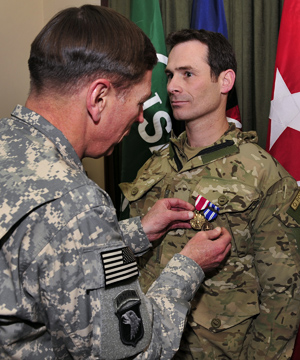
Gen. David H. Petraeus, commander of the International Security Assistance Force (ISAF), awarded the Meritorious Service Medal to New Zealand Army Lt. Col. Chris J. Parsons, during a ceremony in Kabul, Afghanistan, Jan. 13.  NZ Ambassador to Afghanistan Neville Reilly attended the ceremony.  The Meritorious Service Medal is the highest US decoration that can be awarded to an officer who is not a general for exceptional contribution to the ISAF mission. Under Parsons’ command, NZ Army 1st SAS significantly hindered the insurgents’€™ ability to reconstitute and conduct actions against Coalition Forces, resulting in increased security for the people of Afghanistan.   Parsons returns to New Zealand after a four month tour in Afghanistan.

The head of the New Zealand SAS in Afghanistan has been recognised by the United States with its top honour for foreign officers.

Lieutenant Colonel Chris Parsons was presented with the Defense Meritorious Service Medal last week in Kabul.

New Zealand Defence Minister Wayne Mapp says it’s testament to Lieutenant Colonel Parsons’ leadership and also recognition of the work the entire SAS unit is doing in the Afghan capital.

Dr Mapp says each time he meets top American servicepeople they remark on the professionalism of the SAS unit.

He says the award is given for exceptional leadership over a sustained period of time.

Dr Mapp says it is the third time during his tenure as Defence Minister that the medal has been awarded to a New Zealander.

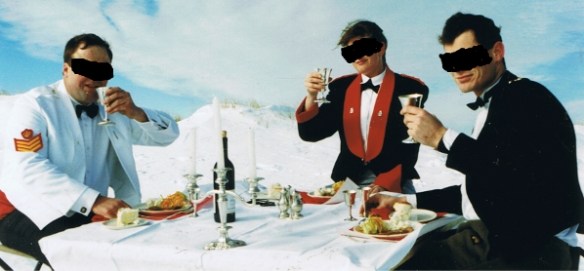
It’s good to see a Kiwi recognised at any time but even better when it’s a mate from wayback…I first met Chris  in 1995 when I was commissioned over the space of a weekend and inflicted on Headquarters Support Command and the Trentham Officers Mess…it wasn’t long before he’d led a group of us through a blizzard to the top of the snow-clad mountain for a formal dinner…because we could…

…and because the sun was so bright, everyone wore their special sunglasses…

Leadership has always been one of Chris’ (many) strong suites and I count myself very fortunate not only to know him as a friend but to have worked for and with him in a number of other appointments…

Well done, mate…

Edit: updated with image of award ceremony and Stuff caption…

Staying focused in Afghanistan

A couple of months ago, in The Information (R)evolution, I made comment on an article in the Sept 10 C4ISR Journal, Shifting Terrain (After the C4ISR JOurnal site was taken down the only record of the original article I have is my original scribbled on one). On later reflection, I thought that it might be more constructive to offer a counterpoint to this article in the Journal as a means of furthering discussion and awareness of the nature of the contemporary operating environment. C4ISR Journal was happy to pick up my commentary and have just published it in the November 2010 issue…so, with no further ado, may I present for your professional information and review…Staying focused in Afghanistan

The version published is actually the penultimate version but technology conspired against us while I was on the road last month and neither myself nor Ben Iannotta, the C4ISR editor, were able to close off the last few loose threads before the closure of the publishing deadline. I have a copy of the final version and will upload it here in a couple of weeks so as not to steal any fire from the Journal’s current issue…

I haven’t had a chance to read through the other articles yet except for NATO integrates ISR at all levels which I think is still a largely aspirational goal but at least someone senior is forcing the debate. While the lowest common denominator approach may have been successfully employed in peacekeeping operations in the 90s, where possibly the driving force within the operation is the number of national flags waving at the table, it remains patently unsound for operations to the right of peacekeeping on the spectrum of conflict. More complex campaigns require entry bars to be set across a range of key enablers that might include language, doctrine, technical interoperability in communications, C2 and information systems, and levels of training in selected key skills…


Today’s COIN Center VBB

As below, Dean presented at the COIN Center’s Virtual Brown Bag session this morning…the slides and audio file will be posted on the Center’s website in the next few days…I may be offline for a week or so as I am off globetrotting again but will link them in when I get an opportunity…in the meantime I strongly recommend that anyone with a personal or professional interest in contemporary intel issues, key an eye of the site and download both files when they become available. This is very good stuff and at least on a par with MG Flynn’s Fixing Intel paper from earlier this year…

Top effort from Dean and it is great to see a compadre’s efforts paying off like this….

As a taster, here’s some of the questions that were asked during the session (to hear the answers, you’ll need to download the files…)

MAJ Decker BCTP – guest: Coming in loud and clear

Peter Sakaris – guest: To understand the environment over time shouldn’t we be getting better more reliable HUMINT through increased population interaction? I would think that the example of a new officer working with a veteran police officer in the CONUS as you described would help to do this in the COIN environment. Obtaining the institutional knowledge of an environment can come from people that live in that environment because they live it every day and are in areas of the local community where it would be difficult for us to get into.

Kevin Frank JIWC – guest: Not will ing give up on the analysis issue- believe that if we collect the correct data and present it to the analyst correctly, we’ll get better analysis at the current training levels, especially if the commander is asking the right questions…comments?

DK Clark, DTAC/CGSC – guest: Did you use the pattern-analysis plot, activities matrix, association matrix, and societal considerations in FM 3-24.2? If so, could you comment on problems with these methods/techniques of framing and displaying the intel analysis in COIN?

MAJ Decker BCTP – guest: Afghanistan Reintegration Program (ARP) is now doing the same as the Boston Gun Project by providing retraining opportunities to former insurgents

HOMBSCH, DAVID G Lt Col : Comment only (no need to repeat):   I love the quote – “analysts to be historians, librarians, journalists” – spot on.   I also totally agree, with exploiting reach back – generate staff with expert knowledge on specific regions, who understand normality, and can interpret important changes (indicators and warnings) to cross cue counter insurgent forces.  Hypothesis – there is a place for more foreign nationals in analysis teams in CONUS and allied intelligence agencies?

CPT Linn – guest: how are we integrating analysis into Data collected from FETs and HUMINTs in theater?

Peter Sakaris – guest: The Stability Academy, Kabul (formerly the COIN center of Excellence) is a COIN Academy that the leadership of deploying BCTs cycle through as part of their RIP/TOAs. They recommend the ASCOPE/PMESII-PT crosswalk as an analytical tool for helping gain the needed detailed understanding of the “complex human terrain”. Are you familiar with this, or other tools like it such as TCAPF and do you find them useful for this purpose? Have you seen other approaches not discussed that are/have been in use?

CPT Linn – guest: also how is that data utilized in targeting packages?

MAJ Allen Smith – guest: Do you vet and confirm info from gang leaders using SIGINT?  How do you build trust on a Narc?

Kevin Frank JIWC – guest: There are many units out there reporting data (CATs, FETs, PRTs, unit reports etc) . But are they getting the right information? ASCOPE is one guide- are there other collection guides out there that can help us get better data? Does the LE community have anythi

Kevin Frank JIWC – guest: anything that can help?

RODRIGUEZ, ISMAEL R USA  2: Any thoughts on the application of GIS in a police intelligence role? Do you think these techniques could translate well in COIN?

The Information (R)evolution

I’ve been marking papers for the last week or so, some good, some indifferent and a couple, well, you know…I handed the last lot back on Friday and, on my way out of the office on Friday, tossed the September issue on C4ISR Journal in my bag to snap my mind back into reading structured material by people who at least know how to write…

I haven’t been disappointed in the content in this issue, although it has made me long somewhat for the free time to be able to read more if not ALL of the journals that we receive each month…the title of this thread comes from the editorial in this month’s issue…Keep the revolution on course…

In this item, editor Ben Ianotta, applauds the US Army’s initiative to adopt commercial ‘smart’ phones as means of distributing and sharing (they ARE two different functions) information to troops on the ground. The idea came from Army Vice-Chief Peter Chiarelli last year “Give troops the same power over information enjoyed by the average commercial iPhone user.” While I’m sure that Apple enjoyed the iPhone plug, it will have to move fast if it wants any significant share of this initiative. Already competitors using competitive operating systems like Google’s Android are hitting the streets and at considerably LESS cost than iProducts. Apple, I think, seems to have a habit of misjudging the market and relying on customer loyalty for expensive products that offer LESS interoperability for vague and illusory benefits.

Much like, perhaps, some military product developers…who have still not figured out that, since the end of the Cold War, primacy in technological development has reversed from military R&D leaders to the commercial sector…that it has taken two decades from the turning point for the Army to accept distributing commercial communication devices to soldiers as something that it MUST do is mildly disturbing and also somewhat ironic in that the information-based revolution in military affairs, the long-vaunted RMA, focussed on massive bloated central information systems that never really delivered. In the meantime, there was this thing called the internet…

Another change heralded by this programme is a long overdue acceptance that classifying any and all information relating to operations does NOT have to be classified up the wazoo, and even less so if you actually want it to get to those who need it…what was that definition of knowledge management, sorry…information management…that we use…

…the right information…

…to the right people…

…at the right time…

…AND ensuring that they know what to do with it…?

Of course, this does NOT mean that everything should be tossed on the intranet and levels of classification done away with – although it would be an interesting experiment post-Wikileaks to see if the sudden flood of information could ever be processed by an adversary fast enough to act decisively on it.

On page 12 of this issue, there’s a short item on a mobile 3G network access system known as MONAX that would allow soldiers to access information with less reliance on commercial cellular systems. MONAX base stations “…could be positioned as fixed mast antennas on the ground, on vehicles, or in airborne assets such as aerostats, C-130 transport aircraft or – potentially – unmanned planes…” immediately below this item, is another on a Google Android-based wearable computer known as Tactical Ground Reporting or TIGR. It’s intended to facilitate situational awareness for individual soldiers and although currently designed to work over a tactical radio network, Android is designed for smart phone connectivity so it’s probably not too hard to join the dots here.

And speaking of joining the dots, page 8 reports on the first flight of the AeroVironment Global Observer. Weighing in it less than 10,000lbs but with a wingspan of 175 feet and a payload of 380lbs, the Global Observer is intended to fly at 65,000 feet for 160+ hours (that’s over a week!) for customers who might range from weather services to cell phone companies and others that need persistent coverage over an area.

More and more commercial off-the-shelf is the way to go, simply to get something out there now, instead of tediously slow, often bloated and inefficient, development projects…

The cover article starting on page 16 advises that Global Hawk will probably NOT be able to meet the current target date of 2013 to replace the venerable U-2 for high altitude long-range surveillance and reconnaissance. The problem is not so much that there is anything wrong with Global Hawk except it was never designed to replace the U-2 and thus has not been integrated with a number of the key collection systems employed by the U-2. This all dates back to a 2005 directive by the Rumsfeld administration in the US DoD to retire a number of older aircraft types including the U-2 and hammered home in 2007 with Rumsfeld’s certification that the U-2 was “…no longer needed to cover intelligence gaps…” I wonder which of that administration’s cronies might have stood to gain the most from contracts for a fleet of new S&R platforms..?

Unfortunately there is no even any agreement that Global hawk is a suitable replacement for the U-2…another go-round of the efficiency (cheaper) versus effectiveness (does the job) argument in which the chair polishing advocates of efficiency still demonstrate that they simply do not get that people are actually useful…SKYNET has nothing on some of these drones in diminishing the value of the human component of military, and thus national, power…

Woman to woman

MG Michael Flynn, 2Lt Roxanne Bras

I’m a little cynical about this next item, leading off on page 34, written by MG Michael Flynn, of Fixing Intel fame/notoriety (I thought it was both very good and long overdue but many consider otherwise) and 2Lt Roxanne Bras on the value of Female Engagement Teams (FETs). The one question that kept coming back to me as I read and then re-read this article was ‘What do FETs really do?’ Don’t get me wrong…I’m sold on the concept as it’s one that was used to considerable good effect during the six year BEL ISI mission on Bougainville (giving the lie to the description in the article of FETs as “…the newest tool to emerge from battlefield innovation…”) and was also described as a key enabler in a recent brief here by a visiting UK psyops practitioner.

My first concern with this paper is that it feels like ‘spin’ – maybe I’m just a bit too set in my ways but I’m having trouble understanding why a two-star general and a junior officer would need to collaborate on a two page article (two and a half if you include the pictures) – paper? Yes perhaps. A book, definitely but this just doesn’t feel right or genuine. Perhaps a better approach would have been to have write the paper and the other provide comment from their own perspective? I always remember an instructor at Tac School who hammered into us the concept of ‘task with a purpose’ – what is something there to do. Reading this article, I wonder what the intent of the author’s is. Clearly there has been some resistance to the FET concept but I’m not sure that this article is going to help any…

The FETs are described as key to gathering information within Afghan village culture but are specifically excluded from collecting intelligence. This implies that there is some distinction between intelligence and information but surely ANY information on adversaries and competitors (once known as the enemy), the weather and terrain (physical, human, informational, whatever) might fall under the heading of intelligence…? And surely, by mere virtue of engaging Afghan women in conversation, FETs will be gathering elements of actionable information be it actionable in training, targeting, situational awareness, etc, etc…

The article even goes so far to distinguish between FETs and Human Terrain Teams which also gather information on social and cultural terrain on the grounds that “…FETs have not been trained in information gathering and they do not know how to vet the information they gather…” Huh? So a FET is not trained to vet information that it is not trained to gather but which is the primary raison d’etre for its existence in the first place i.e. “…the FET can provide valuable information to the commander…”. Moreover while FETs are (quite rightly) not “…working to change Afghan culture and ‘liberate’ the women…”, they “…are a strategic asset…” and  “…should be applied using the very same inkblot strategy applied to [the] wider COIN strategy…” However the inkblot in COIN is indicative of spreading change, typically in growing (hopefully) support for the government and security forces…so what FET-inspired effect will be inkblotted across Afghanistan?

I’m sorry but as much as I think MG Flynn hit the nail fair on the head with Fixing Intel at the beginning of the year, in this case, I think he would have achieved more stepping back and allowing 2Lt Bras to promote the case for FETs based on her own experiences than with this top-level ‘spin’.

Shifting Terrain

Enter a caption

Following immediately on from the FET article is a rather superficial one criticising both Flynn’s Fixing Intel and the human terrain concept by “…US Army experts Paul Meinshausen and Schaun Wheeler…” In arguing that “…information about the human terrain is not the information that decision makers need to be able to work with local populations or defeat insurgencies…” They argue (weakly) that “…more important than data…is an understanding of the influences that drive behaviour…

As near as I can figure, their concept is that physical terrain and, more broadly, the physical environment is the key factor that affects a population and if we understand that environment, we can not only understand but influence the population. “The US and its allies need to let go of the assumption that conventional operations are somehow fundamentally different from counterinsurgent operations and consider the possibility that the population is just another group of people that adapts to its terrain just like any other friendly, neutral or enemy…” Ya think? Is that the arrogant ill-informed assumption that the flawed shock and awe doctrine was based on; the same doctrine that proved so bloodily ineffective in the first three years in Iraq ? Are these two “…experts…” really trying to say that it’s that simple, that all the work in the last five years on the shift from platform-based to individual-based warfare was just wrong and we had it right all along? Give me a break, please…

Nowhere in this article do the authors actually define where such understanding might come from, more so in the absence on what they claim is worthless ‘data’. I wonder if they might stop to think one night about the simple concept that perhaps understanding might be based upon analysis of lots and lots of bits of data and the application of that data against the context of the local environment. While dismissing the means by which we learn about cultures, including the old chestnut about anthropologists specifically criticising the human terrain system programme (in reality only a very small proportion of very vocal anthropologists have done so – the remainder seem happy to go about their anthropological business), they tell us that we need to learn about those same cultures in order to be able achieve our objectives in Afghanistan.

In the last paragraph before the ‘The Human Terrain Fallacy’ heading, the article states that an abundance of information on Afghanistan already exists from a vast range of non-military sources. This is absolutely correct but it is false to say this removes any requirement for the intelligence community to collect its own information. If anything the real problem that the authors allude to but never pin down in this article is that the problem is not in the collection but in the processing and analysis of this data, as both individual data sets and/or as a collated fused national data set. That the authors don’t ‘get’ this is clear when they follow on to declare a finding (in isolation) like “Dispute resolution must remain adaptive and flexible to setbacks and changes” as “…uselessly vague…”. As a statement on its own, this does seem like a statement of the blindingly obvious but then so do many other doctrinal statement – which is probably why they are espoused in doctrine in the first place. Examining that “uselessly vague” finding through a doctrinal lens, one might expect the context from which it has been ripped to include:

Examples of how dispute resolution processes have been applied with varying degrees of success.

A description of how that finding was derived.

Some distilled best practice guidelines, tips and techniques to assist the practitioner in getting it right.

Having spent a decade or so in the lessons learned game, some many clear and distinct observations and issues are ultimately distilled into similarly “uselessly vague” lessons which then form the basis of doctrinal change and evolution. Nowhere has this been more or better validated than through the ABCA Coalition Lessons Analysis Workshop (CLAW) process which was first implemented in 2005 and is now a key driver in ABCA processes.

This paper actually (painfully) reminds me of some of the less sharp papers I have graded in the last week or so. Instead of tasking itself with a clear purpose, it has the feel of a couple of first-year students more focused on being clever and impressing the staff with their brilliance…or what we call IntCorps-itis: always searching for the crucial piece of intelligence that will win the war instead of focusing on simply delivering good solid intelligence product…

I note that on Page 42, C4ISR itself awards this article a red ‘DANGER’ comment in its Attitude Check column and I wonder if someone else cancelled and this was all the C4ISR staff could find to fill the gap…it’s an article that’s not just immature but outright wrong and which would struggle to get an ‘F’ for ‘Fantastic’ on the marking scale….

In other news (in this issue)

There’s also some interesting updates on semi-autonomous EOD robots, iris scanning biometrics, the Blue Heron airborne multi-spectral imager and US Cyber Command and its challenges and opportunities.

Opportunities Lost

‘Opportunity is missed by most people because it is dressed in overalls and looks like work.’ – Thomas A. Edison.

Conversely, some opportunities are seized because they appear easy and not really like work at all. I’ve just watched an item on the midday TV News covering the handover of the town of Sangin in Helmand Province from Royal Marines to US Marines. Approximately one-third all all British combat casualties in Afghanistan have been in and around Sangin…

The British “have decided, given limited resources, to focus on the central part of the province” and leave the hot spots of northern Helmand to the U.S., says Col. Paul Kennedy, commander of U.S. Marine forces in the area.

The true test will come over the next two months, when the last Royal Marines leave Sangin to the U.S. Marines. Right now, the Americans just have to fight; they don’t have to manage relations with the local Afghan government, navigate tribal politics or promote economic growth.

Once the Royal Marines are gone, those jobs will fall to the U.S. Marines.

Going into Afghanistan in 2001 probably looked like an easy win for the Blair Government in Great Britain and a far easier ‘sell’ than Iraq in 2003. I heard Tony Blair in a TV interview here a couple of weeks ago and all the problems in Iraq and Afghanistan were someone else’s fault…largely Al-Qaeda in Iraq and Iran in Afghanistan…without their meddling, one got the impression that Messrs Blair and Bush (Jnr) would have triumphed in both campaigns…

The simple fact is that with intervention comes responsibility and, whatever else people might think or say about the US, it is doing its level best to uphold its end of the stick – in stark contrast to its former ally that bailed in Iraq – from the relative back water of Basra and is now starting to slither away in Afghanistan…335 casualties (so far) and for what? The UK Government does a disservice to every soldier who served by failing to step up to the plate and accept responsibility for its actions

While the UK bleats about being undermanned in Helmand, it continues to slash back its military forces in all three services with all the enthusiasm and passion of Freddy Krueger or Jason from Friday the 13th…in the final analysis, I guess that Britain finally decided that it was only ‘in’ war and not ‘at’ war after all…

Soon they all be getting back on the helos...

Messages

Over the weekend, it was reported that there had been what appears to be a triple murder-homicide in the small town of Feilding, only a few kilometres from where I’m based. The story recapped Feilding’s unfortunate recent history which has in the last few months included a particularly nasty ambush murder of a young farmer, a mid-air collision that killed two people and the death of LT Tim O’Donnell in an IED attack in Afghanistan.

It particularly annoyed me that Tim O’Donnell was described as being killed by ‘insurgents’ which may or may not be correct but it struck me that the use of this word ‘insurgant’ without any supporting evidence, indications or other pointers is again conceding the information battle to our adversaries. Surely better to be part of a strategic communication plan in which those perpetrated that attack are referred to as criminals, thus robbing them of any possible perception of legitimacy or right that may be inherent in ‘insurgent’. After all, it is a COIN truism that one man’s insurgent is another’s freedom fighter and another that most insurgencies are built in one form or another on elements of righteous greivance…mere use of the term implies a base level of right in their actions…so let’s stop doing that and in doing so, erode further their conceptual foundations…

One man who does ‘get’ strategic communication is Steve Tatham, who was the Director of Advanced Communication Research at the Defence Academy at Shrivenham, but whom I see from the tailpiece of his latest paper is now “…completing a PhD in Strategic Communication…” I hope he’s not planning on taking too long on his PhD because we really needed him to be out there expounding the Strategic Communication message. The new paper, Strategic Communication & Influence Operations: Do We Really Get It?, builds further upon his previous works,  Behavioural Conflict – From General to Strategic Corporal: Complexity, Adaptation and Influence and Strategic Communication: A Primer.

Do We Really Get It? moves further into the how-to of Strategic Communication and, of particular note to anyone who’s ever wonder what the Strategic Communication group in their organisation actually does, defines the distinction between Strategic Communication and Strategic Communications:

Strategic Communication

The processes and sequencing of information for carefully targeted audiences

A paradigm that recognises that information & perception effect target audience behaviour and that activity must be calibrated against first, second and third order effects.

Strategic Communications

The paper also discusses in detail the concept of the Target Audience Analysis (TAA), a process clearly and sadly lacking from the coalition’s forays into the information arena against the takfiri: “…Understanding the audience is the beginning and end of all military influence endeavours. Without TAA, influence success is dependent upon randomness, luck and coincidence – in short, ‘a fluke’…” This is what we in the trade would call ‘good stuff’ however no more previews: to learn more you need to not just read the paper, but hoist its message aboard and look to applying it daily…

The Small Wars Journal Blog today linked to an interview with David Kilcullen on Australia’s rising casualty rate in Afghanistan – it is a very interesting read and well worth following the link to the full text of the interview. I offered a small comment of my own based on a discussion we had yesterday regarding the changing situation in Afghanistan and the vague endstates that still persist in most if not all nations with forces in ISAF. I was humbled by the response from one of the SWJ administrators “…and, BTW, nice blog. Added to our roll…” So way down the bottom of the Small Wars Journal blogroll is yours truly…I now know how Dean @ Shiloh felt after Tom Ricks picked up his blog comments on the COIN Symposium in May this year and am a little worried that I will be able to hold up my end in such company as other members of that list…