My Little Life: I Wasn’t Going to Say Anything.

My Little Life: I Wasn’t Going to Say Anything...

…and neither was I but I think that Mama M hits the nail fair on the head in this post…

Muzzle the media. They add no value to tragedies like this other than feeding of it for their own benefit and gain. Like suicide, and regardless of whether or not the perpetrator dies in commission of the act, this is a ‘look at me’ act. We need to take all the value from such ‘look at me’ acts.

Deal with the problems not the symptoms. Banning guns will not stop this type of senseless act – it will just change the tools. Let’s not forget that New Zealand’s most deadly but most overlooked mass killer DIDN’T use a firearm, and neither did many of the all-time high scoring serial killers.

Accept that the information genie is out of the bottle. It is so easy now not just for people to self-publish their own manifestos (no matter how loony-toon) and but also to locate the information that not only enables but that almost encourages them to commit such acts of destruction. I followed a thread over the weekend in a remote-control aircraft forum that pretty much detailed how an R/C or light general aviation aircraft might be used in a terror attack – ironically to prove how ineffetcive it might be (debatable) to protect the ‘rights’ of R/C enthusiasts.

People look after people. over the last couple of decades, governments across the western world have decided that it is cost-beneficial to close down the places where people with social issues could be cared for and watched over. Placing them back into the community was meant to be a good thing and, once upon a time, it may have been – back in the day where care staff would physically visit them, and the ‘bobbie on the beat’ had a fairly good idea who on his or her patch needed special watching – and that’s just not the criminal element.

Put the machine back in its box. One of the reasons that it appears so cost-beneficial to let these people out in the community is because we get to save money through needing less people for monitoring, caring and supervision and we think we can get away with email and other digital monitoring. It doesn’t work, not the same as good old regular face-to-face contact. It is all too easy not for the socially dysfunctional to avoid the human contact that might offer indications that someone is gearing up to elevate their social status from ‘just a bit odd’: banking, shopping, mail can all be done now from behind the ‘safety’ and anonymity of a screen.

I’m not a big supporter of the NRA nor do I have any intention of being drawn into any arguments over the right to keep and bear arms…that’s just a big red herring…guns are the tool of choice in America: in other parts of the world, high explosive, sharp instruments and clubs fill the same gruesome role…we need to focus less on the tool and more on the problem of identifying and intercepting these people before they get anywhere near their selected ground zero…

.

Reversing the Oil-spot

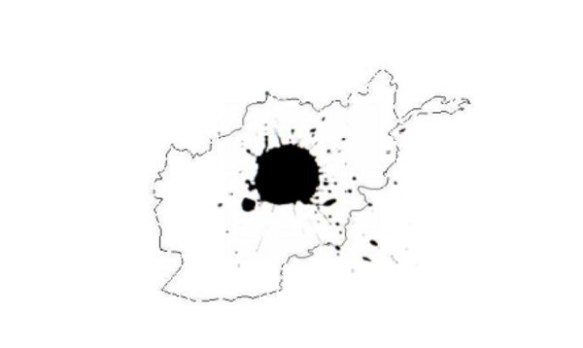
Possibly winding off the Thursday/Friday War for 2012, a short item from Josh Wineera wondering what the reverse side of the popular COIN theory of the inkspot might look like in 2014…

Reversing the Oil-spot:How does the concept apply when leaving Afghanistan?

Josh Wineera

November 2012

inkspot

For professional military planners, and even armchair strategist, the oil-spot concept for responding to an insurgency appears to be well understood. The counter insurgent objective of extending the security environment to establish and entrench a sustainable economic and political situation has been a particular feature of the latter stages of the War in Afghanistan. Conceived some 100 years ago by French Army Generals, Gallieni and Lyautey, the modern oil-spot concept is expressed in the form of a ‘Clear, Hold and Build’ strategy. Clear, Hold and Build has been the mainstay of ISAF coalition operations since the release of the 2006 US Army field manual, FM 3-24 Counterinsurgency Operations.

Afghanistan experts have fiercely debated the merits of fighting the enemy, aka the Taliban, verses focusing on protecting the population. Recent ISAF commanders, such as Generals McChrystal, Petraeus and Allen, all recognised the necessity to engage in both. Kill-capture missions sit aside missions such as training and mentoring Afghan security forces – such is the nature of contemporary counterinsurgency operations.

As the exit date rapidly approaches for coalition governments to withdraw their forces, plaudits for the successful application of the oil-spot approach still proliferate. Manifestly the surge of an additional 30,000 troops in early 2010 provided better force ratios and counterinsurgent density to implement the expansion in to previously held Taliban-strongholds. At this time however, with transition and withdrawal leading every major conversation about Afghanistan, a natural question arises.

Having applied the concept, moving forward has any thought been given to what happens when the oil-spot concept ceases, or rather the ISAF forces contract and concentrate to leave? Granted, a critical precondition to leaving has to be the successful training of the Afghan Army and Police forces to take full responsibility for their own community’s internal security. They after all, are the most important counter insurgent force in Afghanistan – a point often missed. Regardless, the degree of their success is still open for debate. One measure has been the quantity of Afghan security forces being trained. As to the quality, plainly numbers do not convey the whole story. Recent insider attacks, known colloquially as a ‘green on blue’ incident, have placed immense pressure on the trust and confidence within those partnered ISAF and Afghan units. It would be unfair to generalise these extreme tensions across the whole country. In many places, such as the Arghandab River Valley in the Kandahar Province, conditions are in place to enable the Afghans to take the lead. Certainly in his address to the US Army Irregular Warfare Centre last month, former ISAF battalion commander Lieutenant Colonel Michael Simmering explained the rational for his unit’s achievements.

Having expanded the security environment, in many cases literally being the outlier force, ISAF strategists and even regionally based planners must surely be conceiving a plan to reverse the oil-spot concept? Ideally, the full extent of ISAF control of the environment is manageable for the Afghan forces but common sense would suggest they are in for a very tough time. The absence of ISAF will almost certainly be a cue for prospective power brokers to demonstrate their credentials for control. In some provinces this demonstration has already begun.

Drawing back to a concentration area, or a central hub, for departure might seem like a logical method to reduce the ISAF footprint in the provinces. For this to be achieved an assumption would need to be made in terms of the previously held (by ISAF) security zone remaining intact. That is an assumption that will hold up in some provinces, for others it will remain questionable – certainly a major risk consideration. Possibly some ISAF contingents might contemplate holding the outer security areas in place and hollowing out the main force from the rear first. The last element to withdraw would be the outer security forces having provided a ‘shield’. Military proponents would recognise these two options as merely tactical methods of withdrawing from a main defensive position, and so they are. Could they however, become the basis to start conceptualising and visualising what ISAFs oil spots could look like in reverse?

For those ISAF soldiers still patrolling their area of operations, the time for theoretical conceptions matters little. Familiar tactical tasks, such as the options to withdraw or allowing the Afghan security forces to relive them in place, may not be considered particularly elegant or intellectually innovative. But they, in some way, will feature in every planning consideration. So might a new metaphor be coined to explain reversing the oil-spot? In an age where anything can be rebranded and often is, where the old can be made new age again, the likelihood is high.

___________________

Major Josh Wineera is a serving military officer on secondment to the Centre for Defence and Security Studies,Massey University. He can be contacted at j.wineera@massey.ac.nz

The views expressed in this article are those of the author and do not necessarily represent the position of the Centre for Defence and Security Studies or the New Zealand Defence Force.

The rocky road to learning

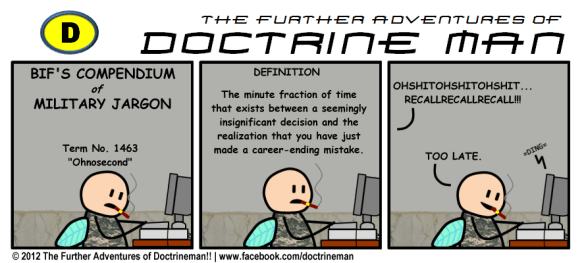
Continuing on the ‘learning’ theme from yesterday, I’m sure that we have all had at least one ohnosecond experience in our professional lives…now that I am older and wiser (apparently) I have given up on sending strongly-worded but incredibly witty and insightful emails to senior staff detailing the errors inherent in current and proposed plans and strategies. I do however still have one minor foible (yes, that’s correct, just one!) that causes me to still have reason to occasionally curse the response times of the Outlook ‘recall’ facility. On occasion, normally only when the context is important, I transpose the words ‘not‘ and ‘now‘ i.e. when I mean ‘not‘, I will write ‘now‘ and vice versa. Hands up everyone who can see some potential for humour and general chaos in that…it’s just one of those things and the more that I am conscious of it and try to avoid it, the more likely it is that at least instance of this foible will slip through. It’s not even like ‘w‘ and ‘t‘ are immediately adjacent or that it is one of the unfortunate quirks of the demon the reside within the spellcheck tool…it just is…

Some mistakes may be career-ending and some potential contenders are listed in this link to InfoWorld’s annual roasting that a friend posted a link on Facebook this morning:

It’s time again for that beloved holiday tradition in Cringeville known as the Golden Gobblers. These awards were created to honor individuals in the world of technology whose giblets we’d be happy to see roasted and served on a platter.

But other mistakes, no matter how face-reddening, should be more opportunities for teach and learning…

Does anyone ever query why an individual acted in a certain manner?

Could it be a result of inadequate or incorrect training, the absence of good role models and mentors?

What is the work environment and its general culture and ethos – if any?

Has the individual been honestly reported on – or have superiors failed to confront  and address issues with whitewash reports that make themselves look good (‘There’s no problems in MY organisation!“)?

And for the offended party…

Has an actual crime been committed or perhaps did you dress from the Emperor’s wardrobe this morning?

Is a wounded (slightly dented?) ego more important than developing and growing your people and your part of the organisation?

Even, could it be possible that you and some of your approaches and methods are contributing more to the problems than to the solution?

Are you contributing to the development and growth of the broader organisation or more aligned with maintaining a status quo, like the reed that refuses to bend…?

Without advocating rabid workers’ rights or the introduction of total workplace socialism, and noting that there are definitely people who need to move on or be moved on from an organisation, score-settling and retribution are not the best rationales for doing so… “I’ll teach them a lesson they never forget!” is NOT the mantra of a for-real learning organisation nor one that expects to continue to deliver credible and useful outputs (as opposed to just meeting its metrics)…And this brings us back to the three qualities discussed yesterday…leadership…initiative…balance…

On Petraeus

Frederick Humphries. The FBI agent who launched the investigation into Paula Broadwell’s email accounts did it as a favour [corrected US to real English!]  for gal pal and wannabe-Kardashian Jill Kelley. He then leaked news of the probe to two right-wing congressmen, igniting one of the biggest scandals in CIA history and bringing down its director, General David Petraeus. Somewhere along the line he generously shared a pic of his pecs with Kelley, launching an FBI investigation into his own conduct.

This quote is from the InfoWorld Golden Gobblers mentioned above. Yes, note the irony that the agent who’s actions led to the resignation of the Director of the CIA for inappropriate behaviour appears to be guilt of the same offence himself. Under the incredibly wonky US justice system, doesn’t that automatically discredit the case against David Petraeus, noting that he doesn’t actually appear to have committed any criminal offence himself?

I hadn’t wanted to comment on this affair (no pun intended – OK, maybe just a little…) until the smoke had cleared somewhat in the wake of the Benghazi attack…and it now seems possible to derive a few insights from what’s been released…

Senior staff can have just the same sort of weak moments as normal people.

Said weaknesses do not necessarily affect their ability to do their jobs. This, of course, does not apply to those senior moments involving fraud or sexual (or any other form of) assault but then these are open and shut criminal offences.

The moral minority that screams for blood at every perceived wrong-doing may do well to wonder if militaries would be any better as organisations if the Dalai Lama was appointed Chairman of the Joint Chiefs, Chief of the Defence Staff or Chief of the Defence Force. Probably not…the love-ins and chanting would be pretty cool for a while but I would have to at some point question their deterrent value or usefulness next time there’s a need to respond to an unplanned contingency.

The organisation is unlikely to be a better place for losing the likes of David Petraeus and potentially John Allen – the mob once sated will put away their pitch-forks and torches secure in the knowledge that they are protected by the mantle of national security that they continue to erode.

I’ve watched some of the current and historical coverage of Paula Broadwell and the strongest message that comes across is that “It’s all about ME, ME and ME!!!” and my take is that she is a selfish and self-seeking individual who has abused the privilege of access and taken it as a right. I’m wondering if the oxymoronic joke about Army Intelligence applies to Ms Broadwell and whether this is something that the former general could have borne in mind from the first time he met her? While not excusing David Petraeus’ actions in the affair,  those are really a matter between him and Mrs Petraeus. Jill Kelley strikes me in the same way, twisting the privilege if access as a Friend of MacDill into a perceived right of access to senior leaders who in all fairness may have been totally unaware of what was going on behind the scenes.

So what could have happened in a smart learning community? Ummm…

The FBI might learn from its part in the affair and ensure that its agents follow set protocols and procedures, certainly in regard to the triggers for taking an issue out of the organisation to Congress or the Senate.

The Friends of MacDill programme is reviewed to ensure that the definitions of privilege and right and well understood by all. My understanding is that this is a useful and beneficial support mechanism for the base that probably does not warrant threats of closure because of the actions of one or two individual.

The Director of the CIA is given some time off to sort his personal life out before returning to the job.

Commander ISAF is left alone to focus on a particular difficult period in the force’s existence i.e. is this really stuff that you want to be bothering your senior commander in your second most costly campaign in the last decade?

Ms Broadwell (it’s unclear whether she remains a Mrs) is encouraged to take some time out, sort her own personal life and stay away from the media where she is not doing herself any favours.

The moral minority have a fire sale on pitch forks and torches, all slightly used…or maybe just have a fire…

Leadership – initiative – balance


Leading through change

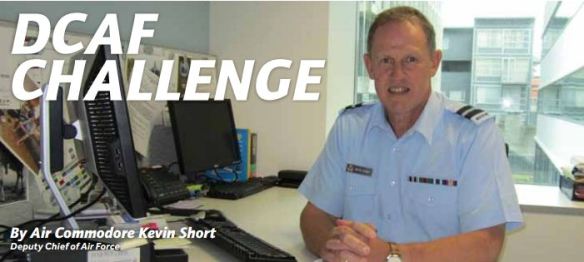
While driving around the Net searching for some information on leading change, I found this recent ‘First Word’ in the October 2012 Air Force News. Pretty good stuff, I thought, on the effects of both leadership and individual initiative in fostering and maintaining a satisfied and thus effective and efficient work force which in turn fosters and maintains the delivery of critical outputs…

Does your Unit have a good reputation and is it one of the sought-after areas to work in? Is it judged as a critical Unit and the people within it as skilled and capable? Is it a ‘key’ capability in the RNZAF?

By ‘key’ I don’t mean as judged by the quarterly reports, not by efficient management processes, nor by the myriad of statistics required by higher command each month; these I would expect from any unit in the RNZAF. Rather, your Unit will be judged as the best to work in by two measures:

(1) by the other units (that is Squadrons, Joint Forces and so on) that you support, and

(2) by the individuals who work within the unit.

So what part do you have to play in all this?

If you are positive and enthusiastic about your job and the people around you, then this will set the tone for the Unit. People will want to work with you—they will seek positions in your Unit. Strive to make your unit the best organisation to work in, with emphasis on innovative policy, development, and capability for the RNZAF, and very focused programmes; focussed because we have limited resources.

I think we all need to be challenged and given opportunities. In order to do that you should encourage initiative and allow others to present and sometimes implement new ideas. Some ideas will work and others will not—but you won’t learn unless you try, and you must take calculated risks. An Officer, SNCO, or for that matter any staff member, who is afraid to make a mistake or to present a counter view is not contributing to the team. Remember, fear stifles initiative, imagination and ideas—and the organisation will inevitably stagnate.

We are “beings in process,” forever developing, learning and adapting. I encourage you to challenge what you do. So let’s think about how we can change and improve the work we do. Think about the future, and use all those bright young men and women who work in your unit—that’s you—to move ahead. I challenge you to improve the products we produce, to improve the processes used to get there, and to make your Unit an enjoyable and rewarding work environment. The latter point is important to our success. Everyone should be provided with an environment in which they can work with little constraint. I want you to create a climate where someone’s worth is determined by their willingness to learn new skills and grab new responsibilities.

As stated in the Better Public Services Advisory Group Report, “…the single most critical driver of successful change is leadership.” I would add that this leadership must come from all levels in the organisation. And here I’ll take a leaf from GEN George Patton. He said: “Never tell people how to do things. Tell them what to do and they will surprise you with their ingenuity.” I expect to see lots of ingenuity.

Remember that we are not at war, but those in uniform can expect to be deployed for operations at any time, so balance your job and home life with appropriate priorities. I want you to be in the military for the long term, so keep your work effort and priorities balanced. There will be times when you will be required to work long hours, or be away from your family—for training, conferences, project activity, exercises and the like—and this is when the RNZAF will be first priority. 

I also encourage you to set yourself some personal goals. Everyone in the RNZAF has integrity, judgement, energy, balance and the drive to get things done. don’t just use these assets at work; apply them to your private life as well. 

You are the people who make the Unit function. You make it happen and you set the example for others to follow. I expect you to provide guidance, direction and oversight to your personnel and to others in the RNZAF so that they may also succeed. So take responsibility for, and ownership of, your particular area. Make your Unit a great place to work and be effective and enjoyable.

When Field Marshall Slim made his so-often quoted comment about the relationship of morale to materiel being as ten is to one, he was referring to far more than simple materiel, I’m sure. Today he probably would have specifically targeting the metric mentality that thrives within modern organisational communities…i.e. the “I’m OK because I’m achieving my targets and completing my directed tasks” philosophy…you might be a lumberjack too but, trust me, anyone hanging their individual or collective  hat on THAT philosophy is NOT OK!

The leadership and learning relationship is not new but this article draws in a couple of other themes that aren’t as common in the discussion. The first of these is initiative, specifically personal initiative. It’s all very well being the best leader in the world but not worth a stick of old rhubarb if the rest of your organisation are content to just follow your awesome leadership example. YOUR people must not just feel empowered but they need to be motivated to dive in and take a (considered) punt to make things that need to happen, happen. The old catch-excuse of “No one told me to” (Why didn’t you do something) is almost as bad as the Nuremberg “I vas only following orders” (Why did you do something?). Individual members of a successful organisation should be applying ‘so what, then what, now what?‘ thinking all the time – and where they may occasionally, perhaps, get it wrong or not fully right, the ‘system’ should be there to assist the learning process. If we don’t screw up from time to time, how to we get better…?

When JFK said “Ask not what your country can do for you but rather, what you can do for your country” he wasn’t meaning that the two questions are mutually exclusive. The other theme that is blended in nicely in this challenge is that of ‘balance’: work/life balance, balance between those things that have to be done and those that you can simply do, balance in looking after yourself and looking after the job (hint: the job may not reciprocate). People crack funnies about the US Army’s long standing (1989-2001) recruiting logo “Be all you can be” but it probably endured for so long because it appealed so directly to a fundamental aspect of what the military is meant be all about: regardless of someone’s roots or background, a fresh start offered exactly that opportunity to ‘be all you can be’. But it doesn’t just stop there – it can and should extend out into the broader relationships of families, friends and communities.

Many years ago, decades actually, I read a comment (on paper – it was so long ago that this interweb thingie wasn’t even a twinkle in someone’s Astounding Stories!) that, contrary to the popular perception of Vietnam veterans in the US being burned-out, drugged-up no-hopers, that many of the 2.7 million Americans that served in uniform in Vietnam actually came home and become leaders and forces for positive change in their communities. Being all they could be because their experiences had given them a new perspective on what was really important – and that wasn’t some clipboard-mounted tick-and-flick philosophy focussed on just doing the bare ‘minimum’, of perception-polishing than actually doing the job. As as stated in DCAF’s Challenge, it’s about extending that balance and perspective into our family and community lives as well. Of  gripping up challenges and doing those things that need to be done but always maintaining that awareness of ‘balance’.

So taking that closing sentence “…Make your Unit a great place to work and be effective and enjoyable…”, if your work place or your home or your community doesn’t feel like a great place to be, if it doesn’t feel effective and enjoyable, rather than just sit around and bitch into your milk about it, perhaps it’s time to consider what changes may be needed (noting that YOU may be the one that needs to change!) and applying some personal individual leadership, initiative and balance yourself. While it is true that good things rarely come without hard work, it is equally so that they rarely come without someone making them happen.

International Globetrotters

Round round get around
We get around
Yeah
Get around round round we get around
we get around
Get around round round we get around
From town to town
Get around round round we get around
We’re a real cool head
Get around round round we get around

Cheers to the Beach Boys for those opening words…

Just popped into the inbox…always good to see local lads doing well…the full update is in the Hawkeye UAV web site but I’ve taken the liberty of posting up the ISR-focused highlights below…this is cutting edge Kiwi technology, both in the aircraft technology and the imagery processing methodology…don’t forget that the processed imagery shown is actually a 3D model – very cool….and more so when you consider the size of the airframe doing the work….all images and text below © Hawkeye UAV…

At the end of September David and I departed Auckland, complete with UAV and cold weather kit, bound for Ulaanbaatar, Mongolia.   We arrived late Sunday night, to spend a week conducting tasks that included surveying an open cast coalmine in the North of the country.  Our host company MonMap took very good care of us and had made all internal arrangements for our stay and operations.

Mongolia is a really interesting place, mineral rich, particularly in copper and coal.  They have a young democracy born from the departure of Soviet control in 1989 at the time when the Iron Curtain was falling.  The legacy of Soviet rule is plain to see in Ulaanbaatar, particularly in its architecture.  That said, the obvious Western influence has definitely taken root in new business and development, and the culture of the city dwellers.  The predominantly Buddhist, Mongolian people are very open and friendly, fiercely patriotic and proud of their heritage and in particular their iconic founding father and conquering hero, Chinggis (Genghis) Khan.  His face is immortalised everywhere on statues, monuments, Vodka bottles and at least three kinds of very good local beer.  The capital’s international airport is of course named after him too.

Mongolia-1

Ulaanbaatar City

On Tuesday we travelled north via road to Sharyn Gol, a coal mining facility with a population of nearly 10,000 in the adjacent village.  Sharyn Gol was a former Soviet mine and the apartment blocks, main buildings and much of the legacy equipment remain.

Wednesday dawned overcast and with little wind initially which was an encouraging sign for the beginning of flight operations.  We had divided the whole facility into three flight areas, 1) The old and current open mines, 2) The steppes, railhead and facilities and 3) the village and outlying buildings.

Mongolia-8

Sharyn Gol mine HQ building, railhead and facilities

Mongolia-5

Mining equipment

Mongolia-12

Sharyn Gol coalmine

Throughout the morning the wind rose steadily and by the time we launched for our first sortie we were experiencing some good crosswind gusts in excess of 30 km per hour.  We conducted the flight as planned, with encouraging approval from the MonMap guys, a team of whom had laid out and very quickly tagged GPS markers for our ground control.  We had set up on the South rim of the pit clear of all mining operations and traffic, operating from out the back of MonMap’s Landcruiser. The flight duration was 72 minutes and we captured over 1,100 images. Recovery was routine, with the Hawk landing within 10 metres of our designated recovery spot.  Indicated wind gusts were registering as high as 47 km per hour and were blowing straight in off the Siberian plains.  Jackets and hats were the order of the day!  The AreoHawk took it all in stride.

After lunch we prepared for the next flight, launching from the South rim still, but further East this time, closer to our target area.  With more runs being conducted into and downwind, speed control and camera firing interval were of particular importance.  Our ability to adjust track, speed and turn radius on the fly, rather than relying on preplanned waypoints, comes into its own in these scenarios.  Despite the variable and strongly gusting winds, the task and subsequent recovery went smoothly and the Hawk landed within 20 metres of its programmed landing point.  Flight time was once again over 70 minutes long with in excess of 1,000 photos captured.

With the ever increasing wind and failing light we decided to conduct the final flight the next morning.  On the completion of Wednesday’s flying I started processing the imagery from flight 1, the mine.

Mongolia-18

AreoHawk 02 in MonMap livery

Mongolia-24

Parachute deployment, flight 1

Mongolia-60

About to touch down

Thursday morning was bright and sunny (and not as cold!).  With good light quite early we launched immediately after breakfast from an area North of the mine, within our target area.  This time we were operating adjacent to the foothills and the village lay stretched out on an incline, requiring David (on the controls for this sortie) to carefully manage acquisition altitude and terrain avoidance for the duration of the flight.  Being so close to the housing area and the schools we soon drew a steady stream of onlookers and curious folk keen to have a look at our operation and pose for photos with us and the UAV.

While the wind did once again grow in strength throughout the morning to over 30 km per hour it had little impact on the flight, which went very smoothly and was over 80 minutes in duration.  One of the main objectives of surveying the village and populated areas was to provide MonMap with a dataset for cadastral boundary and feature extraction.  The resulting product is very good and more than suitable for this purpose, especially with the GPS control applied.

Mongolia-85

Parachute hatch just popping on final recovery in Mongolia

Having completed flying operations and surveying more than a combined 12 square kilometres (3,000 acres) across the three completed flights we packed our stuff and headed back to Ulaanbaatar.  This gave us the opportunity to get into some imagery processing in the office, and to play tourist a bit.

Overall the results from the Mongolia flights have been outstanding.  We captured a lot of imagery on each sortie, with very strong overlap.  Both the point clouds and the orthophotos are extremely pleasing.  Working with MonMap was outstanding and we look forward to our return to their country next year to deliver systems and training, and for the odd Chinggis Gold lager.  Results video here.

Sharyngol Mine

Orthophoto mosaic result sample

mine3

Digital Elevation Model generated from the dense point cloud

mine4

Mine orthophotos draped over terrain model

South Africa:

In September, Andre Henrico of Aeroscan Aerial Survey, South Africa, attended training in New Zealand on his new AreoHawk.  A seasoned UAV professional, Andre has been doing the business from his South African base for many years.  Upon his return home he wasted no time getting to work, deploying his new gear on a task in Botswana.

Andre was good enough to send us some photos and share some of his results.

aeroscan1

Andre onsite with his AreoHawk preparing to get underway

aeroscan2

Recovery

aeroscan4

Digital Surface model

aeroscan5

Elevation profile superimposed in front of the terrain model

They live!!!

Just been up the road for a coffee and endured yet another nutjob spouting off about why New Zealand just has to have fast jets if it hopes to have any credibility internationally. I’m not going to get into that argument although I will admit I do kinda miss the sound of tortured air as 75 Squadron crank across the Rangipo Desert…but…this nutjob made the comment that the Skyhawks are just rusting away, neglected and forgotten, down in Woodbourne. And that’s not true….so just for the record…

A while back, someone emailed me a PDF that had clearly been a copied and pasted Word document drawn from an internet or print article – there were no identifying links, or names or anything to give away the source. If anyone does recognise the source, please let me know so that I can credit the source and link to the original item…so, just for the record, everything from here on in italics and the pictures are all someone else’s work…not mine, not at all…but I do think it’s all pretty cool…

“There has been lots of rumblings in the military aviation community about the future of the Black Diamond Jet Team and the possible establishment of a commercial adversary support arm of the group, known mysteriously as Draken International. It is now clear that Draken International and its team, which sports famous names like a Dale Snodgrass in its roster, is deadly serious about jumping into the fickle commercial adversary support/contractor air services industry, with an armada of blazing afterburners to prove it.

I have written at length about the coming storm of demand for commercial adversary support services. As America and her allies transition into an almost all 5th generation fighter inventory, fighter wings will not be able to afford to accomplish all their required training tasks using “in-house” aircraft as they have done in decades past. 5th generation fighter capability comes at a huge cost, not just in the upfront purchase of the aircraft, which will cost at least twice as much as a comparable fourth generation fighter, but the operational and sustainment costs of these cutting edge machines will be absolutely crushing for users around the globe. It simply does not make sense to send an F-35 up to train on basic radar intercept procedures against another F-35. Incredibly valuable airframe hours are consumed
needlessly by doing so and aircraft operating costs for such sorties will be astronomical. Further, having a state of the art 5th generation fighter mimic an inferior threat is not only inefficient but it is also somewhat problematic. This is precisely where commercial adversary support providers will come in to alleviate these fiscal and operational pressures, providing simulated threats and other support duties that can be tailored cost effectively to each individual sortie’s training goals. Further, outsourcing such duties instead of expanding current military adversary support squadrons or establishing new ones will create an elastic on-demand force that will be much more cost-effective than a standing military force alternative. In other words, by outsourcing adversary support duties to a commercial entity an air arm only needs to pay for exactly what it wants, when it wants it. If they become dissatisfied with their provider or someone else shows that they can provide the same service better or cheaper than they can take their business elsewhere. Such an arrangement is a proven economic and operational win-win for all those involved, the problem is that there is simply not enough supply of these services right now to fulfill what will become a huge demand by the end of the decade. This is where companies like Draken International are beginning to step into the picture, possibly taking what has been a niche industry and thrusting it into the mainstream international defense marketplace. Draken International’s fleet of aggressors is simply eye watering:

image

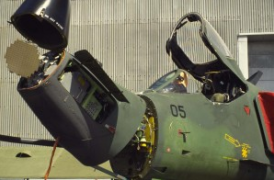
29 MiG-21BIS/UM: This is a lot of supersonic threat simulation aircraft! The majority of these jets are ex-Polish birds and are equipped with the dated by today’s standards, yet still capable RP-22 radar set, as well as a  radar warning receiver. The MiG-21 in this configuration is roughly similar to the F-5Ns currently serving in the aggressor role for the US Navy. With the addition of a capable electronic warfare/jamming pod, the MiG-21 is known to be a dangerous jet to engage with on an air to air level even in modern times.

image

8 Ex-Royal New Zealand Air Force A-4K: Yes, some of the New Zealand’s Skyhawks have finally been sold to a loving new home after years of busted deals and “tire-kicker” inquiries. These are the most capable Skyhawks ever produced and sport an advanced version of the F-16A’s APG-66 pulse- doppler phased array radar, hands-on-throttle-and-stick pilot interface, a full-fledged heads up display, a capable radar warning receiver, 1553 digital bus which will allow for carriage of advanced stores, and even mid-air refueling pods. These A-4Ks will obviously be Draken International’s high-end threat simulation mainstay and will bring a capable radar set to the commercial adversary support industry for the first time, which is a true game-changer. Also, seeing as these jets are equipped with refueling stores, they can offer that capability for fleet training or to enhance their own aggressor capabilities where “time-on-station” is a big selling point for potential customers. The A- 4Ks are slated to be operational by early 2013.

3 A-4L Skyhawks: Currently wearing “zebra’ camouflage and Draken International titles.

image

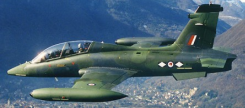
9 Ex-Royal New Zealand Air Force MB-339: These advanced jet trainers are equipped with similar sub-systems as their A-4K cousins, such as an advanced HUD and 1553 digital bus, albeit without the APG-66 radar and other combat oriented gear. Slated to be operational by the fourth quarter of 2012.

image

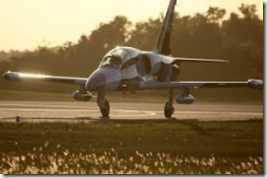
5 L-39: Presumably these are the same aircraft that are flown by Draken International’s non-profit aerial display and exhibition  team.

When you look at this fleet in comparison to other contractor air services/commercial adversary support providers you realize that Draken International has procured a diverse and flexible combination of aircraft that matches more advanced threats, and in greater volume, than what is currently available on the market today. The MiGs are fairly cheap to procure and are a good match for simulating enemy anti-ship and cruise missiles, some of which now possess solid supersonic performance. The Skyhawks will be a an affective “jack of all trades” and will be especially useful at presenting a cost-effective fourth generation fighter threat in the beyond visual range arena, a capability that is currently sorely lacking in the CAS industry. The MB-339s, and even the L-39s to a certain extent, will be good for lugging around jamming pods and presenting rudimentary radar targets for aircraft and ships, as well as providing close air support training for JTAC/FAC schools at home an abroad.

What is most astounding about Draken International’s business plan is the sheer amount of aircraft in their inventory and the endless
potential of how they could be mixed and matched together to form an incredibly diverse and capable aggressor force. With so many airframes of different capabilities, including those which can mid-air refuel and supply a persistent radar picture for their red air team, Draken International will have the ability to supply an enemy air force “on demand” for large force employment exercises that mirror the capabilities of many potential adversary nations.

imageIn business they say timing is everything, and in Draken International’s case that key ingredient may remain illusive due to a faltering F-35 program and shrinking defense budgets both at home and abroad. Yet these same factors, which may seem negative at first glance, could very well end up being Draken International’s proverbial ace in the whole, as the F-35 program is almost unstoppable at this point and costs related to it will continue to balloon, thus resulting in smaller fighter fleets than originally planned for most nations involved in the program and less cash available to fly the jets once they are purchased. As a result hiring companies like Draken International will be absolutely necessary for providing continuous training support at comparatively minimal cost.

One thing is for certain, with firmly entrenched contractor air service providers like Top Aces and ATAC already holding substantial market-share and burgeoning new startups like ECA Program and Draken International just stepping onto the stage, the biggest dogfights for these companies may no happen high in the sky but in corporate boardrooms and DoD contracting offices instead. Competition will be furious for the as yet to grow adversary support pie, but once a new, much bigger pie, in the form of the F-35 program, finally gets served it will be good eating for many for years and years to come…”

PS: Why place this in ‘The Thursday/Friday War‘ category and not ‘Playing with Toys‘? Easy…I think that the relationship between commercial and traditional military providers of capabilities to nation-states et al is just getting started and won’t stop til it gets us to the days of Falkenberg’s Legion and Hammer’s Slammers (look ’em up)…

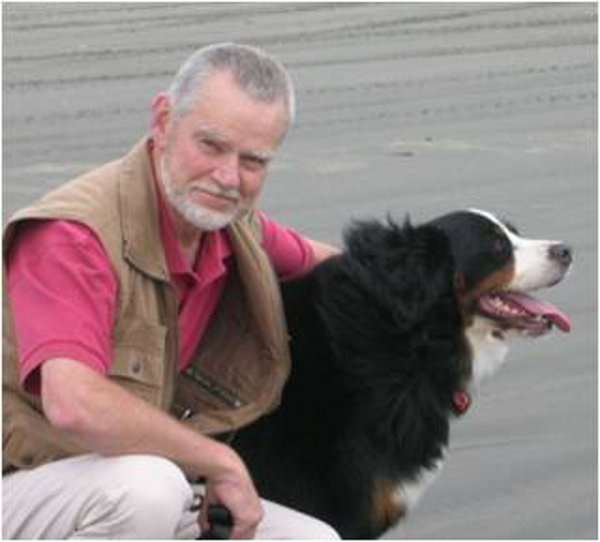
A man and his dog

REID, Piers Martin. CBE, DLitt(Hon), MDefStud, Reg.No.U30723, Major General, of Palmerston North.

Some sad news in the inbox last night as Massey University’s Centre for Defence and Security Studies announced…

It is with sadness that we advise that a friend, colleague and mentor to staff and to many students over the years, Major General Piers Reid, passed away at 21:00 (9.00pm) on 2 October 2012.

A graduate of the Royal Military College, Duntroon, Piers served a double-tour in Vietnam, and then proceeded to advance to Chief of Army. He was with our Centre for more than a decade, including Director in the first half of the 2000s, after which he continued to lecture in defence studies and military history until this semester.

Some weeks ago, Piers was diagnosed with a serious illness (cancer). At his and his family’s request, this information was not distributed widely, and so we were not in a position to use Stream to advise people of his illness. Piers remained independent until the end, and his death was dignified and peaceful.

Friends are invited to attend a service for Piers at the Beauchamp Crematorium Chapel, 167 John F Kennedy Drive, Palmerston North on Monday October 8th 2012 at 2pm.

Piers Reid succeeded Tony Birks as Chief of General Staff just after I was commissioned. Almost his first act in the job was to scrub the previously approved  proposed new service dress for the Army which a. made my life as the new SO3 Clothing really interesting and b. was probably quite a good idea as I am not sure how how long the Zoot Suit Riot look would have remained in vogue before it just looked silly…the service dress that the Army wears today, more traditional in both style and colours, is the result of that decision.

Noting that nowhere in a general’s job description does it say anything about making a young lieutenant’s life easy, seeing the clothing projects through to completion  in his administration was not too burdensome and never dull nor boring.  Before anyone starts bleating about ‘loggie generals’ let’s not forget that this ‘loggie general’ signed off on an awful lot of good kit for soldiers including:

  • Decent combat boots
  • DPM combat clothing that didn’t change colour between batches or like like it was an end run from some third world banana republic army.
  • Mustang knee-length Goretex socks.
  • Running shoes  as an entitlement for all soldiers putting an end to the need for soldiers units with a higher requirement for physical fitness having to buy their own.
  • Reflex wet weather clothing designed by Kathmandu (apologies to all the self-appointed experts out there but at the time this was a better performer than Goretex.
  • Windproof Ventile smocks.
  • Nomex fleece fleece jackets that wouldn’t burst into flame as soon as a lit cigarette or Hexi cooker looked at them.

Not a bad legacy for just a ‘loggie general’….

He also brought back the classic peaked cap for officers – for a whole six months until his successor killed it off again…

In the course of these projects, I got to know Piers Reid quite well, learned of his time in Vietnam, a story not well known but probably not mine to tell…it turned out that we both loved military music and I recall one afternoon  chatting with him at the rehearsal for the Remembrance Day Service in Wellington Cathedral – the band struck up Scipio, the traditional slow march and , as the introductory drum roll ended we both smiled sheepishly as our right legs reflexively shot forward for the first step of the slow march – Scipio for those not in the know starts with two drum roles, the ned of the second being the cue for soldiers to commence marching, using just the beat of the drum to stay in step…

Even those I was never any drill maestro, we did have drill down to an art form in those days, often just working off cues in the music as commands and that memory from that day in the Cathedral is always the one that springs to mind first when I think of Piers.

I would see Piers from time to time when I was working at Massey and it always struck me how fit and well he looked and so it is all the more a shock to hear that he has passed away so quickly…

FX Stolen from Auckland NZ


Posted on behalf of a friend…

Stolen from Birkdale on the North Shore area of Auckland, New Zealand, this weekend.

Please contact Auckland Police on 09 839 0741 .

Only one of this colour and layout in the area so if you see it, its the stolen one.

Last time an FX was stolen it was spotted outside San Francisco Hospital emergency department with 12 hours…let’s see if karma and keen eyes can do the same this time!

This is a little more than just the “…Only one of this colour and layout in the area…”: it is actually a very rare and unusual preproduction prototype…what really narks me is that the lowlife scumhead that has stolen it will have no idea of what it is…I am actually quite proud of my very minor contributions to the FX’s development in the last few years and so am just a little protective of it…

You wouldn’t like me when I’m angry…

An Ear To The Ground

Like many people, I opted not to comment on the 911 anniversary yesterday (it’s already six hours into September 12 here), although as one adversary pointed out, the date remains significant anyway as it marks the airing of the last ever Get Smart episode in 1970. The same pundit also reminded me that there are other such anniversaries that we do not remember so much…

It started to snow last night – finally, the first snow of the season and it’s spring already – and I got up early to check on things, well, really to see how heavy it was to determine if I could have a longer sleep-in this morning because the roads are closed…not such luck and it looks as thought the bulk of it missed us…

Anyway, now being awake, I couldn’t get back to sleep and so logged in to check emails etc before heading away for the day. Sitting there was an email from Ben Ianotta with whom I had done some work while he was editor of C4ISR Journal promoting a new venture, Deep Diver Intelligence. Always keen to check out new ventures and ideas, I had a look and hit the article on the renewal (or not) of the US Foreign Intelligence Surveillance Act (FISA) first…[access is free til 17 September, then I’m not sure so will post a PDF of the article if it drops offline] It’s a good article and worth reading and thing about…

It’s an interesting issue and I think that the key point that may be overlooked in all the Big Brother paranoia is that this type of data collection is happening already in the commercial/corporate arena. Google now quite openly ‘reads’ our emails in order to customise the advertisements that it subjects us – under its ‘do no harm’ philosophy, would/should Google withhold potentially useful information of a national security nature if it stumbles across it?

The genie is already out of the bottle and we need to look at how we deal with it not cry into our milk about how we can’t put it back in. At least the FISA discussions encourage that discussion. We live in an information age now and we need to accept that things will change in respect to our ‘rights’. This is nothing new and simply a fact of civilization’s evolution: the rights that we have now are nothing like those of two centuries ago when our nations were settled and explored…things change, we need to get used to that idea.

Unless we all totally give up access to electronic information and opt to live in a cave in the hills somewhere, the simple fact is that information is being collected on us all the time. When you really get down to it, a lot of that information has been collected for a long long time: what has changed is that we now have technologies that allow us to merge much of the information. It’s still largely aspirational that this merging will enable us to join the dots a la Person of Interest – in fact, that is one reason I don’t like this series: because it does present  such an omnipotent perspective that the story just becomes boring – much like the old Star Trek ‘get out of jail free’ cards of time travel or fiddling the transporter cache – but my point is that this data collection is really nothing new.

“You are being watched. The government has a secret system: a machine that spies on you every hour of every day. I know because I built it. I designed the machine to detect acts of terror, but it sees everything. Violent crimes involving ordinary people, people like you. Crimes the government considered irrelevant. They wouldn’t act, so I decided I would. But I needed a partner, someone with the skills to intervene. Hunted by the authorities, we work in secret. You’ll never find us, but victim or perpetrator, if your number’s up…we’ll find you.” ~ Person of Interest voiceover.

A theme through the article, reflective of more the attitudes of intelligence agencies than the author, in my opinion, is that FISA has failed because it has not been able to directly identify and interdict a major adversary action. A couple of thoughts on this…

First up, we seem to be thinking/hoping that major adversary actions will be in a forms that we recognise i.e. think the Arizona, the Twin Towers, or the invasion of Kuwait. One might ask who really manipulated who in the Arab Spring which resulted in the demise of a number of stability-promoting regional strong men; or why we expect the worst of ISAF forces in Afghanistan but so desperately seek the faintest glimmer of anything remotely redeemable in our adversaries there; or whether last year’s Notting Hill rampage was really just a spontaneous boil-over?

Second, we seem to have forgotten that, in the contemporary environment as opposed to the Fulda Gap, it may be impossible to winnow out from all the noise, the key information that points to an impending action. This is what I call ‘intelitis’: the overpowering desire of many intel analysts to be able to jab a finger at the map, preferably in front of their boss’ boss, and state that Third Shock or Eight Guards Army will do X at X time on X day. Uh-huh…whatever…where were you guys for the end of the Cold War, Fiji Coups 1-57 or the Falklands War…? Huh? More likely, in the contemporary environment, that accumulated data may serve as a foundation for a rapid and precise response (do people get the distinction between ‘response’ and ‘reaction’?) in much the same way as CRIMINT rarely predicts which dairy/bank/service station is going to get knocked over next but is able to quickly narrow down the likely candidates…

A bigger concern than FISA might be the continuance of the post-Cold War trend for private industry to be leaps and bounds ahead of public technology and to be now quite happily exploiting this data for its own commercial ends. In other words, repealing FISA and like legislation is much like opting to fly everywhere to counter an IED threat – all you are really doing is ceding a whole chunk of your operating environment to someone else. Just because contemporary adversaries don’t want to play by the rules we like, doesn’t mean that they are not going to invite us to their next conflict: the information environment is now as much an operating environment as air, land, sea or space – the key difference is that it is the one environment where we are being walked all over.

So, anyway, take the time if you have an intel bent to have a look at Deep Dive…interested in your thoughts…

Weekly Photo Challenge: Near and Far

WordPress’ take on ‘near and far’ is meant to be about mechanical perspective but perspective is relative…

In 1985, I was also a (very) junior member of the local Territorial Force (TF) company, Alpha Company of the 4th (Otago Southland) Battalion. The larger proportion of our soldiers were all freezing workers from one of the major freezing working around Invercargill and they all had difficulty getting to the TF annual training Camp in January (to align with scarfie school holidays) as that was the peak of the works season. On one of his vists to the deepest South, it was put to Chief of General Staff MAJGEN John Mace that shifting the annual camp to the works offpeak season would be a great enabler for local recruiting. He took up the challenge and stated that if A Coy could put a full company on the ground In October, he’d be good for a company deployment to Singapore…

So A Coy put a company ++ on the ground in Tekapo, meeting its side of the deal….lots and lots of adventures that fortnight, I can tell you…

I was also in the last year of my lineman apprenticeship with Telecom and in this phase of my training, I was spending some time with the rigging section that maintain the radio towers scattered around the Southland Plains. Fifty feet is quite near, until you are fifty feet up a tower on a breezy day…then it snowed which was the end of tower-climbing for the day…

This was the day before we staged through Dunedin and flew out to Singapore – 4000 hours (or so it seemed) on a Herc across the red dust of Australia for a one night stopover in Darwin to the sweltering humidity of South East Asia to our home for the next six weeks…Dieppe Barracks, Singapore…

Not that we spent much time there…shake out on the ground and almost immediately off across the Causeway to hit the jungle for Ex PEMBURA RUSA…helicopters…rain…snakes…rain…hornets…rain…more rain…and almost as much fun as there was rain…