AS I SEE IT (30 October)

cjoubert

By Terry O’Neill.

This year experienced rugby referee Craig Joubert was put through the rugby wringer after he awarded a late penalty which enabled Australia to go through to the Rugby World Cup semi finals. Days afterwards the World Rugby organisation claimed Joubert’s decision was incorrect yet World Rugby high performance official manager Joel Jutge believes, “despite this experience Craig has been and remains a world class referee and an important member of our team”. Meanwhile, World Rugby’s CEO Brett Gosper said Joubert’s sprint off the field after the game was “he was keen to get to the bathroom.”

Referees are often the whipping boys as supporters of both teams either criticise or favour decisions they make. And referees’ performances at all levels are critically judged by their own. SANZAR stood down referees following complaints against their rulings.

Concerns about a specified referee’s ability have been around for over a century. The most obvious incident was of a try denied to the 1905 All Blacks centre three-quarter Robert George Deans with Wales leading 3-0. Deans’ try was disallowed by Welsh referee John Dewar Dallas. Despite the All Blacks protests that Deans had been dragged back into the field of play before the suited referee belatedly arrived on the scene. The ruling became part of All Black rugby history.

Many asked why Joubert did not ask for clarity from the TMO. According to protocol this incident was outside the TMO’s area of concern. Since Joubert’s demotion in the quarter finals, some experienced international referees suggested changes.

International referee Mark Lawrence, actually an optometrist, believes that with all today’s technology captains should be given a chance to query contentious decisions as in tennis and cricket, with some limitation on the number of appeals for reviews.

Should we could revert to the days before “real” referees? Prior to a game the two respective captains would meet and set down rules, and would arbitrate throughout the game. Imagine the lively dehydration post-match sessions. Another notion is to maybe microchip referees, or like another international referee Steve Walsh, have a body tattoo – Walsh’s: “He who controls himself controls the game.”

Locally, the late Eddie Lapsley, a pastrycook during the week and a referee over the weekend, was a dedicated Athletic club supporter all his life. During a break in play another Athies supporter asked him how their team on the paddock was going.

Eddie said, “We’re behind at the moment, but I’m doing my best.”

ENDS

NNNN

AS I SEE IT wc 461

coach

By Terry O’Neill.

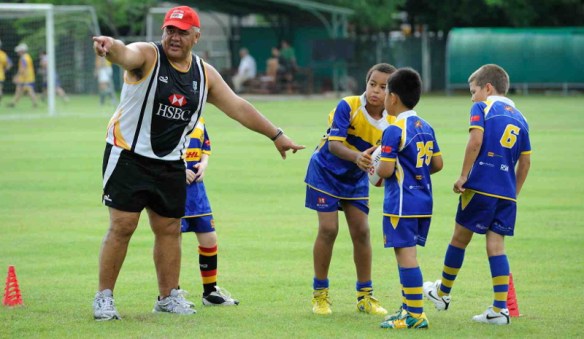
A coach, whatever the sporting code, requires a robust determination and willingness to listen assertively to all critics and supporters (though that varies depending upon the success rate). Coaching has advanced far from the fifty years ago “my way or the highway” approach and now a coaches mission statement must involve “bringing out participants’ ability” and “working towards achieving their full potential”. Some coaches express that more succinctly.

A coach must be competent to evaluate performances, adapt to the needs of players, to break tasks into sequences, and ensure players are always in an appropriate health/safety situation. Generally, a coach must be a role model to gain players’ trust and respect along with the ability to work long irregular hours as most coaches in New Zealand are voluntary part-timers. A 2014 estimation claims 7849 such individuals were involved in this manner in New Zealand.

One of a coach’s real strengths is motivation but individuals can do much for themselves too by listening to those who, with hard work, integrity and ability, have risen to the top of their sporting profession.

Michael Jordan said ,”never say never because limits like fears are often just an illusion.” USA founding father Benjamin Franklin stated that things that hurt, instruct, while Napoleon Boneparte said victory belongs to the most persevering.

In the twentieth century, according to top tennis player Andre Agassi, if you don’t practice you don’t deserve to win, and Tiger Woods believes that you can always become better. John Wooden said a coach should ensure players know the coach is working with the player and not for him/her. And former coach of the UCLA basketball side said it’s what you learn after you know it all that counts.

The last word on coaches is attributed to Stephen Jones , a rugby union correspondent for The Times and The Sunday Times for more than twenty years. Jones is noted for controversial and provocative articles and, in particular, for his anti-Irish and anti-New Zealand comments.

He names his best twenty rugby coaches of all time.

Ian McGeechan (Scotland and Lions) takes number one spot. McGeechan in terms of longevity, great one-off wins and test glory leads the field followed by Fred Allen (New Zealand), a dynamic coach full of rugby nous and brilliance; Sir Clive Woodward (England); Bob Dwyer (Australia); Carwyn James, coach of the 1971 Lions test winning side in New Zealand; John Hart (New Zealand); Ray Williams (Wales); Jack Rowell (England); Graham Henry (New Zealand, Wales, Lions); Nick Mallett (South Africa; Warren Gatland (Waikato, Wales); Marcello Loffreda (Argentina); DeclanKidney (Ireland; Robbie Deans (Australia); Jacques Fouroux (France); Jake White/Kitch Christie (South Africa); and Paul Turner (Bedford, London, Welsh, and others).

You disagree with Jones? He’s used to criticism.

Who’s missing?  Who would you include?

And while on the subject of rugby, It was disappointing last Saturday prior to the North Otago/Mid Canterbury Heartland game which I covered as a rugby commentator along with comments man, Paddy Ford, to be handed less than a half hour before kickoff the Mid Canterbury team which had eight changes from the side which I had been given on Friday morning. According to NZRU regulation, teams must be in the hands of the appropriate Unions 48 hours before kick-off! I’m still trying to decide whether it was through ignorance, arrogance or whether someone in the Mid Canterbury camp was playing a silly game.


ENDS

AS I SEE IT wc 486

fr-rwc 11

By Terry O’Neill.

Why is winning or losing in sport, or indeed in life, so important?

Why are we competitive? Does competitiveness evolve since birth or does an element in society promote this streak? Some very young children don’t display it. Yet maybe it is a throwback, a feral one that’s uncomfortable to acknowledge, harking to the realities of grim personal survival.

Why do we play sport? “It’s fun”. “My friends play.” And a degree of competitiveness develops, and with those who support and follow the play, attitudes towards winning and losing. May we in New Zealand strive to model honour in winning, nobility in losing.

Imagine you were an English or Australian rugby supporter at Twickenham for the England/Australia match. Reactions to the result would vastly vary. The English fan base would likely be demanding the head of English coach Stuart Lancaster, whilst Australian supporters could smugly afford to be generous, an aspect of our emotional makeup sometimes difficult to apply.

Take the 2011 All Blacks World Cup victory in the final over the French team. The build-up was extreme. New Zealand political journalists said a loss would be catastrophic and implied an All Black loss might bring about the downfall of the government. Fortunately, maybe, the All Blacks won, the sun rose again in New Zealand the following morning, and supporters could afford to be magnanimous despite a solitary point being the winning margin.

Did New Zealand win or did the French lose? Lancaster’s England team lost by a wider margin to a better team on the day. Handling defeat takes more stamina to cope with than a victory. But we can learn from losses.

According to “Jonathon Livingstone Seagull” author Richard Bach, “losing is what learning is all about. It’s not whether we lost the game but how we lost and how we are changed because of it, and what we take away from the loss is something that we never had before to apply to other games. Losing in a curious way is winning.”

And from Bill Crowder of “Sports Spectrum”, “Playing a superior team or individual and losing ensures we learn more than if we played and defeated easily a series of teams of lower ability. Today’s culture celebrates winners and sacks losers. Sport is part of life which is filled with victories and defeats and we should learn from both. Victories should teach us humility and losses can teach us character.”

Some claim that if it doesn’t matter who wins or loses, why is the score recorded? Or consider the approach of former top woman tennis player Nartina Navratilova: “Whoever said, ‘it’s not whether you win or lose that counts,’ probably lost.”

Or maybe take the English rugby loss like Trev who twittered after the England loss, “considering all Australians are descendants of British criminals, I’ll take the Aussie win as a home win.”

In winning or losing, a sense of humour may be a healing balm .

ENDS

NNNN

AS I SEE IT

IMG_2054

By Terry O’Neill.

Gradual improvements in practice continue on concussion issues with the horizon a far distant mirage. It sounds simple: “a temporary unconsciousness or confusion caused by a blow on the head” (Concise Oxford English Dictionary), and from the Latin concutere: to dash together or shake.

The issue’s always with me. Fifteen years ago our younger daughter was squashed and bashed in a vehicle collision and the devastating effects of her serious head injury will be with her, and the family, for the rest of her life. There’s no outward sign of disability, and her good looks mask her debilitating injuries within. She married and gave birth to two sons and fatigue dictates absolute rest daily after lunch with demanding tasks sometimes rescheduled next morning, and also she has to accept outside help with children and housekeeping – for a “normal” life that will never be normal again. Nevertheless, magnificent therapies, and all that love can do, means her confidence still improves and she “has a life”.

Concussion in sport may have additional dimensions.

In an earlier “As I See It” column I quoted Ireland’s Dr Barry O’Driscoll whose strong opinions lead to his resignation as a leading IRB medical advisor because the IRB introduced the controversial brief concussion bin, and this five minutes Pitch Side Concussion Assessment (PSCA) was later extended

Rugby players’ collisions vary in impact and severity but former All Black James Broadhurst has suffered a nagging headache for six weeks, and consequently, is ruled out of the remainder of the 2015 ITM competition. Broadhurst, a one test All Black, copped a couple of head knocks against Wellington in August and played until halftime. Broadhurst’s plea to players: “Don’t try to tough it out. I took a knock and thought I’d be all right. Two minutes later I copped another one that cost me my ITM season.” Now he wonders if his rugby career is in limbo.

While research continues on concussion after effects, it’s essential to also focus on causes of head knocks. Tackling in rugby needs to be redefined. The growing number of former rugby league players employed as defence coaches introduced the chest high tackle to control or slow ball distribution. This technique increases head to head clashes. Should rugby encourage the redevelopment of “around the legs tackling” with the head safely behind the opponents knees? Should we not examine the style of rugby whereby there are too many mismatches with bigger and heavier forwards consistently used as first receivers against lighter tacklers? Should supervision be more intense at the breakdown where players individually throw themselves head first into the fray?

Tentative moves are afoot whereby rugby tackling above the shoulder can earn a penalty. But wheels of change turn too slow.

Barry O’Driscoll insists the power of television, and the huge commercial influence, highlights the glory of the club, or the team, and not player welfare. Will only a fatality accelerate those wheels of change?

Parents won’t encourage their children to participate in any sport where the well-being of each player is not the paramount concern.

ENDS

AS I SEE IT (25 Sept)    

12027209_10153620398757070_3435476567489201117_o

The Slippery Slope – Tongariro Alpine Crossing 15 September 2015 (C) Adrift Outdoors.

By Terry O’Neill.

The inevitability of gradualness. A significant statement used to indicate a specific slippery slope as illicit actions, apparently condoned, lead to a deteriorating moral climate.

Formal protocols are part of rugby organisation and this year North Otago introduced a NZRU one designed to assist club and representative rugby during the game. It clearly sets specific areas for players, coaches, medical staff and water boys during play, and this strategy is overseen by the match manager wearing a high visibility vest appropriately labelled.

Protocols are only as good as those appointed to enforce them. No matter how essential, they fall apart when administrators fail the challenges of their duty.

An instance smacked of this at Levin Domain last Saturday when no other than Horowhenua-Kapiti coach Jared Tanira went outside the boundaries where he was required to be during the game. Nobody indicated to him he was absolutely out of order. Would the North Otago coach be accorded the same privilege?

Who was the match manager? The logical choice was Union CEO Corey Kennett but that day he was also the Horowhenua-Kapiti manager as well as liaison manager for North Otago! My queries lead to assistant referees on the sideline, all local referees. None was inclined to tap their Tanira on the shoulder and point out the error of his ways.

If the NZRU are going to inflict such protocols on local unions, these will be toothless if not respected and applied fully and equitably by unions. People involved will ignore them if they judge them to be bureaucratic puff.

Eventually the inevitability of gradualness sinks to deterioration of what was once highly prized, integrity and honour in the sporting code or a particular aspect of our society affected. Think of other examples of retrograde steps when protocols or laws are modified or not fully addressed as required.

Similarly there are attitudinal trends locally. We’re constantly aware of people thumbing their noses at laws and bylaws because experience has taught them those laws are not followed up. The illicit seems to become acceptable.

Individuals with enough arrogance for their personal convenience may feel we owe them a right to park vehicles across footpaths, yet obstructed pedestrians have a right to walk there. Consider those who park on the street facing the wrong direction. Note cyclists not bothering to wear the required safety helmet, drivers using cell phones on busy highways and intersections, and so on. Sadly maybe NZRU’s sensible forthright directives on game protocols might go the same way, into nothingness.

One highly respected and endearing North Otago rugby character, whilst involved before today’s technology, ran on the field at breaks in play to pass on words of wisdom to players, water bottle in hand. Towards the end of the game, after another incursion onto the field, the referee called the miscreant aside, and whispered: “If you’re going to come on as a water boy put some bl…. water in the bottle.”

Once upon a time the referee was the judge of what was, and was not, acceptable.

ENDS

AS I SEE IT

old gold

North Otago’s 25-23 victory over East Coast in Ruatoria, 07/09/13. Photo (c) Gisborne Herald

by Terry O’Neill.

Five Forks livestock manager Duncan Kingan’s “other life” complements his day job looking after heifers. Weekends and intervals during the weeks spanning the rugby season, he’s better known as Old Golds rugby manager, a position he’s held for the nine years since his long stint as Valley premier manager.

In May his season begins, and is hands on till competition ends in late October.

Once Heartland announces the draw, NZRU presides over a conference phone call with all Heartland managers,” Duncan (56) said. “Discussion on the season covers any new protocols and rule changes, and mirrors the ITM setup.” When the Heartland competition launches in late August, for each “away” fixture he contacts the opposition liaison officer to ensure any North Otago pre-match training and warmup requirements can be met.

“The first practice of the season extends to taking individual uniform measurements and generally to indicate management’s expectations of players, on and off the paddock.

Much of Duncan’s responsibility is behind the scene organisation such as flight and booking confirmations and maybe player schedule changes, discussions with the bus driver who meets the team at the airport and with the opposition’s liaison officer, hotel arrivals and any special requirements. Initial accommodation and bus bookings are handled by NORFU CEO Colin Jackson and Murray Pearson respectively.

Last Friday for Duncan dawned at 3.00 am to complete farming arrangements before joining the team bus at 7am in Oamaru to head off to Gisborne via Dunedin Airport. Relaxing was not an option until after phone calls to fine tune Air New Zealand arrangements for the accompanying massive baggage and airport arrival time. On his metal all day, in Gisborne after dinner Duncan assists with strapping and rubbing with team physiotherapist Phillipa Masoe.

Match day. 8am: light breakfast, 10am: players meet with coaches, 10.30 am: pre-match meal followed by the rubbing and strapping, 12.45pm: team meeting, 1.30pm: arrive at the match venue.” Then Duncan swings into informing media of any player changes, and to seek the referee for warm-ups and inspections of team boots and gear. The team returns to the changing room for their final ten minutes until 2.30pm kickoff.

Once the game finishes, if necessary Duncan organises a doctor for injured players, and within 20 minutes he rings detailed match results to the media.

At their hotel players, after the game, are reminded what is required of them that evening and of the morning’s home flight arrangements. Before Sunday’s breakfast the players have the “popular” pool session to alleviate bruised and stiffened bodies and soon we’re homeward bound.” After the Poverty Bay game in Gisborne Duncan’s weekend did not finish until he arrived at his Five Fork home about 9.00pm.on Sunday, and this week he’ll face a similar scenario when North Otago is scheduled to play Horowhenua-Kapiti at Levin.

It fits into my usual job. I’m very lucky with very supportive employers, and while I’m away with the team I keep in touch with what’s happening in the farming area I’m responsible for.”

ENDS

AS I SEE IT (4 Sept)

     By Terry O’Neill.
 Our world is highly technical. Often we’re encouraged to believe answers to sporting problems come from scientific or medical discoveries and analyses.

It was refreshing to learn of Highlanders and All Black winger Waisake Naholo apparent rapid recovery from his officially announced serious leg bone injury sustained during the test against Argentina. Word from the All Black camp shattered Naholo’s aspirations for World Cup inclusion. End of story? Not quite. Naholo returned home to a small Fijian village and a local doctor utilised leaves of specific plants to bring about a spectacular cure.

Advance to early this week. Notably, upon Naholo’s inclusion in the World Cup squad New Zealand, medicos immediately expounded to claim the fracture was not in the serious category after all. The same medical expertise so quick to sideline the winger after the Argentinian test? Former All Blacks doctor John Mayhew earlier this week stated that Naholo’s recovery was “not a surprise” and claimed that the All Black medical teams original claim that the injury would require a three month recovery period was a “ridiculous over-estimation”. 

Maybe this illustrates that modern science does not necessarily embody all answers. If it did, surely Steve Hansen and company would be replaced by a bevy of scientific professors, psychologists and motivators to guide the All Blacks to their third World Cup. But it takes more than a purely scientific approach to win world trophies.

Does rugby history harbour answers? The All Blacks played 43 World Cup matches in the seven World Cup tournaments. The All Blacks are the only team to make all semi-finals 1987 to 2003; the only team never to have lost a pool game; have always been top qualifier in its group; and won the Webb Ellis Cup twice, 1987 and 2011.

In the 1987 Cup team under Brian Lochore the All Blacks won all its six games and hopes were high in 1991 under Alex Wylie and John Hart. However in the post group games it was Australians, especially their precious David Campese, who brought about our downfall in the playoffs with a 16-6 win.

1995 under Laurie Mains carried all before it in South Africa before a field goal from Joel Stransky, ably assisted off-field by hotel waitress Susie, gave the home team a three point win in extra time. 1999 under John Hart closed with losses to France and South Africa. Frustratingly, more of the same in 2003 under former Waikato number eight and linguist John Mitchell. We watched Carlos Spencer’s long hopeful pass gratefully intercepted by Australian centre Hedley Mortlock who galloped away to knock the All Blacks out of contention. Little consolation emerged when the All Blacks defeated France 40-13 to attain the bronze medal.

Graeme Henry had his first joust for the Cup in 2007 and the French cavalry knocked out the All Blacks, 20-18. In Henry’s second chance in 2011, and in a thrilling final, a would-be white-baiter Stephen Donald kicked a penalty to hand the All Blacks an 8-7 win. Hysteria floated New Zealand heaven high, and now the agenda is to recover that blueprint of success.

Will science and planning carry national rugby through to World Cup glory?

Or will an explosion of spontaneous brilliance from one like Naholo bring the Cup home?

ENDS

AS I SEE IT (28 Aug)

ref-whistle

By Terry O’Neill

Sports participants and spectators, when their team fails, at some stage may harbour blame for the referee or umpire involved.

I tend to support the referee/umpire who is probably not at fault.

So who are the culprits? Any blame should be shouldered by those who, like the International Rugby Board (IRB) or International Cricket Council (ICC), with due expertise attempt to right what appears to be a wrong or introduce new legislation to, in the first instance, endeavour to make the sport more attractive to supporters.

So my question is to the IRB. When will it preside over a strenuous enquiry into the obnoxious maul in today’s rugby? The maul grievously offends that basic rugby rule that no player may be hindered from affecting a tackle on the player in possession. A given is that player is at that time within the laws, not offside for instance.

I single out the maul simply because many teams, jealous of the All Blacks’ skills, reason that the maul which protects the ball carrier, is one route to inhibit the All Blacks’ power. Realistically, the maul simply allows seven forwards, usually from a lineout, to assemble in an arrowhead formation to protect the ball carrier securely attached to the back of the group and who thus becomes untouchable by the defenders. This practice is a blight on the game and does little to stir positive emotions in supporters.

Don’t hold your breath. Change is a tardy process within the IRB (to some, the SOF!)

In cricket there is the Duckworth-Lewis system, an attempt to calculate runs-per-over required when a fifty over match is interrupted by rain. This mathematical formula devised by English statisticians Frank Dunlop and Tony Lewis, attempts to set a statistically fair target for the team batting its second teams innings, and is based on the score achieved by the first team taking into account wickets lost and overs played.

The equation: Team One’s score is multiplied by the number found by dividing Teams Two’s resources by Team One’s resources.

Simple? A phone app for this ICC system maybe on the way?

And in tennis, why does a player gets a second serve if he fluffs the first?

How many know that the football goalkeeper must keep his sleeves down throughout the game so the referee can see who punches the ball away?

In water polo are you aware that your crotch is sacrosanct. No grabbing, kicking or hitting, and it’s illegal to splash water in an opponent’s face?

Women’s wrestling participants may not wear underwire bras, while in baseball, if the ball lodges in the umpire’s mask, all runners advance one base.

And many think the rugby maul is a problem.

But back to the present or probably the future. Plans are apparently under way to redevelop the Whitestone stadium grandstand.It has been suggested that the back ten rows of seats be done away with

to allow the building of Rugby Union offices plus the creation of a lounge area which will be divided with movable doors so that it can be divided into smaller areas if and when required.In addition it is presumed that cricket administration will be catered for as well. Sounds good to me.   

ENDS

First Published in The North OtagoTimes

AS I SEE IT (20 FEB)

By Terry O’Neill

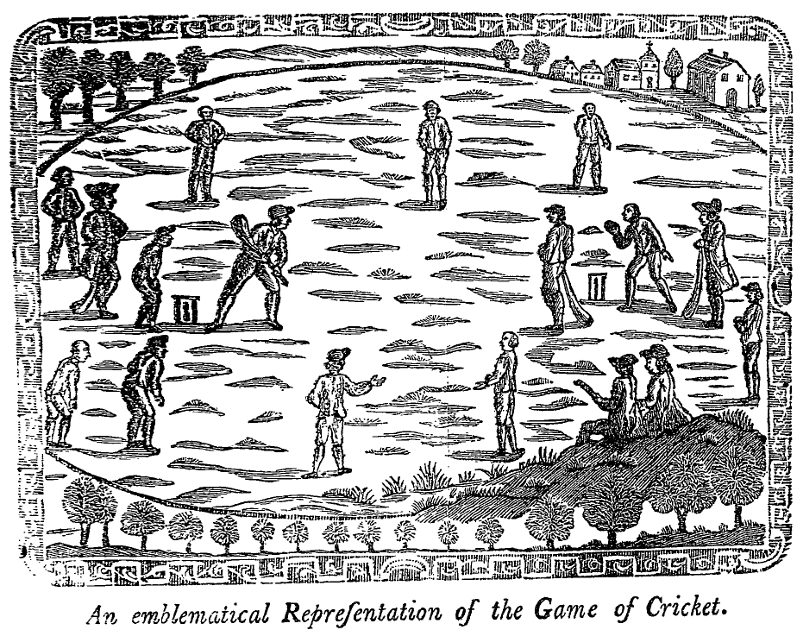
World Cup cricket will enter its second week tomorrow with the initiated and the uninitiated hopefully in an ecstatic mood. But cricket can be a confusing game. The game was first played in England over 300 years ago. Written and pictorial records of cricket go back to the Plantagenet era. A gentleman, because only gentlemen played the game then, A R Littlewood ,wrote a book called the Earliest Known Laws of Cricket, The Code of 1744. This stated, amongst other things, that the length of the pitch was 22 yards, and so it has remained up to the present day.

Fifty over cricket, the format of the World Cup games, has developed rapidly in popularity over the last half century. The game continue to evolve especially in law changes and bat and ball development mainly in an effort to make the game more popular. These changes usually bring criticism from the staunch traditionalist. Under scrutiny  currently are bat sizes, mainly brought about by memorable innings from efforts of  A B de Villiers, Corey Anderson and Chris Gayle who have scored centuries off a mere thirty plus balls. Many are blaming the size of bats currently in use.Bat dimensions permitted in the laws of cricket are  96.5 centimetres in length  and 10.8 centimetres in width and bats are made to suit lefthanded and righthanded batsmen . The bat that Chris Gayle uses in the current World Cup has 45 millimetre  edges.

Blaming bats for the recent prolific scoring has been scoffed at by Chris Gayle and English captain Eion Morgan and come under criticism from the bat manufacturers. Allrounder Dan Christian possibly puts it into perspective when he states that the two 200s and the twice broken fastest centuries  have also been in the period since the two new balls  and only four fielders outside the ring rule have been in use.

Cricket is a game piled high with records and statistics. Do you believe that the following ten efforts are unbeatable? Don Bradman’s 99.4 test batting average; Muttiah Muralitharan’s 1347 international wickets; Jack Hobb’s 61,760 first class runs; Jim Laker’s test match bowling figures of 19 for 90; Wilfred Rhodes’ 4204 first class wickets; Australia’s sixteen consecutive test wins twice, once under Steve Waugh and once under Ricky Ponting; Chaminda Vaas’ one day international bowling figures of 8 for 19; Graham Gooch’s 456 runs in a test match; Phil Simmonds economy rate of 0.3 in a one day international and Chris Gayle’s 20/20 century off just 30 balls.

And just to add to the novice’s confusion there are at least eleven ways for a batsman to be dismissed. He/she can be caught, bowled, leg before wicket, run out, stumped, hit wicket, handled the ball, obstructing the field,hitting the ball twice, timed out, and retired out.

And if you want to be in a complete state of confusion the field placings such as third man, long on, long off, slips, gully, point, covers, midwicket, and fine leg will ensure that.

And then you have the wide variety of balls that can be bowled, the off break, leg break, googly, chinaman, doosra, flipper, Yorker, arm ball, slider, full toss  and of course the Aussie favourite the underarm!

ENDS

First Published in The North OtagoTimes

Does New Zealand’s legal system favour some ahead of the rest of us?

ICCWC15As I See It By Terry O’Neill.

Does New Zealand’s legal system favour some ahead of the rest of us?

2014 Junior World Cup promising rugby star Tevita Li (19) was caught drink-driving in Auckland last May. Last week the Blues-contracted player was discharged without conviction by Judge Gus Andree Wiltens as long as he paid $210, the costs to establish his blood alcohol level. Judge Wiltens took into account that Li completed The Right Track programme and alcohol counselling, and justified his decision because, “A conviction would prove to be a real impediment to what so far has been a stellar career. All indications are that you can go a long way in rugby.”

A conviction possibly would restrict Li’s international rugby travel, and if he pursued a career overseas, teams may overlook him because of that black mark against his name. After his rugby days a clean record would keep the door open for his intention to follow his father into a police career. Another Blues player, George Moala, recently found guilty of assault with intent to injure, appears for sentencing in May, and will apply for a discharge without conviction. Try telling an ordinary 19 year old club rugby player that’d be a fair deal.

Recently I commented on former Olympic triathlete Kris Gemmell. The Court of Arbitration for Sport ruled Gemmell a 15 month ban after Drug-Free Sport NZ had appealed the NZ Sports Tribunal’s decision not to impose a sanction on him for missing a drug test in August, 2012. Last week the Tribunal cut his ban to 12 months stating his conduct would not be a violation under the new rules confirmed January 2015. Gemmell, basically vindicated, lost his International Triathlons Unions athletes’ committee role plus his position as its Global Head of Partnerships for the world triathlon series. He retired from international competition after the World Cup in 2012 but remained on the drug testing programme because he intended to involve himself in long distance racing.

Who had the self-righteous knife out at Drug-Free Sport NZ? Another graceless Tall Poppy blitz.

The Cricket World Cup kicks off next week amidst concerns for security during the tournament. If visitors seek easy access to NZ over the tournament period, visa-free entry is permitted provided an individual’s cricket interest is proved with, say, game tickets. This visa-free entry is primarily to allow ease of movement for cricket fans between NZ and Australia. Many “cricket supporters” from countries for which visas are usually required to enter NZ, have apparently used the “loophole” for easy entry. By last week 94 people had travelled here under the arrangement and others were prevented from boarding flights to NZ. Several Chinese passengers emphasised their intention to attend games and produced Cricket World Cup tickets as evidence but, ironically, those games were scheduled after their NZ departure dates.

And what a temptation to anyone “terroristically” inclined.

ENDS

Note: this version differs from that published in The North Otago Times.