Unknown's avatar

About SJPONeill

Retired(ish) and living on the side of a mountain. I love reading and writing, pottering around with DIY in the garden and the kitchen, watching movies and building models from plastic and paper...I have two awesome daughters, two awesome grand-daughters and two awesome big dogs...lots of awesomeness around me...

The Big Gun

The Business End (c) Michael Yon 2010

There is no doubt that the A-10 Warthog is one of the coolest aircraft ever, no argument…it was designed to do one thing and one thing only: kill tanks. Against the mass exposed targets so thoughtfully provided by the Iraqi Army in 1991 and 2003, it proved eminently successful. So successful that the fast jet jocks who run the US Air Force that were scheming to do away with the A-10 were forced to back down and implement long overdue upgrade programmes. Unfortunately the production jigs for this flying tank had already been destroyed so what we have now is what we’ve got.

The thing about the A-10 that makes it so successful is not just its big gun but the fact that, in addition to dishing it out, it can take a ton of punishment as well everything about this aircraft is designed to bring the aircraft and its pilot back after a hard day converting armour to pillars of smoke. The same could not be said for the A-10’s proposed replacement, an F-16 with the 30mm GEPOD pod strapped to its belly. Not only does the F-16 totally lack the armour and built-in survivability features of the A-10, e.g. like two engines, experience with the gunless versions of the F-4 Phantom showed just how much you lose with a bolt-on gun and how little extra you might gain in ‘adaptability’. That then A-10 for all its utility in the complex environment is a diminishing resource is due to the undue influence of ego over fact within the senior echelons of the USAF. Similar mindset in the Navy maybe why the A-6 Intruder’s successful career was prematurely terminated after Gulf 1 in favour of multi-role-ism.

Similar ego-fed posturing seems to be behind the US hard-line attitude towards Iran and its nuclear programme. The sole redeeming feature of the current US rhetoric is that it appears to have more substance than the WMD arguments that led it into Iraq (and didn’t that work out well?). The nuclear genie is well out of the bottle and the US just needs to get over it, more so since it tacitly supported Israel’s nuclear weapons programme in the 60s and 70s; has opted to partner with Pakistan against the Taliban (also supported by Pakistan!), and take a ‘hope it turns out OK’ approach to xenophobic North Korea. The Sunday Herald reports that the US appears to be restocking its base in Diego Garcia with a range of earth penetrating bunker-buster munitions – of limited utility in Afghanistan except against cave complexes but ideal for disrupting work in underground research and storage facilities.

This is a worry on two counts. Firstly, you’d like to think that the most powerful nation in the world might be able to shift weapons around the planet without some journo plastering it across the media. Secondly. you’d also like to think that senior staff in the US Government might get over the unfortunate events of THIRTY YEARS AGO, get with the 21st Century, and realise that one of the reasons that the Islamic world burns effigies of The Great Satan every Tuesday is ego-driven idiocy like this. As Scott Atran says in his Edge article Pathways to and From Violent Extremism:
The Case for Science-Based Field Research

In sum, there are many millions of people who express sympathy with Al Qaeda or other forms of violent political expression that support terrorism. They are stimulated by a massive, media-driven global political awakening which, for the first time in human history, can “instantly” connect anyone, anywhere to a common cause — provided the message that drives that cause is simple enough not to require much cultural context to understand it: for example, the West is everywhere assaulting Muslims, and Jihad is the only the way to permanently resolve glaring problems caused by this global injustice.

If the road to Hell is paved with good intentions, then the spritual of the road gangs is Bomb Bomb Bomb, Bomb Bomb Iran

The New War #1 – An issue of resolution

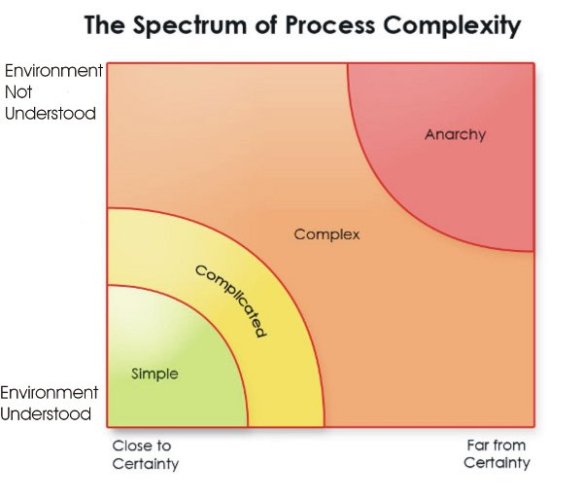
Over the past few months I have alluded to the characteristics of this ‘new war’ that fell out of our review of contemporary COIN doctrine a couple of years back. In From These Things We Draw Strength last week, I commented on GEN Mattis’ statements of obsolete thinking and William Astore’s illustration of flaws in the technology-dominated ‘shock and awe‘ philosophy that arose after DESERT STORM. While I don’t agree 100% with all their comments (I imagine that both will be devastated to learn this!!), I do agree that we are not teaching the right things to ensure a good foundation for successfully operating in the contemporary environment and that we remain too fixated on the philosophies and doctrines for defending the Fulda Gap. Over the next couple of weeks, I will list the key characteristics of this new war, especially how it differs from conventional force on force, state versus state conflict, under the heading of The New War.

An issue of resolution

My use of the word ‘resolution’ in this context is in terms of fidelity and granularity as opposed to resolving actual issues – although there is a clear link between the two.

The first and possibly most important of these differences is that originally passed on to me by USMC LTC Michael Scheiern at the ABCA Coalition Lessons Analysis Workshop (CLAW) in Salisbury in September 2005. Although this was a good two years before we even considered the conduct of the COIN review, I still consider that conversation with LTC Scheiern a tipping point in my grasp of operational concepts.

The Scheiern model, as I call it, essentially states that we have progressed from platform-based tracking to individual-based tracking; in other words we are now less interested in platforms like ships and aircraft, or groups like fleets, wings, and brigades, and much more focused upon individuals. This change reflects not only the nature of the contemporary adversary and the effects of popular support but also the potential of individuals within friendly forces to create disproportionate effects within the mission-space.

This has two immediate effects upon our preparation for and conduct of operations.

Firstly, we must ensure that each and every team member (soldier, sailor, airperson and Marine) meets minimum standards of skill, competence and behaviour. In a mass-oriented conventional force, we can accept a far higher level of adequate but below par personnel because we are mainly interested the performance of a collective group or platform. In the COE, the careless or unthinking actions of a small group of our people, as at Abu Graib Prison, or even an individual, like Hasan at Fort Hood, can have far-reaching effects, that are totally disproportionate.

Secondly, we must be prepared to manage information at a far higher resolution than was ever required in the less complex days of large-scale conventional conflict. It is not just the same geospatial (where and when) and general status information in more detail; in essence there is no limit to the type, nature and scope of the information that now must be tracked. This is further complicated by the fact that it is not even clear which information might actually be significant until after the fact.

In this particular area, I don’t claim to offer any solutions other than to champion those forums that do evaluate technical solutions e.g. CWID, and those, like the CLAW, that review and identify capability gaps so that at least we might know what we don’t know. If nothing else, we should now understand why ‘complexity and uncertainty’ feature so strongly in contemporary writings; we should be talking about how these issues affect us and our forces and how we think they might be mitigated.

The bottom line in all of these ‘new war’ characteristics is that we must continuously and consistently teach them; and equally so practice working in this environment whenever and wherever possible.

One Step Off Anarchy

The Long Tomorrow

Yes, I know…on Thursday, I said I’d start listing the characteristics of the contemporary environment ‘tomorrow‘…but between twins, sick animals and wife being home for the weekend, some things got nudged off to the side…the first instalment will come off the slips tonight…promise…

This is cool

mountain moto 2010

Following through on my resolve to renew old contacts, I rippled off a number of LinkedIn connection requests to LinkedIn members in my email address book. One of them runs a Christchurch-based company, FX Bikes which manufactures and distributes “…the world’s lightest off-road motorcycle, a superlight dirt bike that crosses over between motocross and mountain bike to form a totally new category of ‘mountain motorcycle’…” with an all-up weight of only 57kg – I’ve carried packs weighing that much!! I first came across the Mountain Moto in 2004 when the FX Bike New Zealand marketing tour came through Waiouru…as a former despatch rider on the trusty old XL250, many was the time when a ditch, log, fence or other easily climbable obstacle became a real war-stopper so I saw a real appeal in this new design from the start…unfortunately, I was somewhat alone in those thoughts and FX got a fairly cool reception from capability managers back then “…it’s just a mountain bike with an engine…!” Thus it is quite satisfying, five years on, to see that this is now “…Under evaluation by NZ Special Forces and Police Search and Rescue, under consideration by US Army…

The California Office

Man dogs

Michael Yon, has (finally) given up on bashing and gotten back into serious writing.

Two days ago, there was a series of coordinated IED attacks in Kandahar City “… Details still sketchy but the “Consolidated SITREP” indicates multiple explosions at 1937hrs. 1) BBIED at al-Jidad Market, vicinity Indian Embassy; 2) VBIED at Sarpoza prison incl SAFIRE/RPG; 3) SVBIED at Red Mosque; 4) VBIED Police HQ approx 20 KIA incl 12 ANP, 8 Unkn; 5) Attack PSS (type attack unkn); Total approx 30 KIA incl approx 20 ANP and 10 LN. 97th MPs responded. No known Coalition Casualties. HWY 1 closed to civilian traffic until further…” The bill to date stands around three dozen civilians and ANP – Afghans killing Afghans…

His latest Dispatch Man Dogs provides an interesting commentary on the technological contrasts of this conflict (with some stunning imagery) and also upon the true nature of suicide bombing…the abuse of fellow Afghans and Muslims by their own…this is not a ‘nice’ war as much as we try to distance ourselves from the realities and create a ‘no eggs broken’ omelette…

One comment on the Facebook page raises some interesting issues regarding metrics and combat indicators “…So sad – lives lived to kill or be killed. I’ve read Afghan women and their young daughters, in case of being raped and they survive, keep rat poison handy to commit suicide rather than endure humiliation…I’m also aware of use of a wide variety of drugs by the insurgents/suicide bombers to perpetuate Man Dog behaviors: epinephrine to embolden the bomber/shooter and squeeze out the last drop of blood in a “hyper”-pumping, dying heart, narcotics to dull the pain, speed, cocaine, etc…
Michael, the troops and you have encountered numerous weapons caches and young human shields on housetops. Any comments regarding drug caches and abuse among insurgents that pose an even more asymmetric aspect of war our honorable, decent troops face?…
” While we focus upon the IED trail to the left and right of the BANG, and the obvious components of bomber, bomb components, initiation devices, etc it may be that the dishonour/drug combination can be added to the list…

…and on NATO…

…Guaranteed that many troops who have served here will have sharp feelings/thoughts about some Coalition partners. Some partners get accolades — others would be better off at home. It’s not one big happy family over here. A lot of partners simply do not pull their weight, and you will see complaints do not always involve U.S. I’ve seen Italians complain about Spanish, and French complain about Italians, for instance. The Dutch say the Germans don’t pull their weight. (But the Dutch are leaving while the Germans are sending more troops.) We are lucky that NATO never faced a serious enemy because, fact is, we have very few credible partners. Most of the partners cannot fight. The Taliban will crush nearly all of them. If we left, and the rest of NATO gave it their very best effort, the Taliban likely would be driving captured NATO vehicles through Kabul within a couple years. The Taliban would blast these bases to smithereens if the U.S. were not defending against the rocket/mortar attacks. (Saw that in Iraq — U.S. bases got hit, but partner bases got pounded like pinatas.) This war has been an eye-opener. Most of our partners are weak. Pitifully weak...”

Portable books

I’ve been an Audible subscriber for almost 10 years and  been a believer in portable reading for a long time. One of the problems I have been grappling with for a while is the sheer bulk of information that comes across my desk these days. I find myself continually tempted to print out reports, articles, papers etc for reading away from the PC and so have a growing mountain of paper that can only be searched the old-fashioned way. Dean @ Travels with Shiloh is trying out a ‘nook‘ and so far it seems to be working well. I’d tried this with both iMate and Blackberry and found the experience of reading a PDF on such a small screen somewhat unsatisfying – I’ll be watching Dean’s experiment with interest…

Marines ‘get it’

Hardly any surprises there. Neptunus Lex comments on the Marines’ approach to COIN in Afghanistan where they are apparently creating some ripples in the pond of the ‘nice’ war…”…CENTCOM’s strategy is to protect population centers using the “oil spot” strategy of Baghdad. The Corps, on the other hand, is seeking to minimize the Taliban’s freedom to maneuver through vast swaths of otherwise uncontested battlespace outside the cities as they did in Anbar…” Good to see that at least someone sees the folly of the CENTCOM ‘Cursed Earth‘ strategy…

Kilcullen on horticulture

Nah, just kidding…but what if David Kilcullen had taken horticulture instead of political anthropology…it’s entirely feasible…my last commander had a degree in zoology…

Anyway, this site still gets a number of daily hits from people searching for information on Michael Yon, BGEN Menard and the Tarnak Bridge incident aka Bridgegate – sometimes when I am bored I type in some of the search terms to see what pops up…this time around, I found a thread on Milnet.ca, which appears to be the official forum of  the Canadian forces (why don’t we have one of those?) and it’s thread on Bridgegate is hardly complimentary to Mr Yon…hardly surprising, is it?

One of the the hits in my search of the Milnet site brought me to a treasure trove of links, called the Sandbox, on Afghanistan. One of the linked articles was The Boston Globe‘s Mowing the grass in Afghanistan, published on March 2…this guy, H.D.S. Greenway, gets it…

‘MOWING THE grass’’ is the term frustrated soldiers use to describe the war in Afghanistan. America and its NATO allies sweep in and clear an area. But, once they leave, the Taliban creep back like weeds in the lawn and the allies have to mow it all over again.

General Stanley McCrystal wants to put an end to grass mowing. He plans to hold Marja and has brought in his ready-made Afghan “government in a box.’’ Can it last? And what of other Marjas? Since it would take a foreign army of many hundreds of thousands to stand on every blade of grass – a force level we will never see – the war will continue.

Part of the problem is the very nature of Afghanistan, driven by ethnic, tribal, and linguistic rivalries. It is governed best when it is decentralized, playing to its strengths rather than its weaknesses. But the United States and NATO have tried to build a highly centralized state, lumping regional commanders together and ignoring tribal differences.

Apart from Christmas, I’ve been at home since the beginning of November and it being summer (or as close as we are likely to get this year) I have spent a reasonable amount of that time out in the garden. My main gardening mission this ‘summer’ is to root out all the buttercup (an evil strangling weed) from the garden and then eradicate from the rest of the Lodge section and then the Chalet as well. In doing so, I have made the most of the opportunity to contemplate the similarities between COIN and gardening.

Buttercup is insidious. I’m not sure yet how it initially inserts into the garden although I suspect birds are the only real common denominator. Once it takes root, it will gain strength while sheltered and concealed, usually unwittingly, by other plants; it spreads locally by extending tendrils under the leaves of plants and grass, strangling them as it goes. It grows through bushy plants where it is difficult to back-track to a root that can be pulled  complete from the soil.

The enemy - elusive and tenacious

The temptation is to just blitz the garden with Roundup and start over on the scorched bare soil remaining. However this is hardly ever practical for a number of reasons. Our monthly rainfall is quite high even in ‘summer’ so baring the earth only opens us to erosion. There are already established communities in the garden which are not readily transplantable and which have grown over long periods of time – to try to regrow them would just take too long. Other communities are protected in other ways, often alliance with other power blocs like my wife whose trip-wire retaliation policy is quite clear. Other communities again offer too much in the way of practical value to be subjected to a bare earth strategy: these include vegetable gardens and the flower beds serviced by the 20,000 head of bees that graze the ranges here over summer.

Other conventional weapons are often equally ineffective against an adversary like this. In other campaigns we have found the use of the goats and sheep to be quite effective but attempting to apply this lesson in this campaign was not only ineffective but was grossly detrimental to the overall war effort. We found the hard way that the goats conventional targeting methodologies were more likely to take out useful infrastructure and productive parts of the biosystem while leaving the main adversary untouched…it would appear that goats find it difficult if not outright impossible to accept the targeting paradigms of this new war.

Precision strike is an option approved under current domestic rules of engagement so long as due diligence is paid to wind direction and water courses. But as we all know, precision strike is a bit of an oxymoron: event the most precise strike is almost bound to create so collateral damage, even when applying with high-tech precision technologies like a weed brush. And buttercup, like the typical insurgent, doesn’t exactly advertise its presence and precise location unless in a position of strength. Often sighting a leaf or two will result in an area pattern spray in order to best take out the whole plant; same-same for spraying along the tendrils. This responsible engagement seems to offer the best balance between proportional use of resources, effect upon the enemy and being seen to be taking reasonable steps to mitigate unnecessary collateral damage. Yes, you can read into that last statement that there is such a thing as acceptable collateral damage.

Because of the way that buttercup weaves its way into and through existing communities, it is ultimately necessary to get hands-on and surgically remove it. This is not without certain risks. Many of these communities e.g. roses, raspberries, etc are relatively well defended and even with the greatest care, passive defensive mechanisms can inflict quite nasty wounds. Further out in the hinterlands, there are others who would simply prefer to be left alone and who tend to strike lethally at intruders. The worst of these are wasps and due to their somewhat intractable attitude towards compromise, it is usually necessary to destroy the entire nest. Wild bees are also common however these can be bypassed if spotted early and not provoked as can the giant wetas that frequent less traveled areas.

As H.D.S Greenway states in his article, the insurgent is more likely to spring back into a cleared area than more benign and useful communities. Frustrations arising from this ‘whack-a-mole’ resilience often tempts friendly forces into responding with more and less discriminate force – cures that do almost as much damage as the original invaders. The secrets to successful campaigns in the garden are…

To have a clear idea of what you want to do and how you are going to do it.

Accept that it is going to get messy and that there will be casualties.

Know your enemy.

Before commencing operations, agree on the measurables for success.

Ensure that you have adequate resources to fight the campaign properly – time is one of those resources.

Be prepared to get your hands dirty.

There is no such thing as a nice short war in the garden either…

Who are the Taliban?

That’s the title of another article listed in the Sandbox written by an Afghan woman living in Vancouver. Her description of the Taliban could apply across any one of a number of cultures and religions and it is important to note that “…The Taliban are perhaps less easily identifiable than we might think. We are accustomed to thinking of them as bushy-bearded Afghan men with black turbans and kohl around cold eyes, clutching automatic weapons. Yet this is merely the visual symbol of what does, in fact, not always announce itself visually. The Taliban were officially born in 1994. But in truth, they were born long before…” This is where a number of key strategic documents are getting it wrong, among them the 2010 QDR and Australia’s 2010 Counter-terrorism White Paper, in that they persist in identifying “…global violent jihadist movement…” as the “…main source of international terrorism and the primary terrorist threat…” for the new decade. This is no more correct than those who trumpeted urban operations as the new war in 2005-2006. What we should be focusing as the threat facing us for the next decade at least is that alluded to in the Who are the Taliban article, that of those who seek to subject others’ ways of life to their own, those who, in seeking to do so, would destabilise ‘normalcy’ as WE now it…

On similar lines, Neptunus Lex documented an attempt by an Australian Moslem to introduce a parallel sharia legal system into Australia…whatever, if it’s such a great system, why doesn’t he pack his bags and head off to someplace that already has one in place?

Ooops

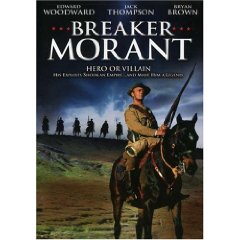
To just take issue with something ADM Mullen said in what’s being referred to as the ‘Mullen Doctrine’ address…”…The Australians are experts at counterinsurgency warfare…” No, sorry, not true at all. Peace support, yeah, sure but COIN? Not since its hey day in South East Asia. Australia is the only Anglospheric nation to not have conducted at least one counter-insurgency campaign on its own soil – even little New Zealand has had four distinct campaigns to determine who actually runs the country. Australia struggled to identify any relevant COIN experiences which to illustrate points in LWD 3-0-1 Counterinsurgency 2008 and ironically, omitted what is probably one of the best examples of the blurred lines and fuzzy responsibility in the complex environment, that of Breaker Morant in the Boer War…
While it’s nice that ADM Mullen has tried to spread the love around the coalition, the fact remains that, apart from political considerations and because it must be nauseatingly tiresome saving the world on its own all the time, the US military doesn’t rally need much help from anyone and really can get by quite nicely (and more smoothly) on its own, thank you very much. The correlative side of this is that if you want to work with the Americans, read the instruction manuals first.

Rapid Fire

Michael Yon still continues to drag the Bridgegate chain in releasing his Dispatch on the Tarnak Bridge attack and who was ultimately responsible for security on the bridge…on his Facebook page this morning, he said “…General Menard is definitely partially to blame. He’s got nowhere to hide. I’ll do this on my timeline, when the moment is right…”  This is the guy who had false accusations on the air in less than 24 hours after the attack… who then said that BG Hodges accepted full responsibility and that he would be apologising to GEN Menard (who I would suggest is not attempting to hide anywhere)…perhaps Mr Yon could enlighten us, and all those he accused over the Tarnak Bridge attack just when ‘the moment will be right‘ and how he goes about determining that? Surely the best time to apologise is as soon as he realised HIS error(s)…?

The story continues

Peter @ The Strategist has set up a new blog to host his short stories…the latest installment of Tales of the Collapse has been released this week…

The Falklands War 2010

No, not really…Cheeseburger Gothic has a thread on the likelihood and likely outcomes of another spat in the South Atlantic between Argentina and the UK…this follows items on The Strategist and Neptunus Lex on the same topic…it seems that the UK is getting a bit squirmy at the thought that the US might not be willing to commit unconditional support for any UK initiatives ‘down south’…funny, that…maybe that’s what happens when you bail and leave your friends holding the baby in places like…aaaahhhh, let’s see…Iraq? I said it there, I’ll say it here…

I posted this on a local blog a week or so ago that took a similar stance. I think that the US (regardless of what you think of the current tenant in the White House) has a right to expect some quid pro quo from its ‘friends and allies’ before supporting them in issues where they have decided to no longer be capable of supporting themselves. I’d dispute the 1 million protesters figure and also note that the UK in Iraq had a backwater AO (compared to the intensity of AOs further north), did nothing but snipe at US conduct of the war especially after the COIN phase kicked off, and had to be rescued by the US in Basra just before scuttling out of the theatre…

From http://kotare.typepad.com/thestrategist/2010/02/britain-us-argentina-falklands.html#comments

Fact time.

– The UK didn’t take a lot of casualties in Iraq…SFA considering they were right up there with the US promoting the cause. They had a backwater AO that the US had to bail they out of just before they ran away back to the UK.

– The UK contribution to Afghanistan is only notable in comparison to the rest of NATO, Australia and NZ. They have scrimped on every pound of support to that campaign (which once again, they talked up in 2001) at the expense of their own soldiers and their allies. They have had to be shamed into providing adequate support to their forces so that they are not a liability to themselves or other coalition partners.

– The UK and NATO were pretty lightweight and ineffective in Yugoslavia until the US bailed them out again in 1995.

– The US worked overtime under the table to ensure that the Brits would win the Falklands War in 82.

– The US had to stand ready to bail the UK and France out of Suez in ‘56 after they made such a botch up of putting Egypt in its place.

– The US had to bail the UK and France out of two world wars and provide the majority of the capability to NATO throughout the Cold War.

In the interests of fairness, I’ll also list those times that the UK has bailed the US out:

Well, that didn’t take long did it…?

So why would the US really give a fat rat’s about Britain’s problems with Argentina, especially since the UK still persists in touting itself as a ‘world’ power…?

If as one comment states on Lex’s item “…Britain is still a “world” power today, once you take American hyperpower out of the equation. She’s one of the very few countries in the world with both the economy and capability to provide “global intervention” military power today…” then Britain won’t really need help from anyone will she…? Certainly not small nations in the South Pacific that had their Argentinian ambassador on a plane home before the Brits could evict their own, that offered ships and troops to free UK forces from other commitments to be deployed ‘South’….

JMS on Superman

In one of my occasional random strolls through the blogosphere I came across this great article by J. Michael Straczynski (of Babylon 5 et al fame) [PDF] on the values he (and we can) draws from Superman…I don’t have much access to modern comic books here…Archie and Jughead are the upper limit in rural bookshops around the Mountain…

Seven fun ways to exercise the mind

Random stroll #2 took me to The Village Wise Woman…keeping the grey matter ticking over is a vital part of both individual and organisational learning – if we allow ourselves to fall into a nice safe comfortable rut e.g. like preparing the defence of the Fulda Gap…then we start to become less innovative and effective and our ability and will to question the things about us atrophies…take a slow day and try one or two of the exercises suggested – even better see if you can make one a habit…

No service = better service

Curzon @ Coming Anarchy describes the Dubai postal service (or lack of) and describes how this actually creates a better postal service for people living and working in a major regional hub and international center of finance and commerce.

The Oscars

Great to see The Hurt Locker take out Best Picture – just as good that it wasn’t any of the blockbuster movies that were nominated…I’m listening to various commentaries as I type and it is a concern that many of them seem to draw the dots between box office income and best picture…using this methodology, would we ever see any movies that challenge us, make us think or nudge us our of our comfort zones…in a few years who, less the scifi geek community, will really remember Avatar? In thirty years will children today describe a scene from Avatar with the same wonder that many today still describe that opening scene from Star Wars (which also did not win Best Picture in 1978), as the Star Destroyer fills the screen? What phrases from Avatar will be used three decades later by people with no interest at all in science fiction? Great bling ≠ great movie…

This year’s winners list

Old doctrine never dies…

Over the weekend both Neptunus Lex and Small Wars Journal have commented on the address by ADM Mike Mullen, Chairman of the Joint Chiefs, at Kansas State University which has been heralded as the death of the Powell Doctrine which dominated US military policy from the 1991 Gulf War. The Lex item links to a LA Times article Top U.S. military official outlines tempered approach to war which doesn’t quite get the right end of the stick in opening with “…The U.S. military must use measured and precise strikes, not overwhelming force, in the wars it is likely to face in the future, the nation’s top uniformed officer said Wednesday in outlining a revised approach to American security…” That’s not quite correct – the full text of ADM Mullen’s address is online and what he is actually advocating re overwhelming force is “…We must not try to use force only in an overwhelming capacity, but in the proper capacity, and in a precise and principled manner…” That is not discounting the overwhelming force option at all – he is saying the force and the approach should be customised to the threat – and inline with a philosophy of comprehensively employing all instruments of national power where they can have the best effect.

The SWJ item is actually a CNP of Robert Haddick’s article Foreign Policy The Long Death of the Powell Doctrine; unfortunately this story has been combined with another story re the potential for Myanmar to build a clandestine breeder reactor on behalf of the North Koreans and/or other bad  people – didn’t they learn from one visit from John Rambo…? The Mullen story is significant of a column all its own, more so when it appears that many are only drawing what they want in isolation from the entire speech. SWJ has a robust discussion on the speech.

The ‘Mullen Doctrine’ which supplants the ‘Powell Doctrine’ rests upon three principles:

The first is that military power should not – maybe cannot – be the last resort of the state.  Military forces are some of the most flexible and adaptable tools to policymakers.  We can, merely by our presence, help alter certain behavior.  Before a shot is even fired, we can bolster a diplomatic argument, support a friend or deter an enemy.  We can assist rapidly in disaster-relief efforts, as we did in the aftermath of Haiti’s earthquake.  We can help gather intelligence, support reconnaissance and provide security. And we can do so on little or no notice.  That ease of use is critical for deterrence.

No arguments there – this finally goes someway to closing the artificial gap between peacetime engagement and operations…there should only really be two types of military operations (always under a national policy framework a la Clausewitz): stability operations which counter any destabilising influences (irregularity) in national areas of interest (domestic or offshore), and war-fighting where specific and intense use of force has become necessary.

Force should, to the maximum extent possible, be applied in a precise and principled way.

I would be more comfortable with this point if it stated ‘military options’ in lieu of ‘force’ as all actions should be applied in a precise, principled AND tailored way.

Policy and strategy should constantly struggle with one another.  Some in the military no doubt would prefer political leadership that lays out a specific strategy and then gets out of the way, leaving the balance of the implementation to commanders in the field.  But the experience of the last nine years tells us two things:  A clear strategy for military operations is essential; and that strategy will have to change as those operations evolve.

I’m not sure that I agree with this last point – the wrangling between senior US military and government officials since 2003 has absorbed and diverted national focus and effort from the job at hand. Perhaps what ADM Mullen means is that the military and government need to have a clearer idea of where each is coming from. We don’t want a military that blindly follows policy without discussion, nor government that blindly ignores concerns from professional operators (this applies in government departments other than the military). The real issue arising from both high level policy strategy is knowing the answer to two key questions:

Why are we here? Clear objectives and the means by which to measure when they have been achieved.

What’s our plan for getting out? Apply the Princess Leia Doctrine “…when you broke in here, did you have a plan for getting out?” A clearly-defined exit strategy, based upon best and worse cases, that is developed as part of initial planning and robustly and regularly reviewed…

What does my boss expect me to achieve and why?

What freedoms enable me?

What constraints restrict me?

Has anything changed since I last thought about this?

My first thought when people start talking about the death of a doctrine is that doctrine never dies – it just gets filed for future reference. This first came home to me at  doctrine working group in Australia in 2006. There was a call from a number of operators and schools for doctrine NOW on convoy escort, roadside IEDs and other pressing contemporary topics and there was certainly a feeling that ‘someone’ had dropped the ball (not New Zealand as it wasn’t a World Cup year) in this regard. One of the things that the Aussies did then – and which I hope they still do – was to have a representative from the Army History Unit attend such working groups; when this call for contemporary doctrine was made, the elderly gentlemen from the AHU called for some semblance of order and advised all assembled that the Australian Army already had such doctrine “…ask your dad, young XXX [the officer who raised the original inquiry] , when he was in Vietnam…none of those topics is new and we have been here before. I suggest you review what’s in the archives and go from there…” In Australia, the Centre for Army Lessons is the default archive for retired doctrine (strangely, not the Doctrine Centre) and over the space of a coffee break, had located a number of Vietnam-era publications that certainly provided a useful start point for contemporary TTPs. I think is because of this, that the NZ Army’s Doctrine Centre (based not far from here in sunny Waiouru) maintains a doctrine library with publications that extend back to between the (world) wars classics like MAJGEN Charles Gwynn‘s Imperial Policing (strangely the only Wikipedia entries on this publication are in Spanish and German).

In last month’s The CoGs in the war go round and round… I discussed the applicability today of some of Napoleon’s writings in his Maxims as part of a broader piece on the Centre of Gravity construct. In this forum, doctrine as defined as what we teach on courses, expand and develop in collective training, and apply with judgement (implied in the real world, not solely on operations) so the traditional ‘out’ that doctrine is only a discussion of fundamental philosophies does not apply here. In purist terms, the Powell Doctrine will not die – the closest it may come is to be quietly filed away until such time as circumstances cause it to be dusted off and reviewed. That so many US pundits are joyous at its ‘death’ is indicative of the urge in the US to disassociate itself from the false beliefs in overwhelming technology, ‘shock and awe’, and adversaries who would cooperatively fold when confronted with the immutable logic of the manouevrist approach that ultimately drew them into the seven years of pain in Iraq.

I selected an image of Trafalgar as the header for today’s post because it is illustrative of both dogmatic application of doctrine (perhaps the  first lesson in any course on doctrine is to emphasise the difference between dogma and doctrine?) and the application of doctrine with judgement. In 1805, it was a capital offence for any captain or commander to not rigidly adhere to the Fighting Instructions in vogue at the time which essentially required opposing fleets to close up in parallel lines and hammer the living bejesus out of each other until a victor emerged or it got too hard due to weather, wind or nightfall…Looking back, this is really not too much different from our approach to state v state warfare where we lined up on respective sides of borders or other lines drawn in the sand until someone pushed the button. Certainly I believe that this linear approach dominated our thinking for the past four to five decades and to a large extent still does as we wrest with the geometrically more complex environment of today.

Nelson opted to disregard the Fighting Instructions at Trafalgar and break the French and Spanish lines in order to defeat them in some detail. Trafalgar was a hard-fought battle and the issues was in doubt for some time – certainly neither the French nor the Spanish were so devastated by this tactic as to strike their colours immediately; if they were devastated by anything it was good British gunnery…It is this ability to appreciate a specific situation, draw from relevant historical and personal experience, and develop a plan tailored to the current situation that we need to (re-)develop and foster amongst our planners and operators. In an area where the military is but just one of a number of instruments of national power, the growth must be applied across government…

Things are Blowing up but no more than usual

Coming Anarchy has an independent view of the progress of the elections in Iraq that is not polluted by the mainstream media’s need for sensationalism and loud noises…it would be nice to think that all the casualties and loss since 2003 will have a positive outcome…

Woof!

The Ironman 2 trailer will screen after the Academy Awards today

Bridgegate

Still waiting for Michael Yon’s Dispatch resolving the Tarnak Bridge episode and publicly apologising to Canada’s GEN Daniel Menard…as his tempo of releases has not slowed, it seems that it is easier for Mr Yon to get rounds of accusation in the air than it is to equally publicly tidy up the mess he makes when he gets it wrong – interestingly still no US or ISAF PAO comment on this story…

On learning

(c) Peter Hodge @ The Strategist

This amazing photo was on Peter’s latest post @ The Strategist…my only comment is WOW! To learn more, click on the image…

This post also carried a link to a recent Business Day article Unhappy workers the key to corporate culture which states organisations that wish to learn about themselves,  for example, what’s working and what’s not, could do worse things that seek out and listen to “…malcontents and marginalised workers in the firm…” Often these people are marginalised or malcontent because they are frustrated in their efforts to improve or progress their work environment. As I commented on Peter’s post, so often I have “…seen a visiting reviewing, audit, info gathering team sat down with the happy-happy joy-joy people in an organisation when they really need to to be getting together with those who have issues (real or perceived) with how the organisation operates…

Most organisations have a fundamental expectation that equipment and processes and staff will function as advertised. To be continually told that this is occurring really achieves little except perhaps a warm fuzzy feeling in the executive washroom. What organisations really need to know is what is NOT functioning as it should, or where things could be done smarter…you won’t get this from the mindless clones of the happy-happy joy-joy brigade. This is the foundation of any Lessons Learned or organisational learning process of system: to get over fear of bad news and actually welcome and seek it out. All to often though, the catalyst for this cultural shift is a king-size punch in the nose.

The most notable example of such cultural change is the US Army in the year from the end of the official war-fighting phase in May 2003 until the true scope of the insurgency was grasped in 2004. In no more than a year, this organisation of 500,000 plus was transformed from one where it was not cool to advertise screw-ups in your area of responsibility to one where it was no longer acceptable NOT to share what went wrong on your patch in order that others might learn and lives be saved…if the pie-in-the-sky plans of Rumsfeld, Cheney et al had actually worked and Iraq had snapped into a functioning democracy as soon as Saddam was toppled, I don’t think that even a quarter of the issues identified in the various post-Phase One AARs would have been addressed, and certainly any cultural shifts arising from those issues would have been incremental at best.

The first step in any Lessons Learned system is to consistently and continuously and honestly capture what’s not working and what could be done better. We found that the format for this is:

What happened? A simple statement that defines the problem or issue, e.g. boot laces keep snapping.

What does it mean? I.e. the ‘so what?’ factor…you can not assume that everyone else will perceive the same or any issues arising from the ‘what happened’ so this needs to be explained. e.g. affects soldier’s mobility as boots don’t fit properly until such time as laces are replaced or repaired – this is not always immediately possible i.e. at night (light discipline) or if spare laces are not available/accessible.

What do you think should be done about it? This is the originator’s recommendation from their perspective and may often serve only as a start point for investigation and bear no resemblance to the final solution e.g. replace the current crap boots with a new brand.

This was an OIL that we came across through direct contact with some of the afore-mentioned malcontents and marginalised who expressed their frustration that this problem was prevalent and nothing seemed to be happening about it. When we pulled on a few threads, we found that higher levels were prone to removing such low-level ‘trivia’ as reports drifted up the hierarchy, based on a misperception that high-level issues should be disseminated up to high levels. The response back down was more than often the good old ‘harden up!’

Investigating the actual issue was very frustrating because there was a continual stream of ‘no fault found’ with every test conducted on the laces held in stock. It was only in examining the boots that it was found that the fault was not in the laces but in a batch of lace eyelets that had an exceptionally sharp inner edge – the action of pulling a lace tight also pulled the lace over this edge which cut into the fibres of the lace. Murphy’s Law of laces states that they will always give way at the least convenient time, typically 0300 on a frosty no-moon night on a patrol in the tussock.

The solutions that were put in place were to:

Withdraw the affected boots and have them repaired by the manufacturer.

Review Quality Assurance processes for future boot shipments.

Review the defect reporting process.

Discuss with headquarters staffs the importance of NOT attenuating reports as they rose through the chain of command, including those issues that perhaps they could actually resolve at their own levels. By keeping these to themselves they constrain the ability of others to learn from them.

Man’s Best Friend

Neptunus Lex has a touching story about a boy and his dog…things you wouldn’t see your cat doing for you…

Bridgegate

Still waiting on Michael Yon’s Dispatch in which he winds up the Tarnak Bridge drama AND apologises to Canadian general Daniel Menard…

Getting out of the square

Travels with Shiloh discusses the need for intelligence operators to have training in snapping out of conventional squares to consider problems in the complex environment. I agree and think that his 2007 suggestion of using movies like John Carpenter’s The Thing as the basis for scenarios to achieve this has considerable merit. I had a similar idea in the early 90s when i was just getting into PC gaming that young officers could be given certain games to play that would broaden their problem-solving thought processes…TacOps springs to mind immediately but for some reason Megafortress springs to mind – will have to see if I can find my old notes on this…to add a pain/risk factor, it was suggested that they play for places (or not) on the monthly duty/orderly officer lists…

I also agree with Dean’s comments re using tactical decision-making games (TDG) – the Marines have been using them for years – I think they still publish one at the back of each issue of the Marine Corps Gazette? – but everyone else seems a little slow on the uptake. The zero defects people seem very cool on the idea unless each TDG comes with a 17 page ‘white’ sheet that details all the possible permutations and variations of solutions so that the supervising staff would be put on the spot and find their own knowledge and or capabilities challenged. I think this is a fundamental lack of understanding of what TDGs are for which is to allow students and instructors to explore the application of principles and considerations in different environments and scenarios and to totally NOT focus on any perceived need for the solution to be a thing that Norman Schwarzkopf would be proud of…

The double standard of nice war

Coming Anarchy discusses the drone ‘war’ in Pakistan. The acceptance of civilian casualties in this campaign against the Taliban seems to be in stark contrast with ISAF’s squeamishness in engaging Taliban hiding behind civilians in Marjah. Maybe it’s only OK to kill civilians in a war zone by accident where you (and the media) can’t see the bodies…? It’s probably all the same to the dead…

A rank outsider?

Many moons ago, I mentioned how much I enjoyed District 9, both as a movie in its own right and for the deeper themes within it. I’ve been following the District 9 Facebook page for a few months now and was rapt to see last night that it has been nominated for Best Picture for the Academy Awards this weekend…

Congratulations to producers PETER JACKSON & CAROLYNNE CUNINGHAM on their Academy Award™ Nomination in the category of BEST PICTURE for DISTRICT 9!

Did you know? Peter Jackson was originally going to produce Director Neill Blomkamp’s vision of HALO, but when that fell apart, he offered Blomkamp $30 million dollars to make any movie we wanted. District 9 was that movie.

District 9 is also up for Oscars® in the categories of Best Adapted Screenplay, Best Editing, and Best Visual Effects. Watch the 82nd Academy Awards™ THIS SUNDAY March 7th!

The FB item links to this article Oscar shocker: Could ‘District 9’ win best picture?

“It would be nice if the Academy surprised us. They don’t surprise us very often,” says Betsy Sharkey, film critic for the Los Angeles Times.

“If something unexpected walked away with an Oscar this year, particularly in the Best Picture category, it would say volumes to the industry,” says Sharkey.

“That Best Picture prize sets the tone for whole Oscar show. An unexpected win would get people talking and make the Academy Awards more relevant than they have been in a long time,” she says.

I, for one, would really like to see an adventurous enterprise like District 9 pip the big studios at the post this weekend – not only would it send a message to Hollywood (although whether Hollywood is actually listening is another issue) that we do actually want original innovative and entertaining movies not endless rehashs and remakes of someone else’s good ideas but it is another score on the board for the New Zealand film industry and the magic Mr Jackson. I haven’t seen Avatar – it been a while since I have been in a city big enough to have a 3D screening of Avatar with time on my hands to go to the movies and Carmen’s description of it as “Fern Gully on steriods...” hasn’t really motivated me that much – or The Hurt Locker yet but I think my second choice for Best Movie would have to go to The Hurt Locker if for not other reason than its topic and setting.

Bridgegate totters toward resolution

Michael Yon Facebook ‘Bridgegate’ posts in the last 24 hours…

#1

After the Monday attack, the Generals are avoiding responsibility for security of the Tarnak River Bridge. Worse, nobody is claiming responsibility for the bridge this morning. Tarnak River bridge, three miles from me, is a strategic artery. The Commanding Generals failed on Monday. They are failing today. Confidence in RC-South and TF-K leadership is plummeting. Dark clouds for the upcoming Kandahar offensive.

#2

U.S, considers Afghan command structure changes. (While they are at it, they might consider getting some generals down to Kandahar who know how to secure a little strategic bridge.)

This item links to an article on “…The United States and its allies are considering setting up an American-led command in southern Afghanistan to oversee operations in a key battleground province, U.S. officials said…” This is interesting and aligns with comments made when I was in the UK last year that the US war machine is very powerful and superbly organised to operate with itself and when you get right down to it, it doesn’t really need (from an operational perspective) much help from anyone to get the job done. Blistering coalition elements into US organisations often only creates unnecessary and drag-inducng friction, more so when those elements do not or will not (hello, UK, are you there?) read from the US playbook. While sharing command across other coalition members may make for a nice stand of flags in the higher headquarters and a strong ‘feel good’ factor for senior coalition staff, it is not an efficient nor an effective method of WARFIGHTING…”We’re not in PSO-ville now, Toto…

#3

Got a call out of the blue from the office of Brigadier General Ben Hodges. We will meet in 90 minutes at his office.I have only two questions. 1) Which Coalition partner was responsible for the security of Tarnak River bridge on Monday, before the explosion. 2) Which Coalition partner is in charge of security at Tarnak River bridge now.

That’s it. If the answer is fuzzy, the answer is that nobody was in charge of a vital bridge. Otherwise, the answer will be that X was in charge on Monday while X1 is in charge today. Simple questions, simple answers. We’ve got 20 minutes. Should take less than five.

It’s been astonishing that it has taken from Monday to Thursday afternoon. Meanwhile, there remain combat leaders whose soldiers cross that bridge every day, who do not know who is in charge of not letting their soldiers get blown up.

#4

Summary of meeting with Brigadier General Ben Hodges: The result was unexpected. General Hodges courageously accepted full responsibility. My respect for him doubled in about 30 seconds. Henceforth, Strykers will “own” the bridge. Bottom line: problem solved. BREAK. Something very important came up tonight, so will give accounting Friday. The accounting will include an apology from me to General Menard.

#5

Working on dispatch with more details about the Tarnak River Bridge. There are many assumptions flying in comments — often talking (incorrectly) about assumptions made here. Surprises are coming. Suggest cease fire until facts are presented. Some folks are wedging into corners by making assumptions about ‘assumptions.’The detailed dispatch will contain email traffic. After facts are presented, it will be a simple matter for pros to check the trail. (Many pros on this FB.) Remains amazing that MSM missed the fact that a strategic bridge was hit, and instead focused so much on hockey.

Have meetings today with Special Forces and others re ongoing matters. Further details on Tarnak River Bridge will not be published today. Will present ASAP.

Yon’s final Dispatch on this topic should be released today and I expect that it will make for interesting reading…

Travels

As I mentioned a couple of days ago, I was on the road the last couple of days on job-seeking activities: had what certainly felt like a very good interview in Taupo on Thursday, and a very interesting day yesterday exploring some alternatives that are closer to my heart, including a couple of left-field initiatives that had me buzzing the whole drive home.

I stopped for dinner, well, fish’n’chips anyway, at the Fastlane Takeaways in Waiouru which we used to frequent regularly when we were living there: sorry, guys, but that was YUK!!! Even the dogs weren’t too sure about the muddy-tasting fish…so you’re OFF the Eating Out list and I’ll be transferring my allegiance to the shop in Ohakune next to the Information Centre…

Hitting the target

Dartboard

Ironically, the Intentional Development website (edit 4 Feb 13: removed the link as it was dead as the proverbial door nail – managed to recover the image via the power of the Wayback Machine) from which I took this image specialises in…

Freeing the embedded wisdom of an organization’s most valuable assets (human resources) currently constrained by titles, roles, politics and procedures.

Mobilizing personnel at all levels to truly participate, become involved, and internalize objectives as their own so they willingly and eagerly contribute to solving their organization’s challenges.

Creating the circumstances and the environment to facilitate change.

Possibly there’s a job for them in Kandahar…?

The Canadian National Post has published Canadian Forces comment in response to Michael Yon’s criticism this week of security arrangements around an important bridge that was damaged in an attack near Kandahar this week. Interestingly, it is Michael Yon who disseminated the link to this article via his Facebook Page.

The release points out that “…all the land surrounding the airport has long been the responsibility of the Royal Air Force Regiment, a British infantry unit that specializes in protecting airports from attack. Most road checks in the area are carried out by Afghan National Police while sweeps for improvised explosive devices on the major highways in Kandahar are done by a U.S. Army Stryker brigade or by U.S. combat engineers attached to them...”

Although a whole three people have commented on the National Post Article, hundreds have offered comment on Yon’s items on his Facebook page, including this one on the RAF regiment in Kandahar…

Never seen this bridge Michael, but as a lowly British Inf NCO, am I making a fair assumption that as a natural/man-made choke point, this should have been identified as a weak point, in oh I don’t know…2 seconds? Therefore reinforced/defended accordingly?

On a slightly related note, there was some talk of the RAF Regt and their role. I personally have no love for them, being Infantry, but they do carry out a role that frees up our Army reservists who can get out and do their jobs. The RAF Regt’s mission is base/airfield protection and security up to 8km from the airfield. I believe this bridge was 10 miles out or something? Far from passing the buck, it should be asked then why this was not identified as an issue, and who was responsible for providing the security for a known high value choke point?

The article then goes on to link the Yon items with “…a growing frustration on the part of some Americans that NATO has put four U.S. battalions under Canadian command in Kandahar…the Americans answer to a Canadian who answers to a British major-general who in turn answers to an American. This is coalition warfare at its best…” At its best, huh? Sounds like an overly-complex recipe for buck-passing and gaps you could drive a LAV (or a VBIED) through…one mother’s comment on Yon’s Facebook page “…This was coalition warfare at its worst…a bridge was blown up! They should have to place the calls to us mothers…

Funnily enough, after presenting the current command and control  environment around Kandahar as hunky-dory, the National Post concludes “…the issue of who commands what in Kandahar is particularly sensitive at the moment, with NATO planning a major offensive in the province later this spring…

Meanwhile back in Kandahar…Michael Yon remains on the offensive… submitting two questions yesterday to Task Force Kandahar regarding the Monday bridge attack:

1) When will the bridge become fully operational?

2) What measures are being taken to prevent such attacks in the future?

A few hours later…Task Force Kandahar just answered the two questions I submitted yesterday. The TF-K answers beg for follow-up, which has just been submitted. Will publish in full when this is over. Something fishy going on.

And about an hour ago (all times are pretty lose as the Facebook clock leaves a lot to be desired)…

Bridge Update: Much information flowing. Just went through long conversations with key people. BLUF: the bridge has become an Orphan. TF-Kandahar says TF-K is not the father. We are waiting for U.S. Brigadier General Ben Hodges to say who is responsible for the bridge. BG Hodges is the Deputy Commander for RC-South. The British command RC-South. The Commanding General is Nick Carter.

My gut, based on what am seeing all over, is that this is between RC-South and TF-Kandahar. TF-K clearly has responsibility, as does their parent command RC-South. While the British command RC-South, the Canadians TF-K. The US is just sort of here under an obtuse command structure that can’t guard a strategic bridge ten minutes from the front gate of one of the biggest bases in Afghanistan.

Bridge situation — This smells like rotten fish. At a bare minimum, someone(s) at General Officer level dropped the ball. Going to take more time to sort this out and get the facts straight. One certainty: it’s not pretty.

A few minutes later…

Menard vs. Carter

Bridge failure heating up: TF-K has, for all intents and purposes, blamed RC-South for allowing the bridge to be attacked on Monday, resulting in the death of a US soldier and serious damage to a vital bridge. The controversy has reached the respective Generals at TF-K and RC-South. For those who understand the dynamics here, Brigadier General Daniel Menard (TF-K boss) has shifted the blame to Major General Nick Carter (RC-South boss).

This has become a dinosaur fight — Menard vs. Carter — wherein little people can get crushed.

If nothing else, ‘Bridgegate’ sends a clear message to ISAF that it needs to seriously up its Information and Influence Operations game…it is probably too broad a stretch to imagine that the Taliban planned or even anticipated this spatting between coalition partners but they must be loving it. It is a pretty simple question: who is responsible for the security of this bridge? Surely it must be in a clearly defined Area of Operations assigned to a specific formation or unit? That ISAF has resorted instead to bureaucratic tap-dancing and not released any comment on the issue is perhaps indicative of deeper rifts within the coalition. Jim Molan recounts in Running the War in Iraq that, prior to the final battle for Fallujah GEN Casey directed him “…in no uncertain terms to ensure that there was no more than a one-hour turnaround between an allegation appearing in the media and our response being fired back…the information fight required less physical courage and sacrifice, but was just as important as the combat on the ground…

Certainly from many of the comments on Yon’s Facebook posts, there is considerable anger in the US at Canada’s stated intention to withdraw from Afghanistan and at those NATO partners who do not pull their weight (which would probably be most of them). This latter issue was a theme in Yon’s posts last week before the bridge attack and I do wonder if the US, or some in it, are not running their own IO campaign to expose those who are not holding up their end of the stick…?

New word of the day

Thanks to Dean at Travels with Shiloh for today’s new word ‘fobbit’, replacing ‘poug’ and ‘REMF’ as a term of endearment for those personnel that spend the larger proportion of their deployment in camps and bases. This is not to say that these personnel do not perform valuable and vital functions in support of operations nor that it is their fault that higher minds decide to introduce as many home comforts as possible into these facilities. I do think however that it behooves such individuals to always remember where they are, why there are there and who they are supporting before bemoaning the quality of the GoatBurger at BK-Kandahar…

Edit: Oh, the joys of working in the information age!! Just as I was writing up ‘fobbits’ and hit the publish button, Michael Yon posted this link to a great description of the Life of a Fobbit in Afghanistan. Although humorous in nature, it is a reminder of the vital role that ‘fobbits’ play and I think that this blog, on the adventures of staff in a currently deployed Forward Surgical Team will be well worth watching…

Acronym of the day

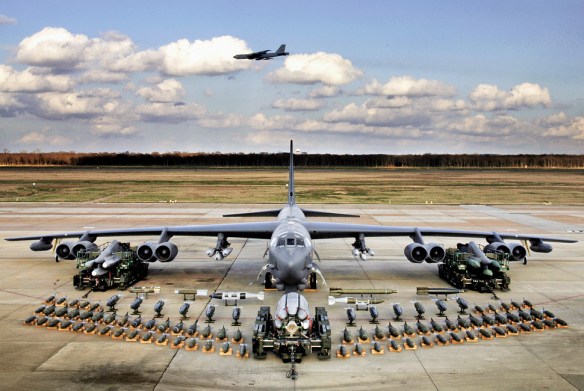
From Michael Yon’s posts, BLUF = Bottom Line Up Front, not to be confused with that ultimate hearts and minds tool, the BUFF:

b-52-bomber-2.jpg

BUFF