Unknown's avatar

About SJPONeill

Retired(ish) and living on the side of a mountain. I love reading and writing, pottering around with DIY in the garden and the kitchen, watching movies and building models from plastic and paper...I have two awesome daughters, two awesome grand-daughters and two awesome big dogs...lots of awesomeness around me...

OBL is Dead! Let Us Rejoice? — Not so fast. . .

OBL is Dead! Let Us Rejoice? — Not so fast. . .. I just thought that this post was so good that there is nothing meaningful I could add to it other than ‘have a read‘ and then ‘have a think‘…

Edit: this post (mine not Cecilia’s excellent piece) was just a little too minimalist (first time I have used ‘Press-It” so know for next time) so I have added a lead-in image with a  Reflections theme…

PDF: OBL is Dead! Let Us Rejoice_ — Not so fast. . . – Inspired Vision

A job well done…

From this....

...to this...

...to this.

Carmen and I filled in the trench late yesterday afternoon with assistance from four four-year olds ( 2 x two-legged, 2 x four-legged – hard to say which was the most helpful…) and are assured fresh, clean water….it’s been a bit if a saga since the old tank was damaged in a  storm last year but all done now…you can see some of the rocks excavated along the way in the middle picture, about a ratio of one barrow load of rocks to every barrow load of spoil…until I gave up on barrowing the rocks away and just dumped them on the edge of the pit…not quite as bad as digging in around Feature Golf at Tekapo and certainly no rocks we couldn’t handle: only one we had to hook the truck up to and brute force out of the way…

Painting the tank, pipes and the top bit of the garage will bring this year’s development project to an end…

I wonder what’s on the cards for next year…

A legend in its own mind

This week the air campaign in Kosovo is examined. The gradualist/risk strategy was employed despite its apparent discrediting in the Vietnam War. This led to a conflict between the commanders. General Short wished for the implementation of a punishment theory. It remains true that ground forces were not committed. However, was it the air campaign alone that achieved the favourable outcome or is there other factors? Was this a true convergence of ‘effects’ generated by the fortuitous or planned combination of offensive military action and the actions of a range of non-military players?

The gradualist (graduated escalation?) strategy was discredited in Vietnam? The elements of strategy and tactics that were discredited in Vietnam (and other conflicts where the same has occurred) were those that were separated from the professionals in those fields and dictated largely by powerful but inexperienced (in warfare) politicians.

Ground forces were not committed in Kosovo? So which famous armoured brigade crawled over narrow mountain roads into Kosovo? (Clue: its emblem is a rodent) Who raced the Russians for Pristina airport? Who’s still there now? While the air campaign may have helped set the scene for a relatively successful positive outcome to the Kosovo campaign, let’s not forget that the other instruments of the DIME (Diplomatic, Informational, Military, Economic) model were also decisively engaged in regional, domestic and international fora; and that these elements also deserve recognition for the roles they played in the campaign.

Russian vehicles mount a road block at Pristina Airport. A British armoured fighting vehicle and Landrover provide assistance

It might actually be argued that Serbian land forces would have been more decisively engaged had a land campaign been conducted in the traditional manner. The ability of the air component to engage Serbian land forces proved to be far more difficult than in the super-optimal environment of Kuwait and southern Iraq, and there is considerable evidence that a large number of targets engaged were ‘spoofs’. As events in the Falaise Gap (1944), Quang Tri province (1972) and the road to Basra (1991) showed, land forces in contact and on the move are significantly easier to engage with aerial fires.

Questions

Given that the first Gulf War concluded with a notion of air power being capable of winning wars, how has the employment of air power since then challenged that assumption?

This notion existed in a very few minds and if there is one single reason for air power’s lack of traction as an equal component of military power, it is the constant assumption of achievements that do not exist. Air power did not win the Kosovo campaign, Gulf War 1,or the Battle of Britain any more than my three-legged floppy-eared Spaniel. Not only do the domains operate together as part of the joint environment, there is no solely military solution to conflicts and these military options are employed as part of a whole of government inter-agency and broader comprehensive approach.

The notion that dominated military thinking after DESERT STORM was that of the revolution in military affairs, the dreaded RMA, but not one in air power. DESERT STORM was the first conflict where information had been employed as a decisive tool. As it turned out as the 90s unfolded, much of the hype from that conflict was simply just that, hype; but at the time it had swayed the minds of the world to justify both the conflict and the methods by which it was conducted. While the application of air power may have influenced the withdrawal of Iraqi forces from Kuwait, that movement did not actually start until after the commencement of the ground war. This action offered an unacceptable threat to Iraqi land forces and forced the withdrawal, or maybe rout would be more accurate. While air power advocates may crow over the road to Basra, it is arguable whether that level of destruction was actually necessary or that it contributed anything meaningful to the conclusion of the conflict. For whatever reasons, air power was also unable to deter Iraqi repression of Shia in southern Iraq.

So how have events since March 1991 challenged the assumption that air power won the 1991 Gulf War? Quite simply there has not been a single campaign or conflict that could claim to have been ‘won’ by air power. To flip that around, every conflict since March 1991 has required ‘boots on the ground’ (or ‘boats in the water’ in the case of counter-piracy campaigns) to force a conclusion:

Somalia. 1992-95 and current. Air used for ISR and mobility; a strong air bridge into Mogadishu during the former campaign. All decisive actions fought on the ground with air in support.

Bosnia. Resolved by the deployment of a powerful US force prepared and empowered to play the warlords at their own game, meeting force with force. Primarily a land mission during the decisive post-Dayton phase with air in support.

Rwanda. Air could have played a decisive supporting role here in 1994 by enabling the mass airlift of troops to reinforce the small UN force and reduce if not halt the genocide.

Kosovo. See above: possibly a contributor to the scene setting before the deployment of land forces, however there are arguments that the air campaign was largely counter-productive and actually strengthened Serbian resolve.

Bougainville. The 1997 deployment of peacekeepers (withdrawn in mission success in 2003) was supported by air for ISR, local mobility and maintenance of an air bridge for resupply and reinforcement.

Solomon Islands. 2000, 2003, 2006-current. Land force deployment supported by air for ISR, local mobility and maintenance of an air bridge for resupply and reinforcement; air transport also employed during various NEO during these periods.

East Timor. Major ground force deployment (division level) supported by air for ISR, local mobility and maintenance of an air bridge for resupply and reinforcement; kinetic air support also stood to during the lodgement phase in 1999.
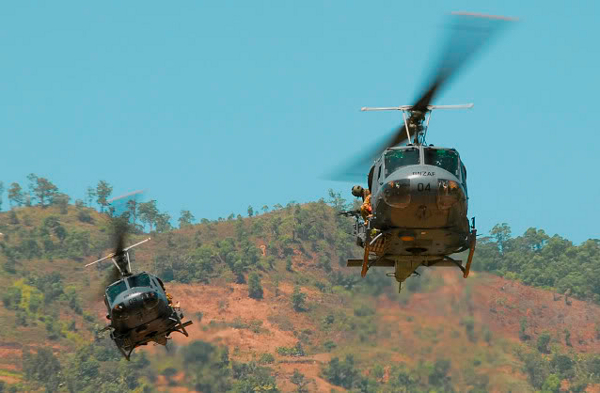
RNZAF Iroquois helicopters fly Australian troops in Dili, Timor-Leste.

South Ossetia. Major, albeit one-sided land force on force confrontation between Russia and Georgia, with air in support (primarily on the Russian side after Day1) for ISR, strike, mobility and CAS.

Chechnya. Primarily a land conflict between conventional Russian forces and irregular Chechan forces; significant air resources employed by Russia to no discernible positive value.

Iraq. The primary effect of the no-fly zone campaign and its associated sporadic strikes into Iraq 1991-2002 was to keep the wounds between Iraq and the US open and festering. While the ‘shock and awe’ aspect of the opening of OIF was feted, the reality is that a decisive land campaign was always identified as the decider in this campaign, both the Plan A campaign to May 2003, and the insurgency to mid-2010. While ‘shock and awe’ can trace its roots through the Powell Doctrine of the 90s back to the ‘triumph’ of Gulf 1, the primary driver behind it was SECDEF Rumsfeld’s belief that greater reliance on technology would reduce defence costs by eliminating large numbers of expensive personnel.

Afghanistan. Neither the British (between the wars) nor the Russians (1979-89) were able to quell local tribesmen by air. OEF was always predicated on a strong land campaign supported by air. The air bridge into Kabul in the earliest days of the campaign was a key enabler for early successes however air has remained in a supporting role to the land campaign. The mission to take down OBL was a land mission supported by air i.e. no UAV-delivered PGM through the window.

Sierra Leone. Primarily a land-based peacekeeping operation. The British JPR mission in 2002(?) was a land force mission supported by air for mobility and CAS however use of kinetics was hindered by misperceptions of proportionality with the rules of engagement.

Israel v Hizbollah. A classic example of how not to do it. Not only would any other aspect of the DIME model been better employed to counter HIzbollah rocket attacks into Israel from Gaza and Lebanon, but the use of air power as Israel’s tool of choice not only illustrated how behind the times Israeli military thinking was but also had the opposite effect to that desired, regionally and in the court of world opinion.

Libya. The ultimate (so far) example of how not to employ air power. Not only has this meddling extended a minor internal conflict into one likely to drag on for years, but it has seriously damaged the credibility of air power as a decisive force and its advocates. Already some NATO nations are trickling land forces (under the guise of training and liaison) into Libya to attempt to recover the situation. This is what happens when you start to believe your own press.

It is to our benefit that the one strategic scenario where the use of the air and space would have had a direct and decisive effect on the outcome of a conflict is the one that has never come to pass…
Good use of colour

(c) Lily aged 4

A new release by ‘Lily aged 4’. displaying exceptional use of colour with clear direct and subliminal imagery which gets her message across in manner which is crisp, concise and to the point…it’s a pity that we can not expect the same from the socalled professional media…

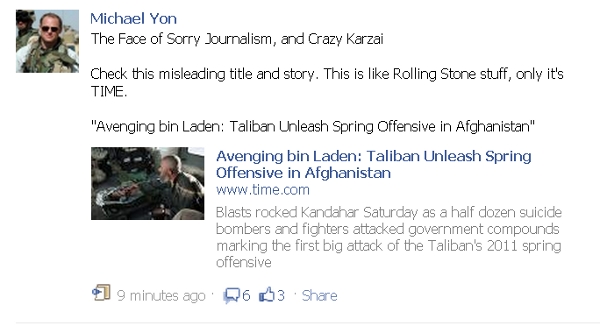
Michael yon yanks Time’s tail for if not directly telling porkies, then definitely playing fast and loose with reality…the Taliban have initiated a spring offensive!!! Wow!! What have they done every other spring since 2003…? If Time wanted any credibility at all in this article it might have found a source better than Hamid Karzai whose grip on reality is tenuous at best…

And still on the Yon trail – in a good way again(Wow!! twice in a row – is Mike reforming?) – while I accept Nancy Colasurdo’s point in Spotlighting Loyalty and Our ‘Confirmation Bias’, I don’t agree that Mike was wrong in calling for a boycott of Rolling Stone magazine for its Kill Team story. I do not believe that the positioning of the Kill Team story with the roadside checkpoint video was an accident or an error – the intent was for readers to join the dots and form a totally erroneous opinion – that is both dishonest and not in the best interest of those at the sharp end of this conflict – certainly not those in US uniform – and I assume that Rolling Stone still considers itself an American magazine? No matter what one might think of the conflict in Afghanistan, how we got there or where it’s going, these are issues to be raised with politicians not targeted against those who serve… (a fine distinction perhaps – is what politicians do regarded as ‘service’?)

Yon’s call for a boycott of Rolling Stone advertisers became even more timely when the results of the Pentagon’s investigation into the circumstances leading up to the dismissal of GEN McCrystal by President Obama following another skewed Rolling Stone article were released last month…

Pentagon investigation clears McChrystal of all wrongdoing | The 

Pentagon Investigation Casts Doubt on Rolling Stone’s McChrystal 

General McChrystal did not violate US military policy, Pentagon 

SURPRISE, SURPRISE: Pentagon internal investigation of “Runaway 

General McChrystal did not violate US military policy, Pentagon 

So..until such time as Rolling Stone tidies up its act, it should be hit where it hurts the most – while is not in the court of the media where the more controversy the better the ratings but in the bank account…as Michael Yon discusses in Rolling Stone: Boycotting Advertisers

Getting back to the Spotlighting Loyalty story…I do like the point that she raises in regard to confirmation bias…a year ago, I had no idea that such things existed; well, certainly not that such a body of social science existed around them. I have been doing a lot of reading about this and other biases and am planning an article on some aspects of them and their employment…or the practical employment of that supporting science anyway…

In other news

FM 3-24 is being critiqued again…when will it register with some people that this was the right book at the right time – FOR IRAQ – and that it was never intended as the universal panacea for all thing not major combat operations…

Fighting Al Qaeda To Fight Liberalism, that I got from Dean at Travels with Shiloh…has given some food for thought but with all the big words, it’s become a bit of a mouthful…some more digestion required nefore I draw any conclusions from it…

Over at the new Unofficial Airfix Modellers Forum, I have started to populate my work area and also started a build (which I may finish) of Trumpeter’s 1/34 128mm PAK 44


Weekly Photo Challenge: Wildlife

1 December 2009…was watching TV one wet-ish afternoon and turned around to see Bambi checking out the vege garden…two kinds of fortunate: firstly, that I had the camera in my hands good to go, and second, nothing in the garden particularly attracted him otherwise he would have ended up in closer proximity to a number of vegetables in an oven bag…

This weeks WordPress Photo Challenge

Totally wild, Bambi would just wonder in from time to time…have a nosey and wander off…he was a treat for city folk staying at the Chalet who would often discover him on the front lawn on misty mornings…haven’t seen him for almost a year now and suspect he got poached from across the fence…

Come on plane spotters!

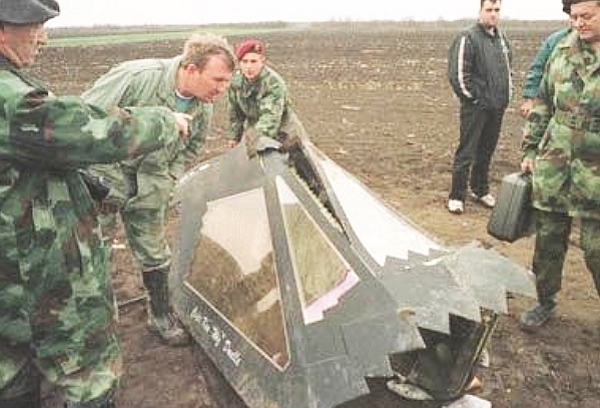
So it wasn’t just me…I was looking at the Reuters images in the Wall Street Journal of the OBL compound this morning and being a bit of a train spotter wondered about the angle that this image of wreckage from what was allegedly an SO Blackhawk was taken from…had a lot on today and just figured that maybe it was some sort of noise or signature reduction shroud around the rotor and went back to work. But it’s been niggling away all day and I was glad to see this Wired article asking the same questions.

My second guess was that it might be one of the trial RAH-66 Comanches out into SO service but Comanche, from memory, has a fenestrom enclosed tail rotor like Gazelle and Blue Thunder…hmmm, this will be interesting to watch…and maybe it leads towards a better explanation of why the helicopter crashed in the first place (experimental and or prototype) and b. why it was blown during the raid and not simply left for recovery post-raid while Pakistan taps dances around the big question of who knew?

I guess the design engineers at Italeri and Testors will be gearing up to get an extrapolated full version into the market before Christmas, noting their previous experience reverse engineering stealth design…or maybe something in paper…

It would be so great to think that something cool, new and nice was part of this operation…it all just adds to the almost fairy tale feel of the whole story, regardless of how poorly it is being handled by the White House…to paraphrase Princess Leia “When you went in there, did you have a plan for getting the information out?” Some interesting speculation over at Secret Projects

(Un)reality Check

The Gulf conflict is considered with regard to Warden’s five ring model and the concept of the self-contained air campaign. The criticisms of Warden’s theory of parallel warfare will be analysed as will its relevance to a smaller air force such as the RAAF.

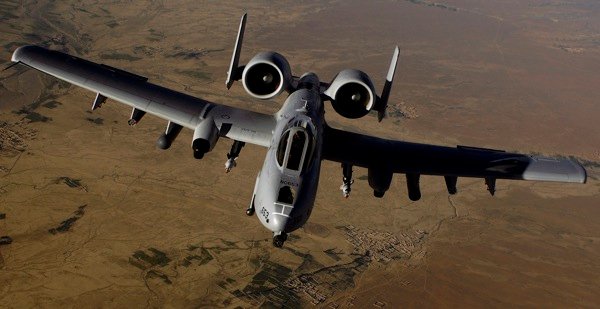
The 1990 Gulf War was a little more, from an air power perspective, than Warden’s largely discredited theories. It saw the first real demonstration of the US’ global air power reach with B-52 missions launched from CONUS; it demonstrated the rift between USAF and USN where the only common ATO format was printed paper; it validated the role of CAS aircraft like the A-10A, to the immense disgust of the fast jet fraternity; it proved the value of SEAD as a key enabler and tactical alternative to low-level strike e.g. the RAF Tornado airfield attacks on Day One; it saw the advent of stealth and practical information technologies; and it saw the birth of the myth of surgical warfare….

Questions

1. Warden & the self contained air campaign – is it now possible for air power alone to force a favourable conclusion to any conflict?

Only as an exception to proven rules. The number of times where air power alone had a strategically decisive effect on the outcome of a conflict could be counted on the fingers of one hand:

The Doolittle Raid which provoked strategic stupidity (Midway) on the part of the Imperial Japanese Navy.

The Battle of Coral Sea which ended the Japanese advance south.

The two USAAF atomic bomb missions against Japan.

The Berlin Airlift was the first major Cold War confrontation and proved Western resolve to stand up to Uncle Joe.

The Linebacker II campaign which lead directly to the settlement under which US forces withdrew from South Vietnam.

2. Warden sees wars as essentially discourses between policy makers on each side. Is the implication that all actors are rational and will achieve rational results, a valid one?

There is not much evidence to support any proposal that any aspect of human behaviour is governed by rationality. Discourse between policy makers is diplomacy, not war.

3. The mind of the enemy and the will of his leaders are targets of far more importance than the bodies of his troops. Does Warden differ from Clausewitz with this assertion?

No. Warden’s ‘theory’ is nothing more than the popular interpretation of Clausewitz’s Trinity (government, people, military; or, for the COE, leadership, people and action arm) with icing on it but not adding much of anything new. Warden’s take on this has been described as “…if you hit enough things with a hammer, eventually there will be a reaction…” i.e. Warden’s application of force in Gulf War 1 was not a precise surgical application of force and there is yet to be any connection shown between the ‘Warden’ campaign and the eventual eviction of Iraqi forces from Kuwait. On the other hand, the systematic obliteration of those forces and those in southern Iraq was definitely a key factor in the Iraqi withdrawal.

Ultimately, an history bears this out time and again, it is the will of the leader(s) than is the ultimate target and determinator.

4. Did a special set of political circumstances allow the Gulf air war to be so seemingly successful?
Not really. Gulf War 1 was the first real information war when a large part of the conflict was ‘fought’ on the television screens of the world. A disproportionate amount of coverage depicted the socalled surgical strikes; considerably less was devoted to the proportionally more attritive air campaign conducted against Iraqi land forces in and around Kuwait.

If so, would it be wise to draw universal conclusions from it?

No but unfortunately, many did, adopting as doctrine (or maybe dogma?) that a clean surgical war was now possible. After the air power false triumphs in Bosnia and Kosovo, this culminated in the ‘shock and awe’ campaign that opened Operation IRAQI FREEDOM in March 2003. Eight years down the track, this misperception still exists although with reduced popularity and it is currently being disproved again in Libya. It may be that Ghaddafi reads and applies more air power doctrine than NATO…

5.  Do Warden’s theories as employed in the Gulf War only have application in state-on-state conflict?

If ‘If you hit something often enough, it should break’ is the theory, then, no, it can be applied more broadly; whether it will be any more effective than it was in 1991 though is debatable. It would more doctrinally sound and have a greater chance of success to stick with targeting Clausewitz’s attributed trinity: leadership, people, action arm.

Colour Me Devastated

…in regard to the closure of the file on the late and unlamented OBL…

Ronald Reagan warned bad guys that they could “…run but not hide…” and George W. Bush undertook that the perpetrators of 911 and those who supported them would be hunted down…no matter where they go or how long it takes…good on Uncle Sam for being true to his word…

I’m more concerned with the issues surrounding disposal of the body…without some irrefutable proof of death the legend of OBL will live on…how long will it be before the first reports of OBL and Elvis bare-backing riding the Loch Ness Monster…? But, either way, a clear message, a reminder, has been sent out, serving notice that bad guys are not untouchable and certainly not safe in their refuges…just the intel haul just from seized computer hardware will have hard drives spinning at Langley and Fort Meade for months…and what terrorists will not have an enhanced pucker factor (EPF) when helicopters fly overhead for the next few weeks..?

I was driving through the Volcanic Plateau when Radio Live stopped for the live feed of the President’s address. I was a bit miffed that I hadn’t any advance notice of the announcement as it was leaked on the net just as I left home – this detracted from the full effect of the news…reception was broken through Erua and I was reminded of, many years ago, being in the jungle trying to tune into BBC News on a little handheld transistor.

I had to pull off the road when I found a clear reception window to listen to the announcement…as the story unfolded, I had two mental images: one of the sirens on the destroyers as they steamed untouched through the Navarone Channel; and the other of the slow drum roll at the end of The Sands of Iwo Jima before the gentle strains of The Marine Hymn…sounds of quiet triumph, a job well done…

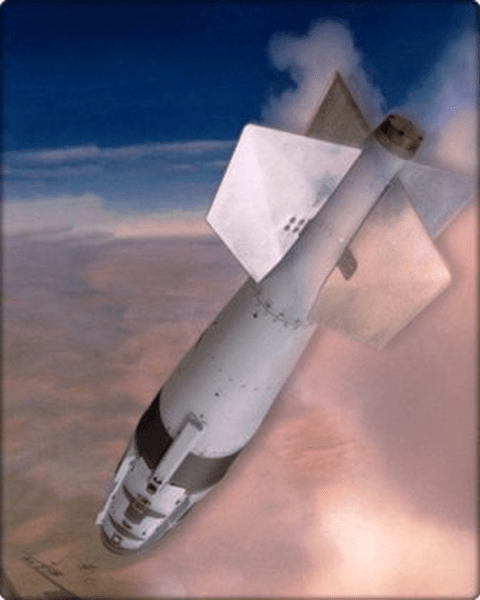
And, I have to say, I was happy that this chapter in the war was done the old-fashioned way, boots on the ground, and not with an anonymous JDAM through the bedroom window.

You can run but you can not hide…

Bad guys, take note…

Coming soon to a sanctuary near you…

Well, I’m impressed…

(c) Baris@UAMF

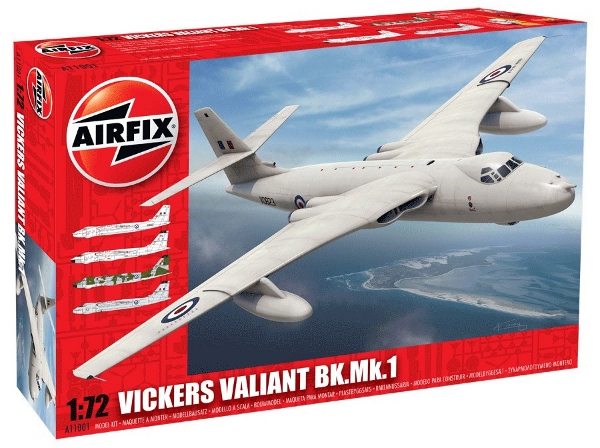
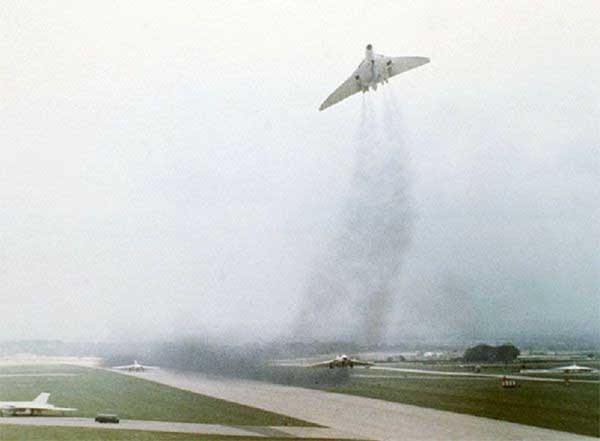
One of my virtual stomping areas, the Unofficial Airfix Modellers Forum, UAMF for short, has just relocated and upgraded to a new site and a long history of issues with its host at forumer…with the 21st Century Airfix going from strength to strength and with its new Valiant due out any day, this site will also go from strength to strength…not only does it have an iconic focus but it is also mercifully free of the prima donna modellers that haunt some other sites…the old site will be locked off but remain as an archive…The transfer process has been about as painless as such things can be and a hearty well done to those who have been beavering away behind the scenes for the last few months getting it all set up and tested…

So you want to run an air campaign…?

The aim of this week’s seminar is to evaluate, ‘what is an air campaign?’ There is an argument that there is no such thing. The term is a modern one: it was a strategic air offensive against Germany, not an offensive air campaign. But our aim is to try and discern what actually is involved in mounting an air campaign. Clearly it is a lot more than highly trained young people operating very expensive pieces of equipment.

The task for this week is different to the other seminars as it is not a set of questions.

 Task

You are sitting in your office and your superior drops in. You are informed that a non-military group is visiting your workplace to gain a better understanding of the military. Your boss recalls nominating you for the Advanced Air Power Course and tasks you to contribute by providing a brief on air power.

Your boss directs you to prepare a paper on what you believe to be the elements of an air campaign, the planning factors involved and why you think that these considerations are important. Your boss does not want a detailed written brief. A short, dot point brief will suffice.

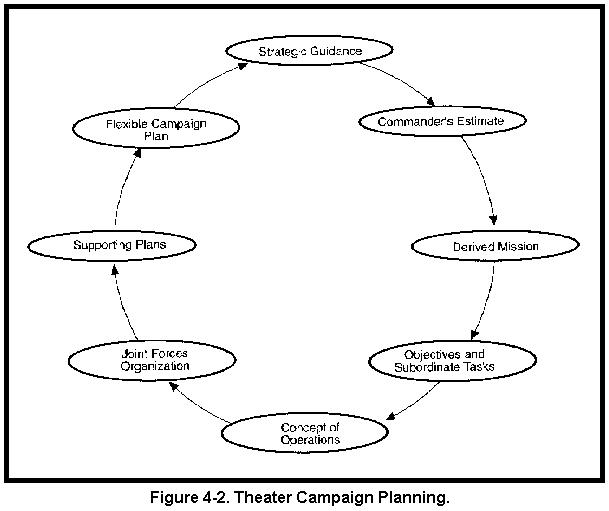
More correctly, perhaps, the air component of the joint campaign…? There is less planning for an air campaign per se than there are air-specific aspect of planning for the campaign – but these sit a fair way down the planning food chain…thus the key elements of an air campaign are largely those for a campaign…so what might those elements be…?

My boss says I’m not allowed to play with bullets but here goes…

·         Why are we here? What does the Government want from our involvement? There is often a big difference between that which is publicly stated and the effects actually desired.

·         How are we going to do that? This leads to developing various courses of action to achieve the desired effects.

·         What will define our point of exit, i.e.  measures of success or otherwise? To quote Princess Leia from the original Star Wars “When you broke in here, did you have a plan for getting out?

·         Are we leaders or led?Are we sending a self-sufficient force or discrete capabilities to support others?

·         What/who will we use to do it? This is a natural product of developing the ‘how’ above.

·          Who will we be working with and what issues arise from that, and more so in ad hoc coalitions? Is there a lead nation? Do we subscribe to their (or compatible) doctrine? Who arbitrates the differences?

·         How will we meet our sustainment leads? Always a good topic to consider prior to departure and to burst any assumption bubbles?

·         When do we have to be there?

·         Are we ready for this? Or do we need a build-up period to achieve an operational level of capability for this campaign?

The answers to these questions provide the framework which is fleshed out and developed by the layers of detail questions that follow…leading to a campaign plan Within the campaign plan will be specific lines of operation dedicated to achieving specific effects and this is where specifc environmental (air, land, sea, SF, etc) roles and tasks are developed. The detailed planning of specific air tasks lies under the heading of ‘Conducting Air Operations”….