Unknown's avatar

About SJPONeill

Retired(ish) and living on the side of a mountain. I love reading and writing, pottering around with DIY in the garden and the kitchen, watching movies and building models from plastic and paper...I have two awesome daughters, two awesome grand-daughters and two awesome big dogs...lots of awesomeness around me...

AS I SEE IT

IMG_2054

By Terry O’Neill.

Gradual improvements in practice continue on concussion issues with the horizon a far distant mirage. It sounds simple: “a temporary unconsciousness or confusion caused by a blow on the head” (Concise Oxford English Dictionary), and from the Latin concutere: to dash together or shake.

The issue’s always with me. Fifteen years ago our younger daughter was squashed and bashed in a vehicle collision and the devastating effects of her serious head injury will be with her, and the family, for the rest of her life. There’s no outward sign of disability, and her good looks mask her debilitating injuries within. She married and gave birth to two sons and fatigue dictates absolute rest daily after lunch with demanding tasks sometimes rescheduled next morning, and also she has to accept outside help with children and housekeeping – for a “normal” life that will never be normal again. Nevertheless, magnificent therapies, and all that love can do, means her confidence still improves and she “has a life”.

Concussion in sport may have additional dimensions.

In an earlier “As I See It” column I quoted Ireland’s Dr Barry O’Driscoll whose strong opinions lead to his resignation as a leading IRB medical advisor because the IRB introduced the controversial brief concussion bin, and this five minutes Pitch Side Concussion Assessment (PSCA) was later extended

Rugby players’ collisions vary in impact and severity but former All Black James Broadhurst has suffered a nagging headache for six weeks, and consequently, is ruled out of the remainder of the 2015 ITM competition. Broadhurst, a one test All Black, copped a couple of head knocks against Wellington in August and played until halftime. Broadhurst’s plea to players: “Don’t try to tough it out. I took a knock and thought I’d be all right. Two minutes later I copped another one that cost me my ITM season.” Now he wonders if his rugby career is in limbo.

While research continues on concussion after effects, it’s essential to also focus on causes of head knocks. Tackling in rugby needs to be redefined. The growing number of former rugby league players employed as defence coaches introduced the chest high tackle to control or slow ball distribution. This technique increases head to head clashes. Should rugby encourage the redevelopment of “around the legs tackling” with the head safely behind the opponents knees? Should we not examine the style of rugby whereby there are too many mismatches with bigger and heavier forwards consistently used as first receivers against lighter tacklers? Should supervision be more intense at the breakdown where players individually throw themselves head first into the fray?

Tentative moves are afoot whereby rugby tackling above the shoulder can earn a penalty. But wheels of change turn too slow.

Barry O’Driscoll insists the power of television, and the huge commercial influence, highlights the glory of the club, or the team, and not player welfare. Will only a fatality accelerate those wheels of change?

Parents won’t encourage their children to participate in any sport where the well-being of each player is not the paramount concern.

ENDS

AS I SEE IT (25 Sept)    

12027209_10153620398757070_3435476567489201117_o

The Slippery Slope – Tongariro Alpine Crossing 15 September 2015 (C) Adrift Outdoors.

By Terry O’Neill.

The inevitability of gradualness. A significant statement used to indicate a specific slippery slope as illicit actions, apparently condoned, lead to a deteriorating moral climate.

Formal protocols are part of rugby organisation and this year North Otago introduced a NZRU one designed to assist club and representative rugby during the game. It clearly sets specific areas for players, coaches, medical staff and water boys during play, and this strategy is overseen by the match manager wearing a high visibility vest appropriately labelled.

Protocols are only as good as those appointed to enforce them. No matter how essential, they fall apart when administrators fail the challenges of their duty.

An instance smacked of this at Levin Domain last Saturday when no other than Horowhenua-Kapiti coach Jared Tanira went outside the boundaries where he was required to be during the game. Nobody indicated to him he was absolutely out of order. Would the North Otago coach be accorded the same privilege?

Who was the match manager? The logical choice was Union CEO Corey Kennett but that day he was also the Horowhenua-Kapiti manager as well as liaison manager for North Otago! My queries lead to assistant referees on the sideline, all local referees. None was inclined to tap their Tanira on the shoulder and point out the error of his ways.

If the NZRU are going to inflict such protocols on local unions, these will be toothless if not respected and applied fully and equitably by unions. People involved will ignore them if they judge them to be bureaucratic puff.

Eventually the inevitability of gradualness sinks to deterioration of what was once highly prized, integrity and honour in the sporting code or a particular aspect of our society affected. Think of other examples of retrograde steps when protocols or laws are modified or not fully addressed as required.

Similarly there are attitudinal trends locally. We’re constantly aware of people thumbing their noses at laws and bylaws because experience has taught them those laws are not followed up. The illicit seems to become acceptable.

Individuals with enough arrogance for their personal convenience may feel we owe them a right to park vehicles across footpaths, yet obstructed pedestrians have a right to walk there. Consider those who park on the street facing the wrong direction. Note cyclists not bothering to wear the required safety helmet, drivers using cell phones on busy highways and intersections, and so on. Sadly maybe NZRU’s sensible forthright directives on game protocols might go the same way, into nothingness.

One highly respected and endearing North Otago rugby character, whilst involved before today’s technology, ran on the field at breaks in play to pass on words of wisdom to players, water bottle in hand. Towards the end of the game, after another incursion onto the field, the referee called the miscreant aside, and whispered: “If you’re going to come on as a water boy put some bl…. water in the bottle.”

Once upon a time the referee was the judge of what was, and was not, acceptable.

ENDS

Weekly Photo Challenge: Change

Quote

In response to The Daily Post’s weekly photo challenge: “Change.”

March 2012 140

The Smithsonian opens: peace to pulse…

DSCF6491

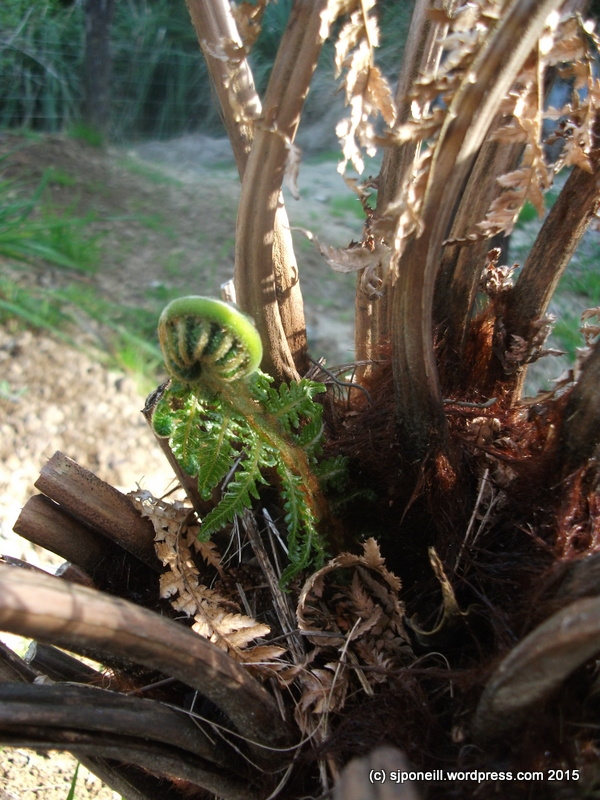
Koru: winter to spring…

Scale Models Expo 2014-225

Upper Hutt: boarded to bustling

DSCF7313

Autobahn: sedate to seductive…

AS I SEE IT

old gold

North Otago’s 25-23 victory over East Coast in Ruatoria, 07/09/13. Photo (c) Gisborne Herald

by Terry O’Neill.

Five Forks livestock manager Duncan Kingan’s “other life” complements his day job looking after heifers. Weekends and intervals during the weeks spanning the rugby season, he’s better known as Old Golds rugby manager, a position he’s held for the nine years since his long stint as Valley premier manager.

In May his season begins, and is hands on till competition ends in late October.

Once Heartland announces the draw, NZRU presides over a conference phone call with all Heartland managers,” Duncan (56) said. “Discussion on the season covers any new protocols and rule changes, and mirrors the ITM setup.” When the Heartland competition launches in late August, for each “away” fixture he contacts the opposition liaison officer to ensure any North Otago pre-match training and warmup requirements can be met.

“The first practice of the season extends to taking individual uniform measurements and generally to indicate management’s expectations of players, on and off the paddock.

Much of Duncan’s responsibility is behind the scene organisation such as flight and booking confirmations and maybe player schedule changes, discussions with the bus driver who meets the team at the airport and with the opposition’s liaison officer, hotel arrivals and any special requirements. Initial accommodation and bus bookings are handled by NORFU CEO Colin Jackson and Murray Pearson respectively.

Last Friday for Duncan dawned at 3.00 am to complete farming arrangements before joining the team bus at 7am in Oamaru to head off to Gisborne via Dunedin Airport. Relaxing was not an option until after phone calls to fine tune Air New Zealand arrangements for the accompanying massive baggage and airport arrival time. On his metal all day, in Gisborne after dinner Duncan assists with strapping and rubbing with team physiotherapist Phillipa Masoe.

Match day. 8am: light breakfast, 10am: players meet with coaches, 10.30 am: pre-match meal followed by the rubbing and strapping, 12.45pm: team meeting, 1.30pm: arrive at the match venue.” Then Duncan swings into informing media of any player changes, and to seek the referee for warm-ups and inspections of team boots and gear. The team returns to the changing room for their final ten minutes until 2.30pm kickoff.

Once the game finishes, if necessary Duncan organises a doctor for injured players, and within 20 minutes he rings detailed match results to the media.

At their hotel players, after the game, are reminded what is required of them that evening and of the morning’s home flight arrangements. Before Sunday’s breakfast the players have the “popular” pool session to alleviate bruised and stiffened bodies and soon we’re homeward bound.” After the Poverty Bay game in Gisborne Duncan’s weekend did not finish until he arrived at his Five Fork home about 9.00pm.on Sunday, and this week he’ll face a similar scenario when North Otago is scheduled to play Horowhenua-Kapiti at Levin.

It fits into my usual job. I’m very lucky with very supportive employers, and while I’m away with the team I keep in touch with what’s happening in the farming area I’m responsible for.”

ENDS

Lovely Leftovers

Friends came over for dinner last Monday night.

Our main was baby roast armadillo meat loaf with a four vege (potato, kumara, carrot and parsnip – it would have been five but I forgot about the pumpkin in the fridge – mash, and a cabbage and tomato side season with a couple of tablespoons of minced galangal from last winter’s garden. I misread my recipe for the meatloaf (modded from The Pioneer Woman’s original) and forgot to double the spices so it wasn’t as sharp as it usually is…

The galangal brings in a nice earthy flavour that is quite distinct from other spices…try some: it grow well here…perhaps a little too well as it is quite aggressive in the garden and needs to be grown in an enclosed pot. The root is similar to ginger but more fibrous – definitely something that you want to mince in someone else’s blender…

This fed four of us for dinner: Melissa took some meatloaf home for sammies and I still had enough for two more meals like this:DSCF9262

…finishing off the last pieces of meat loaf as sammies when I only wanted a snack for dinner on Friday night…no fish and chip Friday this week…DSCF9264

Waste not, want not…

Painless

The fireplace has been running a tad inefficiently, oh, ok, then it has started to smoke a bit recently. Getting a sweep in is always a bit problematic due to the shape of the roof and the fact that some of the locals are fraidy-cats when it comes to heights…

DSCF9268

Due to the H-cap on top, they really need to get up top and take this off. casting around for alternative ideas, I stumbled across this: the Gardus Inc RCH205 Sooteater Rotary Chimney Cleaning System.  Normally the cost of shipping large items from the is a major reason for not ordering something like this but I couldn’t find anything even close anywhere closer and the shipped price wasn’t much more that the price of conventional hand brushes bought locally. Because the flue is so long, I thought it was also a good idea to invest in a set of extension poles.

Delivery down under only took five days, something of a record I think, especially since that involved rural delivery as well. Even though they arrived two weeks ago, I’ve had to wait for a nice day off to try them out.

DSCF9272

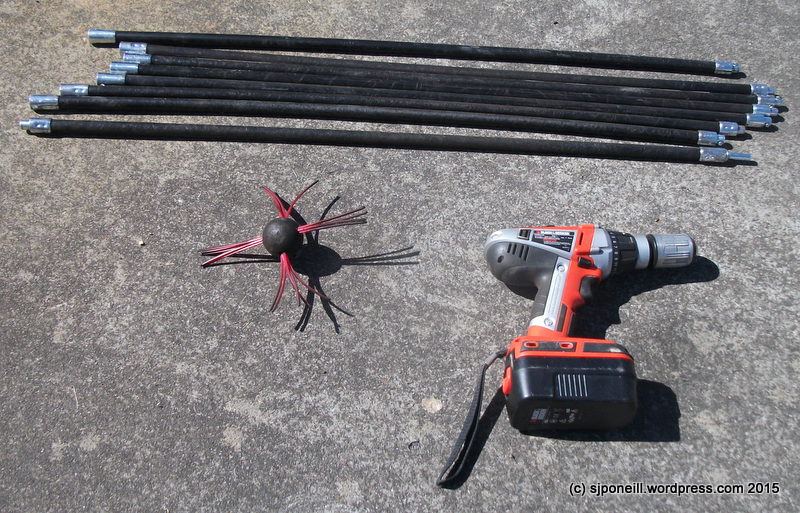
Less the drill this is what you get: six poles = two more in the extension set, the rorating head, comprehensive instructions in English and French; and a sheet of clear plastic to cover the mouth of the fireplace to keep the dislodged soot in.

DSCF9273

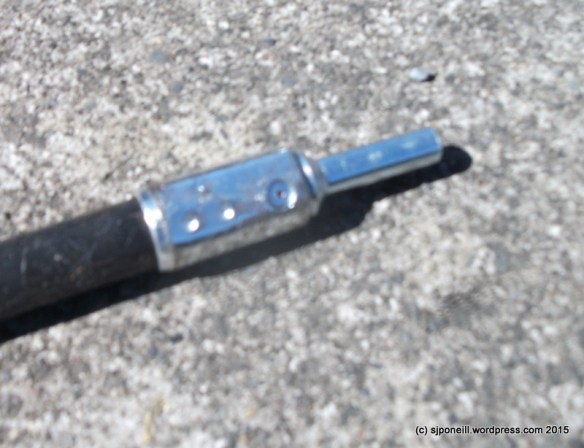
There’s also an adaptor that connects the poles to any common hand drill; and a hand tool for depressing the detent on each pole to release it from its mate and allow the assembled poles to be broken down. There are no Allen key-ed parts so the Allen key on the not-pointy end is a bonus.
Assembly and preparation was easy, taking only a few minutes: the lines on the rotating head had to be trimmed to fit the diameter of the flue – a handy cutting guide is provided…

.DSCF9270…and the poles had to be assembled. This is a simple clip system but I had to make two sets as I didn’t have room in front of the fire place to lay the whole length out.
DSCF9269I didn’t use the plastic sheet but placed drop cloths over the couches just in case things got messy. As it happened I needed have bothered. The whole process was pretty painless. I had the garage vac running in the fire box – while it didn’t pick up a lot of the debris as it fell, it was great and sucking up the dust and keeping that bfrom floeing into the lounge.
DSCF9266
 .   DSCF9267

Use was easy – don’t know why I was worried about this.

DSCF9265

Hooked the drill up to the first length, guided the cleaning head into the chimney and away we went. After working the heading up and down a couple of times, I added in the next length of four poles and up we went, all the way to the top. As expected the greater amount oif debris came from above the roof line we I suspect the colder air and metal has been encouraging the smoke to scale against the insides of the flue – certainly the second half resulted a lot more debris coming down.

The shaft spun easily in my hands and runs up and down the flue with no problems or stoppages. Once the the flow of sooty debris ceased, I reversed the process and brought the shaft out by sections. It had cleaned out a lot of soot and scale, enough to fill a vacuum bag, maybe 2-3 kilograms. The only question is whether there are any obstructions in the H itself – hope not as otherwise we will be needing to get someone in as this is not a roof to be casually scaled – the test of that will be tonight. If the H is part of the problem, it’ll be replaced with a conventional straight through cap so the shaft can push all the way out the top.DSCF9271 The set all broken down –  took less than five minutes – and ready to go away. Clean up inside only took another five minutes or so.

I don’t know why a tool like this is not readily available here as it is a quick and simple way of performing a dirty task that also keeps homes safe by reducing the risk of chimney fire; and contributes to home health by enabling fires to burn warmer and more efficiently.

And then what happened…

Quote

In response to The Daily Post’s writing prompt: “Missing Sequels.”

633

Like a good book, some of the best movie experiences are those that we don’t want to end. Most times, though, it is best that they do end…we’ve all seen the series of hacked sequels that can follow a movie that makes money, that erode and diminish the original experience (did someone say George Lucas?). But there are those rare occasions where a story so well told begs for a sequel…

For me one of those such times is the 1964 classic 633 Squadron, based on Frederick E. Smith’s novel of the same name. Although hinted at in the book, the movie leaves the story of Grenville and Hilde hanging: she’s stranded in England, he’s seriously injured, possibly dying, in a Norwegian field…

Rather than succumb to the current plague of remaking of classic movies, I’d like to see that sequel that answers that question, that fulfils the expectation set at the end of the book (sorry, you’ll have to read it!). Smith wrote another five or six sequels to the original novel but I always felt that these were rather 2D products more focussing on paying the rent than developing the promise of the original. Only Operation Valkyrie comes close and possibly it would be a vehicle for the sequel that closes both the Svartfjord story and that of Grenville and Hilde, Adams, Hoppy and the other survivors;  and whatever happened to Maisie (Rosie in the movie) the buxom lass who waved them all off from the bar of the Black Swan…?

For the boys…

Off-Season | The Daily Post

Umbrellas in winter? Balaclavas in July? Show us what “off-season” means to you.

Source: Off-Season | The Daily Post

DSCF8861

We’re a little lucky here, that we don’t really have much of an off-season…maybe three weeks between the end of the ski season and the start of the summer season; and May and June can be pretty slow as well once the Great Walks end and the uncertainty over first snow begins for another year…

In winter the main street in ‘town’ is fully of cars either heading up to the ski field or trying to head up to the ski field is the road is closed or restricted to vehicles with chains or 4WD (pull up a chair to observe case studies in crowd behaviour!); playing in snow on the side of the road; wandering in and out of the cafes…

In summer, it’s much the same…less but not necessarily no snow…this clip went viral from the Park Facebook page as it snowed heavily on the first day of summer last year…

…but generally summer = as many, if not more, visitors, less clothing and more sun…

Summer 2014 started for us in October with a brill period of beautiful summery weather as the Great Walks opened…the first day that it was so hot we opened all the doors and windows, it started to snow…the biggest dump of the winter and we were back to winter for six weeks…six weeks where five of six Wednesdays it snowed heavily in the Village…six weeks of chaos as we shuffled, cancelled and refund Great Walks bookings…six weeks of the most intense staff training as we brought a 90% new crew up to speed…

The autumn (fall) off-season is a little more stable, consistent but no less intense…it is our main window of opportunity for maintenance, stocktakes, product development, updating brochures, possibly even a little leave, training, strategising, sometimes even just relishing the opportunity to put our feet up for a few minutes and talk ‘stuff’…

…and then the snow falls and it starts all over…

It only works with a great team…proof that paying peanuts doesn’t always get you monkeys…