Unknown's avatar

About SJPONeill

Retired(ish) and living on the side of a mountain. I love reading and writing, pottering around with DIY in the garden and the kitchen, watching movies and building models from plastic and paper...I have two awesome daughters, two awesome grand-daughters and two awesome big dogs...lots of awesomeness around me...

Seven Wonders

The WordPress Daily Prompt: Khalil Gibran once said that people will never understand one another unless language is reduced to seven words. What would your seven words be?

Every once in a while the Doctor Who writers smack the nail fair on the head…

Blink was one episode so clever in its inception and execution; the one word test from The Snowmen another…subtle, challenging, provoking…

Seven words.

In no particular order.

Love.

Trust.

Help.

Feed.

Follow.

Lead.

Protect.

The challenge is not whittling a list down to seven but building it up…I stalled at four (not saying which four) for quite a while.

If eight words were allowed, the eighth might be ‘you’. But ‘you’ becomes redundant…

AS I SEE IT (30 October)

cjoubert

By Terry O’Neill.

This year experienced rugby referee Craig Joubert was put through the rugby wringer after he awarded a late penalty which enabled Australia to go through to the Rugby World Cup semi finals. Days afterwards the World Rugby organisation claimed Joubert’s decision was incorrect yet World Rugby high performance official manager Joel Jutge believes, “despite this experience Craig has been and remains a world class referee and an important member of our team”. Meanwhile, World Rugby’s CEO Brett Gosper said Joubert’s sprint off the field after the game was “he was keen to get to the bathroom.”

Referees are often the whipping boys as supporters of both teams either criticise or favour decisions they make. And referees’ performances at all levels are critically judged by their own. SANZAR stood down referees following complaints against their rulings.

Concerns about a specified referee’s ability have been around for over a century. The most obvious incident was of a try denied to the 1905 All Blacks centre three-quarter Robert George Deans with Wales leading 3-0. Deans’ try was disallowed by Welsh referee John Dewar Dallas. Despite the All Blacks protests that Deans had been dragged back into the field of play before the suited referee belatedly arrived on the scene. The ruling became part of All Black rugby history.

Many asked why Joubert did not ask for clarity from the TMO. According to protocol this incident was outside the TMO’s area of concern. Since Joubert’s demotion in the quarter finals, some experienced international referees suggested changes.

International referee Mark Lawrence, actually an optometrist, believes that with all today’s technology captains should be given a chance to query contentious decisions as in tennis and cricket, with some limitation on the number of appeals for reviews.

Should we could revert to the days before “real” referees? Prior to a game the two respective captains would meet and set down rules, and would arbitrate throughout the game. Imagine the lively dehydration post-match sessions. Another notion is to maybe microchip referees, or like another international referee Steve Walsh, have a body tattoo – Walsh’s: “He who controls himself controls the game.”

Locally, the late Eddie Lapsley, a pastrycook during the week and a referee over the weekend, was a dedicated Athletic club supporter all his life. During a break in play another Athies supporter asked him how their team on the paddock was going.

Eddie said, “We’re behind at the moment, but I’m doing my best.”

ENDS

NNNN

Imaginary Friend

Quote

In response to The Daily Post’s writing prompt: “Imaginary Friend.”

Many of us had imaginary friends as young children. If your imaginary friend grew up alongside you, what would his/her/its life be like today?

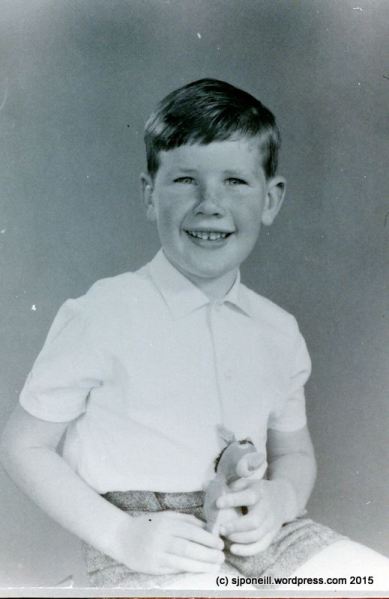
I had an imaginary friend once.1-23-2011_023When I used to live here.

His name was Tom.

Tom wasn’t really much of a friend. 1-7-2011_033

He would do all sorts of horrendous things and then conveniently disappear, leaving this kid to take the rap.

Where is Tom now? Who cares? Probably prison, politics or big business….

Treat | The Daily Post

Source: Treat | The Daily Post

This week’s photo challenge theme is “Treat,” an intentionally open-ended prompt. This week, share with us a photo of something that you consider a marvellous treat.

DSCF8826-001

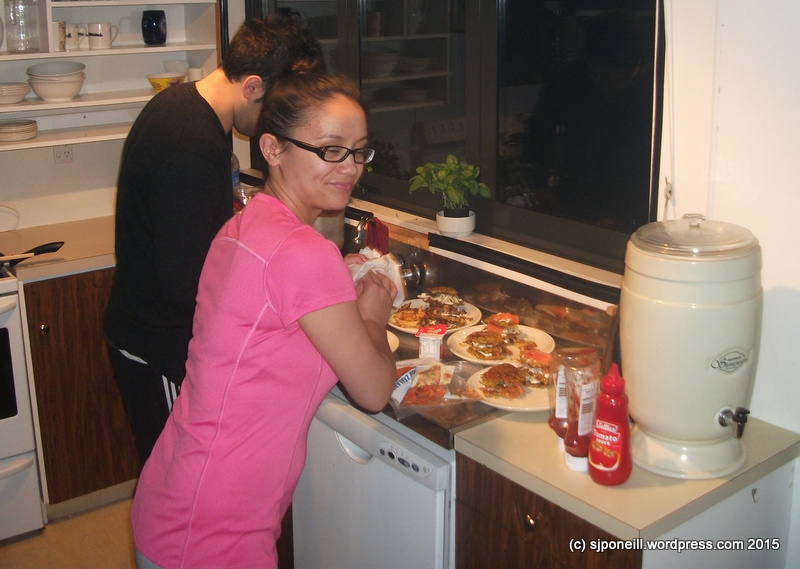
Doing dinner with my youngest daughter and her partner….

DSCF7218-001

Any and all time with the twin terrors….

DSCF8763-001

Kiwi sign outside the office…

DSCF7584

About once a year…someone else gets a treat too…

nerdblock

Geeking out with my oldest daughter each once month when her Nerd Block fix arrives…


Happy Place

Quote

In response to The Daily Post’s weekly photo challenge: “Happy Place.”

Queenstown aerobatics Jan 98

In a most happy place over Queenstown 1998

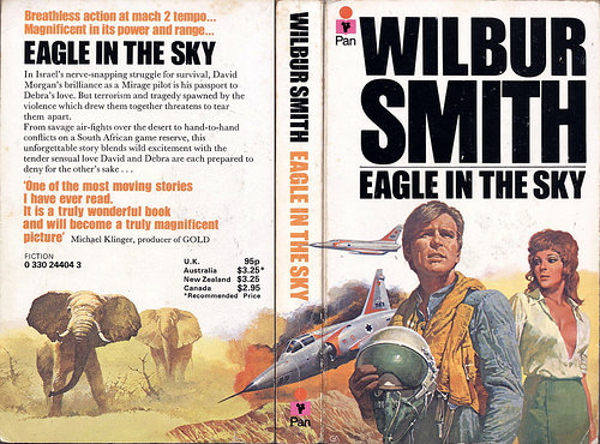
One of my all time favourite ‘desert island’ books is Wilbur Smith’s Eagle in the Sky. “He’ll be in the sky” are Debra’s words when he disappears near the story’s end…well, the book’s end anyway: Eagle is one of those tales that you hope never ends, that David and Debra go on and on…

eagle int he sky cover

As much as I love aviation, I never got round to learning to fly but when I need to go, I go for height, up a hill, onto a mountain, some place high and quiet where I can look down and think.

Tongariro Apr 04 - 1

My other happy place is at a keyboard or holding a pen, using words to seek and maintain balance, to put my feelings some place where they become tangible and malleable. I can’t promise the words will always make sense or that later on I might not remember the emotion behind them but they lie as reminders of places I have been, journeys I have made, people I have been…words as much a sanctuary as a windy hilltop or craggy peak…

Happy place does not necessarily mean tidy place!!!

Out of Your Reach

Quote

atomic annie boxartIn response to The Daily Post’s writing prompt: “Out of Your Reach.”

Was there a toy or thing you always wanted as a child, during the holidays or on your birthday, but never received? Tell us about it.

Lots…the early/mid 70s were a Golden Age for the plastic modeller community with household names (in our household anyway) like Airfix, FROG and Matchbox releasing new kits every month across a range of topics near and dear to every schoolboy’s heart…these were generally pretty affordable and even the larger ones were acquirable, albeit through the good intentions of aunts and uncles. The jewels in the crown though were the big kits from the USA, in 1/32 monster scale mainly, most notably Revell’s range of 1/32 scale aircraft, singles and twins, many of which remained the only games in town until the last couple of years – a competing 1/32 De Havilland Mosquito has only been released this year (at 3-4 times the price of the venerable and still respectable Revell offering.

When I was 12, Mum and Dad took me along on their annual pilgrimage to Christchurch, then, at some 150 miles away, quite an epic journey. One day, while exploring the inner city, we passed a cycle shop (back then most cycle shops carried enough plastic kits to win away a young lad’s pocket money with ease – they are somewhat less exciting now) in, I think it was Manchester Street. There is all its glory was the Atomic Cannon, at a price hopelessly beyond our means…

It’s big and cool and evocative of those days when build and see it was the prevailing engineering philosophy. I grew (temporarily) out of modelling not so long after but that’s always been a strong memory. When I got back into modelling, it was always at the back of my wish list…in the late 90s I managed to score one unbuilt off a collector in the Netherlands and another built one off eBay and few years later, just in time for a work mate to rescue a load of old models from a rubbish skip. Once he took what he wanted he, handed the survivors over to me…and there is was…an original Atomic Annie…built by a clearly schoolboy hand, it dates back to the original releases, I would say, judging by the other kit remnants in the box with it…

So now I have three, none finished…there’s a surprise!!! But one day, when I do, it’ll look something like this…

atomic cannon

You can see more of this build here: http://thegreatcanadianmodelbuilderswebpage.blogspot.co.nz/2011/10/atomic-cannon.html

AS I SEE IT wc 461

coach

By Terry O’Neill.

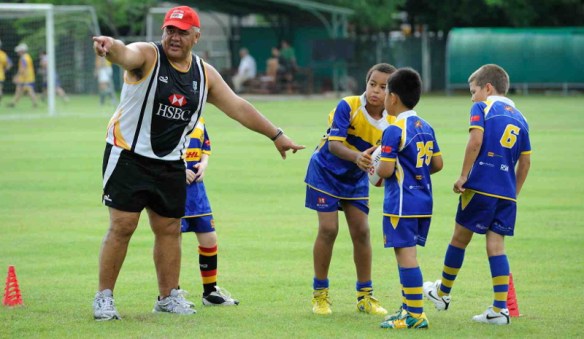
A coach, whatever the sporting code, requires a robust determination and willingness to listen assertively to all critics and supporters (though that varies depending upon the success rate). Coaching has advanced far from the fifty years ago “my way or the highway” approach and now a coaches mission statement must involve “bringing out participants’ ability” and “working towards achieving their full potential”. Some coaches express that more succinctly.

A coach must be competent to evaluate performances, adapt to the needs of players, to break tasks into sequences, and ensure players are always in an appropriate health/safety situation. Generally, a coach must be a role model to gain players’ trust and respect along with the ability to work long irregular hours as most coaches in New Zealand are voluntary part-timers. A 2014 estimation claims 7849 such individuals were involved in this manner in New Zealand.

One of a coach’s real strengths is motivation but individuals can do much for themselves too by listening to those who, with hard work, integrity and ability, have risen to the top of their sporting profession.

Michael Jordan said ,”never say never because limits like fears are often just an illusion.” USA founding father Benjamin Franklin stated that things that hurt, instruct, while Napoleon Boneparte said victory belongs to the most persevering.

In the twentieth century, according to top tennis player Andre Agassi, if you don’t practice you don’t deserve to win, and Tiger Woods believes that you can always become better. John Wooden said a coach should ensure players know the coach is working with the player and not for him/her. And former coach of the UCLA basketball side said it’s what you learn after you know it all that counts.

The last word on coaches is attributed to Stephen Jones , a rugby union correspondent for The Times and The Sunday Times for more than twenty years. Jones is noted for controversial and provocative articles and, in particular, for his anti-Irish and anti-New Zealand comments.

He names his best twenty rugby coaches of all time.

Ian McGeechan (Scotland and Lions) takes number one spot. McGeechan in terms of longevity, great one-off wins and test glory leads the field followed by Fred Allen (New Zealand), a dynamic coach full of rugby nous and brilliance; Sir Clive Woodward (England); Bob Dwyer (Australia); Carwyn James, coach of the 1971 Lions test winning side in New Zealand; John Hart (New Zealand); Ray Williams (Wales); Jack Rowell (England); Graham Henry (New Zealand, Wales, Lions); Nick Mallett (South Africa; Warren Gatland (Waikato, Wales); Marcello Loffreda (Argentina); DeclanKidney (Ireland; Robbie Deans (Australia); Jacques Fouroux (France); Jake White/Kitch Christie (South Africa); and Paul Turner (Bedford, London, Welsh, and others).

You disagree with Jones? He’s used to criticism.

Who’s missing?  Who would you include?

And while on the subject of rugby, It was disappointing last Saturday prior to the North Otago/Mid Canterbury Heartland game which I covered as a rugby commentator along with comments man, Paddy Ford, to be handed less than a half hour before kickoff the Mid Canterbury team which had eight changes from the side which I had been given on Friday morning. According to NZRU regulation, teams must be in the hands of the appropriate Unions 48 hours before kick-off! I’m still trying to decide whether it was through ignorance, arrogance or whether someone in the Mid Canterbury camp was playing a silly game.


ENDS

Sky of blue and land of green

Quote

In response to The Daily Post’s writing prompt: “Right to Brag.”

Tell us about something you (or a person close to you) have done recently (or not so recently) that has made you really, unabashedly proud.

What has this got to do with a Yellow Submarine..? The honest answer is not a lot…when I thought of this subject under this challenge, my mind latched on this line from Yellow Submarine…it is actually “Sky of blue and sea of green” which makes sense from a  nautical point of view but not from the perspective of this story…

I am blessed with a very talented staff in the place where I work. In that place we occasionally pick up some rather challenging jobs. One of New Zealand’s Great walks is close to here. For the upcoming season, the managers want to export their booking system so that walkers on the trail can update and change their bookings once they are on the trail. This often happens if bad weather causes walkers to abandon the walk or where walkers are making good time and opt to skip a hut or camping location.

DSCF9281

The tool of choice provided to us for this task is a rather chunkalunky ruggedised 7″ Android tablet…so chunkalunky that we used plate holders as stands for them…

This is a short story really. One of my talented staff took on this project and in a couple of weeks, and despite some serious illness along the way developed a full system that allow the booking system to be accessed in the Park; these chunkalunkies offered quite a few technical challenges as they hated the local mobile networks necessitating a number of back end work-arounds, lots of cussun’, bad words and torn hair…

The package included development of all the manuals and delivery of training to the ranger staff who will be using them over the summer season…boring story I know but a great achievement for a young staffer on her first independent project…and coming back to the topic of the challenge, I am quite rightly very proud of her achievement…

AS I SEE IT wc 486

fr-rwc 11

By Terry O’Neill.

Why is winning or losing in sport, or indeed in life, so important?

Why are we competitive? Does competitiveness evolve since birth or does an element in society promote this streak? Some very young children don’t display it. Yet maybe it is a throwback, a feral one that’s uncomfortable to acknowledge, harking to the realities of grim personal survival.

Why do we play sport? “It’s fun”. “My friends play.” And a degree of competitiveness develops, and with those who support and follow the play, attitudes towards winning and losing. May we in New Zealand strive to model honour in winning, nobility in losing.

Imagine you were an English or Australian rugby supporter at Twickenham for the England/Australia match. Reactions to the result would vastly vary. The English fan base would likely be demanding the head of English coach Stuart Lancaster, whilst Australian supporters could smugly afford to be generous, an aspect of our emotional makeup sometimes difficult to apply.

Take the 2011 All Blacks World Cup victory in the final over the French team. The build-up was extreme. New Zealand political journalists said a loss would be catastrophic and implied an All Black loss might bring about the downfall of the government. Fortunately, maybe, the All Blacks won, the sun rose again in New Zealand the following morning, and supporters could afford to be magnanimous despite a solitary point being the winning margin.

Did New Zealand win or did the French lose? Lancaster’s England team lost by a wider margin to a better team on the day. Handling defeat takes more stamina to cope with than a victory. But we can learn from losses.

According to “Jonathon Livingstone Seagull” author Richard Bach, “losing is what learning is all about. It’s not whether we lost the game but how we lost and how we are changed because of it, and what we take away from the loss is something that we never had before to apply to other games. Losing in a curious way is winning.”

And from Bill Crowder of “Sports Spectrum”, “Playing a superior team or individual and losing ensures we learn more than if we played and defeated easily a series of teams of lower ability. Today’s culture celebrates winners and sacks losers. Sport is part of life which is filled with victories and defeats and we should learn from both. Victories should teach us humility and losses can teach us character.”

Some claim that if it doesn’t matter who wins or loses, why is the score recorded? Or consider the approach of former top woman tennis player Nartina Navratilova: “Whoever said, ‘it’s not whether you win or lose that counts,’ probably lost.”

Or maybe take the English rugby loss like Trev who twittered after the England loss, “considering all Australians are descendants of British criminals, I’ll take the Aussie win as a home win.”

In winning or losing, a sense of humour may be a healing balm .

ENDS

NNNN

Yes I know that in a room so full of light

Quote

In response to The Daily Post’s writing prompt: “Can’t Drive 55.”

Take the third line of the last song you heard, make it your post title, and write for a maximum of 15 minutes.

That magnificent voice…a weekend trip to Auckland…1996…

In a room so full of light, there can still be so much darkness…what lurks in the shadows? What is not as it seems..?

Miss the big mister under his bright red tree…

Winchester. Bingo. Baseline. Reboot/

The Sun. Light. Warmth. Comfort.

Smile. Say something nice.

Blossoms already on the trees, others still trying to shed last year’s cover …confused trees…bees out in force…no more frost..?

Confidence. Ability. Trust.

Spell-check. Munchkin.

Ain’t done dancing.

Dancer’s back.

15 minutes. Random words.

Off to chop more wood in the sun…lawns all mowed (mown?)…fresh air drifting through the big windows…