AS I SEE IT(24 March)

nanny state

By Terry O’Neill.

Are we becoming the world’s“cotton wool country” an extension of the old “nanny state”? Before we begin to leap in the air in an over indignant protest against what too many will claim are “ infringements of our rights” let’s take a good look at the first health and safety reform in a couple of decades.As you land back on your feet for the first time, the new reforms refer only to paid employees not volunteers. So any person who owns and/ or is a paid organiser of an event ,comes under the new rules. Thus if anything goes wrong the owner is liable for prosecution but the new compliance requirements are bigger and prosecution is higher.So does this mean that organisers of  the Coast to Coast,Christmas parades,school activities, multi sport races, bike races and marathons may  become things of the past as the owners/organisers fear personal liability prosecutions.Many such people are calling in auditors to check their events against the new reforms.

Locally this mean that any event which is run by a paid organiser comes under the new reform?It’s just not limited to workplaces which have paid staff, but the law does not apply to a group of volunteers where nobody is paid as an employee.

It is believed by many that the reforms are really the product of the Pike River mine disaster where twenty nine people are killed, but government denies this stating that its concern is about the high level of deaths and serious injuries in the workplace. So why place paid individuals such as school teachers responsible for the health and safety of students placed  in the same basket as national industry?And why are ordinary New Zealanders being asked to bear the brunt of the increase in workplace deaths.

With fines of up to $600,000 some principals have considered putting their personal homes into trusts so that they will not have to sell homes to pay fines or maybe to avoid gaol times in extreme cases.But others say its simply a case of the more detail being released to assist clarification.

Will this mean that clarification will create a more sensible application of the reforms? Apparently not as such reforms will apply to sports clubs who employ staff.Examples from one bowling club would suggest the opposite.It’s been informed that any steps must be painted so players and visitors could see that they were steps, and signs had to be put up in the shelters warning against sitting on the top rail,in case someone falls off.And the coat racks had to be taken down in case someone impaled themselves upon them ,while any pointed edges had to be wrapped with rubber so that people will not be injured.So if you have a club that runs tournaments more dollars will be required to get your facilities up to scratch.

George Orwell of 1984 fame will be smiling wryly I’m sure.

ENDS

NNNN

AS I SEE IT(4 March)

By Terry O’Neill.

What? Volunteers made redundant?

Volunteering is an integral New Zealand response whereby people selflessly offer services, skills and time for the benefit of others. Every community has people who do their bit with grace, skill and charm.

It can be a two-headed coin. Each volunteer gives to meet a particular need and is often surprised to receive a sense of accomplishment, fellowship, and contentment, the blessings of true generosity.

 A recent Oamaru Mail article on Girl Guides in North Otago suggested the national body is “revitalising”, whatever that means, so it can fulfil its goals of developing self-esteem, confidence and leadership, and a centralised business and administration arm will reduce the work of volunteers in these fields. But to maintain the national “ivory tower”, annual fees for each Girl Guide must be increased from $180 to $300, though in some cases there may be a decrease. Some local guide leaders believe the fees may push the movement into an elite club beyond the reach of many including loyal families with Girl Guide members throughout generations.

When former Prime Minister Rob Muldoon introduced the “think big” philosophy mixed results evolved, and now it appears some organisations which survived, and indeed grew, applied this philosophy in a very practical way. The Society for the Intellectually Handicapped (IHC), Save the Children (SFC) and Riding for the Disabled (RDA) are but three which experienced, and resisted in some cases, the nudges or heaves towards centralisation. Many local branches had a rich complement of competent volunteers before top-of-the-tower decisions effectively attempted to bypass this invaluable resource of experience and support. “Bigger would be better”. Maybe.

Centralisation appears to require paid “executives” whose salaries enable them to direct and organise the remaining, often disillusioned, volunteers. And this rejection of volunteer input ultimately affects the vitality and growth of local support for the national body and its dedicated services.

It’s a New Zealand “thing” to support financially what we believe to be worthy  organisations. I wonder how many find it offensive when a wealth of attractive glossy material regularly is sent out to squeeze even greater donations from already dedicated supporters of the institution?  Exactly how much of each regular donation contributes to such simplistic unsolicited expensive-looking material.  Many charities come to mind.  Surely regular voluntary subscribers could be spared this practice? Sincere volunteers and supporters are too valuable to be treated with disrespect.

Sports bodies are feeling the impact of a smaller volunteer base, and I don’t apologise for bringing this up again. Often loyal supporters hold positions of responsibility for long periods, and are the butts of criticism because nobody is willing to ‘step into their shoes’. Eventually, burnt out, the stalwarts eventually take their skills and drop off the code’s radar into oblivion.

In these days of semi-professional sport, there’re suggestions from some volunteers that those getting paid should do all the work!  But is this just a cop out?
    

ENDS

AS I SEE IT (5 FEB)

By Terry O’Neill.

The local rugby season kicks off on 2nd April. Leading up to it local clubs will mirror other Heartland clubs and battle to e


nsure full premier squads, an increasingly difficult assignment.

Polynesian players are an integral part of the Heartland scene. Many unions made derogatory comments about North Otago’s inclusion of Pacific Island players but North Otago was simply the forerunner of today’s necessity. A couple of seasons ago former All Black and Mid Canterbury lock  Jock Ross told me that some Mid Canterbury clubs only survived in premier ranks because of inclusion of Pacific Island players. Similar to all other Heartland unions.

The all-important necessary visas for Pacific Island players are not easily obtained and often are only for a set time. In some cases Pacific Islanders arrive on student visas to attend school, and play rugby, and others can apply for work visas under a skills’ shortage category or there is the specific purpose or event category, a rugby visa, for one year that may be renewed.

The North Otago Rugby Union does not actively recruit Tongans who generally arrive because of family or friends here. NORFU CEO Colin Jackson said the Union tended to go to Europe, USA or Canada for recruitment and over the past eight years more than 70 players have been under this scheme in North Otago.

Putting aside claims from some white rugby supremacists, without Polynesians there would be no premier rugby locally because of our small population base. Polynesians’ natural talents see many promoted to the top of the North Otago rugby tree to fill the gap created by the lack of other skilled young local players.

But it’s not one way traffic. Over the last two northern seasons local players, Jeremiah Shields, Keegan Anderson, Kayne Middleton, Thomas Shields and Jared Whitburn, all spent a rugby season overseas. It’s not only a rugby experience they benefit from, it’s a life-enhancing experience too.

In addition local rugby clubs Athletic, Kurow, Excelsior, Maheno and Valley have made direct contact with overseas rugby unions and clubs and obtained players.

It’s a conundrum how Immigration NZ treats Pacific Islanders. For instance, French, Italian or Argentinian players may live here for a year or eighteen months without any problem while most Pacific Island players work visas entitle them to be here for only six months and they’ve got to head home if they have no other suitable employment skills to offer in New  Zealand.

Clubs and minor unions don’t seem to receive much support from the New Zealand Rugby Football Union. When will NZRU boffins realise that to ignore the deterioration of New Zealand’s rugby base will not augur well for those higher up the rugby food chain? And in Tonga, Samoa and Fiji  how long will they be able to retain their World Cup status?

ENDS

Something wicked….

3500

A couple of days ago, a friend had what he called a rant on Facebook…

Religion is not to blame for all the world’s problems. If you believe that the eradication of religion will fix humankind then your faith is more misguided than those you believe you are better than.

Religion is not the problem. If you believe there is no God (or Gods), then people cannot be doing God’s will. Therefore their actions are their own, and they choose to commit atrocities. This would indicate that the behaviour is in their (or our?) nature and is not the fault of religion. It cannot be both fantasy and the font of all evil. People will always find excuses for their actions.

I get to mix with many religious groups of different faiths and denominations. The vast majority are communities of people who are interested in living their lives with generosity, selflessness and tolerance. They do this actively in their wider communities – actually practising being nice to people without trying to convert them. Sometimes they seem like the last bastion of selflessness in our materialistic, consumer, celebrity-focused society. Working with them is refreshing.

Religion is not the problem nor the solution. It just is. However there are some evil bastards who will use any tools at their disposal for power. They should be the targets of our wrath, not the constructs they seek to pervert for their own means.

And… rest.

Wherever you sit in the political spectrum, whatever deity or belief system you may or may not support, this is a pretty damn fine summary of the foe we face in the second decade of the 21st Century.

For almost two and a half decades, we have submitted to the myth that war can be precise and sterile, safe almost, despite all contemporary and historical evidence to the contrary.

That ‘Greatest Generation’ succeeded because they mobilised their nations to defeat evil…not 8-5, not Monday to Friday, not just those who cared or those who needed the work…defeating evil is not something that others do…

That more may have died in less publicised and less public locations takes nothing from the attacks in Paris nor does it count that Paris once committed an act of war against us…Paris now is exactly what it is…a deliberate goad to the West…some people should be careful what they wish for…something more wicked this way may come and it’ll be looking to settle some scores…

What happened in Paris last week was evil. Sponsored and spurred by a small group of ‘evil bastards’…who will not be swayed let alone defeated by Tricolour photo filters…nor even the red of spilled blood…only the cleansing blue-white fire of instant sunshine…

AS I SEE IT wc 461

coach

By Terry O’Neill.

A coach, whatever the sporting code, requires a robust determination and willingness to listen assertively to all critics and supporters (though that varies depending upon the success rate). Coaching has advanced far from the fifty years ago “my way or the highway” approach and now a coaches mission statement must involve “bringing out participants’ ability” and “working towards achieving their full potential”. Some coaches express that more succinctly.

A coach must be competent to evaluate performances, adapt to the needs of players, to break tasks into sequences, and ensure players are always in an appropriate health/safety situation. Generally, a coach must be a role model to gain players’ trust and respect along with the ability to work long irregular hours as most coaches in New Zealand are voluntary part-timers. A 2014 estimation claims 7849 such individuals were involved in this manner in New Zealand.

One of a coach’s real strengths is motivation but individuals can do much for themselves too by listening to those who, with hard work, integrity and ability, have risen to the top of their sporting profession.

Michael Jordan said ,”never say never because limits like fears are often just an illusion.” USA founding father Benjamin Franklin stated that things that hurt, instruct, while Napoleon Boneparte said victory belongs to the most persevering.

In the twentieth century, according to top tennis player Andre Agassi, if you don’t practice you don’t deserve to win, and Tiger Woods believes that you can always become better. John Wooden said a coach should ensure players know the coach is working with the player and not for him/her. And former coach of the UCLA basketball side said it’s what you learn after you know it all that counts.

The last word on coaches is attributed to Stephen Jones , a rugby union correspondent for The Times and The Sunday Times for more than twenty years. Jones is noted for controversial and provocative articles and, in particular, for his anti-Irish and anti-New Zealand comments.

He names his best twenty rugby coaches of all time.

Ian McGeechan (Scotland and Lions) takes number one spot. McGeechan in terms of longevity, great one-off wins and test glory leads the field followed by Fred Allen (New Zealand), a dynamic coach full of rugby nous and brilliance; Sir Clive Woodward (England); Bob Dwyer (Australia); Carwyn James, coach of the 1971 Lions test winning side in New Zealand; John Hart (New Zealand); Ray Williams (Wales); Jack Rowell (England); Graham Henry (New Zealand, Wales, Lions); Nick Mallett (South Africa; Warren Gatland (Waikato, Wales); Marcello Loffreda (Argentina); DeclanKidney (Ireland; Robbie Deans (Australia); Jacques Fouroux (France); Jake White/Kitch Christie (South Africa); and Paul Turner (Bedford, London, Welsh, and others).

You disagree with Jones? He’s used to criticism.

Who’s missing?  Who would you include?

And while on the subject of rugby, It was disappointing last Saturday prior to the North Otago/Mid Canterbury Heartland game which I covered as a rugby commentator along with comments man, Paddy Ford, to be handed less than a half hour before kickoff the Mid Canterbury team which had eight changes from the side which I had been given on Friday morning. According to NZRU regulation, teams must be in the hands of the appropriate Unions 48 hours before kick-off! I’m still trying to decide whether it was through ignorance, arrogance or whether someone in the Mid Canterbury camp was playing a silly game.


ENDS

Yes I know that in a room so full of light

Quote

In response to The Daily Post’s writing prompt: “Can’t Drive 55.”

Take the third line of the last song you heard, make it your post title, and write for a maximum of 15 minutes.

That magnificent voice…a weekend trip to Auckland…1996…

In a room so full of light, there can still be so much darkness…what lurks in the shadows? What is not as it seems..?

Miss the big mister under his bright red tree…

Winchester. Bingo. Baseline. Reboot/

The Sun. Light. Warmth. Comfort.

Smile. Say something nice.

Blossoms already on the trees, others still trying to shed last year’s cover …confused trees…bees out in force…no more frost..?

Confidence. Ability. Trust.

Spell-check. Munchkin.

Ain’t done dancing.

Dancer’s back.

15 minutes. Random words.

Off to chop more wood in the sun…lawns all mowed (mown?)…fresh air drifting through the big windows…

AS I SEE IT

old gold

North Otago’s 25-23 victory over East Coast in Ruatoria, 07/09/13. Photo (c) Gisborne Herald

by Terry O’Neill.

Five Forks livestock manager Duncan Kingan’s “other life” complements his day job looking after heifers. Weekends and intervals during the weeks spanning the rugby season, he’s better known as Old Golds rugby manager, a position he’s held for the nine years since his long stint as Valley premier manager.

In May his season begins, and is hands on till competition ends in late October.

Once Heartland announces the draw, NZRU presides over a conference phone call with all Heartland managers,” Duncan (56) said. “Discussion on the season covers any new protocols and rule changes, and mirrors the ITM setup.” When the Heartland competition launches in late August, for each “away” fixture he contacts the opposition liaison officer to ensure any North Otago pre-match training and warmup requirements can be met.

“The first practice of the season extends to taking individual uniform measurements and generally to indicate management’s expectations of players, on and off the paddock.

Much of Duncan’s responsibility is behind the scene organisation such as flight and booking confirmations and maybe player schedule changes, discussions with the bus driver who meets the team at the airport and with the opposition’s liaison officer, hotel arrivals and any special requirements. Initial accommodation and bus bookings are handled by NORFU CEO Colin Jackson and Murray Pearson respectively.

Last Friday for Duncan dawned at 3.00 am to complete farming arrangements before joining the team bus at 7am in Oamaru to head off to Gisborne via Dunedin Airport. Relaxing was not an option until after phone calls to fine tune Air New Zealand arrangements for the accompanying massive baggage and airport arrival time. On his metal all day, in Gisborne after dinner Duncan assists with strapping and rubbing with team physiotherapist Phillipa Masoe.

Match day. 8am: light breakfast, 10am: players meet with coaches, 10.30 am: pre-match meal followed by the rubbing and strapping, 12.45pm: team meeting, 1.30pm: arrive at the match venue.” Then Duncan swings into informing media of any player changes, and to seek the referee for warm-ups and inspections of team boots and gear. The team returns to the changing room for their final ten minutes until 2.30pm kickoff.

Once the game finishes, if necessary Duncan organises a doctor for injured players, and within 20 minutes he rings detailed match results to the media.

At their hotel players, after the game, are reminded what is required of them that evening and of the morning’s home flight arrangements. Before Sunday’s breakfast the players have the “popular” pool session to alleviate bruised and stiffened bodies and soon we’re homeward bound.” After the Poverty Bay game in Gisborne Duncan’s weekend did not finish until he arrived at his Five Fork home about 9.00pm.on Sunday, and this week he’ll face a similar scenario when North Otago is scheduled to play Horowhenua-Kapiti at Levin.

It fits into my usual job. I’m very lucky with very supportive employers, and while I’m away with the team I keep in touch with what’s happening in the farming area I’m responsible for.”

ENDS

Off-Season | The Daily Post

Umbrellas in winter? Balaclavas in July? Show us what “off-season” means to you.

Source: Off-Season | The Daily Post

DSCF8861

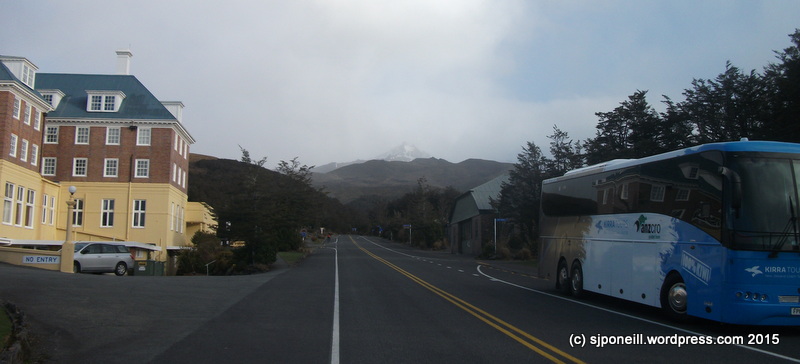
We’re a little lucky here, that we don’t really have much of an off-season…maybe three weeks between the end of the ski season and the start of the summer season; and May and June can be pretty slow as well once the Great Walks end and the uncertainty over first snow begins for another year…

In winter the main street in ‘town’ is fully of cars either heading up to the ski field or trying to head up to the ski field is the road is closed or restricted to vehicles with chains or 4WD (pull up a chair to observe case studies in crowd behaviour!); playing in snow on the side of the road; wandering in and out of the cafes…

In summer, it’s much the same…less but not necessarily no snow…this clip went viral from the Park Facebook page as it snowed heavily on the first day of summer last year…

…but generally summer = as many, if not more, visitors, less clothing and more sun…

Summer 2014 started for us in October with a brill period of beautiful summery weather as the Great Walks opened…the first day that it was so hot we opened all the doors and windows, it started to snow…the biggest dump of the winter and we were back to winter for six weeks…six weeks where five of six Wednesdays it snowed heavily in the Village…six weeks of chaos as we shuffled, cancelled and refund Great Walks bookings…six weeks of the most intense staff training as we brought a 90% new crew up to speed…

The autumn (fall) off-season is a little more stable, consistent but no less intense…it is our main window of opportunity for maintenance, stocktakes, product development, updating brochures, possibly even a little leave, training, strategising, sometimes even just relishing the opportunity to put our feet up for a few minutes and talk ‘stuff’…

…and then the snow falls and it starts all over…

It only works with a great team…proof that paying peanuts doesn’t always get you monkeys…

…now I understand…

Source: broken and ready ‹ Reader — WordPress.com click and read…trust me, it’s worth it…

I’ve taken a break from WordPress for most of the year and only today opted back into following my favoured writers. Most nights before flipping the lights out (or being thumped in the face by the volume I’m reading) I try to wade a little further through Stephen King’s Dark Tower epic (almost done with Book III)…tonight, I opened up WordPress’ Reader instead and found Rara’s latest post, the electrons still dripping…her words struck such a  chord I am up and writing at something past twelve…

I don’t usually write when I’m upset.  When something hurts me, or twists my truths, or shakes the core of my world– I phone a friend.  I brew some tea.  I ask my mother a question she couldn’t possibly answer, and I write a million notes down in one of my million notebooks.

I don’t usually write in the moment of a broken heart.  I’m not ready.

I wait to digest my thoughts.  I taste them– the flavor and texture– and then let the acids that fizzle inside of me break them down.  I let the fire inside of me burn them up, until all that is left over are the indigestibles.

Right now, I can’t seem to process anything.  My insides are completely full of huge, indigestible feels….


…They know my elevator pitch by heart.

You probably know it, too.

It goes like this:
You are loved.

Every word I waste and every story I spend, all comes back to this….

Wow!! I’m speechless, at a loss, shaken by the power of Rara’s words, as unformed as she may think them to be…she’s been through tough times recently (read between the lines in this is not a test) I’ve followed her work for a long time and this post is one of her best…

If the sun goes down over a man in India, while he washes a pot big enough to bathe in, and he doesn’t know he is loved– what does it matter?  If the sun rises on a woman as she piles veterinary books in a tote bag, somewhere in the middle of Illinois, and she doesn’t know she is loved– what does it matter?

What indeed? Not so long ago, someone I know got to a point in their life where they no longer felt valued, felt they were not loved, that they had got to a point where there was no way back, not even a tunnel for there to be a light at the end of…a very dark place…

Some of you may think you know who I’m talking about but, trust me, you probably don’t…no one sees all my faces and for now that’s good with me (I thought of using a house of cards to illustrate my many facets but now that Google search only returns four zillion pictures of Kevin Spacey…)…don’t play Sherlock, just pick up on the message…

When I heard, I was angry…

…angry at them, who I know would fight, kick, scratch, gouge, and bludgeon to help others, for not doing the same for themselves…it’s OK – it’s not selfish – to fight for yourself…for not calling emailing screaming calling for fire sending smoke signals cutting crop circles that said I need some help here, yes, me, over here, help me, help me, help me…

…angry at me for not reading the signs…if there were any…all too often we only see these through the lenses of 20-20 hindsight…and angry at myself for not being able to generate some sort of retroactive rescue mission to interdict that moment of uncharacteristic weakness and leave nothing but scorched earth behind (yep angry angry)…

…angry at all those insignificant casual/causal clumsy pin pricks that wear people down, the petty games that literally suck away the will to live…

…and just generally angry at a world which allows people with so much to offer to get to a place so dark and, let’s be honest, when I get like this I’m kinda an equal opportunity anger sort of guy…spreading the love as it were…

Angry’s good sometimes…it purifies and clarifies thought…and this story has a happy ending…helplessness haunts the dark places..and those around them…you can always do something…even teach a horse to sing…if nothing else…

I can sit in my folding chair and hear your message, and hope you’re hearing mine.

You are loved.

No matter where you’d be on a faded map, if you were just a scattered dot.

You are loved. You are valued.

I am loved. I am valued.

Today’s Rara badge of courage


As I See It

Oamaruoperahouse

Oamaru Opera HouseAS I SEE IT (16 JAN) edited copy wc 465

By Terry O’Neilll

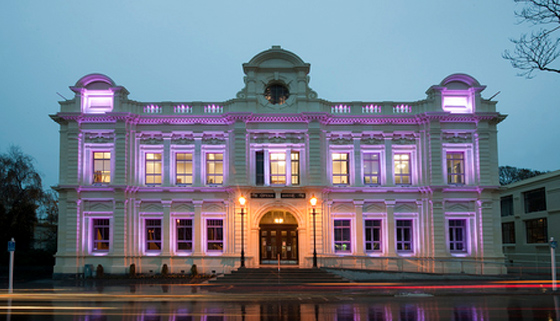
Waitaki District will celebrate and record for eternity the fine efforts of its athletes at the annual sporting awards on Monday, ninth of March, at the Opera House. The district’s population may be fairly sparse but is by no means a reflection on the sporting prowess of its people. Nine divisions of achievers from Emerging Talent to Masters Athletes are represented in nominations of athletes who excel locally to those who succeeded nationally or internationally. The range includes downhill mountain biking and ultra distance running to swimming, rowing and table tennis, and athletes and administrators of all ages.

Many may view the annual sports awards celebration as a function that highlights winners and losers and do not realise that each nominated athlete achieved a target that they set themselves. At whatever level, to achieve that target is success, a platform of many definitions. American columnist Walter Winchell claimed in 1897 “Nothing succeeds like success”. Author, physician and WW1 Intelligence Officer Somerset Maugham believed “The common idea that success spoils people by making them vain, egotistical and self-complacent is erroneous; on the contrary it makes them for the most part humble, tolerant and kind. Failure makes people cruel and bitter.” And author Robert Louis Stevenson believed “To travel hopefully is a better thing than to arrive”. In other words it is the learning on the journey that the athletes travel that is more valuable than the ultimate achievement itself.

Success is relatively easy to cope with as long as it placed on the correct rung of the personal ladder of life. Too often success produces over-confidence or even arrogance. As in any field of endeavour that greatest characteristic, humility, is one of the hardest life skills to embody and we are fortunate so many of our sports heroes and role models have it in abundance.

Failure tests the mettle of the individual facing it: daunting and disappointing to cope with but a process that is but part of the journey. How we cope with failure, and with success, in our sporting endeavours will likely mirror the way we live and relate to people as the journey progresses. It’s about perspective. About relativity, that elusive ability to see situations and generalities in appropriate balance.

This district’s annual awards climax embraces a passion to nurture talent, leadership and flair. The formal celebrations of our sporting prowess extends well over fifty years to 1963 when Commonwealth Games gold medallist rower George Paterson became the inaugural Sportsman of the Year, the premier award. The range of sports recognised in these honours indicate the versatility of participants in the district. Cricket, rugby, rowing and athletics have been intermixed with darts, paraplegic codes, show jumping, croquet, sheep dog trialling and shearing.

The basic inhibitor for success in sport is to stop trying!

ENDS

First Published in The North OtagoTimes