Like, hello?

Is this where some people live?

I noticed an item on the Small Wars Journal blog this morning on my pre-breakfast scan of what’s up on the planet…in it Dr. Christopher Paul comments on an article (also in Foreign Policy) that is strongly critical of the RAND study Victory Has a Thousand Fathers, of which he was the lead author.

Dr Paul would be correct in his comments on the Hoyt/Rovner article except for the minor point that THEY are actually correct in what they say…

I hadn’t read the RAND ‘study’ in question until seeing this item in the SWJ Blog this morning but it is one that would have eventually crossed my desk for review…it’s 187 pages but having just read the summary and introduction, I don’t think it’s going to be a critical read for me anytime soon…

Although it quotes William Rosenau “…insurgency and counterinsurgency. . . have enjoyed a level of military, academic, and journalistic notice unseen since the mid-1960s…”, the authors have not included one single case study from this period that was the heyday of COIN (both as we know it and how others like the USSR and Cuba applied it)…like, hello? By selecting on those campaigns that started after 1978 – you didn’t consider Northern Ireland? Like, hello? – the RAND study only really focuses on a very narrow range of campaigns and even then I’m not convinced that there is much rigour in the selection of campaigns…we all know the COIN campaign in Kosovo, right? and Croatia and Bosnia? Some bad things may have happened in those countries but COIN? Hardly…the COIN campaign in Somalia was concluded in 1991? Papua New Guinea was a COIN loss? By PNG one assumes that the study is referring to Bougainville which is actually a success in that Bougainville is still a part of the nation it sought to break away from and the campaign that was conducted on that island actually addressed the root issues underlying the ‘insurgency’ – actually IAW one of the key COIN trusims…I also note that the use of repression as a strategy is frowned upon when, whether we in the West like it or not, historically (before and after 1978) it is one of the more consistently effective means of keeping a population in line…

I suspect that if I opt to wade through the remaining 161 pages of this ‘study’ (I have to use the term ‘study’ loosely), I will find find more such weak ‘logic’, poor research and inconsistency – and having written this, I find myself resigned to having to read the rest of it…

I wonder to what extent this paper was driven by statements at the COIN Symposium in May where various staff called for a COIN checklist, displaying a fundamental lack of ‘getting it’? While there are some fundamental principles/tenets/truisms for Countering Irregular Activity (COIN is too narrow a term for modern use) that a study like this may have analysed, one of them is that every campaign must be considered on its own merits i.e. there is no checklist in CIA!!

Perhaps, instead of using his position at Foreign Policy to have a self-righteous whiny-nana, Dr Paul might want to reflect on the comments here and in the Rovner/Paul article, and then go back to RAND and redo the job properly this time…

Critical thinking more and more seems to be superseded by a level of superficiality that is quite scary and I wonder if this is due to the economic crisis really putting the acid on academics to publish or really perish…? The really annoying this about products like this RAND ‘study’ is that so much information is freely available for them to do the job properly – the analysis is not that difficult – it’s the application in the contemporary environment that offers up the true challenges and weak superficial work like Victory Has a Thousand Fathers offers nothing to mitigate those challenges…

Later that day…Edit: just used this line in a discussion on this paper on Facebook…pretty well sums up my feelings…

“…I think it’s even worse than that…I simply don’t think they ‘get’ the environment we are operating in now so what they’ve done is pretty much like setting off to study the Third Reich and then limiting themselves to 1946 onwards…”

Today’s COIN Center VBB

As below, Dean presented at the COIN Center’s Virtual Brown Bag session this morning…the slides and audio file will be posted on the Center’s website in the next few days…I may be offline for a week or so as I am off globetrotting again but will link them in when I get an opportunity…in the meantime I strongly recommend that anyone with a personal or professional interest in contemporary intel issues, key an eye of the site and download both files when they become available. This is very good stuff and at least on a par with MG Flynn’s Fixing Intel paper from earlier this year…

Top effort from Dean and it is great to see a compadre’s efforts paying off like this….

As a taster, here’s some of the questions that were asked during the session (to hear the answers, you’ll need to download the files…)

MAJ Decker BCTP – guest: Coming in loud and clear

Peter Sakaris – guest: To understand the environment over time shouldn’t we be getting better more reliable HUMINT through increased population interaction? I would think that the example of a new officer working with a veteran police officer in the CONUS as you described would help to do this in the COIN environment. Obtaining the institutional knowledge of an environment can come from people that live in that environment because they live it every day and are in areas of the local community where it would be difficult for us to get into.

Kevin Frank JIWC – guest: Not will ing give up on the analysis issue- believe that if we collect the correct data and present it to the analyst correctly, we’ll get better analysis at the current training levels, especially if the commander is asking the right questions…comments?

DK Clark, DTAC/CGSC – guest: Did you use the pattern-analysis plot, activities matrix, association matrix, and societal considerations in FM 3-24.2? If so, could you comment on problems with these methods/techniques of framing and displaying the intel analysis in COIN?

MAJ Decker BCTP – guest: Afghanistan Reintegration Program (ARP) is now doing the same as the Boston Gun Project by providing retraining opportunities to former insurgents

HOMBSCH, DAVID G Lt Col : Comment only (no need to repeat):   I love the quote – “analysts to be historians, librarians, journalists” – spot on.   I also totally agree, with exploiting reach back – generate staff with expert knowledge on specific regions, who understand normality, and can interpret important changes (indicators and warnings) to cross cue counter insurgent forces.  Hypothesis – there is a place for more foreign nationals in analysis teams in CONUS and allied intelligence agencies?

CPT Linn – guest: how are we integrating analysis into Data collected from FETs and HUMINTs in theater?

Peter Sakaris – guest: The Stability Academy, Kabul (formerly the COIN center of Excellence) is a COIN Academy that the leadership of deploying BCTs cycle through as part of their RIP/TOAs. They recommend the ASCOPE/PMESII-PT crosswalk as an analytical tool for helping gain the needed detailed understanding of the “complex human terrain”. Are you familiar with this, or other tools like it such as TCAPF and do you find them useful for this purpose? Have you seen other approaches not discussed that are/have been in use?

CPT Linn – guest: also how is that data utilized in targeting packages?

MAJ Allen Smith – guest: Do you vet and confirm info from gang leaders using SIGINT?  How do you build trust on a Narc?

Kevin Frank JIWC – guest: There are many units out there reporting data (CATs, FETs, PRTs, unit reports etc) . But are they getting the right information? ASCOPE is one guide- are there other collection guides out there that can help us get better data? Does the LE community have anythi

Kevin Frank JIWC – guest: anything that can help?

RODRIGUEZ, ISMAEL R USA  2: Any thoughts on the application of GIS in a police intelligence role? Do you think these techniques could translate well in COIN?

Another Victory for the Whiny-baby Brigade…

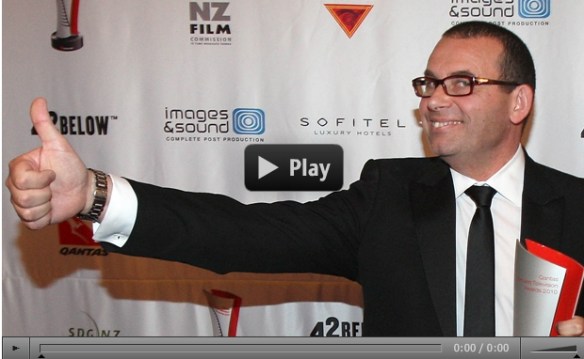
In another resounding victory for the self-righteous, sit-at-home, ne’er-do-wrong brigade of whiny-babies that think the world should be nice…not interesting, exciting, stimulating…just nice…in other words, bland and boring…and that’s what Breakfast (the show and the meal) will be from now on without Paul Henry at the helm…yes, of course, he’s brash, opinionated, childish, immature but…BUT…he does say many of those things that many many people are actually thinking and his latest mindless verbal gaffe is typical of this when he asked the Prime Minister last week on live TV “…Is he [the current Governor-General] even a New Zealander? Are you going to choose a New Zealander who looks and sounds like a New Zealander this time?…

And that’s a good question…not racial grounds but simply because no one has the faintest idea where the current Governor-General comes from, who he is, or what he does…in short, he’s just like Breakfast will be from now on…nice but bland and boring – there’s probably some kind of irony in that. Previous Governor-Generals as far back as I can remember (and that’s getting to be some way now) have been public figures of some form who Joe Public had actually heard of before not some nice chap who doesn’t really appear to say or do much at all…so good on you, Paul, for speaking up and saying what so many think…

And while we’re on the topic of what so many think, here’s a snap of the Stuff.co.nz poll this morning on the subject…


The little yellow bar says it all...


And, Paul,  I hope that you get a good job back on air…probably snapped up by someone else already…and do get to put that Skyhawk in the back garden…


All parked up with no place to go...


Managing Land Conflict in Timor-Leste

This item just popped into the inbox…a great example of the sort of irregular activities that potentially threatens national or regional stability…using an interpretation of irregular that equates to ‘potentially destabilising’….

Dili/Brussels, 9 September 2010: Measures to resolve land disputes in Timor-Leste must go beyond a draft law on land titling if they are to comprehensively reduce the risks posed, otherwise the law could bring more problems than solutions.

Managing Land Conflict in Timor-Leste,* the latest briefing from the International Crisis Group, examines the country’s current tangle of land ownership claims, and recommends that the government and its partners act now to supplement titling with clear public information, clarify protections for those who will be evicted or resettled, and strengthen support to local mediation.

The need to balance land rights inherited from previous Portuguese and Indonesian colonial administrations with the reality of customary law, as well as the implications of a history of population displacements, have delayed the creation of a land administration system. Confusion over the present and future basis of property claims is widespread.

“Establishing legally enforceable property rights will inevitably create winners and losers,” says Cillian Nolan, Crisis Group South East Asia Analyst. “Unless the implications of this law are clearly understood, and protections developed for those who will be negatively affected, it risks being ignored or, even worse, becoming unenforceable”.

The current draft land law, approved by the Council of Ministers in March 2010 and awaiting parliamentary debate and approval, would establish the country’s first property ownership rights. Both the technicalities and the implications of the complex law are poorly understood. Sensitive issues include the fate of those Timorese who occupied empty properties in the violence following the 1999 referendum, the rights of Timorese living abroad to reclaim old property, and the holdings of the political elite. While passage of the draft law will help resolve many land disputes, further public information and debate should be a prerequisite for approval. Previous attempts to enforce laws on state property have often failed due to local resistance.

Though most disputes have to date been either resolved or frozen without recourse to violence, and many people are happy with the status quo, the issue will take on new urgency in light of ambitious new plans for government-driven development. Clarification of basic protections and resettlement plans for illegal or displaced occupants should be a priority, as should continued support to informal dispute mediation processes. The government should take initial steps now towards developing a comprehensive land use and housing policy, as well as to engage communities on sustainable ways of managing customary tenure systems.

“Timor-Leste cannot afford to wait much longer to establish a working mechanism for resolving property disputes as this is a key building block of the rule of law”, says Jim Della-Giacoma, Crisis Group’s South East Asia Project Director. “Failing to do so could instead plant new seeds for future disputes.”


Hey, Skippy! Bugger off!!

In my last post I commented on how these guys…

have been picking on these guys…

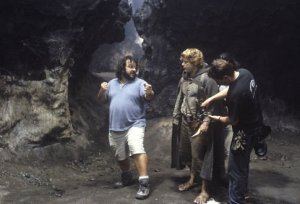
In Get Frank, Sir Peter Jackson offers his own thoughts on this blatant attempt to muscle in and screw up the Kiwi film industry and these are well worth repeating in their entirety….this may not be a biggie to the rest of the planet but way down under we get a little miffed when the Big Brother to our west tries to throw its weight around, more so when it has managed to screw up its own film industry – although after the last Star Wars trilogy it probably didn’t need much help…in terms of Countering Irregular Activity – and it just struck me that we could change this to Countering Irregular Behaviour and get away from that whole CIA issue – this is exactly the type of activity that comes under the heading of irregular…the potential cost to this little nation of losing not only production of The Hobbit, but possibly other big ticket productions is just as harmful as if a terrorist incident shut down our tourism business…

As of this morning, the Government has stepped up to the plate to get this squared away…Govt offers to mediate The Hobbit dispute…like Bridget Smith in Imagine a World, I like not only going to the movies, but that fact that many of the movies I like are made here….

Anyway here’s what Sir Peter says…

Statement regarding The Hobbit and claims by the Australian Media Entertainment and Arts Alliance (MEAA):

The Australian Labour Union, the MEAA is using our production The Hobbit in an attempt to widen it’s membership, and power within the New Zealand film industry. As a New Zealand filmmaker, who has nothing to hide or be ashamed about, I’m not going to see this threatening behaviour continue without some form of sensible discussion about the “facts” and “truth” behind their various allegations.

It’s incredibly easy to wave the flag on behalf of workers and target the rich studios. It’s not hard to generate an emotive response, nor is it hard to sway public opinion, since nobody seems to like the facts to get in the way of a good story in these situations.

Behind the claims of exploiting actors who are cast in the “non-Union” Hobbitproduction, and claims that various high-profile stars will refuse to take part in the films, there are clear agendas at work. As usual with these agendas, they are based on money and power.

I am not a lawyer, nor am I an expert in unions and how they operate – but I like to think I have a degree of common sense, and that’s what I’m basing my observations on. Let me run over a few facts:

– Personally speaking, I’m not anti-Union in the slightest. I’m a very proud and loyal member of three Hollywood Unions – the Directors Guild, the Producers Guild and the Writers Guild. I support the Screen Actors Guild (SAG). All these organisations (I must confess I’m not entirely sure what the difference is between a “Guild” and a “Union”) do terrific work on behalf of their members.

– Many Actors are members of SAG, but many are not — especially younger actors and many Australian and New Zealand performers. MEAA claims we are “non-Union”, but whenever we hire an actor who belongs to SAG, we always honour their working conditions, their minimum salary agreements and their residuals.

– The SAG residuals is a small pot of money that comes from the movie’s profits. The DGA and WGA have similar schemes. An agreed upon percentage of movie profits is placed in a pot, which is shared amongst the members of the guild who worked on the film in question. Despite MEAA claims that The Hobbit is “non-Union”, our studio, Warner Brothers, is honouring these residuals, and making the profit sharing available to all the various Guild members – just as it did on The Lord of the Rings, and Universal did on King Kong.

– These residuals can be worth tens of thousands of dollars to an individual if the film is successful – however the normal situation is that if an actor is not a member of SAG, they do not share in the profit pot.

– This has always struck us as unfair, since most Kiwi actors are not lucky enough to be SAG members. For the Hobbit, Warner Brothers have agreed to create a separate pot of profit participation, which will be divided up amongst non-SAG actors who are cast in the film. This was not done because of any pressure from Guilds or Unions – it was actually Warners doing the decent thing, and New Zealand and Australian actors will be the principle beneficiaries. SAG members have their pot, and non-SAG members now have theirs. We have introduced the scheme to Kiwi agents and it’s now part of all our Hobbit cast deals.

– Whatever damage MEAA is attempting to do — and it will do damage, since that’s their principal objective in targeting The Hobbit – we will continue to treat our actors and crew with respect, as we always have.

– As I said earlier, money and power lies behind this threatening behaviour from our Australian cousins, and to fully understand that, you simply have to step back and look at the greater picture in context.

– It starts with “NZ Actors Equity”. This is a tiny organisation that represents a small minority of New Zealand Actors. They are not a Union, and have none of the legal status of a Union. They are a … well, a smallish group who have some New Zealand actors as members. How many actors are members of NZ Equity? They guard that information very closely, but various reports I’ve seen put their membership at 200, although somebody in the know swears it’s nearer 100.

– How many professional actors are there in New Zealand? Somewhere between 2000 and 4000, depending on just how you describe a “professional actor”. Obviously most Kiwi actors have other employment too, but there’s certainly over 2000 actors available to cast in a film production.

– So taking the most generous numbers, NZ Actors Equity represents 200 out of 2000 Kiwi actors, or 10%. Perhaps I’m wrong, and if so, NZ Equity will no doubt reveal their real membership numbers.

– Now there’s nothing wrong with NZ Actors Equity representing 10% of the actors in this country. It’s great that they offer that service, and if an actor chooses, there’s a supportive group they can join. Obviously the more actors that join NZ Equity, the better, since these organisations usually survive by taking a small percentage of their members acting fees. I’m guessing that Equity do something like that. Recently they have been part-funded by MEAA.

– Over the last 10 years our relationship with NZ Equity has been rocky — whenever we cast an “overseas actor”, we get a letter telling us why such and such Kiwi actor would be so much better in the role. In most cases we have already auditioned the actor in question, and formed our own opinions — but what strikes me as unfair, is how this “helpful” service of suggesting better choices only includes the “Equity 200″. If you happen to be a good actor who doesn’t belong to NZ Equity (and many don’t), you’re automatically not good enough to be put forward.

– What really does strike me as wrong, and this is my personal opinion, is the why that the MEAA is using NZ Actors Equity as a vehicle to represent the voices and opinions of New Zealand actors. A couple of years ago, the members of NZ Actors Equity voted to join some kind of alliance with the Australian MEAA group. At the time, there were voices of alarm at how this relationship could damage the interest of Kiwi Actors, but the merger went ahead – and now we’re about to find out just how damaging it’s going to be.

– As far as I know, the membership of NZ Actors Equity was allowed into the MEAA, meaning that the Australian MEAA organisation represents 200 out of 2000 Kiwi actors. I don’t believe it represents non-Equity NZ actors. It speaks on behalf of a tiny minority of our actors.

– The management of NZ Equity are clearly happy to be used as a political football by the Australians — but my sympathy goes to the 1800 New Zealand Actors who are not part of the “Equity 200″, but who are going to suffer the fallout if this Hobbitthing goes nuclear.

– I also feel a growing anger at the way this tiny minority is endangering a project that hundreds of people have worked on over the last two years, and the thousands about to be employed for the next 4 years. The hundreds of millions of Warner Brothers dollars that is about to be spent in our economy.

– Why is this endangered? Because the “demands” of MEAA cannot be agreed to, or even considered – by law – and therefore the only options that remain involve closing the Hobbit down, or more likely shifting the production to Europe. It could so easily happen. I’ve been told that Disney are no longer bring movies to Australia because of their frustration with the MEAA.

– The MEAA is demanding that the Hobbit production company (Warners owned, 3foot7 Ltd) enter into negotiations for a Union negotiated agreement covering all performers on the film.

– I personally have a problem with any organisation who represent a small minority, but attempt to take control of everyone – but that’s not the real issue. The complex web of NZ labour laws are the reason why this demand will never be agreed to.

– NZ law prohibits engaging in collective bargaining with any labour organisation representing performers who are independent contractors, as film actors clearly are. The NZ Commerce Act claims it would be unlawful to engage with an Australian Union on these matters.

In closing:

My personal opinion is that this is a grab for power. It does not represent a problem that needs a solution. There will always be differing opinions when it comes down to work and conditions, but I have always attempted to treat my actors and crew with fairness and respect. We have created a very favourable profit sharing pool for the non-Union actors on The Hobbit — and now the Union is targeting us, despite the fact that we have always respected SAG conditions and residuals.

I can’t see beyond the ugly spectre of an Australian bully-boy, using what he perceives as his weak Kiwi cousins to gain a foothold in this country’s film industry. They want greater membership, since they get to increase their bank balance.

The conspiracy theories are numerous, so take your pick: We have done better in recent years, with attracting overseas movies — and the Australians would like a greater slice of the pie, which begins with them using The Hobbit to gain control of our film industry. There is a twisted logic to seeing NZ humiliated on the world stage, by losing the Hobbit to Eastern Europe. Warners would take a financial hit that would cause other studios to steer clear of New Zealand.

– Seriously, if the Hobbit goes east (Eastern Europe in fact) — look forward to a long dry big budget movie drought in this country.

– Others gain from that too. SAG would much rather have it’s members hired on movies — as opposed to non-SAG actors. The easiest way to control that, is to stem what are called “runaway productions”, which are American funded films made outside of America. The Hobbit is one of them, as was King Kong andLOTR. SAG, which is naturally supporting MEAA, would see it’s own benefit in studios having a miserable experience in Australia/New Zealand. That may well be pushing the conspiracy theories one step too far, and it’s perfectly natural that one Union would support another – but the point is that in the complex web of Hollywood intrigue, you never really know who’s doing what to whom and why.

But it sure feels like we are being attacked simply because we are a big fat juicy target – not for any wrong doing. We haven’t even been greenlit yet! It feels as if we have a large Aussie cousin kicking sand in our eyes … or to put it another way, opportunists exploiting our film for their own political gain.

Peter Jackson

(NB: This represents Peter Jackson’s opinion as a Kiwi filmmaker, and not that of Warner Bros or New Line Cinema, who were not consulted about this statement.)


Irregular?

...and then the big Aussie Union wizards got grumpy with The Hobbit...

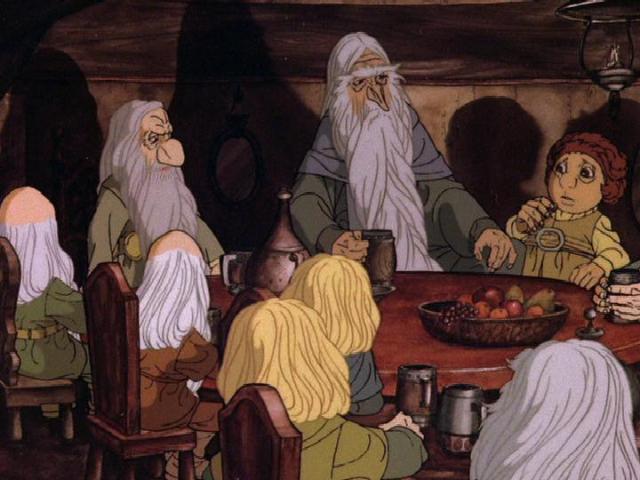
…and then the big Aussie Union wizards got grumpy with The Hobbit…

Irregular?” might be the opening line of a laxative advertisement and I have to admit that this issue of Aussie unions being allowed to muscle in on a New Zealand company producing a movie in New Zealand has about the same effect on me as a good laxative…

Regardless of whether Peter Jackson pays union rates that the Australian and US unions are happy with, this is a New Zealand domestic matter to be resolved and not the business of a couple of overseas unions that have probably done more to skittle the movie business over the decades than movie pirates.  the crux of the matter, as summarised by the Dominion Post this morning, relates to conditions of work:

If film crews were hired as employees, with a contractual promise of ongoing employment, there would be no film industry, he said. “It’s an industry built on short-term work opportunities, with a finite time limit.”

Many contractors preferred being independent contractors – they were paid more, had more breaks, could claim back on expenses, and could also leave with short notice.

He would not be meeting unions because all contract negotiations were being handled by Warner Bros.

New Zealand Film and Video Technicians’ Guild president Alun Bollinger said film workers could be fired on a whim and only one week’s notice was needed to be given by either party.

In other countries, including Australia, film workers were usually employed as employees with full workers’ rights, though they were still only employed for the duration of each movie.

At first glance, a storm in a teacup, this offshore meddling in national affairs has already cost the New Zealand film industry the Halo production, although this did free up resources for the outstanding District 9, and now risks the production of The Hobbit in New Zealand. If not filmed in New Zealand, the movie will probably head off to Eastern Europe somewhere, probably where those large meddling unions have no sway – or where incomes are so low that meeting daily rate requirements under a union contract won’t be a major drain on studio resources.

As an example of irregular activity threatening national interests, should the Government get involved? Absolutely!! Not because some Aussie whiners says so but because this issue does highlight some apparent inconsistencies in current labour laws regarding the status of employees as employees or contractors and this does need to be resolved. Whether or not it will be resolved by the Government that brought in the 90 day fire-at-will labour law ‘reform’ is another question…

Having been involved on the periphery of production of the Lord of the Rings trilogy 1999-2003,  and seen first-hand the positive effects that this production had on the growth of the NZ film production industry, it would be a real shame to see us take one big step backwards…but this is an issue that needs to be resolved by Kiwis…

The Information (R)evolution

I’ve been marking papers for the last week or so, some good, some indifferent and a couple, well, you know…I handed the last lot back on Friday and, on my way out of the office on Friday, tossed the September issue on C4ISR Journal in my bag to snap my mind back into reading structured material by people who at least know how to write…

I haven’t been disappointed in the content in this issue, although it has made me long somewhat for the free time to be able to read more if not ALL of the journals that we receive each month…the title of this thread comes from the editorial in this month’s issue…Keep the revolution on course…

In this item, editor Ben Ianotta, applauds the US Army’s initiative to adopt commercial ‘smart’ phones as means of distributing and sharing (they ARE two different functions) information to troops on the ground. The idea came from Army Vice-Chief Peter Chiarelli last year “Give troops the same power over information enjoyed by the average commercial iPhone user.” While I’m sure that Apple enjoyed the iPhone plug, it will have to move fast if it wants any significant share of this initiative. Already competitors using competitive operating systems like Google’s Android are hitting the streets and at considerably LESS cost than iProducts. Apple, I think, seems to have a habit of misjudging the market and relying on customer loyalty for expensive products that offer LESS interoperability for vague and illusory benefits.

Much like, perhaps, some military product developers…who have still not figured out that, since the end of the Cold War, primacy in technological development has reversed from military R&D leaders to the commercial sector…that it has taken two decades from the turning point for the Army to accept distributing commercial communication devices to soldiers as something that it MUST do is mildly disturbing and also somewhat ironic in that the information-based revolution in military affairs, the long-vaunted RMA, focussed on massive bloated central information systems that never really delivered. In the meantime, there was this thing called the internet…

Another change heralded by this programme is a long overdue acceptance that classifying any and all information relating to operations does NOT have to be classified up the wazoo, and even less so if you actually want it to get to those who need it…what was that definition of knowledge management, sorry…information management…that we use…

…the right information…

…to the right people…

…at the right time…

…AND ensuring that they know what to do with it…?

Of course, this does NOT mean that everything should be tossed on the intranet and levels of classification done away with – although it would be an interesting experiment post-Wikileaks to see if the sudden flood of information could ever be processed by an adversary fast enough to act decisively on it.

On page 12 of this issue, there’s a short item on a mobile 3G network access system known as MONAX that would allow soldiers to access information with less reliance on commercial cellular systems. MONAX base stations “…could be positioned as fixed mast antennas on the ground, on vehicles, or in airborne assets such as aerostats, C-130 transport aircraft or – potentially – unmanned planes…” immediately below this item, is another on a Google Android-based wearable computer known as Tactical Ground Reporting or TIGR. It’s intended to facilitate situational awareness for individual soldiers and although currently designed to work over a tactical radio network, Android is designed for smart phone connectivity so it’s probably not too hard to join the dots here.

And speaking of joining the dots, page 8 reports on the first flight of the AeroVironment Global Observer. Weighing in it less than 10,000lbs but with a wingspan of 175 feet and a payload of 380lbs, the Global Observer is intended to fly at 65,000 feet for 160+ hours (that’s over a week!) for customers who might range from weather services to cell phone companies and others that need persistent coverage over an area.

More and more commercial off-the-shelf is the way to go, simply to get something out there now, instead of tediously slow, often bloated and inefficient, development projects…

The cover article starting on page 16 advises that Global Hawk will probably NOT be able to meet the current target date of 2013 to replace the venerable U-2 for high altitude long-range surveillance and reconnaissance. The problem is not so much that there is anything wrong with Global Hawk except it was never designed to replace the U-2 and thus has not been integrated with a number of the key collection systems employed by the U-2. This all dates back to a 2005 directive by the Rumsfeld administration in the US DoD to retire a number of older aircraft types including the U-2 and hammered home in 2007 with Rumsfeld’s certification that the U-2 was “…no longer needed to cover intelligence gaps…” I wonder which of that administration’s cronies might have stood to gain the most from contracts for a fleet of new S&R platforms..?

Unfortunately there is no even any agreement that Global hawk is a suitable replacement for the U-2…another go-round of the efficiency (cheaper) versus effectiveness (does the job) argument in which the chair polishing advocates of efficiency still demonstrate that they simply do not get that people are actually useful…SKYNET has nothing on some of these drones in diminishing the value of the human component of military, and thus national, power…

Woman to woman

MG Michael Flynn, 2Lt Roxanne Bras

I’m a little cynical about this next item, leading off on page 34, written by MG Michael Flynn, of Fixing Intel fame/notoriety (I thought it was both very good and long overdue but many consider otherwise) and 2Lt Roxanne Bras on the value of Female Engagement Teams (FETs). The one question that kept coming back to me as I read and then re-read this article was ‘What do FETs really do?’ Don’t get me wrong…I’m sold on the concept as it’s one that was used to considerable good effect during the six year BEL ISI mission on Bougainville (giving the lie to the description in the article of FETs as “…the newest tool to emerge from battlefield innovation…”) and was also described as a key enabler in a recent brief here by a visiting UK psyops practitioner.

My first concern with this paper is that it feels like ‘spin’ – maybe I’m just a bit too set in my ways but I’m having trouble understanding why a two-star general and a junior officer would need to collaborate on a two page article (two and a half if you include the pictures) – paper? Yes perhaps. A book, definitely but this just doesn’t feel right or genuine. Perhaps a better approach would have been to have write the paper and the other provide comment from their own perspective? I always remember an instructor at Tac School who hammered into us the concept of ‘task with a purpose’ – what is something there to do. Reading this article, I wonder what the intent of the author’s is. Clearly there has been some resistance to the FET concept but I’m not sure that this article is going to help any…

The FETs are described as key to gathering information within Afghan village culture but are specifically excluded from collecting intelligence. This implies that there is some distinction between intelligence and information but surely ANY information on adversaries and competitors (once known as the enemy), the weather and terrain (physical, human, informational, whatever) might fall under the heading of intelligence…? And surely, by mere virtue of engaging Afghan women in conversation, FETs will be gathering elements of actionable information be it actionable in training, targeting, situational awareness, etc, etc…

The article even goes so far to distinguish between FETs and Human Terrain Teams which also gather information on social and cultural terrain on the grounds that “…FETs have not been trained in information gathering and they do not know how to vet the information they gather…” Huh? So a FET is not trained to vet information that it is not trained to gather but which is the primary raison d’etre for its existence in the first place i.e. “…the FET can provide valuable information to the commander…”. Moreover while FETs are (quite rightly) not “…working to change Afghan culture and ‘liberate’ the women…”, they “…are a strategic asset…” and  “…should be applied using the very same inkblot strategy applied to [the] wider COIN strategy…” However the inkblot in COIN is indicative of spreading change, typically in growing (hopefully) support for the government and security forces…so what FET-inspired effect will be inkblotted across Afghanistan?

I’m sorry but as much as I think MG Flynn hit the nail fair on the head with Fixing Intel at the beginning of the year, in this case, I think he would have achieved more stepping back and allowing 2Lt Bras to promote the case for FETs based on her own experiences than with this top-level ‘spin’.

Shifting Terrain

Enter a caption

Following immediately on from the FET article is a rather superficial one criticising both Flynn’s Fixing Intel and the human terrain concept by “…US Army experts Paul Meinshausen and Schaun Wheeler…” In arguing that “…information about the human terrain is not the information that decision makers need to be able to work with local populations or defeat insurgencies…” They argue (weakly) that “…more important than data…is an understanding of the influences that drive behaviour…

As near as I can figure, their concept is that physical terrain and, more broadly, the physical environment is the key factor that affects a population and if we understand that environment, we can not only understand but influence the population. “The US and its allies need to let go of the assumption that conventional operations are somehow fundamentally different from counterinsurgent operations and consider the possibility that the population is just another group of people that adapts to its terrain just like any other friendly, neutral or enemy…” Ya think? Is that the arrogant ill-informed assumption that the flawed shock and awe doctrine was based on; the same doctrine that proved so bloodily ineffective in the first three years in Iraq ? Are these two “…experts…” really trying to say that it’s that simple, that all the work in the last five years on the shift from platform-based to individual-based warfare was just wrong and we had it right all along? Give me a break, please…

Nowhere in this article do the authors actually define where such understanding might come from, more so in the absence on what they claim is worthless ‘data’. I wonder if they might stop to think one night about the simple concept that perhaps understanding might be based upon analysis of lots and lots of bits of data and the application of that data against the context of the local environment. While dismissing the means by which we learn about cultures, including the old chestnut about anthropologists specifically criticising the human terrain system programme (in reality only a very small proportion of very vocal anthropologists have done so – the remainder seem happy to go about their anthropological business), they tell us that we need to learn about those same cultures in order to be able achieve our objectives in Afghanistan.

In the last paragraph before the ‘The Human Terrain Fallacy’ heading, the article states that an abundance of information on Afghanistan already exists from a vast range of non-military sources. This is absolutely correct but it is false to say this removes any requirement for the intelligence community to collect its own information. If anything the real problem that the authors allude to but never pin down in this article is that the problem is not in the collection but in the processing and analysis of this data, as both individual data sets and/or as a collated fused national data set. That the authors don’t ‘get’ this is clear when they follow on to declare a finding (in isolation) like “Dispute resolution must remain adaptive and flexible to setbacks and changes” as “…uselessly vague…”. As a statement on its own, this does seem like a statement of the blindingly obvious but then so do many other doctrinal statement – which is probably why they are espoused in doctrine in the first place. Examining that “uselessly vague” finding through a doctrinal lens, one might expect the context from which it has been ripped to include:

Examples of how dispute resolution processes have been applied with varying degrees of success.

A description of how that finding was derived.

Some distilled best practice guidelines, tips and techniques to assist the practitioner in getting it right.

Having spent a decade or so in the lessons learned game, some many clear and distinct observations and issues are ultimately distilled into similarly “uselessly vague” lessons which then form the basis of doctrinal change and evolution. Nowhere has this been more or better validated than through the ABCA Coalition Lessons Analysis Workshop (CLAW) process which was first implemented in 2005 and is now a key driver in ABCA processes.

This paper actually (painfully) reminds me of some of the less sharp papers I have graded in the last week or so. Instead of tasking itself with a clear purpose, it has the feel of a couple of first-year students more focused on being clever and impressing the staff with their brilliance…or what we call IntCorps-itis: always searching for the crucial piece of intelligence that will win the war instead of focusing on simply delivering good solid intelligence product…

I note that on Page 42, C4ISR itself awards this article a red ‘DANGER’ comment in its Attitude Check column and I wonder if someone else cancelled and this was all the C4ISR staff could find to fill the gap…it’s an article that’s not just immature but outright wrong and which would struggle to get an ‘F’ for ‘Fantastic’ on the marking scale….

In other news (in this issue)

There’s also some interesting updates on semi-autonomous EOD robots, iris scanning biometrics, the Blue Heron airborne multi-spectral imager and US Cyber Command and its challenges and opportunities.

On irregularity

We’ve had a bit of a beating in this little nation down-under in the last week or so…more speed wobbles than one might reasonably expect in a year…I’ve mentioned on a number of occasions how the UK phrase Countering Irregular Activity offers a more relevant construct for current and near-future periods of uncertainty and complexity than either the Marines’ Countering Irregular Threats or the overly-simplistic and over-used COIN. Who would have thought that in the space of a week we might experience four significant irregular and potentially destabilising events of such magnitude? It was only on Friday night that I was down at the local, discussing this item and observing that whether it would remain an issue into the next week would very much depend on what happened over the weekend – normally here, that means we either get or dish out a thumping on one sports field or another…

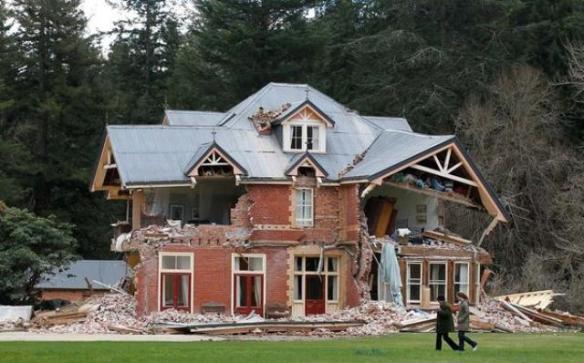
At around 4-30am on Saturday morning, our second largest city, Christchurch in the South Island was severely shaken by a 7.2 Richter earthquake centred some 30km west of the city. This area is not generally noted as a high-risk for earthquakes, more common problems being occasional seasonal snow, flooding and smog. As a result, people were not as physically nor psychologically prepared as they might have been in other areas. This is the most powerful earthquake ever recorded here and, although no lives were lost, the final repair bill will be in the billions and a number of heritage buildings will have to be demolished due to irreparable damage.

Deans Homestead (c) NZ Herald

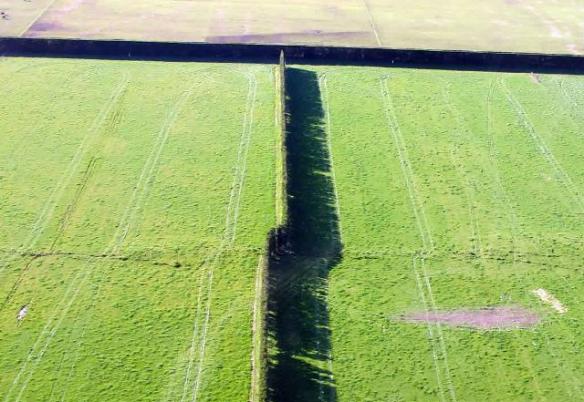
This image is one of a series taken during an early scientific survey of the fault line area (the Youtube file of the overflight is linked through the image). To give an idea of the lateral and vertical ground movement during the main quake, the lateral shift in this image is around four metres, and vertically around 1.5 metres. Only a tenth of that degree of movement would be a nasty jolt! This image was sent to us as an example of some of the underlying issues that might have to be resolved in the wake of the quakes (after shocks up to 5.2 Richter are still rolling in, on top of the obvious tasks of rebuilding and reinforcing,  in terms of changes to boundaries and potentially ownership, to say nothing of the requirement to update every digital and hard copy map of the region. It’s resolving this little issues that may be the bigger long term problem…

Exploring new boundaries (c) geonet.org.nz 2010

While Canterbury was coming to grips with its devastated major city, the lower North Island braced itself against a series of floods that swept through a number of small towns, further stretching Civil Defence and infrastructure agencies that were already focussed on deploying aid south. We got lucky and the front that dumped all this rain hit everywhere BUT Canterbury sparing Christchurch from further damage from rising water levels.

The Mangatainoka river in flood, with the old Tui Brewery building in the background.

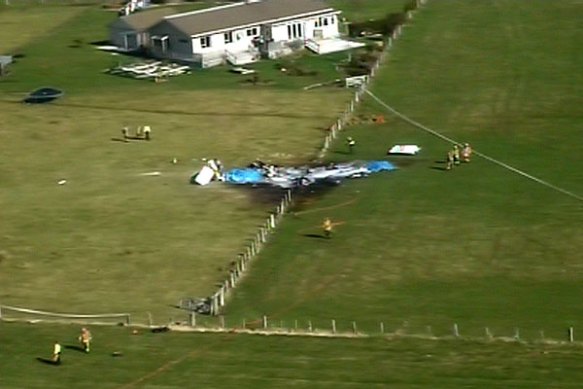
At 1-30pm on Saturday, a light aircraft conducting skydiving operations at Fox Glacier on the other side of the South Island, crashed on take-off killing all nine occupants: the pilot,  four divers-master;  and four tourists from Ireland, England, Germany and Australia. This is the worst air disaster in national history in decades, the worst being the 1963 DC-3 crash in the Kaimai Ranges that killed 23. Any other weekend, such a tragedy would bring to nation to a halt but against the backdrop of the Canterbury earthquake it didn’t even get to lead the 6 O’clock News.

Skydive aircrash kills nine (c) TVNZ 2010

Earlier last week, the Government announced a NZ$1.7billion bail-out for the crumbling South Canterbury Finance (SCF) empire…although some had protested that the Government’s approach was heavy-handed and had helped causer the problem.I think that the simple truth is that it has acted responsibly to prevent the loss of people’s saving due to the doddering of an aging business magnate. I recall not so long ago seeing SCF advertising 8-8.5% interest rates on 18 month investments. At the time, I (rather naively) thought this must be a sign of recovery for this company but of course it wasn’t…it was a last gasp grab for cash flow to bail it out of its current problem – by creating another one 18 months out…I have to admit only a small degree of sympathy for investors who fail to apply the ‘Is it too good to be true?’ rigor test to such proposals and who then get bailed out by the government. The national cost per capita of this bail-out is $372 each so South Canterbury, please note, i don’t expect to be buying too many beers next time I pass through…mine’ll be a Tui…!

The cost (c) TVNZ

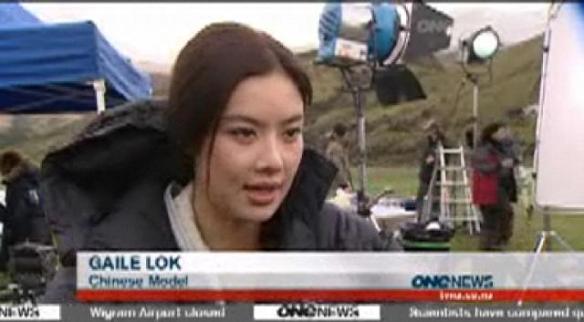
And it goes on…there has been for some time, concern over how much of the country is being bought up by offshore investors and what the potential risks are if we opt for short-term gain without really considering long-term pain…a Chinese consortium has offered to buy a large number of dairy farms, ostensibly as part of a move to introduce high-quality dairy products to the Chinese domestic market. I had no idea that cows couldn’t grow in China or that our national output of dairy produce would be anymore than a drop in the milk bucket of China’s internal market’s…and I do wonder if anyone has actually wargamed what the impact might be on domestic dairy markets if the new owners (if approved by Government) perhaps decide to move cease dairy production on that land…already Fonterra milk product exports have linked domestic dairy prices to overseas prices with the result that the price of milk and cheese has effectively doubled – it IS actually cheaper to feed your children Coke than milk so watch for the destabilising effects of declining dental health on future Government health budgets – or will it just be easier and more pragmatic to swap out your natural teeth for some nice handmade wooden items?

Model Gaile Lok promotes Chinese dairy project in New Zealand (c) TVNZ 2010

My point in all of this is that we can not count on the destabilising cataysts we may face to be purely of man-made origin, or that they might be Militant in nature. What if our adversaries, or competitors, opt to employ the three other components of the DIME construct: Diplomatic, Informational and Economic, perhaps catching the wave of a natural disaster or two….?

And on the subject of considering endstates, Mr Wineera has written another commentary, speculating on the end state sought by our PRT in Afghanistan

Joining the dots

I’m sitting in on the two day Contemporary Wafare module at Command and Staff College  that is being conducted by Dr Michael Evans from the Australian Defence College. Although it is only a two day module (compressed down from 4-5 days to fit the study programme) it is a great learning experience both through Michael’s experience and the interaction with members on the staff course; I have almost a whole notebook full of notes (= a few nights typing them all up before I forget which scribble means what!) and some great insights to expand and write on…There was some very good material yesterday afternoon that has helped join some of the dots in our own work here and we’ve just finished working through some of the ethical dilemmas of the contemporary environment…

Everybody fights!!

If there was one single takeaway from last week’s conference it was this…”Everybody fights…!!” It was hammered home by the US and Canadian representatives who attended and validates that concept that everyone deployed into an operational AO in high-end theatres like Iraq and Afghanistan must first and foremost be a warfighter…

Anyone who goes out the gate must have the same skills as those who habitually tread out in the bad lands and if there has been one single lesson for both these nations in the last six or seven years it has been that EVERYONE has the same probability of getting caught in a contact, activating an IED of some size, or getting in some other form of strife…

So EVERYBODY receives, extracts and delivers detailed and comprehensive orders; EVERYBODY conducts and participates in rehearsals; EVERYBODY is conversant with Immediate Actions and force SOPs; and, where possible, EVERYBODY has a secondary skill to bring to the party so that there are no single points of failure when it all goes noisy…

Those who may expect to spend a large proportion of their time within the wire might also wish to have a bit of a rethink as once all those containers are stacked, blankets counted and bolts tightened, they represent a large proportion of combat power that can be employed in local security, route clearance, population engagement, etc, etc, etc….

COIN is not and never will be a checklist…EVERYBODY needs to think and keep thinking to stay alive and achieve the mission…there is no room for rubber stamping compliance or templated solutions for their own sake – every situation is subtly different from the one before and must be considered in its own context…a key implication from this is that domestic training, outside the force generation or predeployment training environments, MUST provide opportunities for leaders at all level (including EVERY soldier – it’s called self-leadership) to confront complexity and uncertainty in every day they are on the job – and that this must be supported by a firm foundation of a well-embedded organisational ethos and culture…

Kudos to Dean @ Shiloh again for the top job he did in collating and distributing his detailed notes from the COIN Symposium at Ft Leavenworth – Dean, just so you know, we’re reading your stuff down here as well and it was interesting to see notes based upon your observations being distributed at the conference…unfortunately, significant portions of the conference material were classified so I’m unable to share to quite the same degree as Dean however a week away from home gave me a great opportunity to navel-gaze free of distractions and to also interact offline with a number of old and new colleagues and this is content that I’ll be developing over the next week or so…

It’s been bucketing down here for most of the weekend since I got home but I have been making the most of breaks in the weather to do outside jobs at the Lodge and Chalet in preparation for the ski season which starts here in a couple of weeks. In the wetter parts of the days, I have had a full range of inside jobs as part of that prep and this has eaten into PC time quite a bit…tomorrow, I am off to Ohakea again and, assuming that the Army has finally completed all the exit admin, I should be a member of the RNZAF by lunch time…