Kilcullen on horticulture

Nah, just kidding…but what if David Kilcullen had taken horticulture instead of political anthropology…it’s entirely feasible…my last commander had a degree in zoology…

Anyway, this site still gets a number of daily hits from people searching for information on Michael Yon, BGEN Menard and the Tarnak Bridge incident aka Bridgegate – sometimes when I am bored I type in some of the search terms to see what pops up…this time around, I found a thread on Milnet.ca, which appears to be the official forum of  the Canadian forces (why don’t we have one of those?) and it’s thread on Bridgegate is hardly complimentary to Mr Yon…hardly surprising, is it?

One of the the hits in my search of the Milnet site brought me to a treasure trove of links, called the Sandbox, on Afghanistan. One of the linked articles was The Boston Globe‘s Mowing the grass in Afghanistan, published on March 2…this guy, H.D.S. Greenway, gets it…

‘MOWING THE grass’’ is the term frustrated soldiers use to describe the war in Afghanistan. America and its NATO allies sweep in and clear an area. But, once they leave, the Taliban creep back like weeds in the lawn and the allies have to mow it all over again.

General Stanley McCrystal wants to put an end to grass mowing. He plans to hold Marja and has brought in his ready-made Afghan “government in a box.’’ Can it last? And what of other Marjas? Since it would take a foreign army of many hundreds of thousands to stand on every blade of grass – a force level we will never see – the war will continue.

Part of the problem is the very nature of Afghanistan, driven by ethnic, tribal, and linguistic rivalries. It is governed best when it is decentralized, playing to its strengths rather than its weaknesses. But the United States and NATO have tried to build a highly centralized state, lumping regional commanders together and ignoring tribal differences.

Apart from Christmas, I’ve been at home since the beginning of November and it being summer (or as close as we are likely to get this year) I have spent a reasonable amount of that time out in the garden. My main gardening mission this ‘summer’ is to root out all the buttercup (an evil strangling weed) from the garden and then eradicate from the rest of the Lodge section and then the Chalet as well. In doing so, I have made the most of the opportunity to contemplate the similarities between COIN and gardening.

Buttercup is insidious. I’m not sure yet how it initially inserts into the garden although I suspect birds are the only real common denominator. Once it takes root, it will gain strength while sheltered and concealed, usually unwittingly, by other plants; it spreads locally by extending tendrils under the leaves of plants and grass, strangling them as it goes. It grows through bushy plants where it is difficult to back-track to a root that can be pulled  complete from the soil.

The enemy - elusive and tenacious

The temptation is to just blitz the garden with Roundup and start over on the scorched bare soil remaining. However this is hardly ever practical for a number of reasons. Our monthly rainfall is quite high even in ‘summer’ so baring the earth only opens us to erosion. There are already established communities in the garden which are not readily transplantable and which have grown over long periods of time – to try to regrow them would just take too long. Other communities are protected in other ways, often alliance with other power blocs like my wife whose trip-wire retaliation policy is quite clear. Other communities again offer too much in the way of practical value to be subjected to a bare earth strategy: these include vegetable gardens and the flower beds serviced by the 20,000 head of bees that graze the ranges here over summer.

Other conventional weapons are often equally ineffective against an adversary like this. In other campaigns we have found the use of the goats and sheep to be quite effective but attempting to apply this lesson in this campaign was not only ineffective but was grossly detrimental to the overall war effort. We found the hard way that the goats conventional targeting methodologies were more likely to take out useful infrastructure and productive parts of the biosystem while leaving the main adversary untouched…it would appear that goats find it difficult if not outright impossible to accept the targeting paradigms of this new war.

Precision strike is an option approved under current domestic rules of engagement so long as due diligence is paid to wind direction and water courses. But as we all know, precision strike is a bit of an oxymoron: event the most precise strike is almost bound to create so collateral damage, even when applying with high-tech precision technologies like a weed brush. And buttercup, like the typical insurgent, doesn’t exactly advertise its presence and precise location unless in a position of strength. Often sighting a leaf or two will result in an area pattern spray in order to best take out the whole plant; same-same for spraying along the tendrils. This responsible engagement seems to offer the best balance between proportional use of resources, effect upon the enemy and being seen to be taking reasonable steps to mitigate unnecessary collateral damage. Yes, you can read into that last statement that there is such a thing as acceptable collateral damage.

Because of the way that buttercup weaves its way into and through existing communities, it is ultimately necessary to get hands-on and surgically remove it. This is not without certain risks. Many of these communities e.g. roses, raspberries, etc are relatively well defended and even with the greatest care, passive defensive mechanisms can inflict quite nasty wounds. Further out in the hinterlands, there are others who would simply prefer to be left alone and who tend to strike lethally at intruders. The worst of these are wasps and due to their somewhat intractable attitude towards compromise, it is usually necessary to destroy the entire nest. Wild bees are also common however these can be bypassed if spotted early and not provoked as can the giant wetas that frequent less traveled areas.

As H.D.S Greenway states in his article, the insurgent is more likely to spring back into a cleared area than more benign and useful communities. Frustrations arising from this ‘whack-a-mole’ resilience often tempts friendly forces into responding with more and less discriminate force – cures that do almost as much damage as the original invaders. The secrets to successful campaigns in the garden are…

To have a clear idea of what you want to do and how you are going to do it.

Accept that it is going to get messy and that there will be casualties.

Know your enemy.

Before commencing operations, agree on the measurables for success.

Ensure that you have adequate resources to fight the campaign properly – time is one of those resources.

Be prepared to get your hands dirty.

There is no such thing as a nice short war in the garden either…

Who are the Taliban?

That’s the title of another article listed in the Sandbox written by an Afghan woman living in Vancouver. Her description of the Taliban could apply across any one of a number of cultures and religions and it is important to note that “…The Taliban are perhaps less easily identifiable than we might think. We are accustomed to thinking of them as bushy-bearded Afghan men with black turbans and kohl around cold eyes, clutching automatic weapons. Yet this is merely the visual symbol of what does, in fact, not always announce itself visually. The Taliban were officially born in 1994. But in truth, they were born long before…” This is where a number of key strategic documents are getting it wrong, among them the 2010 QDR and Australia’s 2010 Counter-terrorism White Paper, in that they persist in identifying “…global violent jihadist movement…” as the “…main source of international terrorism and the primary terrorist threat…” for the new decade. This is no more correct than those who trumpeted urban operations as the new war in 2005-2006. What we should be focusing as the threat facing us for the next decade at least is that alluded to in the Who are the Taliban article, that of those who seek to subject others’ ways of life to their own, those who, in seeking to do so, would destabilise ‘normalcy’ as WE now it…

On similar lines, Neptunus Lex documented an attempt by an Australian Moslem to introduce a parallel sharia legal system into Australia…whatever, if it’s such a great system, why doesn’t he pack his bags and head off to someplace that already has one in place?

Ooops

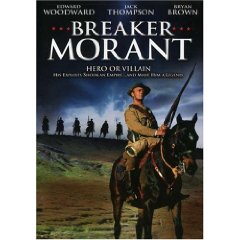
To just take issue with something ADM Mullen said in what’s being referred to as the ‘Mullen Doctrine’ address…”…The Australians are experts at counterinsurgency warfare…” No, sorry, not true at all. Peace support, yeah, sure but COIN? Not since its hey day in South East Asia. Australia is the only Anglospheric nation to not have conducted at least one counter-insurgency campaign on its own soil – even little New Zealand has had four distinct campaigns to determine who actually runs the country. Australia struggled to identify any relevant COIN experiences which to illustrate points in LWD 3-0-1 Counterinsurgency 2008 and ironically, omitted what is probably one of the best examples of the blurred lines and fuzzy responsibility in the complex environment, that of Breaker Morant in the Boer War…
While it’s nice that ADM Mullen has tried to spread the love around the coalition, the fact remains that, apart from political considerations and because it must be nauseatingly tiresome saving the world on its own all the time, the US military doesn’t rally need much help from anyone and really can get by quite nicely (and more smoothly) on its own, thank you very much. The correlative side of this is that if you want to work with the Americans, read the instruction manuals first.

Old doctrine never dies…

Over the weekend both Neptunus Lex and Small Wars Journal have commented on the address by ADM Mike Mullen, Chairman of the Joint Chiefs, at Kansas State University which has been heralded as the death of the Powell Doctrine which dominated US military policy from the 1991 Gulf War. The Lex item links to a LA Times article Top U.S. military official outlines tempered approach to war which doesn’t quite get the right end of the stick in opening with “…The U.S. military must use measured and precise strikes, not overwhelming force, in the wars it is likely to face in the future, the nation’s top uniformed officer said Wednesday in outlining a revised approach to American security…” That’s not quite correct – the full text of ADM Mullen’s address is online and what he is actually advocating re overwhelming force is “…We must not try to use force only in an overwhelming capacity, but in the proper capacity, and in a precise and principled manner…” That is not discounting the overwhelming force option at all – he is saying the force and the approach should be customised to the threat – and inline with a philosophy of comprehensively employing all instruments of national power where they can have the best effect.

The SWJ item is actually a CNP of Robert Haddick’s article Foreign Policy The Long Death of the Powell Doctrine; unfortunately this story has been combined with another story re the potential for Myanmar to build a clandestine breeder reactor on behalf of the North Koreans and/or other bad  people – didn’t they learn from one visit from John Rambo…? The Mullen story is significant of a column all its own, more so when it appears that many are only drawing what they want in isolation from the entire speech. SWJ has a robust discussion on the speech.

The ‘Mullen Doctrine’ which supplants the ‘Powell Doctrine’ rests upon three principles:

The first is that military power should not – maybe cannot – be the last resort of the state.  Military forces are some of the most flexible and adaptable tools to policymakers.  We can, merely by our presence, help alter certain behavior.  Before a shot is even fired, we can bolster a diplomatic argument, support a friend or deter an enemy.  We can assist rapidly in disaster-relief efforts, as we did in the aftermath of Haiti’s earthquake.  We can help gather intelligence, support reconnaissance and provide security. And we can do so on little or no notice.  That ease of use is critical for deterrence.

No arguments there – this finally goes someway to closing the artificial gap between peacetime engagement and operations…there should only really be two types of military operations (always under a national policy framework a la Clausewitz): stability operations which counter any destabilising influences (irregularity) in national areas of interest (domestic or offshore), and war-fighting where specific and intense use of force has become necessary.

Force should, to the maximum extent possible, be applied in a precise and principled way.

I would be more comfortable with this point if it stated ‘military options’ in lieu of ‘force’ as all actions should be applied in a precise, principled AND tailored way.

Policy and strategy should constantly struggle with one another.  Some in the military no doubt would prefer political leadership that lays out a specific strategy and then gets out of the way, leaving the balance of the implementation to commanders in the field.  But the experience of the last nine years tells us two things:  A clear strategy for military operations is essential; and that strategy will have to change as those operations evolve.

I’m not sure that I agree with this last point – the wrangling between senior US military and government officials since 2003 has absorbed and diverted national focus and effort from the job at hand. Perhaps what ADM Mullen means is that the military and government need to have a clearer idea of where each is coming from. We don’t want a military that blindly follows policy without discussion, nor government that blindly ignores concerns from professional operators (this applies in government departments other than the military). The real issue arising from both high level policy strategy is knowing the answer to two key questions:

Why are we here? Clear objectives and the means by which to measure when they have been achieved.

What’s our plan for getting out? Apply the Princess Leia Doctrine “…when you broke in here, did you have a plan for getting out?” A clearly-defined exit strategy, based upon best and worse cases, that is developed as part of initial planning and robustly and regularly reviewed…

What does my boss expect me to achieve and why?

What freedoms enable me?

What constraints restrict me?

Has anything changed since I last thought about this?

My first thought when people start talking about the death of a doctrine is that doctrine never dies – it just gets filed for future reference. This first came home to me at  doctrine working group in Australia in 2006. There was a call from a number of operators and schools for doctrine NOW on convoy escort, roadside IEDs and other pressing contemporary topics and there was certainly a feeling that ‘someone’ had dropped the ball (not New Zealand as it wasn’t a World Cup year) in this regard. One of the things that the Aussies did then – and which I hope they still do – was to have a representative from the Army History Unit attend such working groups; when this call for contemporary doctrine was made, the elderly gentlemen from the AHU called for some semblance of order and advised all assembled that the Australian Army already had such doctrine “…ask your dad, young XXX [the officer who raised the original inquiry] , when he was in Vietnam…none of those topics is new and we have been here before. I suggest you review what’s in the archives and go from there…” In Australia, the Centre for Army Lessons is the default archive for retired doctrine (strangely, not the Doctrine Centre) and over the space of a coffee break, had located a number of Vietnam-era publications that certainly provided a useful start point for contemporary TTPs. I think is because of this, that the NZ Army’s Doctrine Centre (based not far from here in sunny Waiouru) maintains a doctrine library with publications that extend back to between the (world) wars classics like MAJGEN Charles Gwynn‘s Imperial Policing (strangely the only Wikipedia entries on this publication are in Spanish and German).

In last month’s The CoGs in the war go round and round… I discussed the applicability today of some of Napoleon’s writings in his Maxims as part of a broader piece on the Centre of Gravity construct. In this forum, doctrine as defined as what we teach on courses, expand and develop in collective training, and apply with judgement (implied in the real world, not solely on operations) so the traditional ‘out’ that doctrine is only a discussion of fundamental philosophies does not apply here. In purist terms, the Powell Doctrine will not die – the closest it may come is to be quietly filed away until such time as circumstances cause it to be dusted off and reviewed. That so many US pundits are joyous at its ‘death’ is indicative of the urge in the US to disassociate itself from the false beliefs in overwhelming technology, ‘shock and awe’, and adversaries who would cooperatively fold when confronted with the immutable logic of the manouevrist approach that ultimately drew them into the seven years of pain in Iraq.

I selected an image of Trafalgar as the header for today’s post because it is illustrative of both dogmatic application of doctrine (perhaps the  first lesson in any course on doctrine is to emphasise the difference between dogma and doctrine?) and the application of doctrine with judgement. In 1805, it was a capital offence for any captain or commander to not rigidly adhere to the Fighting Instructions in vogue at the time which essentially required opposing fleets to close up in parallel lines and hammer the living bejesus out of each other until a victor emerged or it got too hard due to weather, wind or nightfall…Looking back, this is really not too much different from our approach to state v state warfare where we lined up on respective sides of borders or other lines drawn in the sand until someone pushed the button. Certainly I believe that this linear approach dominated our thinking for the past four to five decades and to a large extent still does as we wrest with the geometrically more complex environment of today.

Nelson opted to disregard the Fighting Instructions at Trafalgar and break the French and Spanish lines in order to defeat them in some detail. Trafalgar was a hard-fought battle and the issues was in doubt for some time – certainly neither the French nor the Spanish were so devastated by this tactic as to strike their colours immediately; if they were devastated by anything it was good British gunnery…It is this ability to appreciate a specific situation, draw from relevant historical and personal experience, and develop a plan tailored to the current situation that we need to (re-)develop and foster amongst our planners and operators. In an area where the military is but just one of a number of instruments of national power, the growth must be applied across government…

Things are Blowing up but no more than usual

Coming Anarchy has an independent view of the progress of the elections in Iraq that is not polluted by the mainstream media’s need for sensationalism and loud noises…it would be nice to think that all the casualties and loss since 2003 will have a positive outcome…

Woof!

The Ironman 2 trailer will screen after the Academy Awards today

Bridgegate

Still waiting for Michael Yon’s Dispatch resolving the Tarnak Bridge episode and publicly apologising to Canada’s GEN Daniel Menard…as his tempo of releases has not slowed, it seems that it is easier for Mr Yon to get rounds of accusation in the air than it is to equally publicly tidy up the mess he makes when he gets it wrong – interestingly still no US or ISAF PAO comment on this story…

Hitting the target

Dartboard

Ironically, the Intentional Development website (edit 4 Feb 13: removed the link as it was dead as the proverbial door nail – managed to recover the image via the power of the Wayback Machine) from which I took this image specialises in…

Freeing the embedded wisdom of an organization’s most valuable assets (human resources) currently constrained by titles, roles, politics and procedures.

Mobilizing personnel at all levels to truly participate, become involved, and internalize objectives as their own so they willingly and eagerly contribute to solving their organization’s challenges.

Creating the circumstances and the environment to facilitate change.

Possibly there’s a job for them in Kandahar…?

The Canadian National Post has published Canadian Forces comment in response to Michael Yon’s criticism this week of security arrangements around an important bridge that was damaged in an attack near Kandahar this week. Interestingly, it is Michael Yon who disseminated the link to this article via his Facebook Page.

The release points out that “…all the land surrounding the airport has long been the responsibility of the Royal Air Force Regiment, a British infantry unit that specializes in protecting airports from attack. Most road checks in the area are carried out by Afghan National Police while sweeps for improvised explosive devices on the major highways in Kandahar are done by a U.S. Army Stryker brigade or by U.S. combat engineers attached to them...”

Although a whole three people have commented on the National Post Article, hundreds have offered comment on Yon’s items on his Facebook page, including this one on the RAF regiment in Kandahar…

Never seen this bridge Michael, but as a lowly British Inf NCO, am I making a fair assumption that as a natural/man-made choke point, this should have been identified as a weak point, in oh I don’t know…2 seconds? Therefore reinforced/defended accordingly?

On a slightly related note, there was some talk of the RAF Regt and their role. I personally have no love for them, being Infantry, but they do carry out a role that frees up our Army reservists who can get out and do their jobs. The RAF Regt’s mission is base/airfield protection and security up to 8km from the airfield. I believe this bridge was 10 miles out or something? Far from passing the buck, it should be asked then why this was not identified as an issue, and who was responsible for providing the security for a known high value choke point?

The article then goes on to link the Yon items with “…a growing frustration on the part of some Americans that NATO has put four U.S. battalions under Canadian command in Kandahar…the Americans answer to a Canadian who answers to a British major-general who in turn answers to an American. This is coalition warfare at its best…” At its best, huh? Sounds like an overly-complex recipe for buck-passing and gaps you could drive a LAV (or a VBIED) through…one mother’s comment on Yon’s Facebook page “…This was coalition warfare at its worst…a bridge was blown up! They should have to place the calls to us mothers…

Funnily enough, after presenting the current command and control  environment around Kandahar as hunky-dory, the National Post concludes “…the issue of who commands what in Kandahar is particularly sensitive at the moment, with NATO planning a major offensive in the province later this spring…

Meanwhile back in Kandahar…Michael Yon remains on the offensive… submitting two questions yesterday to Task Force Kandahar regarding the Monday bridge attack:

1) When will the bridge become fully operational?

2) What measures are being taken to prevent such attacks in the future?

A few hours later…Task Force Kandahar just answered the two questions I submitted yesterday. The TF-K answers beg for follow-up, which has just been submitted. Will publish in full when this is over. Something fishy going on.

And about an hour ago (all times are pretty lose as the Facebook clock leaves a lot to be desired)…

Bridge Update: Much information flowing. Just went through long conversations with key people. BLUF: the bridge has become an Orphan. TF-Kandahar says TF-K is not the father. We are waiting for U.S. Brigadier General Ben Hodges to say who is responsible for the bridge. BG Hodges is the Deputy Commander for RC-South. The British command RC-South. The Commanding General is Nick Carter.

My gut, based on what am seeing all over, is that this is between RC-South and TF-Kandahar. TF-K clearly has responsibility, as does their parent command RC-South. While the British command RC-South, the Canadians TF-K. The US is just sort of here under an obtuse command structure that can’t guard a strategic bridge ten minutes from the front gate of one of the biggest bases in Afghanistan.

Bridge situation — This smells like rotten fish. At a bare minimum, someone(s) at General Officer level dropped the ball. Going to take more time to sort this out and get the facts straight. One certainty: it’s not pretty.

A few minutes later…

Menard vs. Carter

Bridge failure heating up: TF-K has, for all intents and purposes, blamed RC-South for allowing the bridge to be attacked on Monday, resulting in the death of a US soldier and serious damage to a vital bridge. The controversy has reached the respective Generals at TF-K and RC-South. For those who understand the dynamics here, Brigadier General Daniel Menard (TF-K boss) has shifted the blame to Major General Nick Carter (RC-South boss).

This has become a dinosaur fight — Menard vs. Carter — wherein little people can get crushed.

If nothing else, ‘Bridgegate’ sends a clear message to ISAF that it needs to seriously up its Information and Influence Operations game…it is probably too broad a stretch to imagine that the Taliban planned or even anticipated this spatting between coalition partners but they must be loving it. It is a pretty simple question: who is responsible for the security of this bridge? Surely it must be in a clearly defined Area of Operations assigned to a specific formation or unit? That ISAF has resorted instead to bureaucratic tap-dancing and not released any comment on the issue is perhaps indicative of deeper rifts within the coalition. Jim Molan recounts in Running the War in Iraq that, prior to the final battle for Fallujah GEN Casey directed him “…in no uncertain terms to ensure that there was no more than a one-hour turnaround between an allegation appearing in the media and our response being fired back…the information fight required less physical courage and sacrifice, but was just as important as the combat on the ground…

Certainly from many of the comments on Yon’s Facebook posts, there is considerable anger in the US at Canada’s stated intention to withdraw from Afghanistan and at those NATO partners who do not pull their weight (which would probably be most of them). This latter issue was a theme in Yon’s posts last week before the bridge attack and I do wonder if the US, or some in it, are not running their own IO campaign to expose those who are not holding up their end of the stick…?

New word of the day

Thanks to Dean at Travels with Shiloh for today’s new word ‘fobbit’, replacing ‘poug’ and ‘REMF’ as a term of endearment for those personnel that spend the larger proportion of their deployment in camps and bases. This is not to say that these personnel do not perform valuable and vital functions in support of operations nor that it is their fault that higher minds decide to introduce as many home comforts as possible into these facilities. I do think however that it behooves such individuals to always remember where they are, why there are there and who they are supporting before bemoaning the quality of the GoatBurger at BK-Kandahar…

Edit: Oh, the joys of working in the information age!! Just as I was writing up ‘fobbits’ and hit the publish button, Michael Yon posted this link to a great description of the Life of a Fobbit in Afghanistan. Although humorous in nature, it is a reminder of the vital role that ‘fobbits’ play and I think that this blog, on the adventures of staff in a currently deployed Forward Surgical Team will be well worth watching…

Acronym of the day

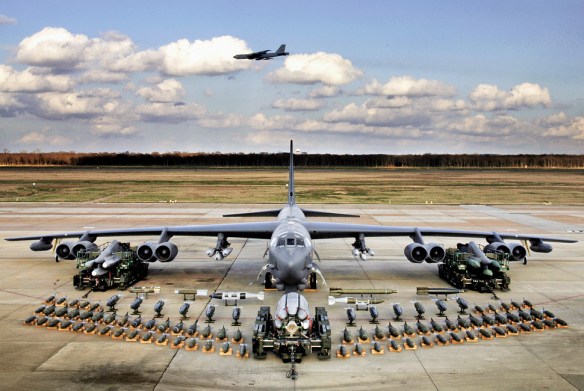
From Michael Yon’s posts, BLUF = Bottom Line Up Front, not to be confused with that ultimate hearts and minds tool, the BUFF:

b-52-bomber-2.jpg

BUFF

Getting it together?

Afghan police officers and the U.S. soldiers, bottom, gather at the scene of a suicide attack in Kandahar south of Kabul, Afghanistan on Monday, March 1, 2010. A suicide car bomber attacked a NATO convoy Monday outside the major southern Afghan city, killing one NATO service member and four Afghan civilians, officials said. (AP Photo/Allauddin Khan)

On Michael Yon’s Facebook page this morning:

Sad and Sickening: A General Officer should be fired.

This morning, we lost a soldier to a suicide bomb on a bridge just a short drive from this massive military installation called Kandahar Airfield. The bridge, which is important to us, was badly damaged and remains impassable to military traffic. Meanwhile, on this bustling base, under-employed soldiers from various nations crowd around hockey games, live bands, and coffee shops. The damaged bridge is just a bicycle ride away from soldiers who are too busy celebrating Olympic medals to safeguard this bridge. The bridge is so close that I felt the explosion and saw the mushroom cloud. Our mission, and no doubt others, was cancelled because we could not get over the bridge.

The General in charge of security for this bridge should be fired.

Coupled with another attack in Kabul involving NZSAS troops, one wonder if there might not be something to the idea of secondary effects of the surge in Afghanistan?

On ‘science’

Coming Anarchy discusses the ‘science’ of global warming, a topic that has also been slammed by Neptunus Lex. Portable Learner while covering another example of misapplied science, “…In an interview for On The Media, The Lancet’s editor Dr. Richard Horton weighs in on the state of open scientific debate:

We used to think that we could publish speculative research which advanced interesting new ideas which may be wrong, but which were important to provoke debate and discussion. We don’t think that now. We don’t seem able to have a rational conversation in the public space about difficult controversial issues without people drawing a conclusion which could be very averse….The 19th-century days where you could sit in the salon at the Royal Society and have a private conversation amongst your fellows just doesn’t exist anymore. So I think yeah, too much information in this particular case is a bad thing, which seems to go against every kind of democratic principle that we believe in. But in the case of science, it seems to be true.

But it is not. I can’t help but wonder if we had had this conversation, in public, ten years ago when the study was still “speculative research” we may well have averted the flawed decision to publish it in the first place. We need more information, not less, and more inclusive conversations, not narrowly confined to the medical community. The public may well have to engage the medical community in the public space “difficult conversations without drawing a conclusion that could be very averse…

I tend to agree – far better to have the discussion early and draw out all of the available information out to make as informed a decision as possible than to disregard potentially relevant stakeholders and abdicate responsibility what may be perceived as an overly-elite group.

‘The people’ can be really dumb at times…

The Strategist comments on the ignorance and stupidity of those who opted to ignore tsunami warnings along New Zealand’s coast after the earthquake in Concepcion. One might argue that this is only natural selection in action and I might have agreed if it were not for the risks implicit to those who might have to attempt to rescue these losers and to the children they took to the beach with them; at best, it is wasting Police time, at worst, manslaughter. An interesting discussion at NZ Herald here and I wonder if this naivety and complacency is linked to the questions asked in the Timings paper mentioned above? Are we a nation that only learns the hard way…after a punch in the nose…?

People ignore tsunami warning at Mount Manganui. Photo/ Christine Cornege.

A good way of doing business

Peter also has an interesting item on the Byzantine Lessons Learned process…1500 years ago, the Byzantines developed theatre-specific handbooks for each of their current and likely mission spaces…if they could do it then, it really makes you wonder why it appears so hard today. I’ll have more on this when I complete my paper on GEN Mattis’ comments re obsolete thinking.

Progress

I made my first pastry ever yesterday afternoon and my first all homemade pies last night…some tuning still required but very YUM!!!

Scooped

But in a good way.

Like 14,691 others, I have been following Michael Yon’s Facebook page as he reports from Afghanistan and had intended to promote him again yesterday as a great example of the Information Militia in operation – Tom Ricks beat me to it with Learn how to be a war correspondent. His website is Michael Yon Online. I’ve commented on him a couple of times before in Doing the Business, following an item on Neptunus Lex on pararescue teams operating in Afghanistan; and slightly later when I thought he was a well-intentioned meddler pressuring US DOD to release a Haitian-born Army officer from service in Afghanistan to deploy to assist in Haiti.

So who is this guy, Michael Yon?

Michael Yon was born in Florida in 1964 (a good year for writers) and joined the US Army when he was 19. He remains one of the youngest soldiers to pass the Special Forces selection process. He left the Army in 1987, after only four years. This is not that unusual and is somewhat typical of what many young men were doing at the time in joining the Army and leaving once they had gotten it out of their system, and/or to take advantage of other opportunities, many of which may have resulted from that military service. I saw many good soldiers in the same period who joined up, completed basis recruit and infantry corps training, spent 6-12 months in 2/1 RNZIR before deploying to 1 RNZIR in Singapore for two years. Many of them left the service at the conclusion of that posting, older, more mature and with much broader horizons.

He drifted through various activities until he began writing in the mid-90s. However it was not until the War in Iraq began that his name came to the fore as a correspondent in December 2004. from that point he has gone from strength to strength as an embedded reporter although his relationship with the military has not always been that smooth. He “…supports embedded journalism over traditional reporting, believing that the closer writers are to events the less likely they are to repeat military public relations spin” and this one of two common themes in his writing today. The other is an extremely strong compassion for soldiers and this comes through very strongly and effectively in his reports.

Happy news for the Left was that U.S. soldiers were demoralized and the war was being lost… Happy news for the Right was that there was no insurgency, then no civil war; we always had enough troops, and we were winning hands-down, except for the left-wing lunatics who were trying to unravel it all. They say heroin addicts are happy, too, when they are out of touch with reality.” Moment of Truth in Iraq, Michael Yon, 2008.

The War in Afghanistan has truly begun. This will be a long, difficult fight that is set to eclipse anything we’ve seen in Iraq. As 2010 unfolds, my 6th year of war coverage will unfold with it. There is relatively little interest in Afghanistan by comparison to previous interest in Iraq, and so reader interest is low. Afghanistan is serious, very deadly business. Like Iraq, however, it gets pushed around as a political brawling pit while the people fighting the war are mostly forgotten. The arguments at home seem more likely to revolve around a few words from the President than the ground realities of combat here. ~ Michael Yon Online

His 2006 article in The Weekly Standard, Censoring Iraq summarises his views well although it led to a major falling out with the US military. He has been criticised often for an apparent naivety in some of his releases, which I think could be attributed to his short period of personal military service, his habit of launching into text-based upon misleading or incorrect information (hence my comments re Haiti), and releasing the names of casualties before next of kin have been properly notified. This last point is interesting as Michael Yon has been accused of doing this during the current operations in Afghanistan however has come back strongly, supported by others, stating that the in-theatre information has been that notifications had been completed.

There is some confusion within the military regarding timing of releasability of names of the fallen. This confusion stems from apparently contradictory sentences within the embed guidelines. The guidelines are being clarified to avert misunderstandings with media, and within the military…Yes. This stems from the Garcia episode. The PAOs, through no fault of their own (other than Garcia blowing a gasket and talking publicly), have some confusion about the embed papers. CPT Adam Weece showed me the sentences and I agreed that the sentences are confusing and seem contradictory. Insofar as my release, I was completely cleared and broke no rules. Was well within the guidelines and what’s right, but the episode revealed some rough spots that need to be ironed out. And so the military is on it and will get it fixed. Should be good soon. ~ Michael Yon Facebook, Feb 10.

This latter point is interesting as it may have uncovered a lag between what happens in the theatre and the actual notifications in the US. While casualty notification is not an easy nor a pleasant task, it has to be sharp – quite simply there can be no fumbles or ball drops – and possibly this is an area that could be put under the Lessons Learned spotlight to make sure we have got it right. One would like to think that the process has come a long way from the Western Union telegrams in We Were Soldiers….Like so many things in the military, this is a function that must be regularly wargamed to ensure that we have it right – and it IS one of those areas where metrics CAN be set to define the standard e.g. family notification in XX hours by XX means by XX individual(s), media release(s) in XX time (relative to family notification) by XX individuals, etc etc.

In Running the War in Iraq, MAJGEN Jim Molan discusses how he and his staff had to meet very tight times lines to be ‘first with the truth’ or, if not, counter dis- and mis-information from any source. I think that the same onus rests with the public affairs staffs everywhere. Embedded media like Michael Yon offer great potential to conduct our own information operations – a function we have historically be very weak in – but they come with risk. Michael Yon’s great attraction is that he comes across as ‘the truth’ and not as PA-spin – if you try to take away the ‘on the edge’ ‘right here, right now’ pulse of his work, you defeat the whole purpose of having an embed. Yeah, sure, there’s this OPSEC thing but I’m not sure how far you can go down that path when the official mouthpieces are telegraphing pinches a week ahead of time. One of the strongest criticisms of the current wars is that ‘truth has become the first casualty’ again – pragmatic shepherding of embeds like Michael Yon can go a long way to mitigating this perception…

A crew from the United States Air Force spent Saturday night and Sunday morning airlifting different groups of wounded soldiers from Kandahar to Camp Bastion to Bagram, back to Kandahar, then back to Bagram, and back to Kandahar. These patients were from Afghanistan, Australia, Canada, and the United States. Here, an Air Force nurse caresses the head of a wounded, unconscious Canadian soldier while whispering into his ear. (c) Michael Yon Online 2010

Into the Blue

xvy2zlctq_ypm6ngt3qzr5ec3oatgbyc-large (2)

Yes, it’s cool; yes, it was in Die Hard 4.0; but it just has way too many dangly bits to do the business. Image (c) http://www.telegraph.co.uk

“We are shackled by the past and never has the future been more difficult to divine. What we must do is to quite ruthlessly discard ideas, traditions, and methods which have not stood the test…each of the fighting services must go for speed, mobility and economy, and develop the whole time with an eye on the other two members of the team in co-operation, not in competition.” This 1947 quote from Marshal of the RAF the Lord Tedder opens an article by the new UK Chief of Air Staff, The Future of British Air and Space Power: A Personal Perspective, in the Autumn 2009 Air Power Review. He follows this with a quote from Darwin on the second page of the article “It is not the strongest of the species that survive, nor the most intelligent, but the most adaptable.” I did comment briefly in this article in Resuming Normal Services last month but have only really considered the issues more fully today…

It is indeed good to see a newly-appointed service chief (appointed on 31 July 2009) publicly stating his opinions and intentions. Certainly, as a general rule across government, this is not something that we do well in New Zealand – tons of internal marketing and engagement but not too much with the poor old public or our friends and allies…I actually think that it should be mandatory for CEOs and chiefs within government and its ministries and agencies to release a public stance on where they think they will go during their tenure as ‘boss’.

The new CAS will most likely achieve much of what he sets out in this paper. He has steered clear of the ‘boots on the ground’ versus ‘ships at sea’ spat between the Chiefs of Army and Navy and it is only in late January this year that he issued a cautionary note regarding the risks involved in focusing Defence acquisitions too much on ‘the’ war and not enough on ‘a’ war “…the point is to have those discussions in the context of a proper review so we don’t end up making short-term decisions on the financial (question) of the availability of money in the current environment or the short term rationale. We need a long-term view…” This is somewhat of a contrast to the previous CAS who, only a month or so before handing over the role, predicted that the RAF would take over Royal Navy jet operations. While this may be the current situation through the establishment of the Joint Harrier Force, it certainly created waves as the Royal Navy anticipates the introduction into service of two new ‘real’ aircraft carriers equipped with brand spanking F-35 Lightning IIs. Lightning is the US name for the F-35 which the RAF has adopted although nothing published as yet defines whether they see it as the successor to the Lockheed Lightning ‘I’ which the RAF wasn’t that impressed with; or  as a possible successor to the English Electric Lightning ‘I’ which is and will always be one of the all-time grunter fighter aircraft.

I have my own reservations regarding the F-35 Joint Strike Fighter, all versions; it seems reminiscent of the McNamarist one-size-fits-all-roles aircraft in the F-111 debacle and comes across as an attempt to (ap)please everyone and will end up pleasing no one. Even though the RAF has stood fast in its procurement of the Eurofighter which lies in capability somewhere between the F-35 and the now-cancelled F-22, it has already shrunk its fleet from the 232 originally needed to only 123  aircraft. This seems scarcely enough for the RAF’s primary mission,as described by CAS’ article,  of controlling and protecting British airspace, let alone to support any but the most benign expeditionary operations. Even though the Typhoon will eventually be joined by the F-35, reading between the lines of the UK MOD’s current financial stresses, it is likely that its numbers will also be dramatically reduced from the 150 originally planned. This number has already been whittled down to 138 and there is speculation that this number will be reduced again.

While the Air Power Review article  sees the F-35 Lightning II as “…primarily an ISTAR asset…with hugely effective built-in Attack and Control of the Air capabilities...”, it does caution against the risks of “…putting all our investment into a small number of highly capable platforms…that we will field a ‘middle-weight’ force structure which is too sophisticated to fight low technology insurgencies in a cost effective manner but equally, is unable to be completely effective against the high technology equipment that future state adversaries…are likely to deploy…” Unfortunately, as costs spiral upwards passing budgets spiraling the other way, it does not seem like that the RAF as it is currently being structured will be able to meet its obligations to “…capitalise on air power’s ability to acquire and process intelligence, and to strike with proportion and precision…” The article concludes by listing ten key propositions for the future of British air and space power:

  1. Air and space power is all about creating influence.
  2. Control of the Air and Space remains the paramount air and space role.
  3. Air and space power is about the provision of capability, not the generation of platforms.
  4. Time is a weapon: air and space power offers the mean to dominate it.
  5. Combat ISTAR will lie at the heart of the RAF’s future capability.
  6. Unmanned Air Systems are here to stay. UAS are an integral part of the UK’s air power capability.
  7. Space and cyber are joint domains but the air component is best-placed to lead in coordinating the defence effort in these areas.
  8. Technology and air and space power are synergistically related.
  9. Agility and adaptability are the key to the delivery of capable, relevant and affordable air and space power in a complex and uncetain world.
  10. Network Enabled Capability is critical to unlocking air and space power’s potential.

First things first: the UK does not have a space capability – it got out of that game in the 60s.  Any interdiction and control of space will be reserved for those nations that can get into the operating environment: the US, Russia and maybe China and India one day. Even the EU is not a real player in the 21st Century space game which is a shame because there is not reason that it should not be, other than general apathy and too great an interest in keeping the here and now nice and comfortable…

ISTAR and cyber are and MUST be a Joint, Interagency, Multinational and Public (Bring out the JIMP!) responsibilities. As soon as any one player declares it is ‘their’ role and grabs for primacy in either role, it only demonstrates a total failure to grasp this fact. Both ISTAR and cyber relate to facets of information; attempts to cram them into legacy single service stovepipes only cripples the wider effort. There is not one single whit of evidence to suggest that any service is better or worse in these domains than any other. If our children are to be believed, it is the unkempt, Gen Z-ers with their trousers habitually halfway to their knees who rule in the information domains…

Technology and air and space power may be synergistically related but possibly not in the way intended in the article. I am a big fan of Alfred Thayer Mahan; in fact, The Influence of Seapower Upon History is one of only two books that I have as both Audible files and hard copy publications – the other being William Manchester‘s American Caesar. I first read The Influence of Seapower in the mid-90s when the third frigate debate raged across Defence. Although Mahan was oft-quoted by the frigate lobby, I always suspected that those doing the quoting hadn’t actually read the book as one of the key points I took away from it was that, in order to control the seas, you must actually be capable of doing so. Thus, the French and Spanish talked it (seapower) up but we never able to quite deliver whereas the Dutch and most definitely the Royal Navy were very much able to enforce their will on and dominate the waves. If the RAF seeks to control the Britain’s air space or the air space of an operational theatre, then perhaps it simply can not afford these high tech platforms like Typhoon and F-35. More importantly, it might not be able to afford to replace them should an opponent adopt an attritive strategy. Even if an adversary lacks its own air power capability, conflicts in Zimbabwe, Vietnam and the Falkland Islands have demonstrated how small groups of soldiers can apply their own counter-air campaigns on aircraft on the ground. Similarly, an over-dependence on UAS will come a cropper as an adversary targets the links between the UAV, its controllers and its ‘clients’.

In defining the way ahead for the RAF, I am not at all sure that the CAS has fully considered where it has been. Scene-setting early paragraphs in the paper cite the air policing of no-fly zones over Iraq from 1991-2003 as a relatively cost-effective (no loss of coalition lives and $1 billion annually) method of neutering Saddam compared to the 4000 US KIA and $12.5 billion monthly cost of OIF. This is very much a chalk and cheese comparison: the no-fly zone campaign was at the bottom end of a containment strategy that did little to curbs Saddam’s aspirations, power or depredations against his own people. OIF, on the other hand, was very much a high intensity state on state conflict that, rightly or wrongly, deposed Saddam’s regime and heralded significant change and consequences for all Iraqis. While I could by no means be accused of land-centricity, the simple fact is that there are few campaigns where the employment of air power in isolation has been a deciding factor in a conflict. The bombing of Nagasaki and Hiroshima, the Berlin Airlift, and Operation EL DORADO CANYON are three rare examples where this has occurred.

Immediately following this example, the article states that “…even where a significant presence is required on the ground as part of a joint campaign, air power is able to act as a force multiplier to dramatically reduce exposure. Ideally, the ‘boots on the ground’ required in a counterinsurgency operation will eventually be provided by indigenous forces after suitable training...” It cites no example to support this statement and it is unlikely that many examples exist. These two statements overlook two fundamentals of COIN (as opposed to Countering Irregular Activity as Op ELDORADO CANYON did) , namely the need to close with and engage (not necessarily ‘strike‘ or ‘attack‘) the people in the campaign theatre, and that, for the purposes of shaping UK forces for the future, the ‘long war‘ nature of COIN requires a long term commitment of land forces. It is only in the very late stages of a successful COIN campaign that air power might become the primary form of aid to the host nation.

Like Friends in High Places, this article only pays the barest lip service to the less kinetic aspects of air power. Instead of ‘engage‘ it still displays the archaic mindset of  ‘attack‘. The force multiplying value of RAF fixed and rotary wing transport capabilities is only skimmed over and does not earn so much as a mention in the ten key propositions for the future of British air and space power listed above. Relationships with the other services receive little mention, and even less is awarded to allies and coalition partners.  The RAF has yet to fully consider the final part of Lord Tedder’s advice that opens the article “…and develop the whole time with an eye on the other two members of the team in co-operation, not in competition...” In the frantic scrambling for the remnants of the British Defence budget, the RAF may have been a little too quick to “…ruthlessly discard ideas, traditions, and methods…” without fully considering the nature of the test that each should have withstood.

Indications of this are evident in the article in that there is not one single mention of control of the sea lanes upon which Britain relies so much. Although Mahan wrote of naval control of the sea, it is not difficult to extrapolate his principles to include control of the sea from the air as well, regardless of who, RAF or RN, might own that air power. The US Navy integration of air power into control of the sea is probably the most powerful example of Mahan’s work being put into action. From its earliest days, the RAF has played a key role in control of Britain’s sea lane’s; although it could be argued that this might fall under one of the ISTAR principles listed above, that does not include any capability (apart from F-35?) to actually inflict control on those areas i.e. the roles filled by the Hudson and Liberators of Coastal Command and now assumed by Nimrod today. The sea is the other ‘space’ the RAF should be seeking to control both as one of its core traditional roles and also as one directly linked to the prosperity and growth of Mother England.

The RAF has some tough decisions ahead of it, as do the Royal Navy and British Army. The simple fact is that Britain is no longer the world power that she once was and has not been for decades: the Falklands Islands campaign almost 30 years ago could easily be regarded as the last gasp of an Empire. Sometime less = less and more = more: maybe the RAF needs to be less swayed by the attractions of technologies it can no longer afford e.g. Typhoon and F-35 – who exactly might be the threat against which such capabilities maybe required? It may well be that such high-tech platforms are now solely in the bailiwick of those that can afford to operate them like the US and Singapore (sorry, Australia). In their place, perhaps the RAF should be considering adoption of  greater quantities of the 21st Century equivalents of the Hawker Hunter,  Douglas A-4 Skyhawk and Northrop F-5…?

[PDF version]

In other news

Peter @ The Strategist has released Part 2 of the Doomsday Device.

Paper Modelers has now been down for almost two days and I am most definitely missing my fix. Apparently the ISP lost (how careless!) a drive in its RAID array and is having trouble restoring the site – as the twins would say, uh-oh…what makes this double or triply frustrating is that I have news to share and no one to share it with: where it was thought that the Kalinin K-12 released a couple of weeks ago might be some seven inches short in wing span, I have now measured the relevant parts and the span, less skin thickness, in my opinion, is 606mm which is close enough to the correct 635mm span. Of course, that meant absolutely nothing to anyone but at least I have it off my chest now…

Neptunus Lex has a thought-provoking item on the “…moral continuum between killing our terrorist adversaries where we find them, detaining them as unlawful combatants and giving them the same constitutional rights as any US citizen…

Round Up

Just a quick round up of what’s happening around the blogspace – have loads of domestic duties this week so focusing on those while the sun shines…

Europe Descends

Neptunus Lex continues to chronicle the decline of Europe as a major power, if it every was in the first place – certainly some of its member nations may have been – once – but EU Europe definitely seems to be less than the sum of its parts…Britain, Eire, Netherlands, Greece, Russia

Keep 558 alive

At Paper Modelers, there is a request to support XH558, the last flying Avro Vulcan bomber. 558 took to the skies once more in 2008 but exists only on donations and some minor corporate support…have a look at the Vulcan Trust site and at least sign the supporters card – give a little if you can….

Is this not both beautiful and super cool?

Birmoverse – The Movie

Following the creation of a Facebook page calling to Hollywood to option John Birmingham’s Axis of Time trilogy, Cheeseburger Gothic called for ideas on who should play who in the movies…still room for your 2 cents…

Mr Birmingham is also off to Puckapunyal again next week for another get together with Force Development Group on what future conflict environments might be like…interesting to be a fly on the wall for that chat…

RIP Charley Wilson

Coming Anarchy carries a brief obituary for the orchestrator of the mujahedeen victory against the Russians in the 80s.

Natural Selection in Action

Some would-be bombers in Adelaide have gone to a better place…

Be older and happier

Discover Magazine reports on a survey that finds we get happier as we get older – something to look forward to…

Kilcullen on Metrics

Tom Ricks at Foreign Policy is carrying a series of new material from David Kilcullen:

Kilcullen (I): Here’s what not to measure in a COIN campaign

Obviously more to follow on the nuggets in these articles…

Uh-huh

More thefts from Army Museum Stop dodgy crims at Crimestoppers.

And we should respect your traditions in our countries why?

Valentine’s police see red as Saudis crack down on Valentine’s Day…

Accepting risk

Who hasn’t heard this answer to a curly question “We’ll carry the risk“? Yeah, that’s nice but who’ll be accepting the responsibility?

Introduction

This is the first in a series that will progress throughout 2010. The idea comes from Dean at Travels with Shiloh who has invited a group of commentators to discuss the twelve questions asked in this article Changing Homeland Security: Twelve Questions From 2009 from the Homeland Security Affairs Journal (HSAJ). Yours truly is one of those privileged to be invited to contribute to this discussion.

The first question is Why is it so difficult to make risk-based decisions in homeland security? Other contributions on this question so far are:

Risk based decisions in homeland security issues

I’ve been working on this for over a week and, to be honest, have really struggled with it. What follows is still tortorously prolonged but I’ve left it ‘as is’ to show the process by which I got to the answer. In a couple of weeks, I will rework it into something a little more coherent.

Defining the question

Before launching into discussion on the topic at hand, I first thought it would be an idea to define my interpretation of the terms in the question.

  • Difficult is the opposite of easy although it may be more correct to swap out ‘difficult’ for ‘simple’ and the degree of difficulty is directly linked to the level of complexity now common in such equations.
  • I cast the net pretty wide to define risk-based decisions. Although there were few, if any, military or HLS examples in first 100 hits when I searched ‘risk-based decisions’ on Bing; the most common seemed to those relating to auditing, insurance, health and event management. There was enough material there for me to comfortable with the R = T x V x C; Risk is the product of Threat, Vulnerability, and Consequence equation in the original HSAJ article.
  • Homeland Security is very much a US term with specific definition, membership and connotations. For our more global audience, I am using ‘HLS’ as the collective grouping of domestic, i.e. non-expeditionary,  military, security, intelligence, law enforcement, and emergency management agencies. I don’t believe that the establishment or not of an overarching agency like HLS affects the decision making process either way.

The Question

My first thought is whether it is actually difficult or, as implied in the question, if it is correct that risk-based decisions are not being made in homeland security. I would argue that they actually are, across our nations, thousands and thousands of them daily.

One approach I have found very useful when working through issues relating to the Contemporary Operating Environment (COE) by establishing a comparison with the more traditional and conventional environment that many of us are still more comfortable with or in.

If we were gearing up for yet another defence of the Fulda Gap at the operational level or even analysing intentions at the state on state level, such assessments are relatively simple and we still get them wrong with monotonous regularity, as Argentina found soon after taking Port Stanley in 1982, and Saddam found after reclaiming Kuwait in 1990. Characteristics of assessments at this level and in this environment might include:

  • Limited number and type of threats.
  • Gradual build-up and lead-in indicators.
  • Motivators/catalysts are usually understood strategies, policies and philosophies.
  • Most players are known values.
  • Big hands, big arrows, small maps.
  • Platform-based i.e focused on tracking ships, units, and formed groups; less focus on personality than major capability.
  • Unified organisations on both sides.
  • Geographic areas and boundaries are well defined.
  • The three organisational functions/groups derived from Clausewitz (people, leadership, action arm) are clearly defined and visible.

‘Simple’ as used in the paragraph above does not necessarily mean easy, just less complex in comparison to today’s environment.

Compare then this model against that faced in the HLS environment. The most obvious change is that we now need to track individuals a la the Scheiern model, not just those that we know might be players or even those who might be, but also those who might just have had a bad day, or just have had ‘enough’. The most recent example of this might be the shootings in Ft Hood and Seattle last year. Although some commentators immediately heralded the Ft Hood incident as the beginning of a domestic 4GW campaign, there has been no evidence to support such claims. Both incidents instead are illustrative of both the unpredictable and micro natures of the domestic environment.

HLS organisations are also not formed and formal organisations like the DoD, NATO, or even the Warsaw Pact. At best it is a bureaucratic umbrella sitting over a diverse collection of agencies all with their own priorities and outputs, and generally very tactically focused. Certainly there is not the same degree, not even a hint thereof, of the command and control arrangements to be found in a single agency in its own right or a large organisation like the DoD with defined roles and responsibilities

Mix in with this nature’s fickleness, for example, earthquakes in Haiti, bush fires in Australia and snow in the Washington DC area. Although the probablity of such incidents is a given, assessment of incidence and severity leans more to the arcane than the scientific: for now, Poughkeepsie Phil probably remains our best indicator for seasonal change.

To use a household analogy, you used to have three dogs and a couple of cats that normally got on with each other. The causes of discord were well-known and it wasn’t too much of a task to prevent major conflict. Then Great Aunt Anastasia dies and left you her ant farm and  ‘tame’ wasp hive; for various reasons, and as tempting as it is at times, investing in a couple of gallons of Raid is not a socially acceptable option. You’re stuck with it. You’re not impressed, the dogs and the cats aren’t impressed, and most likely the ants and wasps aren’t that thrilled either. Oh, and the boiler’s sprung a leak, taxes have just gone up, and old Mrs Grey next door has just lopped off her leg with a chainsaw. Welcome to the world of homeland security – please start your risk-based decision-making process HERE.

HLS as an entity will always find it difficult at best to conduct risk assessment as we and Third Shock Army (8th Guards for some folk) understand them from the Fulda Gap. But that is not to say that risk based assessment does not occur daily across the spectrum of homeland defence in law enforcement, emergency response, security and intelligence fields. I doubt that there are any agencies under the homeland security umbrella where the staff just sit back, bite into another donut, sip on their lattes and just wait around for something to happen. Just because it doesn’t happen in the comfortable macro format that many of us are used to, doesn’t mean that it doesn’t happen…it just happens at the micro level necessary for these agencies to fulfill their primary roles

At that’s the thing, most homeland security agencies have local or regional responsibilities and meeting these is their main priority. Unlike perhaps military organisations which generally devote a reasonably large proportion of time and resources to things that might happen, most HLS agencies are fully committed to meeting real-time outputs like catching bad guys, saving lives, fighting fires and rescuing kittens (think that last one isn’t important? – try telling that to old Mrs Smyth and still keep ‘the people’ on side). Most of them do this well.

Their world may be too complex for precise prediction but something else they also do well is respond. Within those contingencies that they know from past experience are most likely, these agencies can and do turn out and perform credibly thousands of time every day…and against these contingencies there is quite robust risk-based assessment and decision-making…why do police surge for New Years Eve activities, firejumpers have winter leave and paramedics specific tools and treatments over others? These people think, with some justification, that they are quite good at such decisions within their respective areas of expertise and responsibility.

Where they are weaker perhaps in in working and interfacing with each other beyond local relationships, especially where there may be issues of command and control or jurisdiction. HLS is never going to be the uber-C2 construct that DoD is – I think that FEMA perhaps tried this and we all saw how well that worked. Where HLS might begin to add real value is in championing the interoperability cause and facilitating communications, cultural awareness and information sharing between agencies.

An interesting insight from the 2004 Manawatu flooding (look it up – it made the top ten natural disaster list for the year) is that the civil defence plan went out the window only 30 seconds after the state of emergency was declared. BUT the value of the plan was in the planning; in bringing the various agencies together prior so that at least key staff had met, there was a general awareness of potential resources, and an awareness of issues from other perspectives. We saw the same again when the Mt Ruapehu lahar (finally) went in 2007. The event itself was almost anticlimatic because all the agencies involved (none of whom could agree on the probability or severity of the lahar happening) had been required to hammer out their difference and develop a collective response to the threat.

Where risk-based decisions really are difficult in HLS is on the terrorism side of the house. This won’t be news to Europeans, most of whom have endured domestic and/or third-party terrorist acts on their territory for decades. Terrorism itself is still subject to the same variables of complexity and uncertainty found across the HLS functional spectrum. What changes with terrorism is the false assumption that terrorist attacks can be prevented and the resulting pressure upon to HLS make this so. King Canute might offer some topical observations on this after his seashore experiments went wrong.

The Answer

The R = T x V x C equation for risk-based decision making is of little value so long the only acceptable answer is zero. Risk based decisions are made thousands of times every day in HLS – we’re just not interested in the answers. Perhaps the question that should have been asked is not Why is it so difficult to make risk-based decisions in homeland security? but When will we learn to accept risk in HLS?

The CoGs in the war go round and round…

Anyone with small children knows how invasive and persistent THAT tune is…

In Do Ideas Matter? Some thoughts… I commented on Adam Elkus’ paper on interpretation and application of the Centre of Gravity construct, and Adam and I have batted some comments back and forth since.. This has had me thinking more and more about centres of gravity, both generally and in specific regard to the complex environment. I think that we are wrong to consider a centre of gravity as a point of strength.

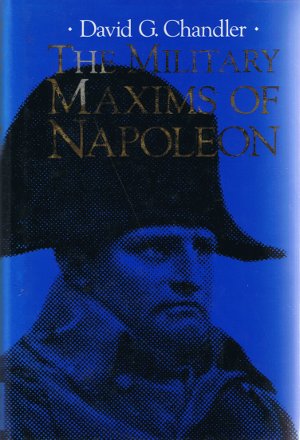
Many years ago, in the good old days (and they were!!) when I was a young soldier and we maintained a substantial presence in Singapore, I stumbled across a UK-based military book club that accepted overseas subscribers and offered a flat rate for shipping. The deal was that you had to buy so many books each year and – much like my current approach to Audible – I would get busy and let my obligation lapse until the last safe moment when I would have to make some snap selections from whatever was available in the most recent catalogue in order to stay in the club. As a result, I built up quite an eclectic library. One of the books that I acquired was David G. Chandler’s The Military Maxims Of Napoleon (Greenhill Books, 1987, ISBN 0947898646) It contains all 78 Maxims, the original 19th Century commentary and a new commentary by David Chandler applying “…the 20th Century perspective of two world wars, Vietnam, the Falklands and other conflicts…“. At the time, I read it, thought it of minor interest and it’s been on the shelf ever since. However one point, not even from the Maxims, has stuck with me in the succeeding two and a bit decades.

It regards what Chandler describes as one of Napoleon’s best known sayings “The principles of war are the same as those of a siege. Fire must be concentrated on a single point and as soon as the breach is made the equilibrium is broken and the rest is nothing.” The commentary in the book offers that most who seek to apply this ‘rule’ get it wrong in that they fixate on the word ‘point‘ and miss the whole implication of ‘equilibrium‘.

Chandler offers that it is highly probable that Napoleon actually meant the ‘joint’ or ‘hinge’ of enemy dispositions. There will always be issues of translation and interpretation when we seek to learn from those who gone before, especially when there is a significant temporal air gap – poor old Clausewitz and Mahan suffer in the same manner as does Douhet, when I ever get round to reading The Command of the Air.

Sometimes we fixate a little too much on the purity of original text and not enough on the actual content of the interpretation – to quote one of our Principles of Lessons Learned “Focus on what is being said and less on who is saying it“. One of the greatest examples of this is the Clausewitzian Trinity which is popularly accepted as ‘the people, the action arm, and the leadership’ – the actual Trinity from the original texts, as Adam and others have pointed out is much more ethereal. Regardless, the popular version of the Trinity still holds true, remains applicable today and, when you get right done to it, is probably more useful as a model than the original.

The modern definition of ‘centre of gravity’ is, according to FM 3-0,:

The source of power that provides moral or physical strength, freedom of action, or will to act. The center of gravity is a vital analytical tool for designing campaigns and major operations. It provides a focal point for them, identifying sources of strength and weakness at the strategic and operational levels of war. Centers of gravity are not relevant at the tactical level; the tactical equivalent is the objective. At the strategic level, the center of gravity may be vulnerable to an operational-level approach; at the operational level, the center of gravity may be vulnerable to tactical actions. The enemy may shift a center of gravity to protect and sustain a source of power. Similarly, changes in the operational environment may cause centers of gravity to shift. Therefore, analysis of friendly and enemy centers of gravity begins during planning and continues throughout a campaign or major operation.

This is very much a Fulda Gapist definition and even then, in the context of Third World War, Red Storm Rising-like, high intensity conventional conflict, it is somewhat flawed. It neither states nor implies any of the characteristics one might expect of a centre of gravity like pivot, balance, or equilibrium. In describing the centre of gravity as a ‘source of power’ and equating it with a tactical objective, it logically but incorrectly follows that the centre of gravity is something that is struck. While it may be correct that centres of gravity apply only at the operational and strategic levels in conventional conflict, this does not apply in the much higher fidelity/granularity microcosms of the complex environment where influence may be applied at all levels. Now compare the military definition of a centre of gravity with an aeronautical one based upon the Archimedean centre of mass principle:

The center-of-gravity (CG) is the point at which an aircraft would balance if it were possible to suspend it at that point. It is the mass center of the aircraft, or the theoretical point at which the entire weight of the aircraft is assumed to be concentrated. Its distance from the reference datum is determined by dividing the total moment by the total weight of the aircraft. The center-of-gravity point affects the stability of the aircraft. To ensure the aircraft is safe to fly, the center-of-gravity must fall within specified limits established by the manufacturer. When the center of gravity or weight of an aircraft is outside the acceptable range, the aircraft may not be able to sustain flight, or it may be impossible to maintain the aircraft in level flight in some or all circumstances.

Placing the CG or weight of an aircraft outside the allowed range can lead to an unavoidable crash of the aircraft. When the fore-aft center of gravity is out of range, the aircraft may pitch uncontrollably down or up, and this tendency may exceed the control authority available to the pilot, causing a loss of control. The excessive pitch may be apparent in all phases of flight, or only during certain phases, such as take-off or descent. Because the burning of fuel gradually produces a loss of weight and possibly a shift in the center of gravity, it is possible for an aircraft to take off with the center of gravity in a position that allows full control, and yet later develop an imbalance that exceeds control authority. Calculations of center of gravity must take this into account (often part of this is calculated in advance by the manufacturer and incorporated into CG limits).

‘Strike the weak joint‘ is the defining point that I took away from Napoleon’s Maxims all those years ago and it has stood me in good stead since. During my very junior intelligence training ( which occurred as DESERT STORM was flashing across our screens, adding a whole new real-time perspective to intelligence doctrine), a common CCIR was to identify the boundaries between enemy elements. The answer to questions regarding the ‘why’ behind this was that it helped determine unit identities…but why? I’d ask again – I got to spend a lot of time sitting in the corner…

A few years later, on the Infantry Minor Tactics (so what? I like the old name!!) course, the other guys (this was before we had guyesses in the Regiment) ‘got it’ and we always paid extra attention to the boundaries between elements as potential weaknesses.

Consider the CoG construct against Napoleon’s advice to strike the weak point to break the equilibrium and the physical definition of a centre of gravity. You find a model that is considerably more robust and applicable to both conventional high-intensity traditional conflict and the complex microcosms of the COE. The centre of gravity is NOT a source of power, nor is it a weakness per se – it is an area that might be influenced by one of a number of simultaneous or sequential actions that create a higher potential for instability.

The effects may be incremental as those of Keenan’s theory of Containment or as immediate and catastrophic as the assassination of Archduke Ferdinand or the 2003 invasion of Iraq. In chaos theory, this is also known as the Butterfly Effect where the slightest flap of the butterfly’s wings in time leads to unexpected and unpredictable results. Newton’s law of equal and opposite reaction does not apply as it is unlikely that there will be a direct proportion correlation between the size of the action and the subsequent effect(s).

Influencing one or more centres of gravity creates a tipping point, the physical definition of which is “…is the point at which an object is displaced from a state of stable equilibrium into a new equilibrium state qualitatively dissimilar from the first…” Although some definitions of tipping point consider the point tipped when the new state of equilibrium becomes permanent or irreversible, achieving and maintaining this state can not be taken as a given. Sometimes the effects are temporary, either because the influencing actions have ceased prematurely, because of other influences having a contrary effect, or simply because the inertia of ‘normalcy’ is too great to be overcome long term.

Even though a nuclear device might achieve critical mass, there are any number of factors that may prevent a full detonation. In COIN, there is a temptation to perceive positive change as steady state, and withdraw the critical influences before the changes in equilibrium and environment have fully taken hold. Hence, one of the core truisms of COIN and peace support operations is that success takes time, probably generations, before it can be safely said that peaceful equilibrium has been achieved.

A more practical definition of centre of gravity may be:

The point which, when subjected to influences or actions, effects change in the equilibrium or balance of an object, group of individual. The center of gravity is a vital analytical tool for designing campaigns and major operations. It provides a focal point for them, identifying sources of strength and weakness.

Centres of gravity may not be static and some may be in a state of constant flux. Similarly, changes in the environment may cause centers of gravity to shift. Therefore, analysis of friendly and enemy centers of gravity begins during planning and continues throughout a campaign or operation.

To achieve the desired ultimate effect, it may be necessary to be influence multiple centres of gravity sequentially and/or simultaneously.

The second point is important in all types and levels of activity and is endemic of weaknesses in intelligence apparatus. A snap shot of centres of gravity is only as current as the time it was taken; current apparatus are probably adequate for maintaining current pictures of centres of gravity in conventional platform-based activity but they have yet to adapt in any significant manner to the much higher granularity, global scope and complexity of individual-based activity and operations.

The final part of the definition requires a perceptional adjustment in how centres of gravity have been defined previously. While still holding true in traditional platform-based activity, it becomes vital in environments of complexity and uncertainty. Traditionally we speak of THE centre of gravity; now we must think and talk in terms of centres of gravity. Consider many cogs rotating in a machine: by applying subtle influences to specific cogs at specific points in their rotation and relationship to other cogs, the machine can be made to run faster, or smoother, or slow down or fly apart catastrophically…

Or, using the planetary model in Interbella, significant effects can sometimes only occur when the planets are in alignment….