Surely not?

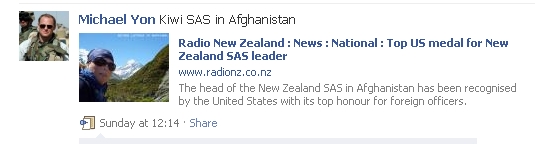
Just saw this item on Michael Yon’s Facebook page…you can read the actual article on Wired.  I have to admit that I find this an excellent source of hints for places to look and issues to consider…

It would be quite scary to think that our intelligence apparatus weren’t being filled by our best and brightest but then there was this bumper sticker I saw…

In all seriousness, if we’re fighting in an environment where information rules, surely it is critical that we resource the mechanisms that process and analyse our information accordingly…?
Reading between the lines in the article, it sounds as though there is quite a bit of tap-dancing and backstepping going on – and that all the checks and balances one would assume at that level weren’t so much no in place but simply weren’t being followed…it’s all a bit difficult…

Well done, that man!!

Strangely, I picked this up from Michael Yon and not the local media

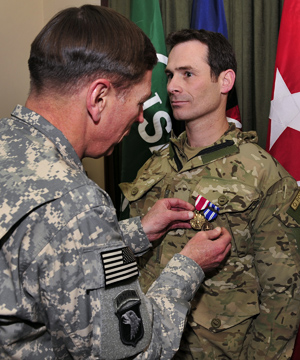
(Photo by U.S. Navy Chief Petty Officer Joshua Treadwell)

Gen. David H. Petraeus, commander of the International Security Assistance Force (ISAF), awarded the Meritorious Service Medal to New Zealand Army Lt. Col. Chris J. Parsons, during a ceremony in Kabul, Afghanistan, Jan. 13.  NZ Ambassador to Afghanistan Neville Reilly attended the ceremony.  The Meritorious Service Medal is the highest US decoration that can be awarded to an officer who is not a general for exceptional contribution to the ISAF mission. Under Parsons’ command, NZ Army 1st SAS significantly hindered the insurgents’€™ ability to reconstitute and conduct actions against Coalition Forces, resulting in increased security for the people of Afghanistan.   Parsons returns to New Zealand after a four month tour in Afghanistan.

The head of the New Zealand SAS in Afghanistan has been recognised by the United States with its top honour for foreign officers.

Lieutenant Colonel Chris Parsons was presented with the Defense Meritorious Service Medal last week in Kabul.

New Zealand Defence Minister Wayne Mapp says it’s testament to Lieutenant Colonel Parsons’ leadership and also recognition of the work the entire SAS unit is doing in the Afghan capital.

Dr Mapp says each time he meets top American servicepeople they remark on the professionalism of the SAS unit.

He says the award is given for exceptional leadership over a sustained period of time.

Dr Mapp says it is the third time during his tenure as Defence Minister that the medal has been awarded to a New Zealander.

It’s good to see a Kiwi recognised at any time but even better when it’s a mate from wayback…I first met Chris  in 1995 when I was commissioned over the space of a weekend and inflicted on Headquarters Support Command and the Trentham Officers Mess…it wasn’t long before he’d led a group of us through a blizzard to the top of the snow-clad mountain for a formal dinner…because we could…

…and because the sun was so bright, everyone wore their special sunglasses…

Leadership has always been one of Chris’ (many) strong suites and I count myself very fortunate not only to know him as a friend but to have worked for and with him in a number of other appointments…

Well done, mate…

Edit: updated with image of award ceremony and Stuff caption…

Ha–bloody – ha

Hyena-laughing

It’s been a while since I visited my blogroll but I am making a serious attempt to get back into a proper work routine that balances my blogwork with Air Force projects, domestic ‘honey todos’, and my relationships with Hawkeye UAV and FX Bikes…I’m well into my summer programme which seeks to do as much work from home in order to optimise the longer summer days for honey todos: it’s just a case of getting the balance right…

So, having spent a day on base reviewing draft doctrine and keeping up with ASIC admin, I’m now feet up catching up with UK Masterchef and attempting some concurrent activity blog-surfing…

My first stop was Coming Anarchy…twas a bit of a worry when the first headline I saw was “Invade New Zealand!” but fortunately it’s actually a series of links to some great satirical Aussie piss-takings from a couple of years back – have a look and a laugh!

Speaking of having a laugh, and the reason for this post’s title, was a brief commentary on Julian Assange’s lawyers having a squawk because the same media that he used to publish the latest batch of wiki=leaks is now printing his linked Police record…oh dear…! WHat has Assange wrought the title asks…pretty much exactly what he has sown, I’d say…it seems that his urge for openness doesn’t apply to his own information…it amazes me how self-righteous Assange’s supporters become when their own privacy is challenged as it is now being at the rapid rate by various US government and law enforcement agencies…how dumb are some of these people when they blithely use US-based communications and networks, and then bleat when the US asserts ownership over information on those US-based networks, you know, things like Twitter, Facebook, Paypal, Google, etc, etc, etc…

Also on wikileaks, Chirol asks some long overdue questions about Saudi Arabia’s relationship with the Western world…

Even before Wikileaks, it was abundantly clear that Saudi Arabia is the largest financer of terrorism in the world. The US knows this, and Saudi knows we know. The continue to do to a half-assed job, doing enough to keep us happy but not enough to seriously attack the problem. My question, given that Saudi Arabia is not actually a major oil supplier to the United States (see Canada, Mexico, Colombia, Venezuela, Nigeria etc), what is keeping us from really putting the screws to them? Is it because maintaining an uneasy friendship and geting some cooperation is the lesser evil than making them an enemy? That is my reading of the situation. Would serious pressure even make them an enemy or could we still maintain decent relations? The more I think about it, the less I understand the special relationship we have today.

Not new news perhaps, when you get down to it, Osama Bin Laden was their dog and they’ve naff-all to shoot him or any of his rabid takfiri spawn…John Birmingham also makes a similar comment on spinelessness in the Gulf after wikileaks exposed “…Arab governments who’ve been caught out urging an attack on Iran…” He also comments on various leaked discussions regarding China’s true military capability and intentions with a link to a further Australian commentary on this topic…it’s worth a read but possibly only to see how confused Australian strategic thinking has been in the last decade: China has now taken over from the Indonesian bogey-man of the 70s and 80s, justifying Australia’s really quite amazing military expansion of its own…

Wiki…whatever….

Julian Assange’s latest exploits from Wikileaks have caused about as much real news as Y2K on 1 January 2000…after all the hype and expectation-massaging, the latest torrent of leaked documents is about as inspiring and memorable as George Lucas’ attempt at a prequel trilogy to the Original Trilogy…I once heard somewhere that the body doesn’t remember pain: it’s not that great at remembering boredom either and hopefully once the ripples in the pond subside, Assange will be marginalised by the growing realisation that he has actually done anything…all the risk was taken by those who actually leaked the quarter of a million documents in question and anyone who believes that one disgruntled PFC who’s just been dumped by his boyfriend can steal such a range of classified documents is living in Lala-land (much, in fact, like those in my previous post…)…

Michael Yon puts it all in perspective on his Facebook Page by linking Assange to other nutjobs….

It is HIGHLY doubtful that the United States government would kill Assange. If Assange is killed, the hit more likely would come from a lone wolf or someone else’s government. The conspiracy theorists might then “prove” that it was a CIA hit ordered by the same people who killed Kennedy, and that we didn’t really land on the moon but we do have a secret moon base. And 9/11 was a Jewish plot…

Never really thought about that before either…that the same people who deny the moon landings are the same ones who think the US/UN World Government has a secret Moonbase…but then again, when I was 10 I was a big fan of Gerry Anderson’s UFO and thought that building a secret Moonbase (complete with chicks with purple hair – the penny relating to the benefits of the short skirts hadn’t really dropped when I was that old) was a. pretty cool and b. pretty simple…

Dean covers it all pretty well in Wikileaks and ‘cablegate’ and I share his desperate plea to stop adding ‘gate’ to everything that has the slightest potential whiff of scandal attached to it…much the same as could we please stop referring to every campaign or initiative as a ‘war’ unless we really mean to fix bayonets, send in the Marines and let Air Combat Command off the leash…

And on ‘wars’, let’s not forget that, rhetoric aside, we’re not really at war at the moment…in at least one…yes, certainly…but ‘at’ war…no, not really: we’re not harnessing all the instruments of national power to quell the adversary and most definitely, we are not acting against those who seek to undermine the ‘war’ effort through accident or deliberate action. And that, boys, girls and family pets, is why people like Assange get away with what they do: because they are not breaking any laws…that their motives and actions are reprehensible is beyond question but even if it can be proved in the World Court (where else would have jurisdiction?) that the wikileaks were directly responsible for deaths in Afghanistan or elsewhere, it is not an offense to publish leaked material – not unless perhaps there is some form of court-ordered suppression order in effect. Even then, with the internet being what it is, it is unlikely that this would be that enforceable or provable…

But that notwithstanding, the lunatic fringe is out there demanding that Assange be arrested, assassinated or otherwise jabbed in the calf by a ricin-loaded umbrella. There’s a good thread at Small Wars Journal that hammers out the why-nots of this issue. In fact, Small Wars seems to be all over this one…WikiLeaks, Round Three provides a comprehensive list of links to various comments and reports on Assange’s latest non-event: note the DoD caveat at the top of the list, two or more wrongs DO NOT make a right:

Department of Defense personnel should not access the WikiLeaks website to view or download publicized classified information nor should they download it from anywhere, regardless of the source. Doing so will introduce potentially classified information on unclassified networks. Executive Order 13526 states ‘Classified Information shall not be declassified automatically as a result of any unauthorized disclosure of identical or similar information.

Digital security problem is bigger than Assange and PFC Manning discusses the likelihood of kneejerk reactions to PFC Manning’s indiscretions (so just how does one PFC access let alone copy 250,000 classified military and diplomatic documents between making coffee, sweeping the floor and being unappreciated?) leading to balkanisation of military and government information systems ( and Dean raises this as well)…might as well since most of them can’t talk to each other anyway, but doing so effectively cedes the public information domain to the other guys – which is probably not the sharpest move we’d want to be making…

And finally a word from our sponsor for the current ‘war’, Secretary Gates, once again courtesy of Michael Yon :

I’ve heard the impact of these releases on our foreign policy described as a meltdown, as a game-changer, and so on.  I think — I think those descriptions are fairly significantly overwrought. The fact is, governments deal with the United States because it’s in their interest, not because they like us, not because they trust us, and not because they believe we can keep secrets.  Many governments — some governments deal with us because they fear us, some because they respect us, most because they need us.  We are still essentially, as has been said before, the indispensable nation.

So other nations will continue to deal with us.  They will continue to work with us.  We will continue to share sensitive information with one another.

Is this embarrassing?  Yes.  Is it awkward?  Yes.  Consequences for U.S. foreign policy?  I think fairly modest.

The sooner we forget about Assange and let him be consumed by his own insignificance, the better…the real problem raised by the unauthorised release of close to half a million classified documents is what are we going to do a. about those who are releasing them in the first place (there can’t be THAT many briefcases and thumb drives left on the train each night)? and b. how do we train and educate their replacements that doing these is the wrong thing to do…?

Like, hello?

Is this where some people live?

I noticed an item on the Small Wars Journal blog this morning on my pre-breakfast scan of what’s up on the planet…in it Dr. Christopher Paul comments on an article (also in Foreign Policy) that is strongly critical of the RAND study Victory Has a Thousand Fathers, of which he was the lead author.

Dr Paul would be correct in his comments on the Hoyt/Rovner article except for the minor point that THEY are actually correct in what they say…

I hadn’t read the RAND ‘study’ in question until seeing this item in the SWJ Blog this morning but it is one that would have eventually crossed my desk for review…it’s 187 pages but having just read the summary and introduction, I don’t think it’s going to be a critical read for me anytime soon…

Although it quotes William Rosenau “…insurgency and counterinsurgency. . . have enjoyed a level of military, academic, and journalistic notice unseen since the mid-1960s…”, the authors have not included one single case study from this period that was the heyday of COIN (both as we know it and how others like the USSR and Cuba applied it)…like, hello? By selecting on those campaigns that started after 1978 – you didn’t consider Northern Ireland? Like, hello? – the RAND study only really focuses on a very narrow range of campaigns and even then I’m not convinced that there is much rigour in the selection of campaigns…we all know the COIN campaign in Kosovo, right? and Croatia and Bosnia? Some bad things may have happened in those countries but COIN? Hardly…the COIN campaign in Somalia was concluded in 1991? Papua New Guinea was a COIN loss? By PNG one assumes that the study is referring to Bougainville which is actually a success in that Bougainville is still a part of the nation it sought to break away from and the campaign that was conducted on that island actually addressed the root issues underlying the ‘insurgency’ – actually IAW one of the key COIN trusims…I also note that the use of repression as a strategy is frowned upon when, whether we in the West like it or not, historically (before and after 1978) it is one of the more consistently effective means of keeping a population in line…

I suspect that if I opt to wade through the remaining 161 pages of this ‘study’ (I have to use the term ‘study’ loosely), I will find find more such weak ‘logic’, poor research and inconsistency – and having written this, I find myself resigned to having to read the rest of it…

I wonder to what extent this paper was driven by statements at the COIN Symposium in May where various staff called for a COIN checklist, displaying a fundamental lack of ‘getting it’? While there are some fundamental principles/tenets/truisms for Countering Irregular Activity (COIN is too narrow a term for modern use) that a study like this may have analysed, one of them is that every campaign must be considered on its own merits i.e. there is no checklist in CIA!!

Perhaps, instead of using his position at Foreign Policy to have a self-righteous whiny-nana, Dr Paul might want to reflect on the comments here and in the Rovner/Paul article, and then go back to RAND and redo the job properly this time…

Critical thinking more and more seems to be superseded by a level of superficiality that is quite scary and I wonder if this is due to the economic crisis really putting the acid on academics to publish or really perish…? The really annoying this about products like this RAND ‘study’ is that so much information is freely available for them to do the job properly – the analysis is not that difficult – it’s the application in the contemporary environment that offers up the true challenges and weak superficial work like Victory Has a Thousand Fathers offers nothing to mitigate those challenges…

Later that day…Edit: just used this line in a discussion on this paper on Facebook…pretty well sums up my feelings…

“…I think it’s even worse than that…I simply don’t think they ‘get’ the environment we are operating in now so what they’ve done is pretty much like setting off to study the Third Reich and then limiting themselves to 1946 onwards…”

Staying focused in Afghanistan

A couple of months ago, in The Information (R)evolution, I made comment on an article in the Sept 10 C4ISR Journal, Shifting Terrain (After the C4ISR JOurnal site was taken down the only record of the original article I have is my original scribbled on one). On later reflection, I thought that it might be more constructive to offer a counterpoint to this article in the Journal as a means of furthering discussion and awareness of the nature of the contemporary operating environment. C4ISR Journal was happy to pick up my commentary and have just published it in the November 2010 issue…so, with no further ado, may I present for your professional information and review…Staying focused in Afghanistan

The version published is actually the penultimate version but technology conspired against us while I was on the road last month and neither myself nor Ben Iannotta, the C4ISR editor, were able to close off the last few loose threads before the closure of the publishing deadline. I have a copy of the final version and will upload it here in a couple of weeks so as not to steal any fire from the Journal’s current issue…

I haven’t had a chance to read through the other articles yet except for NATO integrates ISR at all levels which I think is still a largely aspirational goal but at least someone senior is forcing the debate. While the lowest common denominator approach may have been successfully employed in peacekeeping operations in the 90s, where possibly the driving force within the operation is the number of national flags waving at the table, it remains patently unsound for operations to the right of peacekeeping on the spectrum of conflict. More complex campaigns require entry bars to be set across a range of key enablers that might include language, doctrine, technical interoperability in communications, C2 and information systems, and levels of training in selected key skills…


Today’s COIN Center VBB

As below, Dean presented at the COIN Center’s Virtual Brown Bag session this morning…the slides and audio file will be posted on the Center’s website in the next few days…I may be offline for a week or so as I am off globetrotting again but will link them in when I get an opportunity…in the meantime I strongly recommend that anyone with a personal or professional interest in contemporary intel issues, key an eye of the site and download both files when they become available. This is very good stuff and at least on a par with MG Flynn’s Fixing Intel paper from earlier this year…

Top effort from Dean and it is great to see a compadre’s efforts paying off like this….

As a taster, here’s some of the questions that were asked during the session (to hear the answers, you’ll need to download the files…)

MAJ Decker BCTP – guest: Coming in loud and clear

Peter Sakaris – guest: To understand the environment over time shouldn’t we be getting better more reliable HUMINT through increased population interaction? I would think that the example of a new officer working with a veteran police officer in the CONUS as you described would help to do this in the COIN environment. Obtaining the institutional knowledge of an environment can come from people that live in that environment because they live it every day and are in areas of the local community where it would be difficult for us to get into.

Kevin Frank JIWC – guest: Not will ing give up on the analysis issue- believe that if we collect the correct data and present it to the analyst correctly, we’ll get better analysis at the current training levels, especially if the commander is asking the right questions…comments?

DK Clark, DTAC/CGSC – guest: Did you use the pattern-analysis plot, activities matrix, association matrix, and societal considerations in FM 3-24.2? If so, could you comment on problems with these methods/techniques of framing and displaying the intel analysis in COIN?

MAJ Decker BCTP – guest: Afghanistan Reintegration Program (ARP) is now doing the same as the Boston Gun Project by providing retraining opportunities to former insurgents

HOMBSCH, DAVID G Lt Col : Comment only (no need to repeat):   I love the quote – “analysts to be historians, librarians, journalists” – spot on.   I also totally agree, with exploiting reach back – generate staff with expert knowledge on specific regions, who understand normality, and can interpret important changes (indicators and warnings) to cross cue counter insurgent forces.  Hypothesis – there is a place for more foreign nationals in analysis teams in CONUS and allied intelligence agencies?

CPT Linn – guest: how are we integrating analysis into Data collected from FETs and HUMINTs in theater?

Peter Sakaris – guest: The Stability Academy, Kabul (formerly the COIN center of Excellence) is a COIN Academy that the leadership of deploying BCTs cycle through as part of their RIP/TOAs. They recommend the ASCOPE/PMESII-PT crosswalk as an analytical tool for helping gain the needed detailed understanding of the “complex human terrain”. Are you familiar with this, or other tools like it such as TCAPF and do you find them useful for this purpose? Have you seen other approaches not discussed that are/have been in use?

CPT Linn – guest: also how is that data utilized in targeting packages?

MAJ Allen Smith – guest: Do you vet and confirm info from gang leaders using SIGINT?  How do you build trust on a Narc?

Kevin Frank JIWC – guest: There are many units out there reporting data (CATs, FETs, PRTs, unit reports etc) . But are they getting the right information? ASCOPE is one guide- are there other collection guides out there that can help us get better data? Does the LE community have anythi

Kevin Frank JIWC – guest: anything that can help?

RODRIGUEZ, ISMAEL R USA  2: Any thoughts on the application of GIS in a police intelligence role? Do you think these techniques could translate well in COIN?

And now…for your edification and education….

Just a quick advert that Dean from Travels with Shiloh will be presenting online at the COIN Center at 141500Z

Managing Land Conflict in Timor-Leste

This item just popped into the inbox…a great example of the sort of irregular activities that potentially threatens national or regional stability…using an interpretation of irregular that equates to ‘potentially destabilising’….

Dili/Brussels, 9 September 2010: Measures to resolve land disputes in Timor-Leste must go beyond a draft law on land titling if they are to comprehensively reduce the risks posed, otherwise the law could bring more problems than solutions.

Managing Land Conflict in Timor-Leste,* the latest briefing from the International Crisis Group, examines the country’s current tangle of land ownership claims, and recommends that the government and its partners act now to supplement titling with clear public information, clarify protections for those who will be evicted or resettled, and strengthen support to local mediation.

The need to balance land rights inherited from previous Portuguese and Indonesian colonial administrations with the reality of customary law, as well as the implications of a history of population displacements, have delayed the creation of a land administration system. Confusion over the present and future basis of property claims is widespread.

“Establishing legally enforceable property rights will inevitably create winners and losers,” says Cillian Nolan, Crisis Group South East Asia Analyst. “Unless the implications of this law are clearly understood, and protections developed for those who will be negatively affected, it risks being ignored or, even worse, becoming unenforceable”.

The current draft land law, approved by the Council of Ministers in March 2010 and awaiting parliamentary debate and approval, would establish the country’s first property ownership rights. Both the technicalities and the implications of the complex law are poorly understood. Sensitive issues include the fate of those Timorese who occupied empty properties in the violence following the 1999 referendum, the rights of Timorese living abroad to reclaim old property, and the holdings of the political elite. While passage of the draft law will help resolve many land disputes, further public information and debate should be a prerequisite for approval. Previous attempts to enforce laws on state property have often failed due to local resistance.

Though most disputes have to date been either resolved or frozen without recourse to violence, and many people are happy with the status quo, the issue will take on new urgency in light of ambitious new plans for government-driven development. Clarification of basic protections and resettlement plans for illegal or displaced occupants should be a priority, as should continued support to informal dispute mediation processes. The government should take initial steps now towards developing a comprehensive land use and housing policy, as well as to engage communities on sustainable ways of managing customary tenure systems.

“Timor-Leste cannot afford to wait much longer to establish a working mechanism for resolving property disputes as this is a key building block of the rule of law”, says Jim Della-Giacoma, Crisis Group’s South East Asia Project Director. “Failing to do so could instead plant new seeds for future disputes.”


Hey, Skippy! Bugger off!!

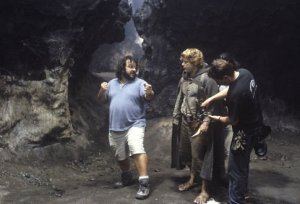
In my last post I commented on how these guys…

have been picking on these guys…

In Get Frank, Sir Peter Jackson offers his own thoughts on this blatant attempt to muscle in and screw up the Kiwi film industry and these are well worth repeating in their entirety….this may not be a biggie to the rest of the planet but way down under we get a little miffed when the Big Brother to our west tries to throw its weight around, more so when it has managed to screw up its own film industry – although after the last Star Wars trilogy it probably didn’t need much help…in terms of Countering Irregular Activity – and it just struck me that we could change this to Countering Irregular Behaviour and get away from that whole CIA issue – this is exactly the type of activity that comes under the heading of irregular…the potential cost to this little nation of losing not only production of The Hobbit, but possibly other big ticket productions is just as harmful as if a terrorist incident shut down our tourism business…

As of this morning, the Government has stepped up to the plate to get this squared away…Govt offers to mediate The Hobbit dispute…like Bridget Smith in Imagine a World, I like not only going to the movies, but that fact that many of the movies I like are made here….

Anyway here’s what Sir Peter says…

Statement regarding The Hobbit and claims by the Australian Media Entertainment and Arts Alliance (MEAA):

The Australian Labour Union, the MEAA is using our production The Hobbit in an attempt to widen it’s membership, and power within the New Zealand film industry. As a New Zealand filmmaker, who has nothing to hide or be ashamed about, I’m not going to see this threatening behaviour continue without some form of sensible discussion about the “facts” and “truth” behind their various allegations.

It’s incredibly easy to wave the flag on behalf of workers and target the rich studios. It’s not hard to generate an emotive response, nor is it hard to sway public opinion, since nobody seems to like the facts to get in the way of a good story in these situations.

Behind the claims of exploiting actors who are cast in the “non-Union” Hobbitproduction, and claims that various high-profile stars will refuse to take part in the films, there are clear agendas at work. As usual with these agendas, they are based on money and power.

I am not a lawyer, nor am I an expert in unions and how they operate – but I like to think I have a degree of common sense, and that’s what I’m basing my observations on. Let me run over a few facts:

– Personally speaking, I’m not anti-Union in the slightest. I’m a very proud and loyal member of three Hollywood Unions – the Directors Guild, the Producers Guild and the Writers Guild. I support the Screen Actors Guild (SAG). All these organisations (I must confess I’m not entirely sure what the difference is between a “Guild” and a “Union”) do terrific work on behalf of their members.

– Many Actors are members of SAG, but many are not — especially younger actors and many Australian and New Zealand performers. MEAA claims we are “non-Union”, but whenever we hire an actor who belongs to SAG, we always honour their working conditions, their minimum salary agreements and their residuals.

– The SAG residuals is a small pot of money that comes from the movie’s profits. The DGA and WGA have similar schemes. An agreed upon percentage of movie profits is placed in a pot, which is shared amongst the members of the guild who worked on the film in question. Despite MEAA claims that The Hobbit is “non-Union”, our studio, Warner Brothers, is honouring these residuals, and making the profit sharing available to all the various Guild members – just as it did on The Lord of the Rings, and Universal did on King Kong.

– These residuals can be worth tens of thousands of dollars to an individual if the film is successful – however the normal situation is that if an actor is not a member of SAG, they do not share in the profit pot.

– This has always struck us as unfair, since most Kiwi actors are not lucky enough to be SAG members. For the Hobbit, Warner Brothers have agreed to create a separate pot of profit participation, which will be divided up amongst non-SAG actors who are cast in the film. This was not done because of any pressure from Guilds or Unions – it was actually Warners doing the decent thing, and New Zealand and Australian actors will be the principle beneficiaries. SAG members have their pot, and non-SAG members now have theirs. We have introduced the scheme to Kiwi agents and it’s now part of all our Hobbit cast deals.

– Whatever damage MEAA is attempting to do — and it will do damage, since that’s their principal objective in targeting The Hobbit – we will continue to treat our actors and crew with respect, as we always have.

– As I said earlier, money and power lies behind this threatening behaviour from our Australian cousins, and to fully understand that, you simply have to step back and look at the greater picture in context.

– It starts with “NZ Actors Equity”. This is a tiny organisation that represents a small minority of New Zealand Actors. They are not a Union, and have none of the legal status of a Union. They are a … well, a smallish group who have some New Zealand actors as members. How many actors are members of NZ Equity? They guard that information very closely, but various reports I’ve seen put their membership at 200, although somebody in the know swears it’s nearer 100.

– How many professional actors are there in New Zealand? Somewhere between 2000 and 4000, depending on just how you describe a “professional actor”. Obviously most Kiwi actors have other employment too, but there’s certainly over 2000 actors available to cast in a film production.

– So taking the most generous numbers, NZ Actors Equity represents 200 out of 2000 Kiwi actors, or 10%. Perhaps I’m wrong, and if so, NZ Equity will no doubt reveal their real membership numbers.

– Now there’s nothing wrong with NZ Actors Equity representing 10% of the actors in this country. It’s great that they offer that service, and if an actor chooses, there’s a supportive group they can join. Obviously the more actors that join NZ Equity, the better, since these organisations usually survive by taking a small percentage of their members acting fees. I’m guessing that Equity do something like that. Recently they have been part-funded by MEAA.

– Over the last 10 years our relationship with NZ Equity has been rocky — whenever we cast an “overseas actor”, we get a letter telling us why such and such Kiwi actor would be so much better in the role. In most cases we have already auditioned the actor in question, and formed our own opinions — but what strikes me as unfair, is how this “helpful” service of suggesting better choices only includes the “Equity 200″. If you happen to be a good actor who doesn’t belong to NZ Equity (and many don’t), you’re automatically not good enough to be put forward.

– What really does strike me as wrong, and this is my personal opinion, is the why that the MEAA is using NZ Actors Equity as a vehicle to represent the voices and opinions of New Zealand actors. A couple of years ago, the members of NZ Actors Equity voted to join some kind of alliance with the Australian MEAA group. At the time, there were voices of alarm at how this relationship could damage the interest of Kiwi Actors, but the merger went ahead – and now we’re about to find out just how damaging it’s going to be.

– As far as I know, the membership of NZ Actors Equity was allowed into the MEAA, meaning that the Australian MEAA organisation represents 200 out of 2000 Kiwi actors. I don’t believe it represents non-Equity NZ actors. It speaks on behalf of a tiny minority of our actors.

– The management of NZ Equity are clearly happy to be used as a political football by the Australians — but my sympathy goes to the 1800 New Zealand Actors who are not part of the “Equity 200″, but who are going to suffer the fallout if this Hobbitthing goes nuclear.

– I also feel a growing anger at the way this tiny minority is endangering a project that hundreds of people have worked on over the last two years, and the thousands about to be employed for the next 4 years. The hundreds of millions of Warner Brothers dollars that is about to be spent in our economy.

– Why is this endangered? Because the “demands” of MEAA cannot be agreed to, or even considered – by law – and therefore the only options that remain involve closing the Hobbit down, or more likely shifting the production to Europe. It could so easily happen. I’ve been told that Disney are no longer bring movies to Australia because of their frustration with the MEAA.

– The MEAA is demanding that the Hobbit production company (Warners owned, 3foot7 Ltd) enter into negotiations for a Union negotiated agreement covering all performers on the film.

– I personally have a problem with any organisation who represent a small minority, but attempt to take control of everyone – but that’s not the real issue. The complex web of NZ labour laws are the reason why this demand will never be agreed to.

– NZ law prohibits engaging in collective bargaining with any labour organisation representing performers who are independent contractors, as film actors clearly are. The NZ Commerce Act claims it would be unlawful to engage with an Australian Union on these matters.

In closing:

My personal opinion is that this is a grab for power. It does not represent a problem that needs a solution. There will always be differing opinions when it comes down to work and conditions, but I have always attempted to treat my actors and crew with fairness and respect. We have created a very favourable profit sharing pool for the non-Union actors on The Hobbit — and now the Union is targeting us, despite the fact that we have always respected SAG conditions and residuals.

I can’t see beyond the ugly spectre of an Australian bully-boy, using what he perceives as his weak Kiwi cousins to gain a foothold in this country’s film industry. They want greater membership, since they get to increase their bank balance.

The conspiracy theories are numerous, so take your pick: We have done better in recent years, with attracting overseas movies — and the Australians would like a greater slice of the pie, which begins with them using The Hobbit to gain control of our film industry. There is a twisted logic to seeing NZ humiliated on the world stage, by losing the Hobbit to Eastern Europe. Warners would take a financial hit that would cause other studios to steer clear of New Zealand.

– Seriously, if the Hobbit goes east (Eastern Europe in fact) — look forward to a long dry big budget movie drought in this country.

– Others gain from that too. SAG would much rather have it’s members hired on movies — as opposed to non-SAG actors. The easiest way to control that, is to stem what are called “runaway productions”, which are American funded films made outside of America. The Hobbit is one of them, as was King Kong andLOTR. SAG, which is naturally supporting MEAA, would see it’s own benefit in studios having a miserable experience in Australia/New Zealand. That may well be pushing the conspiracy theories one step too far, and it’s perfectly natural that one Union would support another – but the point is that in the complex web of Hollywood intrigue, you never really know who’s doing what to whom and why.

But it sure feels like we are being attacked simply because we are a big fat juicy target – not for any wrong doing. We haven’t even been greenlit yet! It feels as if we have a large Aussie cousin kicking sand in our eyes … or to put it another way, opportunists exploiting our film for their own political gain.

Peter Jackson

(NB: This represents Peter Jackson’s opinion as a Kiwi filmmaker, and not that of Warner Bros or New Line Cinema, who were not consulted about this statement.)